Tools, Equipment, and Utensils
needed in preparing dessert/sweets
Prepared by: Adam Noah Escalante
Everyone should be familiar with
the tools, equipment and utensils
need in preparing desserts. Every
pastry chef must have these tools,
utensils, and equipment for
efficient preparation of desserts.
Each tools is designed to perform
a specific job in the kitchen.
Tools and Utensils needed in preparing
dessert
•Measuring cup and spoon
•Mixing bowl
•Can opener
•Cutting board
•Double boiler
•Graters
Kitchen knives
- are often referred to
as the cook’s or chef’s
knife. They are use for
peeling and slicing
fruits and vegetables.
Types of knives
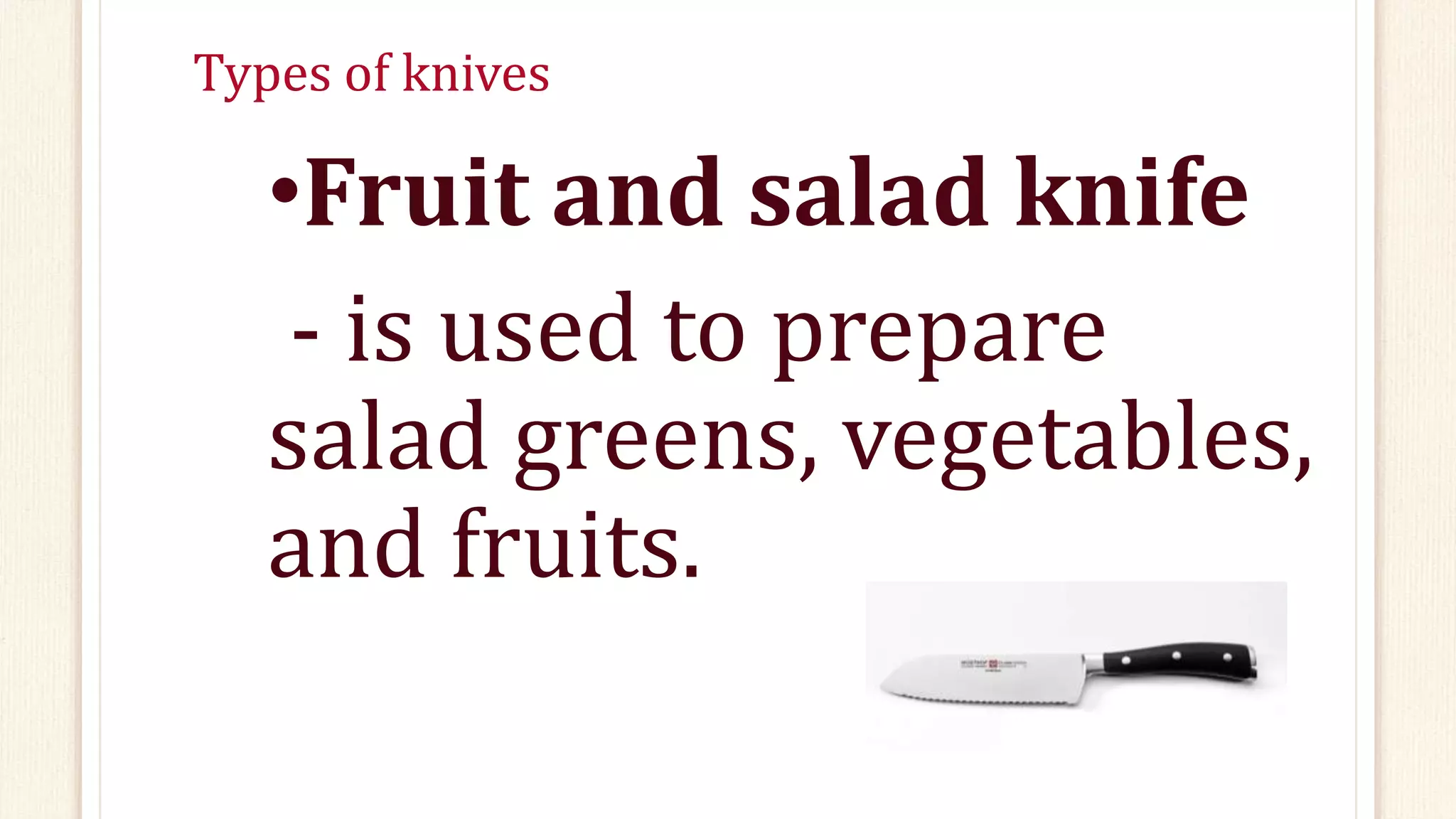
•Fruit and salad knife
- is used to prepare
salad greens, vegetables,
and fruits.
•Spatula
- is used to level off
ingredients when measuring
and to spread frosting
Citrus knife
- is used to
section citrus
fruits. The blade
has a two-sided,
serrated edge
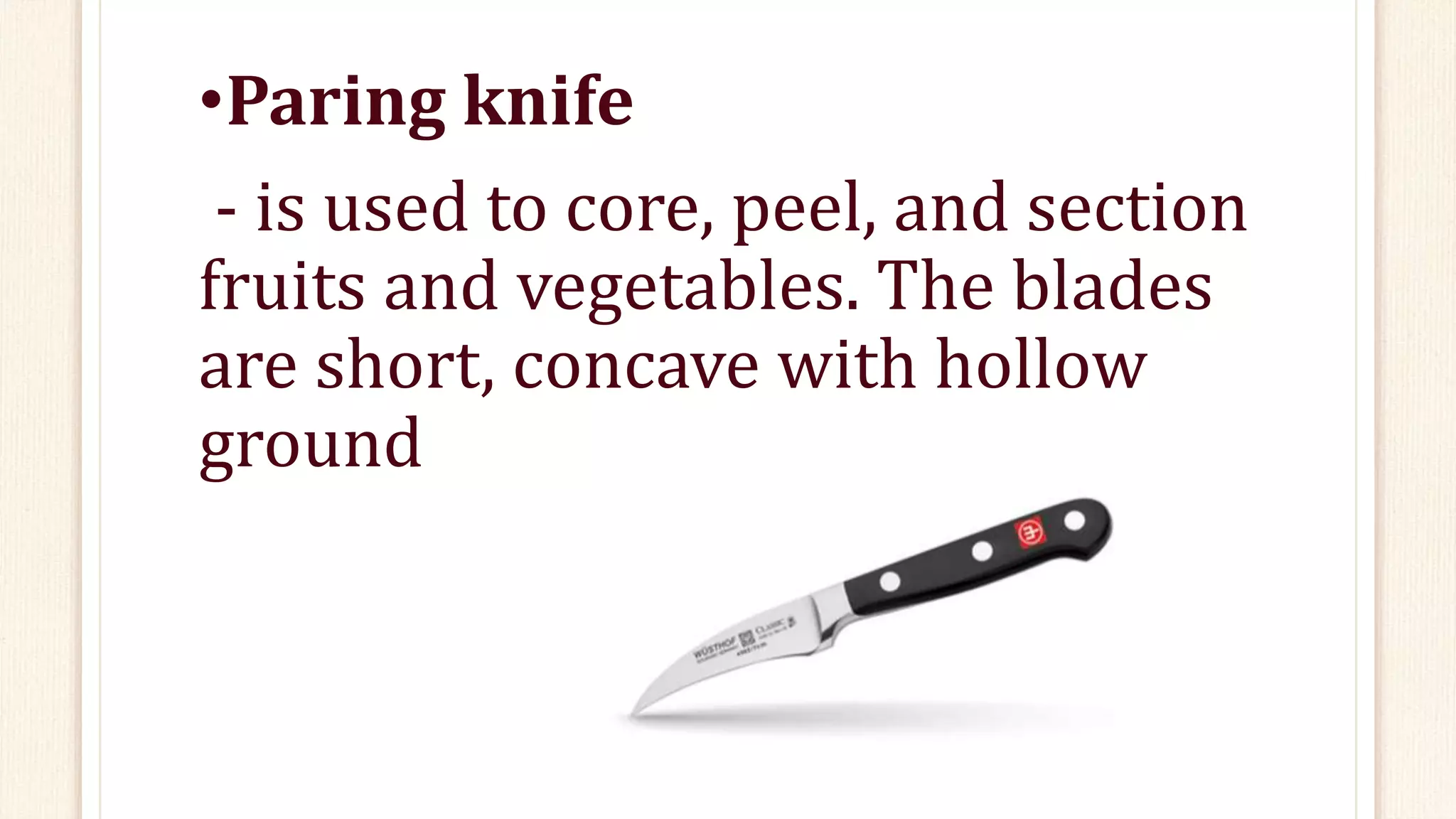
•Paring knife
- is used to core, peel, and section
fruits and vegetables. The blades
are short, concave with hollow
ground
•Kitchen shears
•Scrapers
•Spoons
•Temperature scales
•Vegetable peeler
•Whisk for blending
•Wooden spoons
•Baking pan
Equipments
•Refrigerator
•Range
•Mixers
•Blenders
Reasons for eating desserts and sweets
•Dessert balances
out a meal and
gives “closure to
the meal”
Reasons for eating desserts and sweets
•Eating dessert is an
opportunity to experience
different flavor and textures
that you cannot get in other
foods like vegetables, meats
and fruits.
Reasons for eating desserts and sweets
•Dessert can be an
opportunity to be creative
you can make interesting
mixtures that you
otherwise may not have
thought of.
Reasons for eating desserts and sweets
•Dessert isn’t
“fattening” Remember,
there is no such thing
as a fattening food
•It will make you
feel like a kid
again.
•It is romantic
Classification
or type of
desserts and
their
characteristics
A. Fruits
•The simplest dessert and
one of the best are fruits
because they are
nutritious, appetizing,
and easy to prepare and
serve
Characteristics of good fruit dessert:
•Appetizing aroma
•Simple
•Clean washed appearance
•Slightly chilled
B. Cheese
• Is another excellent dessert that is
ready to serve. It is made in all parts
of the world from a variety of milks
from cow, goat and sheep. Cheese
differs depending on the kind of milk
use, the kinds of cheese making
procedures, the seasoning and the
ripening process also distinguish its
variety. Each variety has a definite
character, a special appeal and
particular uses.
The three general types of cheese
based on consistency
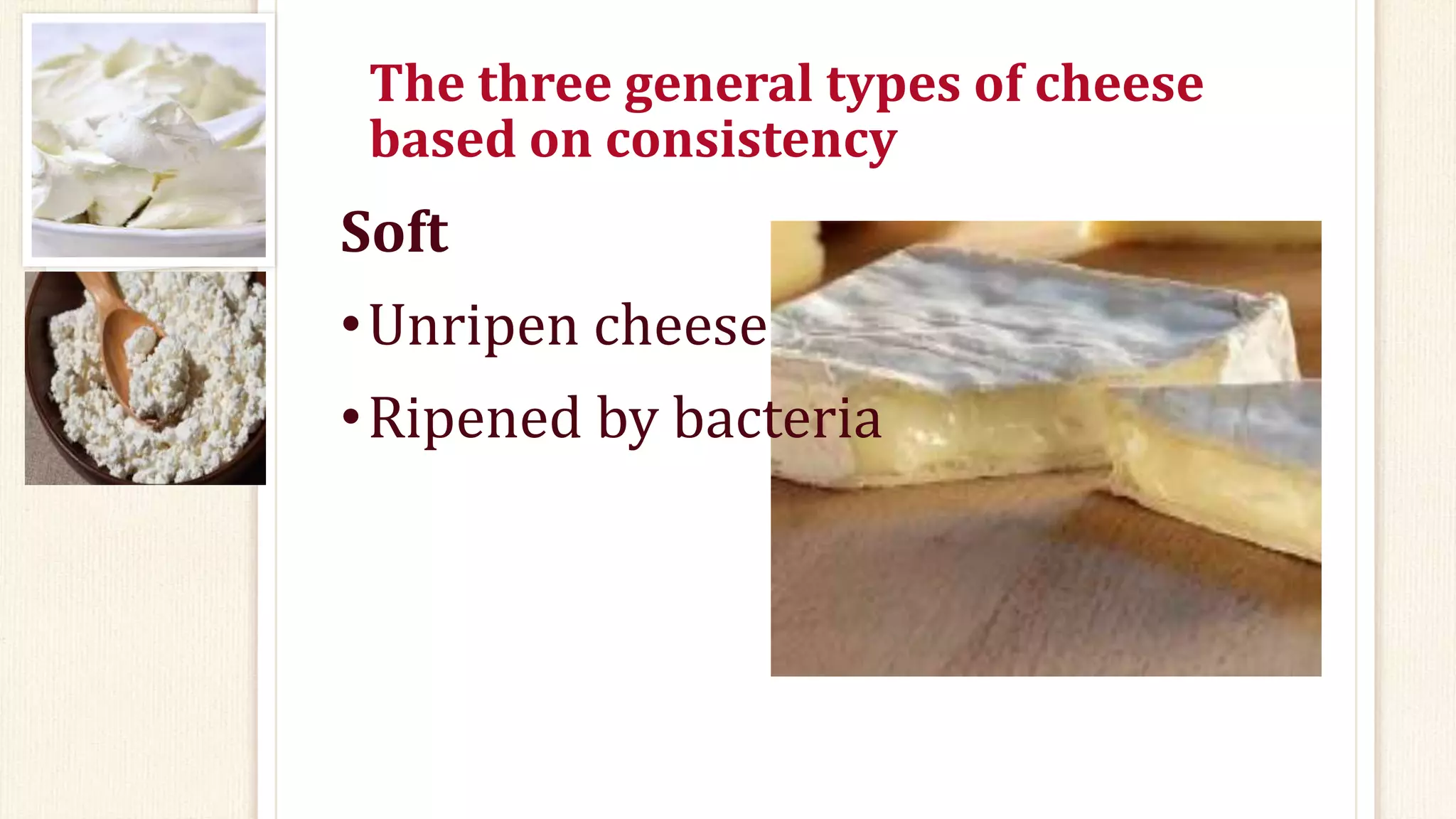
Soft
•Unripen cheese
•Ripened by bacteria
Unripen Cheese
Cream cheese Cottage cheese
Ripened by bacteria
Cheddar
Swiss
Colby
Brick
Parmesan
Semi-hard
Ripened by mold
Ripened by bacteria
Hard
• With gas holes
• Without gas holes
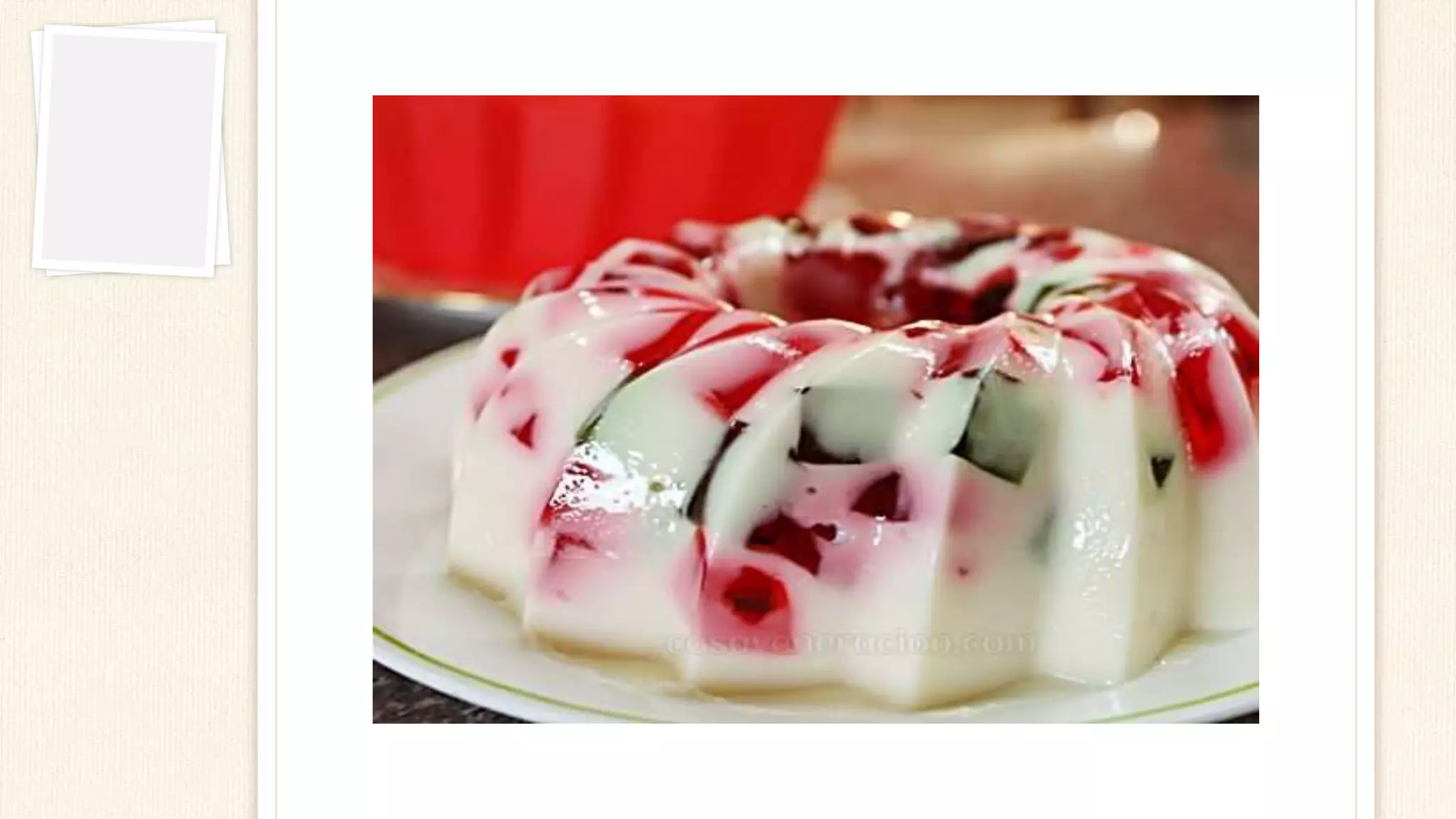
C. Gelatin dessert
•These are easily prepared,
economical and vary many ways.
Gelatin is marketed in two forms.
First the unsweetened, granular type
that must be softened in water
before use, and the fruit gelatin to
which flavor, color, and sugar have
already been added
D. Custard
• Baked and soft custard vary is so many ways.
Creamy, delicate, baked custards may be served
in their baking cups or may be unmolded and
served with fruit garnishes or with dessert
sauces.
Characteristics of a baked custard
• Firmness of shape
• Smooth, tender texture
• Rich and creamy consistency
• Excellent flavor
Characteristics of soft custard
• Velvety smooth texture
• Rich flavor
• Has pouring consistency of heavy cream
E. Pudding
• Puddings are relatively simple to prepare and
vary witch sauces. These are classified as
cornstarch pudding, sometimes called
blancmange, rice pudding, bread pudding.
Characteristics of pudding
• Attractive appearance
• Excellent consistency
• Well-blended flavor
• Firmness of shape
• An accompanying sauce to add interest
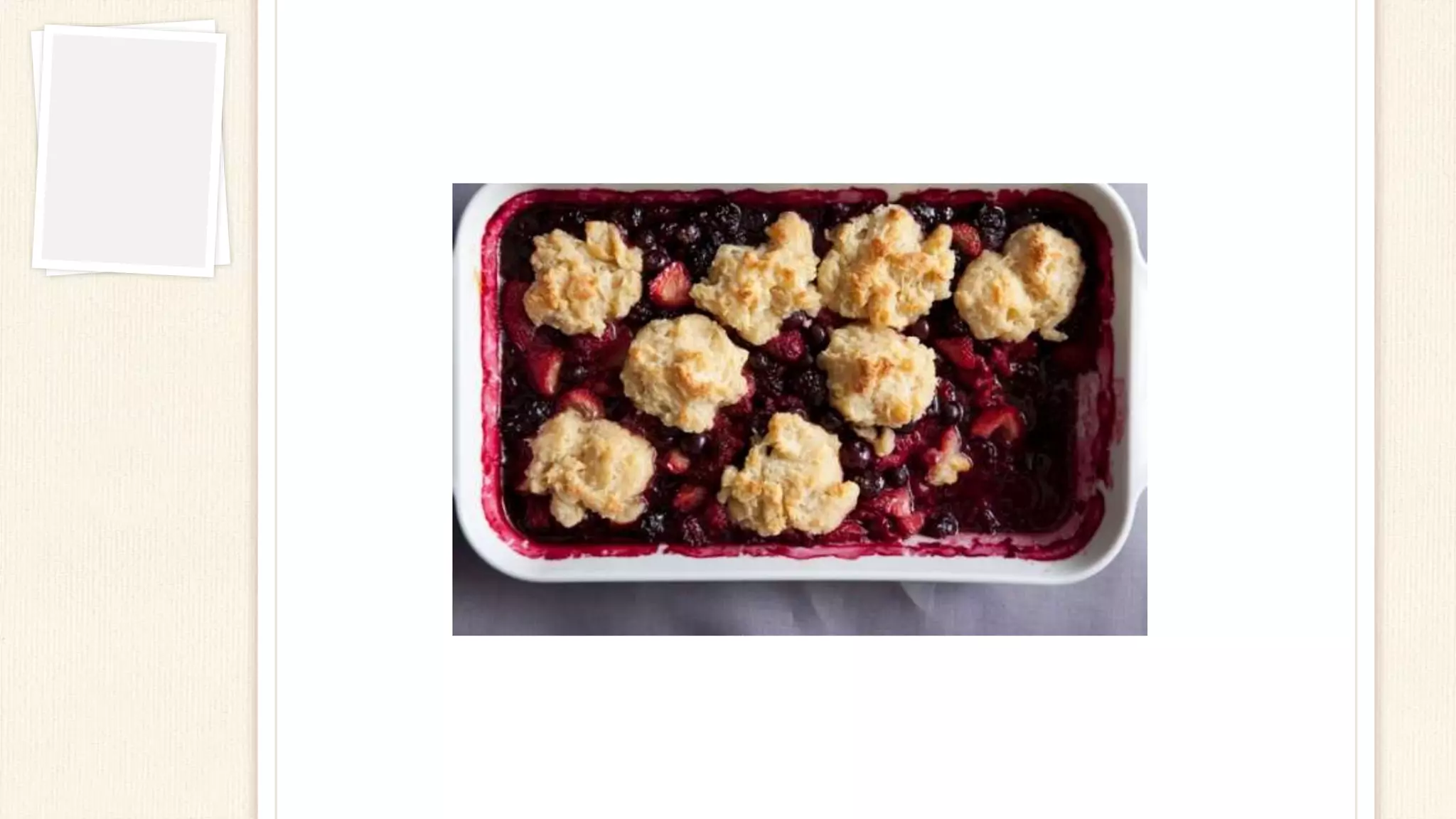
F. Fruit Cobblers
• These are not fruit pies. They have a
depth of two or three inches and are
topped with biscuit dough rather that
being made with pie crust. They may be
served either hot or cold.
G. Frozen Desserts
• Ice cream
- Smooth frozen mixture of milk,
cream, sugar, flavorings, and sometimes
eggs.
• Sherbet and Ices
- Made from fruit juices, water and
sugar. American sherbet contains milk and
cream and sometimes egg white. The egg
whites increase smoothness and volume.
Ice contains only fruit juice water, sugar
and sometimes egg white
1.Tools_Equipment_and_Utensils_needed_in_preparing desserts.pptx

1.Tools_Equipment_and_Utensils_needed_in_preparing desserts.pptx

  • 1.
    Tools, Equipment, andUtensils needed in preparing dessert/sweets Prepared by: Adam Noah Escalante
  • 2.
    Everyone should befamiliar with the tools, equipment and utensils need in preparing desserts. Every pastry chef must have these tools, utensils, and equipment for efficient preparation of desserts. Each tools is designed to perform a specific job in the kitchen.
  • 3.
    Tools and Utensilsneeded in preparing dessert •Measuring cup and spoon •Mixing bowl •Can opener •Cutting board •Double boiler •Graters
  • 4.
    Kitchen knives - areoften referred to as the cook’s or chef’s knife. They are use for peeling and slicing fruits and vegetables.
  • 5.
    Types of knives •Fruitand salad knife - is used to prepare salad greens, vegetables, and fruits.
  • 6.
    •Spatula - is usedto level off ingredients when measuring and to spread frosting
  • 7.
    Citrus knife - isused to section citrus fruits. The blade has a two-sided, serrated edge
  • 8.
    •Paring knife - isused to core, peel, and section fruits and vegetables. The blades are short, concave with hollow ground
  • 9.
    •Kitchen shears •Scrapers •Spoons •Temperature scales •Vegetablepeeler •Whisk for blending •Wooden spoons •Baking pan
  • 10.
  • 11.
    Reasons for eatingdesserts and sweets •Dessert balances out a meal and gives “closure to the meal”
  • 12.
    Reasons for eatingdesserts and sweets •Eating dessert is an opportunity to experience different flavor and textures that you cannot get in other foods like vegetables, meats and fruits.
  • 13.
    Reasons for eatingdesserts and sweets •Dessert can be an opportunity to be creative you can make interesting mixtures that you otherwise may not have thought of.
  • 14.
    Reasons for eatingdesserts and sweets •Dessert isn’t “fattening” Remember, there is no such thing as a fattening food
  • 15.
    •It will makeyou feel like a kid again. •It is romantic
  • 16.
    Classification or type of dessertsand their characteristics
  • 17.
    A. Fruits •The simplestdessert and one of the best are fruits because they are nutritious, appetizing, and easy to prepare and serve
  • 18.
    Characteristics of goodfruit dessert: •Appetizing aroma •Simple •Clean washed appearance •Slightly chilled
  • 19.
    B. Cheese • Isanother excellent dessert that is ready to serve. It is made in all parts of the world from a variety of milks from cow, goat and sheep. Cheese differs depending on the kind of milk use, the kinds of cheese making procedures, the seasoning and the ripening process also distinguish its variety. Each variety has a definite character, a special appeal and particular uses.
  • 20.
    The three generaltypes of cheese based on consistency Soft •Unripen cheese •Ripened by bacteria
  • 21.
  • 22.
  • 23.
  • 24.
    Hard • With gasholes • Without gas holes
  • 25.
    C. Gelatin dessert •Theseare easily prepared, economical and vary many ways. Gelatin is marketed in two forms. First the unsweetened, granular type that must be softened in water before use, and the fruit gelatin to which flavor, color, and sugar have already been added
  • 27.
    D. Custard • Bakedand soft custard vary is so many ways. Creamy, delicate, baked custards may be served in their baking cups or may be unmolded and served with fruit garnishes or with dessert sauces.
  • 28.
    Characteristics of abaked custard • Firmness of shape • Smooth, tender texture • Rich and creamy consistency • Excellent flavor
  • 29.
    Characteristics of softcustard • Velvety smooth texture • Rich flavor • Has pouring consistency of heavy cream
  • 30.
    E. Pudding • Puddingsare relatively simple to prepare and vary witch sauces. These are classified as cornstarch pudding, sometimes called blancmange, rice pudding, bread pudding.
  • 31.
    Characteristics of pudding •Attractive appearance • Excellent consistency • Well-blended flavor • Firmness of shape • An accompanying sauce to add interest
  • 32.
    F. Fruit Cobblers •These are not fruit pies. They have a depth of two or three inches and are topped with biscuit dough rather that being made with pie crust. They may be served either hot or cold.
  • 34.
    G. Frozen Desserts •Ice cream - Smooth frozen mixture of milk, cream, sugar, flavorings, and sometimes eggs.
  • 35.
    • Sherbet andIces - Made from fruit juices, water and sugar. American sherbet contains milk and cream and sometimes egg white. The egg whites increase smoothness and volume. Ice contains only fruit juice water, sugar and sometimes egg white

Editor's Notes

  • #2 NOTE: To replace a picture, just select and delete it. Then use the Insert Picture icon to replace it with one of your own!
  • #16 Forget anti-aging creams or long and sweaty workout session at the gym, the fastest way to recapture your youth, or embrace a more youthful spirit is to eat like a kid. Desserts are designed for romance. Afterall, you cant really order a salad with two forks. But, when it comes to cake, that is a different matter.
  • #21 Unripen cheese are made by coagulating milk proteins with acid. Soft cheese like cream cheese, cottage cheese Ripened (aged) by bacteria made by coagulating milk proteins and culture acids. samples are cheddar, swiss, Colby, brick and parmesan
  • #22 Unripen cheese are made by coagulating milk proteins with acid. Soft cheese like cream cheese, cottage cheese Ripened (aged) by bacteria made by coagulating milk proteins and culture acids. samples are cheddar, swiss, Colby, brick and parmesan
  • #23 Unripen cheese are made by coagulating milk proteins with acid. Soft cheese like cream cheese, cottage cheese Ripened (aged) by bacteria made by coagulating milk proteins and culture acids. samples are cheddar, swiss, Colby, brick and parmesan
  • #24 Ripened by mold cheeses are made by blending one or more natural cheeses, heating and adding salts. Process cheeses contain more moisture than natural cheeses.
  • #25 Swiss Cheese has holes because of carbon dioxide bubbles that form in the cheese