METHODS OF COOKING
MOIST-HEAT
METHODS
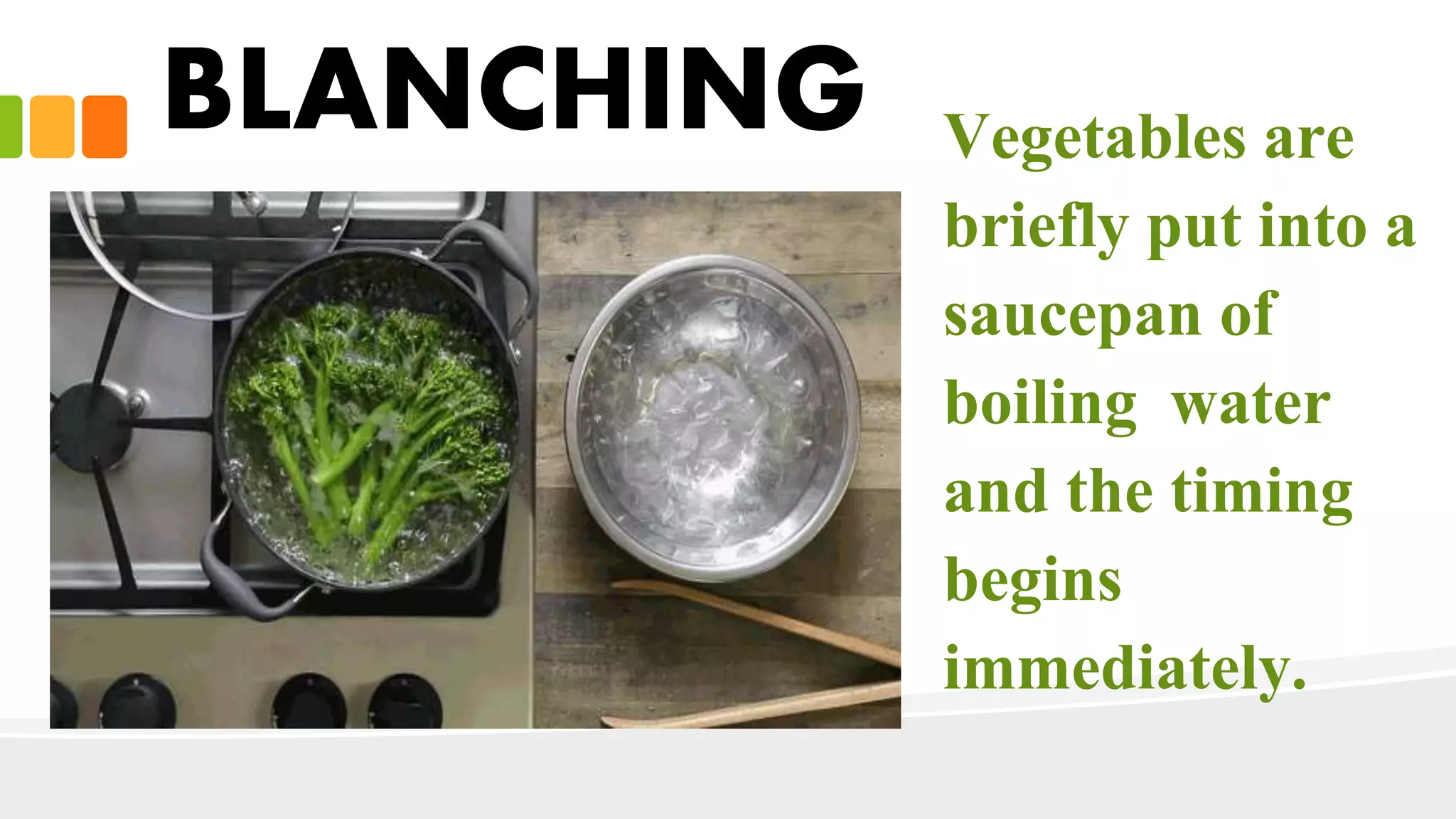
BLANCHING Vegetables are
briefly put into a
saucepan of
boiling water
and the timing
begins
immediately.
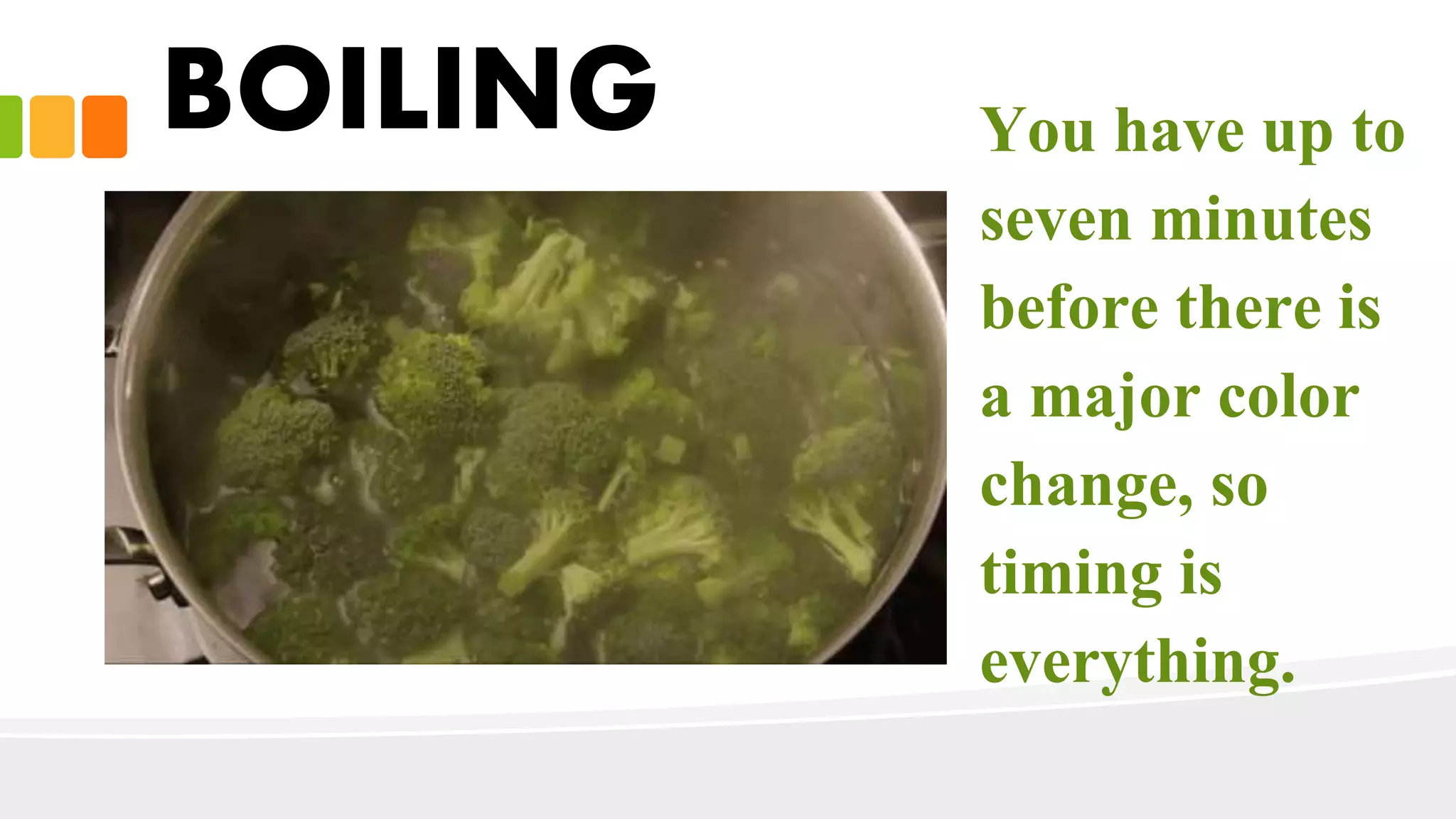
BOILING You have up to
seven minutes
before there is
a major color
change, so
timing is
everything.
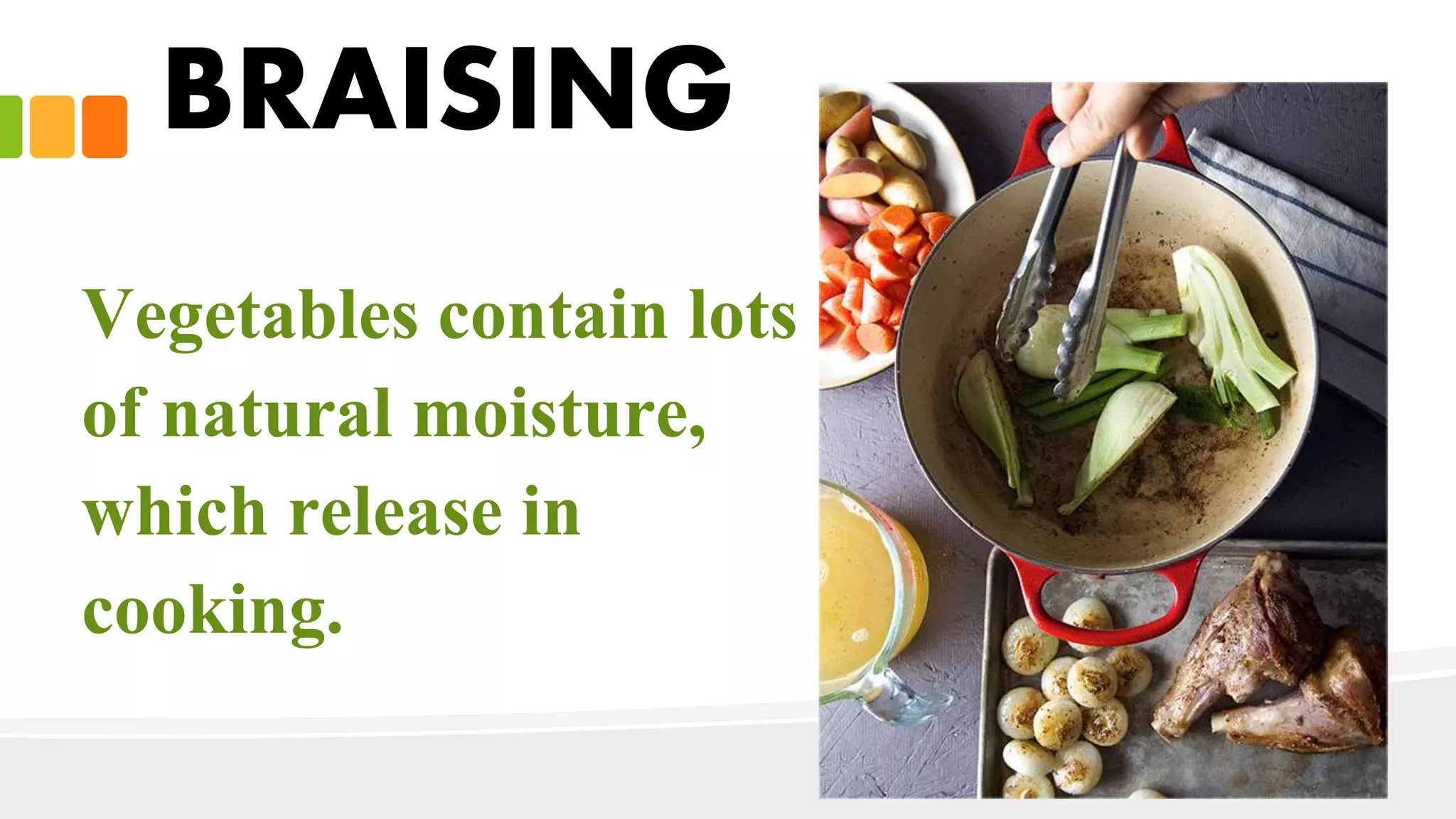
BRAISING
Vegetables contain lots
of natural moisture,
which release in
cooking.
POACHING
This method is similar
to boiling but uses less
liquid and a lower
heat to gently cook
more fragile
vegetables
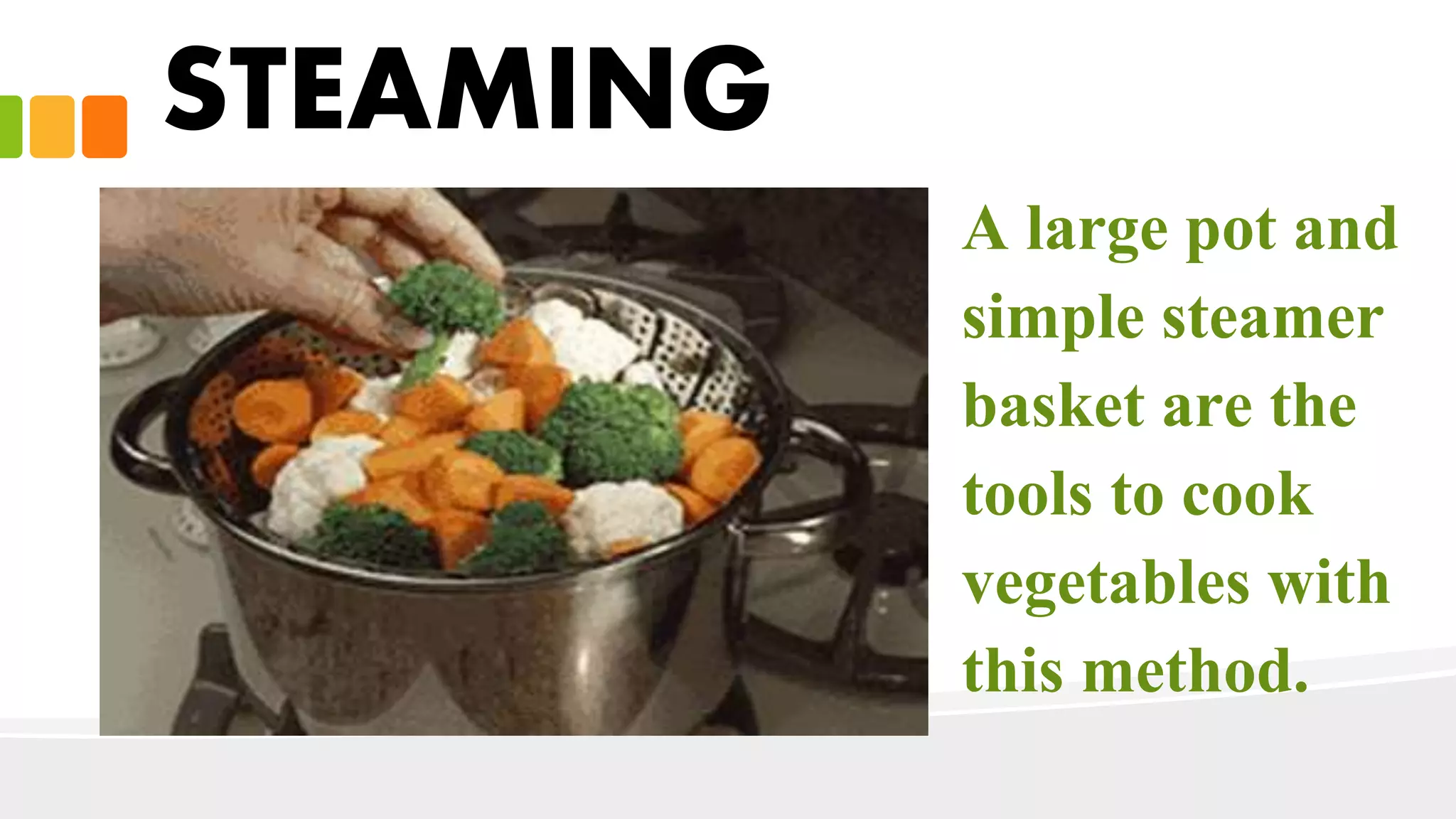
STEAMING
A large pot and
simple steamer
basket are the
tools to cook
vegetables with
this method.
DRY-HEAT
METHODS
BROILING
The heat
source is above
the food
GRILLING
This technique
is similar to
broiling, but
the heat
sources comes
from below.
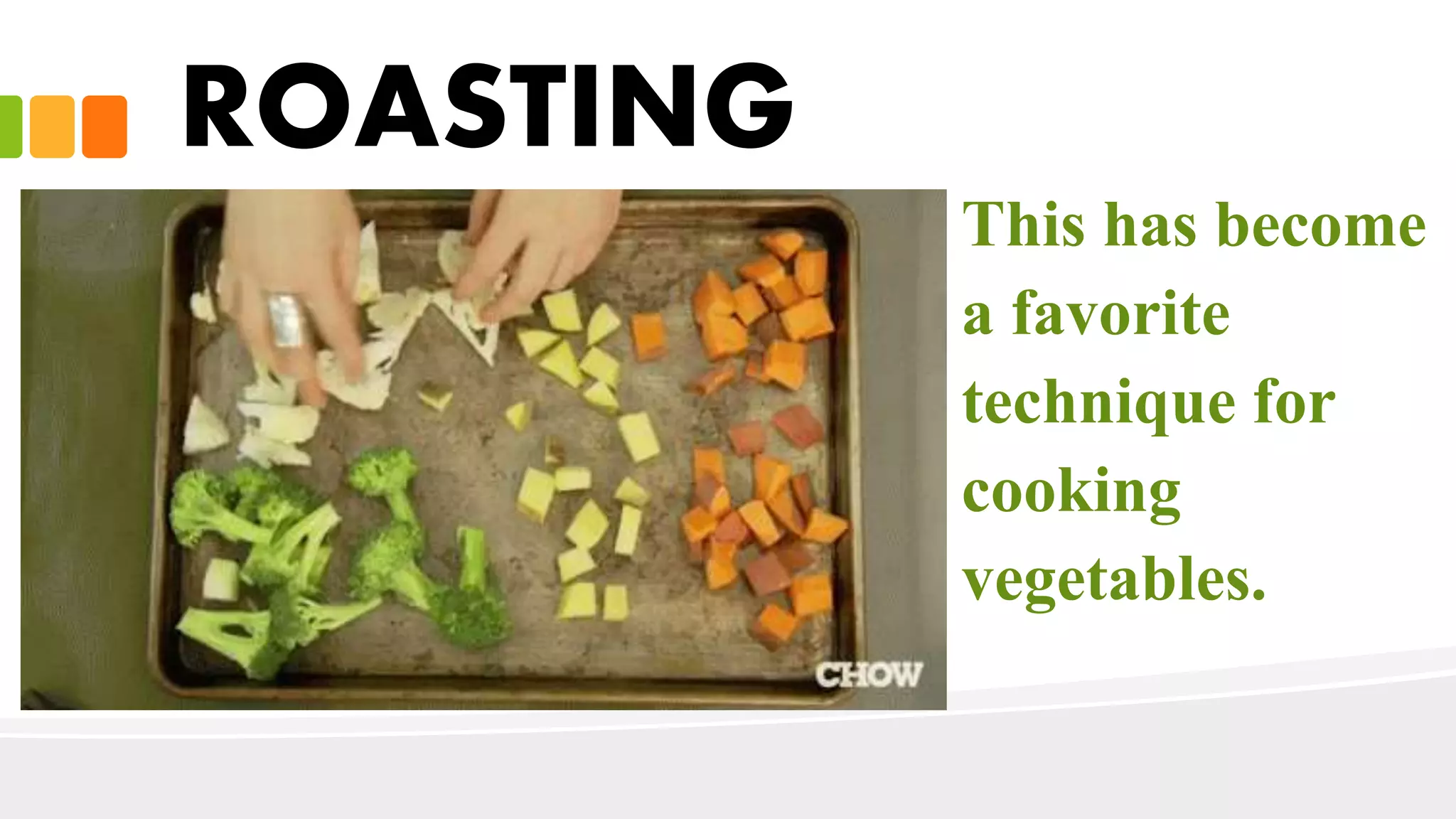
ROASTING
This has become
a favorite
technique for
cooking
vegetables.
SAUTEING
The pan size
should be large
enough to cook
vegetables in a
single layer
without
crowding.
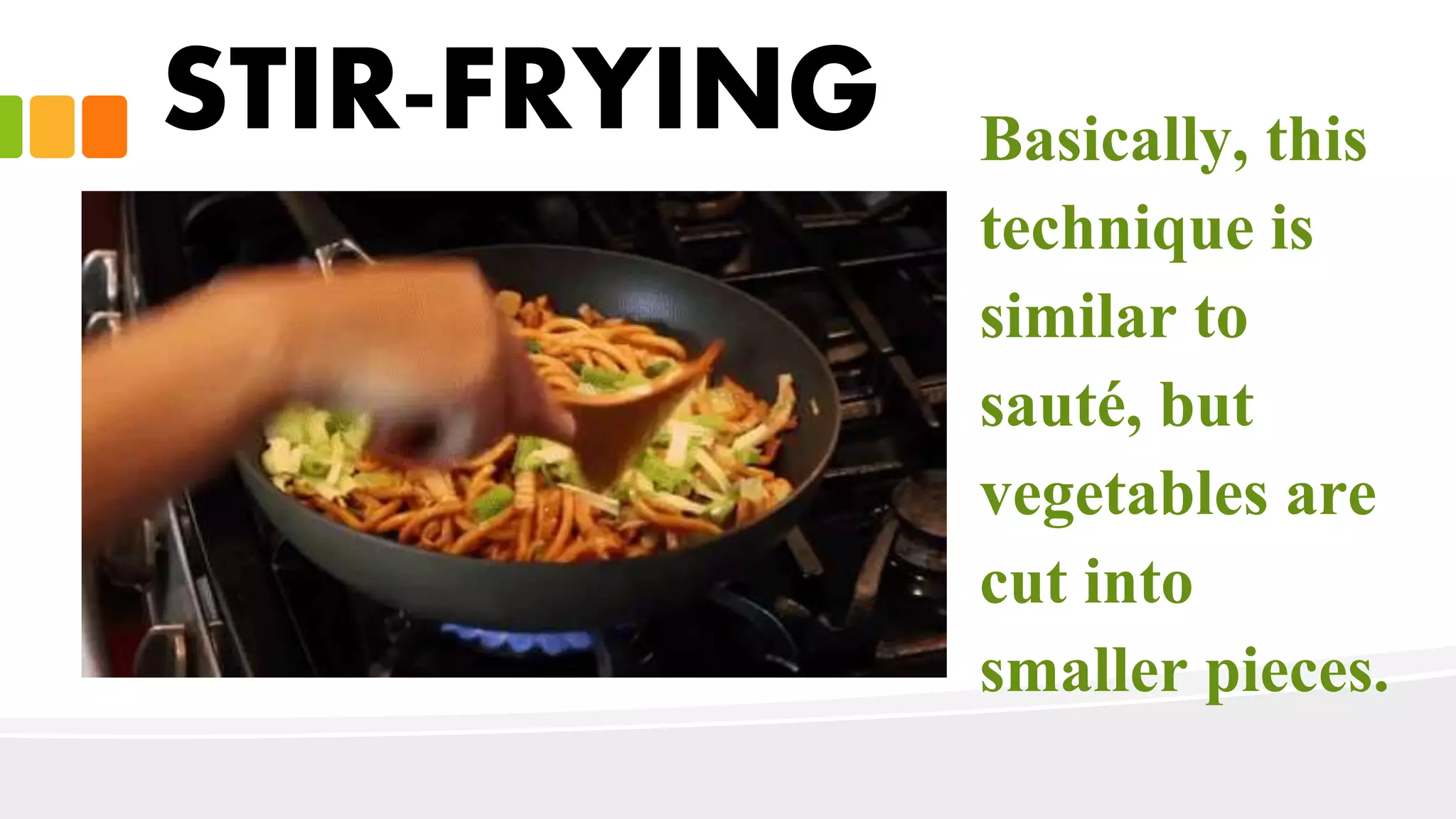
STIR-FRYING Basically, this
technique is
similar to
sauté, but
vegetables are
cut into
smaller pieces.
1. Leave vegetables in big
pieces. That way fewer
vitamins are destroyed when
they are exposed to air.
2. Always cover your pot to hold
steam and heat. This will also
help reduce cooking time.
3. Use any leftover cooking
water for soups and stews,
sauces, or vegetable juice
drinks.
4. Eat fruits and vegetables
raw whenever possible in
salads and smoothies or as
whole fruits and vegetables.
5. Cook vegetables until
crisp. Do not overcook.
6. Use as little water
as possible when
cooking.

Methods of cooking vegetables

Editor's Notes

  • #2 Method is a systematic procedure, technique,
  • #3 Moist-heat cooking methods use water, liquid or steam to transfer heat to food. 
  • #4 Blanching is a cooking process wherein a food, usually a vegetable or fruit, is scalded in boiling water or oil, removed after a brief, timed interval, and finally plunged into iced water or placed under cold running water to halt the cooking process.
  • #5 Boiling the action of bringing a liquid to the temperature at which it bubbles and turns to vapor.
  • #6 Braising is a combination-cooking method that uses both wet and dry heats: typically, the food is first sautéed or seared at a high temperature, then finished in a covered pot at a lower temperature while sitting in some amount of liquid.
  • #7 Poaching is a cooking technique that involves cooking by submerging food in a liquid, such as water, milk, stock or wine or in a tray.  Uses constant temperature
  • #8 Steaming is a method of cooking using steam. This is often done with a food steamer Steaming definition, water in the form of an invisible gas or vapor. 
  • #9 What is the difference between the two? Moist heat is more effective than dry heat, in providing deeper penetration of the tissue at the same temperature. Moist heat can speed recovery by increasing blood flow to targeted area. Increased circulation brings in fresh blood and takes away the wastes which may slow healing
  • #10 Broiling, cooking by exposing food to direct radiant heat, either on a grill over live coals or below a gas burner or electric coil.
  • #11 Long story short, grilling and broiling refer to a similar cooking process with only one major difference. When grilling, the heat source is below (like with a barbecue grill), but in oven broiling, the heating source is above. Bothgrilling and broiling involve intense direct heat.
  • #12 Roast is to cook food such as meat or vegetables in an oven. <Roast the pork for an hour.