Classification of
soil
Prepared by:
EZRA SHARIN M. MARATO
OBJECTIVES:
At the end of the lesson the learners
must have to:
Define the meaning of the soil.
Identify the different types of soil.
Appreciate the importance of the soil.
What is soil?
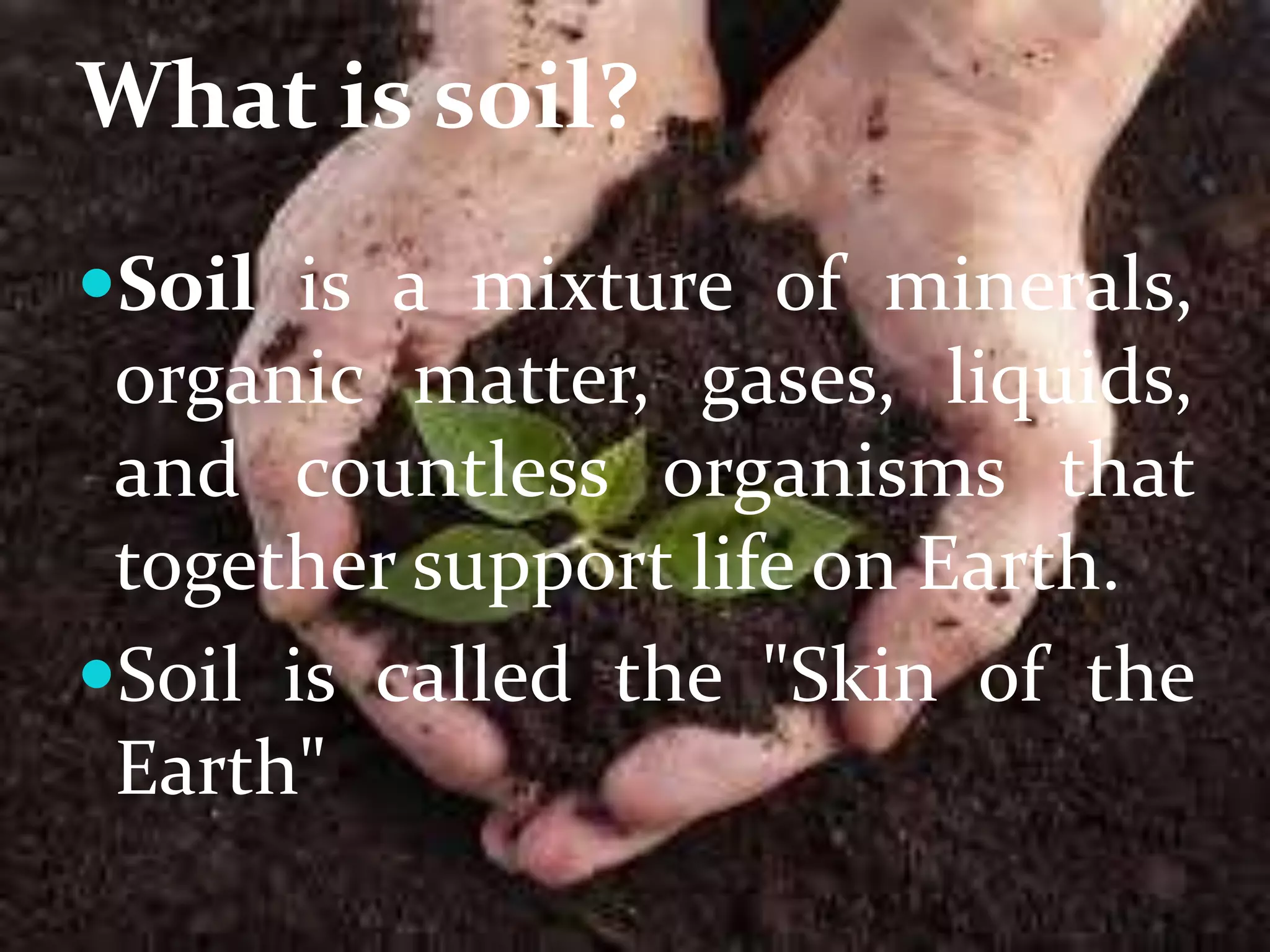
Soil is a mixture of minerals,
organic matter, gases, liquids,
and countless organisms that
together support life on Earth.
Soil is called the "Skin of the
Earth"
SANDY SOIL
ois a naturally occurring granular material
composed of finely divided rock and
mineral particle.
osoils with particle sizes ranging from 2.0 to
.05 mm.
othis type of soil is easy to cultivate but, since
it allows for more drainage than needed, it is
important to water it regularly, especially
during summer days.
It is defined by size, being finer
than gravel and coarser than silt.
In terms of agriculture:
 Sandy soil is ideal for crops such
as watermelon, peaches, and
peanuts, and their excellent
drainage characteristics make them
suitable for intensive dairy farming.
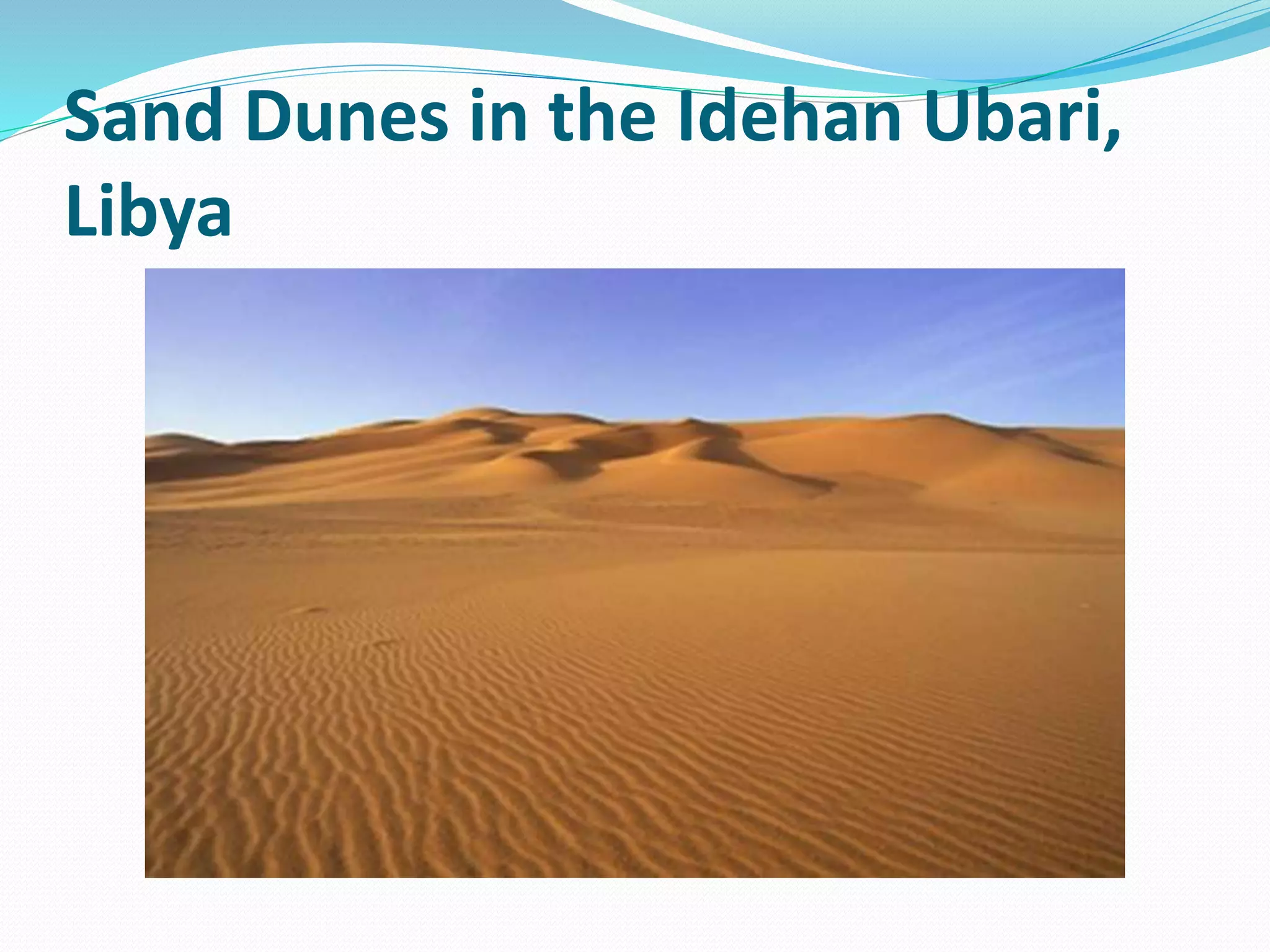
Sand Dunes in the Idehan Ubari,
Libya
 Arenosols or sandy soils occur throughout Europe.
However, in many parts of the world, Arenosols
present major problems for agriculture. The
picture shows an Arenosol in southern Africa.
SILTY SOIL
is one of the most fertile of soils. It can
occur in nature as soil or as suspended
sediment in water column of water body on
the surface of the earth. It is composed of
minerals like quartz and fine organic
particles.
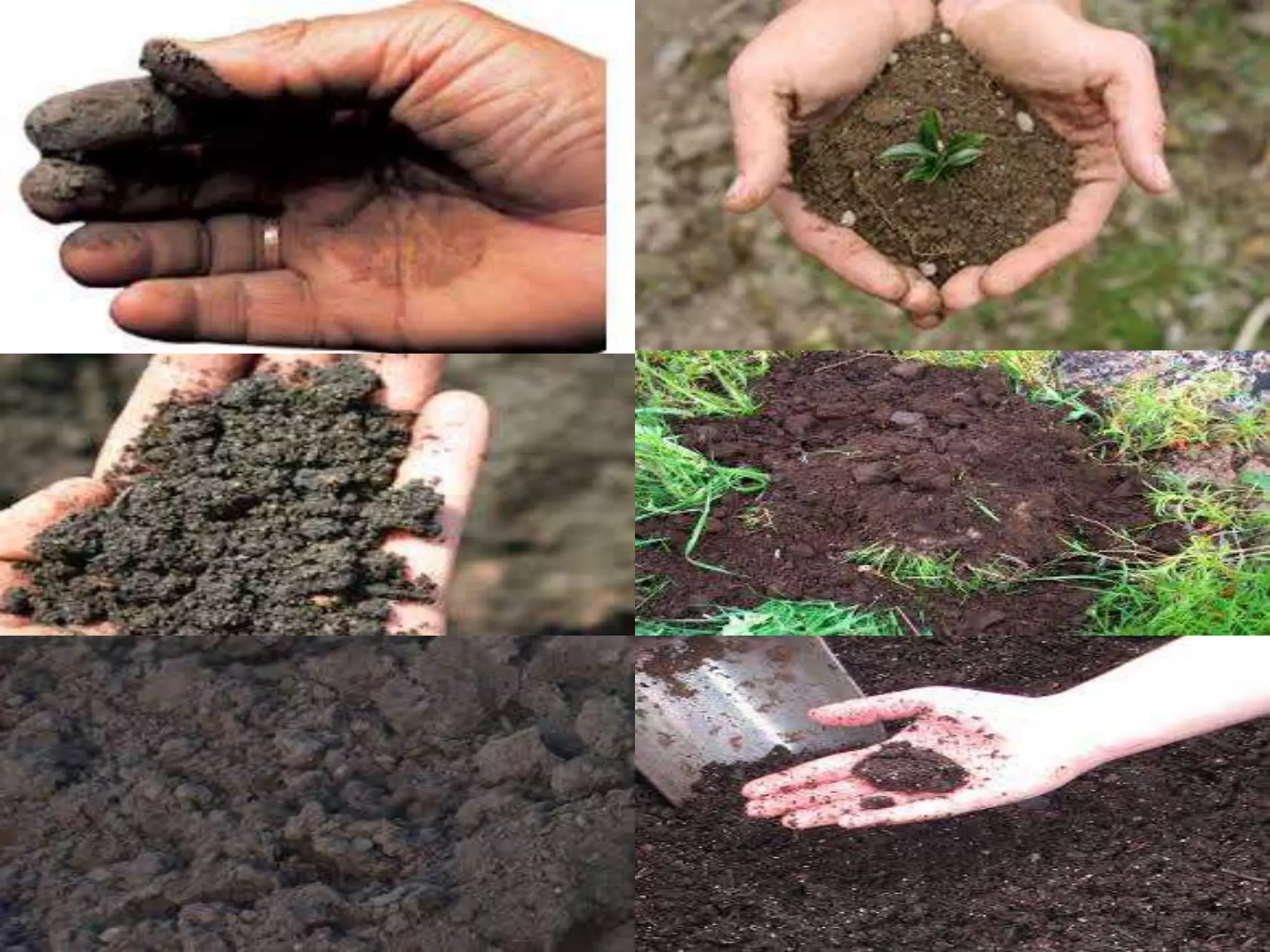
Silty soil has much smaller particles than
sandy soil so it’s smooth to the touch. When
moistened, it’s soapy slick. When you roll it
between your fingers, dirt is left on your
skin.
Texture: Silt soil is finer than sand, and feel
smooth and silky.
Color: Usually a brown to black in color.
Structure: Silt soil is similar to loam but
contains smaller ratios of both sand and clay
particles.
is granular material of a size somewhere
between sand and clay.
serves as a smooth, water-rich and fertile
soil that is able to be used for growing most
kind of plants.
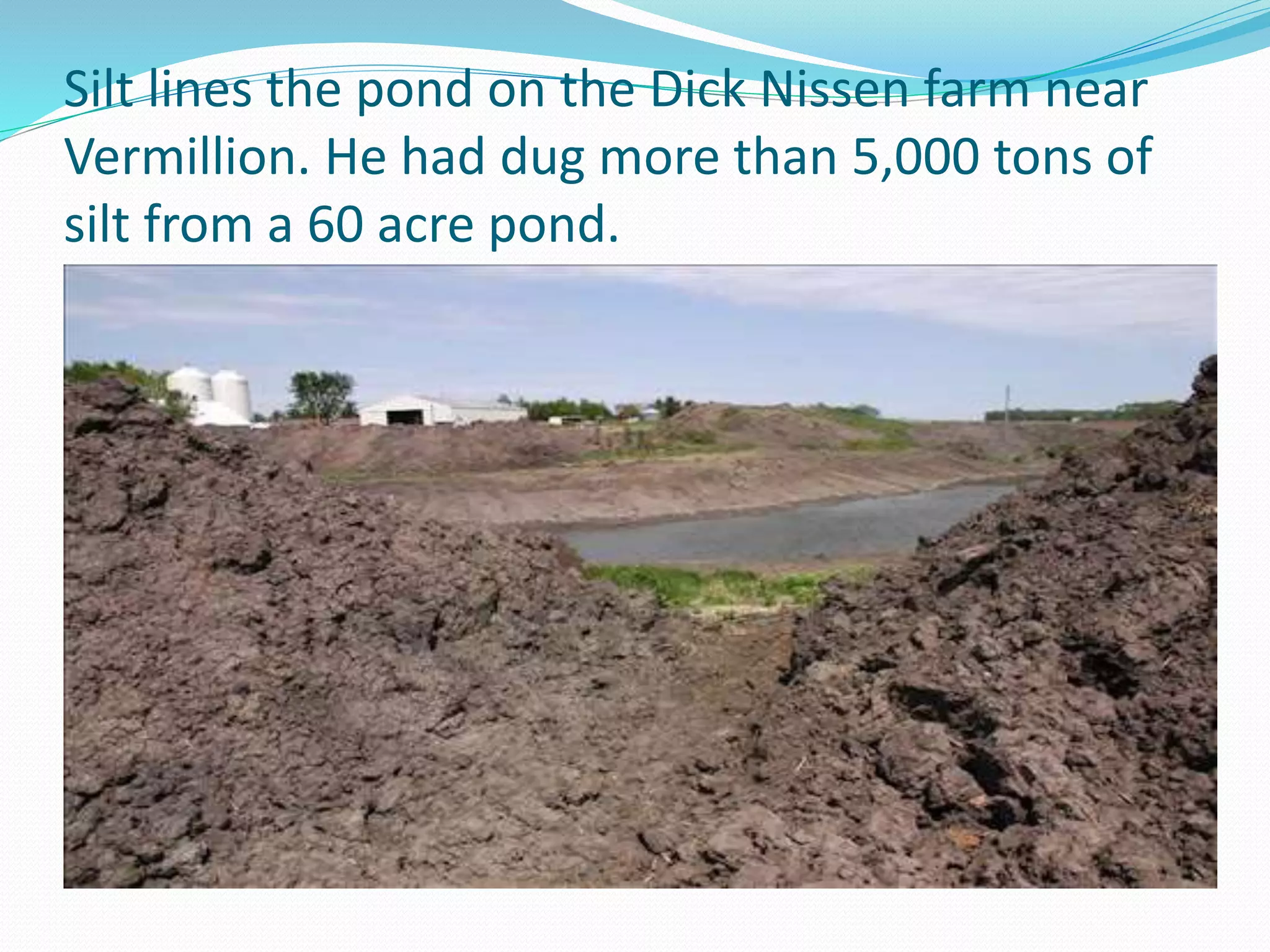
Silt lines the pond on the Dick Nissen farm near
Vermillion. He had dug more than 5,000 tons of
silt from a 60 acre pond.
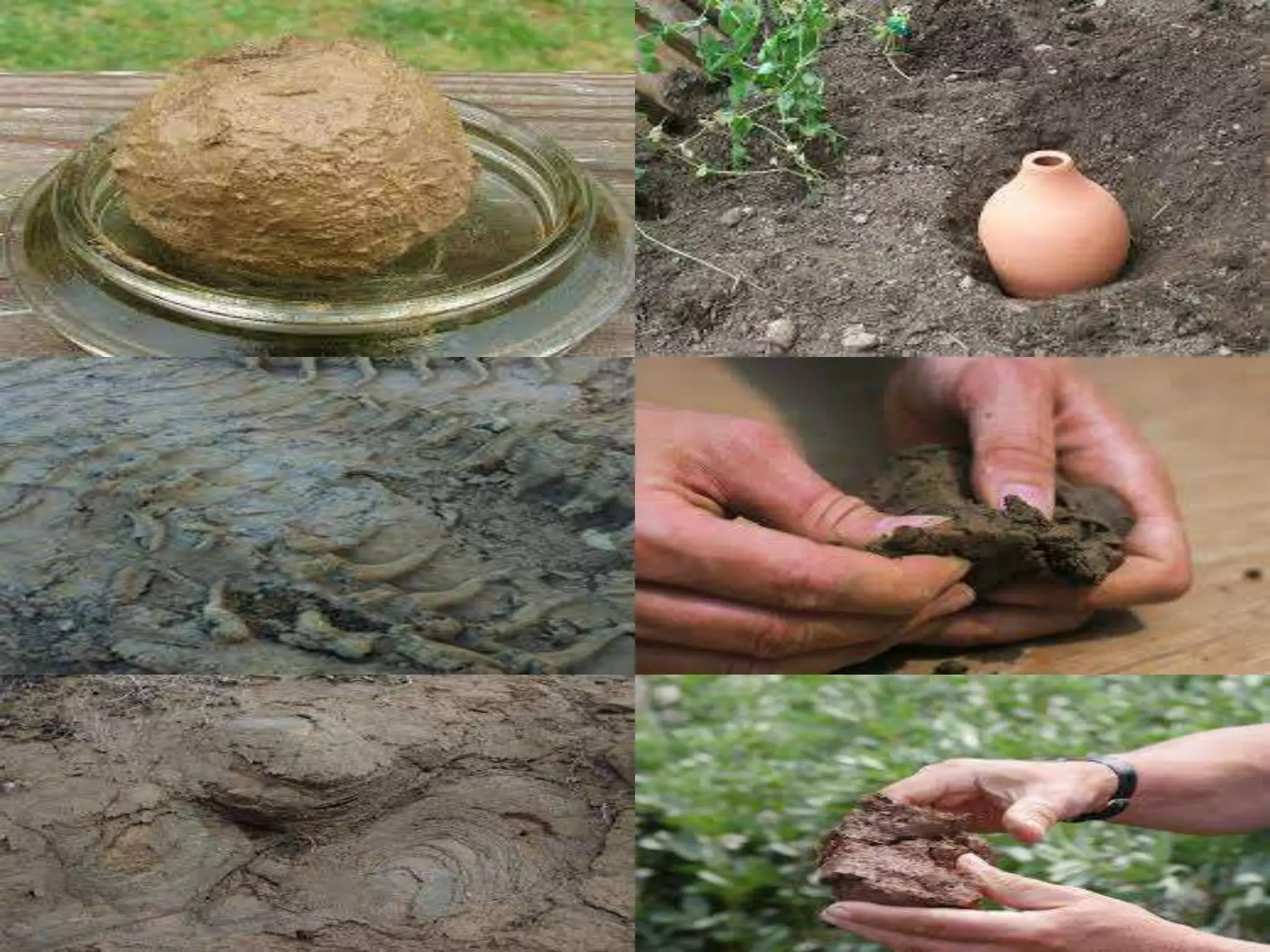
CLAY SOIL
is a fine-grained natural rock or soil
material that combines one or more clay
minerals with traces of metal oxides and
organic matter.
exhibits plasticity when mixed with water in
certain proportions.
When dry, clay becomes firm and when
fired permanent physical changes occur.
heavy and easily saturated.
becomes sticky when wet.
CROPS GROWN IN CLAY SOIL:
lettuce, chard, snap beans, broccoli,
Brussels sprouts, cabbage, and many
more.
Quaternary clay in Estonia
LOAM
 ideal mixed and equal combination of
sand, silt, and clay.
 consisting of 40% sand, 40% silt and 20%
clay.
Loamy soil is ideal for most garden plants
because it holds plenty of moisture but also
drains well so that sufficient air can reach
the roots.
Fine, loam-rich field ideal for
farming vegetables in the UK
Thank you and
GODBLES! 

(classification of soil)

  • 1.
  • 2.
    OBJECTIVES: At the endof the lesson the learners must have to: Define the meaning of the soil. Identify the different types of soil. Appreciate the importance of the soil.
  • 3.
    What is soil? Soilis a mixture of minerals, organic matter, gases, liquids, and countless organisms that together support life on Earth. Soil is called the "Skin of the Earth"
  • 4.
    SANDY SOIL ois anaturally occurring granular material composed of finely divided rock and mineral particle. osoils with particle sizes ranging from 2.0 to .05 mm. othis type of soil is easy to cultivate but, since it allows for more drainage than needed, it is important to water it regularly, especially during summer days.
  • 5.
    It is definedby size, being finer than gravel and coarser than silt. In terms of agriculture:  Sandy soil is ideal for crops such as watermelon, peaches, and peanuts, and their excellent drainage characteristics make them suitable for intensive dairy farming.
  • 6.
    Sand Dunes inthe Idehan Ubari, Libya
  • 7.
     Arenosols orsandy soils occur throughout Europe. However, in many parts of the world, Arenosols present major problems for agriculture. The picture shows an Arenosol in southern Africa.
  • 9.
    SILTY SOIL is oneof the most fertile of soils. It can occur in nature as soil or as suspended sediment in water column of water body on the surface of the earth. It is composed of minerals like quartz and fine organic particles. Silty soil has much smaller particles than sandy soil so it’s smooth to the touch. When moistened, it’s soapy slick. When you roll it between your fingers, dirt is left on your skin.
  • 10.
    Texture: Silt soilis finer than sand, and feel smooth and silky. Color: Usually a brown to black in color. Structure: Silt soil is similar to loam but contains smaller ratios of both sand and clay particles. is granular material of a size somewhere between sand and clay. serves as a smooth, water-rich and fertile soil that is able to be used for growing most kind of plants.
  • 11.
    Silt lines thepond on the Dick Nissen farm near Vermillion. He had dug more than 5,000 tons of silt from a 60 acre pond.
  • 13.
    CLAY SOIL is afine-grained natural rock or soil material that combines one or more clay minerals with traces of metal oxides and organic matter. exhibits plasticity when mixed with water in certain proportions. When dry, clay becomes firm and when fired permanent physical changes occur. heavy and easily saturated. becomes sticky when wet.
  • 14.
    CROPS GROWN INCLAY SOIL: lettuce, chard, snap beans, broccoli, Brussels sprouts, cabbage, and many more.
  • 15.
  • 18.
    LOAM  ideal mixedand equal combination of sand, silt, and clay.  consisting of 40% sand, 40% silt and 20% clay. Loamy soil is ideal for most garden plants because it holds plenty of moisture but also drains well so that sufficient air can reach the roots.
  • 19.
    Fine, loam-rich fieldideal for farming vegetables in the UK
  • 25.