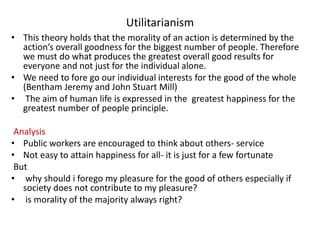
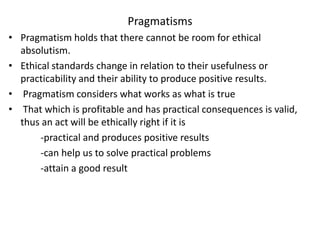
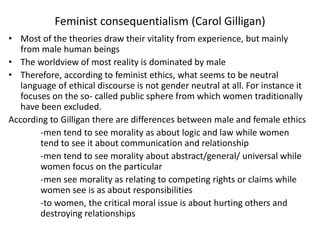
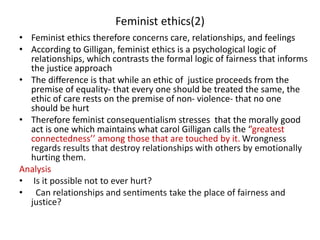
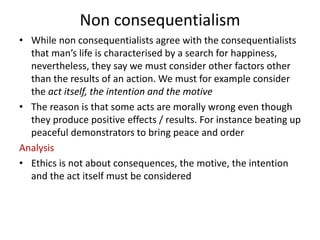
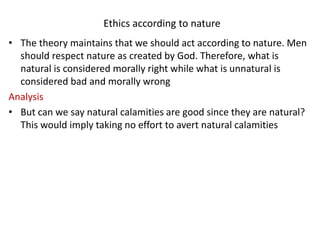
The document provides an overview and analysis of several classical ethical theories:
- Moral absolutism claims there are absolute ethical standards applicable to all, but it can condone fundamentalism.
- Moral relativism holds that morality depends on individuals and societies, making universal principles impossible.
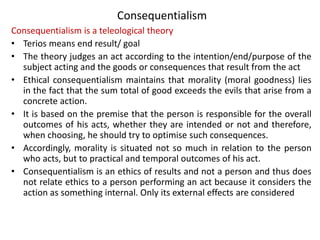
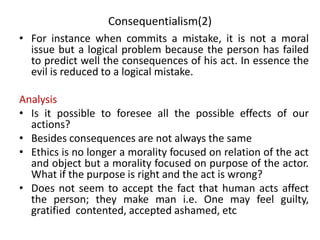
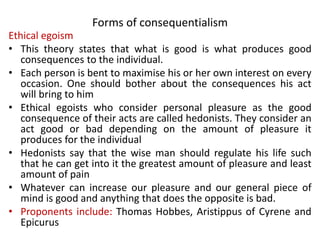
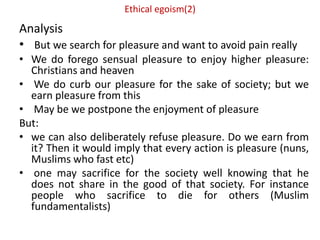
- Consequentialism judges acts based on their outcomes and consequences rather than motives. It is difficult to foresee all consequences.
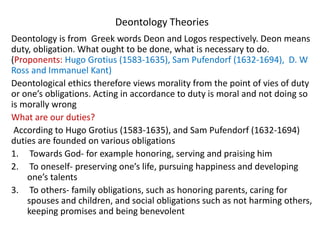
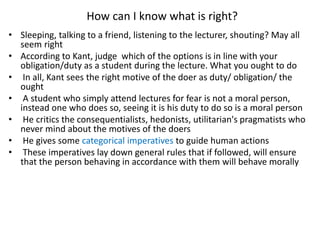
- Deontology focuses on duties and obligations over outcomes. Kant's categorical imperatives provide rules for determining duties.
The document examines each theory's strengths and limitations in determining ethical standards and guiding human behavior.