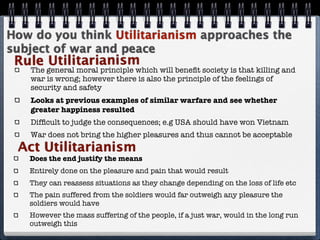
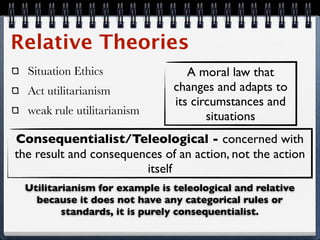
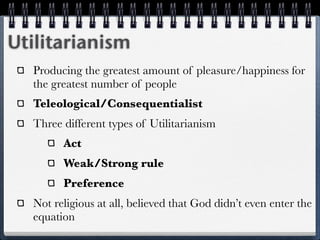
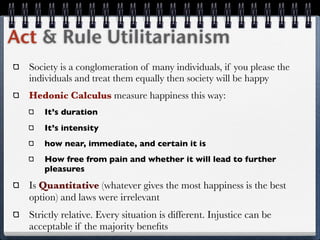
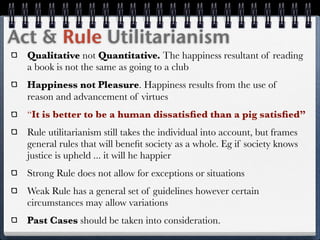
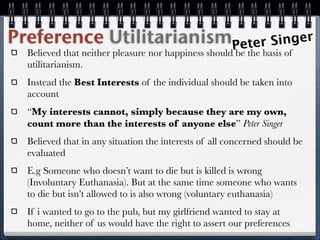
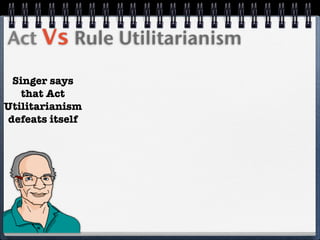
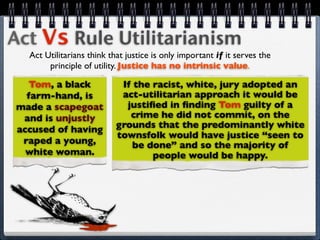
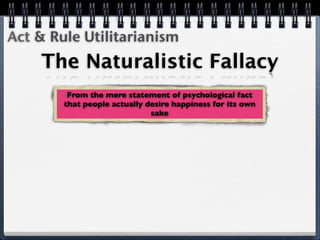
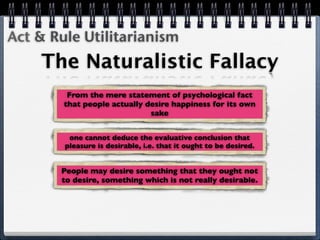
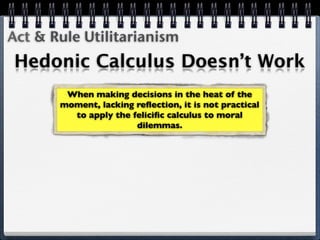
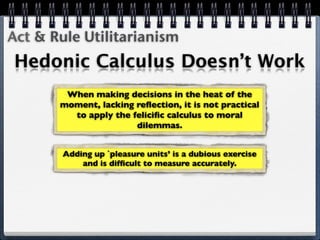
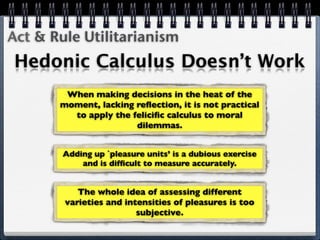
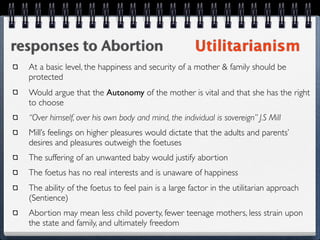
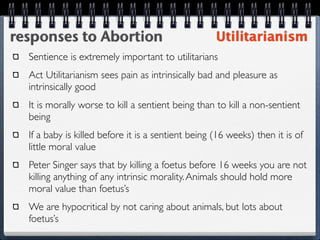
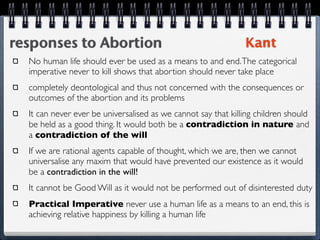
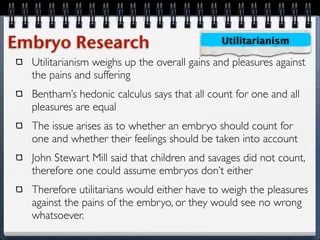
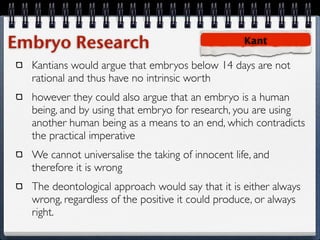
Utilitarianism is a teleological ethical theory that evaluates actions based on their consequences. There are three main types: act, rule, and preference utilitarianism. Act utilitarianism judges each act independently based on its consequences, while rule utilitarianism evaluates actions based on general rules that maximize well-being. Preference utilitarianism focuses on fulfilling individual preferences and interests rather than maximizing happiness. Utilitarianism faces criticisms such as the naturalistic fallacy and the inability to accurately quantify and compare pleasures. Rule utilitarianism is argued to be more practical than act utilitarianism as it provides stability of rules and obligations in society.




















































![When to fight – Jus ad bellum
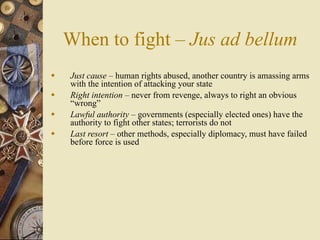
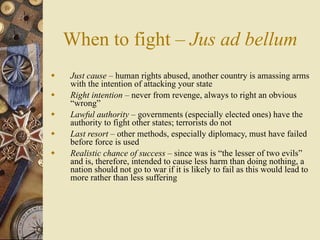
Just cause – human rights abused, another country is amassing arms
with the intention of attacking your state
Right intention – never from revenge, always to right an obvious
“wrong”
Lawful authority – governments (especially elected ones) have the
authority to fight other states; terrorists do not
Last resort – other methods, especially diplomacy, must have failed
before force is used
Realistic chance of success – since was is “the lesser of two evils”
and is, therefore, intended to cause less harm than doing nothing, a
nation should not go to war if it is likely to fail as this would lead to
more rather than less suffering
Proportionality – there has to be a “cost benefit analysis”: the gains
of war must exceed their likely cost in human life [this is very
difficult to assess]](https://image.slidesharecdn.com/ethics-100109074242-phpapp01/85/Ethics-AS-OCR-110-320.jpg)