Concept and General
Features
• There is no universal accord on how to categorize/classify microorganism and such
classification is rather arbitrary.
• However, there are two basic/primary cell types: prokaryotic and eukaryotic.
• The fundamental difference/characteristic between them is the presence or absence of
membrane around the cell’s genetic information.
• Prokaryotes are unicellular organism and have simple structure with a single
chromosome.
• Prokaryotic cell lacks membrane-bound organelles (i.e., mitochondria and endoplasmic
reticulum) and also lacks nuclear membrane.
• Eukaryotes have a more complex internal structure, with more than one chromosome
(DNA molecule) in the nucleus.
• Eukaryotic cells have a true nuclear membrane and hold membrane-bound organelles (i.e.,
golgi apparatus mitochondria, endoplasmic reticulum) and a variety of
functional/specialized organelles.
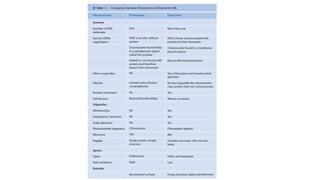
• A detailed contrast/comparison of prokaryotes and eukaryotes is presented in Table 1.1.
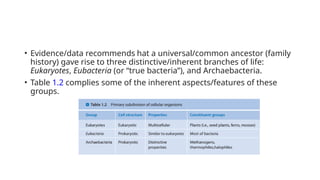
• Evidence/data recommends hat a universal/common ancestor (family
history) gave rise to three distinctive/inherent branches of life:
Eukaryotes, Eubacteria (or “true bacteria”), and Archaebacteria.
• Table 1.2 complies some of the inherent aspects/features of these
groups.
Prokaryotes
• The sizes of maximum or most prokaryotes differ from 0.5 to 3 micrometers (μm) in length (or equivalent
radius).
• Different species have different shapes such as spiral or spirillum (e.g., Rhodospirillum), spherical or
coccus (e.g., staphylococci), or cylindrical or bacillus (e.g., Escherichia coli).
• Prokaryotic cells grow rapidly, with usual doubling times of one-half hour to several hours.
• Moreover, prokaryotes can use/take advantage of a variety of nutrients as carbon source, including
hydrocarbons, carbohydrates, proteins, and carbon dioxide.
• Eubacteria
• Eubacteria (genus of gram-positive bacteria in the family Eubacteriaceae) are microscopic single-celled organisms, characterized by
rigid cell wall, and grow in diverse environments.
• The Eubacteria can be divided into several groups. One differentiation is established on the gram stain—the name comes from
Danish bacteriologist Hans Christian Gram who developed the technique in 1884.
• The staining process first requires fixing/mending the cells (by heating), and then crystal violet (basic dye) is added; all bacteria
will stain purple.
• Next, iodine is added (binds crystal violet), followed by the rapid decolorization/addition of ethanol (or acetone).
• Gram-positive cells stay purple, while gram-negative cells become colorless. Finally, counterstaining with safranin or fuchsine
leaves gram-positive cells purple, while gram-negative cells are red.
• This ability to react with the gram stain differentiates bacteria by the chemical and physical properties of their cell wall (or
structure of the cell envelope).
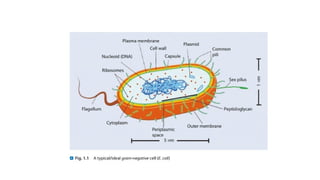
• A typical/ideal gram-negative cell is E. coli (Fig. 1.1).
• It has an outer membrane supported by a thin peptidoglycan (also known as murein) layer.
• Peptidoglycan is a polymer of sugars (polysaccharide) and amino acids that forms a
structure similar to a mesh/chain-link fence/layer. 2
• Peptidoglycan provides structural strength as well as resists (opposing action) the osmotic
pressure of the cytoplasm.
• A second membrane (the inner or cytoplasmic membrane) prevails and is detached from
the outer membrane by the periplasmic space.
• The cytoplasmic membrane (bacterial plasma membrane) is composed of phospholipid
bilayer (50% protein, 30% lipids, and 20% carbohydrates).
• The cell envelope (capsule of polysaccharide) serves to protect, reserve/retain important
cellular compounds, and in turn exclude/prevent undesirable compounds into the cell
environment.
• It provides structural/membrane integrity and loss of membrane integrity that leads to
cell lysis and cell death.
• The cell envelope is essential to the transport of preferred material in and out of the cell.
• A typical gram-positive cell is Bacillus subtilis. Gram-positive cells do not have an outer
membrane.
• Rather they have a very thick, rigid cell wall with multiple layers of peptidoglycan and are
made up of glycan strands that are cross-linked by peptide side chains.
• Gram-positive cells also contain teichoic acids covalently bonded to the peptidoglycan (wall
teichoic acids) or are attached to the lipid membrane (lipo teichoic acids).
• Because gram-positive bacteria have a single cytoplasmic membrane, they are often much
better suited/appropriate to extraction of proteins.
• Such extraction can be technologically advantageous when the protein is a desired
product.
• Spore-forming gram-positive bacteria (B. subtilis) produce morphologically specific
daughter cells by asymmetric cell division.
• The cell wall of spores varies from that of mother cells and has specific sets of proteins.
• Unlike eukaryotic DNA, which is neatly packed into a cellular compartment called the
nucleus (within the nucleus), bacterial DNA floats freely in the cytoplasm, in a twisted
thread-like mass called the nucleoid.
• Actinomycetes are bacteria (generally gram-positive, anaerobic), but, morphologically, they
resemble molds with their long filaments and highly branched hyphae.
• However, the lack of a nuclear membrane and the composition of the cell wall
require/appropriate classification as bacteria.
• Actinomyces, Thermomonospora, Streptomyces, Microbacterium, Bifidobacterium,
Brevibacterium, Corynebacterium, Micrococcus, and Brachybacterium are examples of the
genera convenient to this group.
• Actinomycetes are essential sources of antibiotics.
• Over 500 species of Streptomyces bacteria have been recognized as the builders of abundant
bioactive metabolites, such as antibacterials, antivirals, antifungals, and enzyme inhibitors.
• Certain actinomycetes possess amylolytic, pectinolytic, and cellulolytic enzymes and are
useful in enzymatic hydrolysis of starch, pectin, and cellulose, respectively.
• Other/alternative characteristics within the Eubacteria can be made based on
cellular nutrition and energy metabolism.
• One important example is photosynthesis.
• The cyanobacteria (cyanophyta or blue green algae) obtain their energy through
photosynthesis and have chlorophyll, fix CO2 into sugars, and are able to produce
oxygen.
• Some of the cyanobacteria are nitrogen-fixing (fix atmospheric nitrogen in
anaerobic condition) by means of specialized cells called heterocysts.
• Prokaryotes may have other visible structures/organizations when observed/viewed
under the microscope, such as ribosomes, storage granules, spores, and volutins.
• Ribosomes are the site of biological protein synthesis (translation).
• Prokaryotes have 70S ribosomes, are made of 50S and 30S subunits, and are highly
complex cellular structures .
• Storage granules (which are not present in every bacterium) act as reservoir—
nutrients can be stored in the cytoplasm. Storage granules are source of basic/key
metabolites in the form of polysaccharides (glycogen), polyphosphates, lipids,
nitrogen, and sulfur granules.
• Volutins (polyphosphate bodies) are another granular intracytoplasmic/intracellular
energy-rich compound, composed of inorganic polymetaphosphates, present in some
species (e.g., Agrobacterium tumefaciens and Rhodospirillum rubrum).
• It acts as a reserve store of energy and of phosphate, and, in some cases, nucleic acid,
protein, and lipids are associated with these granules.
• Some photosynthetic bacteria (e.g., Rhodospirillum rubrum) have chromatophores
which are large inclusion bodies (pigment-containing and light-reflecting cells) utilized
in photosynthesis for the absorption of light.
• Some bacteria make intracellular spores or endospores.
• Bacterial endospores (seed like) are dormant, tough, and nonreproductive structures
and are produced as a resistance to adverse conditions (i.e., high temperature,
radiation, and toxic chemicals).
• Spores can germinate under favorable growth conditions to yield actively growing
bacteria.
• Certain bacteria (e.g., Streptococcus, Bacillus antracis) have a coating or outside cell
wall called capsule, which is usually a polysaccharide (lipopolysaccharides) or
polypeptide (lipoproteins).
• Many bacterial cells secrete some extracellular material in the form of slime layer
which protects the bacterial cells from environmental changes (e.g., antibiotics and
desiccation).
• Unlike bacterial capsule, which is attached tightly to the bacterium and has definite
boundaries, the slime layer is loosely associated and can be easily washed off.
Archaebacteria
• Archaebacteria are similar to eukaryotes, but these cells differ greatly at the molecular level.
• Archaebacteria and Eubacteria or “true” bacteria both are considered to be part of same
kingdom of “single-celled” organisms.
• However, sophisticated genetic and molecular studies allowed the major biochemical
differences between Archaebacteria and Eubacteria.
• The differences between Archaebacteria and Eubacteria are as follows:
1. Archaebacteria are called ancient bacteria, whereas the Eubacteria are called “true”
bacteria.
2. Eubacteria are usually found in soil and water and living in and on of large
organism, whereas Archaebacteria are found in extreme environments and possess unusual
metabolism (e.g., salt brines, ocean depths, and hot springs).
3. Eubacteria are divided into two groups known as gram-positive and gram-
negative; whereas three types of Archaebacteria are found: methanogens
(methane-producing bacteria), halophiles (grow at very strong salt solutions), and
thermophiles (grow at high temperatures and low pH values).
4. Archaebacteria have no peptidoglycan.
5. The nucleotide sequences in the rRNA are similar within the
Archaebacteria and distinctly different from Eubacteria.
6. The lipid composition of the cytoplasmic membrane is very different for
the two groups.
Proteobacteria
• Proteobacteria is a major phylum of gram-negative bacteria.
• Under this phylum, Acetobacter sp. and Gluconacetobacter sp. are the main bacterial
groups consisted with nine and eight species, respectively.
• They are chiefly employed in the making of vinegar but also of significance in the
fermentation of coffee and cocoa.
Eukaryotes
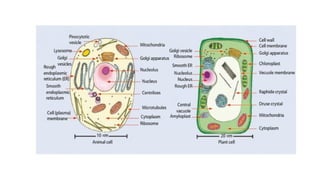
• Fungi (yeasts and molds), algae, protozoa, and animal and plant cells comprise the eukaryotes.
• Eukaryotes are five to ten times larger than prokaryotes in diameter (e.g., yeast about 5 μm, animal cell
about 10 μm, and plant cell about 20 μm).
• Eukaryotes have a true nucleus (enclosed within membrane) and a number of cellular organelles (e.g.,
mitochondria, golgi apparatus etc.) inside the cytoplasm.
• In cell wall and cell membrane structure, eukaryotes are similar to prokaryotes.
• The plasma membrane is made of proteins and phospholipids that form a bilayer
structure (lipid bilayer with embedded protein).
• Major proteins for the membrane are hydrophobic and are embedded in the
phospholipids (50% of all lipids) matrix.
• Sterols are essential in all eukaryotic cell/cytoplasmic membranes.
• One major difference is in the presence of sterols (third major class of membrane lipid
after phospholipids and glycolipids) in the plasma/cytoplasmic (plasmalemma)
membrane of the eukaryotes.
• For instance, cholesterol is the major sterol in animal plasma membrane. Sterols
increase rigidity and strengthen the membrane structure (reduce membrane fluidity
and permeability) and make the membrane less flexible.
• The cell wall of eukaryotic cells (e.g., algae, plant, fungi) shows considerable variations.
• Some eukaryotes (e.g., algae) have polysaccharides and cellulose in their cell wall,
while others have chitin and other polysaccharides (e.g., fungi).
• The true fungi do not have cellulose in their cell wall.
• The plant cell wall is composed of cellulose fibers and is linked via hemicellulose
adhere/edge to form the network which is embedded in pectin aggregates.
• The cellulose-hemicellulose-pectin network imparts strength to the cell wall.
• Animal cells do not have a cell wall but only a cell/plasma/cytoplasmic membrane.
• For this logic, animal cells are very shear-sensitive and fragile (delicate).
• This aspect significantly complicates/upsets the design of large-scale bioreactor for
animal cells.
• The nucleus of the eukaryotic cells (except mammalian red blood cells) contains
chromosomes as nuclear material (DNA-associated proteins), surrounded by a membrane.
• The nuclear membrane/envelope, a double membrane, consists of concentric and porous
(nuclear pores) membranes.
• The nuclear envelope completely encloses the nucleus and separates the cell’s genetic
material from the surrounding cytoplasm.
• The nuclear pores are required to regulate nuclear transport of the molecules across the
envelope.
• The nucleolus is an area in the nucleus that stains differently and is the site of ribosome
and rRNA synthesis.
• It is not surrounded by a membrane.
• Nevertheless, many chromosomes have small amounts of RNA and basic proteins called
histones adhered to the DNA.
• Each chromosome contains a single linear DNA molecule on which the histones are
attached.
• The mitochondria are double membrane-bound organelle and are the powerhouses
(generate most of the cell’s supply of adenosine triphosphate) of a eukaryotic cell, where
respiration and oxidative phosphorylation occur.
• The mitochondria have a nearly cylindrical (vary considerably in size and structure) shape 1
μm in diameter and 2–3 μm in length.
• The external membrane is made of a phospholipid bilayer with proteins embedded in the
lipid matrix.
• It has a protein-to-phospholipids ratio very much alike to that of eukaryotic plasma
membrane (approx. 1:1).
• The mitochondria contain complex system of inner membranes (compartmentalized) called
cristae.
• A gel-like matrix containing large amounts of protein (mixtures of enzymes) fills the space
inside the cristae.
• Some enzymes of oxidative respiration (oxidation of pyruvate, fatty acids, and citric acid
cycle) are bound to the cristae.
• Mitochondria have its own DNA which is organized as several copies of single, usually circular
chromosome and have protein-synthesizing system and reproduces independently.
• The endoplasmic reticulum (ER) is a complex, convoluted/tangled membrane system
of interconnected network of flattened, sac- or tubelike structure known as cisternae.
• There are two types of ER, rough endoplasmic reticulum (RER) and smooth
endoplasmic reticulum (SER).
• The RER (granular) contains ribosomes on the inner surfaces (giving a rough
appearance) and is the site of protein synthesis and modifications/corrections of
protein structure after synthesis.
• The SER (agranular) is more engaged with lipid, phospholipids, and steroids synthesis.
• Lysosomes are very small membrane-bound organelle that contain and release
digestive/hydrolytic enzymes.
• Lysosomes add to the digestion of nutrients and invading substances/biomolecules
(e.g., peptides, nucleic acids, carbohydrates, and lipids).
• Peroxisomes (also known as microbody) are similar to lysosomes in their structure, but not in
function.
• Peroxisomes contain oxidative enzymes (carry out oxidative reactions) that produce hydrogen
peroxide.
• Glyoxysomes (specialized peroxisomes found in plants) are also very small membrane bound
particles that contain the enzymes of glyoxylate cycle.
• Golgi bodies (golgi apparatus or golgi complex) are endomembrane system in the cytoplasm and
are composed of membrane aggregates/combinations engaged for the secretion of certain
proteins.
• Golgi bodies are sites/centers where proteins (glycosylation enzymes) are modified by the
addition of various sugars monomers in a process called glycosylation.
• Such modification/conversion is essential to protein function (responsibility) in the body.
• Vacuoles are membrane-bound organelles (filled with cell sap) of low density (have no basic
shape or size) and are enclosed by a membrane called tonoplast.
• Vacuoles are responsible for food digestion, osmotic regulation (hydrostatic pressure or turgor
within the cell), and waste product storage.
• Vacuoles may occupy a large fraction of cell volume (up to 90% in plant cells) and maintain an acidic internal
pH.
• Chloroplasts (known as plastid) are comparatively large, chlorophyll-containing organelles that are
responsible for photosynthesis in photosynthetic eukaryotes (algae and plant cells).
• Every chloroplast is characterized by its two membranes, an outer membrane and a large number of inner
membranes called thylakoids.
• Chlorophyll molecules are combined with thylakoids, which contain a regular membrane structure with lipid
bilayers.
• Chloroplasts are autonomous units consisting of their own DNA (ctDNA) and protein-synthesizing machinery.
• Certain prokaryotes and eukaryotic organisms contain flagella—long, filamentous structures that are
connected to one end of the cell and are responsible for the motion of the cell.
• Eukaryotic flagella contain two central fibers surrounded by 18 (nine fused pairs of microtubule) peripheral
fibers, which exist in doublets (so-called “9 + 2” arrangement).
• Fibers are in a tube structure called microtubule and are composed of proteins called tubulin.
• The whole fiber assembly is installed/embedded in an organic matrix and is surrounded by a
membrane.
• Cilia are flagella-like structures but are numerous and shorter.
• Only one group of protozoa, called ciliates (e.g., Paramecium), contains cilia.
• Eukaryotic cilia are structurally identical to eukaryotic flagella, although differentiations are made
according to length and/or functions.
• Ciliated organisms move much faster than flagellated ones.
• The cytoskeleton (in eukaryotic cells) refers to filaments that provide an internal framework to
organize the cell’s internal activities and control its shape.
• These filaments are essential in cell movement and separation of chromosomes into the two
daughter cells during cell division and transduction of mechanical forces into biological response.
• The types of fibers present are actin filaments, intermediate filaments, and microtubules.
Microscopic Eukaryotes
• Fungi are heterotrophs (obtain their food by absorbing dissolved molecules) that are widespread in distribution and grow
in a wide range of habitats.
• Fungal cells (fungal mycelia) are larger than bacterial cells, and their typical internal structures, such as nucleus and
vacuoles.
• The fungal mycelia can become visible to naked eye and can also be seen easily with a light microscope.
• Two major/dominant groups of fungi are yeasts and molds.
• Yeasts are eukaryotic and single-celled microorganism of 5–10 μm size.
• Yeast cells are usually cylindrical, spherical, or oval.
• Yeasts can reproduce by asexual or sexual modes.
• Asexual reproduction (vegetative growth) is by either budding or fission.
• In budding, a small bud (known as “bleb” or daughter cell) forms on the parent/mother cell; this progressively
enlarges/swells and detaches from the mother cell.
• Asexual reproduction by fission is identical to that of bacteria.
• Only a few species of yeast (e.g., Saccharomyces pombe) can reproduce by fission.
• In fission, the cell grows to a definite size and divides into two equal cells.
• Sexual reproduction of yeasts concerns with the formation of a zygote (a diploid cell) from fusion of two haploid cells,
each having a single set of chromosomes.
• The nucleus of the diploid cells divides several times to form ascospores.
• Each ascopspore finally becomes a new haploid cell and may reproduce by budding or fission.
• The classification (analysis) of yeast is based on reproductive means (e.g., budding or fission) and the
nutritional requirement/demand of cells.
• The most widely used yeast Saccharomyces cerevisiae is one of the main microorganisms of
industrial interest such as baking, distilling, and wine making.
• S. cerevisiae is used in alcohol fermentation/ formation under anaerobic or low-oxygen conditions
(e.g. in beer, wine, and whisky making) and also for baker’s yeast (leavening agent) production under
aerobic conditions, where it converts fermentable sugar (present in dough) into carbon dioxide .
• Molds are filamentous fungi and have a mycelial structure (i.e., network of tubular branching), the
highly branched system (mycelium) of tubes that contains cytoplasm with many nuclei.
• Long and thin multicellular filaments on the mycelium are called hyphae.
• Certain branches of mycelium may grow in the air, and the asexual spores (or differentiation at the
ends of hyphae) formed on these aerial branches are called conidia.
• Conidia are nearly spherical in structure and are often colored/pigmented.
• Some molds reproduce by sexual modes and form sexual spores.
• These spores provide resistance against heat, drying, freezing, and some chemical agents.
• Both sexual and asexual spores of molds can germinate and form hyphae.
• Molds usually form long, highly branched cells, and easily grow on moist, solid nutrient surface.
• The growth of molds in the form of pellets can be an alternative in industrial fermentation
processes.
• The growth of mold in submerged culture often forms cell aggregates and pellets.
• The pellets reach a diameter of 1.0–2.0 mm at the end of fermentation.
• Pellet formation can cause some nutrient transfer (mainly oxygen) problems inside the pellet.
• However, pellet formation reduces broth viscosity, which can improve bulk oxygen transfer.
• Molds are used for the production of citric acid (Aspergillus niger), and the pellet growth is being
widely used in the production of citric acid.
• Several groups of antibiotics such as penicillin are produced by mold (Penicillium notatum-
chrysogenum group).
• Algae are usually unicellular (eukaryotic) organisms (e.g., chlorella, diatoms).
• The size of a typical unicellular alga is 10–30 μm.
• However, multicellular algae (e.g., giant kelp, spirogyra, and stonewort) sometimes form a
branched or unbranched filamentous structure.
• Some algae with multicellular structure are present in marine water (e.g., seaweeds).
• All algae are photosynthetic and contain chloroplasts (similar in structure to
cyanobacteria), which commonly impart/transmit a green color to the organisms.
• The chloroplasts are the sites/centers of chlorophyll pigments and are important for
photosynthesis.
• Some algae contain calcium carbonate or silica in their cell wall.
• Diatoms containing silica in their cell wall are used as filter aids/supports in industry.
• Some algae, such as Chlorella, Spirulina, Scenedesmus, and Dunaliella, are used for
wastewater treatment with simultaneous single-cell protein production.
• Certain gelling agents (e.g., alginic acid or alginate) are obtained from marine/brown
algae and seaweeds.
• Some algae are brown or red due to the occupancy of other pigments.
• Protozoa are unicellular, motile, either free-living or parasitic, and comparably large (1–50 mm)
eukaryotic cells that lack cell walls.
• Protozoa are normally heterotrophic and obtain food by ingesting other small organisms or organic
particles.
• Protozoa are usually uninucleate and reproduce by sexual or asexual modes.
• They are classified on the basis of their motion.
• The amoeba move by amoeboid motion, whereby the cytoplasm of the cell flows forward to form a
pseudopodium (false foot), and the rest of the cell flows toward this lobe.
• The flagellates move using their flagella.
• Trypanosomes move by flagella and cause a number of diseases in humans.
• The ciliates move by motion of a large number of small appendages on the cell surface called cilia.
• These protozoa do not engulf/imbibe food particles but absorb dissolved food contents through their
membranes.
• The sporozoans are nonmotile and contain members that are human and animal parasites.
• Protozoa cause some diseases (human pathogens), such as malaria, giardiasis, and amoebic dysentery.
• Some protozoa are helpful in removing/eliminating bacteria from wastewater in biological wastewater
treatment methods and obtaining clean effluent.
Methods of Fermentation
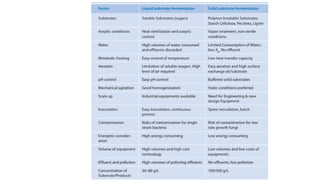
• Fermentation has been classified into liquid fermentation (LF) or submerged fermentation (SmF) and
solid-state fermentation (SSF) mainly based on the level of water used during the fermentation.
• Submerged Fermentation (SmF) or Liquid Fermentation (LF)
• SmF exploits/utilizes free-flowing liquid substrates, broths, and molasses.
• The bioactive compounds are secreted into the fermentation broth.
• The substrates are utilized quite rapidly and hence need to be constantly
replaced/supplemented with nutrients.
• This fermentation method is suitable for microorganisms such as bacteria that
need high moisture content.
• An additional choice of this technique/method is that purification/ refining of
products is easier.
• SmF is mainly used in the extraction of secondary metabolites that necessitate to
be used in liquid form.
Solid-State Fermentation
• SSF utilizes solid substrates, like bran, bagasse, and paper pulp.
• The main interest/advantage of using these substrates is that nutrient-rich waste materials can be
easily/efficiently recycled as substrates.
• In this fermentation method/technique, the same substrate can be used for long fermentation periods and can
be utilized very slowly and steadily.
• Henceforth, this technique supports controlled release of nutrients.
• SSF is best suited/adapted for fermentation techniques including fungi and microorganisms that depend on
limited moisture content.
• Nevertheless, it cannot be used in fermentation processes involving organisms that require high aw (water
activity), such as bacteria.
• Bacteria and yeasts are equally involved in SmF and SSF, whereas fungi are mostly concerned with SSF processes.
• The roles of bacteria and yeasts in SmF are mostly related to food and beverage processing industries.
• Filamentous fungi are best suited for SSF owing to their physiological, biochemical, and enzymological properties
and dominate in oriental foods, ensiling and composting processes.
• The hyphal means/modes of fungal growth and their good tolerance to low aw and high osmotic
pressure conditions make fungi more efficient for bioconversion of solid substrates.
• Koji (in Japan) and Tempeh (in Indonesia) are the two most successful applications of SSF using
filamentous fungi.
• In Koji production, the fungus Aspergillus oryzae is grown on soybean and wheat bran, which is the
first step of soy sauce and citric acid production.
• Koji is an unpurified form of several hydrolytic enzymes required in further steps of the fermentation
process.
• Similarly, Tempeh is a fermented food produced by the growth of Rhizopus oligosporus on soybeans.
• In Tempeh fermentation, the hydrolytic enzymes released by R. oligosporus degrade the anti-
nutrients such as trypsin inhibitors and hemagglutinins (lectins) in crude soybean and improve taste,
flavor, and nutritive quality.
• Further, the hyphal mode of growth has an added advantage to filamentous fungi over unicellular
microorganisms in colonization of solid substrate and better utilization of nutrients.
• The basic mode of fungal growth is a combination of apical extension of hyphal tips and the
mycelium ensures a firm and solid structure.
• The hydrolytic enzymes are excreted at the hyphal tip, without large dilution like in the case of SmF.
Metabolic Measurement of Biomass
Respiratory Metabolism
• Oxygen (O2) consumption and carbon dioxide (CO2) evolution resulting from respiration are the
metabolic processes by which aerobic microorganisms derive most of their energy for growth.
• Carbon compounds within the substrate are metabolized, which are converted into microbial biomass
and carbon dioxide. Production of CO2 causes the weight of fermenting substrate to decrease during
growth, and the amount of weight lost can be correlated to the amount of growth that has occurred.
• The measurement of either CO2 evolution or O2 consumption is more powerful when coupled with the
use of a correlation model.
• If both the monitoring and computational equipment are available, then these correlation models
provide a powerful means of biomass estimation since continuous on-line measurements can be
made.
• Other advantages of monitoring effluent gas concentrations with paramagnetic and infrared analyzers
include the ability to monitor the respiratory quotient to ensure optimal substrate oxidation, the
ability to incorporate automated feedback control over the aeration rate, and the nondestructive
nature of the measurement procedure.
Production of Primary Metabolites
• Usually, a growing cell will use its primary metabolites for growth and not export them to the
medium.
• However, in fermentation processes designed for production of primary metabolites, i.e.,
amino acids, enzymes, organic acids, or nucleotides, their production is often growth-related.
• It has been frequently observed that there is a good correlation between mycelial growth and
organic acid production, which can be measured by the pH analysis, or a posteriori correlated
by HPLC analysis on extracts. In the case of Rhizopus, a group of scientists demonstrated a
close correlation between fungal protein (biomass) and organic acids (citric, fumaric, lactic, or
acetic).
• However, the ratio of product formed per unit cell mass is not necessarily constant and as a
consequence correlation with cell mass is poor.
Biomass Components
Protein Content
• The most readily measured biomass component is protein.
• The biuret method is easy, with good reproducibility since it measures peptide bonds, but it
is not very sensitive.
• Kjeldahl nitrogen when multiplied by 6.25 to obtain crude protein is subject to error from
nonprotein nitrogen. The Folin–Ciocalteu method (Lowry’s method) is more sensitive, but
since it responds strongly to the aromatic amino acids, it can give an erroneous value unless
samples and reference protein are similar in composition.
• Kjeldahl method or Kjeldahl digestion in analytical chemistry is a method for the quantitative
determination of nitrogen contained in organic substances plus the nitrogen contained in the
inorganic compounds ammonia and ammonium (NH3/NH4+).
• Biuret method: The chemical text used to assess the concentration of protein (i.e., the
presence of peptide bonds).
• The intensity of color or absorbance measured at 540 nm is directly proportional to the protein
concentration (according to the Lambert–Beer law).
• The intensity of color or absorbance measured at 600 nm is directly proportional to the protein
concentration.
Lowry’s method: The biochemical assay for determining the total level of protein in a solution.
Nucleic Acid
• Nucleic acid methods based on DNA or RNA determination are reliable only if there is little nucleic
acid in the substrate and if no interfering chemicals are present.
Glucosamine
• A useful method for the estimation of fungal biomass in SSF is the glucosamine method.
• This method takes advantage of the presence of chitin in the cell walls of many fungi.
• Chitin is a poly-N-acetylglucosamine. Interference with this method may occur with growth on
complex agricultural substrates containing glucosamine in glycoproteins.
Ergosterol
• Ergosterol is the predominant sterol in fungi. Glucosamine estimation was therefore compared with
the estimation of ergosterol for determination of the growth of Agaricus bisporus.
Factors Affecting Microbial Growth in Fermentation
• The growth of microbes is influenced by various internal and external factors, viz., pH,
temperature, composition of the media, etc.
• Microorganisms need optimum temperature for growth. If grown at a temperature below
the optimum, growth occurs slowly resulting in a reduced rate of cellular production.
• The bacteria can be divided into following groups based on their optimum growth
temperature.
• Thermophiles are heat-loving bacteria (i.e., Thermus aquaticus, Thermococcus litoralis, and
Bacillus stearothermophilus).
• The optimum growth temperature is between 45 and 70 °C and is commonly found in hot
springs and in compost heaps.
• Hyperthermophiles are bacteria that grow at very high temperatures (i.e., genus
Sulfolobus).
• Their optimum temperature is between 70 and 110 °C. They are usually members of the
Archaea and are found growing near hydrothermal vents of great depths in the ocean.
• Mesophiles are bacteria that grow best at moderate temperatures (i.e., Pesudomonas
maltophilia, Thiobacillus novellus, Streptococcus pyrogenes, Streptococcus pneumoniae,
Clostridium kluyveri etc).
• Their optimum growth temperature is between 25 and 45 °C.
• Most bacteria are mesophilic and include common soil bacteria and bacteria that live in and
on the body.
• Phychrophiles are cold-loving bacteria (i.e., Arthrobacter sp., Psychrobacter sp.).
• Their optimum growth temperature is between -5 to 15 °C.
• They are usually found in the Arctic and Antarctic regions and in the streams fed by glaciers.
These bacteria are of little importance in fermentation.
• Most microorganisms grow optimally between pH 5 and 7 (fungi and yeast grow in acidic conditions).
• Microorganisms can be placed in one of the following groups based on their optimum pH requirements.
• Neutrophiles grow best at a pH range of 5 and 8.
• Acidophiles grow best at a pH below 5.5.
• Alkaliphiles grow best at a pH above 8.5.
• Oxygen (aeration) is an important factor for aerobic organisms and is very strongly related to growth rate.
• Optimum growth of many microorganisms usually requires large amounts of dissolved oxygen. As oxygen is
sparingly soluble in water (8.4 mg/L at 25 °C), it needs to be supplied continuously (generally in the form of
sterilized air) to a growing culture.
• The air produces bubbles, and the stirrer is used to break up the bubbles and mix content in fermentation.
• If airflow is inadequate or the air bubbles are too large, the rate of transfer of oxygen to the cells is low and
is insufficient to meet oxygen demand.
Constituents of Growth Medium
Macro- and Microelements
• All microorganisms require certain elements for growth and metabolism.
• Macroelements are needed in concentrations larger than 10-4
M.
• Carbon, nitrogen, oxygen, hydrogen, sulfur, phosphorus, Mg2+
, and K+
are major
elements.
• Carbon compounds in growth medium are major sources of cellular carbon and energy.
• However, microelements are needed in concentration less than 10-4
M.
• Trace elements such as Mo2+
, Zn2+
, Cu2+
, Mn2+
, Ca2+
, Na+
and vitamins, growth hormones,
and metabolic precursors are micro-elements.
C:N Ratio of Growth Medium
• Carbon-to-nitrogen ratio (C/N ratio or C:N ratio) is a ratio of the mass of carbon to the
mass of nitrogen in a substrate.
• The microorganisms decomposing organic matter with a higher C:N ratio are
confronted with a surplus of C in relation to N and microorganisms confronted with a
lower C:N ratio are facing a lack of C in relation to N.
• The most common carbon sources in industrial fermentations are molasses (sucrose),
starch (glucose, dextrin), corn syrup, and waste sulfite liquor (glucose).
• In laboratory fermentation, glucose, sucrose, and fructose are the most common
carbon sources.
• Methanol, ethanol, and methane also constitute cheap carbon sources for the
fermentation.
• Most industrially used microorganisms can utilize inorganic or organic sources of
nitrogen.
• Inorganic nitrogen may be supplied as ammonia gas, ammonium salts, or nitrates.
• Ammonia has been used for pH control and as the major nitrogen source in a defined
medium.
Growth Factors
• Some microorganisms cannot synthesize a full complement of cell components and
therefore require preformed compounds called growth factors.
• Growth factors stimulate the growth and synthesis of some metabolites.
• Vitamins, hormones, and amino acids are the major growth factors.
• Some commonly used vitamins are thiamine (B1), riboflavin (B2), pyridoxine (B6), biotin,
cyanocobalamine (B12), folic acid, lipoic acid, p-amino benzoic acid, and vitamin K.
• The growth factors most commonly required are vitamins, but there may also be a need
for specific amino acids, fatty acids, or sterols.
• Depending on the organism, some or all of the amino acid may need to be supplied
externally.
• Some fatty acids, such as oleic acids and sterols, are also needed in small quantities by
some organisms.
• Many natural media formulations contain all or some of the required growth factors.
• For example, in processes used for the production of glutamic acid, limited concentrations
of biotin must be present in the medium.
Starter Culture(s)
• A starter culture may be defined as a preparation containing large numbers of
desired microorganisms, used for accelerating the fermentation process.
• The preparations may contain some unavoidable residues from the culture
substrates and additives (such as antifreeze or antioxidant compounds), which
support the vitality and technological functionality of the microorganisms.
• A typical starter after being adapted to the substrate facilitates improved control of
a fermentation process and predictability of its products.
• Basically, there are three categories of starter cultures:
(1) single-strain cultures, contain only one strain of a species;
(2) multi-strain cultures, contain more than one strain of a single species; and
(3) multi-strain mixed cultures, contain different strains from different species.
• Microorganisms are naturally omnipresent and hence observed in raw substrates.
• This was the basis of the idea of spontaneous fermentation.
• Backslopping was the important technological phenomenon used in spontaneous
fermentation by inoculating the raw material with a small quantity of a previously
performed successful fermentation.
• Hence, the dominance of the best adapted strains resulted in backslopping.
• This technology is still used for production of foods and beverages where the
ecology and concrete knowledge about microbial population and role are not
clearly known.
• This is also an economical and reliable method of production of fermented foods.
Recombinant Starter Culture
• Recombinant technology and genetic manipulation offer extensive possibilities to incorporate
new traits into organisms and have positive applications in food and pharmaceutical industries.
• The recombinant Lactococcus is starter strains to produced peptidases from Lactobacillus
helveticus 53/7 for potential use as an additional enzyme supply for accelerated proteolysis
during cheese ripening.
• It is possible to increase the production of exopolysaccharides (EPS) by Streptococcus
thermophilus strains through genetic engineering of galactose metabolism. In situ production of
EPS by starter sutures (S. thermophilus) is an alternative to the addition of biothickeners of fat-
free yogurts.
• Scientists reported both LABs (Lactobacillus plantarum NC8 and Lactobacillus casei) as potential
expression hosts for recombinant enzyme [hyperthermophilic β-glycosidase (CelB)] production.
Facets of Fermentation
• Fermentation process is used by human beings for various processes from industrial applications to food
and agriculture, bioremediation of organic wastes to biovalorization of food and agricultural wastes, etc.
• Industrial fermentation is the intentional use of fermentation by microorganisms such as bacteria and
fungi to make a product useful to humans.
Production of Biomass
• Microbial cells or biomass is sometimes the intended product of fermentation, for example, single-cell
protein (SCP), baker’s yeast, lactobacillus, etc. SCP refers to edible unicellular microorganism.
• The biomass (protein extract) from pure or mixed cultures of algae, yeasts, fungi, or bacteria may be used
as an ingredient or a substitute for protein-rich foods and is suitable for human consumption or as animal
feeds.
• Baker’s yeast (Saccharomyces cerevisiae) is commonly used as a leavening agent in baking bread and
bakery products, where it converts the fermentable sugars present in the dough into carbon dioxide and
ethanol.
Production of Extracellular Metabolites
• Metabolites can be divided into two groups: primary metabolites (ethanol, citric acid,
glutamic acid, lysine, vitamins, and polysaccharides) and secondary metabolites
(penicillin, cyclosporin-A, gibberellins, and lovastatin).
Production of Intracellular Components
• The intracellular components are several microbial enzymes, such as catalase, amylase,
protease, pectinase, glucose isomerase, cellulase, hemicelluase, lipase, lactase,
streptokinase, etc.
• Moreover, the industrially synthesized recombinant proteins, such as insulin, hepatitis B
vaccine, interferon, and granulocyte colony-stimulating factor, play an important role in
health care.
Food Fermentation
• Fermentation of food is the ancient process of making bread, curds, idli, dosa, cheese, etc., from
thousand years ago.
• However, similar process is employed specifically to the conversion of sugars into ethanol producing
alcoholic drinks such as wine, beer, and cider and in the preservation of sour foods with the production
of lactic acid such as in sauerkraut and yogurt.
• More localized foods prepared by fermentation may also be based on beans, grain, vegetables, fruit,
honey, dairy products, fish, meat, or tea.
Biofuels
• Fermentation is the main source of ethanol in the production of ethanol fuel (i.e., ethyl alcohol) and
butanol (butyl alcohol).
• Common crops such as sugarcane, potato, cassava, and corn are fermented by yeast to produce ethanol
and are further processed to produce motor fuel or biofuel additive to gasoline.
Sewage Treatment
• Sewage treatment (also called “wastewater treatment”) is the process of removing
contaminants from municipal wastewater (containing mainly household sewage plus some
industrial wastewater).
• In the process of sewage treatment, sewage is digested by enzymes secreted by bacteria.
Animal Feeds
• A wide variety of agricultural waste products can be fermented to use as food for animals, especially
ruminants.
• Fungi have been employed to break down cellulosic wastes to increase protein content and improve in
vitro digestibility.
Representative Metabolites Produced by
Microorganisms
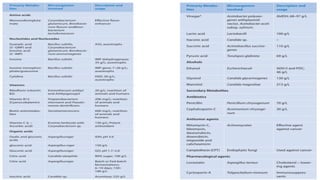
• Microbial metabolites represent an incredibly diverse array of chemistry.
Microbes can make molecules that synthetic chemists cannot access.
• While over 25,000 microbial metabolites have been reported in the scientific
literature, fewer than 2% of these have ever been readily available to the wider
research community.
• Most metabolites have only ever existed in small quantities in the research
laboratory in which they were discovered, and their biological activity has never
been fully investigated.
Primary Metabolites
• Primary metabolites are vital molecules (e.g., amino acids, vitamins, nucleotides, solvents, or organic acids) of all living
cells and are the end product of metabolic pathways or their intermediate products or are domicile of essential
macromolecules or are converted into coenzymes.
Amino Acids
• The amino acid market is over $6 billion and has been growing at 5–10% for each year [9].
• For instance, monosodium glutamate, an effective flavor enhancer, is a leading amino acid in terms of tonnage.
• Various species of the genera Corynebacterium and Brevibacterium (e.g., Corynebacterium glutamicum, Brevibacterium
flavum, and Brevibacterium lactofermentum) are claimed to be producers of glutamate.
Nucleotides and Nucleosides
• The nucleotide/nucleoside fermentations are due to the activity of two purine ribonucleoside 5 -monophosphates, [i.e,
′
guanylic acid (5 -GMP) and inosinic acid (5 -IMP)].
′ ′
• Three primary processes are involved: (i) hydrolysis and enzymatic deamination of yeast RNA to IMP, (ii) synthesis and
phosphorylation of the nucleoside (inosine and guanosine) by Bacillus subtilis mutants, and (iii) direct fermentation of
sugar to IMP (by Corynebacterium glutamicum mutants) and conversion of guanine to GMP (using intact cells of
Brevibacterium ammoniagenes).
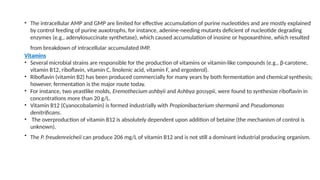
• The intracellular AMP and GMP are limited for effective accumulation of purine nucleotides and are mostly explained
by control feeding of purine auxotrophs, for instance, adenine-needing mutants deficient of nucleotide degrading
enzymes (e.g., adenylosuccinate synthetase), which caused accumulation of inosine or hypoxanthine, which resulted
from breakdown of intracellular accumulated IMP.
Vitamins
• Several microbial strains are responsible for the production of vitamins or vitamin-like compounds (e.g., β-carotene,
vitamin B12, riboflavin, vitamin C, linolenic acid, vitamin F, and ergosterol).
• Riboflavin (vitamin B2) has been produced commercially for many years by both fermentation and chemical synthesis;
however, fermentation is the major route today.
• For instance, two yeastlike molds, Eremothecium ashbyii and Ashbya gossypii, were found to synthesize riboflavin in
concentrations more than 20 g/L.
• Vitamin B12 (Cyanocobalamin) is formed industrially with Propionibacterium shermanii and Pseudomonas
denitrificans.
• The overproduction of vitamin B12 is absolutely dependent upon addition of betaine (the mechanism of control is
unknown).
• The P. freudenreicheii can produce 206 mg/L of vitamin B12 and is not still a dominant industrial producing organism.
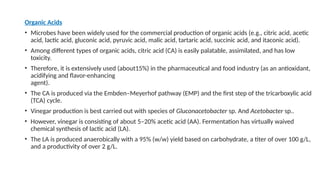
Organic Acids
• Microbes have been widely used for the commercial production of organic acids (e.g., citric acid, acetic
acid, lactic acid, gluconic acid, pyruvic acid, malic acid, tartaric acid, succinic acid, and itaconic acid).
• Among different types of organic acids, citric acid (CA) is easily palatable, assimilated, and has low
toxicity.
• Therefore, it is extensively used (about15%) in the pharmaceutical and food industry (as an antioxidant,
acidifying and flavor-enhancing
agent).
• The CA is produced via the Embden–Meyerhof pathway (EMP) and the first step of the tricarboxylic acid
(TCA) cycle.
• Vinegar production is best carried out with species of Gluconacetobacter sp. And Acetobacter sp..
• However, vinegar is consisting of about 5–20% acetic acid (AA). Fermentation has virtually waived
chemical synthesis of lactic acid (LA).
• The LA is produced anaerobically with a 95% (w/w) yield based on carbohydrate, a titer of over 100 g/L,
and a productivity of over 2 g/L.
• This is comparable to processes employing LA bacteria.
• Lactobacilli produce mixed isomers, whereas Rhizopus forms L -(+)- LA exclusively.
• Rhizopus oryzae is favored for formation since it makes only the stereochemically pure L-(+)-LA.
• Itaconic acid is used as a comonomer in resins and synthetic fibers and is produced from the selective
fungal (i.e., Candida) sp..
• Although microbial processes exist for the other acids, they have not been exploited commercially on a
large scale.
• Succinic acid can be made from the rumen organism Actinobacillus succinogenes at 110 g/L .
• Pyruvic acid is formed at 69 g/L at 56 h with a yield of 0.62 g/g glucose using Torulopsis glabrata.
Alcohols
• Ethyl alcohol (C2H5OH) is a primary metabolite that can be formed from fermentation of a carbohydrate/sugar or a
polysaccharide that can be depolymerized to a fermentable sugar.
• Yeasts are preferred for these fermentations, but the species used depends on the substrate employed.
• Saccharomyces cerevisiae is used for the fermentation of hexose, whereas Candida sp. or Kluyveromyces fragilis may
be employed if pentose or lactose, respectively, is the substrate.
• Ethanol is produced in Brazil from cane sugar at 12.5 billion liters/year and is used as a 25% fuel blend or as a pure
fuel.
• With regard to beverage ethanol, some 60 million tons of beer and 30 million tons of wine are produced each year.
• Production of glycerol is usually done by chemical synthesis from petroleum feedstocks, but better
fermentations processes are available.
• Osmotolerant yeast strains (Candida glycerinogenes) can produce up to 130 g/L of glycerol.
• Six hundred thousand tons of glycerol are produced annually by recovery as a by-product of the fat and oil industries,
by synthesis from propylene, and, to a small extent, by glucose fermentation using Saccharomyces cerevisiae.
Secondary Metabolites
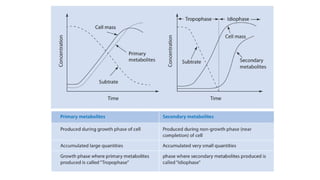
• Microbial secondary metabolites are compounds produced by strains of certain microbial species (mainly by
actinomycetes and fungi), usually late in the growth cycle (idiophase).
• The production of secondary metabolites starts when growth is limited with exhaustion of one key nutrient
source (i.e., carbon, nitrogen, or phosphate).
• For example, penicillin biosynthesis by Penicillium chryosgenum starts when glucose is exhausted from the
culture medium and the fungus starts consuming lactose, a less readily utilized glucose.
• A characteristic of secondary metabolites is that they are usually not produced during the phase of rapid
growth (trophophase) but are synthesized during a subsequent production stage (idiophase).
• The secondary metabolites have an enormous range of biological activities and are extremely important to our
health and nutrition.
• A group that includes antibiotics, toxins, pesticides, animal and plant growth factors, and other medicines has
tremendous economic importance.
Antibiotics
• The best known/recognized secondary metabolites are antibiotics (antimicrobial agent).
• The antibiotic revolutionized medicine in twentieth century and its market involves about 160
antibiotics and derivatives, (e.g., β-lactam peptide antibiotics, the macrolide polyketides and
polyketides, tetracyclines, aminoglycosides, and others).
• The antiinfective market is framed of 62% antibacterials, 13% sera immunoglobulins and vaccines, 12%
anti-HIV antivirals, 7% antifungals, and 6% non-HIV antivirals.
• Titers of penicillin with Penicillium chrysogenum have reached 70 g/L, whereas those of Cephalosporin-
C by Acremonium chrysogenum are over 30 g/L.
• Published data on clavulanic acid production by Streptomyces clavuligerus indicate the titer to be above
3 g/L.
Antitumor Agents
• Ever since the discovery/origination of the Actinomycins by Waksman and Woodruff and the use of Actinomycin-D
against the Wilms tumor in children, microbes have served as a prime source of anticancer agents.
• The essential microbial molecules are mitomycin-C, bleomycin, daunorubicin, doxorubicin, etoposide, and
calicheamicin, all are produced by Actinomycetes.
• Taxol (paclitaxel) is a very productive compound against ovarian and breast cancer, produced by the endophytic
fungi.
• Another plant product is camptothecin (CPT), produced by certain angiosperms, which is a modified
monoterpene indole alkaloid and is active against type I DNA topoisomerase.
• Its water-soluble derivatives irinotecan and topotecan are used against cancer.
• It also can be made by endophytic fungi.
Class Lecture 1_Bioprocess Engineering.pptx

Class Lecture 1_Bioprocess Engineering.pptx

  • 1.
  • 2.
    • There isno universal accord on how to categorize/classify microorganism and such classification is rather arbitrary. • However, there are two basic/primary cell types: prokaryotic and eukaryotic. • The fundamental difference/characteristic between them is the presence or absence of membrane around the cell’s genetic information. • Prokaryotes are unicellular organism and have simple structure with a single chromosome. • Prokaryotic cell lacks membrane-bound organelles (i.e., mitochondria and endoplasmic reticulum) and also lacks nuclear membrane. • Eukaryotes have a more complex internal structure, with more than one chromosome (DNA molecule) in the nucleus. • Eukaryotic cells have a true nuclear membrane and hold membrane-bound organelles (i.e., golgi apparatus mitochondria, endoplasmic reticulum) and a variety of functional/specialized organelles. • A detailed contrast/comparison of prokaryotes and eukaryotes is presented in Table 1.1.
  • 4.
    • Evidence/data recommendshat a universal/common ancestor (family history) gave rise to three distinctive/inherent branches of life: Eukaryotes, Eubacteria (or “true bacteria”), and Archaebacteria. • Table 1.2 complies some of the inherent aspects/features of these groups.
  • 5.
    Prokaryotes • The sizesof maximum or most prokaryotes differ from 0.5 to 3 micrometers (μm) in length (or equivalent radius). • Different species have different shapes such as spiral or spirillum (e.g., Rhodospirillum), spherical or coccus (e.g., staphylococci), or cylindrical or bacillus (e.g., Escherichia coli). • Prokaryotic cells grow rapidly, with usual doubling times of one-half hour to several hours. • Moreover, prokaryotes can use/take advantage of a variety of nutrients as carbon source, including hydrocarbons, carbohydrates, proteins, and carbon dioxide. • Eubacteria • Eubacteria (genus of gram-positive bacteria in the family Eubacteriaceae) are microscopic single-celled organisms, characterized by rigid cell wall, and grow in diverse environments. • The Eubacteria can be divided into several groups. One differentiation is established on the gram stain—the name comes from Danish bacteriologist Hans Christian Gram who developed the technique in 1884. • The staining process first requires fixing/mending the cells (by heating), and then crystal violet (basic dye) is added; all bacteria will stain purple. • Next, iodine is added (binds crystal violet), followed by the rapid decolorization/addition of ethanol (or acetone). • Gram-positive cells stay purple, while gram-negative cells become colorless. Finally, counterstaining with safranin or fuchsine leaves gram-positive cells purple, while gram-negative cells are red. • This ability to react with the gram stain differentiates bacteria by the chemical and physical properties of their cell wall (or structure of the cell envelope).
  • 6.
    • A typical/idealgram-negative cell is E. coli (Fig. 1.1). • It has an outer membrane supported by a thin peptidoglycan (also known as murein) layer. • Peptidoglycan is a polymer of sugars (polysaccharide) and amino acids that forms a structure similar to a mesh/chain-link fence/layer. 2 • Peptidoglycan provides structural strength as well as resists (opposing action) the osmotic pressure of the cytoplasm. • A second membrane (the inner or cytoplasmic membrane) prevails and is detached from the outer membrane by the periplasmic space. • The cytoplasmic membrane (bacterial plasma membrane) is composed of phospholipid bilayer (50% protein, 30% lipids, and 20% carbohydrates). • The cell envelope (capsule of polysaccharide) serves to protect, reserve/retain important cellular compounds, and in turn exclude/prevent undesirable compounds into the cell environment. • It provides structural/membrane integrity and loss of membrane integrity that leads to cell lysis and cell death. • The cell envelope is essential to the transport of preferred material in and out of the cell.
  • 8.
    • A typicalgram-positive cell is Bacillus subtilis. Gram-positive cells do not have an outer membrane. • Rather they have a very thick, rigid cell wall with multiple layers of peptidoglycan and are made up of glycan strands that are cross-linked by peptide side chains. • Gram-positive cells also contain teichoic acids covalently bonded to the peptidoglycan (wall teichoic acids) or are attached to the lipid membrane (lipo teichoic acids). • Because gram-positive bacteria have a single cytoplasmic membrane, they are often much better suited/appropriate to extraction of proteins. • Such extraction can be technologically advantageous when the protein is a desired product. • Spore-forming gram-positive bacteria (B. subtilis) produce morphologically specific daughter cells by asymmetric cell division. • The cell wall of spores varies from that of mother cells and has specific sets of proteins. • Unlike eukaryotic DNA, which is neatly packed into a cellular compartment called the nucleus (within the nucleus), bacterial DNA floats freely in the cytoplasm, in a twisted thread-like mass called the nucleoid.
  • 9.
    • Actinomycetes arebacteria (generally gram-positive, anaerobic), but, morphologically, they resemble molds with their long filaments and highly branched hyphae. • However, the lack of a nuclear membrane and the composition of the cell wall require/appropriate classification as bacteria. • Actinomyces, Thermomonospora, Streptomyces, Microbacterium, Bifidobacterium, Brevibacterium, Corynebacterium, Micrococcus, and Brachybacterium are examples of the genera convenient to this group. • Actinomycetes are essential sources of antibiotics. • Over 500 species of Streptomyces bacteria have been recognized as the builders of abundant bioactive metabolites, such as antibacterials, antivirals, antifungals, and enzyme inhibitors. • Certain actinomycetes possess amylolytic, pectinolytic, and cellulolytic enzymes and are useful in enzymatic hydrolysis of starch, pectin, and cellulose, respectively.
  • 10.
    • Other/alternative characteristicswithin the Eubacteria can be made based on cellular nutrition and energy metabolism. • One important example is photosynthesis. • The cyanobacteria (cyanophyta or blue green algae) obtain their energy through photosynthesis and have chlorophyll, fix CO2 into sugars, and are able to produce oxygen. • Some of the cyanobacteria are nitrogen-fixing (fix atmospheric nitrogen in anaerobic condition) by means of specialized cells called heterocysts.
  • 11.
    • Prokaryotes mayhave other visible structures/organizations when observed/viewed under the microscope, such as ribosomes, storage granules, spores, and volutins. • Ribosomes are the site of biological protein synthesis (translation). • Prokaryotes have 70S ribosomes, are made of 50S and 30S subunits, and are highly complex cellular structures . • Storage granules (which are not present in every bacterium) act as reservoir— nutrients can be stored in the cytoplasm. Storage granules are source of basic/key metabolites in the form of polysaccharides (glycogen), polyphosphates, lipids, nitrogen, and sulfur granules. • Volutins (polyphosphate bodies) are another granular intracytoplasmic/intracellular energy-rich compound, composed of inorganic polymetaphosphates, present in some species (e.g., Agrobacterium tumefaciens and Rhodospirillum rubrum). • It acts as a reserve store of energy and of phosphate, and, in some cases, nucleic acid, protein, and lipids are associated with these granules. • Some photosynthetic bacteria (e.g., Rhodospirillum rubrum) have chromatophores which are large inclusion bodies (pigment-containing and light-reflecting cells) utilized in photosynthesis for the absorption of light.
  • 12.
    • Some bacteriamake intracellular spores or endospores. • Bacterial endospores (seed like) are dormant, tough, and nonreproductive structures and are produced as a resistance to adverse conditions (i.e., high temperature, radiation, and toxic chemicals). • Spores can germinate under favorable growth conditions to yield actively growing bacteria. • Certain bacteria (e.g., Streptococcus, Bacillus antracis) have a coating or outside cell wall called capsule, which is usually a polysaccharide (lipopolysaccharides) or polypeptide (lipoproteins). • Many bacterial cells secrete some extracellular material in the form of slime layer which protects the bacterial cells from environmental changes (e.g., antibiotics and desiccation). • Unlike bacterial capsule, which is attached tightly to the bacterium and has definite boundaries, the slime layer is loosely associated and can be easily washed off.
  • 13.
    Archaebacteria • Archaebacteria aresimilar to eukaryotes, but these cells differ greatly at the molecular level. • Archaebacteria and Eubacteria or “true” bacteria both are considered to be part of same kingdom of “single-celled” organisms. • However, sophisticated genetic and molecular studies allowed the major biochemical differences between Archaebacteria and Eubacteria. • The differences between Archaebacteria and Eubacteria are as follows: 1. Archaebacteria are called ancient bacteria, whereas the Eubacteria are called “true” bacteria. 2. Eubacteria are usually found in soil and water and living in and on of large organism, whereas Archaebacteria are found in extreme environments and possess unusual metabolism (e.g., salt brines, ocean depths, and hot springs).
  • 14.
    3. Eubacteria aredivided into two groups known as gram-positive and gram- negative; whereas three types of Archaebacteria are found: methanogens (methane-producing bacteria), halophiles (grow at very strong salt solutions), and thermophiles (grow at high temperatures and low pH values). 4. Archaebacteria have no peptidoglycan. 5. The nucleotide sequences in the rRNA are similar within the Archaebacteria and distinctly different from Eubacteria. 6. The lipid composition of the cytoplasmic membrane is very different for the two groups. Proteobacteria • Proteobacteria is a major phylum of gram-negative bacteria. • Under this phylum, Acetobacter sp. and Gluconacetobacter sp. are the main bacterial groups consisted with nine and eight species, respectively. • They are chiefly employed in the making of vinegar but also of significance in the fermentation of coffee and cocoa.
  • 15.
    Eukaryotes • Fungi (yeastsand molds), algae, protozoa, and animal and plant cells comprise the eukaryotes. • Eukaryotes are five to ten times larger than prokaryotes in diameter (e.g., yeast about 5 μm, animal cell about 10 μm, and plant cell about 20 μm). • Eukaryotes have a true nucleus (enclosed within membrane) and a number of cellular organelles (e.g., mitochondria, golgi apparatus etc.) inside the cytoplasm. • In cell wall and cell membrane structure, eukaryotes are similar to prokaryotes. • The plasma membrane is made of proteins and phospholipids that form a bilayer structure (lipid bilayer with embedded protein). • Major proteins for the membrane are hydrophobic and are embedded in the phospholipids (50% of all lipids) matrix. • Sterols are essential in all eukaryotic cell/cytoplasmic membranes. • One major difference is in the presence of sterols (third major class of membrane lipid after phospholipids and glycolipids) in the plasma/cytoplasmic (plasmalemma) membrane of the eukaryotes.
  • 17.
    • For instance,cholesterol is the major sterol in animal plasma membrane. Sterols increase rigidity and strengthen the membrane structure (reduce membrane fluidity and permeability) and make the membrane less flexible. • The cell wall of eukaryotic cells (e.g., algae, plant, fungi) shows considerable variations. • Some eukaryotes (e.g., algae) have polysaccharides and cellulose in their cell wall, while others have chitin and other polysaccharides (e.g., fungi). • The true fungi do not have cellulose in their cell wall. • The plant cell wall is composed of cellulose fibers and is linked via hemicellulose adhere/edge to form the network which is embedded in pectin aggregates. • The cellulose-hemicellulose-pectin network imparts strength to the cell wall. • Animal cells do not have a cell wall but only a cell/plasma/cytoplasmic membrane. • For this logic, animal cells are very shear-sensitive and fragile (delicate). • This aspect significantly complicates/upsets the design of large-scale bioreactor for animal cells.
  • 18.
    • The nucleusof the eukaryotic cells (except mammalian red blood cells) contains chromosomes as nuclear material (DNA-associated proteins), surrounded by a membrane. • The nuclear membrane/envelope, a double membrane, consists of concentric and porous (nuclear pores) membranes. • The nuclear envelope completely encloses the nucleus and separates the cell’s genetic material from the surrounding cytoplasm. • The nuclear pores are required to regulate nuclear transport of the molecules across the envelope. • The nucleolus is an area in the nucleus that stains differently and is the site of ribosome and rRNA synthesis. • It is not surrounded by a membrane. • Nevertheless, many chromosomes have small amounts of RNA and basic proteins called histones adhered to the DNA. • Each chromosome contains a single linear DNA molecule on which the histones are attached.
  • 19.
    • The mitochondriaare double membrane-bound organelle and are the powerhouses (generate most of the cell’s supply of adenosine triphosphate) of a eukaryotic cell, where respiration and oxidative phosphorylation occur. • The mitochondria have a nearly cylindrical (vary considerably in size and structure) shape 1 μm in diameter and 2–3 μm in length. • The external membrane is made of a phospholipid bilayer with proteins embedded in the lipid matrix. • It has a protein-to-phospholipids ratio very much alike to that of eukaryotic plasma membrane (approx. 1:1). • The mitochondria contain complex system of inner membranes (compartmentalized) called cristae. • A gel-like matrix containing large amounts of protein (mixtures of enzymes) fills the space inside the cristae. • Some enzymes of oxidative respiration (oxidation of pyruvate, fatty acids, and citric acid cycle) are bound to the cristae. • Mitochondria have its own DNA which is organized as several copies of single, usually circular chromosome and have protein-synthesizing system and reproduces independently.
  • 20.
    • The endoplasmicreticulum (ER) is a complex, convoluted/tangled membrane system of interconnected network of flattened, sac- or tubelike structure known as cisternae. • There are two types of ER, rough endoplasmic reticulum (RER) and smooth endoplasmic reticulum (SER). • The RER (granular) contains ribosomes on the inner surfaces (giving a rough appearance) and is the site of protein synthesis and modifications/corrections of protein structure after synthesis. • The SER (agranular) is more engaged with lipid, phospholipids, and steroids synthesis. • Lysosomes are very small membrane-bound organelle that contain and release digestive/hydrolytic enzymes. • Lysosomes add to the digestion of nutrients and invading substances/biomolecules (e.g., peptides, nucleic acids, carbohydrates, and lipids).
  • 21.
    • Peroxisomes (alsoknown as microbody) are similar to lysosomes in their structure, but not in function. • Peroxisomes contain oxidative enzymes (carry out oxidative reactions) that produce hydrogen peroxide. • Glyoxysomes (specialized peroxisomes found in plants) are also very small membrane bound particles that contain the enzymes of glyoxylate cycle. • Golgi bodies (golgi apparatus or golgi complex) are endomembrane system in the cytoplasm and are composed of membrane aggregates/combinations engaged for the secretion of certain proteins. • Golgi bodies are sites/centers where proteins (glycosylation enzymes) are modified by the addition of various sugars monomers in a process called glycosylation. • Such modification/conversion is essential to protein function (responsibility) in the body. • Vacuoles are membrane-bound organelles (filled with cell sap) of low density (have no basic shape or size) and are enclosed by a membrane called tonoplast. • Vacuoles are responsible for food digestion, osmotic regulation (hydrostatic pressure or turgor within the cell), and waste product storage.
  • 22.
    • Vacuoles mayoccupy a large fraction of cell volume (up to 90% in plant cells) and maintain an acidic internal pH. • Chloroplasts (known as plastid) are comparatively large, chlorophyll-containing organelles that are responsible for photosynthesis in photosynthetic eukaryotes (algae and plant cells). • Every chloroplast is characterized by its two membranes, an outer membrane and a large number of inner membranes called thylakoids. • Chlorophyll molecules are combined with thylakoids, which contain a regular membrane structure with lipid bilayers. • Chloroplasts are autonomous units consisting of their own DNA (ctDNA) and protein-synthesizing machinery. • Certain prokaryotes and eukaryotic organisms contain flagella—long, filamentous structures that are connected to one end of the cell and are responsible for the motion of the cell. • Eukaryotic flagella contain two central fibers surrounded by 18 (nine fused pairs of microtubule) peripheral fibers, which exist in doublets (so-called “9 + 2” arrangement). • Fibers are in a tube structure called microtubule and are composed of proteins called tubulin.
  • 23.
    • The wholefiber assembly is installed/embedded in an organic matrix and is surrounded by a membrane. • Cilia are flagella-like structures but are numerous and shorter. • Only one group of protozoa, called ciliates (e.g., Paramecium), contains cilia. • Eukaryotic cilia are structurally identical to eukaryotic flagella, although differentiations are made according to length and/or functions. • Ciliated organisms move much faster than flagellated ones. • The cytoskeleton (in eukaryotic cells) refers to filaments that provide an internal framework to organize the cell’s internal activities and control its shape. • These filaments are essential in cell movement and separation of chromosomes into the two daughter cells during cell division and transduction of mechanical forces into biological response. • The types of fibers present are actin filaments, intermediate filaments, and microtubules.
  • 24.
    Microscopic Eukaryotes • Fungiare heterotrophs (obtain their food by absorbing dissolved molecules) that are widespread in distribution and grow in a wide range of habitats. • Fungal cells (fungal mycelia) are larger than bacterial cells, and their typical internal structures, such as nucleus and vacuoles. • The fungal mycelia can become visible to naked eye and can also be seen easily with a light microscope. • Two major/dominant groups of fungi are yeasts and molds. • Yeasts are eukaryotic and single-celled microorganism of 5–10 μm size. • Yeast cells are usually cylindrical, spherical, or oval. • Yeasts can reproduce by asexual or sexual modes. • Asexual reproduction (vegetative growth) is by either budding or fission. • In budding, a small bud (known as “bleb” or daughter cell) forms on the parent/mother cell; this progressively enlarges/swells and detaches from the mother cell. • Asexual reproduction by fission is identical to that of bacteria. • Only a few species of yeast (e.g., Saccharomyces pombe) can reproduce by fission. • In fission, the cell grows to a definite size and divides into two equal cells. • Sexual reproduction of yeasts concerns with the formation of a zygote (a diploid cell) from fusion of two haploid cells, each having a single set of chromosomes. • The nucleus of the diploid cells divides several times to form ascospores. • Each ascopspore finally becomes a new haploid cell and may reproduce by budding or fission.
  • 25.
    • The classification(analysis) of yeast is based on reproductive means (e.g., budding or fission) and the nutritional requirement/demand of cells. • The most widely used yeast Saccharomyces cerevisiae is one of the main microorganisms of industrial interest such as baking, distilling, and wine making. • S. cerevisiae is used in alcohol fermentation/ formation under anaerobic or low-oxygen conditions (e.g. in beer, wine, and whisky making) and also for baker’s yeast (leavening agent) production under aerobic conditions, where it converts fermentable sugar (present in dough) into carbon dioxide . • Molds are filamentous fungi and have a mycelial structure (i.e., network of tubular branching), the highly branched system (mycelium) of tubes that contains cytoplasm with many nuclei. • Long and thin multicellular filaments on the mycelium are called hyphae. • Certain branches of mycelium may grow in the air, and the asexual spores (or differentiation at the ends of hyphae) formed on these aerial branches are called conidia. • Conidia are nearly spherical in structure and are often colored/pigmented. • Some molds reproduce by sexual modes and form sexual spores. • These spores provide resistance against heat, drying, freezing, and some chemical agents. • Both sexual and asexual spores of molds can germinate and form hyphae.
  • 26.
    • Molds usuallyform long, highly branched cells, and easily grow on moist, solid nutrient surface. • The growth of molds in the form of pellets can be an alternative in industrial fermentation processes. • The growth of mold in submerged culture often forms cell aggregates and pellets. • The pellets reach a diameter of 1.0–2.0 mm at the end of fermentation. • Pellet formation can cause some nutrient transfer (mainly oxygen) problems inside the pellet. • However, pellet formation reduces broth viscosity, which can improve bulk oxygen transfer. • Molds are used for the production of citric acid (Aspergillus niger), and the pellet growth is being widely used in the production of citric acid. • Several groups of antibiotics such as penicillin are produced by mold (Penicillium notatum- chrysogenum group). • Algae are usually unicellular (eukaryotic) organisms (e.g., chlorella, diatoms). • The size of a typical unicellular alga is 10–30 μm. • However, multicellular algae (e.g., giant kelp, spirogyra, and stonewort) sometimes form a branched or unbranched filamentous structure. • Some algae with multicellular structure are present in marine water (e.g., seaweeds).
  • 27.
    • All algaeare photosynthetic and contain chloroplasts (similar in structure to cyanobacteria), which commonly impart/transmit a green color to the organisms. • The chloroplasts are the sites/centers of chlorophyll pigments and are important for photosynthesis. • Some algae contain calcium carbonate or silica in their cell wall. • Diatoms containing silica in their cell wall are used as filter aids/supports in industry. • Some algae, such as Chlorella, Spirulina, Scenedesmus, and Dunaliella, are used for wastewater treatment with simultaneous single-cell protein production. • Certain gelling agents (e.g., alginic acid or alginate) are obtained from marine/brown algae and seaweeds. • Some algae are brown or red due to the occupancy of other pigments.
  • 28.
    • Protozoa areunicellular, motile, either free-living or parasitic, and comparably large (1–50 mm) eukaryotic cells that lack cell walls. • Protozoa are normally heterotrophic and obtain food by ingesting other small organisms or organic particles. • Protozoa are usually uninucleate and reproduce by sexual or asexual modes. • They are classified on the basis of their motion. • The amoeba move by amoeboid motion, whereby the cytoplasm of the cell flows forward to form a pseudopodium (false foot), and the rest of the cell flows toward this lobe. • The flagellates move using their flagella. • Trypanosomes move by flagella and cause a number of diseases in humans. • The ciliates move by motion of a large number of small appendages on the cell surface called cilia. • These protozoa do not engulf/imbibe food particles but absorb dissolved food contents through their membranes. • The sporozoans are nonmotile and contain members that are human and animal parasites. • Protozoa cause some diseases (human pathogens), such as malaria, giardiasis, and amoebic dysentery. • Some protozoa are helpful in removing/eliminating bacteria from wastewater in biological wastewater treatment methods and obtaining clean effluent.
  • 29.
    Methods of Fermentation •Fermentation has been classified into liquid fermentation (LF) or submerged fermentation (SmF) and solid-state fermentation (SSF) mainly based on the level of water used during the fermentation. • Submerged Fermentation (SmF) or Liquid Fermentation (LF) • SmF exploits/utilizes free-flowing liquid substrates, broths, and molasses. • The bioactive compounds are secreted into the fermentation broth. • The substrates are utilized quite rapidly and hence need to be constantly replaced/supplemented with nutrients. • This fermentation method is suitable for microorganisms such as bacteria that need high moisture content. • An additional choice of this technique/method is that purification/ refining of products is easier. • SmF is mainly used in the extraction of secondary metabolites that necessitate to be used in liquid form.
  • 30.
    Solid-State Fermentation • SSFutilizes solid substrates, like bran, bagasse, and paper pulp. • The main interest/advantage of using these substrates is that nutrient-rich waste materials can be easily/efficiently recycled as substrates. • In this fermentation method/technique, the same substrate can be used for long fermentation periods and can be utilized very slowly and steadily. • Henceforth, this technique supports controlled release of nutrients. • SSF is best suited/adapted for fermentation techniques including fungi and microorganisms that depend on limited moisture content. • Nevertheless, it cannot be used in fermentation processes involving organisms that require high aw (water activity), such as bacteria. • Bacteria and yeasts are equally involved in SmF and SSF, whereas fungi are mostly concerned with SSF processes. • The roles of bacteria and yeasts in SmF are mostly related to food and beverage processing industries. • Filamentous fungi are best suited for SSF owing to their physiological, biochemical, and enzymological properties and dominate in oriental foods, ensiling and composting processes.
  • 33.
    • The hyphalmeans/modes of fungal growth and their good tolerance to low aw and high osmotic pressure conditions make fungi more efficient for bioconversion of solid substrates. • Koji (in Japan) and Tempeh (in Indonesia) are the two most successful applications of SSF using filamentous fungi. • In Koji production, the fungus Aspergillus oryzae is grown on soybean and wheat bran, which is the first step of soy sauce and citric acid production. • Koji is an unpurified form of several hydrolytic enzymes required in further steps of the fermentation process. • Similarly, Tempeh is a fermented food produced by the growth of Rhizopus oligosporus on soybeans. • In Tempeh fermentation, the hydrolytic enzymes released by R. oligosporus degrade the anti- nutrients such as trypsin inhibitors and hemagglutinins (lectins) in crude soybean and improve taste, flavor, and nutritive quality. • Further, the hyphal mode of growth has an added advantage to filamentous fungi over unicellular microorganisms in colonization of solid substrate and better utilization of nutrients. • The basic mode of fungal growth is a combination of apical extension of hyphal tips and the mycelium ensures a firm and solid structure. • The hydrolytic enzymes are excreted at the hyphal tip, without large dilution like in the case of SmF.
  • 34.
    Metabolic Measurement ofBiomass Respiratory Metabolism • Oxygen (O2) consumption and carbon dioxide (CO2) evolution resulting from respiration are the metabolic processes by which aerobic microorganisms derive most of their energy for growth. • Carbon compounds within the substrate are metabolized, which are converted into microbial biomass and carbon dioxide. Production of CO2 causes the weight of fermenting substrate to decrease during growth, and the amount of weight lost can be correlated to the amount of growth that has occurred. • The measurement of either CO2 evolution or O2 consumption is more powerful when coupled with the use of a correlation model. • If both the monitoring and computational equipment are available, then these correlation models provide a powerful means of biomass estimation since continuous on-line measurements can be made. • Other advantages of monitoring effluent gas concentrations with paramagnetic and infrared analyzers include the ability to monitor the respiratory quotient to ensure optimal substrate oxidation, the ability to incorporate automated feedback control over the aeration rate, and the nondestructive nature of the measurement procedure.
  • 35.
    Production of PrimaryMetabolites • Usually, a growing cell will use its primary metabolites for growth and not export them to the medium. • However, in fermentation processes designed for production of primary metabolites, i.e., amino acids, enzymes, organic acids, or nucleotides, their production is often growth-related. • It has been frequently observed that there is a good correlation between mycelial growth and organic acid production, which can be measured by the pH analysis, or a posteriori correlated by HPLC analysis on extracts. In the case of Rhizopus, a group of scientists demonstrated a close correlation between fungal protein (biomass) and organic acids (citric, fumaric, lactic, or acetic). • However, the ratio of product formed per unit cell mass is not necessarily constant and as a consequence correlation with cell mass is poor.
  • 36.
    Biomass Components Protein Content •The most readily measured biomass component is protein. • The biuret method is easy, with good reproducibility since it measures peptide bonds, but it is not very sensitive. • Kjeldahl nitrogen when multiplied by 6.25 to obtain crude protein is subject to error from nonprotein nitrogen. The Folin–Ciocalteu method (Lowry’s method) is more sensitive, but since it responds strongly to the aromatic amino acids, it can give an erroneous value unless samples and reference protein are similar in composition. • Kjeldahl method or Kjeldahl digestion in analytical chemistry is a method for the quantitative determination of nitrogen contained in organic substances plus the nitrogen contained in the inorganic compounds ammonia and ammonium (NH3/NH4+). • Biuret method: The chemical text used to assess the concentration of protein (i.e., the presence of peptide bonds).
  • 37.
    • The intensityof color or absorbance measured at 540 nm is directly proportional to the protein concentration (according to the Lambert–Beer law). • The intensity of color or absorbance measured at 600 nm is directly proportional to the protein concentration. Lowry’s method: The biochemical assay for determining the total level of protein in a solution. Nucleic Acid • Nucleic acid methods based on DNA or RNA determination are reliable only if there is little nucleic acid in the substrate and if no interfering chemicals are present. Glucosamine • A useful method for the estimation of fungal biomass in SSF is the glucosamine method. • This method takes advantage of the presence of chitin in the cell walls of many fungi. • Chitin is a poly-N-acetylglucosamine. Interference with this method may occur with growth on complex agricultural substrates containing glucosamine in glycoproteins. Ergosterol • Ergosterol is the predominant sterol in fungi. Glucosamine estimation was therefore compared with the estimation of ergosterol for determination of the growth of Agaricus bisporus.
  • 38.
    Factors Affecting MicrobialGrowth in Fermentation • The growth of microbes is influenced by various internal and external factors, viz., pH, temperature, composition of the media, etc. • Microorganisms need optimum temperature for growth. If grown at a temperature below the optimum, growth occurs slowly resulting in a reduced rate of cellular production. • The bacteria can be divided into following groups based on their optimum growth temperature. • Thermophiles are heat-loving bacteria (i.e., Thermus aquaticus, Thermococcus litoralis, and Bacillus stearothermophilus). • The optimum growth temperature is between 45 and 70 °C and is commonly found in hot springs and in compost heaps. • Hyperthermophiles are bacteria that grow at very high temperatures (i.e., genus Sulfolobus). • Their optimum temperature is between 70 and 110 °C. They are usually members of the Archaea and are found growing near hydrothermal vents of great depths in the ocean.
  • 40.
    • Mesophiles arebacteria that grow best at moderate temperatures (i.e., Pesudomonas maltophilia, Thiobacillus novellus, Streptococcus pyrogenes, Streptococcus pneumoniae, Clostridium kluyveri etc). • Their optimum growth temperature is between 25 and 45 °C. • Most bacteria are mesophilic and include common soil bacteria and bacteria that live in and on the body. • Phychrophiles are cold-loving bacteria (i.e., Arthrobacter sp., Psychrobacter sp.). • Their optimum growth temperature is between -5 to 15 °C. • They are usually found in the Arctic and Antarctic regions and in the streams fed by glaciers. These bacteria are of little importance in fermentation.
  • 41.
    • Most microorganismsgrow optimally between pH 5 and 7 (fungi and yeast grow in acidic conditions). • Microorganisms can be placed in one of the following groups based on their optimum pH requirements. • Neutrophiles grow best at a pH range of 5 and 8. • Acidophiles grow best at a pH below 5.5. • Alkaliphiles grow best at a pH above 8.5. • Oxygen (aeration) is an important factor for aerobic organisms and is very strongly related to growth rate. • Optimum growth of many microorganisms usually requires large amounts of dissolved oxygen. As oxygen is sparingly soluble in water (8.4 mg/L at 25 °C), it needs to be supplied continuously (generally in the form of sterilized air) to a growing culture. • The air produces bubbles, and the stirrer is used to break up the bubbles and mix content in fermentation. • If airflow is inadequate or the air bubbles are too large, the rate of transfer of oxygen to the cells is low and is insufficient to meet oxygen demand.
  • 42.
    Constituents of GrowthMedium Macro- and Microelements • All microorganisms require certain elements for growth and metabolism. • Macroelements are needed in concentrations larger than 10-4 M. • Carbon, nitrogen, oxygen, hydrogen, sulfur, phosphorus, Mg2+ , and K+ are major elements. • Carbon compounds in growth medium are major sources of cellular carbon and energy. • However, microelements are needed in concentration less than 10-4 M. • Trace elements such as Mo2+ , Zn2+ , Cu2+ , Mn2+ , Ca2+ , Na+ and vitamins, growth hormones, and metabolic precursors are micro-elements.
  • 43.
    C:N Ratio ofGrowth Medium • Carbon-to-nitrogen ratio (C/N ratio or C:N ratio) is a ratio of the mass of carbon to the mass of nitrogen in a substrate. • The microorganisms decomposing organic matter with a higher C:N ratio are confronted with a surplus of C in relation to N and microorganisms confronted with a lower C:N ratio are facing a lack of C in relation to N. • The most common carbon sources in industrial fermentations are molasses (sucrose), starch (glucose, dextrin), corn syrup, and waste sulfite liquor (glucose). • In laboratory fermentation, glucose, sucrose, and fructose are the most common carbon sources. • Methanol, ethanol, and methane also constitute cheap carbon sources for the fermentation. • Most industrially used microorganisms can utilize inorganic or organic sources of nitrogen. • Inorganic nitrogen may be supplied as ammonia gas, ammonium salts, or nitrates. • Ammonia has been used for pH control and as the major nitrogen source in a defined medium.
  • 44.
    Growth Factors • Somemicroorganisms cannot synthesize a full complement of cell components and therefore require preformed compounds called growth factors. • Growth factors stimulate the growth and synthesis of some metabolites. • Vitamins, hormones, and amino acids are the major growth factors. • Some commonly used vitamins are thiamine (B1), riboflavin (B2), pyridoxine (B6), biotin, cyanocobalamine (B12), folic acid, lipoic acid, p-amino benzoic acid, and vitamin K. • The growth factors most commonly required are vitamins, but there may also be a need for specific amino acids, fatty acids, or sterols. • Depending on the organism, some or all of the amino acid may need to be supplied externally. • Some fatty acids, such as oleic acids and sterols, are also needed in small quantities by some organisms. • Many natural media formulations contain all or some of the required growth factors. • For example, in processes used for the production of glutamic acid, limited concentrations of biotin must be present in the medium.
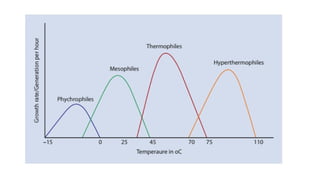
  • 45.
    Starter Culture(s) • Astarter culture may be defined as a preparation containing large numbers of desired microorganisms, used for accelerating the fermentation process. • The preparations may contain some unavoidable residues from the culture substrates and additives (such as antifreeze or antioxidant compounds), which support the vitality and technological functionality of the microorganisms. • A typical starter after being adapted to the substrate facilitates improved control of a fermentation process and predictability of its products. • Basically, there are three categories of starter cultures: (1) single-strain cultures, contain only one strain of a species; (2) multi-strain cultures, contain more than one strain of a single species; and (3) multi-strain mixed cultures, contain different strains from different species.
  • 46.
    • Microorganisms arenaturally omnipresent and hence observed in raw substrates. • This was the basis of the idea of spontaneous fermentation. • Backslopping was the important technological phenomenon used in spontaneous fermentation by inoculating the raw material with a small quantity of a previously performed successful fermentation. • Hence, the dominance of the best adapted strains resulted in backslopping. • This technology is still used for production of foods and beverages where the ecology and concrete knowledge about microbial population and role are not clearly known. • This is also an economical and reliable method of production of fermented foods.
  • 47.
    Recombinant Starter Culture •Recombinant technology and genetic manipulation offer extensive possibilities to incorporate new traits into organisms and have positive applications in food and pharmaceutical industries. • The recombinant Lactococcus is starter strains to produced peptidases from Lactobacillus helveticus 53/7 for potential use as an additional enzyme supply for accelerated proteolysis during cheese ripening. • It is possible to increase the production of exopolysaccharides (EPS) by Streptococcus thermophilus strains through genetic engineering of galactose metabolism. In situ production of EPS by starter sutures (S. thermophilus) is an alternative to the addition of biothickeners of fat- free yogurts. • Scientists reported both LABs (Lactobacillus plantarum NC8 and Lactobacillus casei) as potential expression hosts for recombinant enzyme [hyperthermophilic β-glycosidase (CelB)] production.
  • 48.
    Facets of Fermentation •Fermentation process is used by human beings for various processes from industrial applications to food and agriculture, bioremediation of organic wastes to biovalorization of food and agricultural wastes, etc. • Industrial fermentation is the intentional use of fermentation by microorganisms such as bacteria and fungi to make a product useful to humans. Production of Biomass • Microbial cells or biomass is sometimes the intended product of fermentation, for example, single-cell protein (SCP), baker’s yeast, lactobacillus, etc. SCP refers to edible unicellular microorganism. • The biomass (protein extract) from pure or mixed cultures of algae, yeasts, fungi, or bacteria may be used as an ingredient or a substitute for protein-rich foods and is suitable for human consumption or as animal feeds. • Baker’s yeast (Saccharomyces cerevisiae) is commonly used as a leavening agent in baking bread and bakery products, where it converts the fermentable sugars present in the dough into carbon dioxide and ethanol.
  • 49.
    Production of ExtracellularMetabolites • Metabolites can be divided into two groups: primary metabolites (ethanol, citric acid, glutamic acid, lysine, vitamins, and polysaccharides) and secondary metabolites (penicillin, cyclosporin-A, gibberellins, and lovastatin). Production of Intracellular Components • The intracellular components are several microbial enzymes, such as catalase, amylase, protease, pectinase, glucose isomerase, cellulase, hemicelluase, lipase, lactase, streptokinase, etc. • Moreover, the industrially synthesized recombinant proteins, such as insulin, hepatitis B vaccine, interferon, and granulocyte colony-stimulating factor, play an important role in health care.
  • 50.
    Food Fermentation • Fermentationof food is the ancient process of making bread, curds, idli, dosa, cheese, etc., from thousand years ago. • However, similar process is employed specifically to the conversion of sugars into ethanol producing alcoholic drinks such as wine, beer, and cider and in the preservation of sour foods with the production of lactic acid such as in sauerkraut and yogurt. • More localized foods prepared by fermentation may also be based on beans, grain, vegetables, fruit, honey, dairy products, fish, meat, or tea. Biofuels • Fermentation is the main source of ethanol in the production of ethanol fuel (i.e., ethyl alcohol) and butanol (butyl alcohol). • Common crops such as sugarcane, potato, cassava, and corn are fermented by yeast to produce ethanol and are further processed to produce motor fuel or biofuel additive to gasoline.
  • 51.
    Sewage Treatment • Sewagetreatment (also called “wastewater treatment”) is the process of removing contaminants from municipal wastewater (containing mainly household sewage plus some industrial wastewater). • In the process of sewage treatment, sewage is digested by enzymes secreted by bacteria. Animal Feeds • A wide variety of agricultural waste products can be fermented to use as food for animals, especially ruminants. • Fungi have been employed to break down cellulosic wastes to increase protein content and improve in vitro digestibility.
  • 52.
    Representative Metabolites Producedby Microorganisms • Microbial metabolites represent an incredibly diverse array of chemistry. Microbes can make molecules that synthetic chemists cannot access. • While over 25,000 microbial metabolites have been reported in the scientific literature, fewer than 2% of these have ever been readily available to the wider research community. • Most metabolites have only ever existed in small quantities in the research laboratory in which they were discovered, and their biological activity has never been fully investigated.
  • 54.
    Primary Metabolites • Primarymetabolites are vital molecules (e.g., amino acids, vitamins, nucleotides, solvents, or organic acids) of all living cells and are the end product of metabolic pathways or their intermediate products or are domicile of essential macromolecules or are converted into coenzymes. Amino Acids • The amino acid market is over $6 billion and has been growing at 5–10% for each year [9]. • For instance, monosodium glutamate, an effective flavor enhancer, is a leading amino acid in terms of tonnage. • Various species of the genera Corynebacterium and Brevibacterium (e.g., Corynebacterium glutamicum, Brevibacterium flavum, and Brevibacterium lactofermentum) are claimed to be producers of glutamate. Nucleotides and Nucleosides • The nucleotide/nucleoside fermentations are due to the activity of two purine ribonucleoside 5 -monophosphates, [i.e, ′ guanylic acid (5 -GMP) and inosinic acid (5 -IMP)]. ′ ′ • Three primary processes are involved: (i) hydrolysis and enzymatic deamination of yeast RNA to IMP, (ii) synthesis and phosphorylation of the nucleoside (inosine and guanosine) by Bacillus subtilis mutants, and (iii) direct fermentation of sugar to IMP (by Corynebacterium glutamicum mutants) and conversion of guanine to GMP (using intact cells of Brevibacterium ammoniagenes).
  • 55.
    • The intracellularAMP and GMP are limited for effective accumulation of purine nucleotides and are mostly explained by control feeding of purine auxotrophs, for instance, adenine-needing mutants deficient of nucleotide degrading enzymes (e.g., adenylosuccinate synthetase), which caused accumulation of inosine or hypoxanthine, which resulted from breakdown of intracellular accumulated IMP. Vitamins • Several microbial strains are responsible for the production of vitamins or vitamin-like compounds (e.g., β-carotene, vitamin B12, riboflavin, vitamin C, linolenic acid, vitamin F, and ergosterol). • Riboflavin (vitamin B2) has been produced commercially for many years by both fermentation and chemical synthesis; however, fermentation is the major route today. • For instance, two yeastlike molds, Eremothecium ashbyii and Ashbya gossypii, were found to synthesize riboflavin in concentrations more than 20 g/L. • Vitamin B12 (Cyanocobalamin) is formed industrially with Propionibacterium shermanii and Pseudomonas denitrificans. • The overproduction of vitamin B12 is absolutely dependent upon addition of betaine (the mechanism of control is unknown). • The P. freudenreicheii can produce 206 mg/L of vitamin B12 and is not still a dominant industrial producing organism.
  • 56.
    Organic Acids • Microbeshave been widely used for the commercial production of organic acids (e.g., citric acid, acetic acid, lactic acid, gluconic acid, pyruvic acid, malic acid, tartaric acid, succinic acid, and itaconic acid). • Among different types of organic acids, citric acid (CA) is easily palatable, assimilated, and has low toxicity. • Therefore, it is extensively used (about15%) in the pharmaceutical and food industry (as an antioxidant, acidifying and flavor-enhancing agent). • The CA is produced via the Embden–Meyerhof pathway (EMP) and the first step of the tricarboxylic acid (TCA) cycle. • Vinegar production is best carried out with species of Gluconacetobacter sp. And Acetobacter sp.. • However, vinegar is consisting of about 5–20% acetic acid (AA). Fermentation has virtually waived chemical synthesis of lactic acid (LA). • The LA is produced anaerobically with a 95% (w/w) yield based on carbohydrate, a titer of over 100 g/L, and a productivity of over 2 g/L.
  • 57.
    • This iscomparable to processes employing LA bacteria. • Lactobacilli produce mixed isomers, whereas Rhizopus forms L -(+)- LA exclusively. • Rhizopus oryzae is favored for formation since it makes only the stereochemically pure L-(+)-LA. • Itaconic acid is used as a comonomer in resins and synthetic fibers and is produced from the selective fungal (i.e., Candida) sp.. • Although microbial processes exist for the other acids, they have not been exploited commercially on a large scale. • Succinic acid can be made from the rumen organism Actinobacillus succinogenes at 110 g/L . • Pyruvic acid is formed at 69 g/L at 56 h with a yield of 0.62 g/g glucose using Torulopsis glabrata.
  • 58.
    Alcohols • Ethyl alcohol(C2H5OH) is a primary metabolite that can be formed from fermentation of a carbohydrate/sugar or a polysaccharide that can be depolymerized to a fermentable sugar. • Yeasts are preferred for these fermentations, but the species used depends on the substrate employed. • Saccharomyces cerevisiae is used for the fermentation of hexose, whereas Candida sp. or Kluyveromyces fragilis may be employed if pentose or lactose, respectively, is the substrate. • Ethanol is produced in Brazil from cane sugar at 12.5 billion liters/year and is used as a 25% fuel blend or as a pure fuel. • With regard to beverage ethanol, some 60 million tons of beer and 30 million tons of wine are produced each year. • Production of glycerol is usually done by chemical synthesis from petroleum feedstocks, but better fermentations processes are available. • Osmotolerant yeast strains (Candida glycerinogenes) can produce up to 130 g/L of glycerol. • Six hundred thousand tons of glycerol are produced annually by recovery as a by-product of the fat and oil industries, by synthesis from propylene, and, to a small extent, by glucose fermentation using Saccharomyces cerevisiae.
  • 59.
    Secondary Metabolites • Microbialsecondary metabolites are compounds produced by strains of certain microbial species (mainly by actinomycetes and fungi), usually late in the growth cycle (idiophase). • The production of secondary metabolites starts when growth is limited with exhaustion of one key nutrient source (i.e., carbon, nitrogen, or phosphate). • For example, penicillin biosynthesis by Penicillium chryosgenum starts when glucose is exhausted from the culture medium and the fungus starts consuming lactose, a less readily utilized glucose. • A characteristic of secondary metabolites is that they are usually not produced during the phase of rapid growth (trophophase) but are synthesized during a subsequent production stage (idiophase). • The secondary metabolites have an enormous range of biological activities and are extremely important to our health and nutrition. • A group that includes antibiotics, toxins, pesticides, animal and plant growth factors, and other medicines has tremendous economic importance.
  • 61.
    Antibiotics • The bestknown/recognized secondary metabolites are antibiotics (antimicrobial agent). • The antibiotic revolutionized medicine in twentieth century and its market involves about 160 antibiotics and derivatives, (e.g., β-lactam peptide antibiotics, the macrolide polyketides and polyketides, tetracyclines, aminoglycosides, and others). • The antiinfective market is framed of 62% antibacterials, 13% sera immunoglobulins and vaccines, 12% anti-HIV antivirals, 7% antifungals, and 6% non-HIV antivirals. • Titers of penicillin with Penicillium chrysogenum have reached 70 g/L, whereas those of Cephalosporin- C by Acremonium chrysogenum are over 30 g/L. • Published data on clavulanic acid production by Streptomyces clavuligerus indicate the titer to be above 3 g/L.
  • 62.
    Antitumor Agents • Eversince the discovery/origination of the Actinomycins by Waksman and Woodruff and the use of Actinomycin-D against the Wilms tumor in children, microbes have served as a prime source of anticancer agents. • The essential microbial molecules are mitomycin-C, bleomycin, daunorubicin, doxorubicin, etoposide, and calicheamicin, all are produced by Actinomycetes. • Taxol (paclitaxel) is a very productive compound against ovarian and breast cancer, produced by the endophytic fungi. • Another plant product is camptothecin (CPT), produced by certain angiosperms, which is a modified monoterpene indole alkaloid and is active against type I DNA topoisomerase. • Its water-soluble derivatives irinotecan and topotecan are used against cancer. • It also can be made by endophytic fungi.