Disclaimer: This presentation is prepared by trainees of
baabtra as a part of mentoring program. This is not official
document of baabtra –Mentoring Partner
Baabtra-Mentoring Partner is the mentoring division of baabte System Technologies Pvt .
Ltd
CLASSES AND OBJECTS
CLASS
• A Class is a way to bind the data and its
  associated functions together.
• An object is an instance of a class.
• Ideas about classes are:
  – A class can have subclasses that can inherit all or
    some of the characteristics of the class.
  – Subclasses can also define their own methods and
    variables that are not part of their superclass.
 ACCESS SPECIFIER
• private -members of a class are accessible
  only from within other members of the same
  class
• protected -members are accessible from
  members of their same class and from
  members of their derived classes.
• public members are accessible from anywhere
  where the object is visible
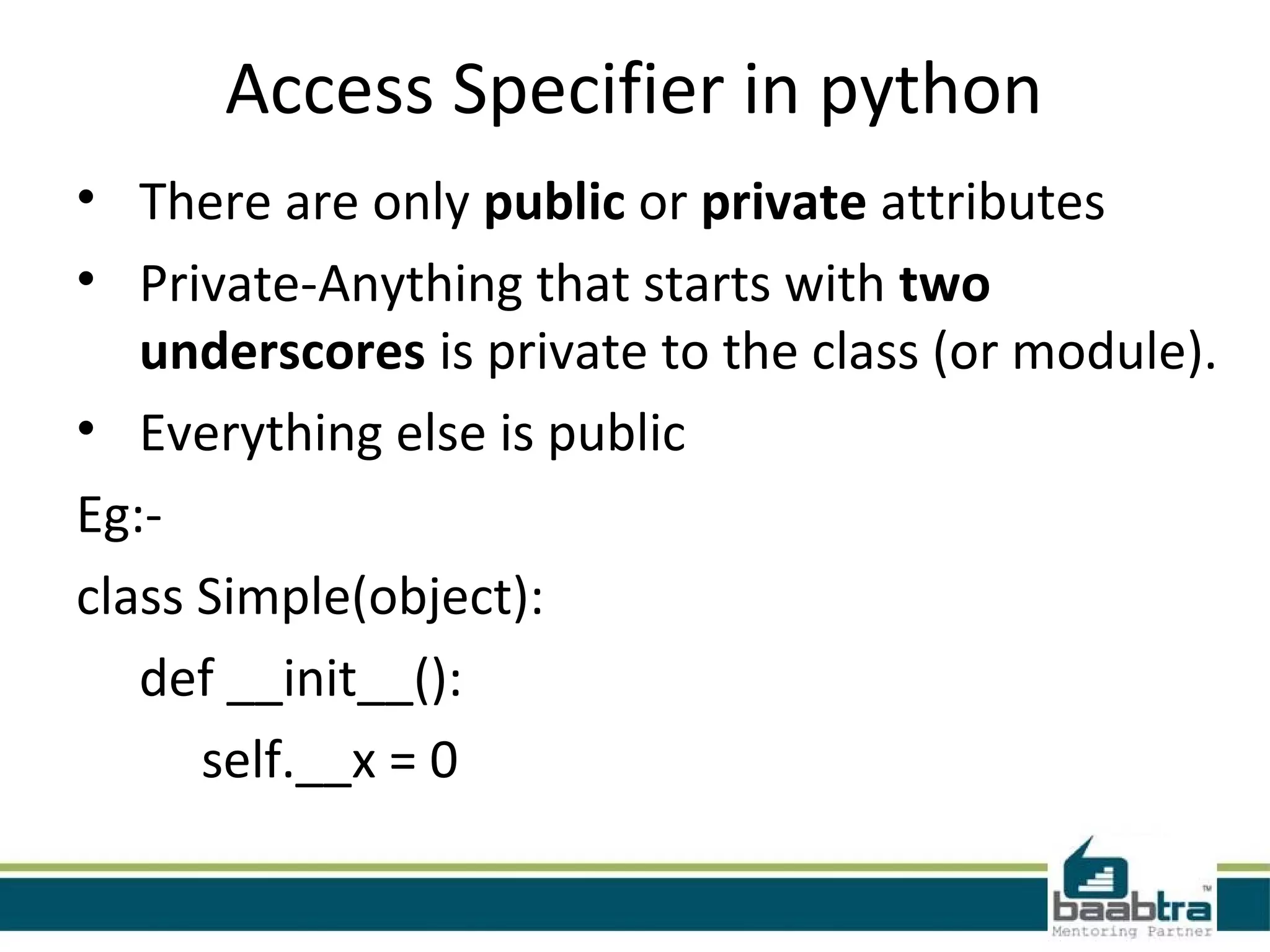
Access Specifier in python
• There are only public or private attributes
• Private-Anything that starts with two
   underscores is private to the class (or module).
• Everything else is public
Eg:-
class Simple(object):
   def __init__():
      self.__x = 0
Declaring a class in python
class name:
    statements
OBJECT
• An object that contains information about a
  user-defined type
• An object represents an entity in the real world
• Distinctly identified
  • For example, a student, a desk, a circle
• An object has an unique identity, state, and
  behaviors.
  – State-properties
  – Behavior-a set of methods.
Built-In Class Attributes:
__dict__ : Dictionary containing the class's namespace.
__doc__ : Class documentation string, or None if
  undefined.
__name__: Class name.
__module__: Module name in which the class is
  defined. This attribute is "__main__" in interactive
  mode.
__bases__ : A possibly empty tuple containing the
  base classes, in the order of their occurrence in the
  base class list.
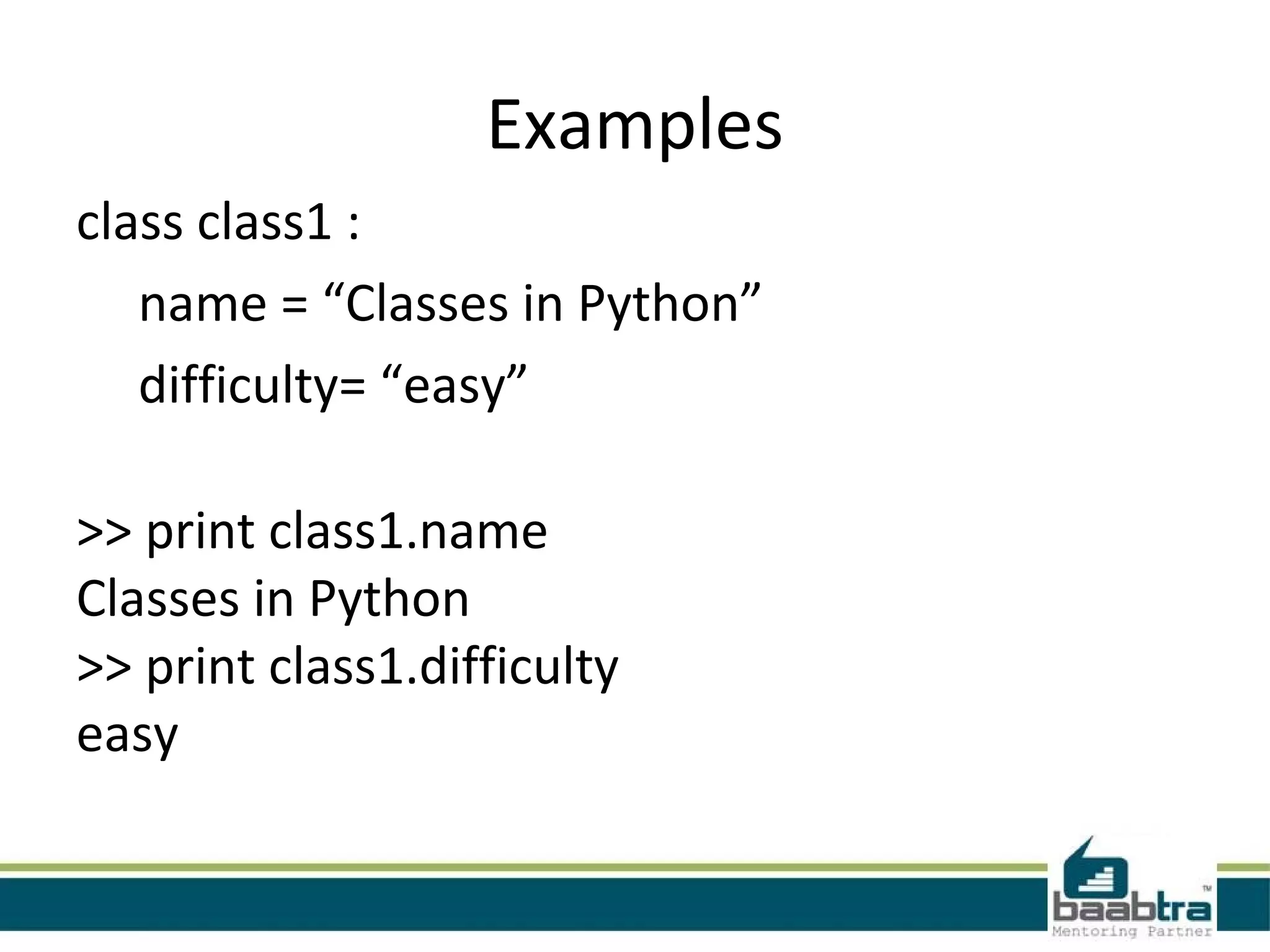
Examples
class class1 :
   name = “Classes in Python”
   difficulty= “easy”

>> print class1.name
Classes in Python
>> print class1.difficulty
easy
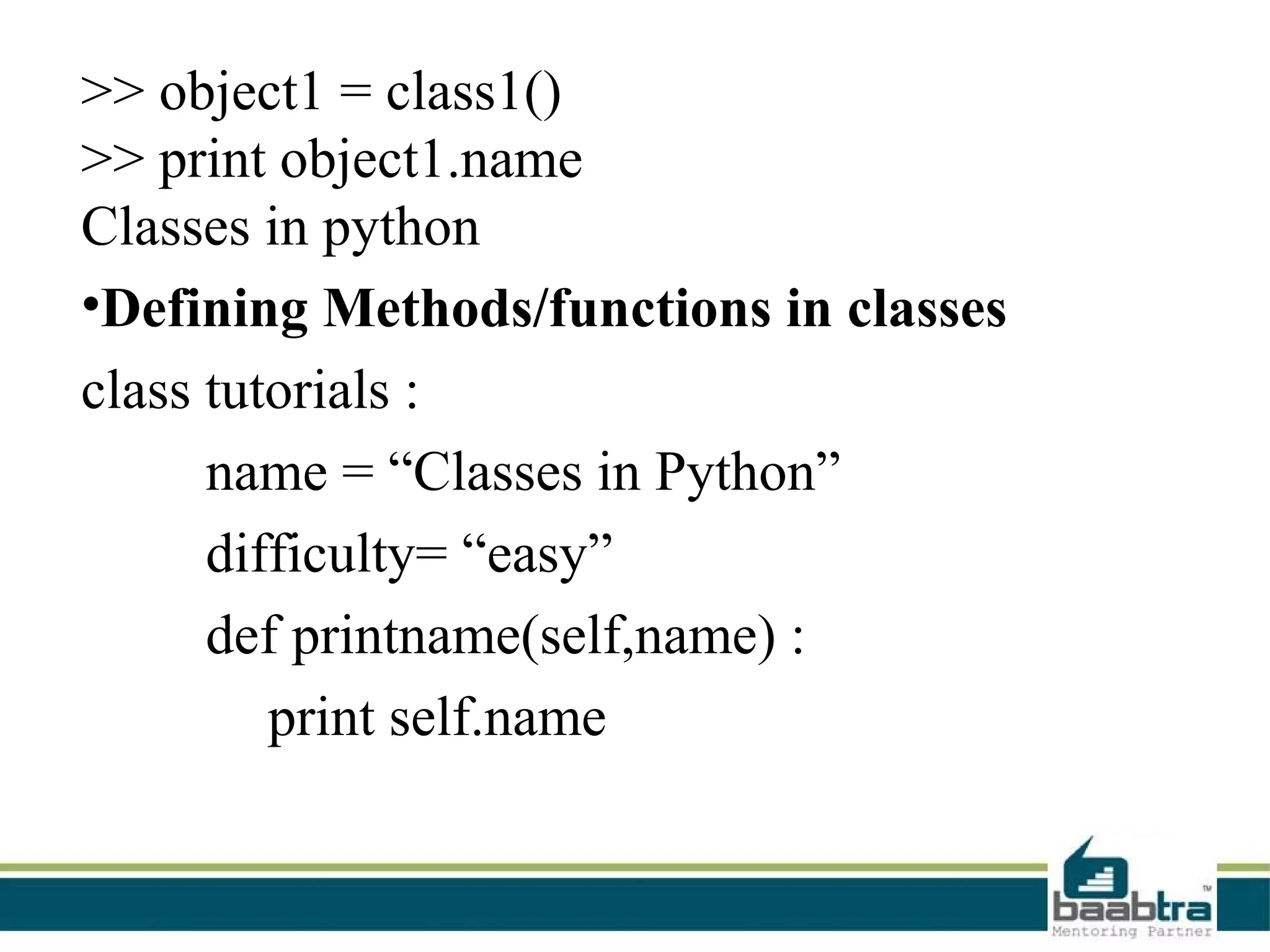
>> object1 = class1()
>> print object1.name
Classes in python
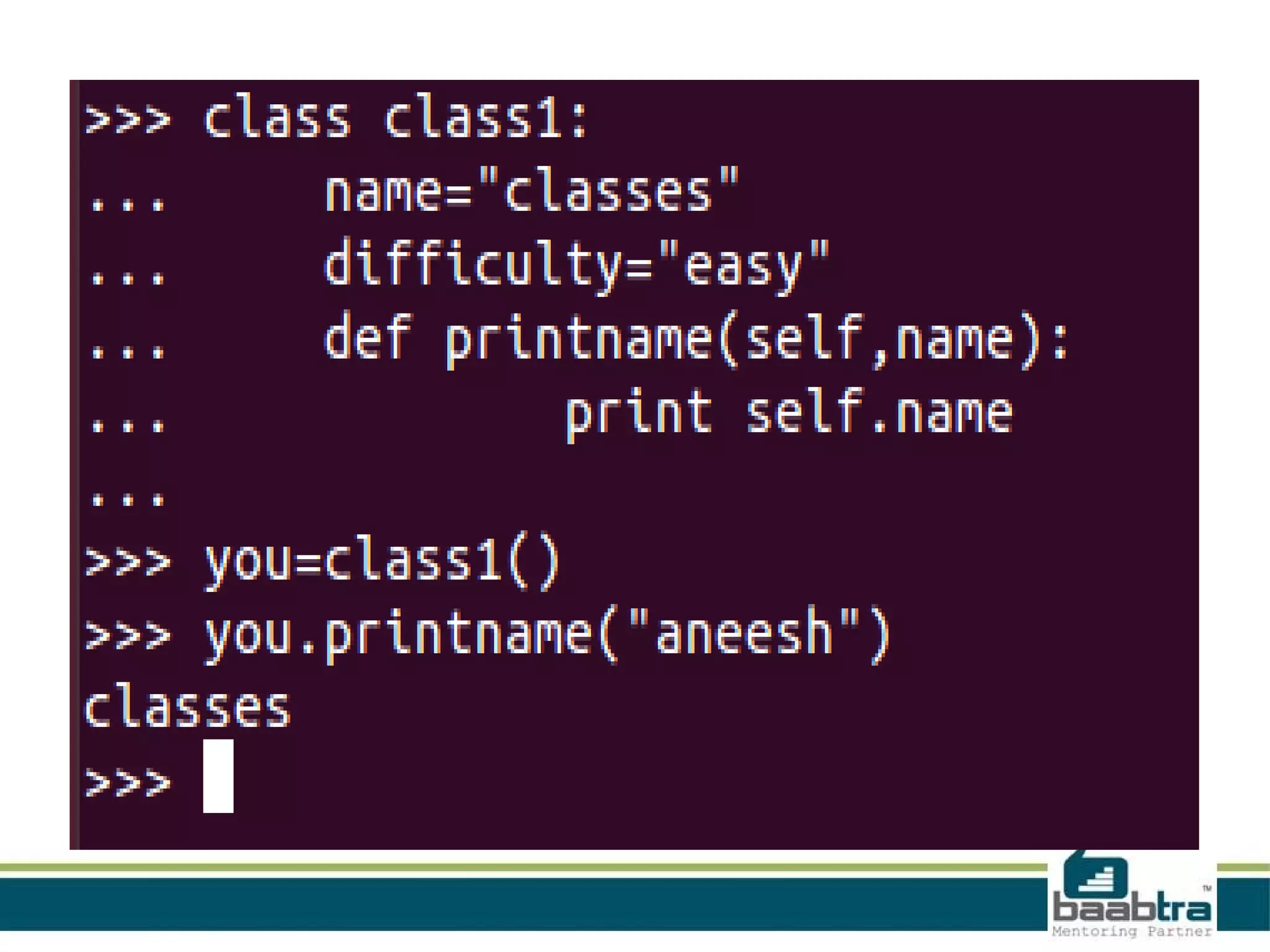
•Defining Methods/functions in classes
class tutorials :
      name = “Classes in Python”
      difficulty= “easy”
      def printname(self,name) :
         print self.name
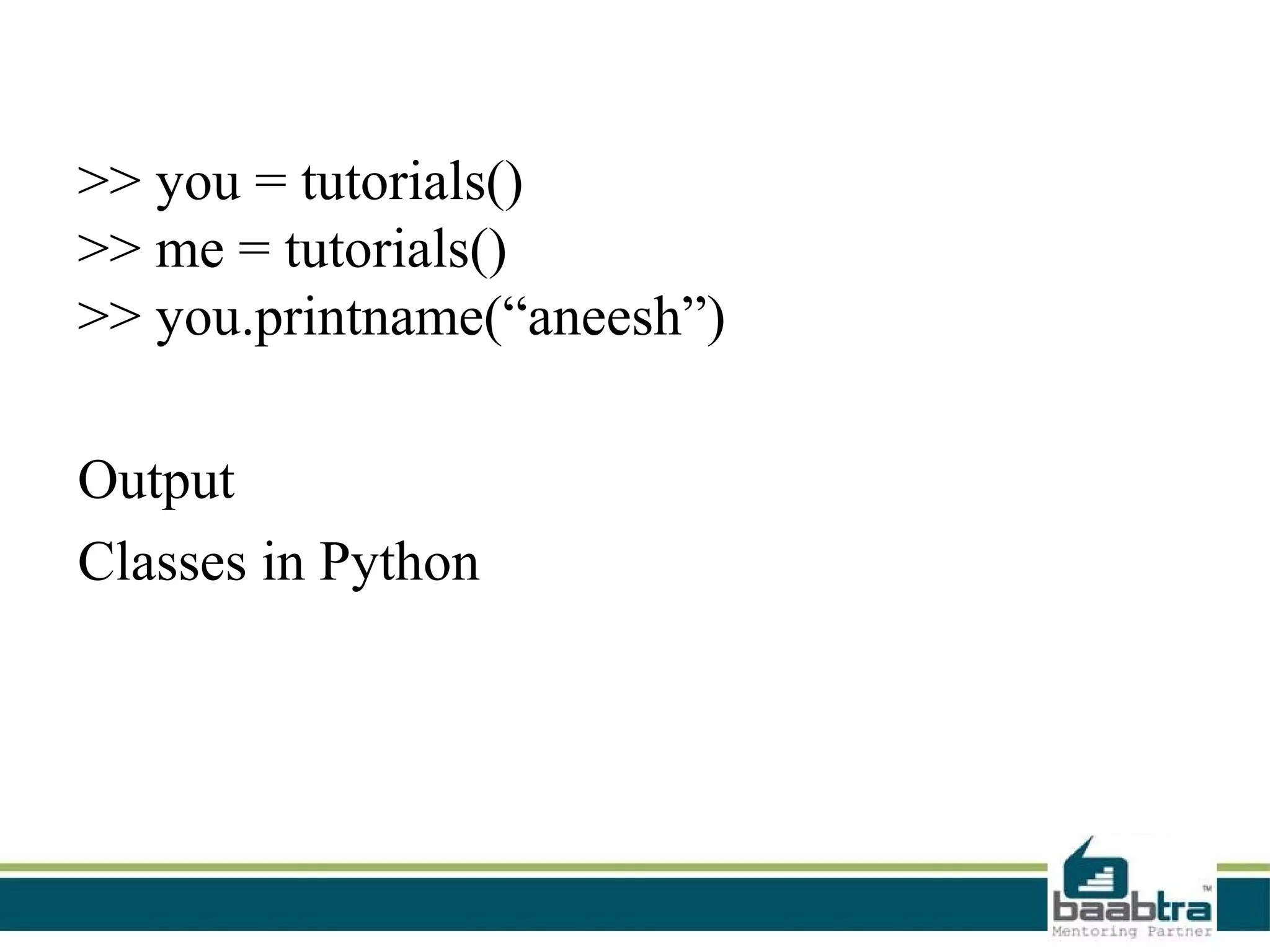
>> you = tutorials()
>> me = tutorials()
>> you.printname(“aneesh”)

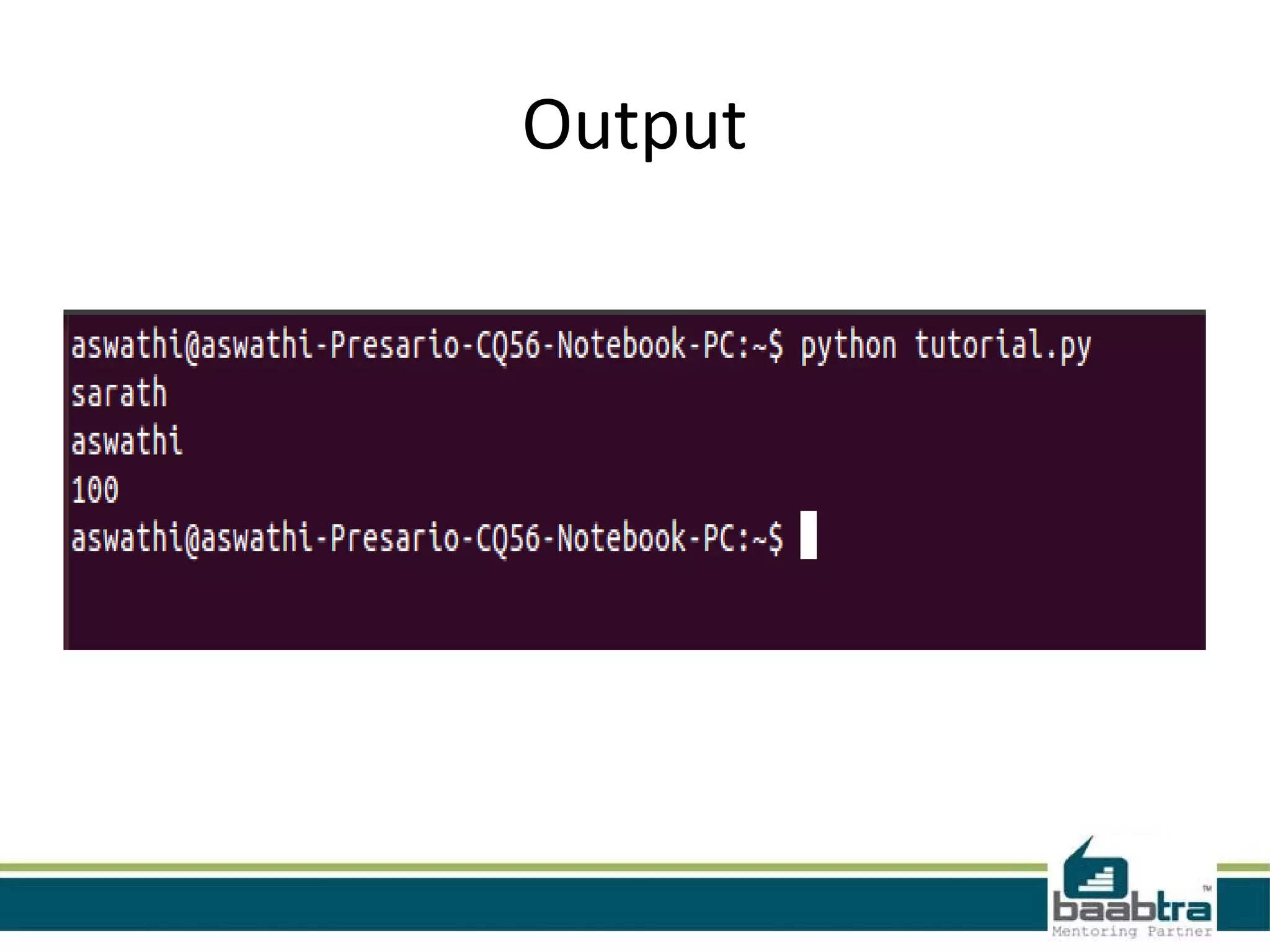
Output
Classes in Python
Output
If this presentation helped you, please visit our
           page facebook.com/baabtra and like it.
                 Thanks in advance.
www.baabtra.com | www.massbaab.com |www.baabte.com
Contact Us

Class

  • 2.
    Disclaimer: This presentationis prepared by trainees of baabtra as a part of mentoring program. This is not official document of baabtra –Mentoring Partner Baabtra-Mentoring Partner is the mentoring division of baabte System Technologies Pvt . Ltd
  • 3.
  • 4.
    CLASS • A Classis a way to bind the data and its associated functions together. • An object is an instance of a class. • Ideas about classes are: – A class can have subclasses that can inherit all or some of the characteristics of the class. – Subclasses can also define their own methods and variables that are not part of their superclass.
  • 5.
     ACCESS SPECIFIER • private -membersof a class are accessible only from within other members of the same class • protected -members are accessible from members of their same class and from members of their derived classes. • public members are accessible from anywhere where the object is visible
  • 6.
    Access Specifier inpython • There are only public or private attributes • Private-Anything that starts with two underscores is private to the class (or module). • Everything else is public Eg:- class Simple(object): def __init__(): self.__x = 0
  • 7.
    Declaring a classin python class name: statements
  • 8.
    OBJECT • An objectthat contains information about a user-defined type • An object represents an entity in the real world • Distinctly identified • For example, a student, a desk, a circle • An object has an unique identity, state, and behaviors. – State-properties – Behavior-a set of methods.
  • 9.
    Built-In Class Attributes: __dict__: Dictionary containing the class's namespace. __doc__ : Class documentation string, or None if undefined. __name__: Class name. __module__: Module name in which the class is defined. This attribute is "__main__" in interactive mode. __bases__ : A possibly empty tuple containing the base classes, in the order of their occurrence in the base class list.
  • 10.
    Examples class class1 : name = “Classes in Python” difficulty= “easy” >> print class1.name Classes in Python >> print class1.difficulty easy
  • 11.
    >> object1 =class1() >> print object1.name Classes in python •Defining Methods/functions in classes class tutorials : name = “Classes in Python” difficulty= “easy” def printname(self,name) : print self.name
  • 12.
    >> you =tutorials() >> me = tutorials() >> you.printname(“aneesh”) Output Classes in Python
  • 14.
  • 16.
    If this presentationhelped you, please visit our page facebook.com/baabtra and like it. Thanks in advance. www.baabtra.com | www.massbaab.com |www.baabte.com
  • 17.