Disclaimer: This presentation is prepared by trainees of
baabtra as a part of mentoring program. This is not official
document of baabtra –Mentoring Partner
Baabtra-Mentoring Partner is the mentoring division of baabte System Technologies Pvt .
Ltd
Title of the presentation


           Reshmi R
           reshmir@ymail.com
           www.facebook.com/reshmi.
             ramaswami
           twitter.com/reshmir1
           in.linkedin.com/in/reshmi r
           +917736719717
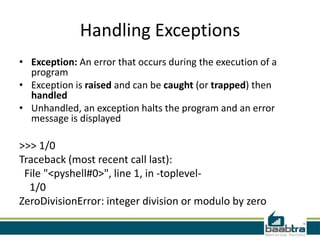
Handling Exceptions
• Exception: An error that occurs during the execution of a
  program
• Exception is raised and can be caught (or trapped) then
  handled
• Unhandled, an exception halts the program and an error
  message is displayed

>>> 1/0
Traceback (most recent call last):
 File "<pyshell#0>", line 1, in -toplevel-
  1/0
ZeroDivisionError: integer division or modulo by zero
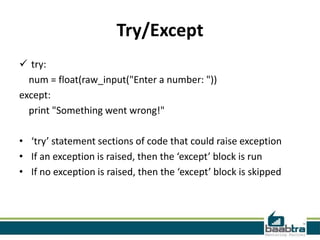
Try/Except
 try:
  num = float(raw_input("Enter a number: "))
except:
  print "Something went wrong!"

• ‘try’ statement sections of code that could raise exception
• If an exception is raised, then the ‘except’ block is run
• If no exception is raised, then the ‘except’ block is skipped
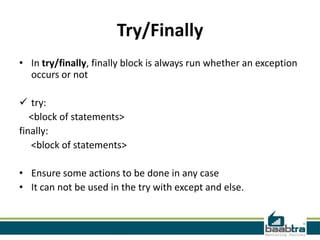
Try/Finally
• In try/finally, finally block is always run whether an exception
  occurs or not

 try:
   <block of statements>
finally:
   <block of statements>

• Ensure some actions to be done in any case
• It can not be used in the try with except and else.
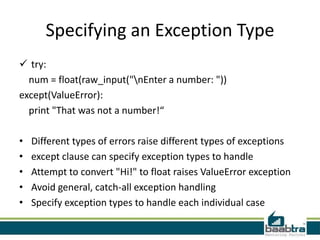
Specifying an Exception Type
 try:
  num = float(raw_input("nEnter a number: "))
except(ValueError):
  print "That was not a number!“

•   Different types of errors raise different types of exceptions
•   except clause can specify exception types to handle
•   Attempt to convert "Hi!" to float raises ValueError exception
•   Avoid general, catch-all exception handling
•   Specify exception types to handle each individual case
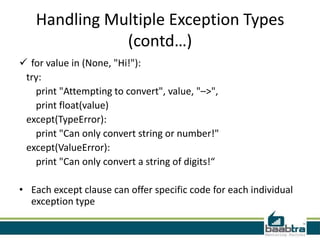
Handling Multiple Exception Types
              (contd…)
 for value in (None, "Hi!"):
 try:
   print "Attempting to convert", value, "–>",
   print float(value)
 except(TypeError):
   print "Can only convert string or number!"
 except(ValueError):
   print "Can only convert a string of digits!“

• Each except clause can offer specific code for each individual
  exception type
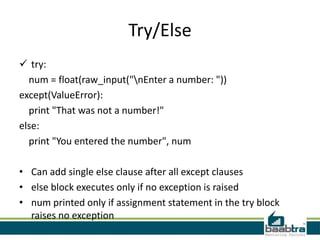
Try/Else
 try:
  num = float(raw_input("nEnter a number: "))
except(ValueError):
  print "That was not a number!"
else:
  print "You entered the number", num

• Can add single else clause after all except clauses
• else block executes only if no exception is raised
• num printed only if assignment statement in the try block
  raises no exception
If this presentation helped you, please visit our
           page facebook.com/baabtra and like it.
               Thanks in advance.
www.baabtra.com | www.massbaab.com |www.baabte.com
Contact Us

Exception handling

  • 2.
    Disclaimer: This presentationis prepared by trainees of baabtra as a part of mentoring program. This is not official document of baabtra –Mentoring Partner Baabtra-Mentoring Partner is the mentoring division of baabte System Technologies Pvt . Ltd
  • 3.
    Title of thepresentation Reshmi R reshmir@ymail.com www.facebook.com/reshmi. ramaswami twitter.com/reshmir1 in.linkedin.com/in/reshmi r +917736719717
  • 4.
    Handling Exceptions • Exception:An error that occurs during the execution of a program • Exception is raised and can be caught (or trapped) then handled • Unhandled, an exception halts the program and an error message is displayed >>> 1/0 Traceback (most recent call last): File "<pyshell#0>", line 1, in -toplevel- 1/0 ZeroDivisionError: integer division or modulo by zero
  • 5.
    Try/Except  try: num = float(raw_input("Enter a number: ")) except: print "Something went wrong!" • ‘try’ statement sections of code that could raise exception • If an exception is raised, then the ‘except’ block is run • If no exception is raised, then the ‘except’ block is skipped
  • 6.
    Try/Finally • In try/finally,finally block is always run whether an exception occurs or not  try: <block of statements> finally: <block of statements> • Ensure some actions to be done in any case • It can not be used in the try with except and else.
  • 7.
    Specifying an ExceptionType  try: num = float(raw_input("nEnter a number: ")) except(ValueError): print "That was not a number!“ • Different types of errors raise different types of exceptions • except clause can specify exception types to handle • Attempt to convert "Hi!" to float raises ValueError exception • Avoid general, catch-all exception handling • Specify exception types to handle each individual case
  • 8.
    Handling Multiple ExceptionTypes (contd…)  for value in (None, "Hi!"): try: print "Attempting to convert", value, "–>", print float(value) except(TypeError): print "Can only convert string or number!" except(ValueError): print "Can only convert a string of digits!“ • Each except clause can offer specific code for each individual exception type
  • 9.
    Try/Else  try: num = float(raw_input("nEnter a number: ")) except(ValueError): print "That was not a number!" else: print "You entered the number", num • Can add single else clause after all except clauses • else block executes only if no exception is raised • num printed only if assignment statement in the try block raises no exception
  • 10.
    If this presentationhelped you, please visit our page facebook.com/baabtra and like it. Thanks in advance. www.baabtra.com | www.massbaab.com |www.baabte.com
  • 11.