• Hybridization:- Mating or crossing of two plants or lines of
dissimilar genotypes is known as hybridization
• Male and Female parent
• Hybrid
• Aims
* Transfer of one or few qualitative characters
* Improvement in one or more quantitative characters.
* Use of F1 hybrid as a variety
• Objectives
* To create genetic variation
* Combination Breeding
* Transgressive Breeding
* Hybrid varieties
Types of Hybridization
Intervarietal – Intraspecific hybridization
- simple cross
- complex cross
- convergent cross –
Converging./ bringing together
genes from several parents
Distant Hybridization – Cross between different species of
same genus or different genera
• Interspecific
• Intergeneric
Procedure/Steps in Hybridization Programme
1. Choice of parents:
2. Evaluation of parents
3. Emasculation – Hand Emasculation – 4 to 6 pm
- Suction Method -
- Hot water - 42 – 480C
for 10 min. jawar
- Alcohol -50-60%
alchohol for 10-15 Sec.
- Cold treatment-.Cold water 0-60 c
kills polten
- Genetic emasculation -
Male sterility, self incompatibility
4. Bagging – Female inflorescence/flower emasculated
bagged
- Male flowers/inflorescence bagged for
purity of pollengrains.
- Butter paper parchment paper bags.
- 2-3 days after pollination bag is removed.
5. Tagging - Circular tag of 3cm diameter
- 3x2 rectangular tags
- Labeled with Date of Emasculation, Date of
Pollination, Name of female parent and name
of male parent
6. Pollination – Collecting pollens from freshly
dehisced anthers of male parent and
dusting on the stigma of emasculated
flowers.
Pollens are collected in bag and used for dusting the stigma
of female inflorescence or emasculated flower
Mature anthers are collected from male parent flowers,
when pollen liberated, applied to the stigma of female
flower with help of camel hair brush, tooth pick or forceps
Anthers are collected and inserted into the floret and allow
to burst
Spikes of male inflorescence in shaken over the
emasculated inflorescence just when the anthers are about
to dehisce
The inflorescence is detached and enclosed in the bag
covering the female inflorescence e.g. Maize
7. Harvesting and storage of seed.
Wide/Distant Hybridization
Hybridization between individuals from different
species belonging to the same genera or different
genera is called as distant/ wide hybridization.
Such cross called as distant/wide cross.
Interspecific/ intrageneric
intergeneric
Features of wide hybridization
Incompatible crosses
F1 sterility – Variable fertility
Problems in creating new species
Lack of homology between chromosomes of
parental species.
Undesirable linkage
Lack of flowering in F1,
Genus Glycine fall to flower.
Grafting on G. max induce flower
Improved variety using problem
dormancy
Barriers in distant hybridization
Difficulties for production of interspecific /distant
hybrids varies greatly
In tomato Lycopersicon esculentum crosses readily
with L. pimpinellifolium
Brassica oleracea (cabhage) does not readily
hybridize to B. rapa or B. napus
Closely related species crosses more easily than more
distantly related.
Barriers
Failure of zygote formation
Failure of zygote development
Failure of Hybrid seedling development
Failure of zygote formation
Zygote is not formed due to failure of fertilization
Pollen tube unable to reach to embryosac & effect
fertilization
Pollen tube burst into style/style is more longer than
pollentube normal growth.
Failure of zygote development
Fertilization takes place and zygote is produced but zygote
development is blocked at many stages due to
1) Lethal genes: Death of zygote at early dev. Stage
2) Genotypic disharmony Between two parental genome
3) Chromosome elimination – Haploid formation
4) Incompatible cytoplasm-
5) Endosperm abortion-
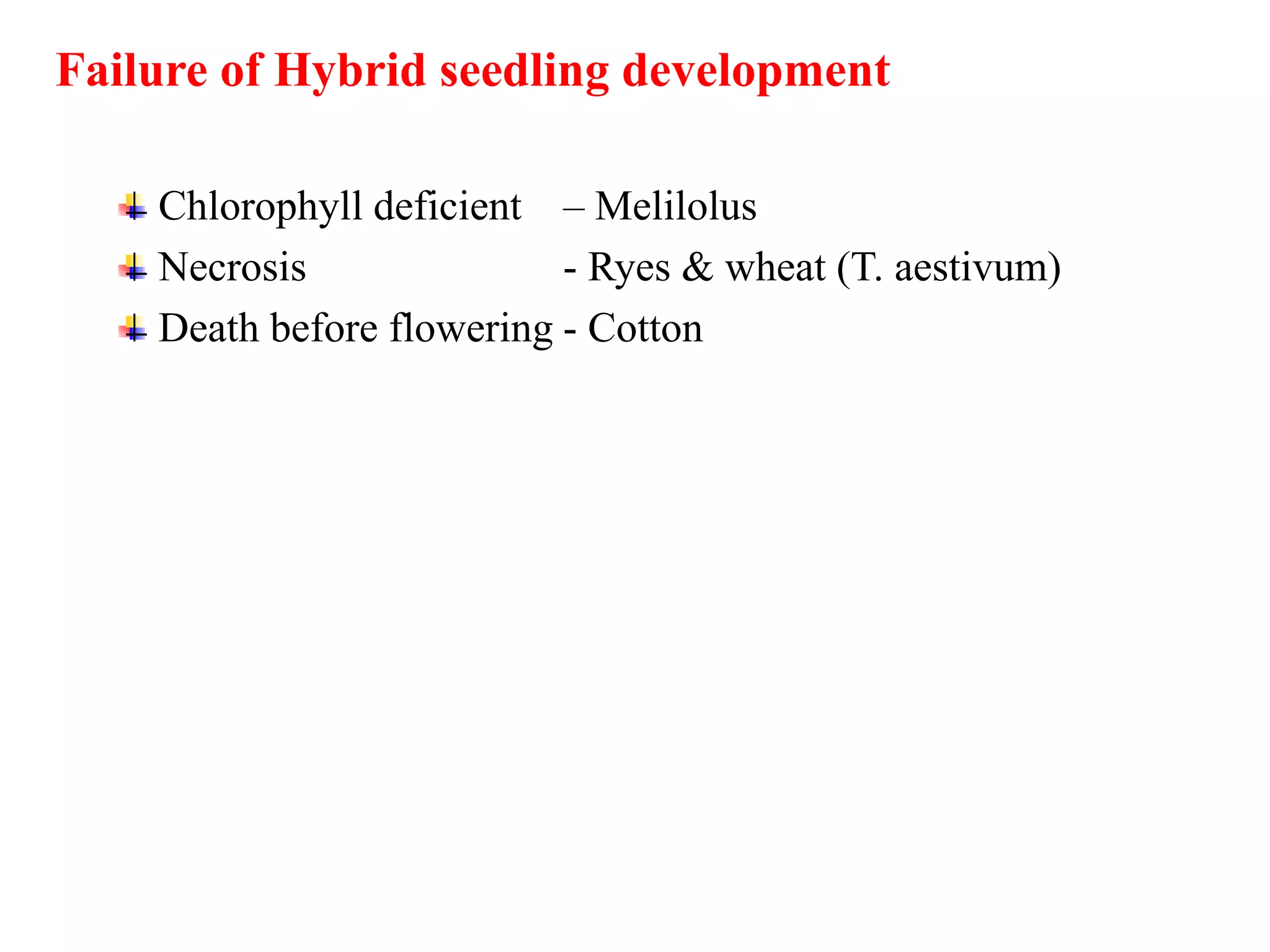
Failure of Hybrid seedling development
Chlorophyll deficient – Melilolus
Necrosis - Ryes & wheat (T. aestivum)
Death before flowering - Cotton
Failure of Hybrid seedling development
Chlorophyll deficient – Melilolus
Necrosis - Ryes & wheat (T. aestivum)
Death before flowering - Cotton
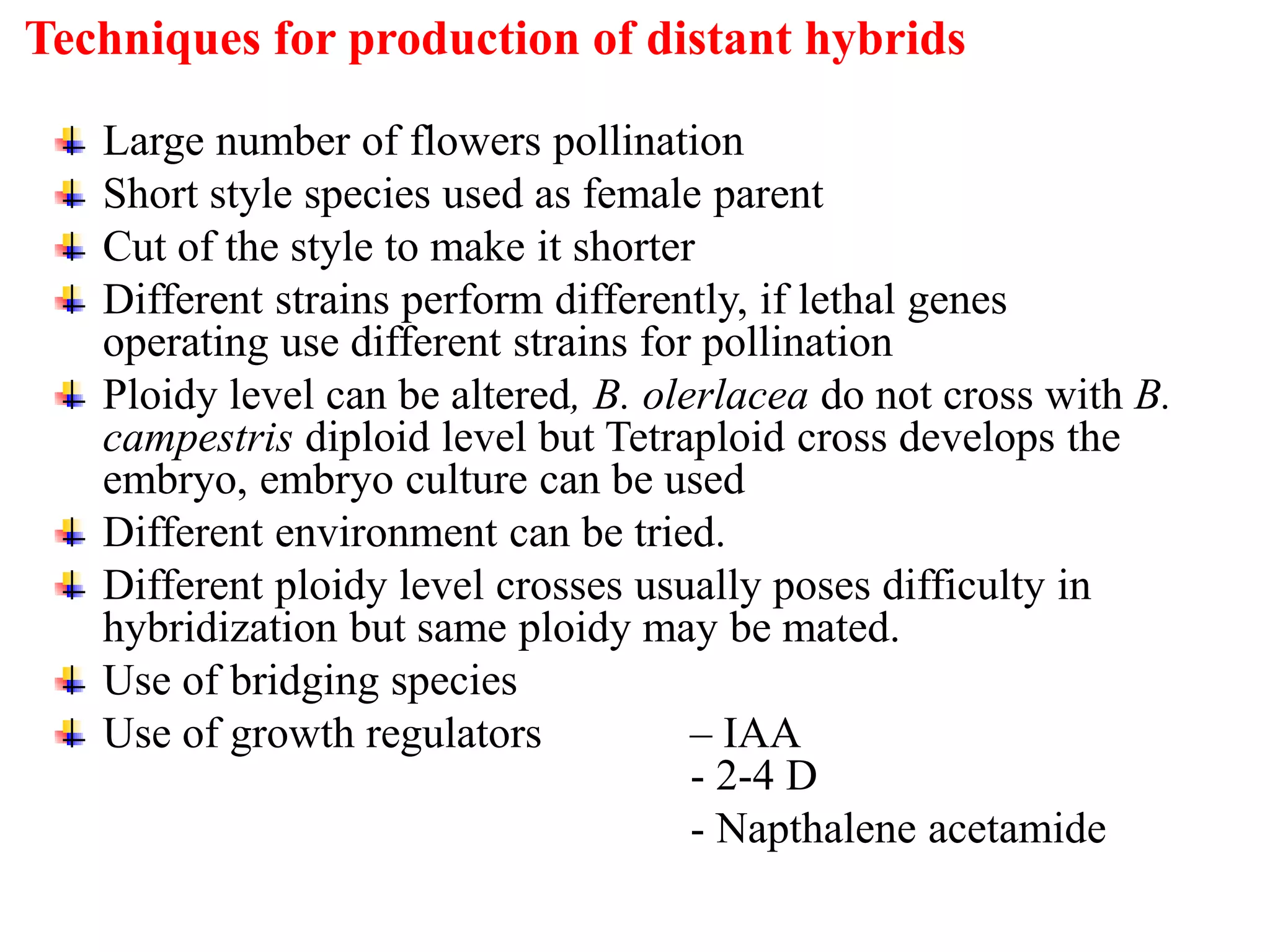
Large number of flowers pollination
Short style species used as female parent
Cut of the style to make it shorter
Different strains perform differently, if lethal genes
operating use different strains for pollination
Ploidy level can be altered, B. olerlacea do not cross with B.
campestris diploid level but Tetraploid cross develops the
embryo, embryo culture can be used
Different environment can be tried.
Different ploidy level crosses usually poses difficulty in
hybridization but same ploidy may be mated.
Use of bridging species
Use of growth regulators – IAA
- 2-4 D
- Napthalene acetamide
Techniques for production of distant hybrids
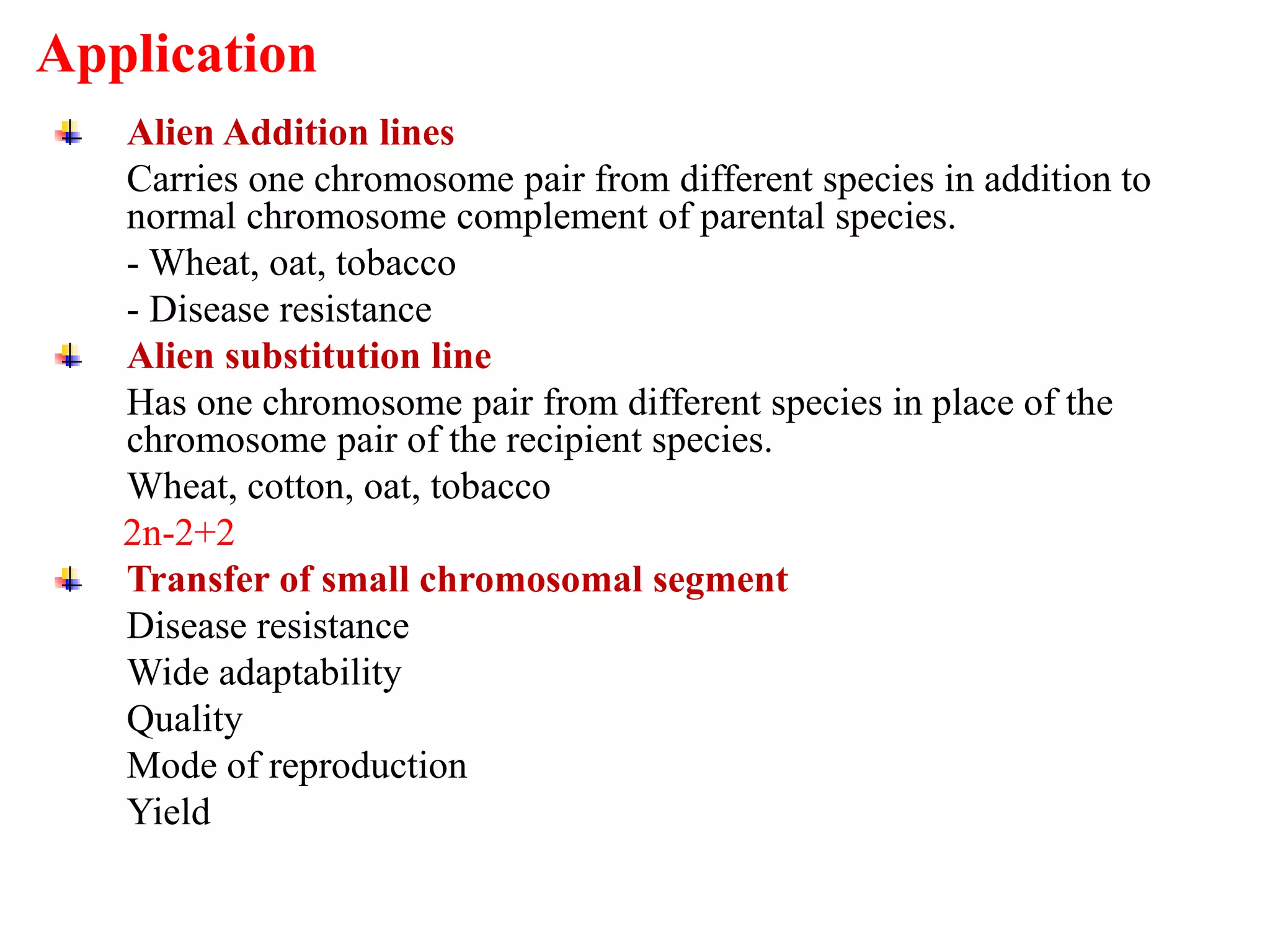
Alien Addition lines
Carries one chromosome pair from different species in addition to
normal chromosome complement of parental species.
- Wheat, oat, tobacco
- Disease resistance
Alien substitution line
Has one chromosome pair from different species in place of the
chromosome pair of the recipient species.
Wheat, cotton, oat, tobacco
2n-2+2
Transfer of small chromosomal segment
Disease resistance
Wide adaptability
Quality
Mode of reproduction
Yield
Application
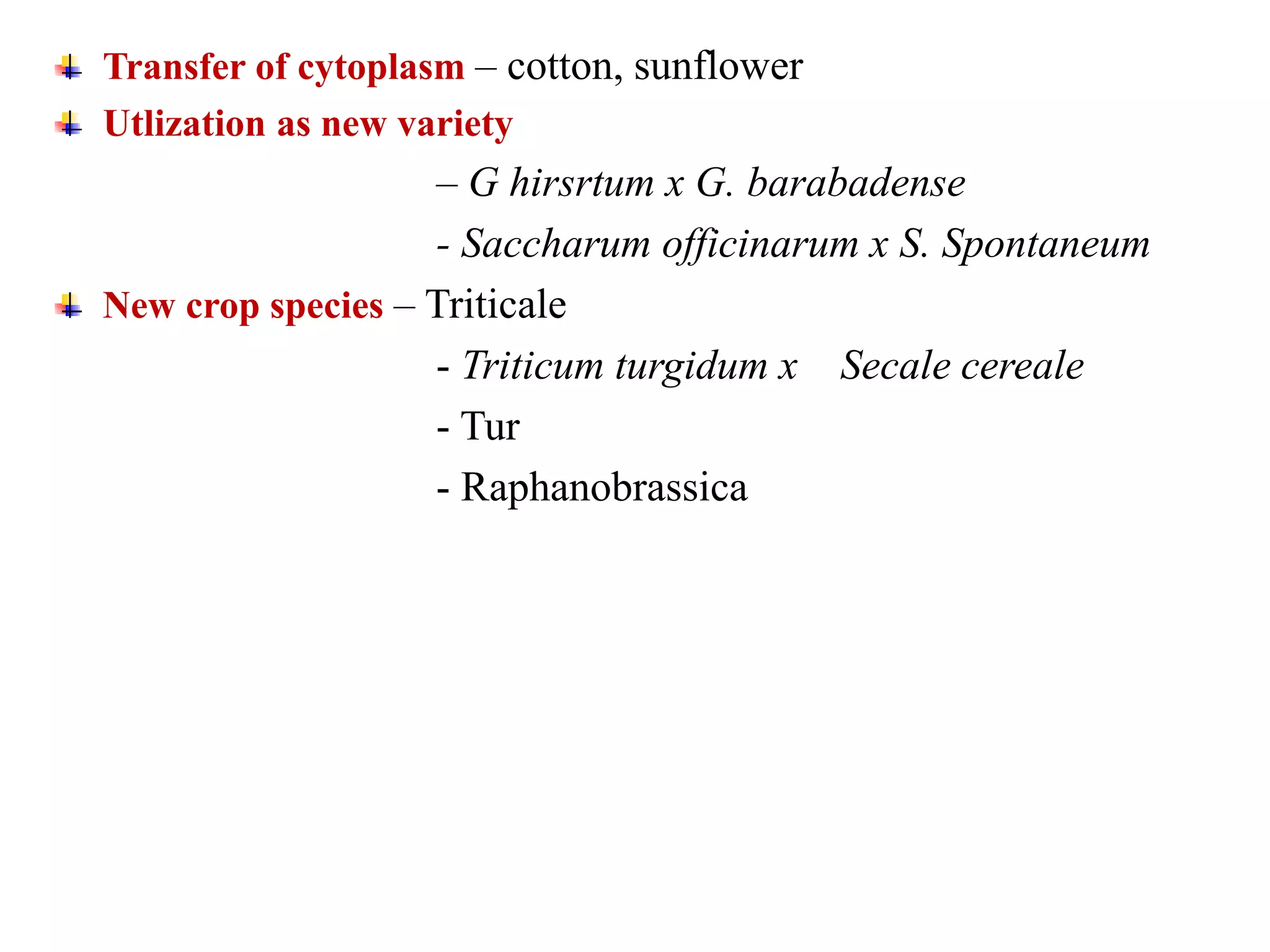
Transfer of cytoplasm – cotton, sunflower
Utlization as new variety
– G hirsrtum x G. barabadense
- Saccharum officinarum x S. Spontaneum
New crop species – Triticale
- Triticum turgidum x Secale cereale
- Tur
- Raphanobrassica
Cotton – Cytoplasmic sterility from
G. harknessii G. aridum
Parbhani kranti okra variety derived from cross of
pusa sawani x A. manihot resistant to YVM
Triticale hexaploide
Achievements

CLass 12 GPB 232Hybridization Techniques.pptx

  • 1.
    • Hybridization:- Matingor crossing of two plants or lines of dissimilar genotypes is known as hybridization • Male and Female parent • Hybrid • Aims * Transfer of one or few qualitative characters * Improvement in one or more quantitative characters. * Use of F1 hybrid as a variety • Objectives * To create genetic variation * Combination Breeding * Transgressive Breeding * Hybrid varieties
  • 2.
    Types of Hybridization Intervarietal– Intraspecific hybridization - simple cross - complex cross - convergent cross – Converging./ bringing together genes from several parents Distant Hybridization – Cross between different species of same genus or different genera • Interspecific • Intergeneric
  • 3.
    Procedure/Steps in HybridizationProgramme 1. Choice of parents: 2. Evaluation of parents 3. Emasculation – Hand Emasculation – 4 to 6 pm - Suction Method - - Hot water - 42 – 480C for 10 min. jawar - Alcohol -50-60% alchohol for 10-15 Sec. - Cold treatment-.Cold water 0-60 c kills polten - Genetic emasculation - Male sterility, self incompatibility
  • 4.
    4. Bagging –Female inflorescence/flower emasculated bagged - Male flowers/inflorescence bagged for purity of pollengrains. - Butter paper parchment paper bags. - 2-3 days after pollination bag is removed. 5. Tagging - Circular tag of 3cm diameter - 3x2 rectangular tags - Labeled with Date of Emasculation, Date of Pollination, Name of female parent and name of male parent 6. Pollination – Collecting pollens from freshly dehisced anthers of male parent and dusting on the stigma of emasculated flowers.
  • 5.
    Pollens are collectedin bag and used for dusting the stigma of female inflorescence or emasculated flower Mature anthers are collected from male parent flowers, when pollen liberated, applied to the stigma of female flower with help of camel hair brush, tooth pick or forceps Anthers are collected and inserted into the floret and allow to burst Spikes of male inflorescence in shaken over the emasculated inflorescence just when the anthers are about to dehisce The inflorescence is detached and enclosed in the bag covering the female inflorescence e.g. Maize 7. Harvesting and storage of seed.
  • 6.
    Wide/Distant Hybridization Hybridization betweenindividuals from different species belonging to the same genera or different genera is called as distant/ wide hybridization. Such cross called as distant/wide cross. Interspecific/ intrageneric intergeneric
  • 7.
    Features of widehybridization Incompatible crosses F1 sterility – Variable fertility Problems in creating new species Lack of homology between chromosomes of parental species. Undesirable linkage Lack of flowering in F1, Genus Glycine fall to flower. Grafting on G. max induce flower Improved variety using problem dormancy
  • 8.
    Barriers in distanthybridization Difficulties for production of interspecific /distant hybrids varies greatly In tomato Lycopersicon esculentum crosses readily with L. pimpinellifolium Brassica oleracea (cabhage) does not readily hybridize to B. rapa or B. napus Closely related species crosses more easily than more distantly related.
  • 9.
    Barriers Failure of zygoteformation Failure of zygote development Failure of Hybrid seedling development Failure of zygote formation Zygote is not formed due to failure of fertilization Pollen tube unable to reach to embryosac & effect fertilization Pollen tube burst into style/style is more longer than pollentube normal growth.
  • 10.
    Failure of zygotedevelopment Fertilization takes place and zygote is produced but zygote development is blocked at many stages due to 1) Lethal genes: Death of zygote at early dev. Stage 2) Genotypic disharmony Between two parental genome 3) Chromosome elimination – Haploid formation 4) Incompatible cytoplasm- 5) Endosperm abortion- Failure of Hybrid seedling development Chlorophyll deficient – Melilolus Necrosis - Ryes & wheat (T. aestivum) Death before flowering - Cotton
  • 11.
    Failure of Hybridseedling development Chlorophyll deficient – Melilolus Necrosis - Ryes & wheat (T. aestivum) Death before flowering - Cotton
  • 12.
    Large number offlowers pollination Short style species used as female parent Cut of the style to make it shorter Different strains perform differently, if lethal genes operating use different strains for pollination Ploidy level can be altered, B. olerlacea do not cross with B. campestris diploid level but Tetraploid cross develops the embryo, embryo culture can be used Different environment can be tried. Different ploidy level crosses usually poses difficulty in hybridization but same ploidy may be mated. Use of bridging species Use of growth regulators – IAA - 2-4 D - Napthalene acetamide Techniques for production of distant hybrids
  • 13.
    Alien Addition lines Carriesone chromosome pair from different species in addition to normal chromosome complement of parental species. - Wheat, oat, tobacco - Disease resistance Alien substitution line Has one chromosome pair from different species in place of the chromosome pair of the recipient species. Wheat, cotton, oat, tobacco 2n-2+2 Transfer of small chromosomal segment Disease resistance Wide adaptability Quality Mode of reproduction Yield Application
  • 14.
    Transfer of cytoplasm– cotton, sunflower Utlization as new variety – G hirsrtum x G. barabadense - Saccharum officinarum x S. Spontaneum New crop species – Triticale - Triticum turgidum x Secale cereale - Tur - Raphanobrassica
  • 15.
    Cotton – Cytoplasmicsterility from G. harknessii G. aridum Parbhani kranti okra variety derived from cross of pusa sawani x A. manihot resistant to YVM Triticale hexaploide Achievements