Cinematography
Establishing shot
Establishing shot
Can be taken from as much as a mile away, and is generally
used as a scene setting, establishing shot normally shows an
exterior e.g. outside of a building or a landscape.
Extreme close up
As its name suggests an extreme version of a close up,
generally magnifying beyond the human eye. If a person,
usually of eye or mouth.
Long shot
The camera is placed far away to capture a large area view.
Usually the opening shot of the movie. If a person we see all of
them from head to toe.
Point of view
This is a shot where we see what the actor see’s through their
own eyes.
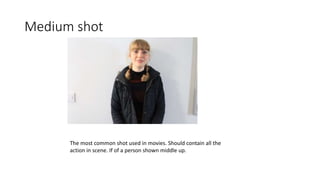
Medium shot
The most common shot used in movies. Should contain all the
action in scene. If of a person shown middle up.
Over the shoulder
This is a shot where we see what the actor see’s but not
through their eyes, filmed over the shoulder.
Medium close up
Similar to a medium shot but closer.
Two shot
This shows a conversation/link or reaction between actors.
How close or far away shows relationship.
Tilted
A movement which scans a scene vertically. Makes audience feel disorientated.
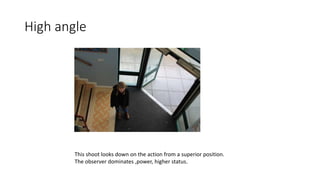
High angle
This shoot looks down on the action from a superior position.
The observer dominates ,power, higher status.
Dolly shot
Sometime called a tracking shot. The camera is placed on a moving
vehicle.
Zoom/ reverse zoom
a shot that views the action from the opposite side of the
previous shot, as during a conversation between two actors,
giving the effect of looking from one actor to the other
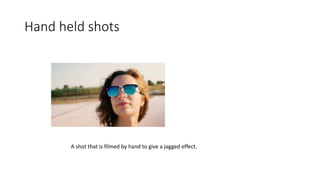
Hand held shots
A shot that is filmed by hand to give a jagged effect.
Tilts
A movement which scans a scene vertically. Makes audience
feel disorientated.

Cinematography

  • 1.
  • 2.
    Establishing shot Establishing shot Canbe taken from as much as a mile away, and is generally used as a scene setting, establishing shot normally shows an exterior e.g. outside of a building or a landscape.
  • 3.
    Extreme close up Asits name suggests an extreme version of a close up, generally magnifying beyond the human eye. If a person, usually of eye or mouth.
  • 4.
    Long shot The camerais placed far away to capture a large area view. Usually the opening shot of the movie. If a person we see all of them from head to toe.
  • 5.
    Point of view Thisis a shot where we see what the actor see’s through their own eyes.
  • 6.
    Medium shot The mostcommon shot used in movies. Should contain all the action in scene. If of a person shown middle up.
  • 7.
    Over the shoulder Thisis a shot where we see what the actor see’s but not through their eyes, filmed over the shoulder.
  • 8.
    Medium close up Similarto a medium shot but closer.
  • 9.
    Two shot This showsa conversation/link or reaction between actors. How close or far away shows relationship.
  • 10.
    Tilted A movement whichscans a scene vertically. Makes audience feel disorientated.
  • 11.
    High angle This shootlooks down on the action from a superior position. The observer dominates ,power, higher status.
  • 12.
    Dolly shot Sometime calleda tracking shot. The camera is placed on a moving vehicle.
  • 13.
    Zoom/ reverse zoom ashot that views the action from the opposite side of the previous shot, as during a conversation between two actors, giving the effect of looking from one actor to the other
  • 14.
    Hand held shots Ashot that is filmed by hand to give a jagged effect.
  • 15.
    Tilts A movement whichscans a scene vertically. Makes audience feel disorientated.