Chromosomal Basis of Inheritance
Ayesha safdar
17130814-029
Animal genetics
Msc-2nd
Objectives
 Be familiar with patterns of inheritance for autosomal and sex linked
genes
 Understand the concept of “Linked Genes”
 Understand how traits affected by incomplete dominance and
codominance differ from autosomal dominant and autosomal
recessive traits
 Understand how nondisjunction of chromosomes can lead to
disorders.
Linked Genes
Linked genes: are those that reside on the same chromosome
and tend to be inherited together
Humans have 23 pairs of chromosomes
 Autosomal genes reside on the autosomal
chromosomes (pairs 1-22)
 Sex-linked genes are found on the sex chromosomes
(pair 23, usually on the X)
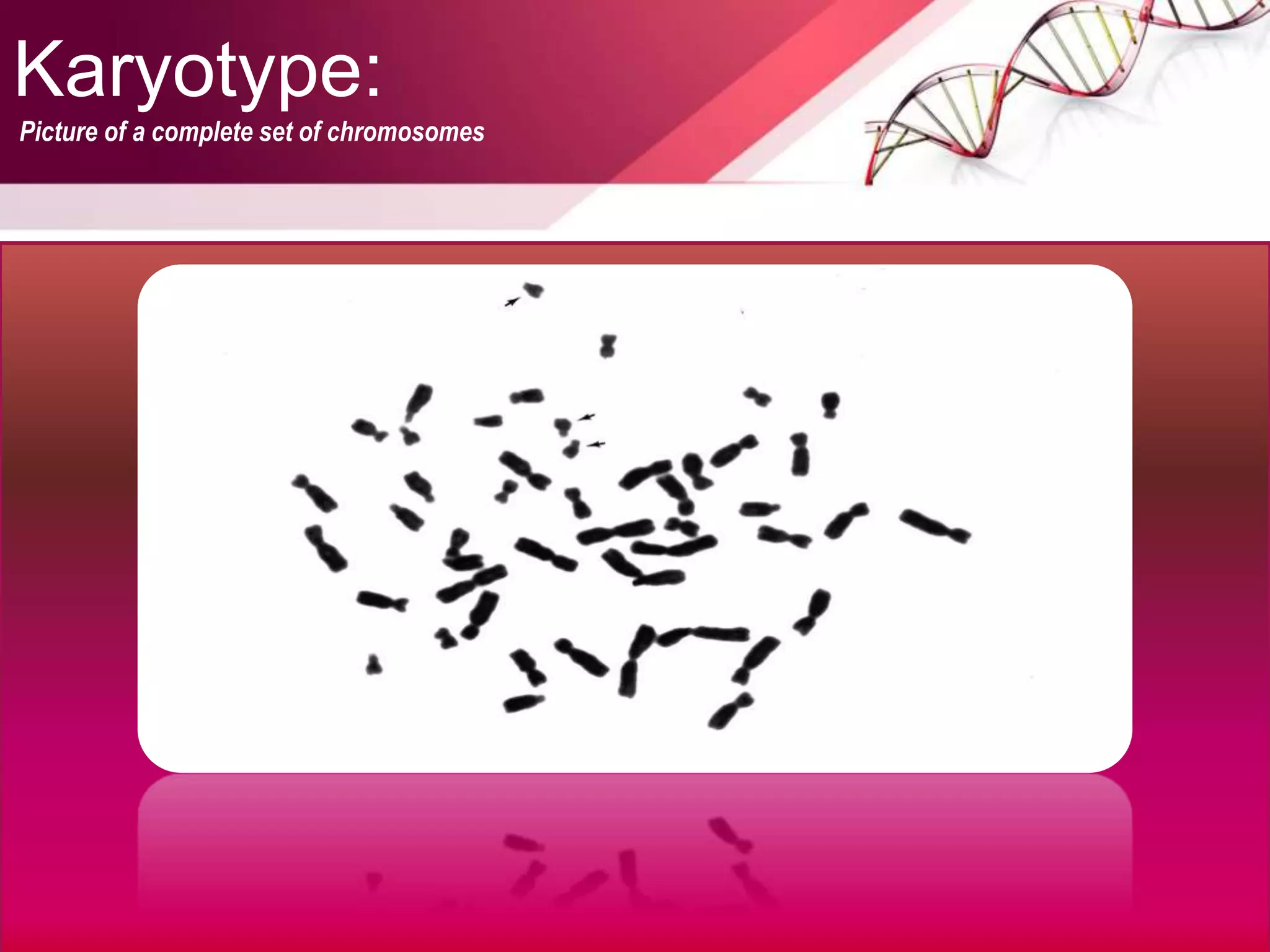
Karyotype:
Picture of a complete set of chromosomes
picture of a complete set of chromosomes
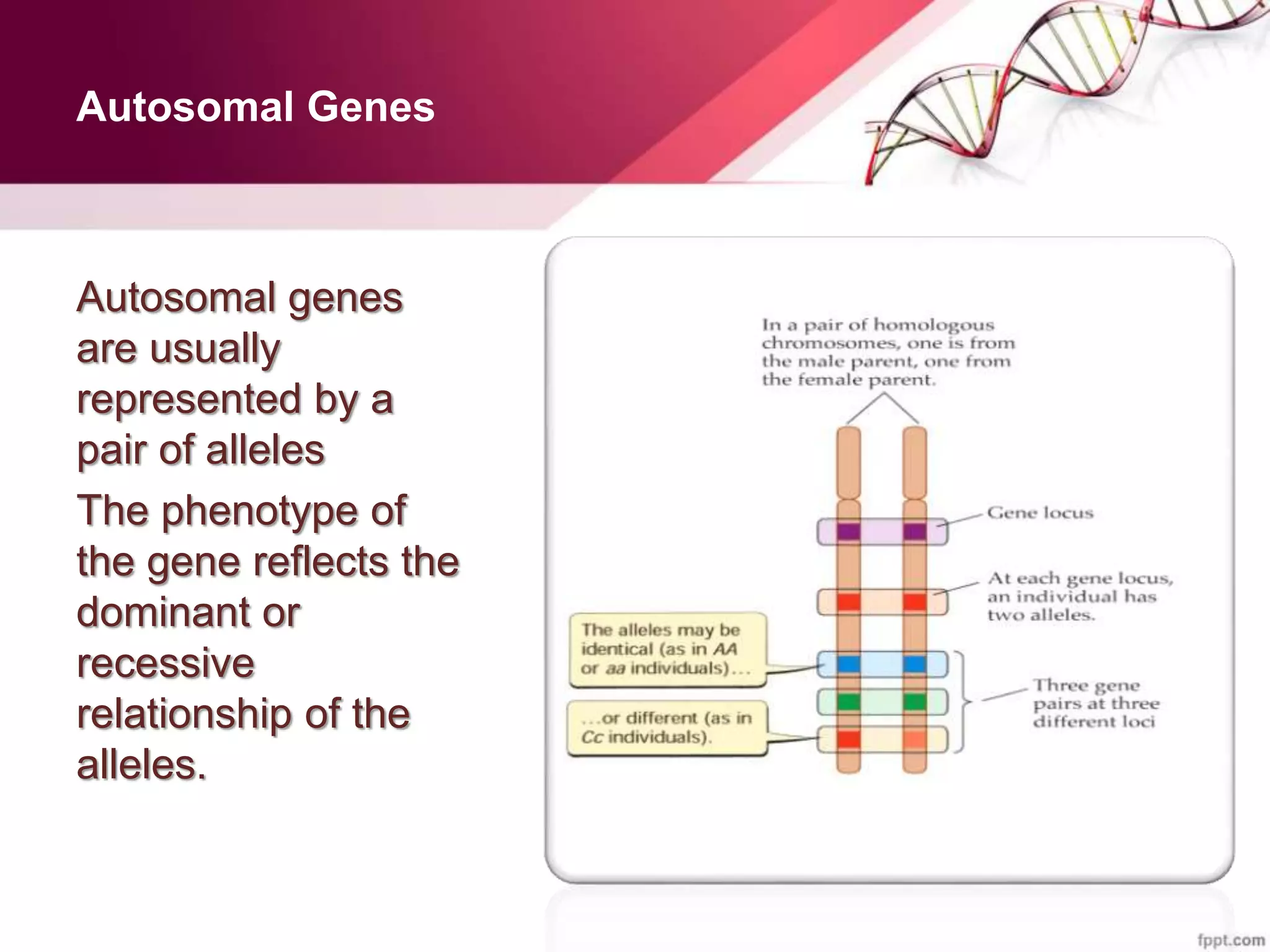
Autosomal Genes
Autosomal genes
are usually
represented by a
pair of alleles
The phenotype of
the gene reflects the
dominant or
recessive
relationship of the
alleles.
Autosomal Disorders
Most autosomal genetic diseases are autosomal recessive meaning the individual
need to be homozygous recessive to exhibit the condition
(example: cystic fibrosis) Production of abnormmaly thick mucus. Leading to the
blockage of panreatic duct, intestines and respiratory infection.
Huntington’s disease is an autosomal dominant disorder meaning that is a single
Huntingtons allele is inherited, the individual will have the disease.
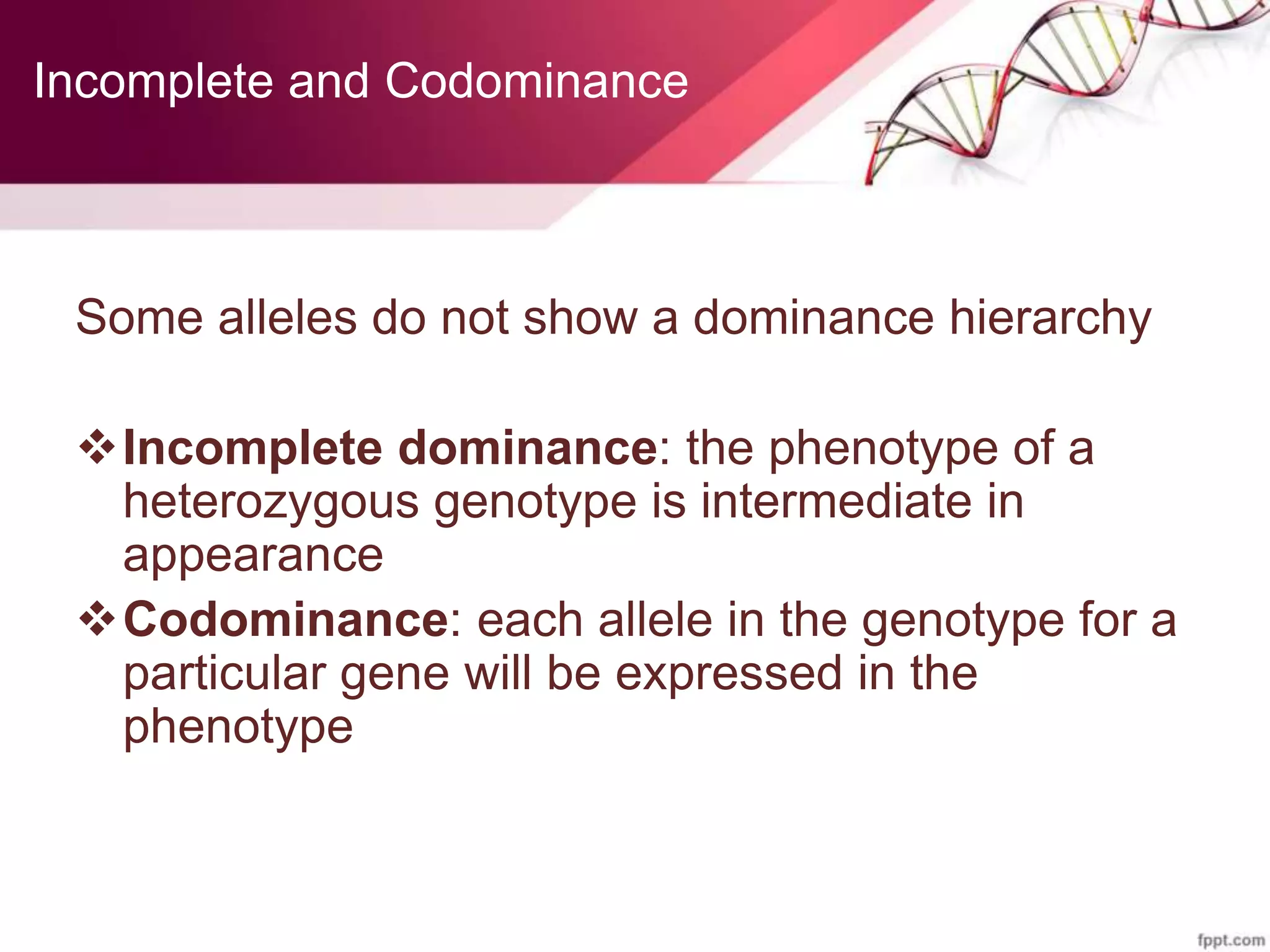
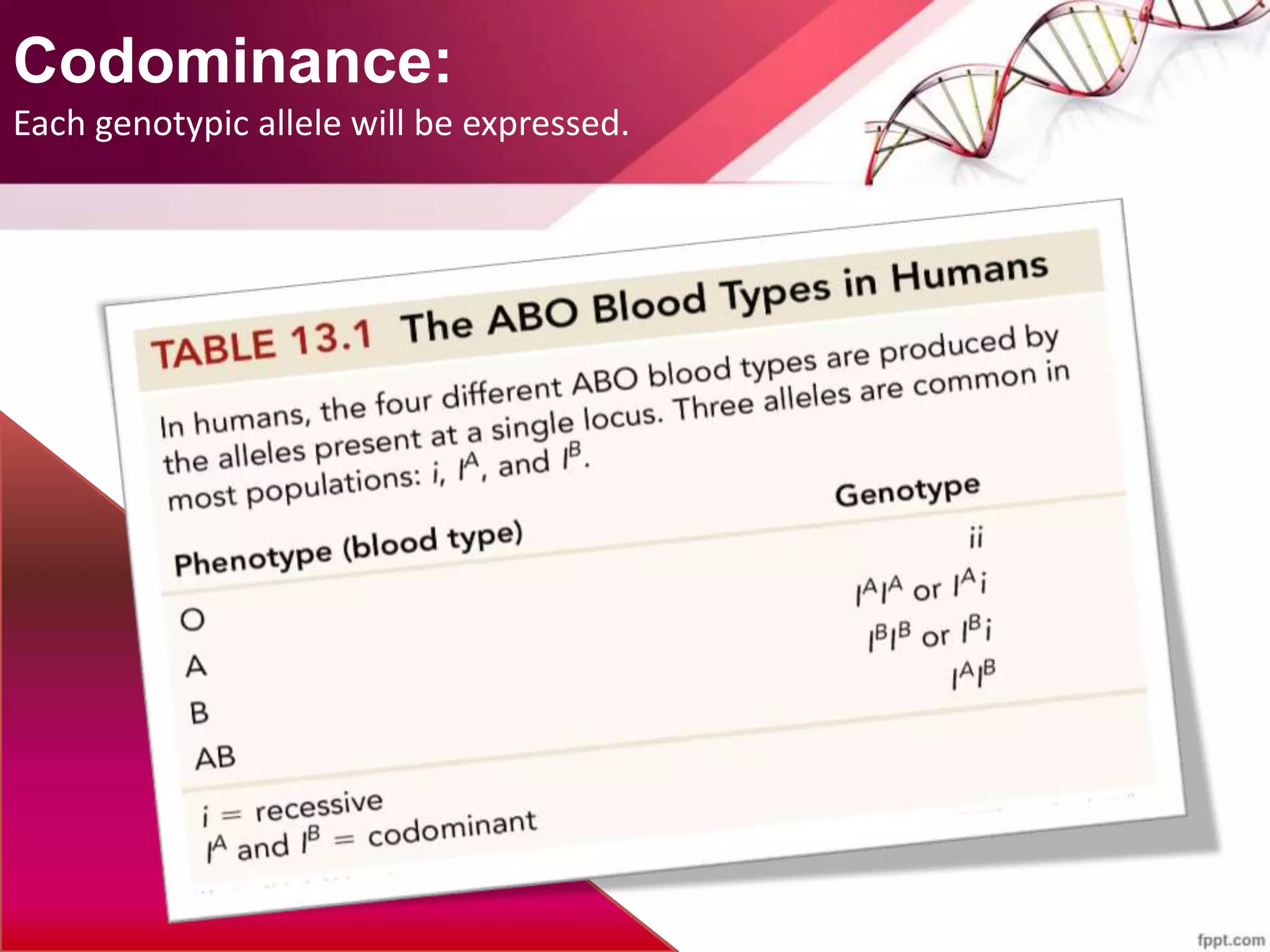
Incomplete and Codominance
Some alleles do not show a dominance hierarchy
Incomplete dominance: the phenotype of a
heterozygous genotype is intermediate in
appearance
Codominance: each allele in the genotype for a
particular gene will be expressed in the
phenotype
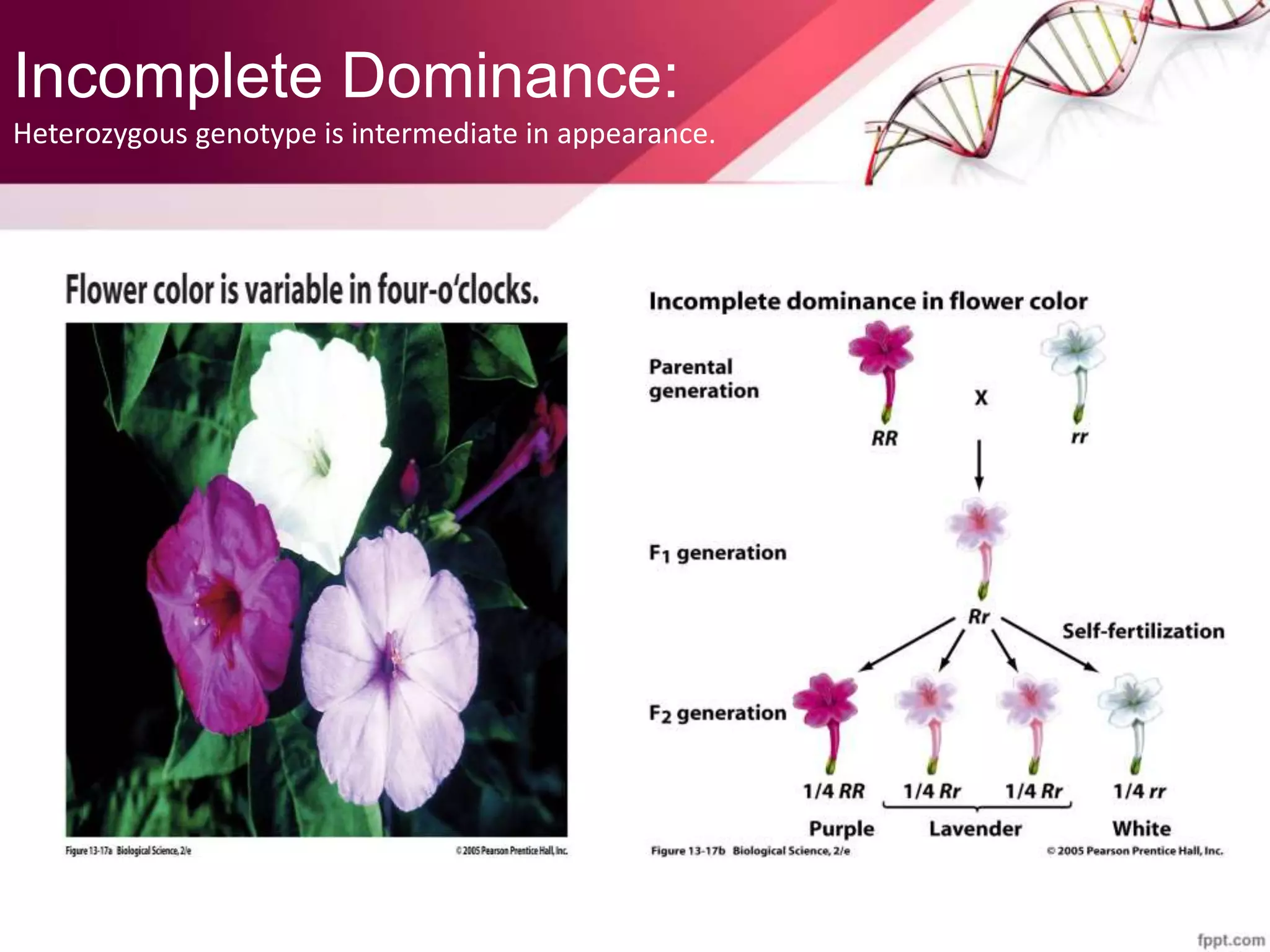
Incomplete Dominance:
Heterozygous genotype is intermediate in appearance.
Codominance:
Each genotypic allele will be expressed.
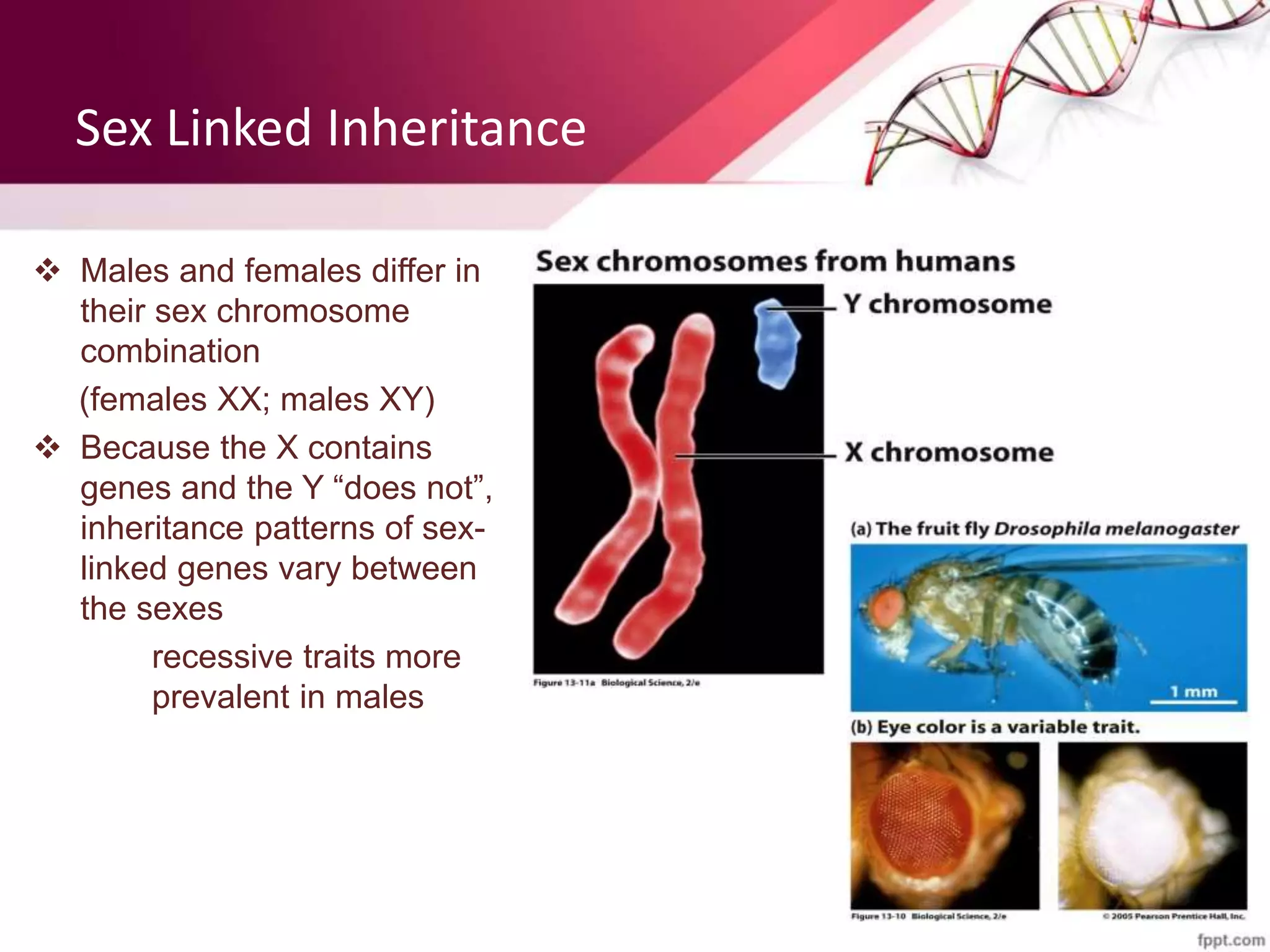
Sex Linked Inheritance
 Males and females differ in
their sex chromosome
combination
(females XX; males XY)
 Because the X contains
genes and the Y “does not”,
inheritance patterns of sex-
linked genes vary between
the sexes
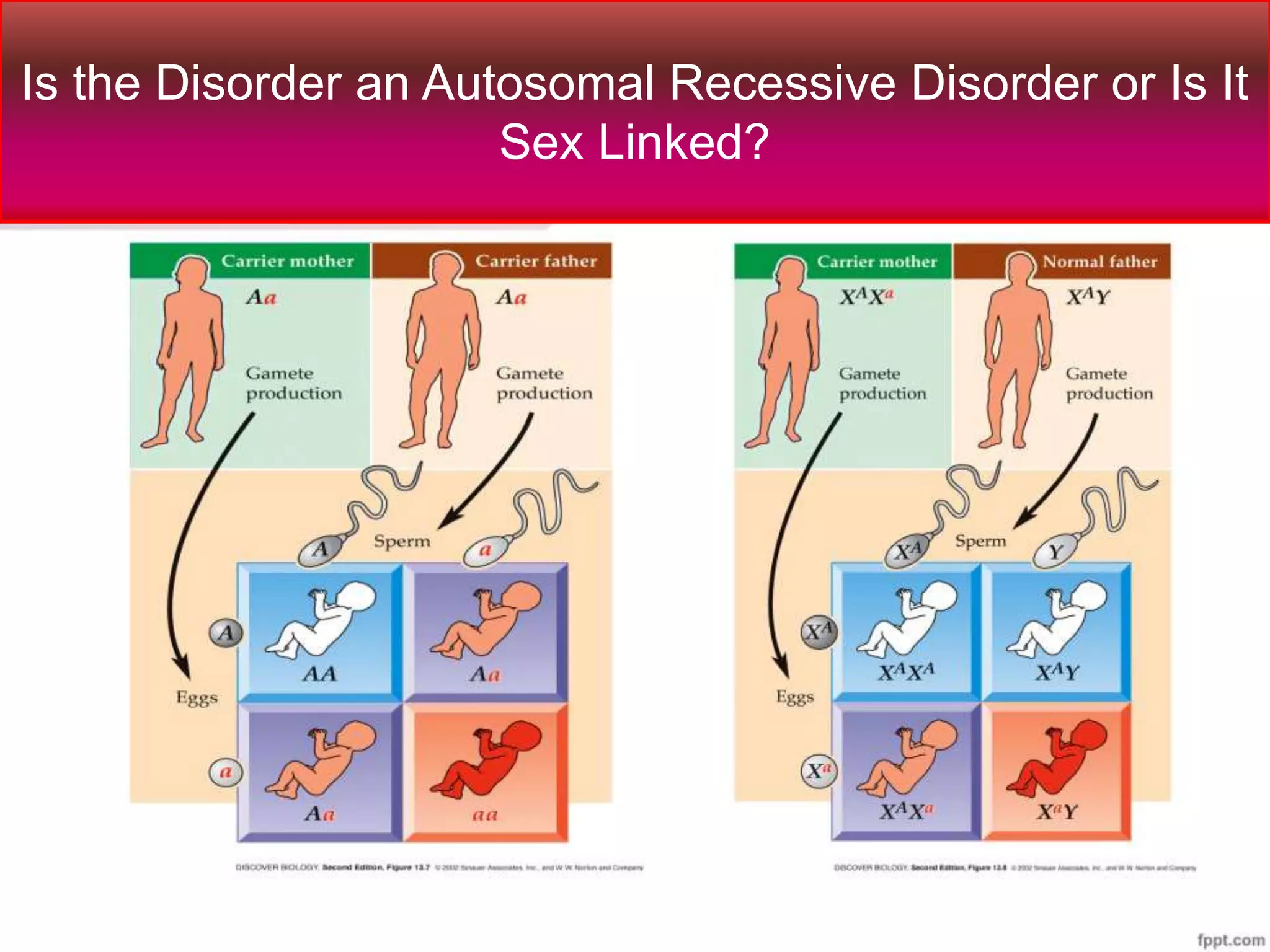
recessive traits more
prevalent in males
Is the Disorder an Autosomal Recessive Disorder or Is It
Sex Linked?
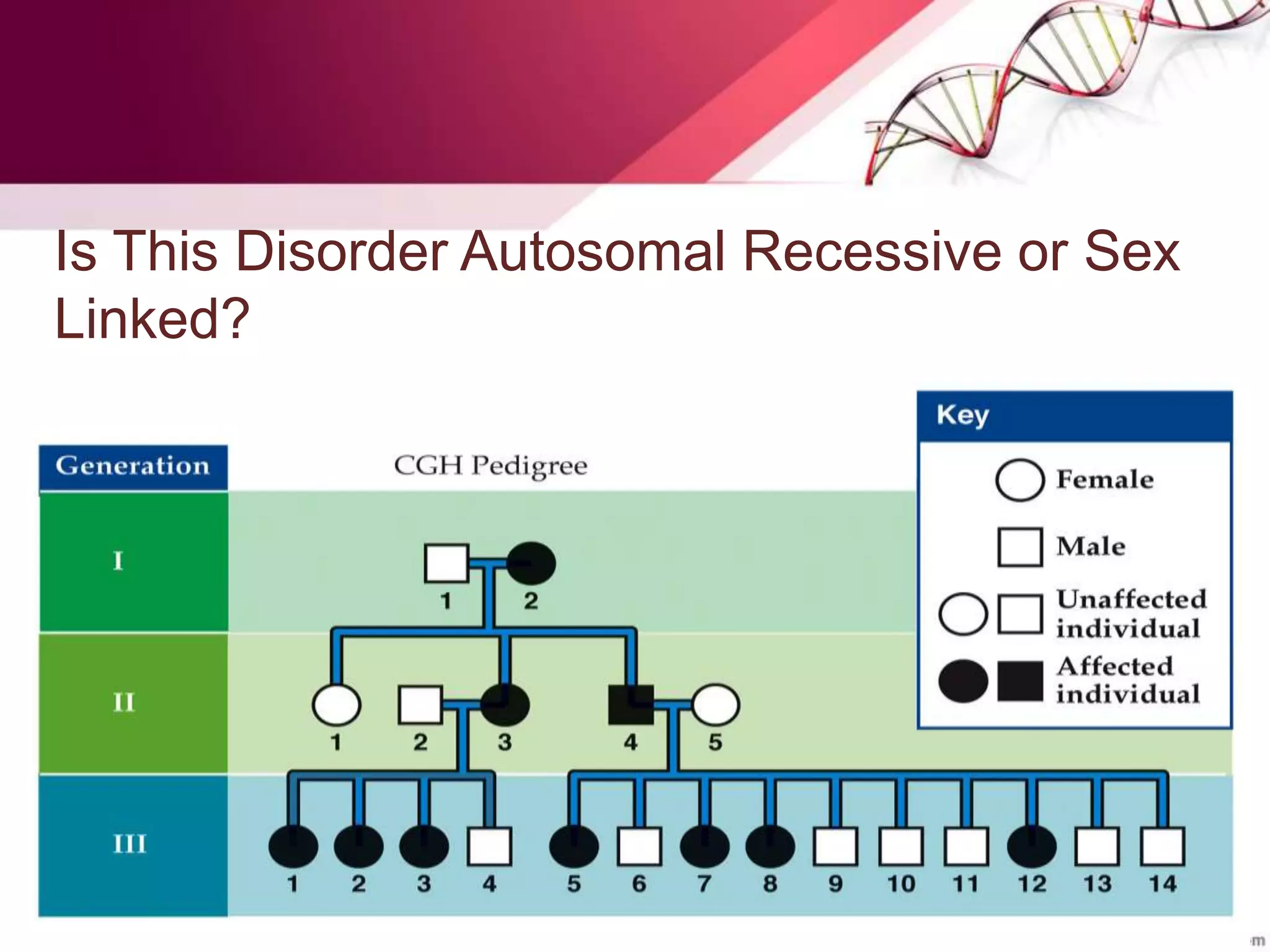
Is This Disorder Autosomal Recessive or Sex
Linked?
Errors In Chromosomal
Inheritance
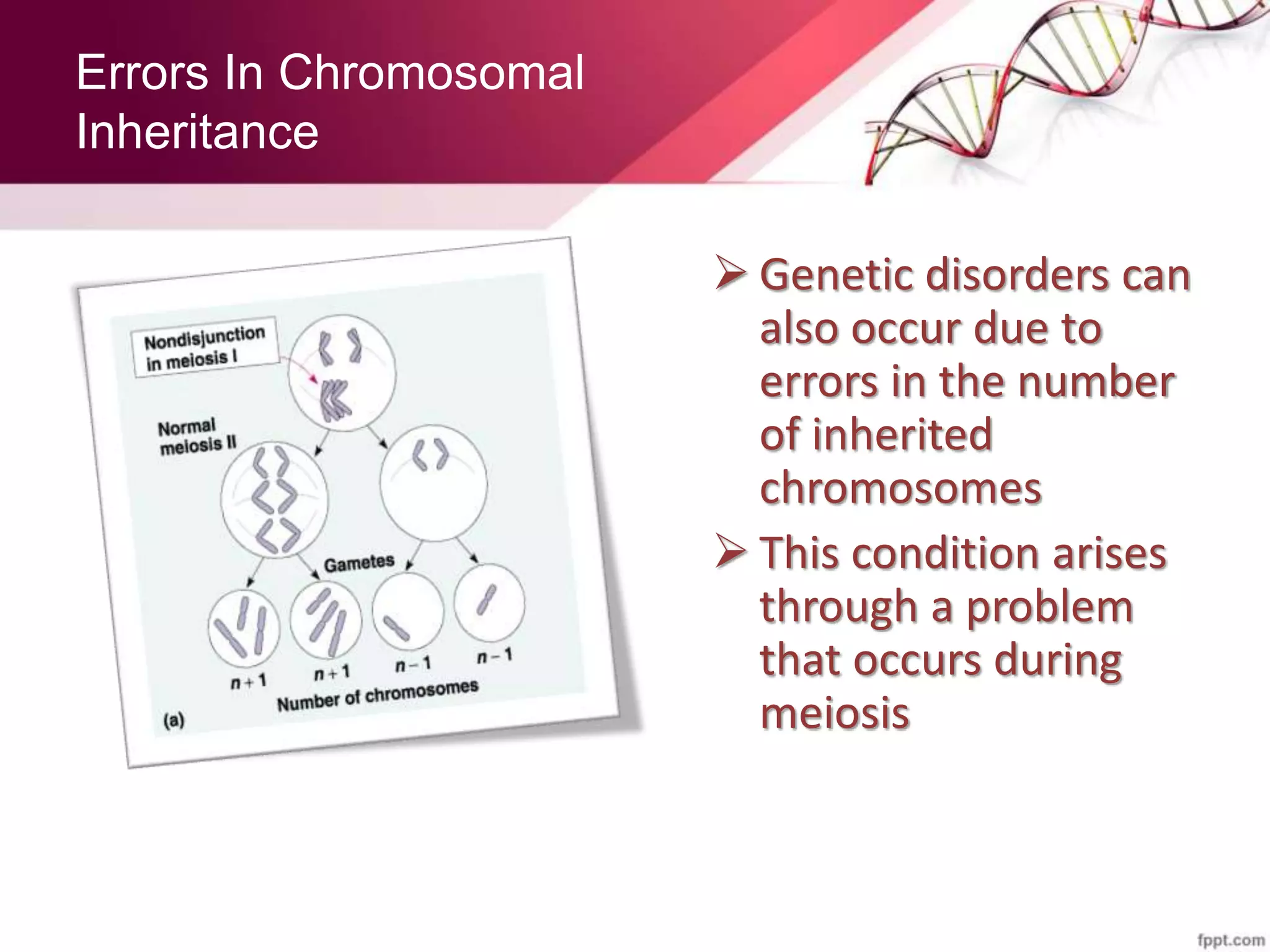
 Genetic disorders can
also occur due to
errors in the number
of inherited
chromosomes
 This condition arises
through a problem
that occurs during
meiosis
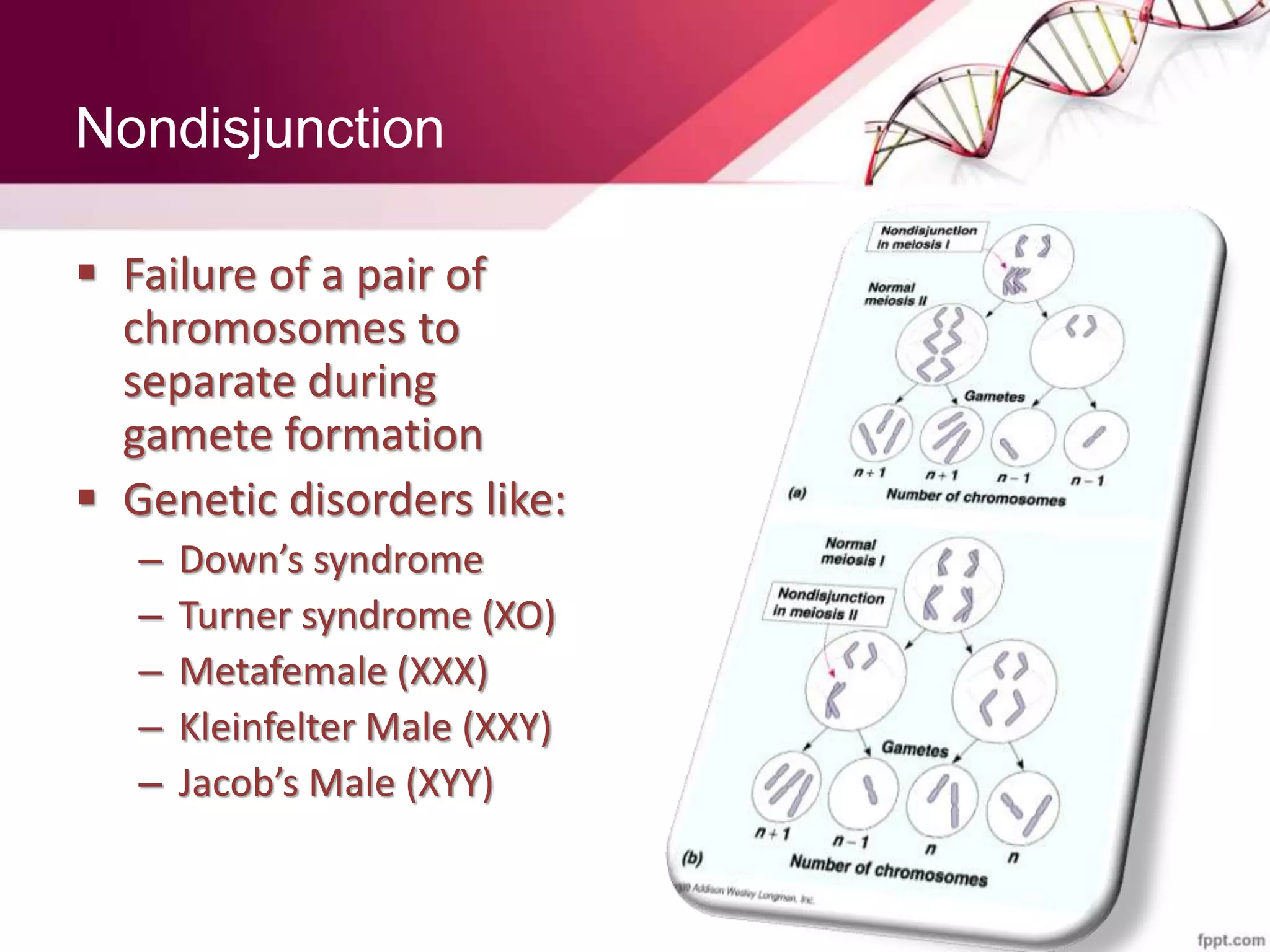
Nondisjunction
 Failure of a pair of
chromosomes to
separate during
gamete formation
 Genetic disorders like:
– Down’s syndrome
– Turner syndrome (XO)
– Metafemale (XXX)
– Kleinfelter Male (XXY)
– Jacob’s Male (XYY)
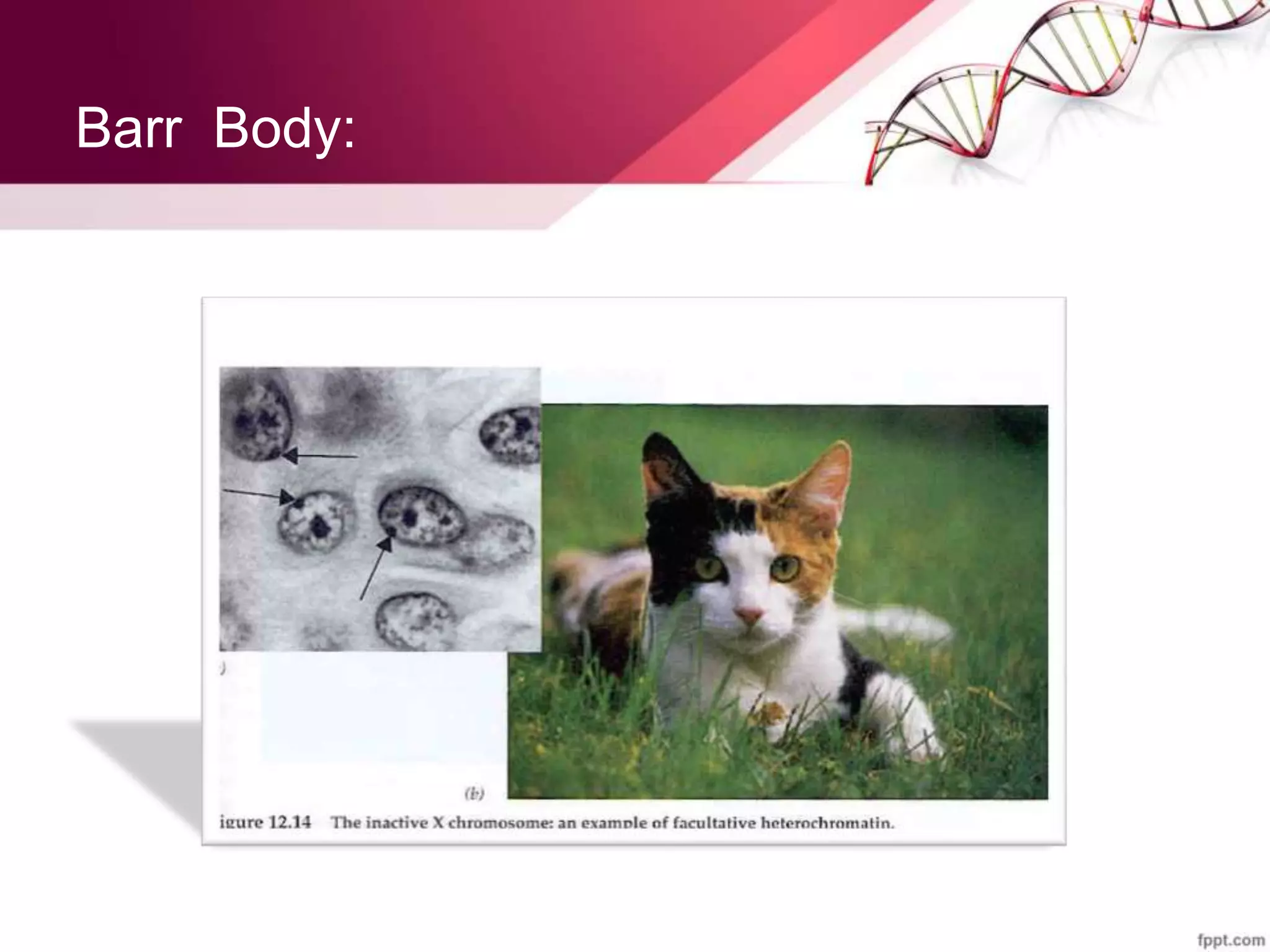
X inactivation in female mammals
 Although female mammals, including humans,
inherit two X chromosomes, one X
chromosome in each cell becomes almost
completely inactivated during embryonic
development.
o Barr body
Barr Body:
Abnormal Chromosome
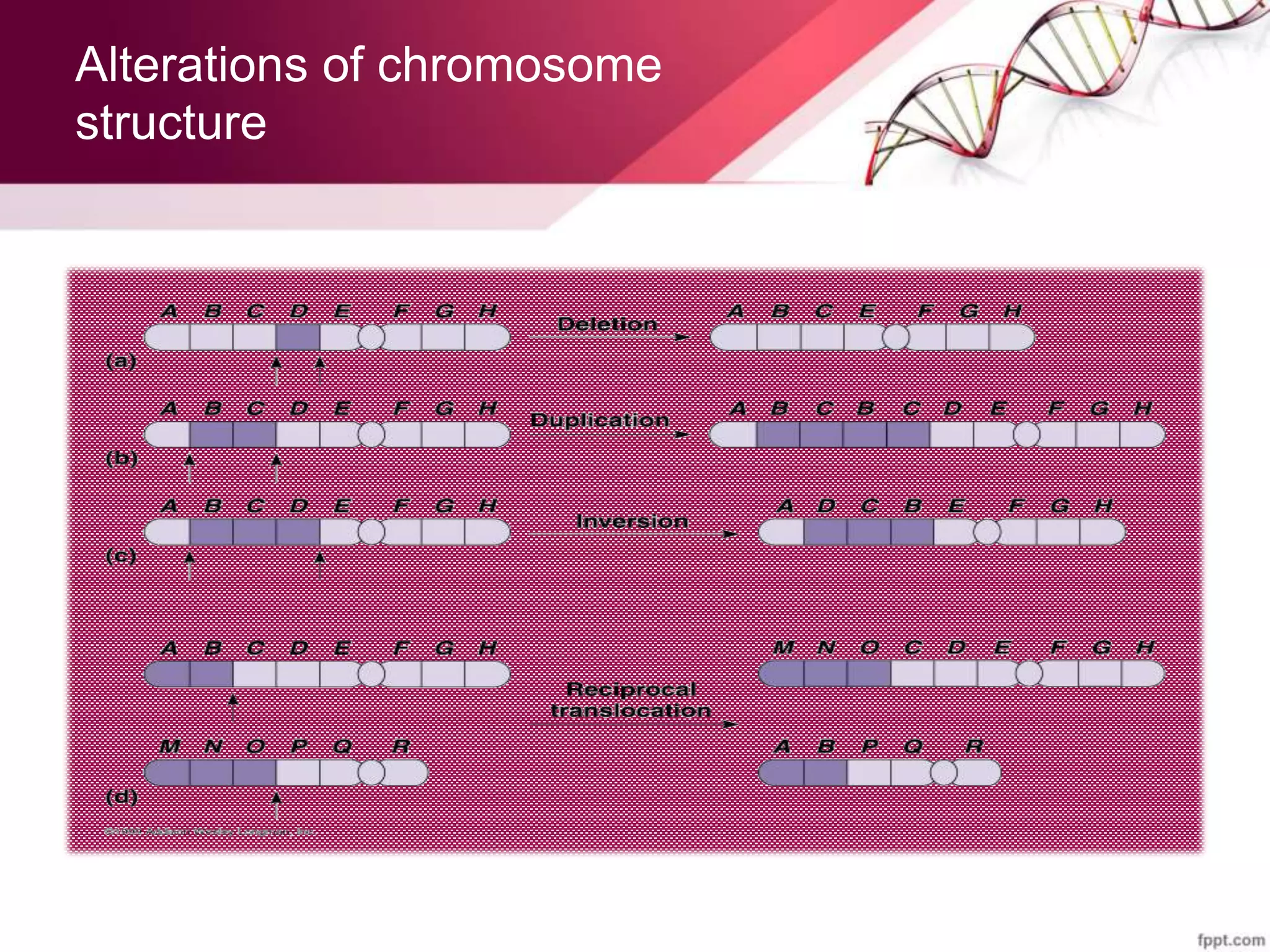
•Nondisjunction:
–Leads to aneuploidy:
•Aneuploidy: is the condition of having less
than or more than the normal diploid number of
chromosomes, and is the most frequently
observed type of cytogenetic abnormality.
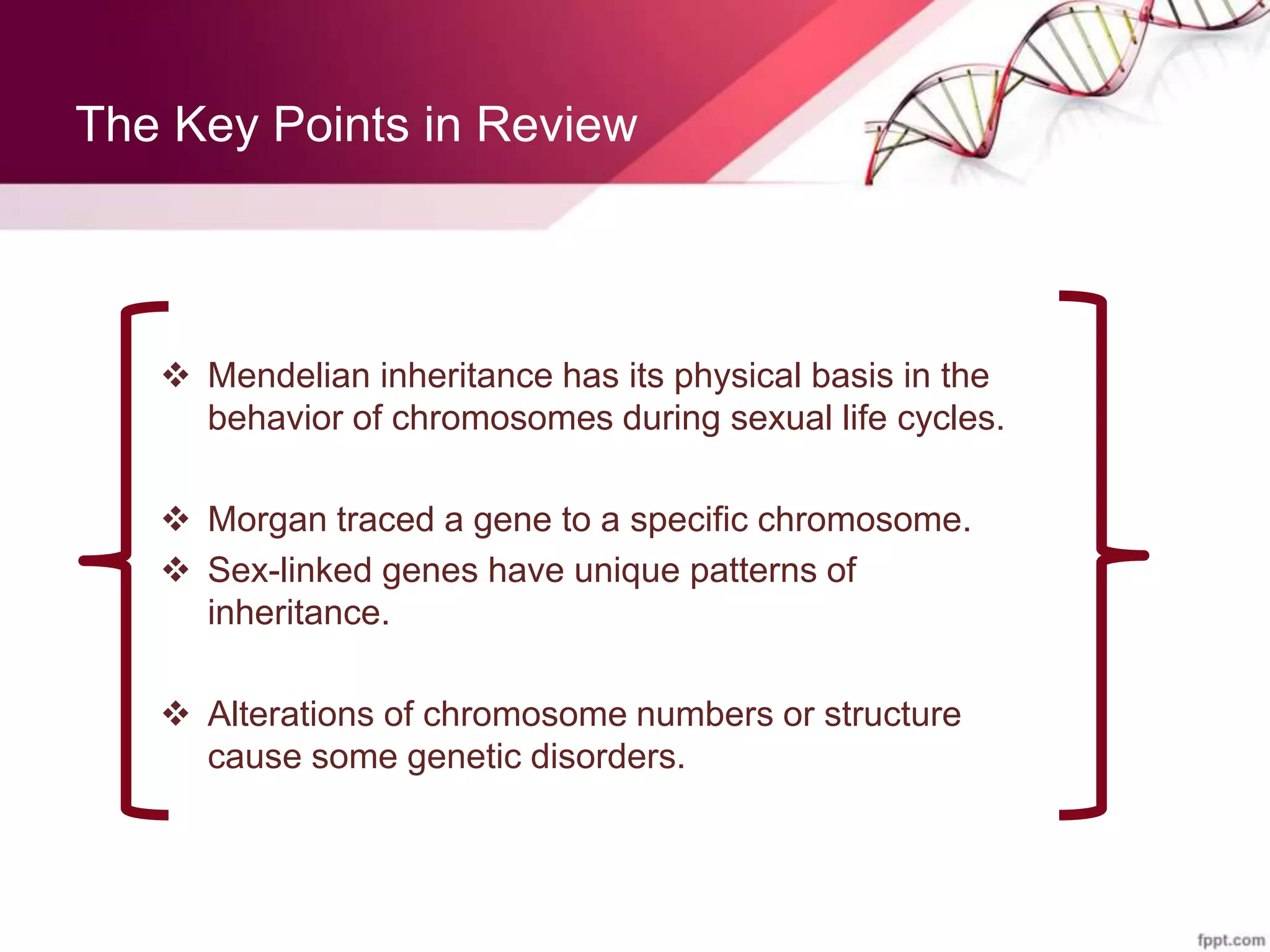
Alterations of chromosome
structure
The Key Points in Review
 Mendelian inheritance has its physical basis in the
behavior of chromosomes during sexual life cycles.
 Morgan traced a gene to a specific chromosome.
 Sex-linked genes have unique patterns of
inheritance.
 Alterations of chromosome numbers or structure
cause some genetic disorders.
Key Points in Review
 Linked genes tend to be inherited together
because they are located on the same
chromosome.
 Independent assortment of chromosomes and
crossing over produce genetic variation
(recombinants)
 Geneticists can use recombination data to map a
chromosomes genetic loci.
 Chromosomal basis for sex is dependent upon the
organism.
Thank you

Chromosomal basis of inheritance

  • 1.
    Chromosomal Basis ofInheritance Ayesha safdar 17130814-029 Animal genetics Msc-2nd
  • 2.
    Objectives  Be familiarwith patterns of inheritance for autosomal and sex linked genes  Understand the concept of “Linked Genes”  Understand how traits affected by incomplete dominance and codominance differ from autosomal dominant and autosomal recessive traits  Understand how nondisjunction of chromosomes can lead to disorders.
  • 3.
    Linked Genes Linked genes:are those that reside on the same chromosome and tend to be inherited together Humans have 23 pairs of chromosomes  Autosomal genes reside on the autosomal chromosomes (pairs 1-22)  Sex-linked genes are found on the sex chromosomes (pair 23, usually on the X)
  • 4.
    Karyotype: Picture of acomplete set of chromosomes picture of a complete set of chromosomes
  • 5.
    Autosomal Genes Autosomal genes areusually represented by a pair of alleles The phenotype of the gene reflects the dominant or recessive relationship of the alleles.
  • 6.
    Autosomal Disorders Most autosomalgenetic diseases are autosomal recessive meaning the individual need to be homozygous recessive to exhibit the condition (example: cystic fibrosis) Production of abnormmaly thick mucus. Leading to the blockage of panreatic duct, intestines and respiratory infection. Huntington’s disease is an autosomal dominant disorder meaning that is a single Huntingtons allele is inherited, the individual will have the disease.
  • 7.
    Incomplete and Codominance Somealleles do not show a dominance hierarchy Incomplete dominance: the phenotype of a heterozygous genotype is intermediate in appearance Codominance: each allele in the genotype for a particular gene will be expressed in the phenotype
  • 8.
    Incomplete Dominance: Heterozygous genotypeis intermediate in appearance.
  • 9.
  • 10.
    Sex Linked Inheritance Males and females differ in their sex chromosome combination (females XX; males XY)  Because the X contains genes and the Y “does not”, inheritance patterns of sex- linked genes vary between the sexes recessive traits more prevalent in males
  • 11.
    Is the Disorderan Autosomal Recessive Disorder or Is It Sex Linked?
  • 12.
    Is This DisorderAutosomal Recessive or Sex Linked?
  • 13.
    Errors In Chromosomal Inheritance Genetic disorders can also occur due to errors in the number of inherited chromosomes  This condition arises through a problem that occurs during meiosis
  • 14.
    Nondisjunction  Failure ofa pair of chromosomes to separate during gamete formation  Genetic disorders like: – Down’s syndrome – Turner syndrome (XO) – Metafemale (XXX) – Kleinfelter Male (XXY) – Jacob’s Male (XYY)
  • 15.
    X inactivation infemale mammals  Although female mammals, including humans, inherit two X chromosomes, one X chromosome in each cell becomes almost completely inactivated during embryonic development. o Barr body
  • 16.
  • 17.
    Abnormal Chromosome •Nondisjunction: –Leads toaneuploidy: •Aneuploidy: is the condition of having less than or more than the normal diploid number of chromosomes, and is the most frequently observed type of cytogenetic abnormality.
  • 18.
  • 19.
    The Key Pointsin Review  Mendelian inheritance has its physical basis in the behavior of chromosomes during sexual life cycles.  Morgan traced a gene to a specific chromosome.  Sex-linked genes have unique patterns of inheritance.  Alterations of chromosome numbers or structure cause some genetic disorders.
  • 20.
    Key Points inReview  Linked genes tend to be inherited together because they are located on the same chromosome.  Independent assortment of chromosomes and crossing over produce genetic variation (recombinants)  Geneticists can use recombination data to map a chromosomes genetic loci.  Chromosomal basis for sex is dependent upon the organism.
  • 21.