We are over 10,000
voices strong
The IAS is the world’s largest association of HIV
professionals. Together we advocate and drive urgent
action to reduce the global impact of HIV across every
front of the response. Join the movement, become an
IAS member today!
Abstract Submission is open from
1 December 2015 - 4 February 2016
State of the Science:
Key Populations
Chris Beyrer MD, MPH
President, The International AIDS Society
Key Populations in HIV
Key populations: those individuals and communities who have
disproportionate burdens of HIV risk and disease and lack of
access to essential HIV services
• Gay, Bisexual, and other men who have sex with men
(MSM)
• Sex Workers of all genders
• People who inject drugs (PWID)
• Transgender Women who have sex with men
• Women and Girls in South, East African hyper-epidemics
• Adolescents from all of these communities
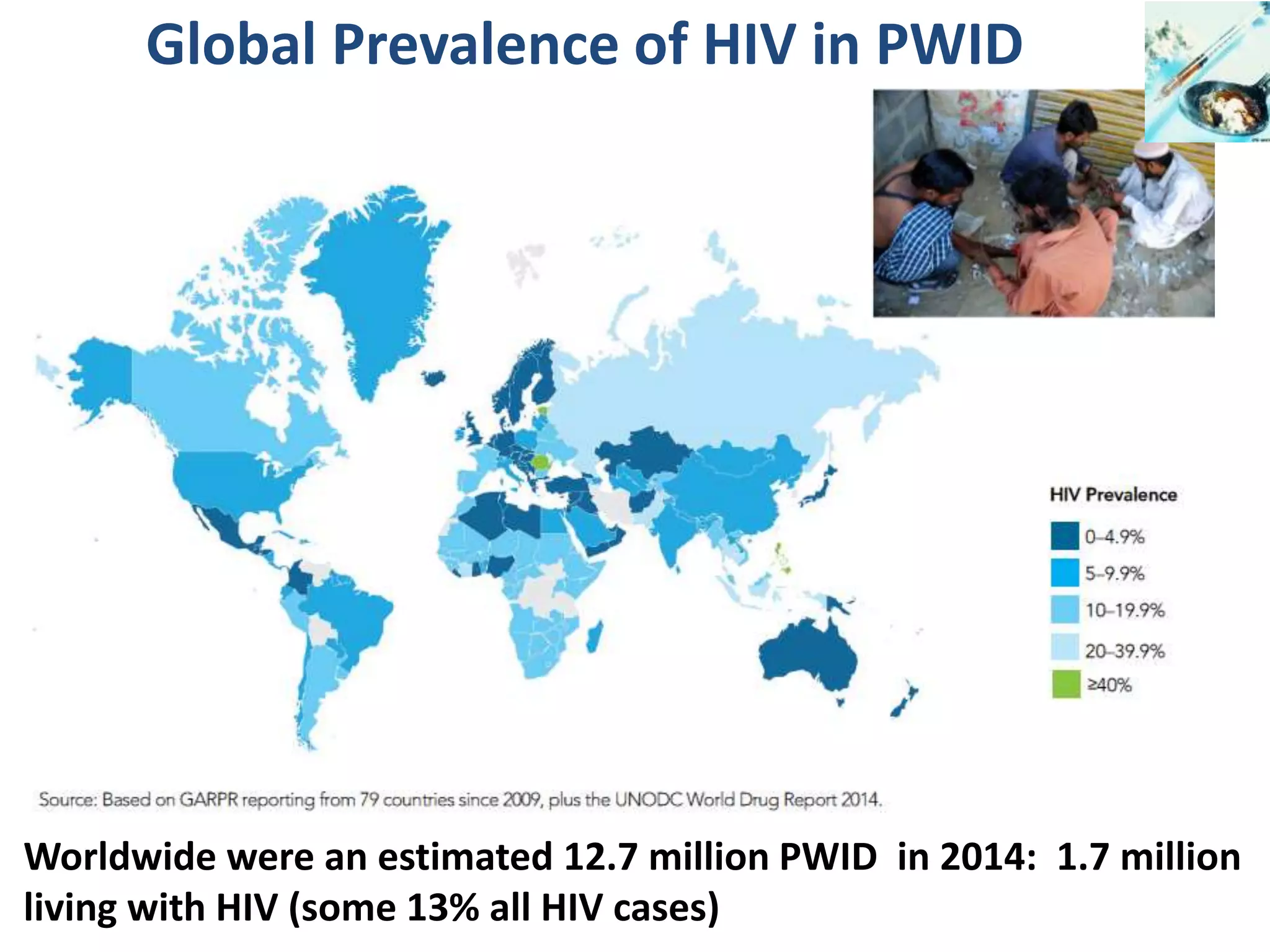
Global Prevalence of HIV in PWID
Worldwide were an estimated 12.7 million PWID in 2014: 1.7 million
living with HIV (some 13% all HIV cases)
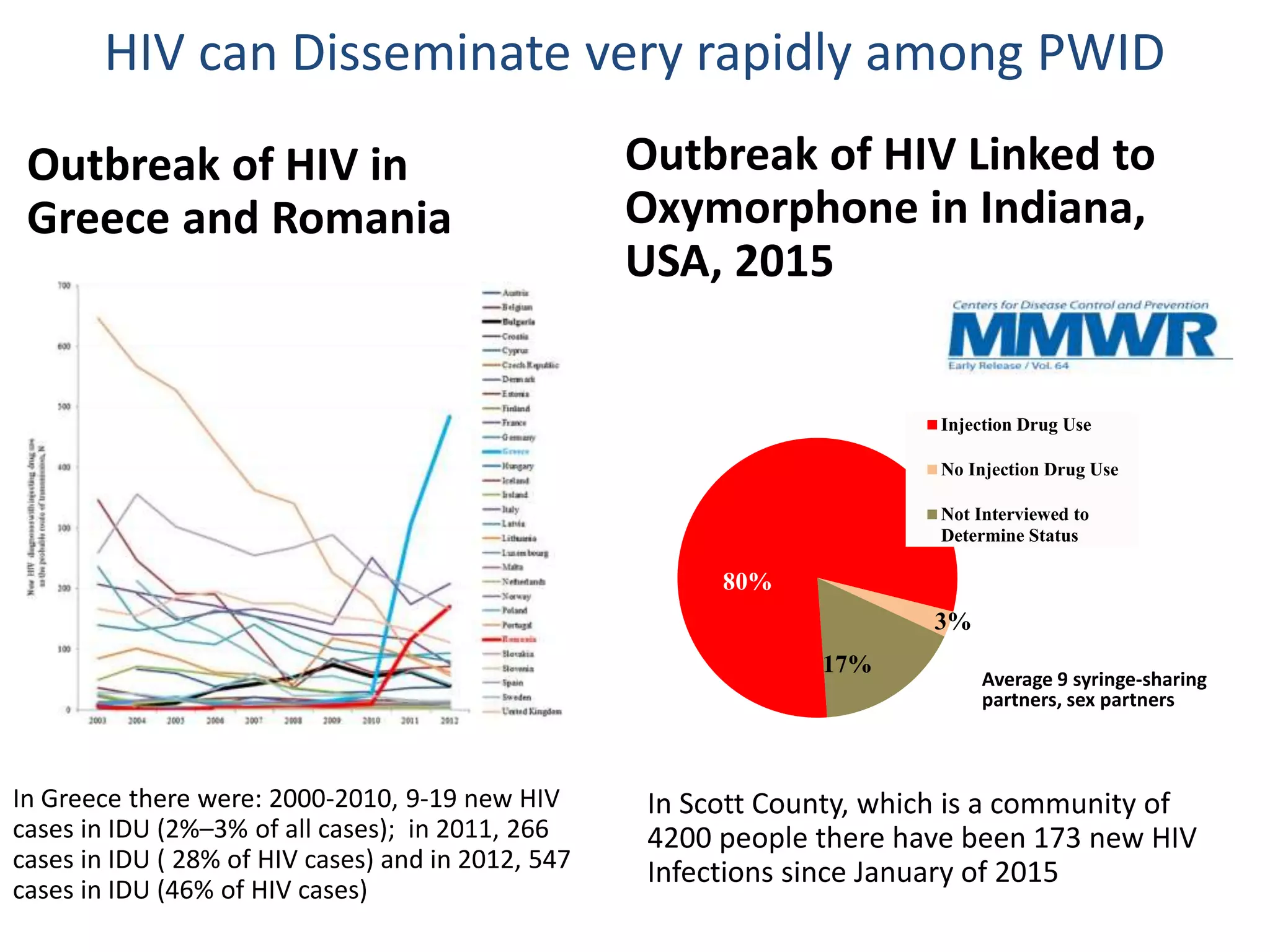
In Greece there were: 2000-2010, 9-19 new HIV
cases in IDU (2%–3% of all cases); in 2011, 266
cases in IDU ( 28% of HIV cases) and in 2012, 547
cases in IDU (46% of HIV cases)
HIV can Disseminate very rapidly among PWID
Outbreak of HIV Linked to
Oxymorphone in Indiana,
USA, 2015
80%
3%
17%
Injection Drug Use
No Injection Drug Use
Not Interviewed to
Determine Status
Average 9 syringe-sharing
partners, sex partners
Outbreak of HIV in
Greece and Romania
In Scott County, which is a community of
4200 people there have been 173 new HIV
Infections since January of 2015
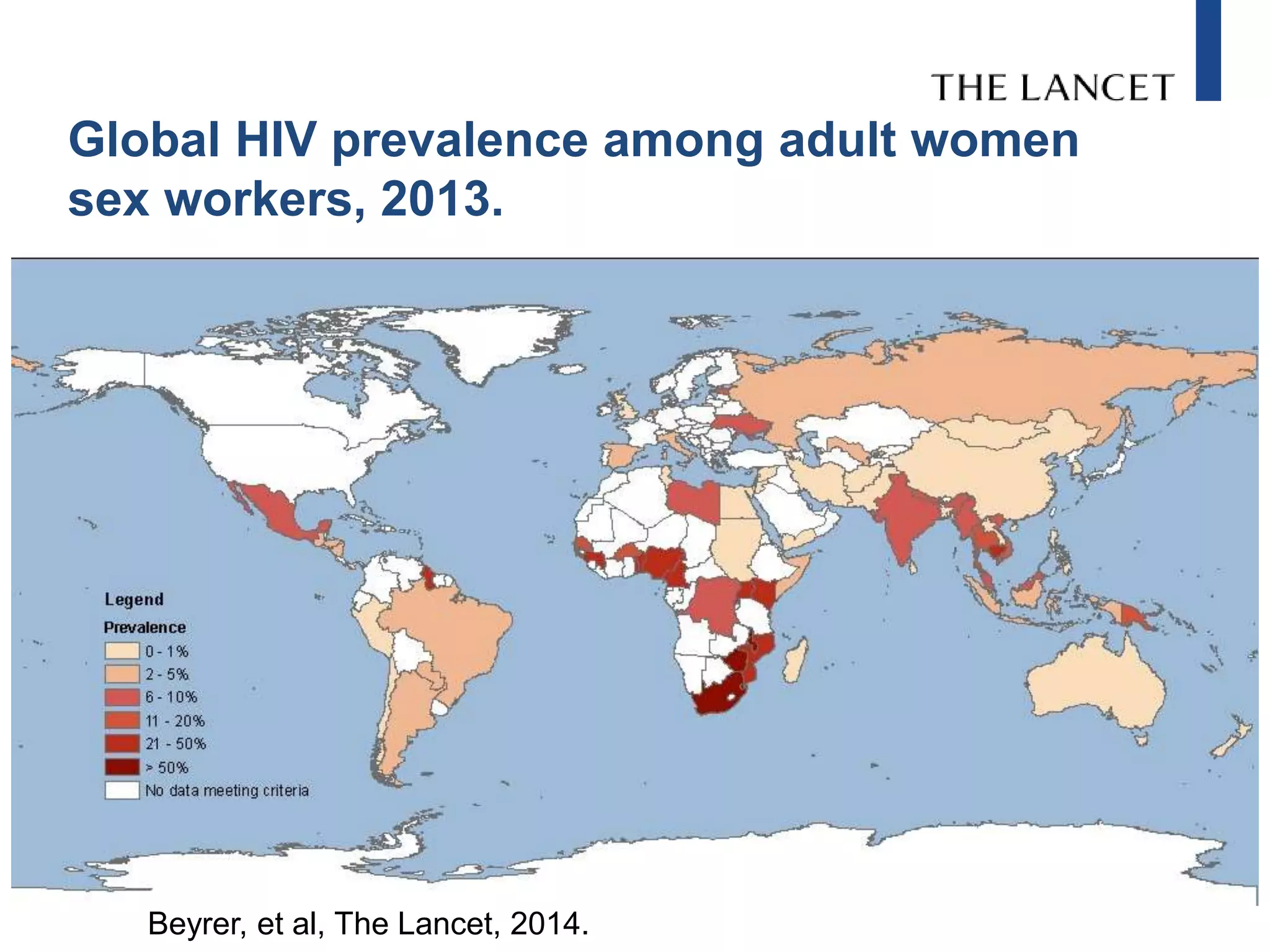
Global HIV prevalence among adult women
sex workers, 2013.
Beyrer, et al, The Lancet, 2014.
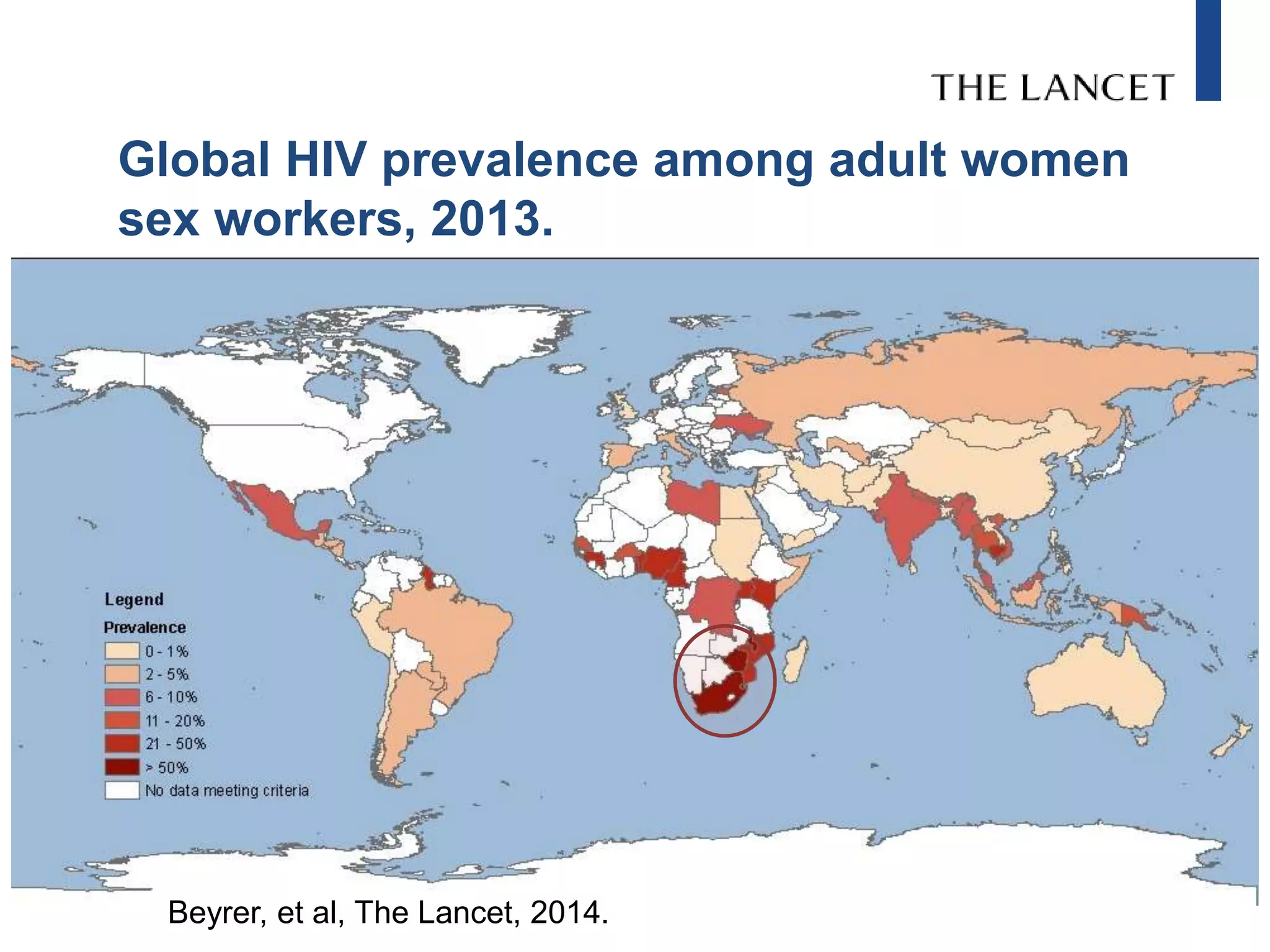
Global HIV prevalence among adult women
sex workers, 2013.
Beyrer, et al, The Lancet, 2014.
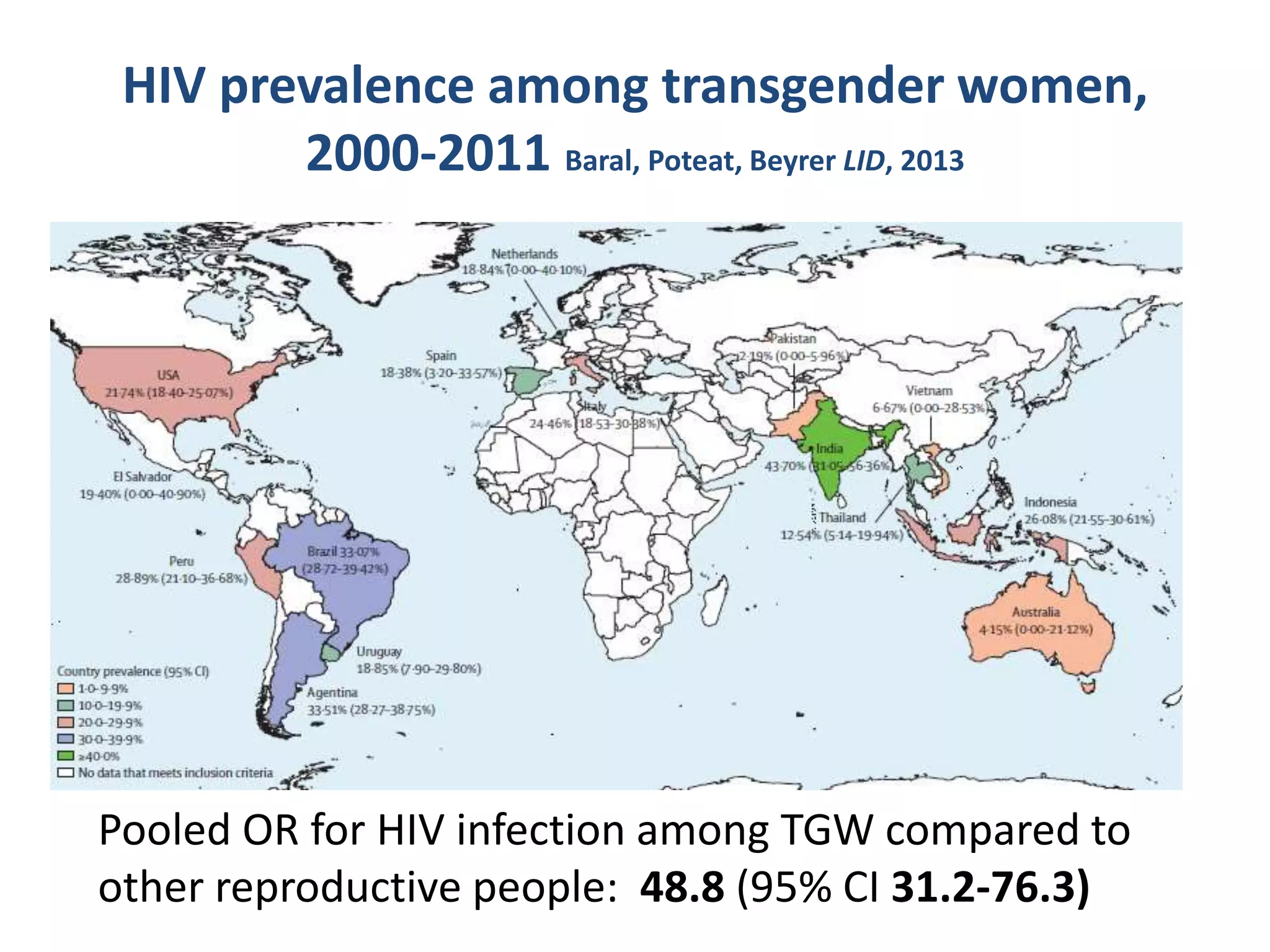
HIV prevalence among transgender women,
2000-2011 Baral, Poteat, Beyrer LID, 2013
Pooled OR for HIV infection among TGW compared to
other reproductive people: 48.8 (95% CI 31.2-76.3)
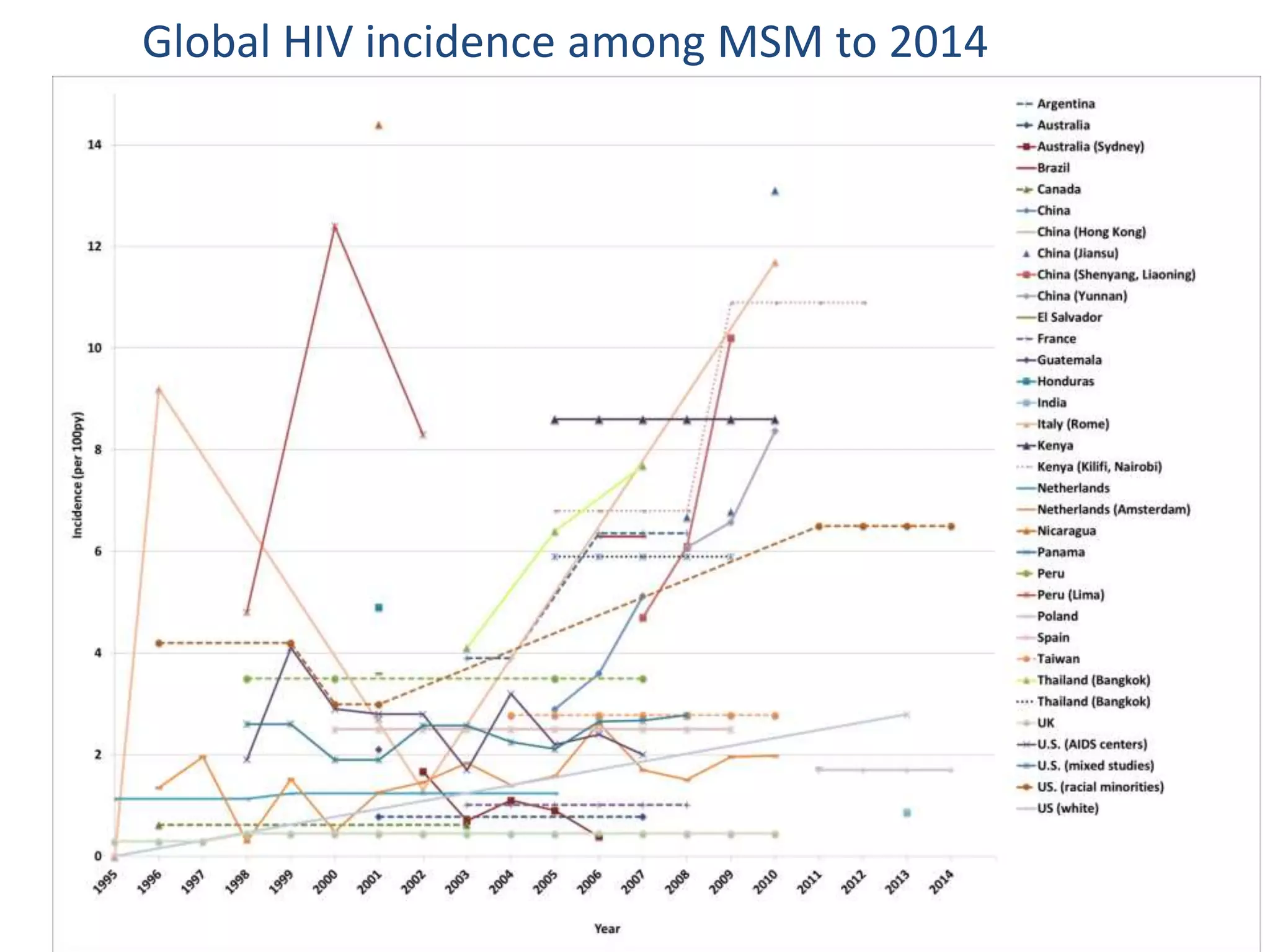
Global HIV incidence among MSM to 2014
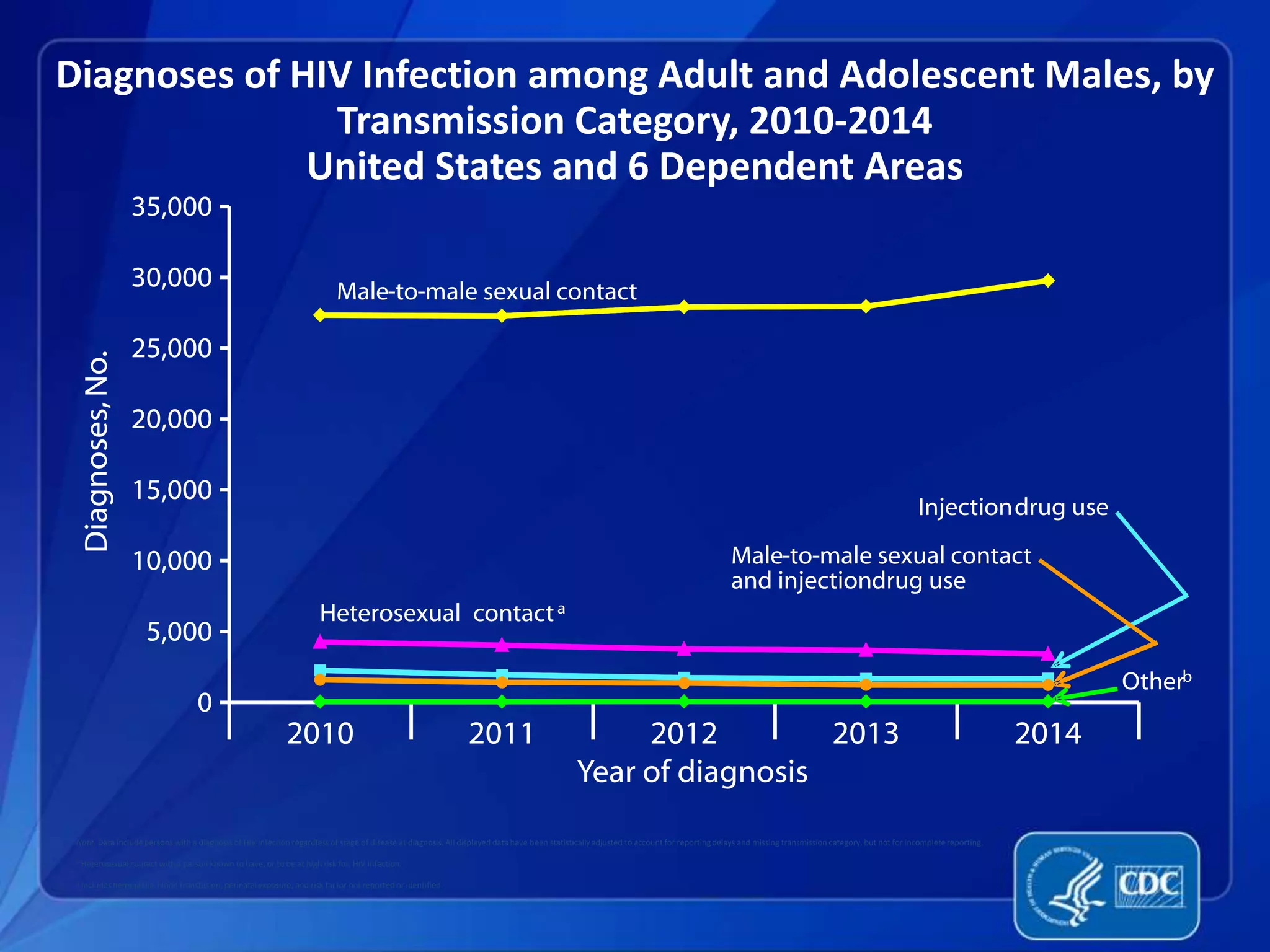
Diagnoses of HIV Infection among Adult and Adolescent Males, by
Transmission Category, 2010-2014
United States and 6 Dependent Areas
Note. Data include persons with a diagnosis of HIV infection regardless of stage of disease at diagnosis. All displayed data have been statisticallyadjusted to account for reportingdelays and missing transmission category, but not for incomplete reporting.
a Heterosexual contact with a person known to have, or to be at high risk for, HIV infection.
b Includes hemophilia,blood transfusion, perinatalexposure, and risk factor not reported or identified.
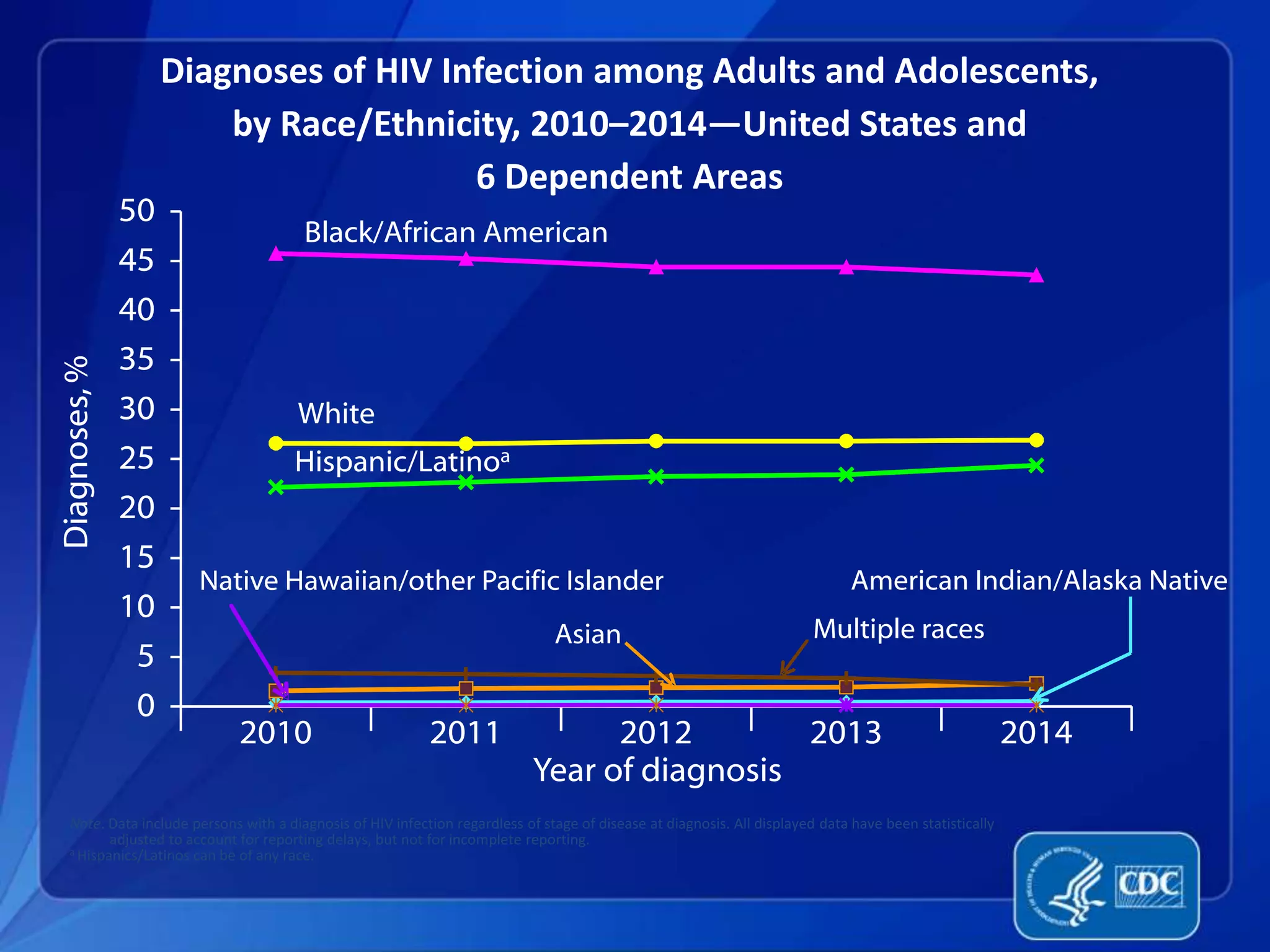
Diagnoses of HIV Infection among Adults and Adolescents,
by Race/Ethnicity, 2010–2014—United States and
6 Dependent Areas
Note. Data include persons with a diagnosis of HIV infection regardless of stage of disease at diagnosis. All displayed data have been statistically
adjusted to account for reporting delays, but not for incomplete reporting.
a Hispanics/Latinos can be of any race.
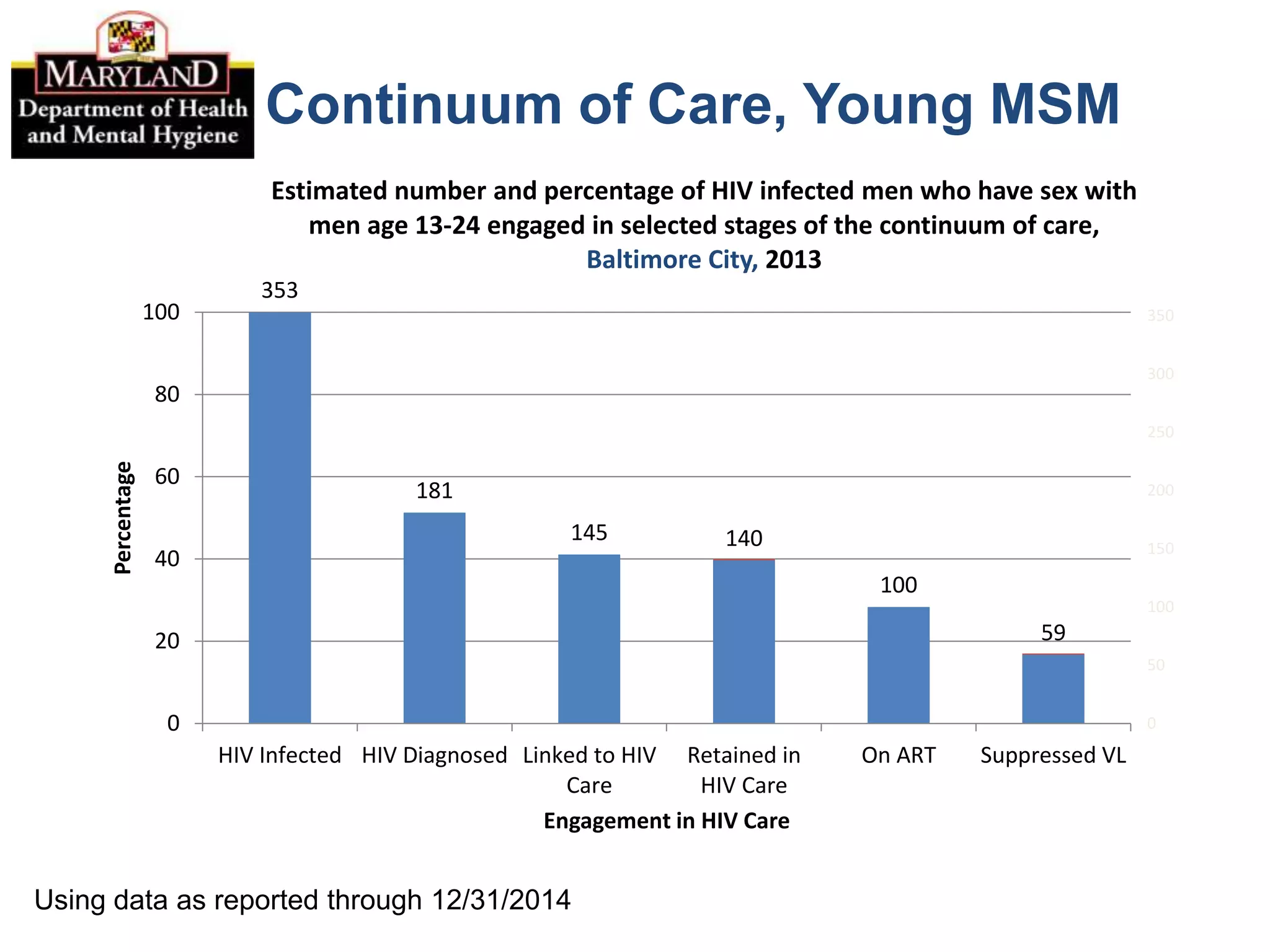
Continuum of Care, Young MSM
353
181
145 140
100
59
0
50
100
150
200
250
300
350
0
20
40
60
80
100
HIV Infected HIV Diagnosed Linked to HIV
Care
Retained in
HIV Care
On ART Suppressed VL
Percentage
Engagement in HIV Care
Estimated number and percentage of HIV infected men who have sex with
men age 13-24 engaged in selected stages of the continuum of care,
Baltimore City, 2013
Using data as reported through 12/31/2014
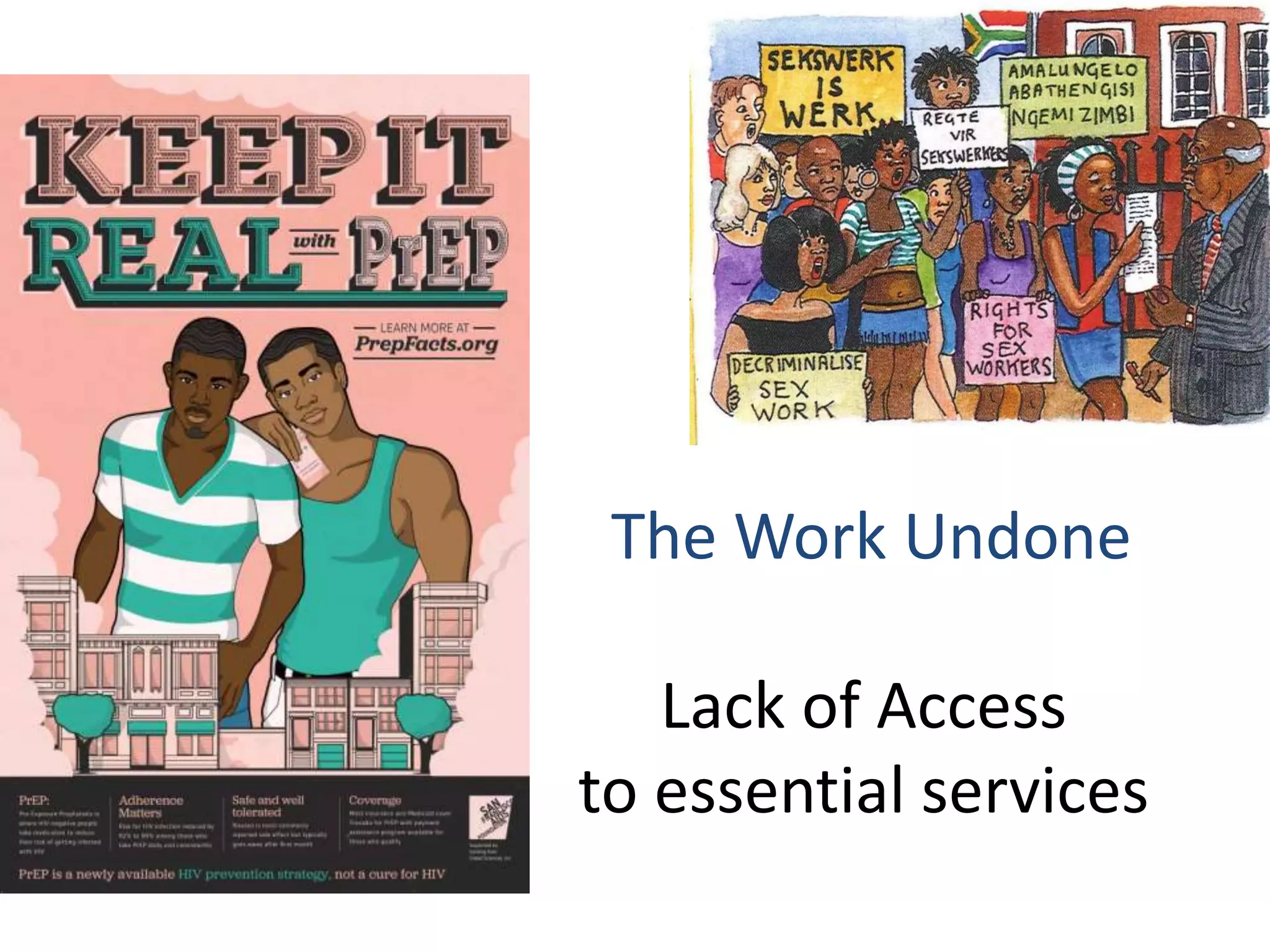
The Work Undone
Lack of Access
to essential services
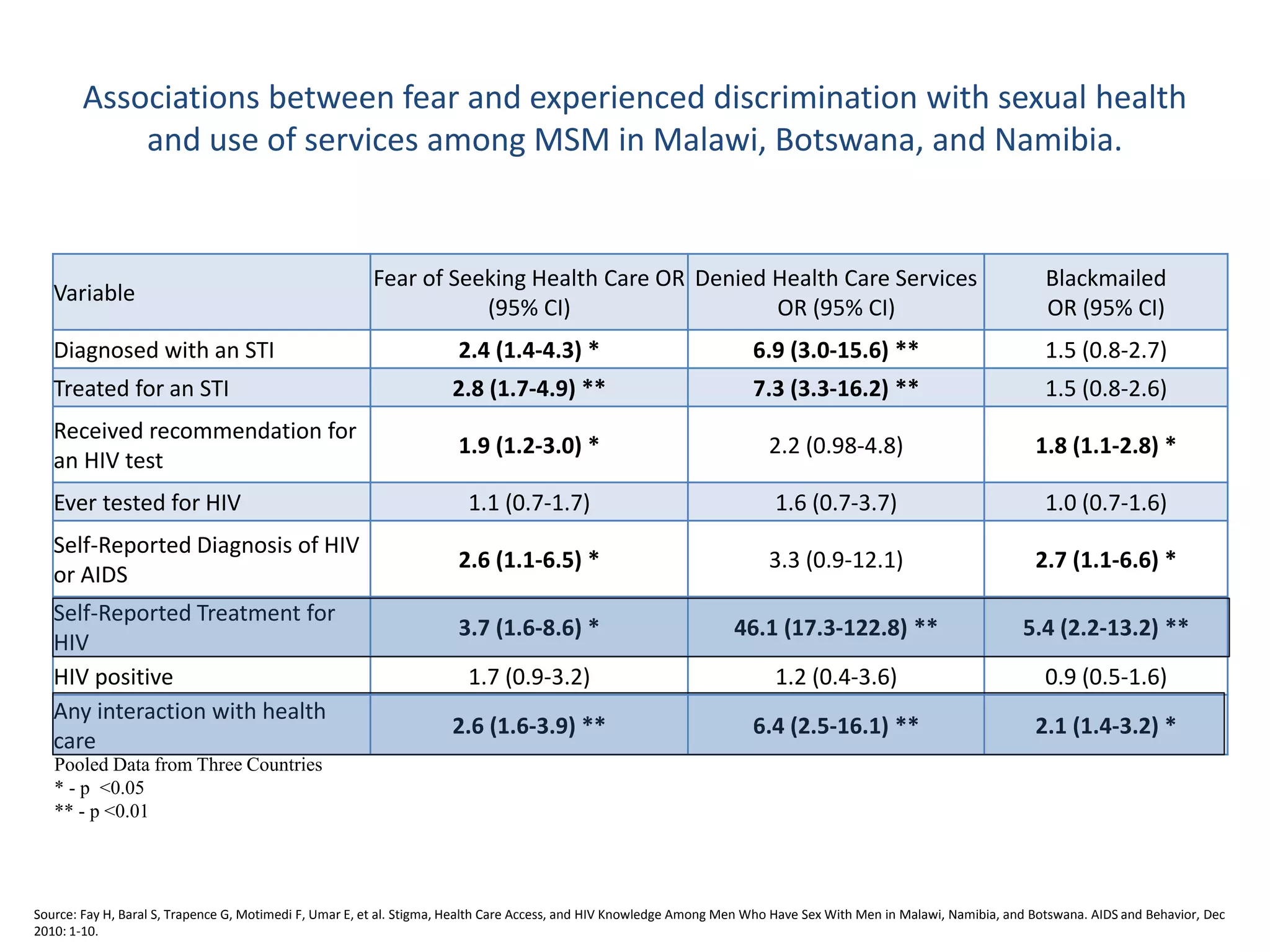
Variable
Fear of Seeking Health Care OR
(95% CI)
Denied Health Care Services
OR (95% CI)
Blackmailed
OR (95% CI)
Diagnosed with an STI 2.4 (1.4-4.3) * 6.9 (3.0-15.6) ** 1.5 (0.8-2.7)
Treated for an STI 2.8 (1.7-4.9) ** 7.3 (3.3-16.2) ** 1.5 (0.8-2.6)
Received recommendation for
an HIV test
1.9 (1.2-3.0) * 2.2 (0.98-4.8) 1.8 (1.1-2.8) *
Ever tested for HIV 1.1 (0.7-1.7) 1.6 (0.7-3.7) 1.0 (0.7-1.6)
Self-Reported Diagnosis of HIV
or AIDS
2.6 (1.1-6.5) * 3.3 (0.9-12.1) 2.7 (1.1-6.6) *
Self-Reported Treatment for
HIV
3.7 (1.6-8.6) * 46.1 (17.3-122.8) ** 5.4 (2.2-13.2) **
HIV positive 1.7 (0.9-3.2) 1.2 (0.4-3.6) 0.9 (0.5-1.6)
Any interaction with health
care
2.6 (1.6-3.9) ** 6.4 (2.5-16.1) ** 2.1 (1.4-3.2) *
Pooled Data from Three Countries
* - p <0.05
** - p <0.01
Source: Fay H, Baral S, Trapence G, Motimedi F, Umar E, et al. Stigma, Health Care Access, and HIV Knowledge Among Men Who Have Sex With Men in Malawi, Namibia, and Botswana. AIDS and Behavior, Dec
2010: 1-10.
Associations between fear and experienced discrimination with sexual health
and use of services among MSM in Malawi, Botswana, and Namibia.
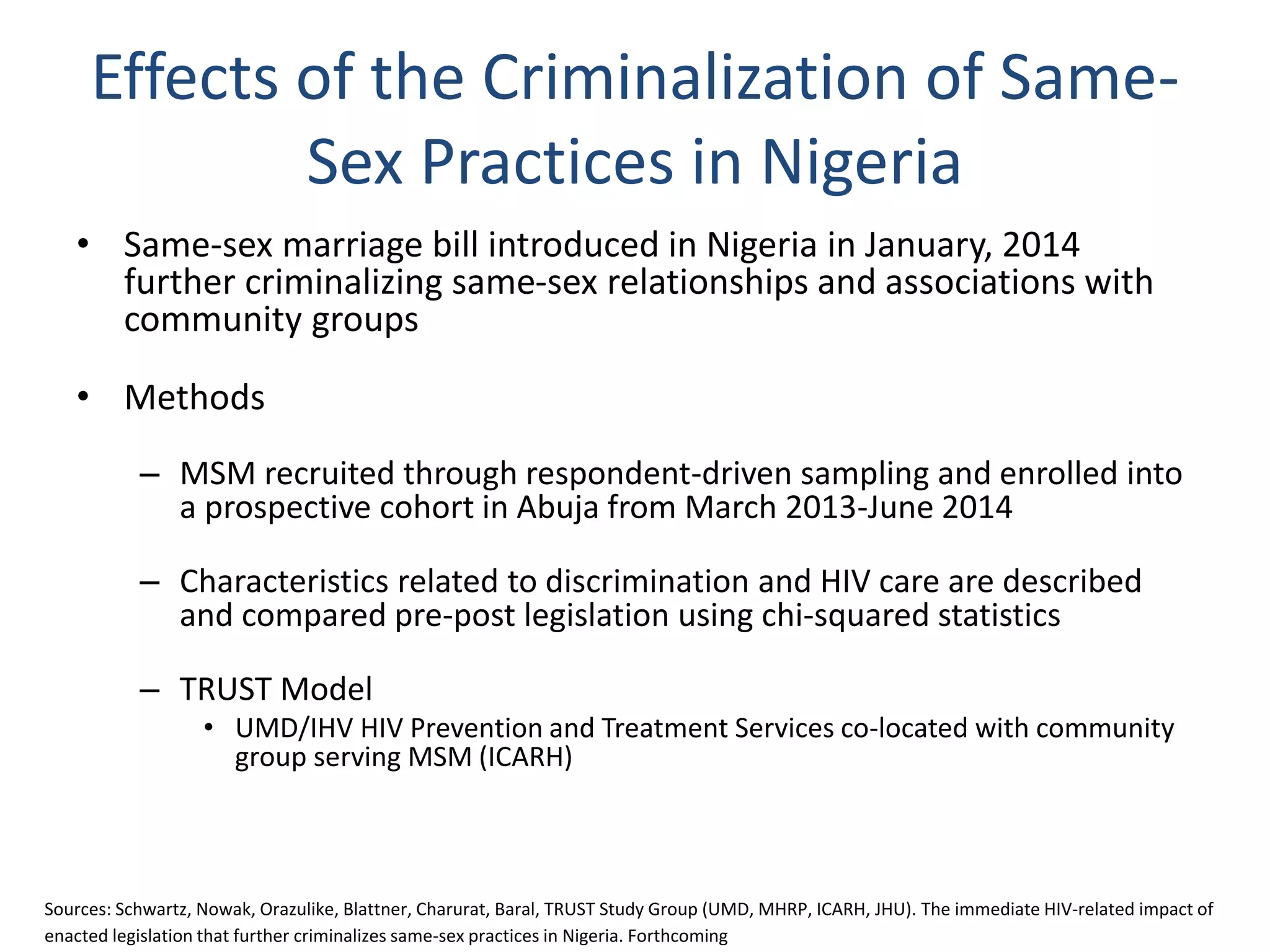
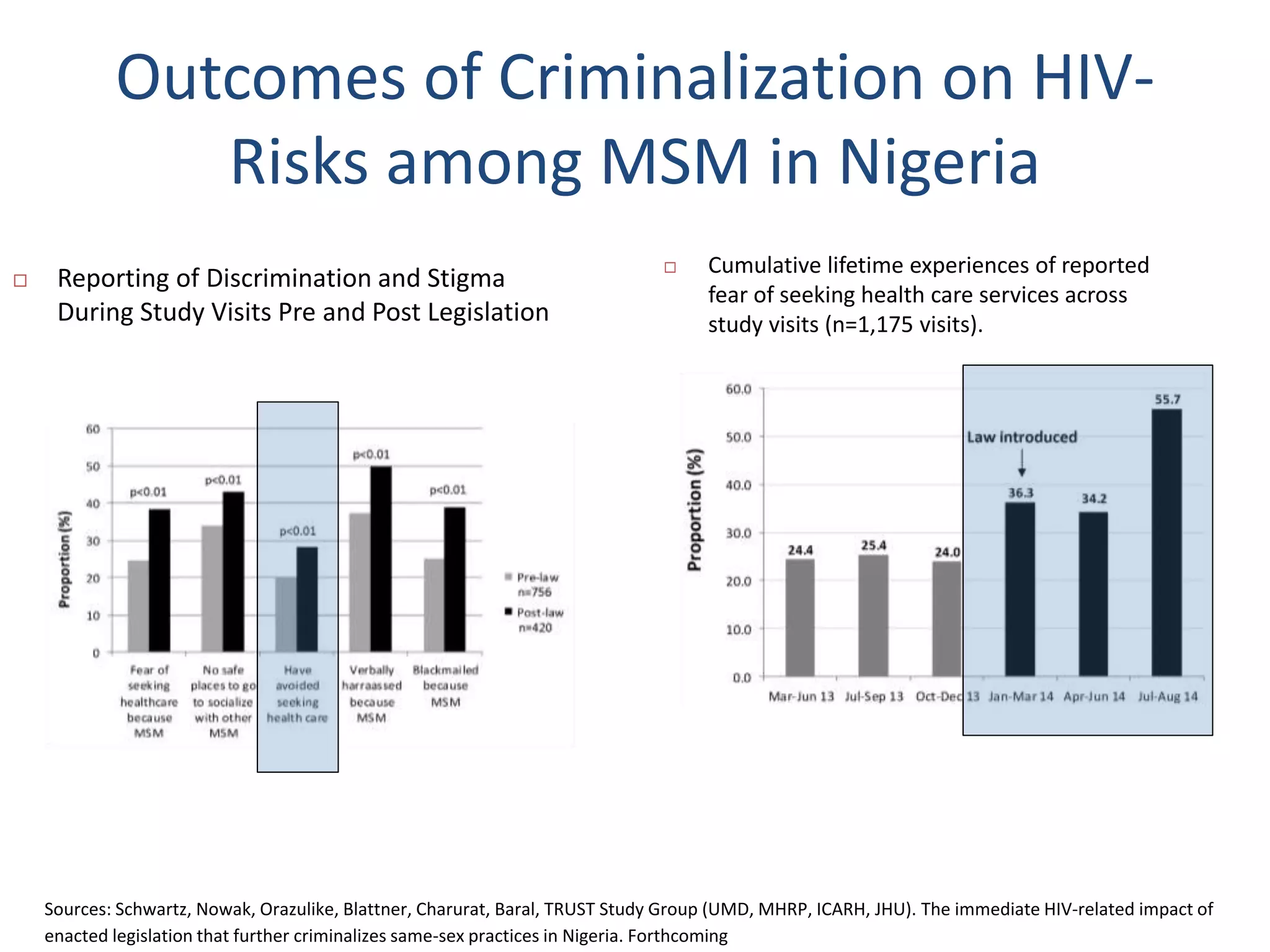
Effects of the Criminalization of Same-
Sex Practices in Nigeria
• Same-sex marriage bill introduced in Nigeria in January, 2014
further criminalizing same-sex relationships and associations with
community groups
• Methods
– MSM recruited through respondent-driven sampling and enrolled into
a prospective cohort in Abuja from March 2013-June 2014
– Characteristics related to discrimination and HIV care are described
and compared pre-post legislation using chi-squared statistics
– TRUST Model
• UMD/IHV HIV Prevention and Treatment Services co-located with community
group serving MSM (ICARH)
Sources: Schwartz, Nowak, Orazulike, Blattner, Charurat, Baral, TRUST Study Group (UMD, MHRP, ICARH, JHU). The immediate HIV-related impact of
enacted legislation that further criminalizes same-sex practices in Nigeria. Forthcoming
Outcomes of Criminalization on HIV-
Risks among MSM in Nigeria
 Reporting of Discrimination and Stigma
During Study Visits Pre and Post Legislation
 Cumulative lifetime experiences of reported
fear of seeking health care services across
study visits (n=1,175 visits).
Sources: Schwartz, Nowak, Orazulike, Blattner, Charurat, Baral, TRUST Study Group (UMD, MHRP, ICARH, JHU). The immediate HIV-related impact of
enacted legislation that further criminalizes same-sex practices in Nigeria. Forthcoming
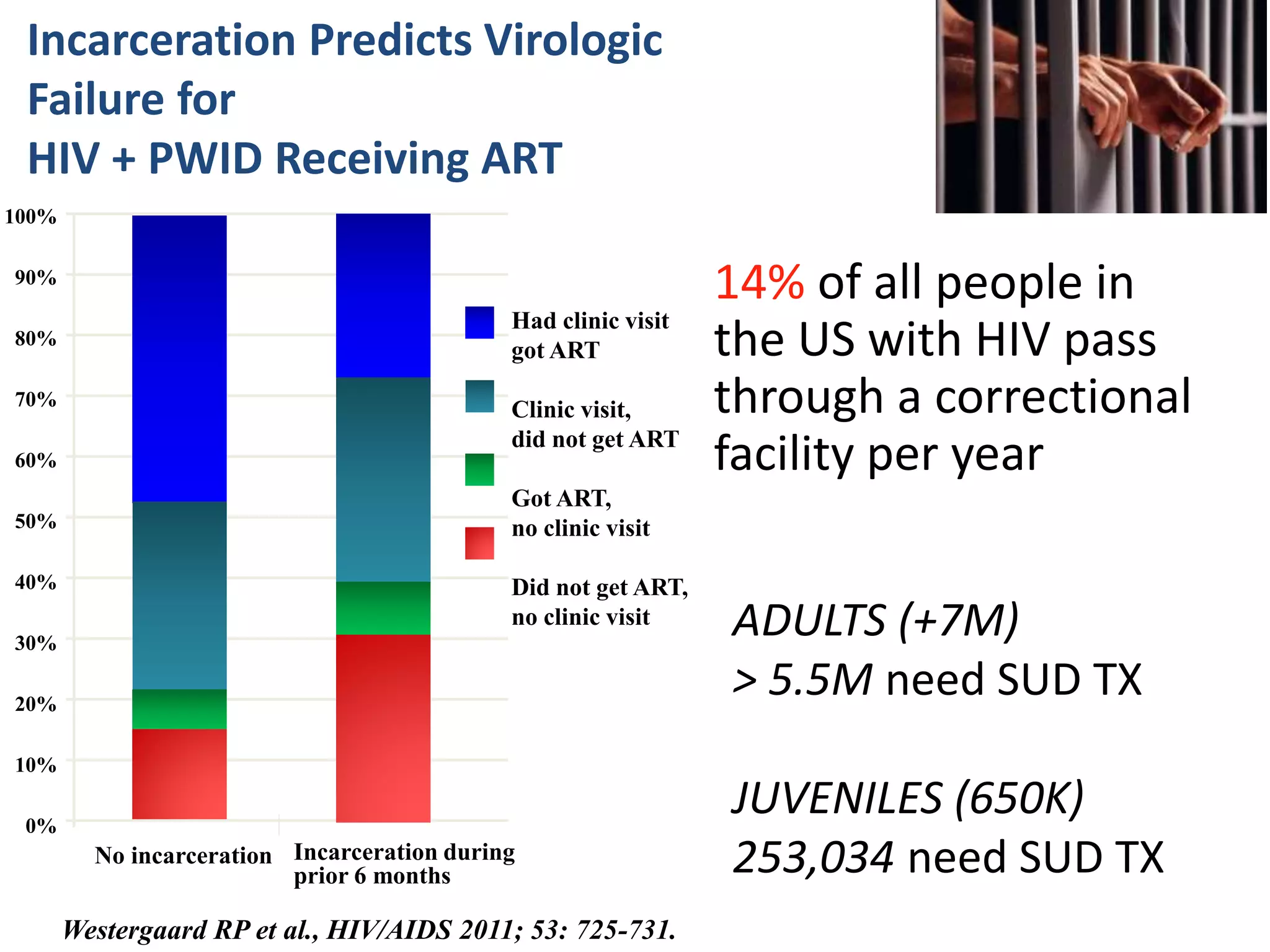
Source: Bureau of Justice Statistics, 2009
ADULTS (+7M)
> 5.5M need SUD TX
JUVENILES (650K)
253,034 need SUD TX
14% of all people in
the US with HIV pass
through a correctional
facility per year
Incarceration Predicts Virologic
Failure for
HIV + PWID Receiving ART
Westergaard RP et al., HIV/AIDS 2011; 53: 725-731.
100%
90%
80%
70%
60%
50%
40%
30%
20%
10%
0%
No incarceration Incarceration during
prior 6 months
Had clinic visit
got ART
Clinic visit,
did not get ART
Got ART,
no clinic visit
Did not get ART,
no clinic visit
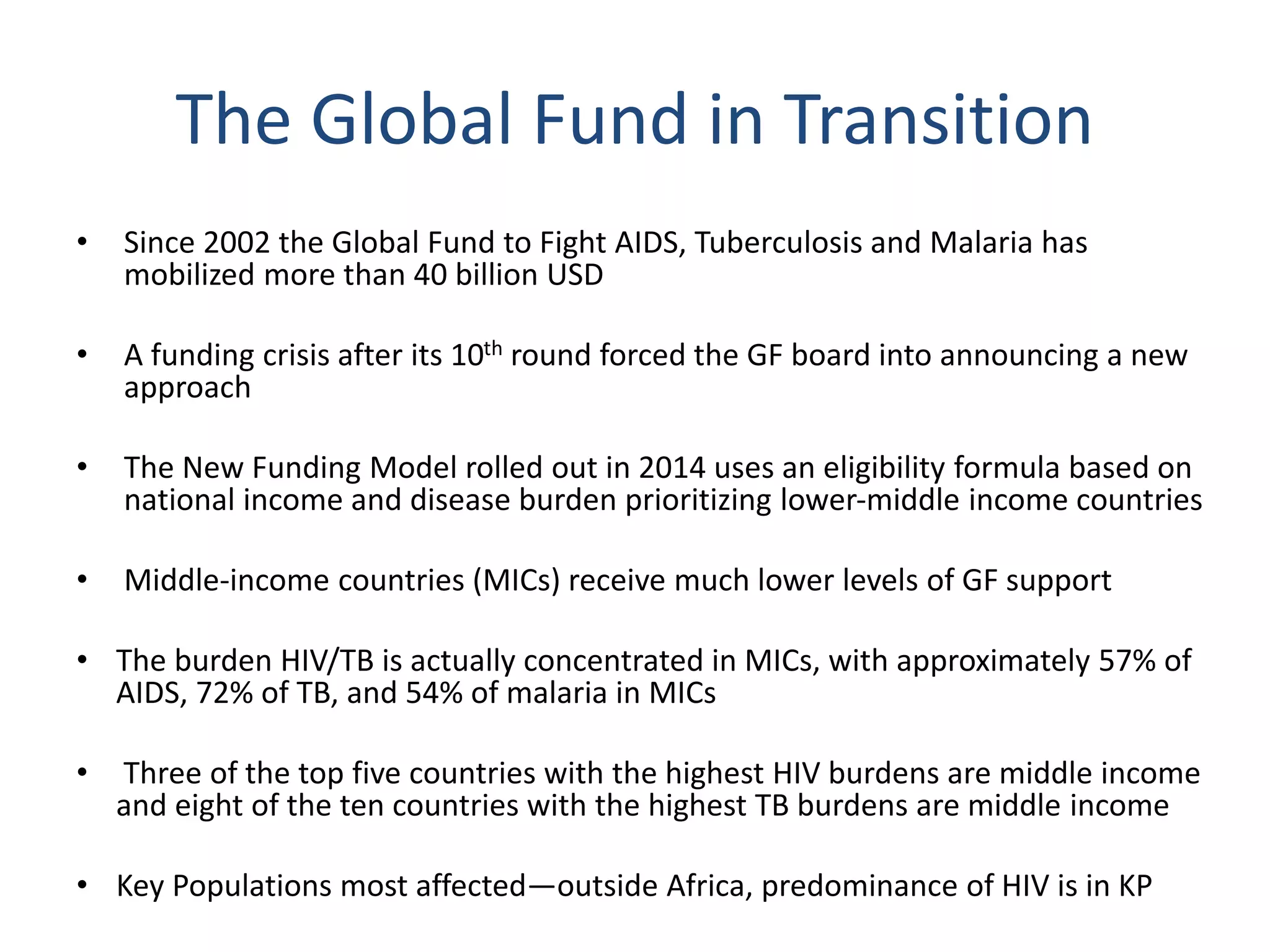
The Global Fund in Transition
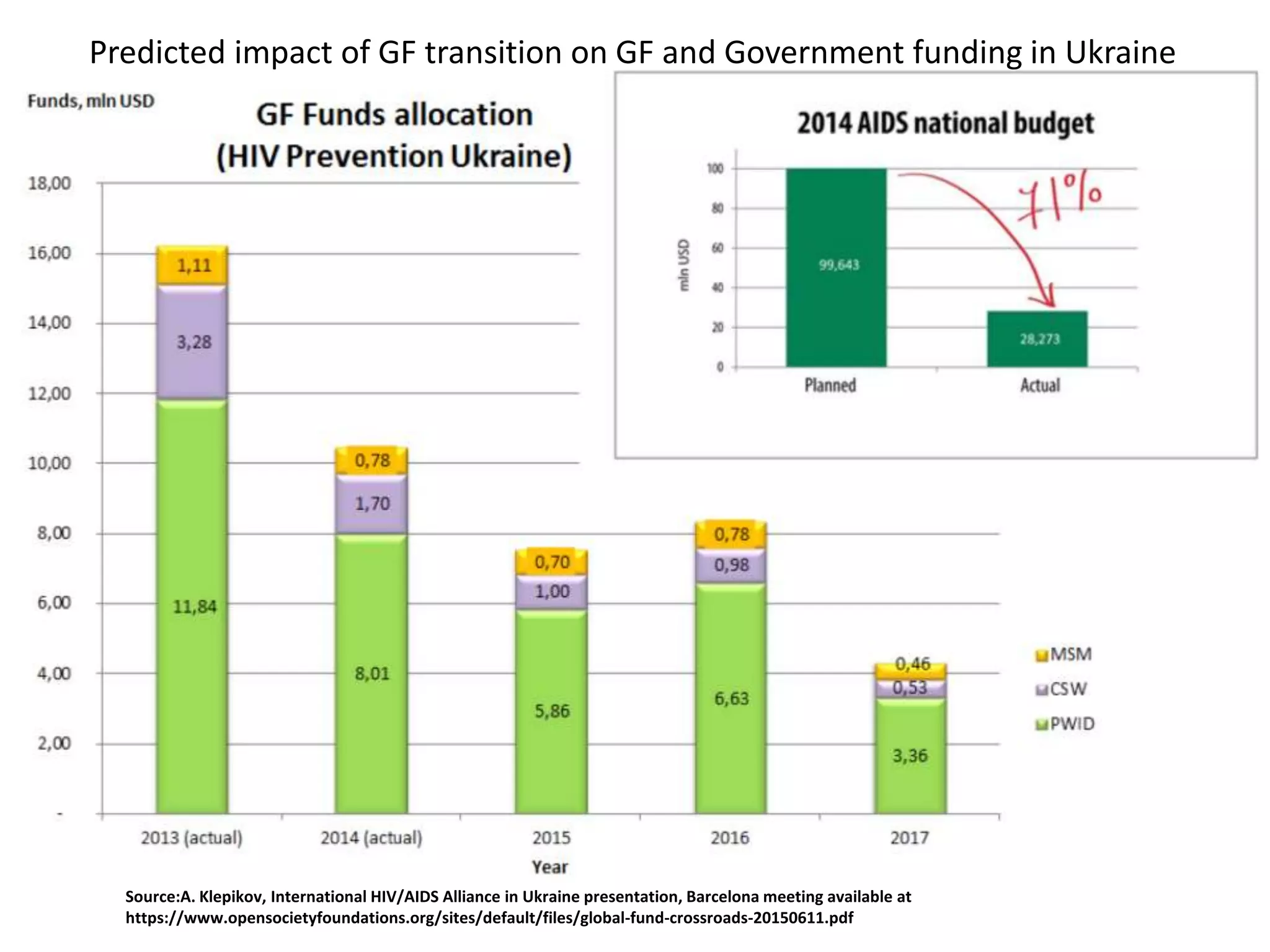
• Since 2002 the Global Fund to Fight AIDS, Tuberculosis and Malaria has
mobilized more than 40 billion USD
• A funding crisis after its 10th round forced the GF board into announcing a new
approach
• The New Funding Model rolled out in 2014 uses an eligibility formula based on
national income and disease burden prioritizing lower-middle income countries
• Middle-income countries (MICs) receive much lower levels of GF support
• The burden HIV/TB is actually concentrated in MICs, with approximately 57% of
AIDS, 72% of TB, and 54% of malaria in MICs
• Three of the top five countries with the highest HIV burdens are middle income
and eight of the ten countries with the highest TB burdens are middle income
• Key Populations most affected—outside Africa, predominance of HIV is in KP
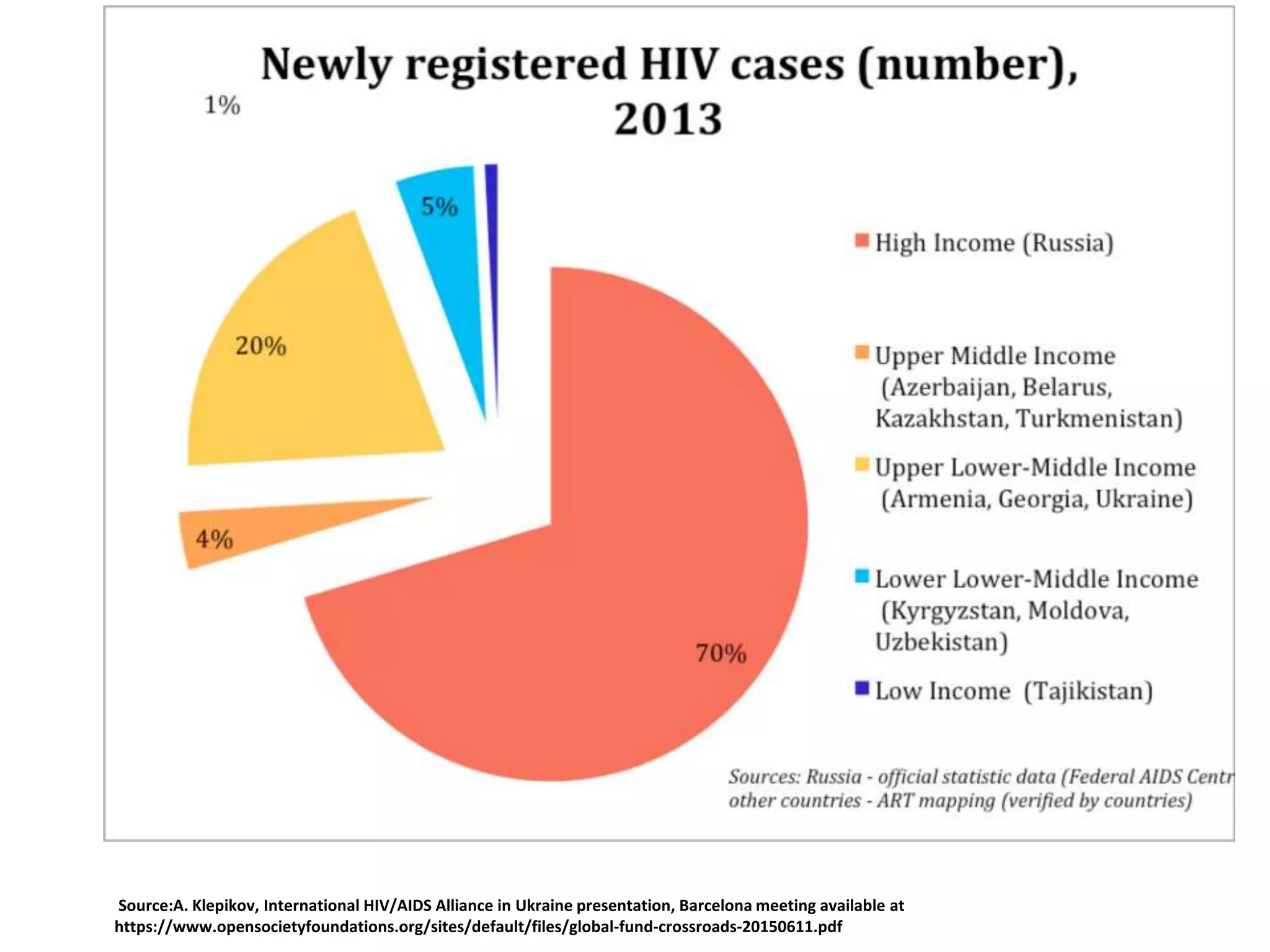
Source:A. Klepikov, International HIV/AIDS Alliance in Ukraine presentation, Barcelona meeting available at
https://www.opensocietyfoundations.org/sites/default/files/global-fund-crossroads-20150611.pdf
Predicted impact of GF transition on GF and Government funding in Ukraine
Source:A. Klepikov, International HIV/AIDS Alliance in Ukraine presentation, Barcelona meeting available at
https://www.opensocietyfoundations.org/sites/default/files/global-fund-crossroads-20150611.pdf
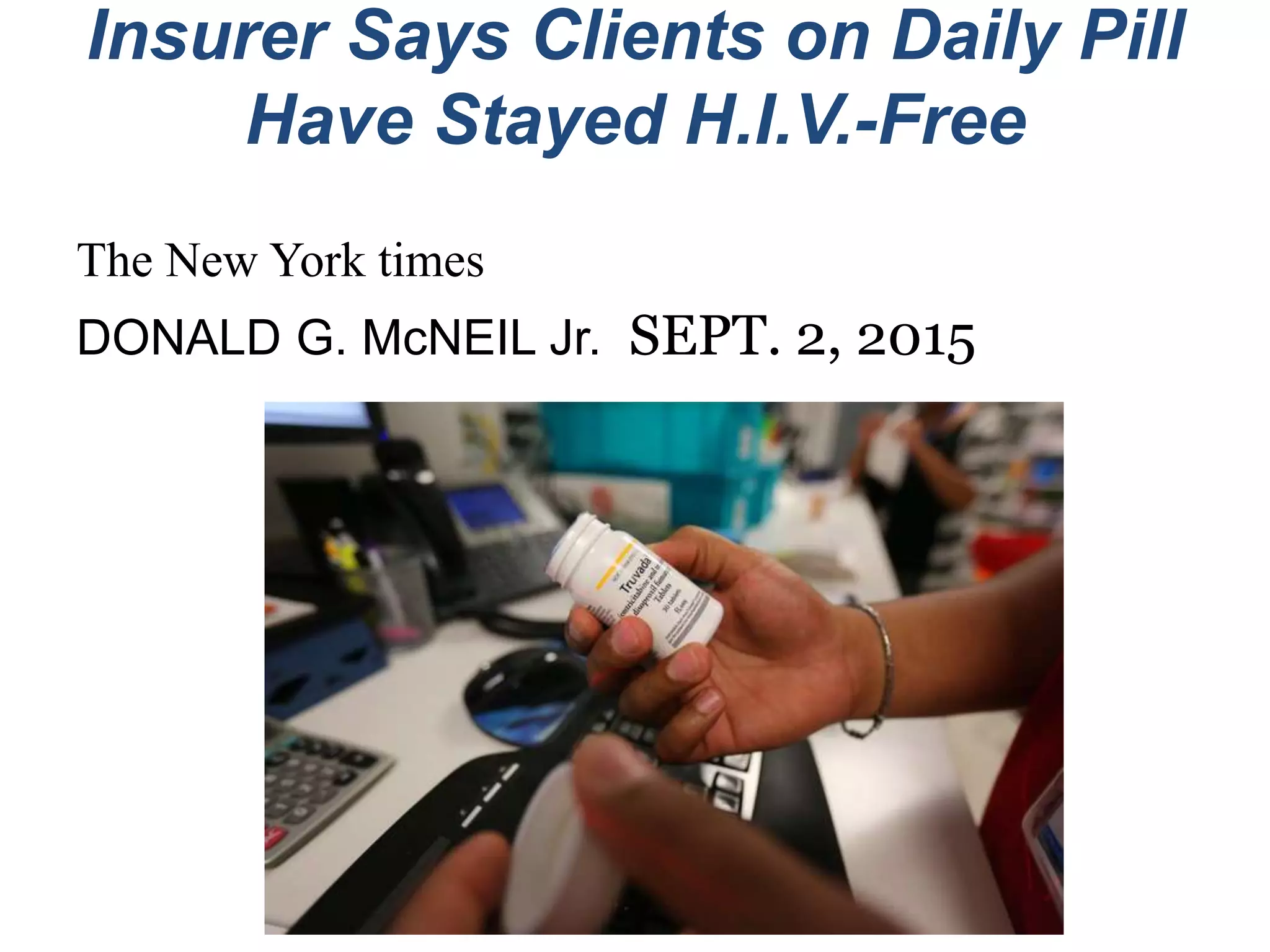
Insurer Says Clients on Daily Pill
Have Stayed H.I.V.-Free
The New York times
DONALD G. McNEIL Jr. SEPT. 2, 2015
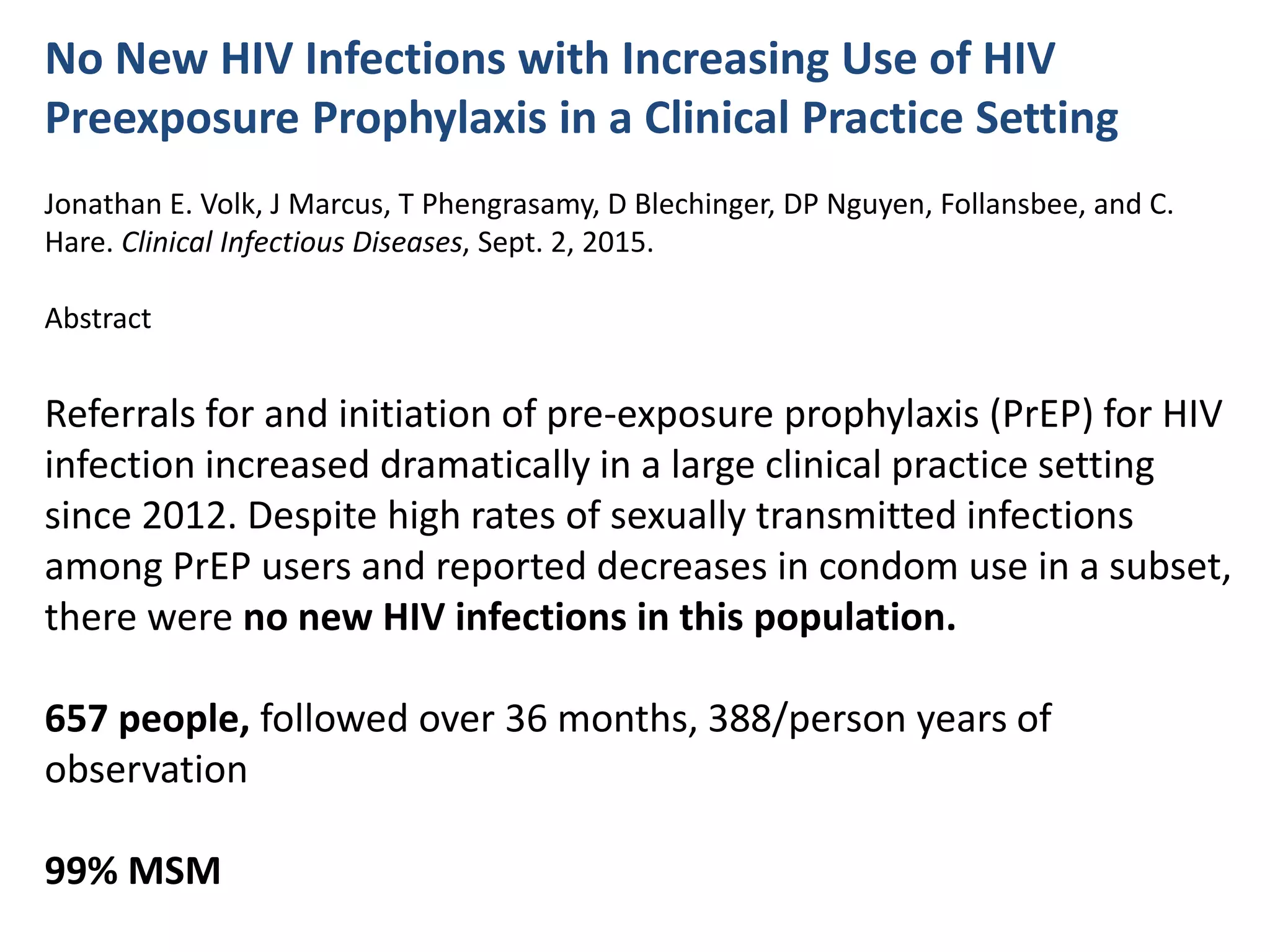
No New HIV Infections with Increasing Use of HIV
Preexposure Prophylaxis in a Clinical Practice Setting
Jonathan E. Volk, J Marcus, T Phengrasamy, D Blechinger, DP Nguyen, Follansbee, and C.
Hare. Clinical Infectious Diseases, Sept. 2, 2015.
Abstract
Referrals for and initiation of pre-exposure prophylaxis (PrEP) for HIV
infection increased dramatically in a large clinical practice setting
since 2012. Despite high rates of sexually transmitted infections
among PrEP users and reported decreases in condom use in a subset,
there were no new HIV infections in this population.
657 people, followed over 36 months, 388/person years of
observation
99% MSM
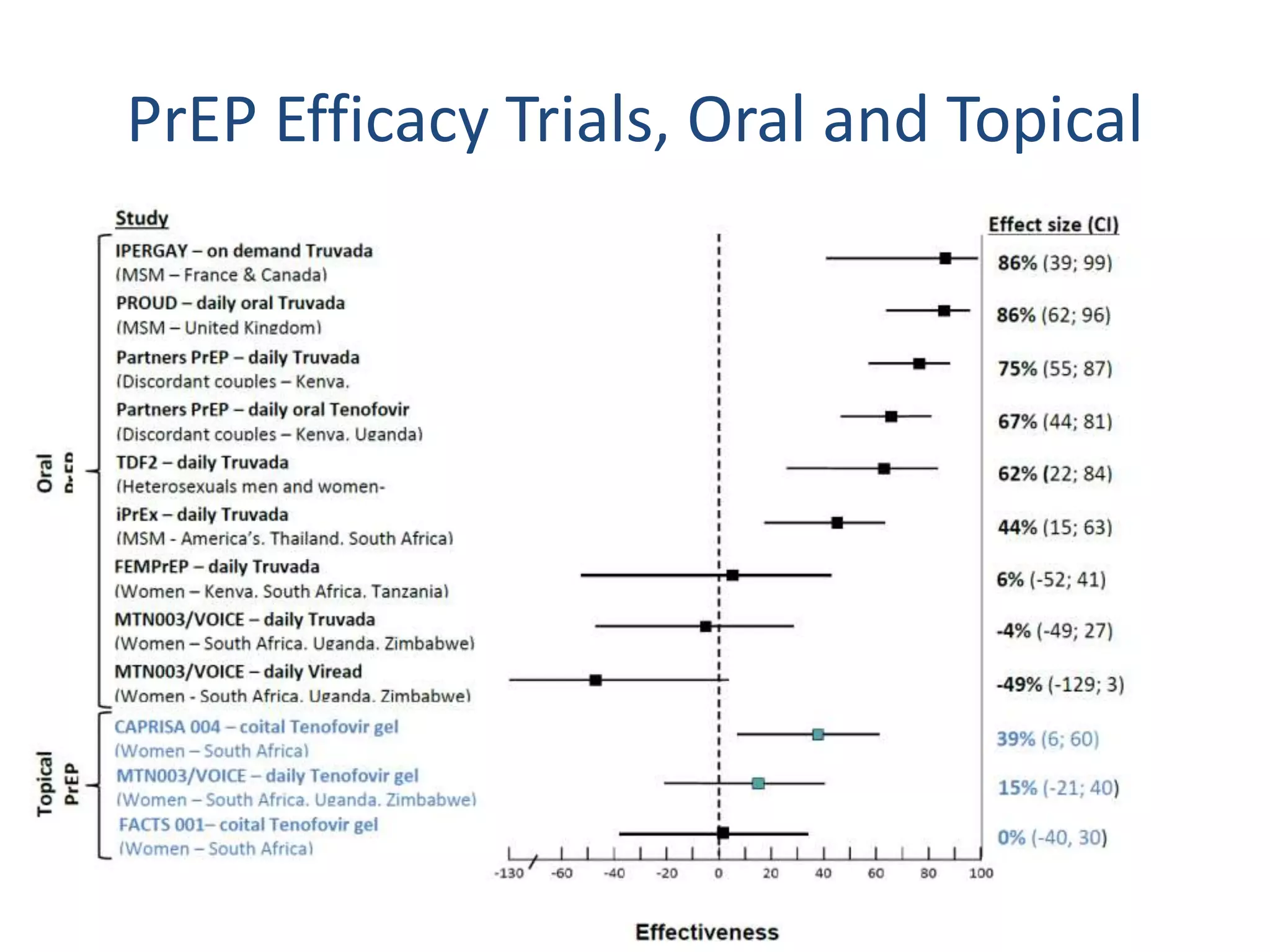
PrEP Efficacy Trials, Oral and Topical
Research Agenda
• Reducing incidence: PrEP implementation for Key
Populations
• Optimizing Treatment: MSM, PWID, SW, TG need
HIV testing, ARVs, PrEP platforms in safety and
dignity
• Tailored interventions across the continuum
needed to address LGBT health disparities
globally
• Next generation interventions and delivery
systems need to be designed for KP to achieve
control of HIV
Acknowledgements
Johns Hopkins
Stefan Baral, Tonia Poteat, Sheree
Schwartz, Brian Weir, Andrea Wirtz,
Anne Efron, Liz Bonomo, Richard
Chaisson, Nick
Sex Workers and HIV
Linda-Gail Bekker, Jenny Butler, Anna-
Louise Crago, Pam Das, Leigh
Johnson, Kate Shannon, Steffanie
Strathdee, Frances Cowan, Cheryl
Overs, Donela Besada, Sharon Hillier,
Ward Cates
Meg Doherty, Bob Grant, Gottfried
Hirnshchall, Michel Kazatchkine, Ken
Mayer, Owen Ryan, Michel Sidibe,
Nora Volkov
MSM Prevention: Patrick
Sullivan, Alex Carballo-Dieguez,
Thomas Coates, Steven M
Goodreau, Sybil Hosek, Ian
McGowan, Eduard J Sanders,
Adrian Smith, P. Goswami, Jorge
Sanchez
MSM Epidemiology
Frits van Griensven, Steven
Goodreau, Suwat Chariyalertsak,
Ron Brookmeyer, Pat Chaulk
Supported by grants to the Center for Public Health and Human Rights at John Hopkins from
amfAR the Foundation for AIDS Research
The Bill & Melinda Gates Foundation
Project Search, USAID
The John Hopkins Center for AIDS Research (NIAID, 1P30AI094189-01A1)

Chris Beyrer: "State of the Science: Key populations"

  • 1.
    We are over10,000 voices strong The IAS is the world’s largest association of HIV professionals. Together we advocate and drive urgent action to reduce the global impact of HIV across every front of the response. Join the movement, become an IAS member today!
  • 2.
    Abstract Submission isopen from 1 December 2015 - 4 February 2016
  • 3.
    State of theScience: Key Populations Chris Beyrer MD, MPH President, The International AIDS Society
  • 4.
    Key Populations inHIV Key populations: those individuals and communities who have disproportionate burdens of HIV risk and disease and lack of access to essential HIV services • Gay, Bisexual, and other men who have sex with men (MSM) • Sex Workers of all genders • People who inject drugs (PWID) • Transgender Women who have sex with men • Women and Girls in South, East African hyper-epidemics • Adolescents from all of these communities
  • 5.
    Global Prevalence ofHIV in PWID Worldwide were an estimated 12.7 million PWID in 2014: 1.7 million living with HIV (some 13% all HIV cases)
  • 6.
    In Greece therewere: 2000-2010, 9-19 new HIV cases in IDU (2%–3% of all cases); in 2011, 266 cases in IDU ( 28% of HIV cases) and in 2012, 547 cases in IDU (46% of HIV cases) HIV can Disseminate very rapidly among PWID Outbreak of HIV Linked to Oxymorphone in Indiana, USA, 2015 80% 3% 17% Injection Drug Use No Injection Drug Use Not Interviewed to Determine Status Average 9 syringe-sharing partners, sex partners Outbreak of HIV in Greece and Romania In Scott County, which is a community of 4200 people there have been 173 new HIV Infections since January of 2015
  • 7.
    Global HIV prevalenceamong adult women sex workers, 2013. Beyrer, et al, The Lancet, 2014.
  • 8.
    Global HIV prevalenceamong adult women sex workers, 2013. Beyrer, et al, The Lancet, 2014.
  • 9.
    HIV prevalence amongtransgender women, 2000-2011 Baral, Poteat, Beyrer LID, 2013 Pooled OR for HIV infection among TGW compared to other reproductive people: 48.8 (95% CI 31.2-76.3)
  • 10.
    Global HIV incidenceamong MSM to 2014
  • 11.
    Diagnoses of HIVInfection among Adult and Adolescent Males, by Transmission Category, 2010-2014 United States and 6 Dependent Areas Note. Data include persons with a diagnosis of HIV infection regardless of stage of disease at diagnosis. All displayed data have been statisticallyadjusted to account for reportingdelays and missing transmission category, but not for incomplete reporting. a Heterosexual contact with a person known to have, or to be at high risk for, HIV infection. b Includes hemophilia,blood transfusion, perinatalexposure, and risk factor not reported or identified.
  • 12.
    Diagnoses of HIVInfection among Adults and Adolescents, by Race/Ethnicity, 2010–2014—United States and 6 Dependent Areas Note. Data include persons with a diagnosis of HIV infection regardless of stage of disease at diagnosis. All displayed data have been statistically adjusted to account for reporting delays, but not for incomplete reporting. a Hispanics/Latinos can be of any race.
  • 13.
    Continuum of Care,Young MSM 353 181 145 140 100 59 0 50 100 150 200 250 300 350 0 20 40 60 80 100 HIV Infected HIV Diagnosed Linked to HIV Care Retained in HIV Care On ART Suppressed VL Percentage Engagement in HIV Care Estimated number and percentage of HIV infected men who have sex with men age 13-24 engaged in selected stages of the continuum of care, Baltimore City, 2013 Using data as reported through 12/31/2014
  • 14.
    The Work Undone Lackof Access to essential services
  • 15.
    Variable Fear of SeekingHealth Care OR (95% CI) Denied Health Care Services OR (95% CI) Blackmailed OR (95% CI) Diagnosed with an STI 2.4 (1.4-4.3) * 6.9 (3.0-15.6) ** 1.5 (0.8-2.7) Treated for an STI 2.8 (1.7-4.9) ** 7.3 (3.3-16.2) ** 1.5 (0.8-2.6) Received recommendation for an HIV test 1.9 (1.2-3.0) * 2.2 (0.98-4.8) 1.8 (1.1-2.8) * Ever tested for HIV 1.1 (0.7-1.7) 1.6 (0.7-3.7) 1.0 (0.7-1.6) Self-Reported Diagnosis of HIV or AIDS 2.6 (1.1-6.5) * 3.3 (0.9-12.1) 2.7 (1.1-6.6) * Self-Reported Treatment for HIV 3.7 (1.6-8.6) * 46.1 (17.3-122.8) ** 5.4 (2.2-13.2) ** HIV positive 1.7 (0.9-3.2) 1.2 (0.4-3.6) 0.9 (0.5-1.6) Any interaction with health care 2.6 (1.6-3.9) ** 6.4 (2.5-16.1) ** 2.1 (1.4-3.2) * Pooled Data from Three Countries * - p <0.05 ** - p <0.01 Source: Fay H, Baral S, Trapence G, Motimedi F, Umar E, et al. Stigma, Health Care Access, and HIV Knowledge Among Men Who Have Sex With Men in Malawi, Namibia, and Botswana. AIDS and Behavior, Dec 2010: 1-10. Associations between fear and experienced discrimination with sexual health and use of services among MSM in Malawi, Botswana, and Namibia.
  • 16.
    Effects of theCriminalization of Same- Sex Practices in Nigeria • Same-sex marriage bill introduced in Nigeria in January, 2014 further criminalizing same-sex relationships and associations with community groups • Methods – MSM recruited through respondent-driven sampling and enrolled into a prospective cohort in Abuja from March 2013-June 2014 – Characteristics related to discrimination and HIV care are described and compared pre-post legislation using chi-squared statistics – TRUST Model • UMD/IHV HIV Prevention and Treatment Services co-located with community group serving MSM (ICARH) Sources: Schwartz, Nowak, Orazulike, Blattner, Charurat, Baral, TRUST Study Group (UMD, MHRP, ICARH, JHU). The immediate HIV-related impact of enacted legislation that further criminalizes same-sex practices in Nigeria. Forthcoming
  • 17.
    Outcomes of Criminalizationon HIV- Risks among MSM in Nigeria  Reporting of Discrimination and Stigma During Study Visits Pre and Post Legislation  Cumulative lifetime experiences of reported fear of seeking health care services across study visits (n=1,175 visits). Sources: Schwartz, Nowak, Orazulike, Blattner, Charurat, Baral, TRUST Study Group (UMD, MHRP, ICARH, JHU). The immediate HIV-related impact of enacted legislation that further criminalizes same-sex practices in Nigeria. Forthcoming
  • 18.
    Source: Bureau ofJustice Statistics, 2009 ADULTS (+7M) > 5.5M need SUD TX JUVENILES (650K) 253,034 need SUD TX 14% of all people in the US with HIV pass through a correctional facility per year Incarceration Predicts Virologic Failure for HIV + PWID Receiving ART Westergaard RP et al., HIV/AIDS 2011; 53: 725-731. 100% 90% 80% 70% 60% 50% 40% 30% 20% 10% 0% No incarceration Incarceration during prior 6 months Had clinic visit got ART Clinic visit, did not get ART Got ART, no clinic visit Did not get ART, no clinic visit
  • 19.
    The Global Fundin Transition • Since 2002 the Global Fund to Fight AIDS, Tuberculosis and Malaria has mobilized more than 40 billion USD • A funding crisis after its 10th round forced the GF board into announcing a new approach • The New Funding Model rolled out in 2014 uses an eligibility formula based on national income and disease burden prioritizing lower-middle income countries • Middle-income countries (MICs) receive much lower levels of GF support • The burden HIV/TB is actually concentrated in MICs, with approximately 57% of AIDS, 72% of TB, and 54% of malaria in MICs • Three of the top five countries with the highest HIV burdens are middle income and eight of the ten countries with the highest TB burdens are middle income • Key Populations most affected—outside Africa, predominance of HIV is in KP
  • 20.
    Source:A. Klepikov, InternationalHIV/AIDS Alliance in Ukraine presentation, Barcelona meeting available at https://www.opensocietyfoundations.org/sites/default/files/global-fund-crossroads-20150611.pdf
  • 21.
    Predicted impact ofGF transition on GF and Government funding in Ukraine Source:A. Klepikov, International HIV/AIDS Alliance in Ukraine presentation, Barcelona meeting available at https://www.opensocietyfoundations.org/sites/default/files/global-fund-crossroads-20150611.pdf
  • 22.
    Insurer Says Clientson Daily Pill Have Stayed H.I.V.-Free The New York times DONALD G. McNEIL Jr. SEPT. 2, 2015
  • 23.
    No New HIVInfections with Increasing Use of HIV Preexposure Prophylaxis in a Clinical Practice Setting Jonathan E. Volk, J Marcus, T Phengrasamy, D Blechinger, DP Nguyen, Follansbee, and C. Hare. Clinical Infectious Diseases, Sept. 2, 2015. Abstract Referrals for and initiation of pre-exposure prophylaxis (PrEP) for HIV infection increased dramatically in a large clinical practice setting since 2012. Despite high rates of sexually transmitted infections among PrEP users and reported decreases in condom use in a subset, there were no new HIV infections in this population. 657 people, followed over 36 months, 388/person years of observation 99% MSM
  • 24.
    PrEP Efficacy Trials,Oral and Topical
  • 25.
    Research Agenda • Reducingincidence: PrEP implementation for Key Populations • Optimizing Treatment: MSM, PWID, SW, TG need HIV testing, ARVs, PrEP platforms in safety and dignity • Tailored interventions across the continuum needed to address LGBT health disparities globally • Next generation interventions and delivery systems need to be designed for KP to achieve control of HIV
  • 26.
    Acknowledgements Johns Hopkins Stefan Baral,Tonia Poteat, Sheree Schwartz, Brian Weir, Andrea Wirtz, Anne Efron, Liz Bonomo, Richard Chaisson, Nick Sex Workers and HIV Linda-Gail Bekker, Jenny Butler, Anna- Louise Crago, Pam Das, Leigh Johnson, Kate Shannon, Steffanie Strathdee, Frances Cowan, Cheryl Overs, Donela Besada, Sharon Hillier, Ward Cates Meg Doherty, Bob Grant, Gottfried Hirnshchall, Michel Kazatchkine, Ken Mayer, Owen Ryan, Michel Sidibe, Nora Volkov MSM Prevention: Patrick Sullivan, Alex Carballo-Dieguez, Thomas Coates, Steven M Goodreau, Sybil Hosek, Ian McGowan, Eduard J Sanders, Adrian Smith, P. Goswami, Jorge Sanchez MSM Epidemiology Frits van Griensven, Steven Goodreau, Suwat Chariyalertsak, Ron Brookmeyer, Pat Chaulk Supported by grants to the Center for Public Health and Human Rights at John Hopkins from amfAR the Foundation for AIDS Research The Bill & Melinda Gates Foundation Project Search, USAID The John Hopkins Center for AIDS Research (NIAID, 1P30AI094189-01A1)