Session One:
Basics of HIV and AIDS
2
Purpose
Provide basic information about HIV and AIDS,
including causes, transmission, progression,
knowledge, and challenges.
3
Learning Objectives
• Know basic facts about the impact, trends,
definition, and causes of HIV.
• Understand the factors that affect the risk of
transmission and vulnerability to HIV infection
• Discuss strategies to prevent and treat HIV and
AIDS and care for people with HIV (PLHIV).
• Describe the challenges of managing HIV and
AIDS.
4
Session Outline
• Magnitude, prevalence, and trends of HIV in sub-Saharan Africa
• Definitions of HIV and AIDS
• Modes of HIV transmission and related factors
• Factors affecting HIV transmission
• Phases of HIV infection
• Disease recognition and testing
• Treatment of HIV and AIDS
• Impact of HIV on demographic patterns, food security, health,
and education in Africa
• Comprehensive package of HIV programs
• Challenges of managing HIV and AIDS
5
What is HIV?
• Human immunodeficiency virus
• Responsible for causing AIDS
6
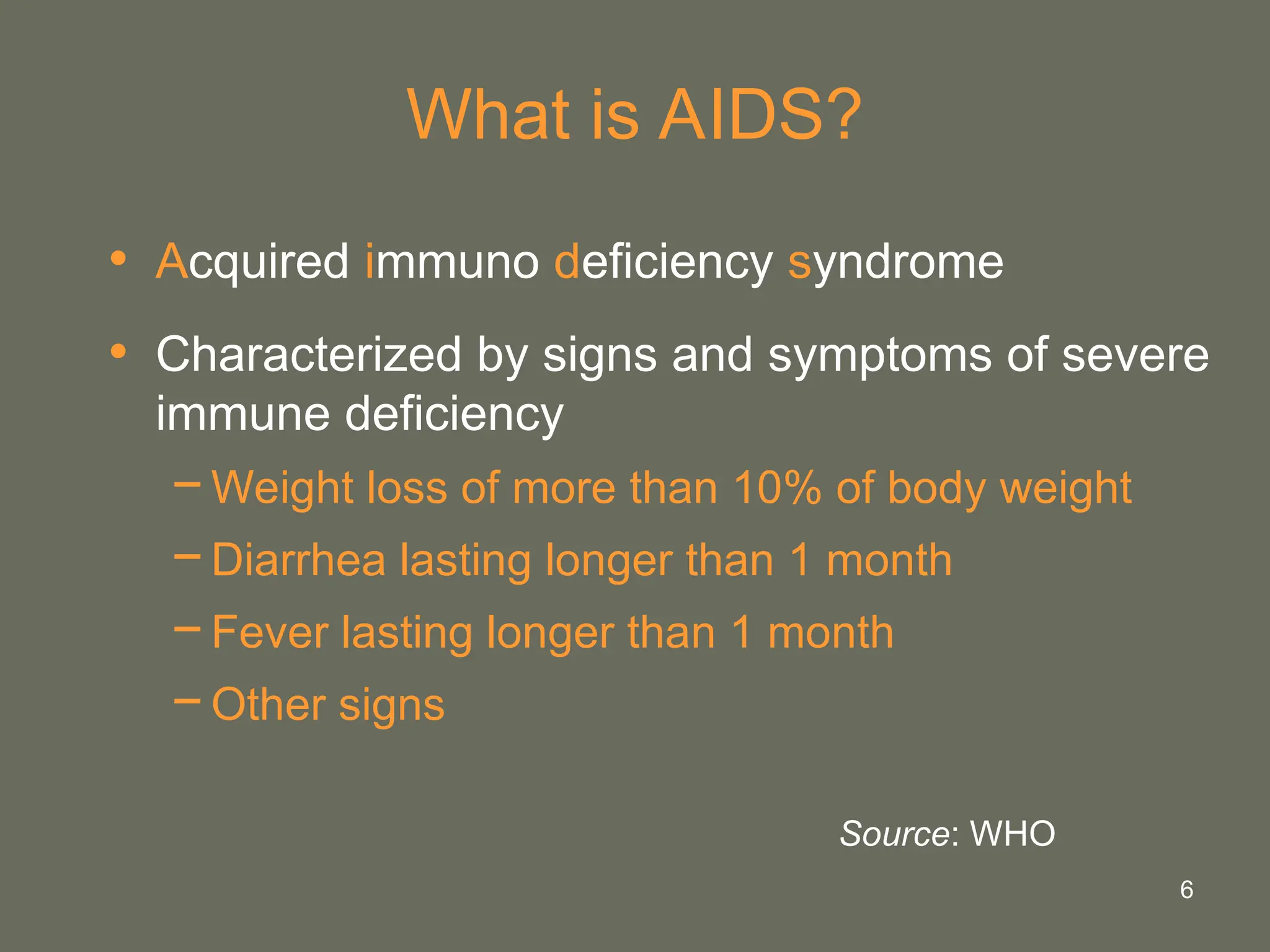
What is AIDS?
• Acquired immuno deficiency syndrome
• Characterized by signs and symptoms of severe
immune deficiency
−Weight loss of more than 10% of body weight
−Diarrhea lasting longer than 1 month
−Fever lasting longer than 1 month
−Other signs
Source: WHO
7
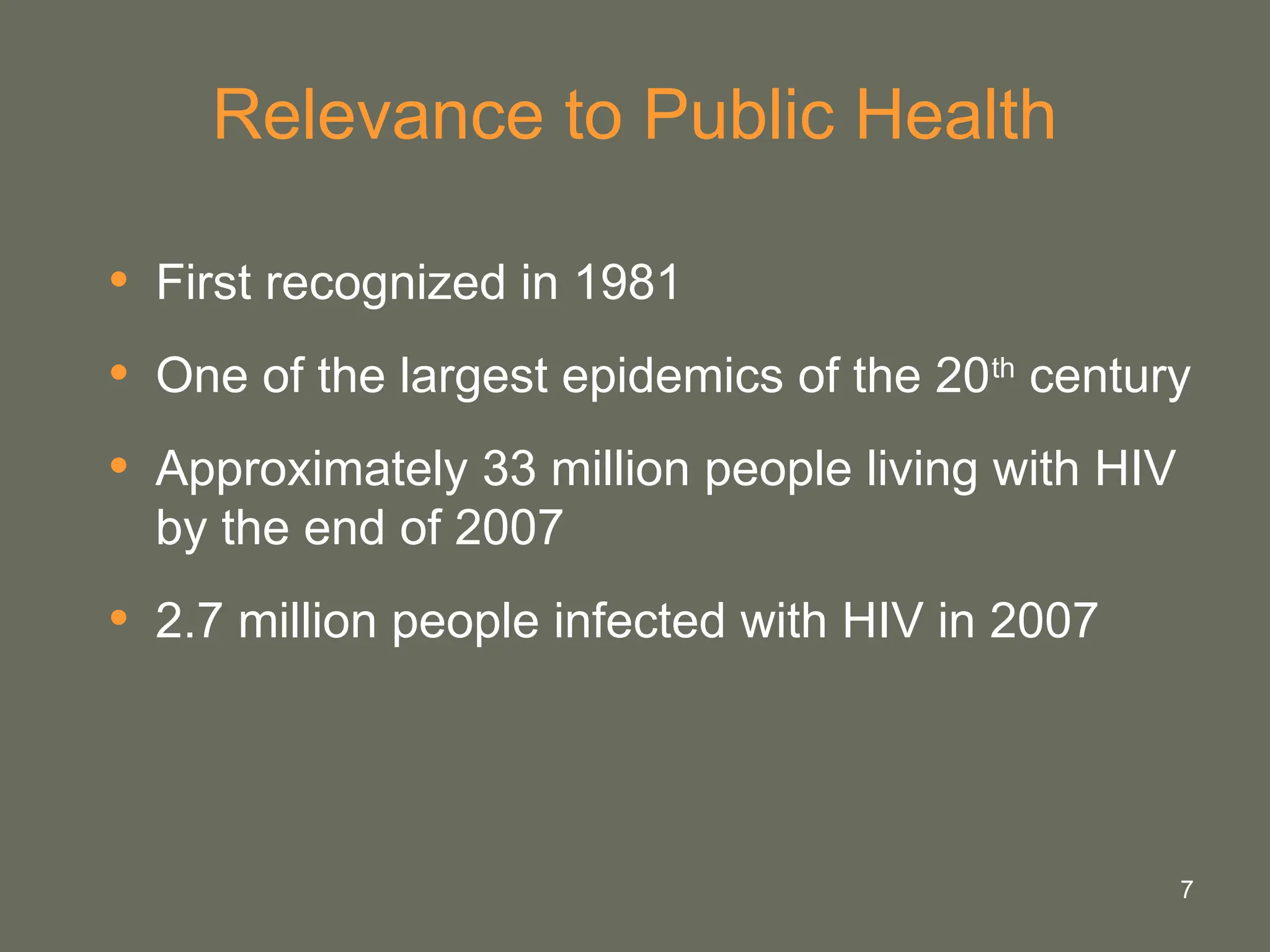
Relevance to Public Health
• First recognized in 1981
• One of the largest epidemics of the 20th
century
• Approximately 33 million people living with HIV
by the end of 2007
• 2.7 million people infected with HIV in 2007
8
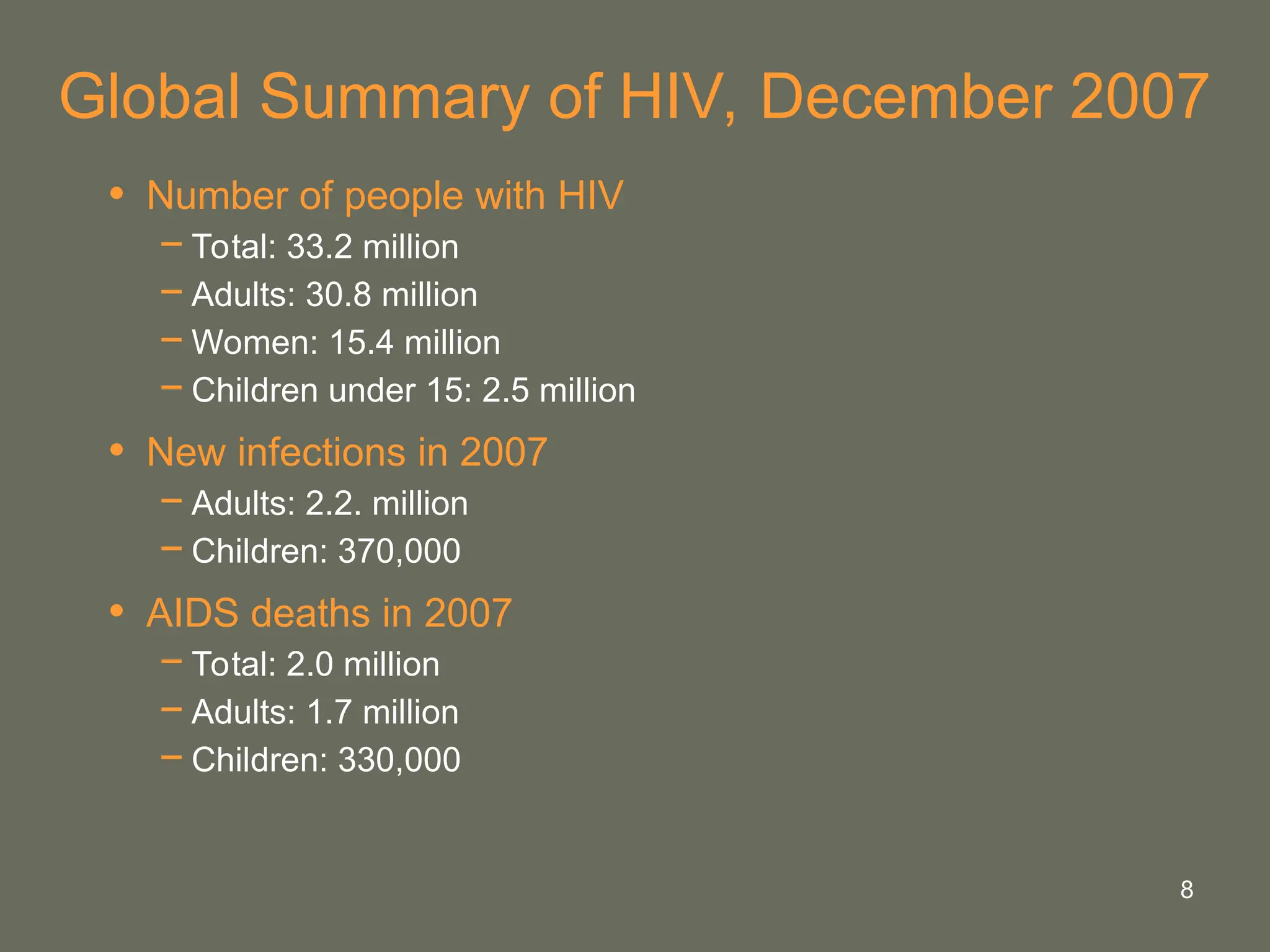
Global Summary of HIV, December 2007
• Number of people with HIV
− Total: 33.2 million
− Adults: 30.8 million
− Women: 15.4 million
− Children under 15: 2.5 million
• New infections in 2007
− Adults: 2.2. million
− Children: 370,000
• AIDS deaths in 2007
− Total: 2.0 million
− Adults: 1.7 million
− Children: 330,000
9
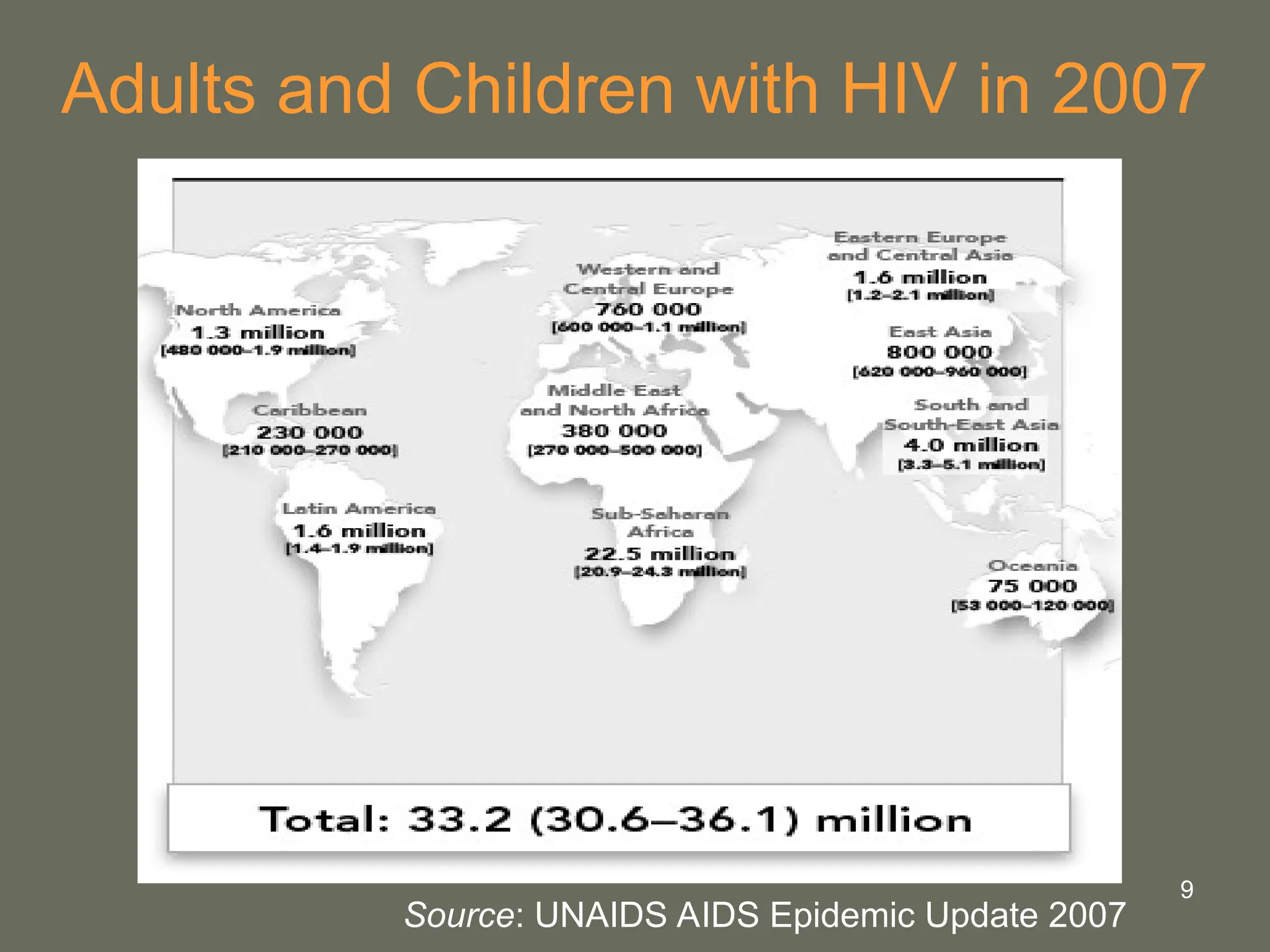
Adults and Children with HIV in 2007
Source: UNAIDS AIDS Epidemic Update 2007
10
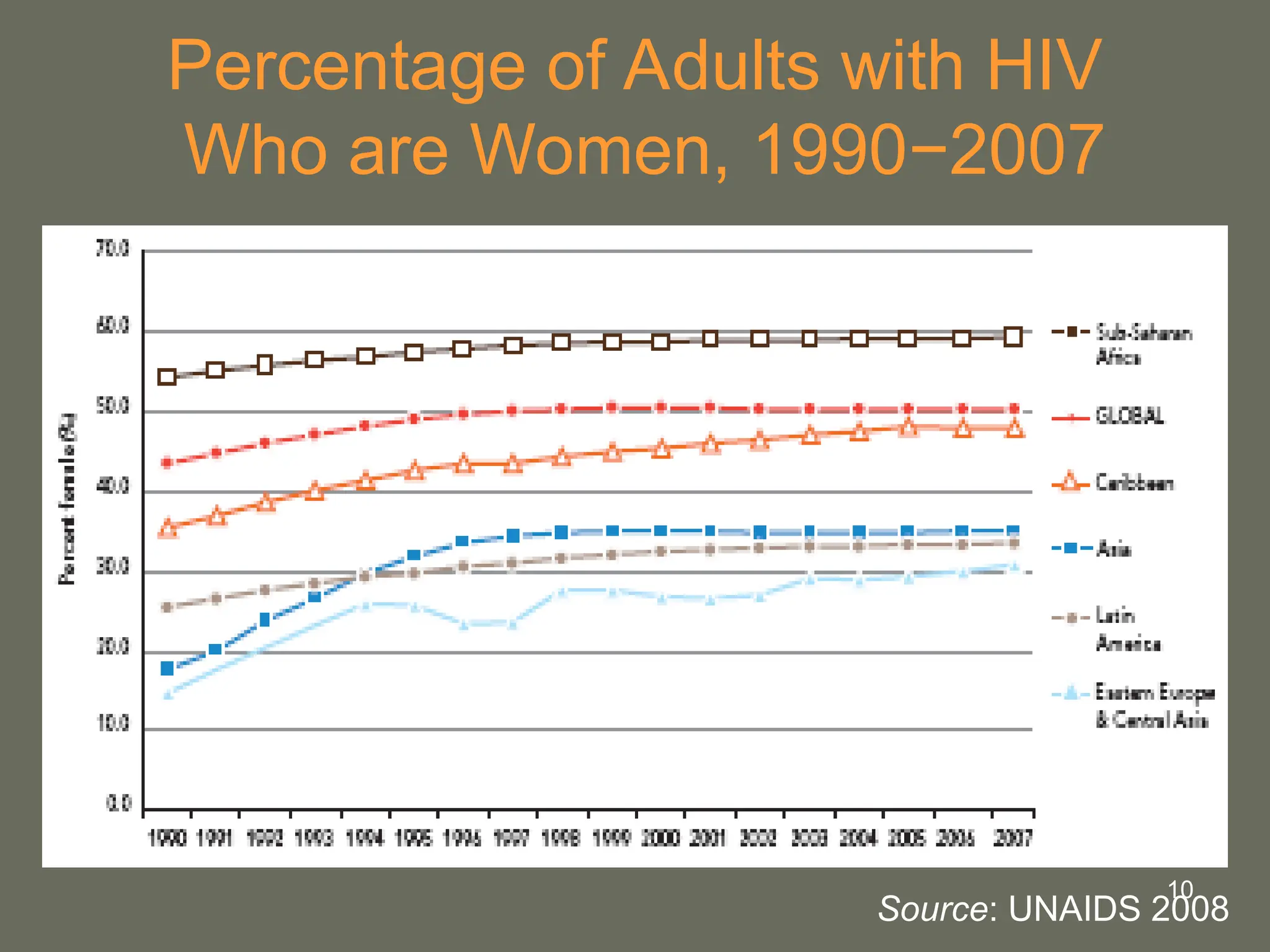
Percentage of Adults with HIV
Who are Women, 1990−2007
Source: UNAIDS 2008
11
Effects of the Virus
• Attacks white blood cells that fight infection in
healthy people
• Changes the composition of white blood cells
and enables HIV to replicate itself
• Weakens the immune system
• Increases vulnerability to life-threatening
illnesses
12
Main Routes of HIV Transmission
Sexual
• Main mode of transmission
• Accounts for 70−80% of all HIV infections
Parenteral
• Blood transfusions (estimated risk from a single unit of HIV-
infected whole blood is > 90%)
• Contaminated needle pricks
• Needle sharing among HIV-infected drug users
Vertical (perinatal)
• In utero, during labor and delivery, and through breastfeeding
13
Physical Factors Affecting
Transmission and Vulnerability
Viral
• Strain of HIV
• Viral load
Host
• Presence of sexually transmitted infections
• Stage of infection
• Circumcision
• Hereditary resistance to HIV
14
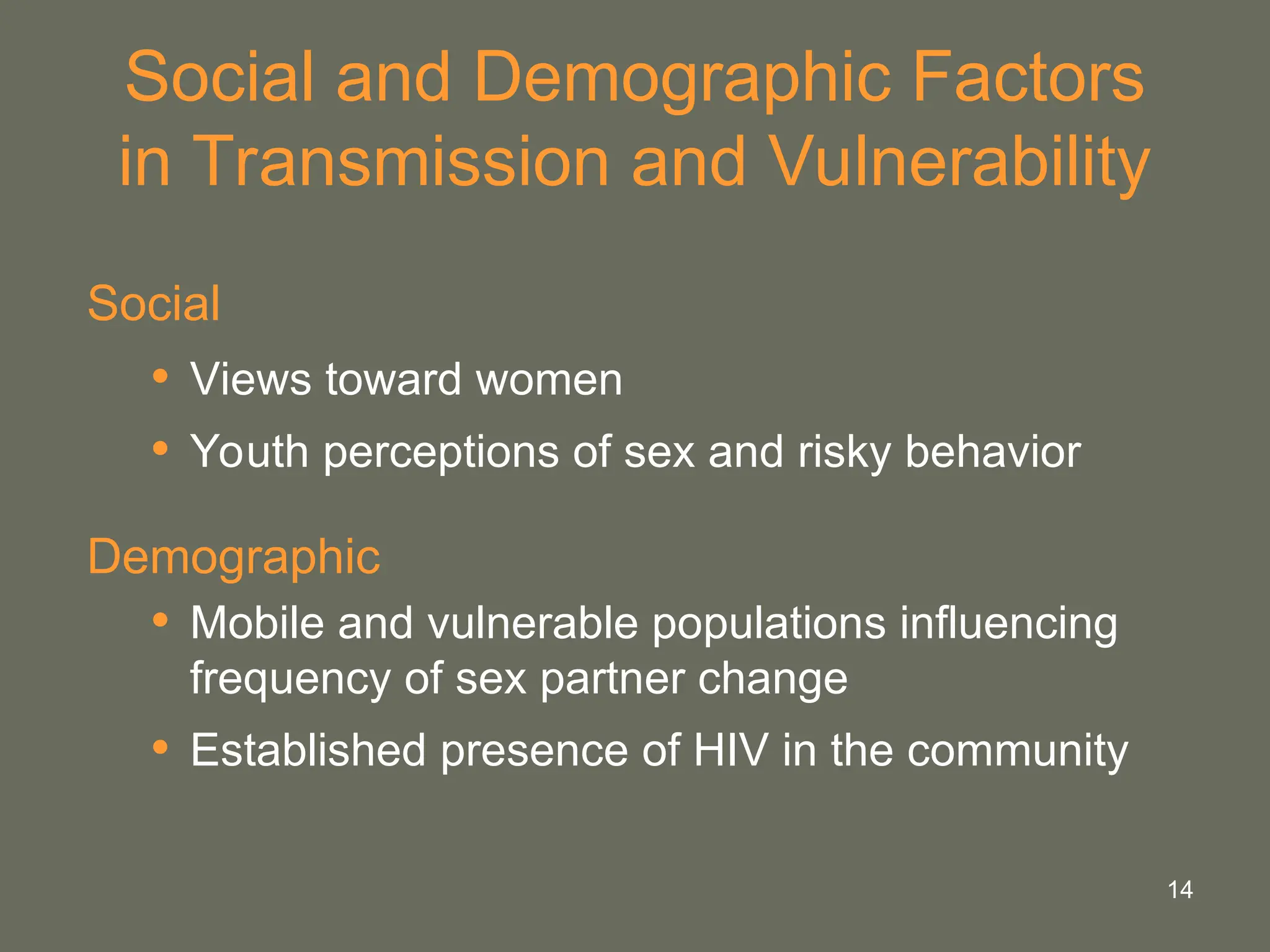
Social and Demographic Factors
in Transmission and Vulnerability
Social
• Views toward women
• Youth perceptions of sex and risky behavior
Demographic
• Mobile and vulnerable populations influencing
frequency of sex partner change
• Established presence of HIV in the community
15
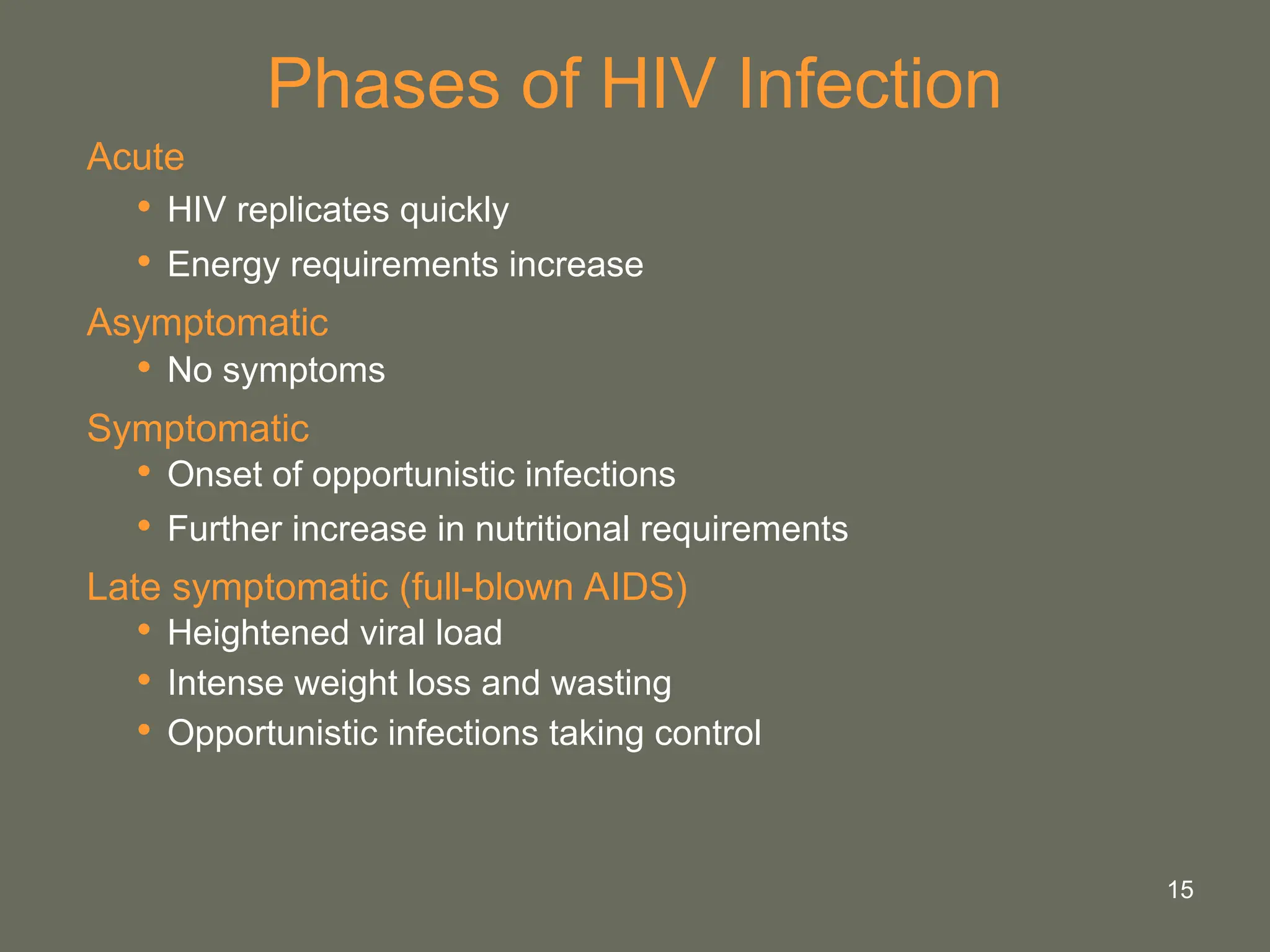
Phases of HIV Infection
Acute
• HIV replicates quickly
• Energy requirements increase
Asymptomatic
• No symptoms
Symptomatic
• Onset of opportunistic infections
• Further increase in nutritional requirements
Late symptomatic (full-blown AIDS)
• Heightened viral load
• Intense weight loss and wasting
• Opportunistic infections taking control
16
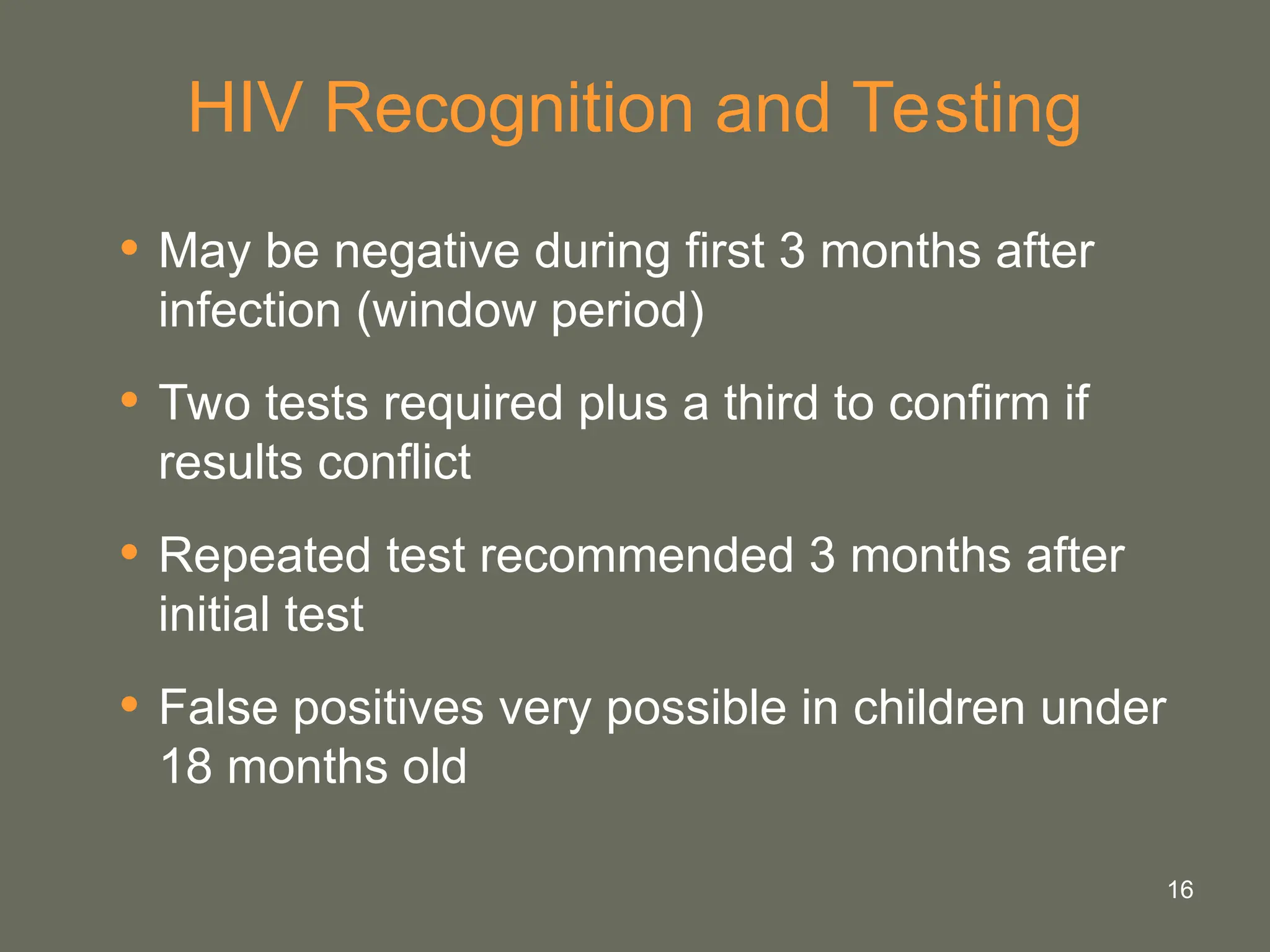
HIV Recognition and Testing
• May be negative during first 3 months after
infection (window period)
• Two tests required plus a third to confirm if
results conflict
• Repeated test recommended 3 months after
initial test
• False positives very possible in children under
18 months old
17
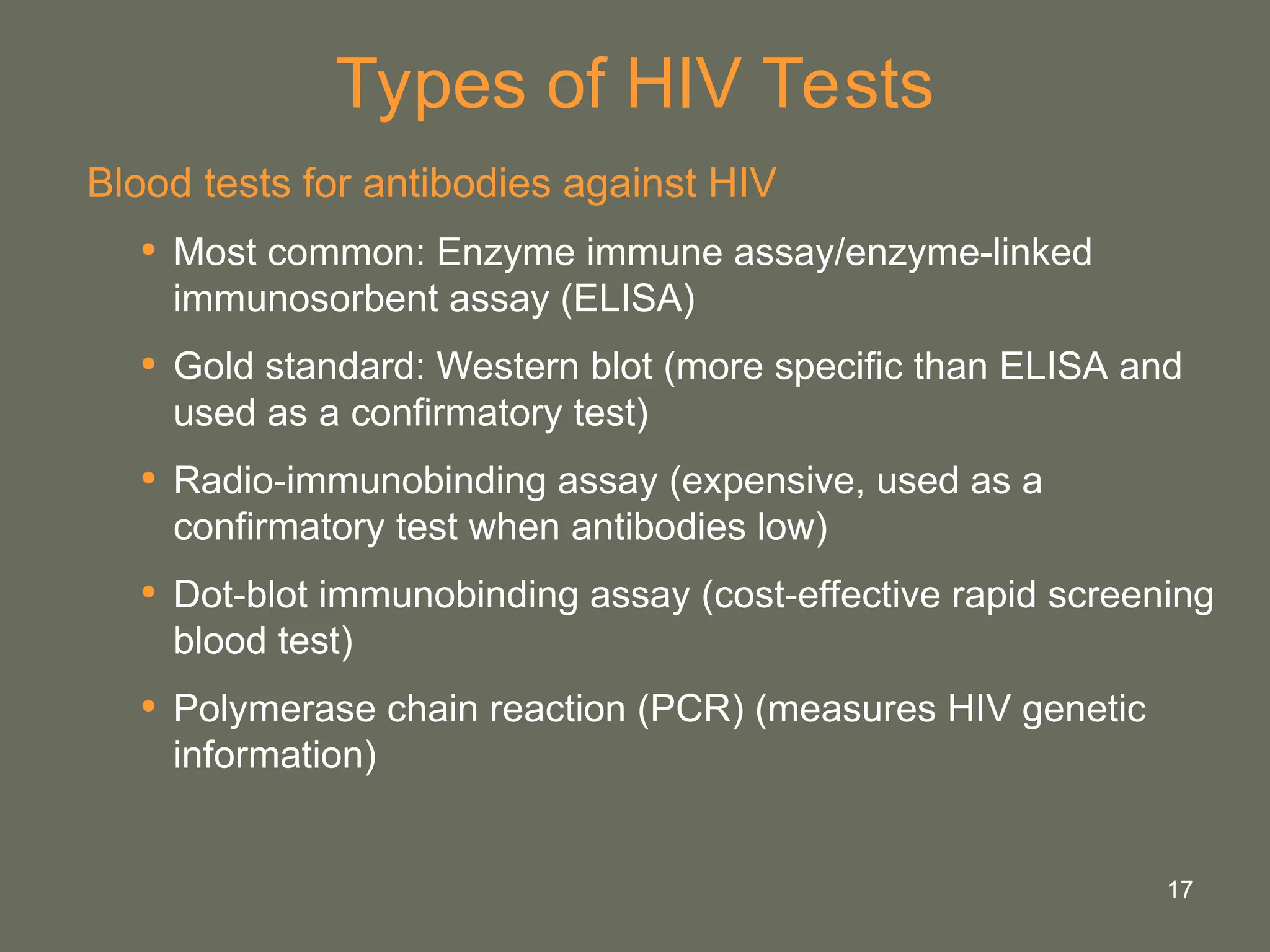
Types of HIV Tests
Blood tests for antibodies against HIV
• Most common: Enzyme immune assay/enzyme-linked
immunosorbent assay (ELISA)
• Gold standard: Western blot (more specific than ELISA and
used as a confirmatory test)
• Radio-immunobinding assay (expensive, used as a
confirmatory test when antibodies low)
• Dot-blot immunobinding assay (cost-effective rapid screening
blood test)
• Polymerase chain reaction (PCR) (measures HIV genetic
information)
18
Types of HIV Tests, Cont.
Urine tests
• Test for antibodies in urine
• Not as sensitive as blood tests
• Enzyme immune assay (EIA)
• Western blot
Oral fluid tests
• Test for antibodies in oral fluids
• EIA
• Western blot
19
Treatment of HIV and AIDS
• No cure
• Treatment can help slow progression to AIDS,
reduce OIs, and minimize malnutrition.
• The most effective treatment is antiretroviral
therapy (ART) using antiretroviral drugs (ARVs)
20
ART
• Combination of ARVs
• Proven to limit replication of HIV in the body,
delay onset of AIDS, and prevent additional OIs
• Challenges
− Expensive
− Must be taken for the rest of the person’s life
− Uncomfortable side effects
21
Demographic Impact of HIV and AIDS
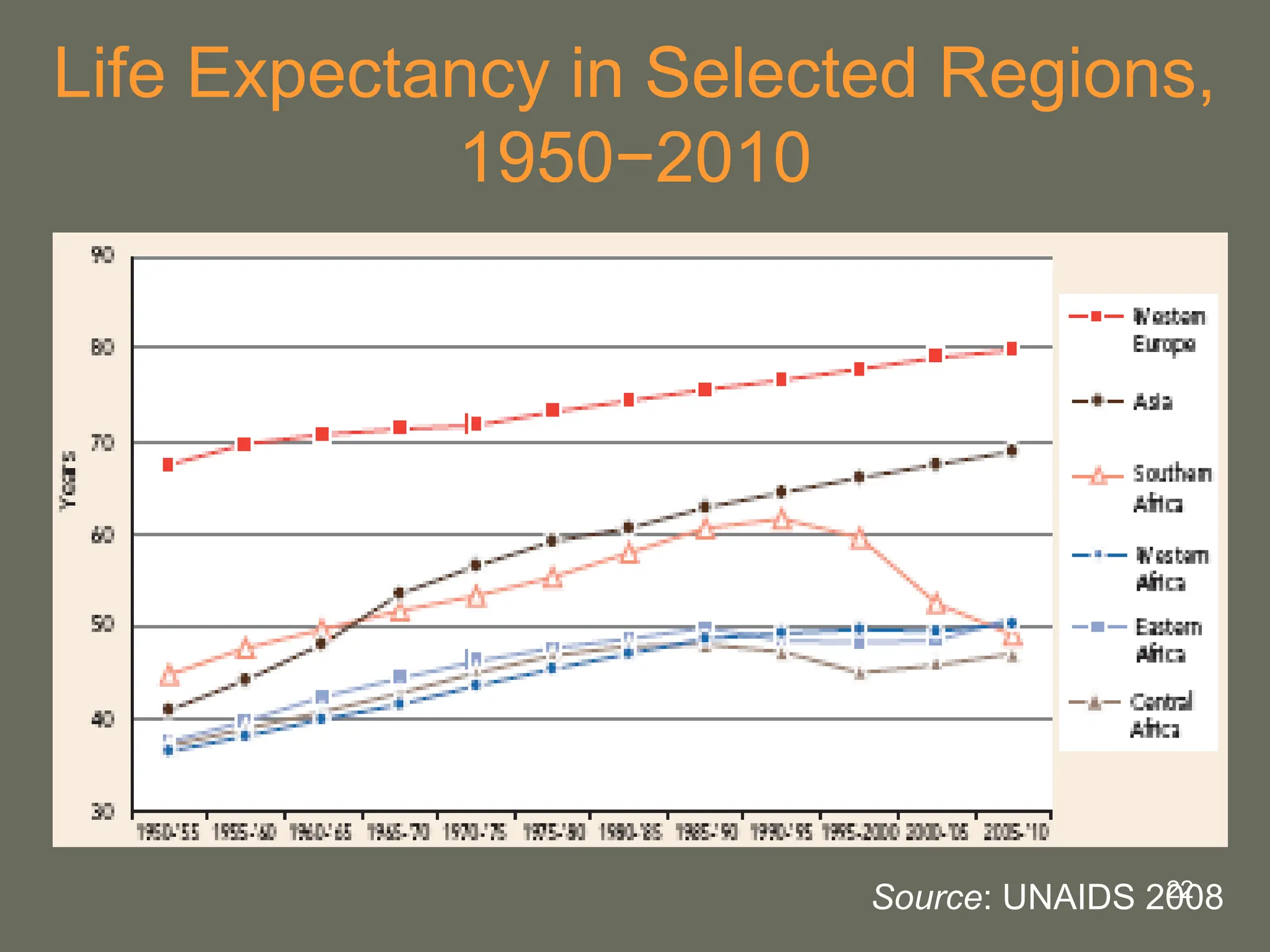
• In the worst-affected countries, HIV has reduced
life expectancy by over 20 years.
• In southern Africa, life expectancy has dropped
below 50.
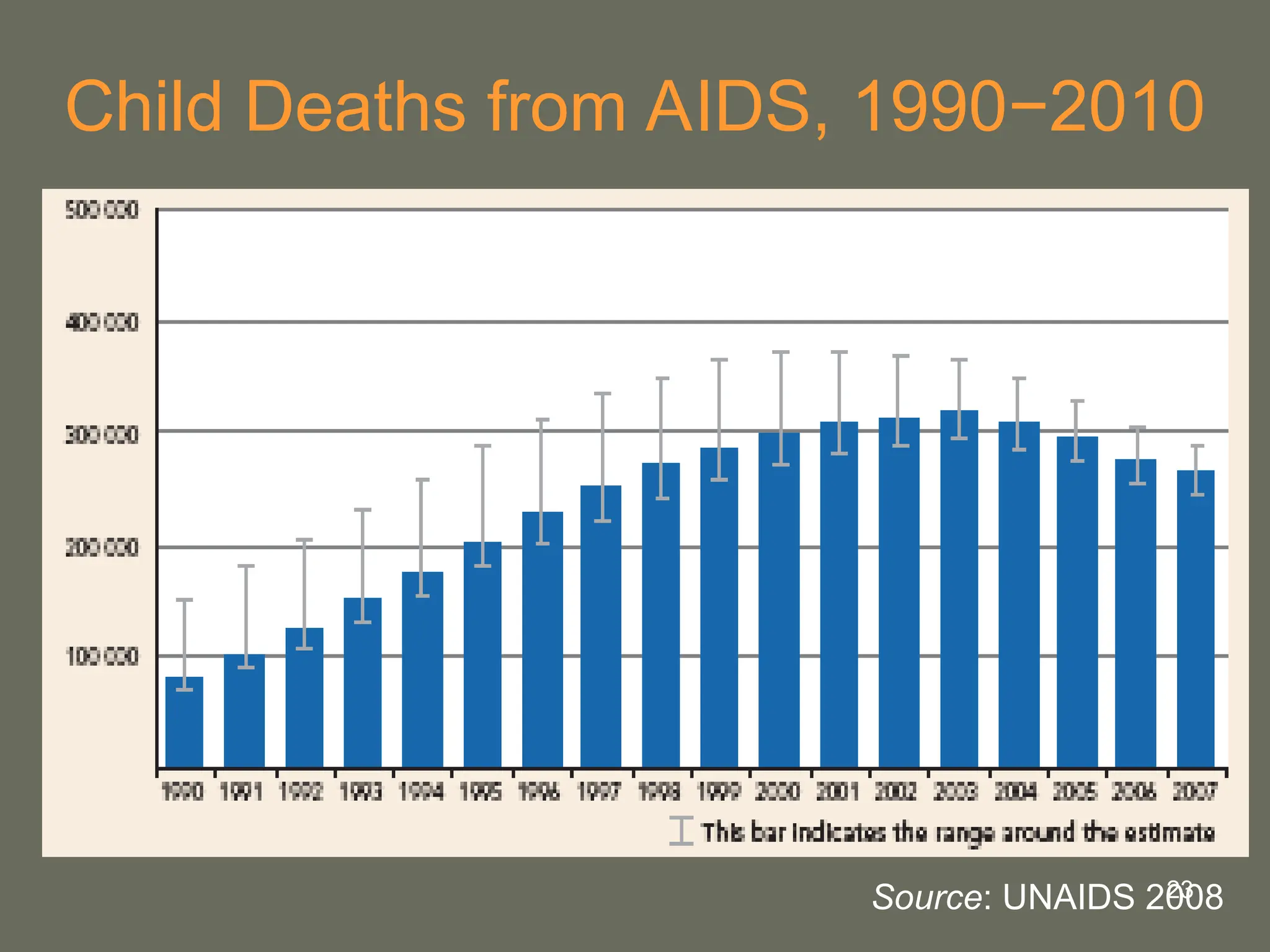
• In the worst affected countries, HIV causes over
one-third of child deaths.
• In the seven countries hardest hit by HIV,
under-five mortality has increased by 36%.
22
Life Expectancy in Selected Regions,
1950−2010
Source: UNAIDS 2008
23
Child Deaths from AIDS, 1990−2010
Source: UNAIDS 2008
24
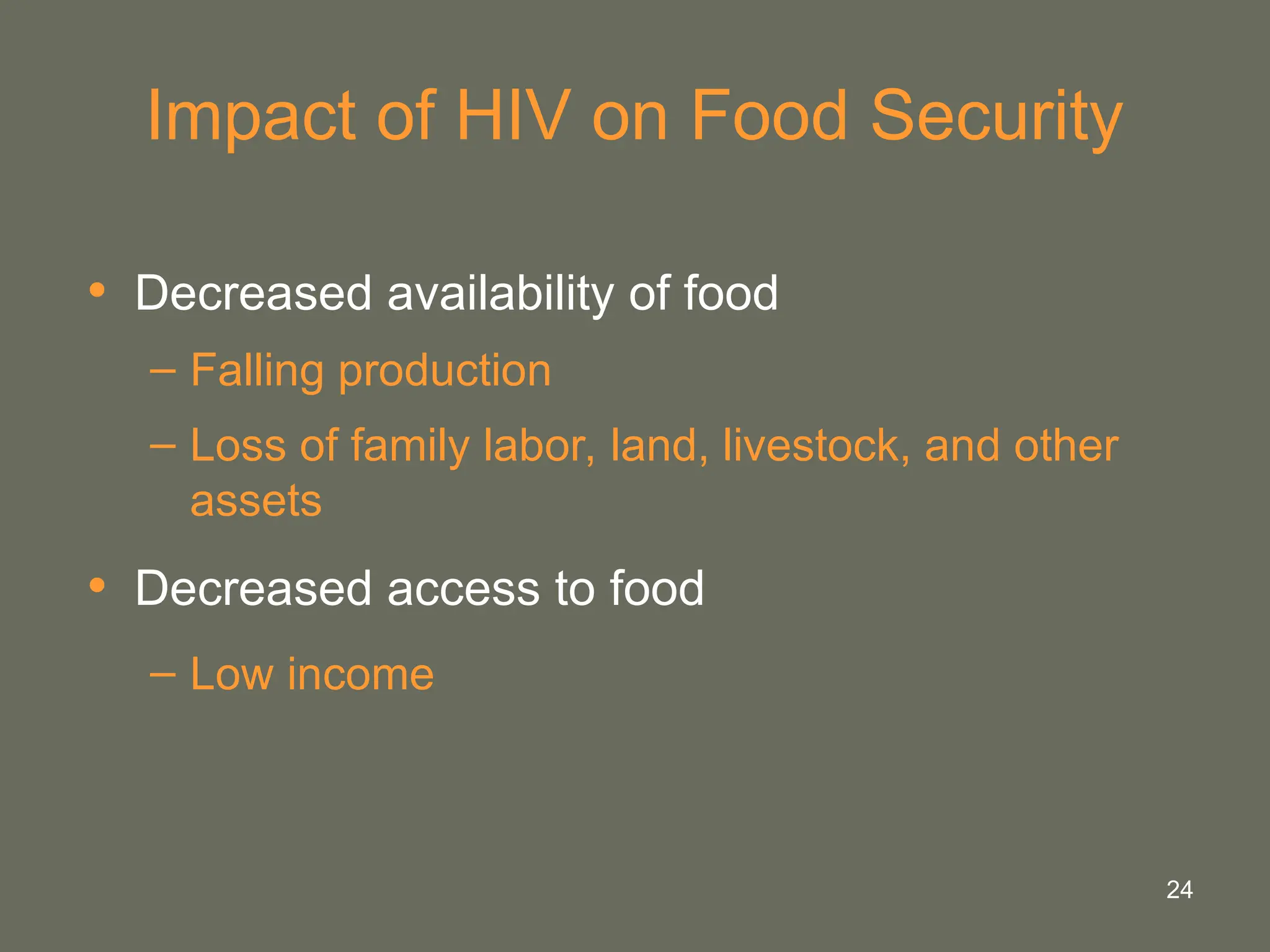
Impact of HIV on Food Security
• Decreased availability of food
– Falling production
– Loss of family labor, land, livestock, and other
assets
• Decreased access to food
– Low income
25
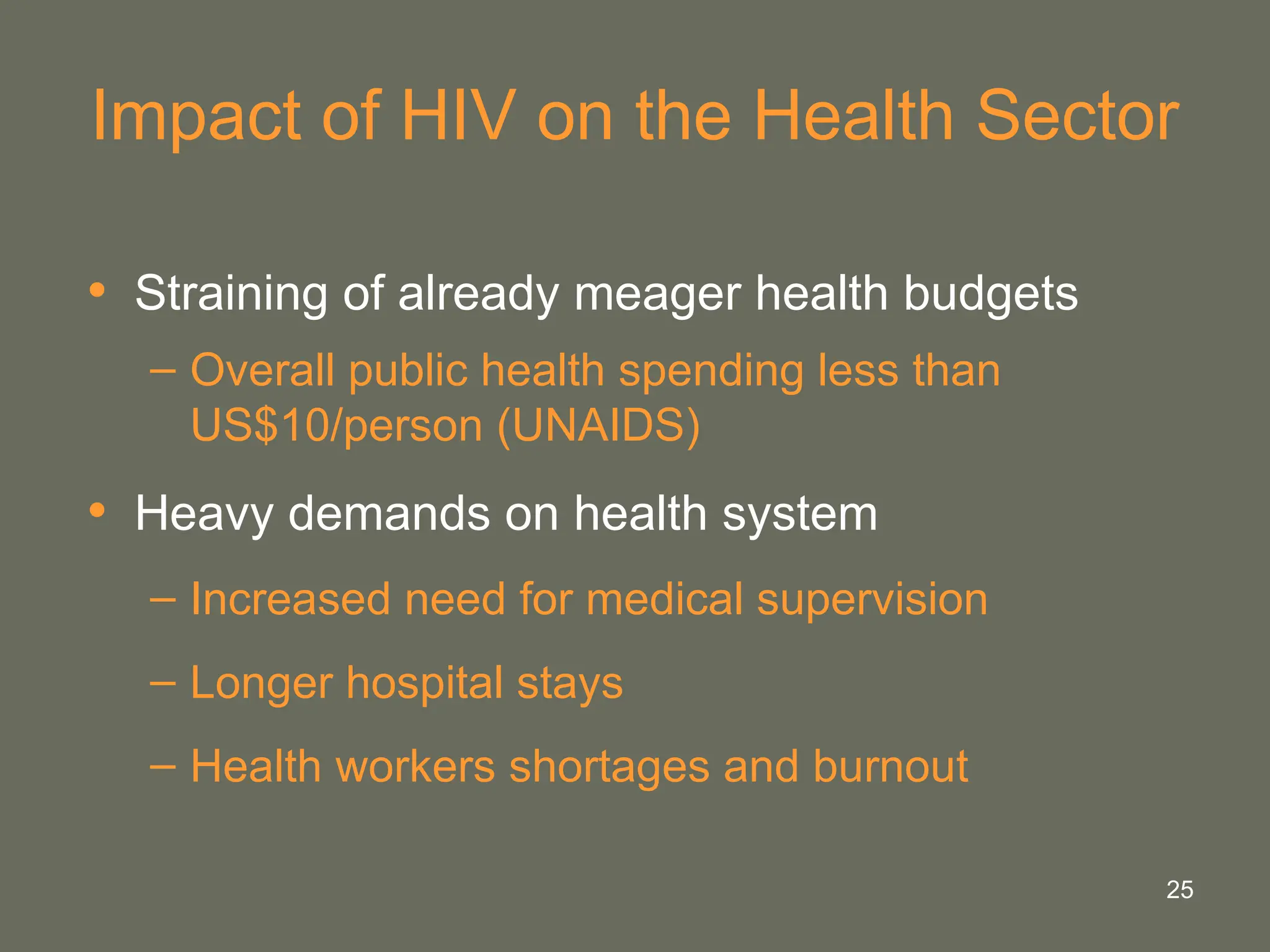
Impact of HIV on the Health Sector
• Straining of already meager health budgets
– Overall public health spending less than
US$10/person (UNAIDS)
• Heavy demands on health system
– Increased need for medical supervision
– Longer hospital stays
– Health workers shortages and burnout
26
Impact of HIV on the Education Sector
• Declining school enrolment
• Illness and death of teachers
• Increased Cost of training new teachers to
replace those lost to AIDS
27
Comprehensive Package of
HIV and AIDS Programs
• Prevention
– Health and sex education
– Expansion of behavior change and harm
reduction strategies
– Increased access to VCT
– PMTCT
• Treatment
– Secure access to ARVs for PLHIV
– Treatment of OIs
– Proper nutrition
28
Comprehensive Package of
HIV and AIDS Programs, Cont.
• Care and support
– Synergy with prevention interventions
– Health services
– Psychosocial support
– Management of ARV side effects
• Mitigation of social and economic impact
– Care of OVC
– Access to basic needs, rights, and general
well-being
29
Comprehensive Package of
HIV and AIDS Programs, Cont.
• Reduction of vulnerability
– Services for women, girls, PLHIV, and people
in war and conflict
– Economic empowerment and life skills
training
• Cross-cutting issues
– Participation and acceptance of PLHIV
– Strong leadership from community to national
level
30
Strategies to Prevent and Control
Undernutrition
• Improve household food security.
• Improve diversity of diet.
• Improve maternal nutrition and health care.
• Improve child feeding practices.
• Ensure child health care (immunization,
medical care, growth monitoring).
• Provide nutrition rehabilitation.
31
Challenges
• Political commitment
• Funding
• Human resources in health system
• Discrimination against PLHIV
• Scale and quality of interventions
• Lack of vaccine
32
Conclusions
• HIV attacks and weakens the immune system, reducing its ability
to fight infection.
• Main transmission routes are sexual, parenteral, vertical.
• The four phases of HIV disease are acute, asymptomatic,
symptomatic, and full-blown AIDS.
• HIV is recognized mainly by testing antibodies formed to fight the
virus.
• ART can prevent OIs and slow progression of AIDS.
• A comprehensive package of HIV and AIDS interventions should
include infection prevention, ART, care and support, and
mitigation of the impacts of HIV on food security, health, and
education.

Session 1 Basics of HIV.pptttttttttttttt

  • 1.
  • 2.
    2 Purpose Provide basic informationabout HIV and AIDS, including causes, transmission, progression, knowledge, and challenges.
  • 3.
    3 Learning Objectives • Knowbasic facts about the impact, trends, definition, and causes of HIV. • Understand the factors that affect the risk of transmission and vulnerability to HIV infection • Discuss strategies to prevent and treat HIV and AIDS and care for people with HIV (PLHIV). • Describe the challenges of managing HIV and AIDS.
  • 4.
    4 Session Outline • Magnitude,prevalence, and trends of HIV in sub-Saharan Africa • Definitions of HIV and AIDS • Modes of HIV transmission and related factors • Factors affecting HIV transmission • Phases of HIV infection • Disease recognition and testing • Treatment of HIV and AIDS • Impact of HIV on demographic patterns, food security, health, and education in Africa • Comprehensive package of HIV programs • Challenges of managing HIV and AIDS
  • 5.
    5 What is HIV? •Human immunodeficiency virus • Responsible for causing AIDS
  • 6.
    6 What is AIDS? •Acquired immuno deficiency syndrome • Characterized by signs and symptoms of severe immune deficiency −Weight loss of more than 10% of body weight −Diarrhea lasting longer than 1 month −Fever lasting longer than 1 month −Other signs Source: WHO
  • 7.
    7 Relevance to PublicHealth • First recognized in 1981 • One of the largest epidemics of the 20th century • Approximately 33 million people living with HIV by the end of 2007 • 2.7 million people infected with HIV in 2007
  • 8.
    8 Global Summary ofHIV, December 2007 • Number of people with HIV − Total: 33.2 million − Adults: 30.8 million − Women: 15.4 million − Children under 15: 2.5 million • New infections in 2007 − Adults: 2.2. million − Children: 370,000 • AIDS deaths in 2007 − Total: 2.0 million − Adults: 1.7 million − Children: 330,000
  • 9.
    9 Adults and Childrenwith HIV in 2007 Source: UNAIDS AIDS Epidemic Update 2007
  • 10.
    10 Percentage of Adultswith HIV Who are Women, 1990−2007 Source: UNAIDS 2008
  • 11.
    11 Effects of theVirus • Attacks white blood cells that fight infection in healthy people • Changes the composition of white blood cells and enables HIV to replicate itself • Weakens the immune system • Increases vulnerability to life-threatening illnesses
  • 12.
    12 Main Routes ofHIV Transmission Sexual • Main mode of transmission • Accounts for 70−80% of all HIV infections Parenteral • Blood transfusions (estimated risk from a single unit of HIV- infected whole blood is > 90%) • Contaminated needle pricks • Needle sharing among HIV-infected drug users Vertical (perinatal) • In utero, during labor and delivery, and through breastfeeding
  • 13.
    13 Physical Factors Affecting Transmissionand Vulnerability Viral • Strain of HIV • Viral load Host • Presence of sexually transmitted infections • Stage of infection • Circumcision • Hereditary resistance to HIV
  • 14.
    14 Social and DemographicFactors in Transmission and Vulnerability Social • Views toward women • Youth perceptions of sex and risky behavior Demographic • Mobile and vulnerable populations influencing frequency of sex partner change • Established presence of HIV in the community
  • 15.
    15 Phases of HIVInfection Acute • HIV replicates quickly • Energy requirements increase Asymptomatic • No symptoms Symptomatic • Onset of opportunistic infections • Further increase in nutritional requirements Late symptomatic (full-blown AIDS) • Heightened viral load • Intense weight loss and wasting • Opportunistic infections taking control
  • 16.
    16 HIV Recognition andTesting • May be negative during first 3 months after infection (window period) • Two tests required plus a third to confirm if results conflict • Repeated test recommended 3 months after initial test • False positives very possible in children under 18 months old
  • 17.
    17 Types of HIVTests Blood tests for antibodies against HIV • Most common: Enzyme immune assay/enzyme-linked immunosorbent assay (ELISA) • Gold standard: Western blot (more specific than ELISA and used as a confirmatory test) • Radio-immunobinding assay (expensive, used as a confirmatory test when antibodies low) • Dot-blot immunobinding assay (cost-effective rapid screening blood test) • Polymerase chain reaction (PCR) (measures HIV genetic information)
  • 18.
    18 Types of HIVTests, Cont. Urine tests • Test for antibodies in urine • Not as sensitive as blood tests • Enzyme immune assay (EIA) • Western blot Oral fluid tests • Test for antibodies in oral fluids • EIA • Western blot
  • 19.
    19 Treatment of HIVand AIDS • No cure • Treatment can help slow progression to AIDS, reduce OIs, and minimize malnutrition. • The most effective treatment is antiretroviral therapy (ART) using antiretroviral drugs (ARVs)
  • 20.
    20 ART • Combination ofARVs • Proven to limit replication of HIV in the body, delay onset of AIDS, and prevent additional OIs • Challenges − Expensive − Must be taken for the rest of the person’s life − Uncomfortable side effects
  • 21.
    21 Demographic Impact ofHIV and AIDS • In the worst-affected countries, HIV has reduced life expectancy by over 20 years. • In southern Africa, life expectancy has dropped below 50. • In the worst affected countries, HIV causes over one-third of child deaths. • In the seven countries hardest hit by HIV, under-five mortality has increased by 36%.
  • 22.
    22 Life Expectancy inSelected Regions, 1950−2010 Source: UNAIDS 2008
  • 23.
    23 Child Deaths fromAIDS, 1990−2010 Source: UNAIDS 2008
  • 24.
    24 Impact of HIVon Food Security • Decreased availability of food – Falling production – Loss of family labor, land, livestock, and other assets • Decreased access to food – Low income
  • 25.
    25 Impact of HIVon the Health Sector • Straining of already meager health budgets – Overall public health spending less than US$10/person (UNAIDS) • Heavy demands on health system – Increased need for medical supervision – Longer hospital stays – Health workers shortages and burnout
  • 26.
    26 Impact of HIVon the Education Sector • Declining school enrolment • Illness and death of teachers • Increased Cost of training new teachers to replace those lost to AIDS
  • 27.
    27 Comprehensive Package of HIVand AIDS Programs • Prevention – Health and sex education – Expansion of behavior change and harm reduction strategies – Increased access to VCT – PMTCT • Treatment – Secure access to ARVs for PLHIV – Treatment of OIs – Proper nutrition
  • 28.
    28 Comprehensive Package of HIVand AIDS Programs, Cont. • Care and support – Synergy with prevention interventions – Health services – Psychosocial support – Management of ARV side effects • Mitigation of social and economic impact – Care of OVC – Access to basic needs, rights, and general well-being
  • 29.
    29 Comprehensive Package of HIVand AIDS Programs, Cont. • Reduction of vulnerability – Services for women, girls, PLHIV, and people in war and conflict – Economic empowerment and life skills training • Cross-cutting issues – Participation and acceptance of PLHIV – Strong leadership from community to national level
  • 30.
    30 Strategies to Preventand Control Undernutrition • Improve household food security. • Improve diversity of diet. • Improve maternal nutrition and health care. • Improve child feeding practices. • Ensure child health care (immunization, medical care, growth monitoring). • Provide nutrition rehabilitation.
  • 31.
    31 Challenges • Political commitment •Funding • Human resources in health system • Discrimination against PLHIV • Scale and quality of interventions • Lack of vaccine
  • 32.
    32 Conclusions • HIV attacksand weakens the immune system, reducing its ability to fight infection. • Main transmission routes are sexual, parenteral, vertical. • The four phases of HIV disease are acute, asymptomatic, symptomatic, and full-blown AIDS. • HIV is recognized mainly by testing antibodies formed to fight the virus. • ART can prevent OIs and slow progression of AIDS. • A comprehensive package of HIV and AIDS interventions should include infection prevention, ART, care and support, and mitigation of the impacts of HIV on food security, health, and education.