High Sensitivity HIV Testing and
Translational Science around PrEP
Joanne Stekler, MD MPH
Associate Professor, Department of Medicine
University of Washington
Inter-Center for AIDS Research
Antiretrovirals for Prevention Working Group
November 13, 2017
Outline
- HIV testing technologies
- Screening for acute HIV infection (AHI)
- Impact of PrEP on HIV tests during seroconversion
- Sampling of implementation science questions
around HIV testing and PrEP
- Not included: discussion of PrEP failures (3/12/18)
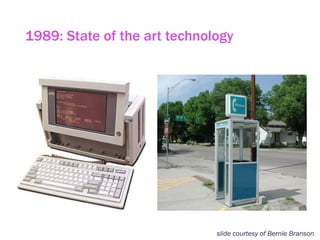
1989: State of the art technology
slide courtesy of Bernie Branson
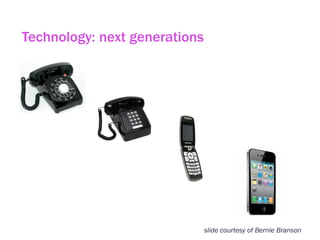
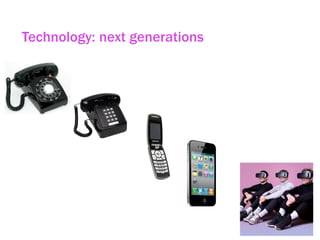
Technology: next generations
slide courtesy of Bernie Branson
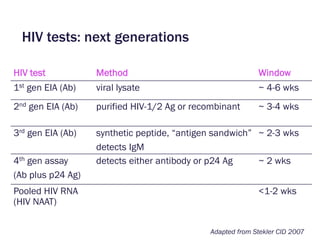
HIV tests: next generations
HIV test Method Window
1st gen EIA (Ab) viral lysate ~ 4-6 wks
2nd gen EIA (Ab) purified HIV-1/2 Ag or recombinant ~ 3-4 wks
3rd gen EIA (Ab) synthetic peptide, “antigen sandwich”
detects IgM
~ 2-3 wks
4th gen assay
(Ab plus p24 Ag)
detects either antibody or p24 Ag ~ 2 wks
Pooled HIV RNA
(HIV NAAT)
<1-2 wks
Adapted from Stekler CID 2007
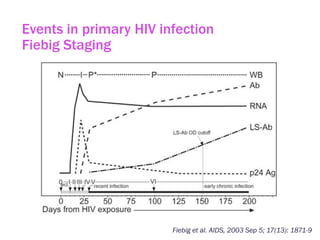
Events in primary HIV infection
Fiebig Staging
Fiebig et al. AIDS, 2003 Sep 5; 17(13): 1871-9
The Importance of
Screening for Acute
HIV Infection
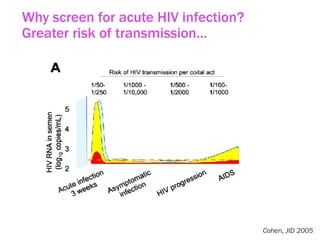
Cohen, JID 2005
Why screen for acute HIV infection?
Greater risk of transmission…
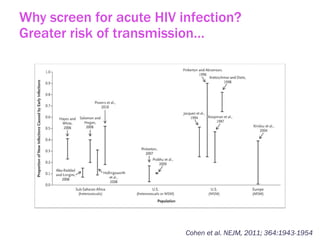
Cohen et al. NEJM, 2011; 364:1943-1954
Why screen for acute HIV infection?
Greater risk of transmission…
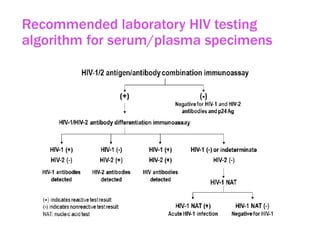
Recommended laboratory HIV testing
algorithm for serum/plasma specimens
Number of HIV Seroconverters on Active PrEP Arms With HIV Resistance*
Trial
N
mITT (oral drug)
HIV Infected After Enrollment,
Resistant / Seroconverters
(randomized to active drug)
iPrEx[1,2] 1224 0/36
Partners PrEP[3,4]* 3140 4/51
TDF2[5] 601 0/10
FEM-PrEP[6,7]* 1024 4/33
VOICE[8] 1978 1/113
TOTAL 7967 9/243 (3.7%)
Modified Total§ 7967 5/243 (2.0%)
1. Liegler T, et al. J Inf Dis. 2014.
2. Grant RM, et al. N Engl J Med. 2010.
3. Baeten JM, et al. N Engl J Med. 2012.
4. Lehman DA, et al. J Inf Dis. 2015.
5. Thigpen MC, et al. N Engl J Med. 2012.
6. Van Damme L, et al. N Engl J Med. 2012.
7. Grant RM, et al. AIDS. 2015.
8. Marrazzo JM, et al. NEJM. 2015
* For 454 sequencing, resistance levels >1% of variants §After exclusion of resistance likely to be transmitted
Resistance with oral PrEP in AHI: 8/29 (28%)
Why screen for acute HIV infection in PrEP?
Drug resistance
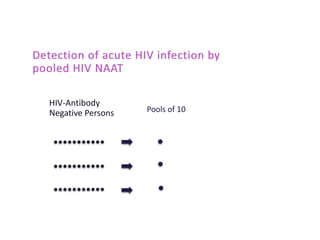
HIV-Antibody
Negative Persons Pools of 10
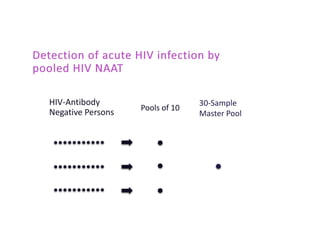
HIV-Antibody
Negative Persons Pools of 10
30-Sample
Master Pool
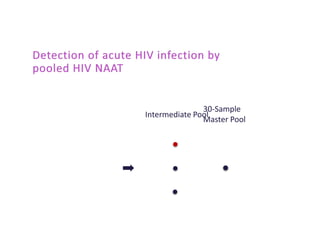
30-Sample
Master Pool
Intermediate Pool
30-Sample
Master Pool
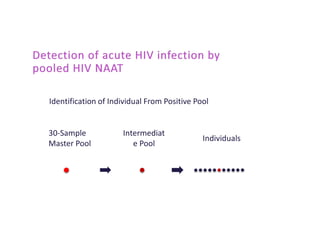
Identification of Individual From Positive Pool
Intermediat
e Pool
Individuals
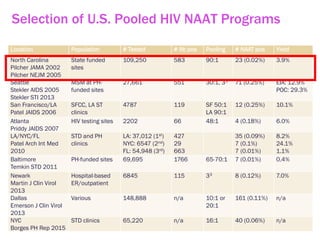
Location Population # Tested # Ab pos Pooling # NAAT pos Yield
North Carolina
Pilcher JAMA 2002
Pilcher NEJM 2005
State funded
sites
109,250 583 90:1 23 (0.02%) 3.9%
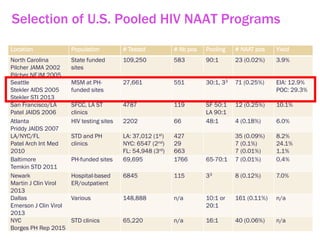
Seattle
Stekler AIDS 2005
Stekler STI 2013
MSM at PH-
funded sites
27,661 551 30:1, 33 71 (0.25%) EIA: 12.9%
POC: 29.3%
San Francisco/LA
Patel JAIDS 2006
SFCC, LA ST
clinics
4787 119 SF 50:1
LA 90:1
12 (0.25%) 10.1%
Atlanta
Priddy JAIDS 2007
HIV testing sites 2202 66 48:1 4 (0.18%) 6.0%
LA/NYC/FL
Patel Arch Int Med
2010
STD and PH
clinics
LA: 37,012 (1st)
NYC: 6547 (2nd)
FL: 54,948 (3rd)
427
29
663
35 (0.09%)
7 (0.1%)
7 (0.01%)
8.2%
24.1%
1.1%
Baltimore
Temkin STD 2011
PH-funded sites 69,695 1766 65-70:1 7 (0.01%) 0.4%
Newark
Martin J Clin Virol
2013
Hospital-based
ER/outpatient
6845 115 33 8 (0.12%) 7.0%
Dallas
Emerson J Clin Virol
2013
Various 148,888 n/a 10:1 or
20:1
161 (0.11%) n/a
NYC
Borges PH Rep 2015
STD clinics 65,220 n/a 16:1 40 (0.06%) n/a
Selection of U.S. Pooled HIV NAAT Programs
Location Population # Tested # Ab pos Pooling # NAAT pos Yield
North Carolina
Pilcher JAMA 2002
Pilcher NEJM 2005
State funded
sites
109,250 583 90:1 23 (0.02%) 3.9%
Seattle
Stekler AIDS 2005
Stekler STI 2013
MSM at PH-
funded sites
27,661 551 30:1, 33 71 (0.25%) EIA: 12.9%
POC: 29.3%
San Francisco/LA
Patel JAIDS 2006
SFCC, LA ST
clinics
4787 119 SF 50:1
LA 90:1
12 (0.25%) 10.1%
Atlanta
Priddy JAIDS 2007
HIV testing sites 2202 66 48:1 4 (0.18%) 6.0%
LA/NYC/FL
Patel Arch Int Med
2010
STD and PH
clinics
LA: 37,012 (1st)
NYC: 6547 (2nd)
FL: 54,948 (3rd)
427
29
663
35 (0.09%)
7 (0.1%)
7 (0.01%)
8.2%
24.1%
1.1%
Baltimore
Temkin STD 2011
PH-funded sites 69,695 1766 65-70:1 7 (0.01%) 0.4%
Newark
Martin J Clin Virol
2013
Hospital-based
ER/outpatient
6845 115 33 8 (0.12%) 7.0%
Dallas
Emerson J Clin Virol
2013
Various 148,888 n/a 10:1 or
20:1
161 (0.11%) n/a
NYC
Borges PH Rep 2015
STD clinics 65,220 n/a 16:1 40 (0.06%) n/a
Selection of U.S. Pooled HIV NAAT Programs
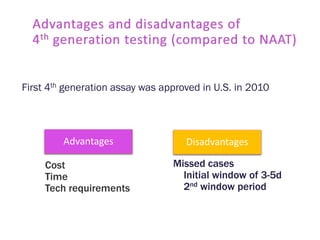
Advantages Disadvantages
Cost
Time
Tech requirements
Missed cases
Initial window of 3-5d
2nd window period
First 4th generation assay was approved in U.S. in 2010
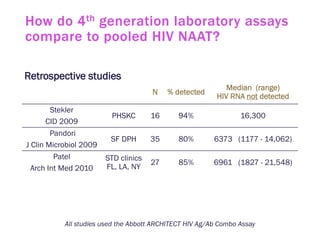
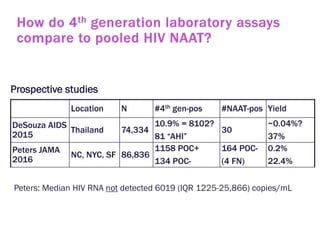
How do 4th generation laboratory assays
compare to pooled HIV NAAT?
N % detected
Median (range)
HIV RNA not detected
Stekler
CID 2009
PHSKC 16 94% 16,300
Pandori
J Clin Microbiol 2009
SF DPH 35 80% 6373 (1177 - 14,062)
Patel
Arch Int Med 2010
STD clinics
FL, LA, NY
27 85% 6961 (1827 - 21,548)
All studies used the Abbott ARCHITECT HIV Ag/Ab Combo Assay
Retrospective studies
Location N #4th gen-pos #NAAT-pos Yield
DeSouza AIDS
2015
Thailand 74,334
10.9% = 8102?
81 “AHI”
30
~0.04%?
37%
Peters JAMA
2016
NC, NYC, SF 86,836
1158 POC+
134 POC-
164 POC-
(4 FN)
0.2%
22.4%
Prospective studies
Peters: Median HIV RNA not detected 6019 (IQR 1225-25,866) copies/mL
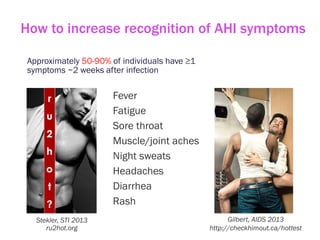
How to increase recognition of AHI symptoms
Approximately 50-90% of individuals have ≥1
symptoms ~2 weeks after infection
Fever
Fatigue
Sore throat
Muscle/joint aches
Night sweats
Headaches
Diarrhea
Rash
Stekler, STI 2013
ru2hot.org
Gilbert, AIDS 2013
http://checkhimout.ca/hottest
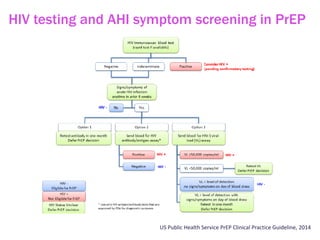
HIV testing and AHI symptom screening in PrEP
US Public Health Service PrEP Clinical Practice Guideline, 2014
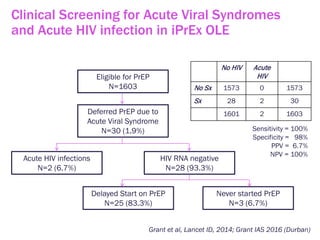
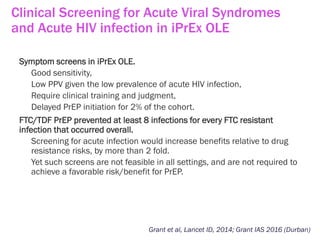
Clinical Screening for Acute Viral Syndromes
and Acute HIV infection in iPrEx OLE
Grant et al, Lancet ID, 2014; Grant IAS 2016 (Durban)
Eligible for PrEP
N=1603
Deferred PrEP due to
Acute Viral Syndrome
N=30 (1.9%)
Acute HIV infections
N=2 (6.7%)
HIV RNA negative
N=28 (93.3%)
Delayed Start on PrEP
N=25 (83.3%)
Never started PrEP
N=3 (6.7%)
No HIV Acute
HIV
No Sx 1573 0 1573
Sx 28 2 30
1601 2 1603
Sensitivity = 100%
Specificity = 98%
PPV = 6.7%
NPV = 100%
Clinical Screening for Acute Viral Syndromes
and Acute HIV infection in iPrEx OLE
Grant et al, Lancet ID, 2014; Grant IAS 2016 (Durban)
Symptom screens in iPrEx OLE.
Good sensitivity,
Low PPV given the low prevalence of acute HIV infection,
Require clinical training and judgment,
Delayed PrEP initiation for 2% of the cohort.
FTC/TDF PrEP prevented at least 8 infections for every FTC resistant
infection that occurred overall.
Screening for acute infection would increase benefits relative to drug
resistance risks, by more than 2 fold.
Yet such screens are not feasible in all settings, and are not required to
achieve a favorable risk/benefit for PrEP.
Rapid HIV tests
and point-of-care
(POC) testing
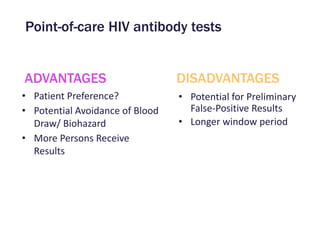
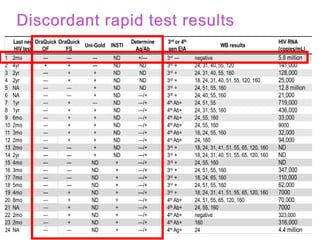
Point-of-care HIV antibody tests
ADVANTAGES
• Patient Preference?
• Potential Avoidance of Blood
Draw/ Biohazard
• More Persons Receive
Results
DISADVANTAGES
• Potential for Preliminary
False-Positive Results
• Longer window period
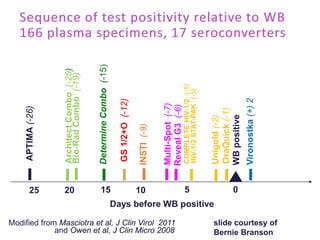
Modified from Masciotra et al, J Clin Virol 2011
Days before WB positive
WBpositive
APTIMA(-26)
GS1/2+O(-12)
Multi-Spot(-7)
RevealG3(-6)
Vironostka(+)2
OraQuick(-1)
Unigold(-2)
25 20 1015
ArchitectCombo(-20)
COMPLETEHIV-1/2(-5)
HIV-1/2STAT-PAK(-5)
INSTI(-9)
Bio-RadCombo(-19)
and Owen et al, J Clin Micro 2008
DetermineCombo(-15)
slide courtesy of
Bernie Branson
5 0
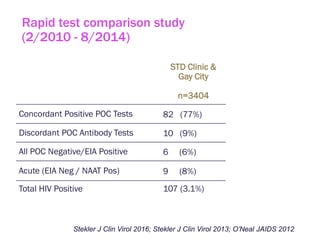
STD Clinic &
Gay City
n=3404
PIC
n=34
Total
n=3438
Concordant Positive POC Tests 82 (77%) 18 100
Discordant POC Antibody Tests 10 (9%) 13 23
All POC Negative/EIA Positive 6 (6%) 0 6
Acute (EIA Neg / NAAT Pos) 9 (8%) 2 11
Total HIV Positive 107 (3.1%) 33 140
Stekler J Clin Virol 2016; Stekler J Clin Virol 2013; O’Neal JAIDS 2012
Rapid test comparison study
(2/2010 - 8/2014)
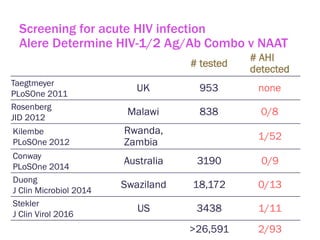
# tested
# AHI
detected
Taegtmeyer
PLoSOne 2011
UK 953 none
Rosenberg
JID 2012
Malawi 838 0/8
Kilembe
PLoSOne 2012
Rwanda,
Zambia
1/52
Conway
PLoSOne 2014
Australia 3190 0/9
Duong
J Clin Microbiol 2014
Swaziland 18,172 0/13
Stekler
J Clin Virol 2016
US 3438 1/11
>26,591 2/93
Screening for acute HIV infection
Alere Determine HIV-1/2 Ag/Ab Combo v NAAT
Impact of PrEP on
HIV tests during
seroconversion
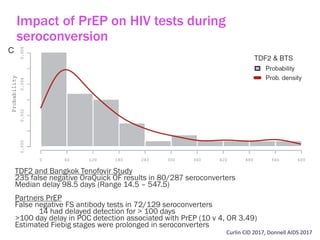
Impact of PrEP on HIV tests during
seroconversion
Curlin CID 2017, Donnell AIDS 2017
TDF2 and Bangkok Tenofovir Study
235 false negative OraQuick OF results in 80/287 seroconverters
Median delay 98.5 days (Range 14.5 – 547.5)
Partners PrEP
False negative FS antibody tests in 72/129 seroconverters
14 had delayed detection for > 100 days
>100 day delay in POC detection associated with PrEP (10 v 4, OR 3.49)
Estimated Fiebig stages were prolonged in seroconverters
Summary
PrEP and HIV tests?
Guiding principles…
• When starting PrEP, use the test with shortest window
period available. Do not use oral fluid tests.
Starting PrEP during AHI → resistance
• If you use individual HIV NAAT in the U.S., please be
aware and counsel patients that negative results may be
reported and lead to a public health case investigation.
• Do not ask people to remain abstinent/use condoms
while waiting out the window period.
• Screen for symptoms of AHI
If symptoms and recent exposure → delay PrEP start
*Almost all* symptomatic AHI will test pos on lab 4th gen
But…. There is a 2nd window period….
• PrEP may lead to delayed seroconversion and false-
negative tests, particularly with oral fluid tests.
Implementation Question #1:
Same day PrEP start
Rationale:
- Rapid HAART start associated with better outcomes in PLWH
- Many PrEP clients fail to return for visits or go to pharmacies
to pick up prescribed medication
Challenges:
- POC HIV tests are not as sensitive as laboratory-based tests.
- Delays due to insurance/medication program coverage
- Some people sent with PrEP may not take it, or may take it
months later without re-initiating care.
Correlate:
- How strongly do we pursue people who would otherwise not
follow-up?
Implementation Question #2
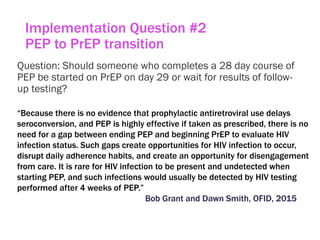
PEP to PrEP transition
Question: Should someone who completes a 28 day course of
PEP be started on PrEP on day 29 or wait for results of follow-
up testing?
“Because there is no evidence that prophylactic antiretroviral use delays
seroconversion, and PEP is highly effective if taken as prescribed, there is no
need for a gap between ending PEP and beginning PrEP to evaluate HIV
infection status. Such gaps create opportunities for HIV infection to occur,
disrupt daily adherence habits, and create an opportunity for disengagement
from care. It is rare for HIV infection to be present and undetected when
starting PEP, and such infections would usually be detected by HIV testing
performed after 4 weeks of PEP.”
Bob Grant and Dawn Smith, OFID, 2015
Implementation Question #3
What is the role of telehealth in PrEP?
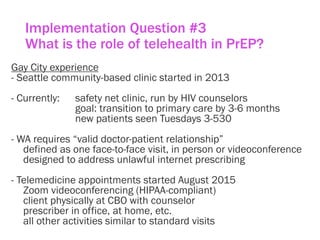
Gay City experience
- Seattle community-based clinic started in 2013
- Currently: safety net clinic, run by HIV counselors
goal: transition to primary care by 3-6 months
new patients seen Tuesdays 3-530
- WA requires “valid doctor-patient relationship”
defined as one face-to-face visit, in person or videoconference
designed to address unlawful internet prescribing
- Telemedicine appointments started August 2015
Zoom videoconferencing (HIPAA-compliant)
client physically at CBO with counselor
prescriber in office, at home, etc.
all other activities similar to standard visits
Implementation Question #3
What is the role of telehealth in PrEP?
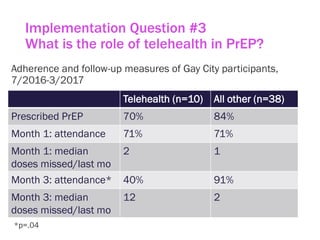
Adherence and follow-up measures of Gay City participants,
7/2016-3/2017
Telehealth (n=10) All other (n=38)
Prescribed PrEP 70% 84%
Month 1: attendance 71% 71%
Month 1: median
doses missed/last mo
2 1
Month 3: attendance* 40% 91%
Month 3: median
doses missed/last mo
12 2
*p=.04
Implementation Question #3
What is the role of telehealth in PrEP?
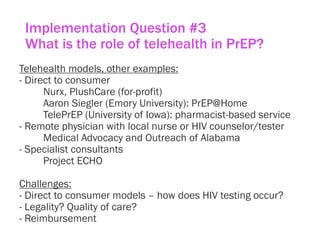
Telehealth models, other examples:
- Direct to consumer
Nurx, PlushCare (for-profit)
Aaron Siegler (Emory University): PrEP@Home
TelePrEP (University of Iowa): pharmacist-based service
- Remote physician with local nurse or HIV counselor/tester
Medical Advocacy and Outreach of Alabama
- Specialist consultants
Project ECHO
Challenges:
- Direct to consumer models – how does HIV testing occur?
- Legality? Quality of care?
- Reimbursement
Implementation Question #3
What is the role of telehealth in PrEP?
Gay City experience, future projects
- Provision of additional support to telehealth participants
- Expansion into bathhouses
- Potential expansion across WA state
- Exploration of self-testing technologies
Implementation Question #4
What is the role of self-testing in PrEP?
Rationale:
- People at high risk for HIV may need/want to test frequently.
- Self-testing could minimize clinic burden.
- May be useful in conjunction with (not FDA approved) purchase
of generic PrEP by people who can/do not access clinic services.
Challenges:
- Self-tests are not as sensitive as clinic-based tests. More
frequent HIV tests may not be useful if window period is long.
- Self-tests for STIs are not yet FDA-approved.
Opportunities:
- POC NAAT opened the door to the possibility of home NAAT.
PAR-17-471: Detection of HIV for Self-Testing (R61/R33)
FY 2018: NIAID/NIMH commitment ~$3 million
Technology: next generations
Questions?

High Sensitivity HIV Testing and Translational Science around PrEP

  • 1.
    High Sensitivity HIVTesting and Translational Science around PrEP Joanne Stekler, MD MPH Associate Professor, Department of Medicine University of Washington Inter-Center for AIDS Research Antiretrovirals for Prevention Working Group November 13, 2017
  • 3.
    Outline - HIV testingtechnologies - Screening for acute HIV infection (AHI) - Impact of PrEP on HIV tests during seroconversion - Sampling of implementation science questions around HIV testing and PrEP - Not included: discussion of PrEP failures (3/12/18)
  • 4.
    1989: State ofthe art technology slide courtesy of Bernie Branson
  • 5.
    Technology: next generations slidecourtesy of Bernie Branson
  • 6.
    HIV tests: nextgenerations HIV test Method Window 1st gen EIA (Ab) viral lysate ~ 4-6 wks 2nd gen EIA (Ab) purified HIV-1/2 Ag or recombinant ~ 3-4 wks 3rd gen EIA (Ab) synthetic peptide, “antigen sandwich” detects IgM ~ 2-3 wks 4th gen assay (Ab plus p24 Ag) detects either antibody or p24 Ag ~ 2 wks Pooled HIV RNA (HIV NAAT) <1-2 wks Adapted from Stekler CID 2007
  • 7.
    Events in primaryHIV infection Fiebig Staging Fiebig et al. AIDS, 2003 Sep 5; 17(13): 1871-9
  • 8.
    The Importance of Screeningfor Acute HIV Infection
  • 9.
    Cohen, JID 2005 Whyscreen for acute HIV infection? Greater risk of transmission…
  • 10.
    Cohen et al.NEJM, 2011; 364:1943-1954 Why screen for acute HIV infection? Greater risk of transmission…
  • 11.
    Recommended laboratory HIVtesting algorithm for serum/plasma specimens
  • 12.
    Number of HIVSeroconverters on Active PrEP Arms With HIV Resistance* Trial N mITT (oral drug) HIV Infected After Enrollment, Resistant / Seroconverters (randomized to active drug) iPrEx[1,2] 1224 0/36 Partners PrEP[3,4]* 3140 4/51 TDF2[5] 601 0/10 FEM-PrEP[6,7]* 1024 4/33 VOICE[8] 1978 1/113 TOTAL 7967 9/243 (3.7%) Modified Total§ 7967 5/243 (2.0%) 1. Liegler T, et al. J Inf Dis. 2014. 2. Grant RM, et al. N Engl J Med. 2010. 3. Baeten JM, et al. N Engl J Med. 2012. 4. Lehman DA, et al. J Inf Dis. 2015. 5. Thigpen MC, et al. N Engl J Med. 2012. 6. Van Damme L, et al. N Engl J Med. 2012. 7. Grant RM, et al. AIDS. 2015. 8. Marrazzo JM, et al. NEJM. 2015 * For 454 sequencing, resistance levels >1% of variants §After exclusion of resistance likely to be transmitted Resistance with oral PrEP in AHI: 8/29 (28%) Why screen for acute HIV infection in PrEP? Drug resistance
  • 13.
  • 14.
    HIV-Antibody Negative Persons Poolsof 10 30-Sample Master Pool
  • 15.
  • 16.
    30-Sample Master Pool Identification ofIndividual From Positive Pool Intermediat e Pool Individuals
  • 17.
    Location Population #Tested # Ab pos Pooling # NAAT pos Yield North Carolina Pilcher JAMA 2002 Pilcher NEJM 2005 State funded sites 109,250 583 90:1 23 (0.02%) 3.9% Seattle Stekler AIDS 2005 Stekler STI 2013 MSM at PH- funded sites 27,661 551 30:1, 33 71 (0.25%) EIA: 12.9% POC: 29.3% San Francisco/LA Patel JAIDS 2006 SFCC, LA ST clinics 4787 119 SF 50:1 LA 90:1 12 (0.25%) 10.1% Atlanta Priddy JAIDS 2007 HIV testing sites 2202 66 48:1 4 (0.18%) 6.0% LA/NYC/FL Patel Arch Int Med 2010 STD and PH clinics LA: 37,012 (1st) NYC: 6547 (2nd) FL: 54,948 (3rd) 427 29 663 35 (0.09%) 7 (0.1%) 7 (0.01%) 8.2% 24.1% 1.1% Baltimore Temkin STD 2011 PH-funded sites 69,695 1766 65-70:1 7 (0.01%) 0.4% Newark Martin J Clin Virol 2013 Hospital-based ER/outpatient 6845 115 33 8 (0.12%) 7.0% Dallas Emerson J Clin Virol 2013 Various 148,888 n/a 10:1 or 20:1 161 (0.11%) n/a NYC Borges PH Rep 2015 STD clinics 65,220 n/a 16:1 40 (0.06%) n/a Selection of U.S. Pooled HIV NAAT Programs
  • 18.
    Location Population #Tested # Ab pos Pooling # NAAT pos Yield North Carolina Pilcher JAMA 2002 Pilcher NEJM 2005 State funded sites 109,250 583 90:1 23 (0.02%) 3.9% Seattle Stekler AIDS 2005 Stekler STI 2013 MSM at PH- funded sites 27,661 551 30:1, 33 71 (0.25%) EIA: 12.9% POC: 29.3% San Francisco/LA Patel JAIDS 2006 SFCC, LA ST clinics 4787 119 SF 50:1 LA 90:1 12 (0.25%) 10.1% Atlanta Priddy JAIDS 2007 HIV testing sites 2202 66 48:1 4 (0.18%) 6.0% LA/NYC/FL Patel Arch Int Med 2010 STD and PH clinics LA: 37,012 (1st) NYC: 6547 (2nd) FL: 54,948 (3rd) 427 29 663 35 (0.09%) 7 (0.1%) 7 (0.01%) 8.2% 24.1% 1.1% Baltimore Temkin STD 2011 PH-funded sites 69,695 1766 65-70:1 7 (0.01%) 0.4% Newark Martin J Clin Virol 2013 Hospital-based ER/outpatient 6845 115 33 8 (0.12%) 7.0% Dallas Emerson J Clin Virol 2013 Various 148,888 n/a 10:1 or 20:1 161 (0.11%) n/a NYC Borges PH Rep 2015 STD clinics 65,220 n/a 16:1 40 (0.06%) n/a Selection of U.S. Pooled HIV NAAT Programs
  • 19.
    Advantages Disadvantages Cost Time Tech requirements Missedcases Initial window of 3-5d 2nd window period First 4th generation assay was approved in U.S. in 2010
  • 20.
    How do 4thgeneration laboratory assays compare to pooled HIV NAAT? N % detected Median (range) HIV RNA not detected Stekler CID 2009 PHSKC 16 94% 16,300 Pandori J Clin Microbiol 2009 SF DPH 35 80% 6373 (1177 - 14,062) Patel Arch Int Med 2010 STD clinics FL, LA, NY 27 85% 6961 (1827 - 21,548) All studies used the Abbott ARCHITECT HIV Ag/Ab Combo Assay Retrospective studies
  • 21.
    Location N #4thgen-pos #NAAT-pos Yield DeSouza AIDS 2015 Thailand 74,334 10.9% = 8102? 81 “AHI” 30 ~0.04%? 37% Peters JAMA 2016 NC, NYC, SF 86,836 1158 POC+ 134 POC- 164 POC- (4 FN) 0.2% 22.4% Prospective studies Peters: Median HIV RNA not detected 6019 (IQR 1225-25,866) copies/mL
  • 22.
    How to increaserecognition of AHI symptoms Approximately 50-90% of individuals have ≥1 symptoms ~2 weeks after infection Fever Fatigue Sore throat Muscle/joint aches Night sweats Headaches Diarrhea Rash Stekler, STI 2013 ru2hot.org Gilbert, AIDS 2013 http://checkhimout.ca/hottest
  • 23.
    HIV testing andAHI symptom screening in PrEP US Public Health Service PrEP Clinical Practice Guideline, 2014
  • 24.
    Clinical Screening forAcute Viral Syndromes and Acute HIV infection in iPrEx OLE Grant et al, Lancet ID, 2014; Grant IAS 2016 (Durban) Eligible for PrEP N=1603 Deferred PrEP due to Acute Viral Syndrome N=30 (1.9%) Acute HIV infections N=2 (6.7%) HIV RNA negative N=28 (93.3%) Delayed Start on PrEP N=25 (83.3%) Never started PrEP N=3 (6.7%) No HIV Acute HIV No Sx 1573 0 1573 Sx 28 2 30 1601 2 1603 Sensitivity = 100% Specificity = 98% PPV = 6.7% NPV = 100%
  • 25.
    Clinical Screening forAcute Viral Syndromes and Acute HIV infection in iPrEx OLE Grant et al, Lancet ID, 2014; Grant IAS 2016 (Durban) Symptom screens in iPrEx OLE. Good sensitivity, Low PPV given the low prevalence of acute HIV infection, Require clinical training and judgment, Delayed PrEP initiation for 2% of the cohort. FTC/TDF PrEP prevented at least 8 infections for every FTC resistant infection that occurred overall. Screening for acute infection would increase benefits relative to drug resistance risks, by more than 2 fold. Yet such screens are not feasible in all settings, and are not required to achieve a favorable risk/benefit for PrEP.
  • 26.
    Rapid HIV tests andpoint-of-care (POC) testing
  • 27.
    Point-of-care HIV antibodytests ADVANTAGES • Patient Preference? • Potential Avoidance of Blood Draw/ Biohazard • More Persons Receive Results DISADVANTAGES • Potential for Preliminary False-Positive Results • Longer window period
  • 28.
    Modified from Masciotraet al, J Clin Virol 2011 Days before WB positive WBpositive APTIMA(-26) GS1/2+O(-12) Multi-Spot(-7) RevealG3(-6) Vironostka(+)2 OraQuick(-1) Unigold(-2) 25 20 1015 ArchitectCombo(-20) COMPLETEHIV-1/2(-5) HIV-1/2STAT-PAK(-5) INSTI(-9) Bio-RadCombo(-19) and Owen et al, J Clin Micro 2008 DetermineCombo(-15) slide courtesy of Bernie Branson 5 0
  • 29.
    STD Clinic & GayCity n=3404 PIC n=34 Total n=3438 Concordant Positive POC Tests 82 (77%) 18 100 Discordant POC Antibody Tests 10 (9%) 13 23 All POC Negative/EIA Positive 6 (6%) 0 6 Acute (EIA Neg / NAAT Pos) 9 (8%) 2 11 Total HIV Positive 107 (3.1%) 33 140 Stekler J Clin Virol 2016; Stekler J Clin Virol 2013; O’Neal JAIDS 2012 Rapid test comparison study (2/2010 - 8/2014)
  • 31.
    # tested # AHI detected Taegtmeyer PLoSOne2011 UK 953 none Rosenberg JID 2012 Malawi 838 0/8 Kilembe PLoSOne 2012 Rwanda, Zambia 1/52 Conway PLoSOne 2014 Australia 3190 0/9 Duong J Clin Microbiol 2014 Swaziland 18,172 0/13 Stekler J Clin Virol 2016 US 3438 1/11 >26,591 2/93 Screening for acute HIV infection Alere Determine HIV-1/2 Ag/Ab Combo v NAAT
  • 32.
    Impact of PrEPon HIV tests during seroconversion
  • 33.
    Impact of PrEPon HIV tests during seroconversion Curlin CID 2017, Donnell AIDS 2017 TDF2 and Bangkok Tenofovir Study 235 false negative OraQuick OF results in 80/287 seroconverters Median delay 98.5 days (Range 14.5 – 547.5) Partners PrEP False negative FS antibody tests in 72/129 seroconverters 14 had delayed detection for > 100 days >100 day delay in POC detection associated with PrEP (10 v 4, OR 3.49) Estimated Fiebig stages were prolonged in seroconverters
  • 34.
  • 35.
    PrEP and HIVtests? Guiding principles… • When starting PrEP, use the test with shortest window period available. Do not use oral fluid tests. Starting PrEP during AHI → resistance • If you use individual HIV NAAT in the U.S., please be aware and counsel patients that negative results may be reported and lead to a public health case investigation. • Do not ask people to remain abstinent/use condoms while waiting out the window period. • Screen for symptoms of AHI If symptoms and recent exposure → delay PrEP start *Almost all* symptomatic AHI will test pos on lab 4th gen But…. There is a 2nd window period…. • PrEP may lead to delayed seroconversion and false- negative tests, particularly with oral fluid tests.
  • 36.
    Implementation Question #1: Sameday PrEP start Rationale: - Rapid HAART start associated with better outcomes in PLWH - Many PrEP clients fail to return for visits or go to pharmacies to pick up prescribed medication Challenges: - POC HIV tests are not as sensitive as laboratory-based tests. - Delays due to insurance/medication program coverage - Some people sent with PrEP may not take it, or may take it months later without re-initiating care. Correlate: - How strongly do we pursue people who would otherwise not follow-up?
  • 37.
    Implementation Question #2 PEPto PrEP transition Question: Should someone who completes a 28 day course of PEP be started on PrEP on day 29 or wait for results of follow- up testing? “Because there is no evidence that prophylactic antiretroviral use delays seroconversion, and PEP is highly effective if taken as prescribed, there is no need for a gap between ending PEP and beginning PrEP to evaluate HIV infection status. Such gaps create opportunities for HIV infection to occur, disrupt daily adherence habits, and create an opportunity for disengagement from care. It is rare for HIV infection to be present and undetected when starting PEP, and such infections would usually be detected by HIV testing performed after 4 weeks of PEP.” Bob Grant and Dawn Smith, OFID, 2015
  • 38.
    Implementation Question #3 Whatis the role of telehealth in PrEP? Gay City experience - Seattle community-based clinic started in 2013 - Currently: safety net clinic, run by HIV counselors goal: transition to primary care by 3-6 months new patients seen Tuesdays 3-530 - WA requires “valid doctor-patient relationship” defined as one face-to-face visit, in person or videoconference designed to address unlawful internet prescribing - Telemedicine appointments started August 2015 Zoom videoconferencing (HIPAA-compliant) client physically at CBO with counselor prescriber in office, at home, etc. all other activities similar to standard visits
  • 39.
    Implementation Question #3 Whatis the role of telehealth in PrEP? Adherence and follow-up measures of Gay City participants, 7/2016-3/2017 Telehealth (n=10) All other (n=38) Prescribed PrEP 70% 84% Month 1: attendance 71% 71% Month 1: median doses missed/last mo 2 1 Month 3: attendance* 40% 91% Month 3: median doses missed/last mo 12 2 *p=.04
  • 40.
    Implementation Question #3 Whatis the role of telehealth in PrEP? Telehealth models, other examples: - Direct to consumer Nurx, PlushCare (for-profit) Aaron Siegler (Emory University): PrEP@Home TelePrEP (University of Iowa): pharmacist-based service - Remote physician with local nurse or HIV counselor/tester Medical Advocacy and Outreach of Alabama - Specialist consultants Project ECHO Challenges: - Direct to consumer models – how does HIV testing occur? - Legality? Quality of care? - Reimbursement
  • 41.
    Implementation Question #3 Whatis the role of telehealth in PrEP? Gay City experience, future projects - Provision of additional support to telehealth participants - Expansion into bathhouses - Potential expansion across WA state - Exploration of self-testing technologies
  • 42.
    Implementation Question #4 Whatis the role of self-testing in PrEP? Rationale: - People at high risk for HIV may need/want to test frequently. - Self-testing could minimize clinic burden. - May be useful in conjunction with (not FDA approved) purchase of generic PrEP by people who can/do not access clinic services. Challenges: - Self-tests are not as sensitive as clinic-based tests. More frequent HIV tests may not be useful if window period is long. - Self-tests for STIs are not yet FDA-approved. Opportunities: - POC NAAT opened the door to the possibility of home NAAT. PAR-17-471: Detection of HIV for Self-Testing (R61/R33) FY 2018: NIAID/NIMH commitment ~$3 million
  • 43.
  • 44.