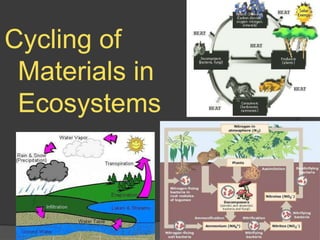
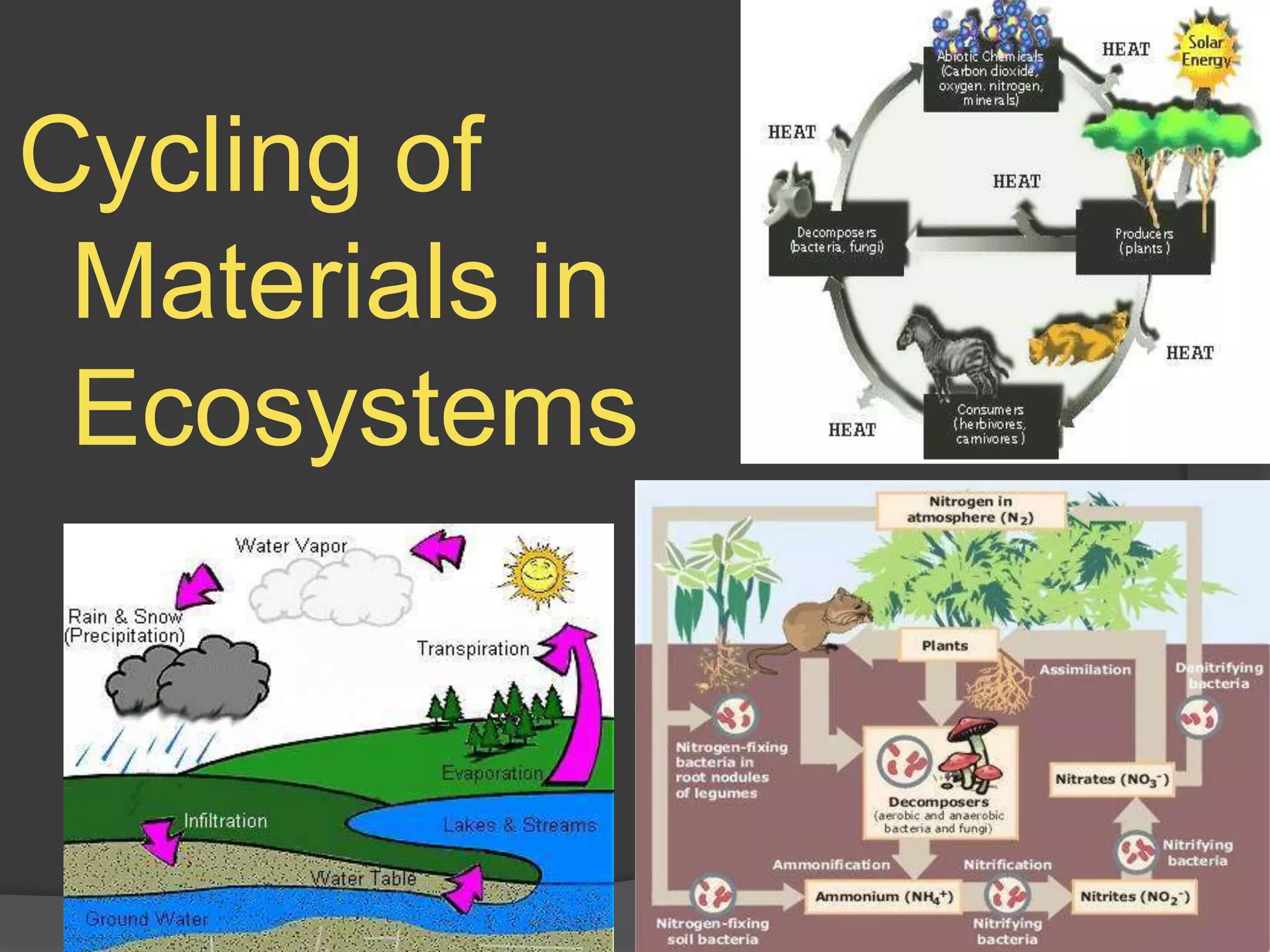
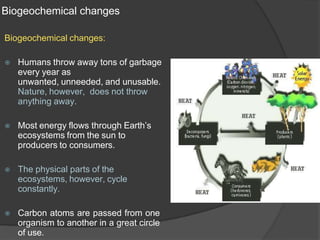
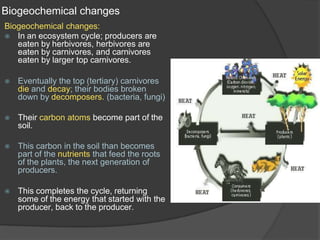
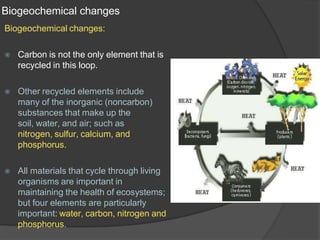
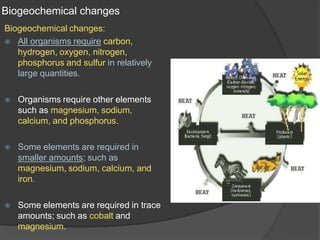
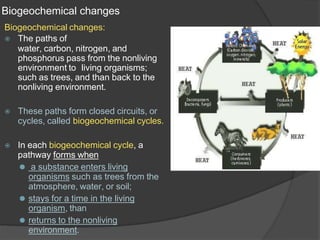
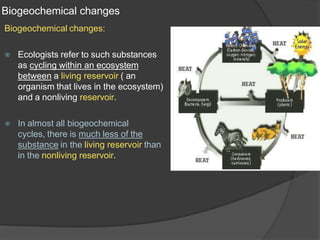
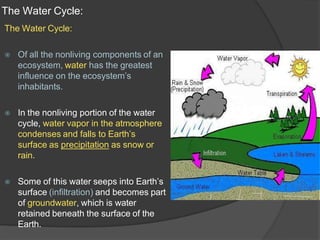
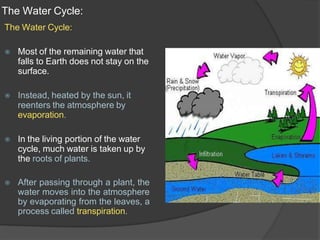
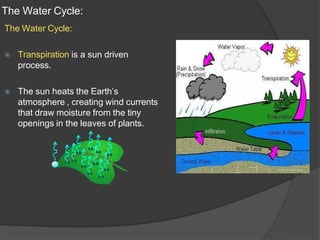
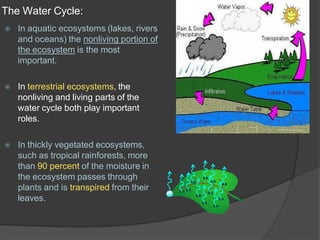
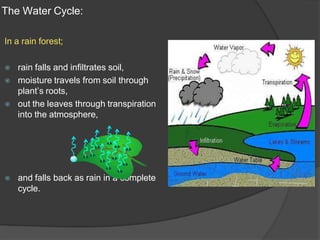
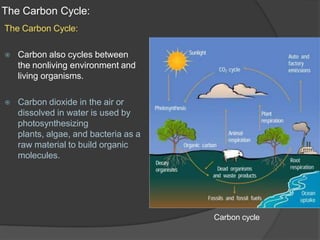
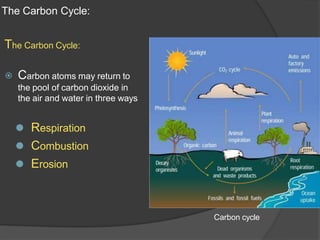
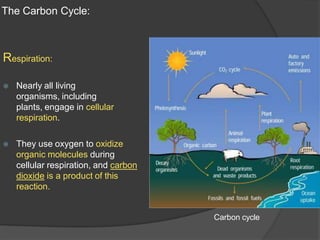
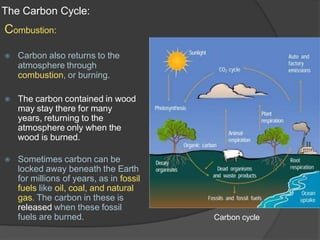
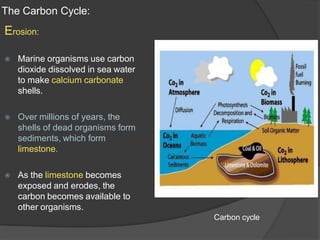
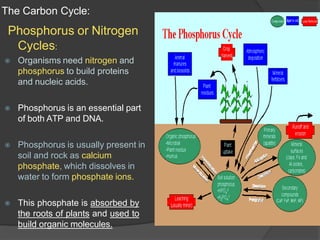
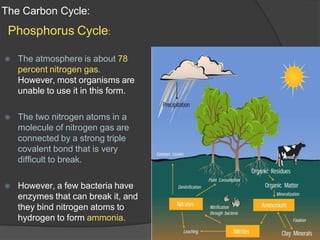
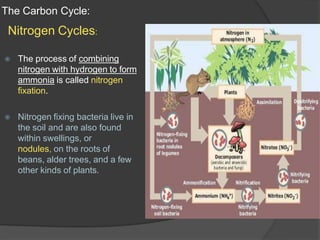
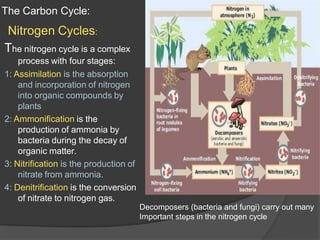
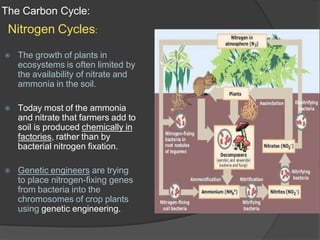
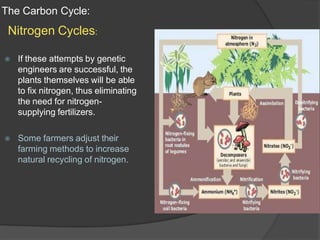
Biogeochemical cycles move nutrients and elements through ecosystems, recycling them between living and nonliving matter. Key cycles include water, carbon, nitrogen, and phosphorus. In the water cycle, water evaporates from plants and surfaces, condenses in the atmosphere, and falls as precipitation to be absorbed again by living things. Carbon cycles as carbon dioxide in the atmosphere is absorbed by plants through photosynthesis, released through respiration, and locked away in sediments and fossil fuels. Nitrogen cycles through the soil as nitrogen gas absorbed by bacteria, released as ammonia, and converted to plant-usable nitrates. These cycles sustain life by recycling essential elements.