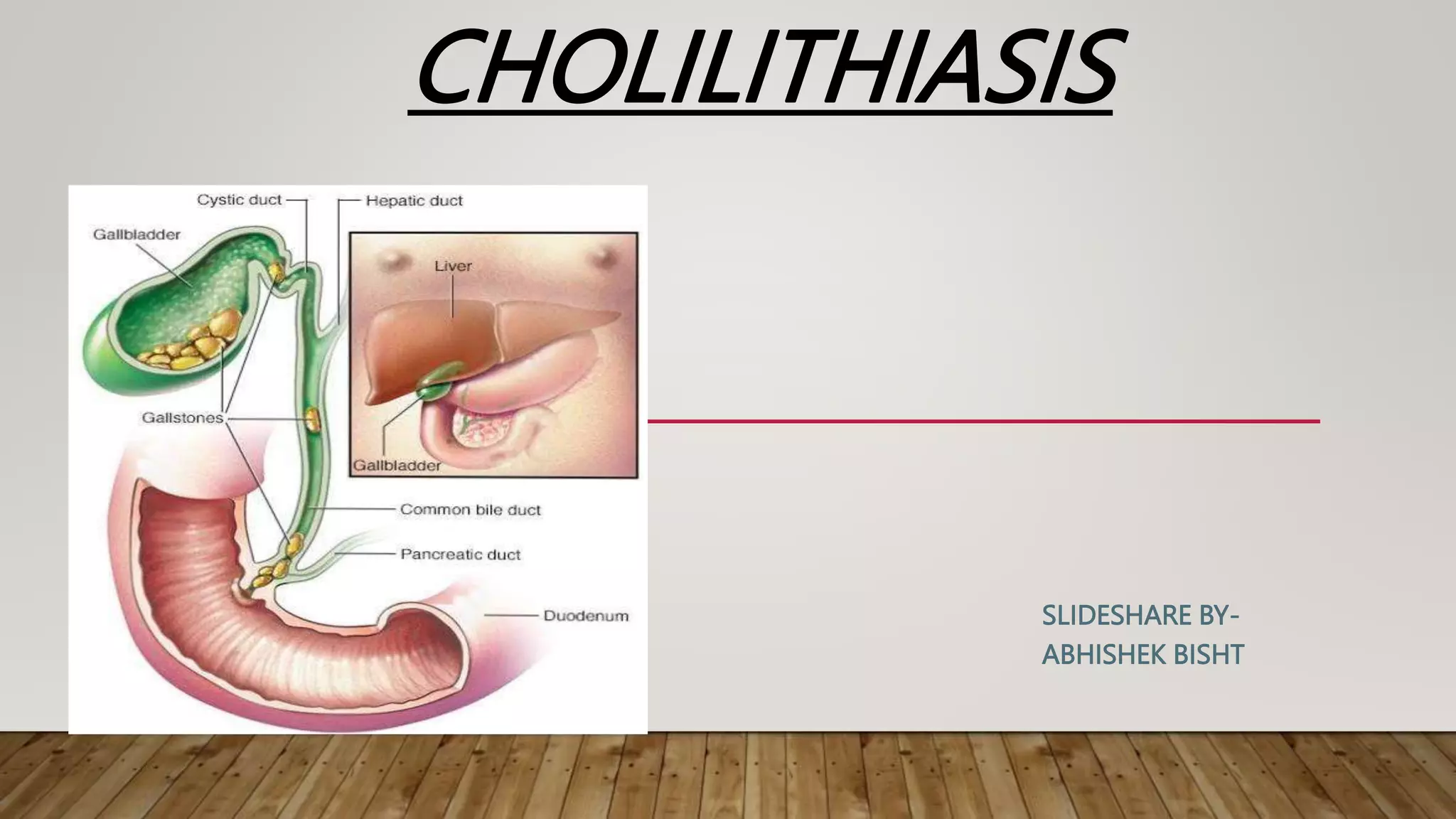
CHOLILITHIASIS
SLIDESHARE BY-
ABHISHEK BISHT
INTRODUCTION
• Chlolilithiasis is made up from two words – Choli + Lithiasis
• Chole- Gall bladder ,, Lithiasis – Stone
• So Chlolilithiasis means ( Presence of Stones in gall bladder)
• A gallstone is a Crystalline concretion formed within the gallbladder by
accumulation of the bile components
TYPES OF GALLSTONES
(a) Cholesterol stones : Yellow to dark green
(b) Pigment stones: Pigment Stones are small and dark
(c) Mixed stones: Contain 20-80% cholesterol
ETIOLOGY
• Gender: Women are twice as likely as men
• Family history
• Obesity
• Diet : Diet high in fat and cholesterol
• Age : People older than age 60 are more likely to develop gall stones than younger
people
• Hypolipidemic drugs
• Hyperglycemia
PATHOPHYSIOLOGY
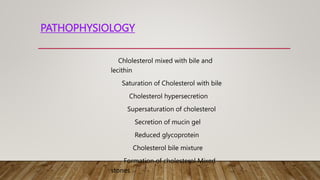
Chlolesterol mixed with bile and
lecithin
Saturation of Cholesterol with bile
Cholesterol hypersecretion
Supersaturation of cholesterol
Secretion of mucin gel
Reduced glycoprotein
Cholesterol bile mixture
Formation of cholesterol Mixed
stones
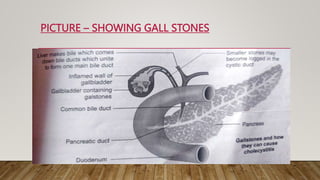
PICTURE – SHOWING GALL STONES
SIGN AND SYMPTOMS
• Steady pain in right upper abdomen
• Pain under right shoulder
• Murphy’s sign(guarding type of respiratory pain radiates towards the back and
scapula)
• Nausea and vomiting
• Hyperthermia
• Clay colored stool
• Jaundice
DIAGNOSTIC EVALUATION
• History collection
• Physical examination (sign and pain )
• CT scan
• Cholescintigraphy scan
• Blood test
• ERCP – Endoscopic retrograde choleangiopancreatography
MANAGEMENT
• Pharmacological management
• Opioid analgesic
• Antispasmodic
• Antiemetic
• Bile acid therapy
• Chenodeoxycholic acid to reduce the cholesterol stone
• Surgical management
• Extracorporeal shock wave lithotripsy
• Percutaneous transhepatic biliary catheter insertion
• Nursing management
• Monitor weight daily
• Assess the pain of the patient and provide medication
• Provide low cholesterol diet to the patient
• Provide frequent and small amount of meal

Chlolilithiasis slideshare

  • 1.
  • 2.
    INTRODUCTION • Chlolilithiasis ismade up from two words – Choli + Lithiasis • Chole- Gall bladder ,, Lithiasis – Stone • So Chlolilithiasis means ( Presence of Stones in gall bladder) • A gallstone is a Crystalline concretion formed within the gallbladder by accumulation of the bile components
  • 3.
    TYPES OF GALLSTONES (a)Cholesterol stones : Yellow to dark green (b) Pigment stones: Pigment Stones are small and dark (c) Mixed stones: Contain 20-80% cholesterol
  • 4.
    ETIOLOGY • Gender: Womenare twice as likely as men • Family history • Obesity • Diet : Diet high in fat and cholesterol • Age : People older than age 60 are more likely to develop gall stones than younger people • Hypolipidemic drugs • Hyperglycemia
  • 5.
    PATHOPHYSIOLOGY Chlolesterol mixed withbile and lecithin Saturation of Cholesterol with bile Cholesterol hypersecretion Supersaturation of cholesterol Secretion of mucin gel Reduced glycoprotein Cholesterol bile mixture Formation of cholesterol Mixed stones
  • 6.
  • 7.
    SIGN AND SYMPTOMS •Steady pain in right upper abdomen • Pain under right shoulder • Murphy’s sign(guarding type of respiratory pain radiates towards the back and scapula) • Nausea and vomiting • Hyperthermia • Clay colored stool • Jaundice
  • 8.
    DIAGNOSTIC EVALUATION • Historycollection • Physical examination (sign and pain ) • CT scan • Cholescintigraphy scan • Blood test • ERCP – Endoscopic retrograde choleangiopancreatography
  • 9.
    MANAGEMENT • Pharmacological management •Opioid analgesic • Antispasmodic • Antiemetic • Bile acid therapy • Chenodeoxycholic acid to reduce the cholesterol stone
  • 10.
    • Surgical management •Extracorporeal shock wave lithotripsy • Percutaneous transhepatic biliary catheter insertion
  • 11.
    • Nursing management •Monitor weight daily • Assess the pain of the patient and provide medication • Provide low cholesterol diet to the patient • Provide frequent and small amount of meal