BY- NAKSHATRA PAL SINGH CHAUHAN
ENROLLMENT NO.:- A14587822001
AIMMSCR-SEM I (MSM)
• The bacterium Chlamydia trachomatis is the source of the sexually transmitted
infectious illness chlamydia. Additionally, it causes "trachoma," the most
common infectious cause of blindness worldwide, an ocular infection.
• In females the anatomic site of infection is cervix and can cause cervicitis,
urethritis, perihepatitis or proctitis.
• In males C. trachomatis can lead to urethritis, epididymitis and reactive
arthritis.
• Chlamydia trachomatis is part of Chlamydophila genus.
• This bacteria is gram-negative, anaerobic, intracellular obligates that replicate within
eukaryotic cells.
• C. trachomatis differentiates into 18 serologically variant strains based on monoclonal
antibody-based typing assays.
• Serovars A, B, Ba and C: Is a serious ocular illness that is endemic in Africa and Asia
• Serovars D-K: Genital tract infections, neonatal infections.
• Serovars L1-L3: Lymphogranuloma venereum (LGV) correlates with genital ulcer disease in
tropical countries.
• Urogenital chlamydia infections are most commonly reported bacterial infections and most
common cause of sexually transmitted diseases in the world. Urethral infection is called as
urethritis and burning sensation during peeing is known as dysuria. Similarly for vaginal
infection is termed as vaginitis and painful intercourse termed as dyspareunia.
• Females aged between 15-25 years are more prone to infection while in males the age of
infection is 20-25 years.
• C. trachomatis targets the squamocolumnar epithelial cells of endocervix and upper genital
tract in women, and the conjunctiva of eye, urethra and rectum in both males and females.
• Bacterium is transmitted through direct contact with infected tissue, including Vaginal, anal
or oral sex .
• Mother can pass this disease to newborn during childbirth causes neonatal chlamydia.
• Prostate in male is infected and causes prostatitis.
• Chlamydia further diffuse to blood stream and infects the
eye particularly conjunctiva; causes conjunctivitis. It gives
itching sensation. If someone scratches his eye the infection
can move to pupil causes opacity which is referred to as
trachoma which is most common cause of blindness in the
world. The disease is also known as Reiter’s syndrome.
• Another site infected by blood is joints of bone causing
infective arthritis. Chlamydia infects the synovial fluid which
helps bones to move on top of each other. again WBC will
attack here making the movement tough causing dysarthria
• Reactive arthritis is distinctive beast. It is result of reactive
antibodies that body has made to fight against chlamydia for
some reason due to presence of mistaking protein in joints
will start to attack Chlamydia as well as joint.
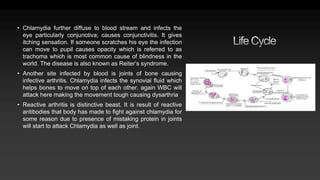
• Chlamydia is unique among bacteria, having an infectious cycle and two developmental
forms.
SYMPTOMS
• Painful urination
• Vaginal discharge
• Discharge from penis
• Painful sexual intercourse with bleeding
• Testicular pain in men
• Redness and itching of eye
• Blurred vision.
• Severe pain in the joints during movement.
PREVENTION AND TREATMENT
• Person should have partners identified and tested. Avoid multiple partners and use of protection like
condoms available in market.
• Treatment of Chlamydial infection is with azithromycin.
• Other alternatives are Doxycycline, erythromycin, levofloxacin, and ofloxacin.
THANK YOU !
• Typical intra-cytoplasmic inclusions and free chlamydiae are identifiable in
Giesma-stained cell scrapings from the eye.
• Cytology techniques can be used to evaluate endocervical scrapings.

Chlamydia .pptx

  • 1.
    BY- NAKSHATRA PALSINGH CHAUHAN ENROLLMENT NO.:- A14587822001 AIMMSCR-SEM I (MSM)
  • 2.
    • The bacteriumChlamydia trachomatis is the source of the sexually transmitted infectious illness chlamydia. Additionally, it causes "trachoma," the most common infectious cause of blindness worldwide, an ocular infection. • In females the anatomic site of infection is cervix and can cause cervicitis, urethritis, perihepatitis or proctitis. • In males C. trachomatis can lead to urethritis, epididymitis and reactive arthritis.
  • 3.
    • Chlamydia trachomatisis part of Chlamydophila genus. • This bacteria is gram-negative, anaerobic, intracellular obligates that replicate within eukaryotic cells. • C. trachomatis differentiates into 18 serologically variant strains based on monoclonal antibody-based typing assays. • Serovars A, B, Ba and C: Is a serious ocular illness that is endemic in Africa and Asia • Serovars D-K: Genital tract infections, neonatal infections. • Serovars L1-L3: Lymphogranuloma venereum (LGV) correlates with genital ulcer disease in tropical countries.
  • 4.
    • Urogenital chlamydiainfections are most commonly reported bacterial infections and most common cause of sexually transmitted diseases in the world. Urethral infection is called as urethritis and burning sensation during peeing is known as dysuria. Similarly for vaginal infection is termed as vaginitis and painful intercourse termed as dyspareunia. • Females aged between 15-25 years are more prone to infection while in males the age of infection is 20-25 years. • C. trachomatis targets the squamocolumnar epithelial cells of endocervix and upper genital tract in women, and the conjunctiva of eye, urethra and rectum in both males and females. • Bacterium is transmitted through direct contact with infected tissue, including Vaginal, anal or oral sex . • Mother can pass this disease to newborn during childbirth causes neonatal chlamydia. • Prostate in male is infected and causes prostatitis.
  • 5.
    • Chlamydia furtherdiffuse to blood stream and infects the eye particularly conjunctiva; causes conjunctivitis. It gives itching sensation. If someone scratches his eye the infection can move to pupil causes opacity which is referred to as trachoma which is most common cause of blindness in the world. The disease is also known as Reiter’s syndrome. • Another site infected by blood is joints of bone causing infective arthritis. Chlamydia infects the synovial fluid which helps bones to move on top of each other. again WBC will attack here making the movement tough causing dysarthria • Reactive arthritis is distinctive beast. It is result of reactive antibodies that body has made to fight against chlamydia for some reason due to presence of mistaking protein in joints will start to attack Chlamydia as well as joint.
  • 6.
    • Chlamydia isunique among bacteria, having an infectious cycle and two developmental forms. SYMPTOMS • Painful urination • Vaginal discharge • Discharge from penis • Painful sexual intercourse with bleeding • Testicular pain in men • Redness and itching of eye • Blurred vision. • Severe pain in the joints during movement.
  • 7.
    PREVENTION AND TREATMENT •Person should have partners identified and tested. Avoid multiple partners and use of protection like condoms available in market. • Treatment of Chlamydial infection is with azithromycin. • Other alternatives are Doxycycline, erythromycin, levofloxacin, and ofloxacin. THANK YOU ! • Typical intra-cytoplasmic inclusions and free chlamydiae are identifiable in Giesma-stained cell scrapings from the eye. • Cytology techniques can be used to evaluate endocervical scrapings.

Editor's Notes

  • #3 -Chlamydia trachomatis is a gram-negative bacterium that can replicate only within a host cell. Its is a intracellular organism. Trachoma means eye infection. Transmission takes place by sex, anal, vaginal, oral, childbirth and direct contact with the infected body part.
  • #4 Chlamydia enters through vaginal or urethral opening and infect the cell and also start to multiply. Infected place is then attacked by WBC and cause the cell death by apoptosis. White blood cells from blood stream move to the infected place and causes inflammation
  • #5 Sometimes in female infection from cervix passes to the abdominal cavity then it is termed as pelvic inflammatory disease (PID). When WBC attacks the site of infection and causes apoptosis. Dead cells in males and females come out through the opening in form of pus; its necessary to remove out these cells out of the body for further complications.