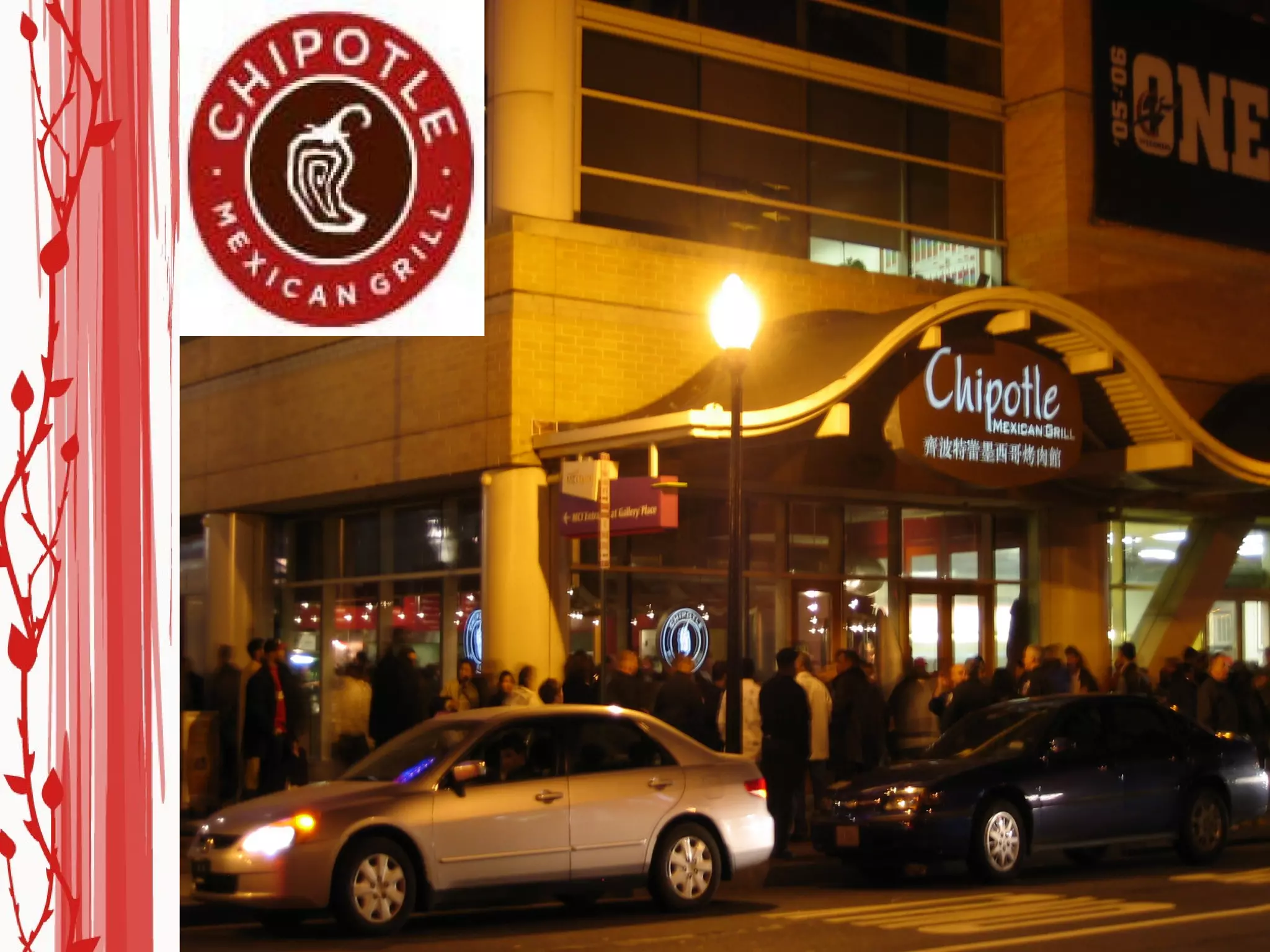
Chipotle is an American chain of fast casual restaurants known for burritos and tacos made from natural ingredients. It was founded in 1993 in Colorado and has expanded across the US and Canada. The document discusses conducting a SWOT analysis and providing recommendations for Chipotle to expand into India. It identifies strengths such as innovation and brand equity, but also weaknesses in limited menus and higher prices. Opportunities include emerging markets and expansion abroad, but threats include increased competition. Recommendations include using a joint venture to mitigate risks and initially opening two locations in New Delhi and Bangalore.
Chipotle Mexican Grill, founded in 1993, specializes in burritos and tacos, emphasizing natural ingredients with a mission of 'Food with Integrity'.
The Indian food service market includes various dining options, driven by urbanization and changing lifestyles, facing competition from both organized and unorganized sectors.
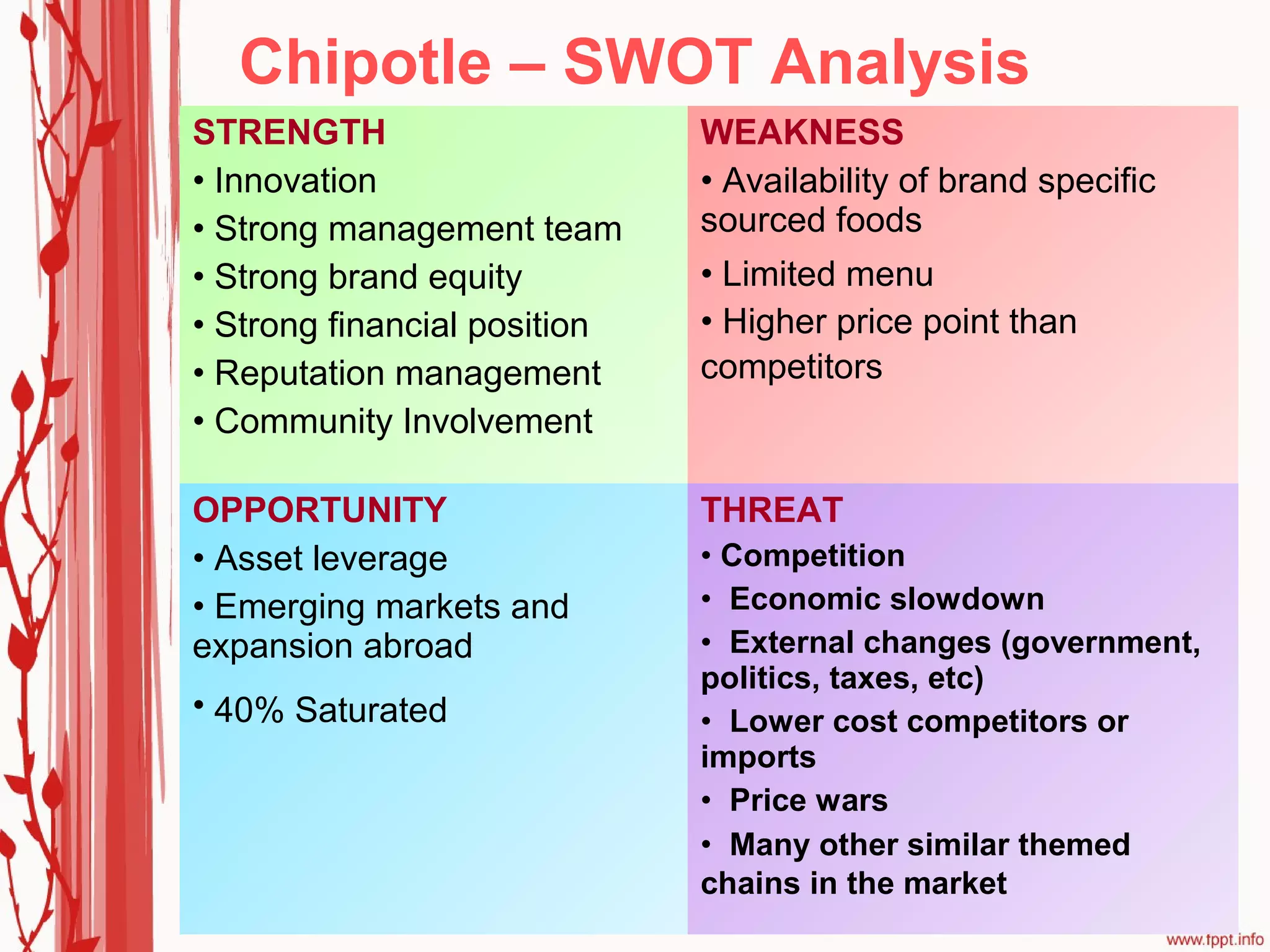
Chipotle's strengths include innovation and strong brand equity, while facing weaknesses like limited menu. Opportunities lie in market expansion with threats from competition.
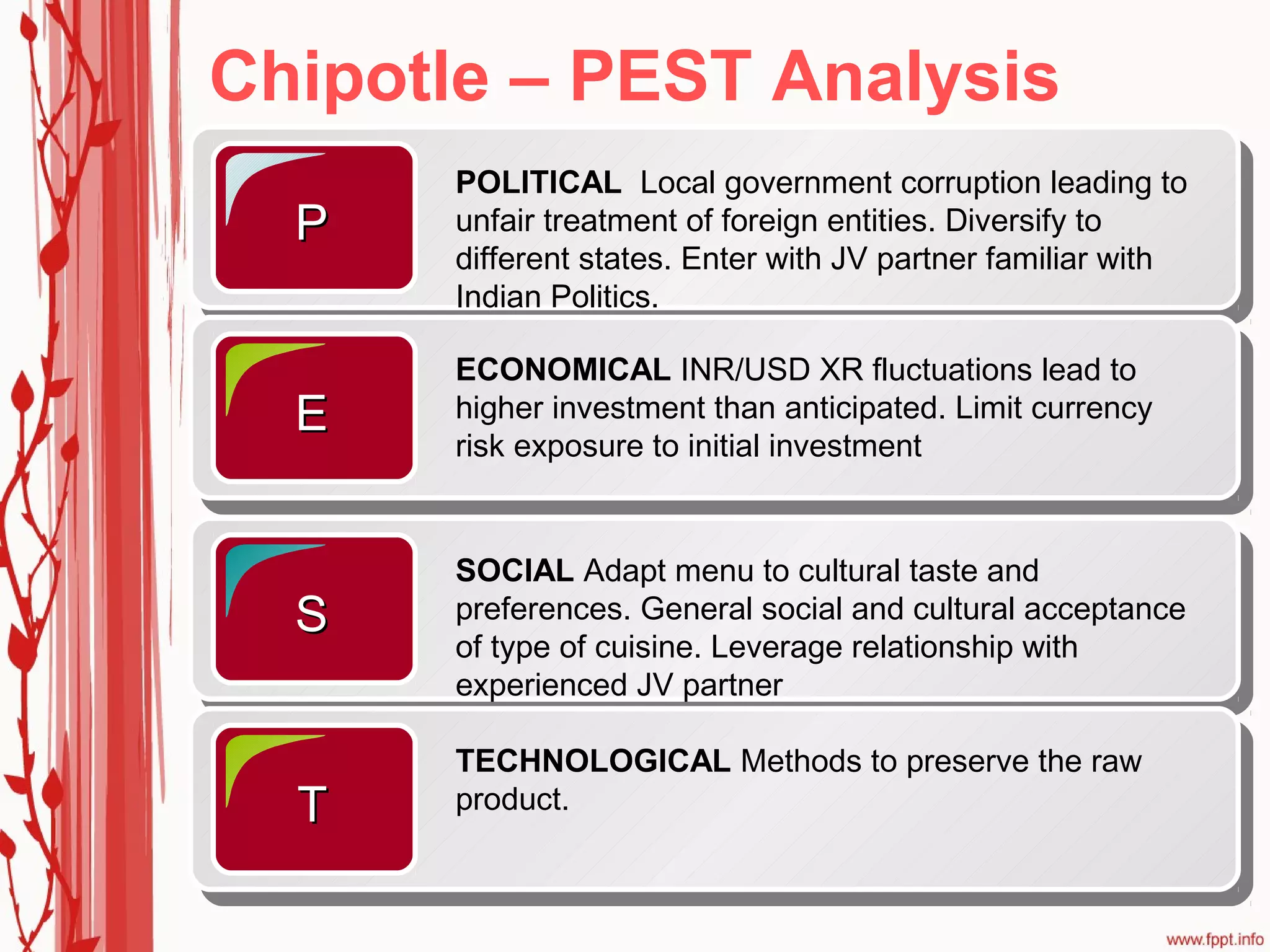
Chipotle's PEST analysis highlights political, economic, social, and technological factors affecting its operations, particularly in entering the Indian market.
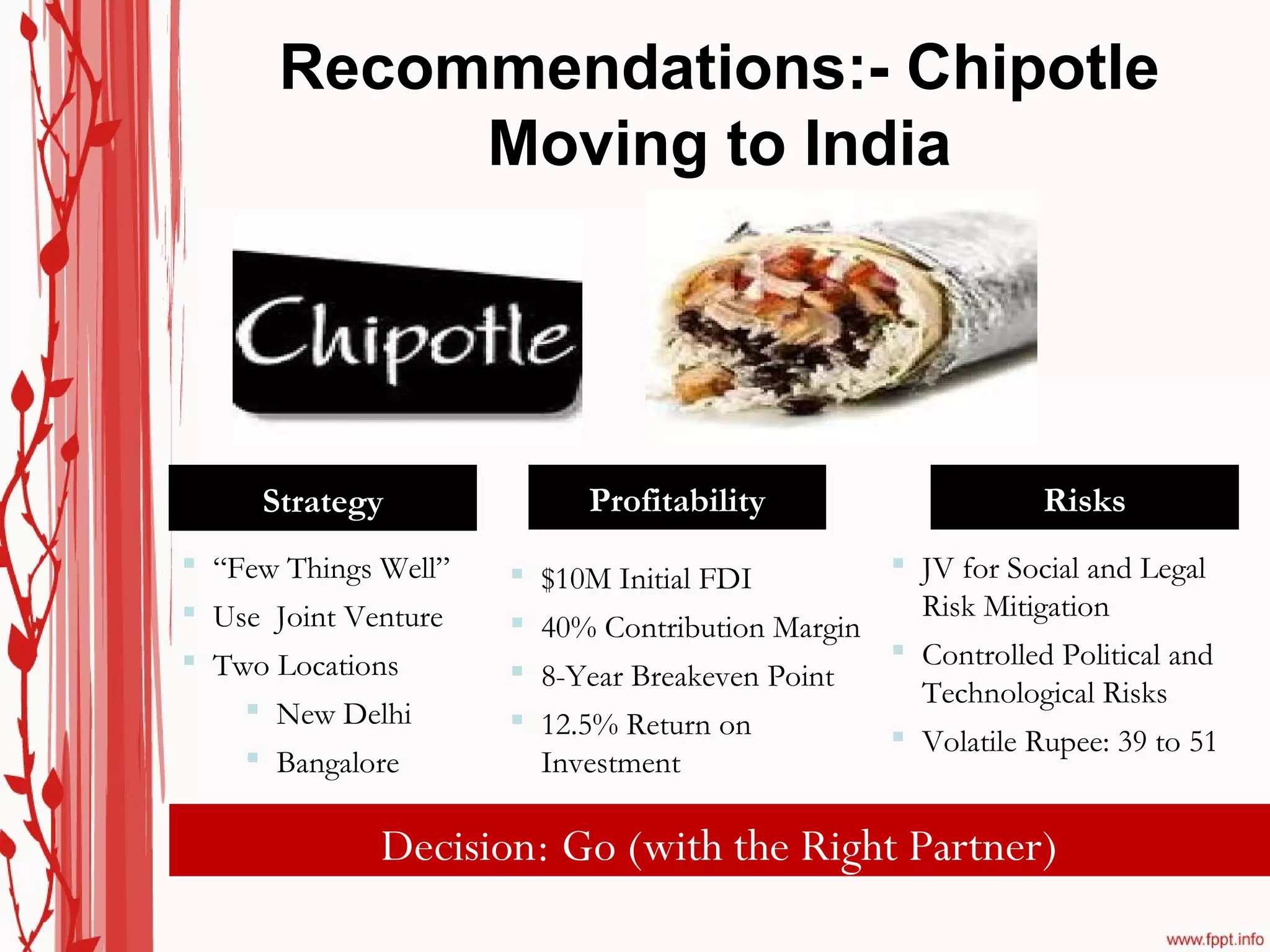
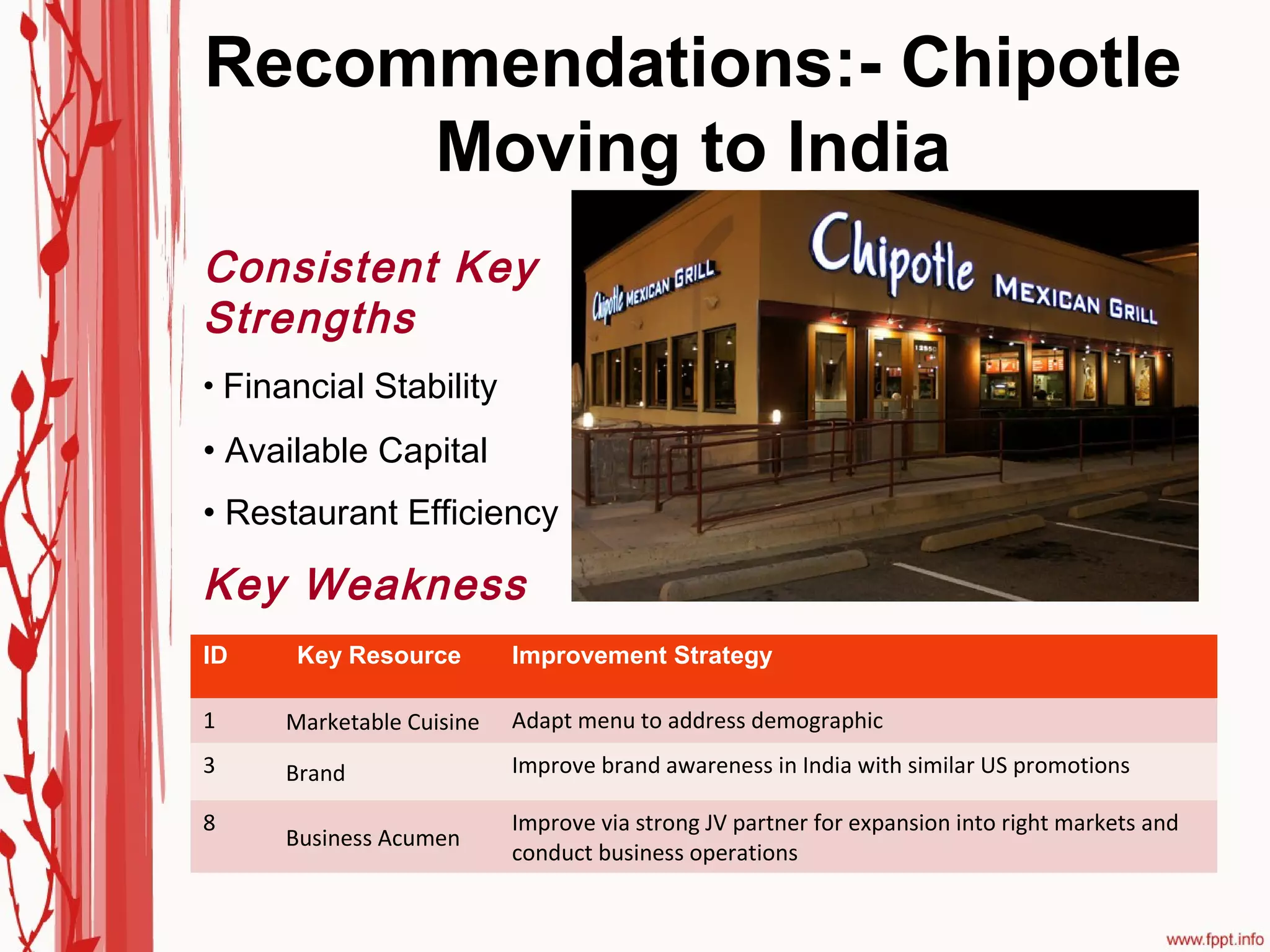
Strategic recommendations for Chipotle's entry into India include joint ventures, market adaptation, and leveraging strengths while managing risks effectively.
Chipotle - Introduction
•Chipotle Mexican Grill, Inc. is a chain of restaurants in the
United States and Canada specializing in burritos and
tacos. It was founded by Steve Ells in 1993 and based in
Denver, Colorado.
• The restaurant is known for its large burritos, assembly line
production, and use of natural ingredients. The company
has released a mission statement called Food with Integrity,
which highlights its efforts in using organic ingredients, and
serves more naturally raised meat than any other
restaurant.
• Chipotle is one of the first chains of fast casual dining
establishments.
3.
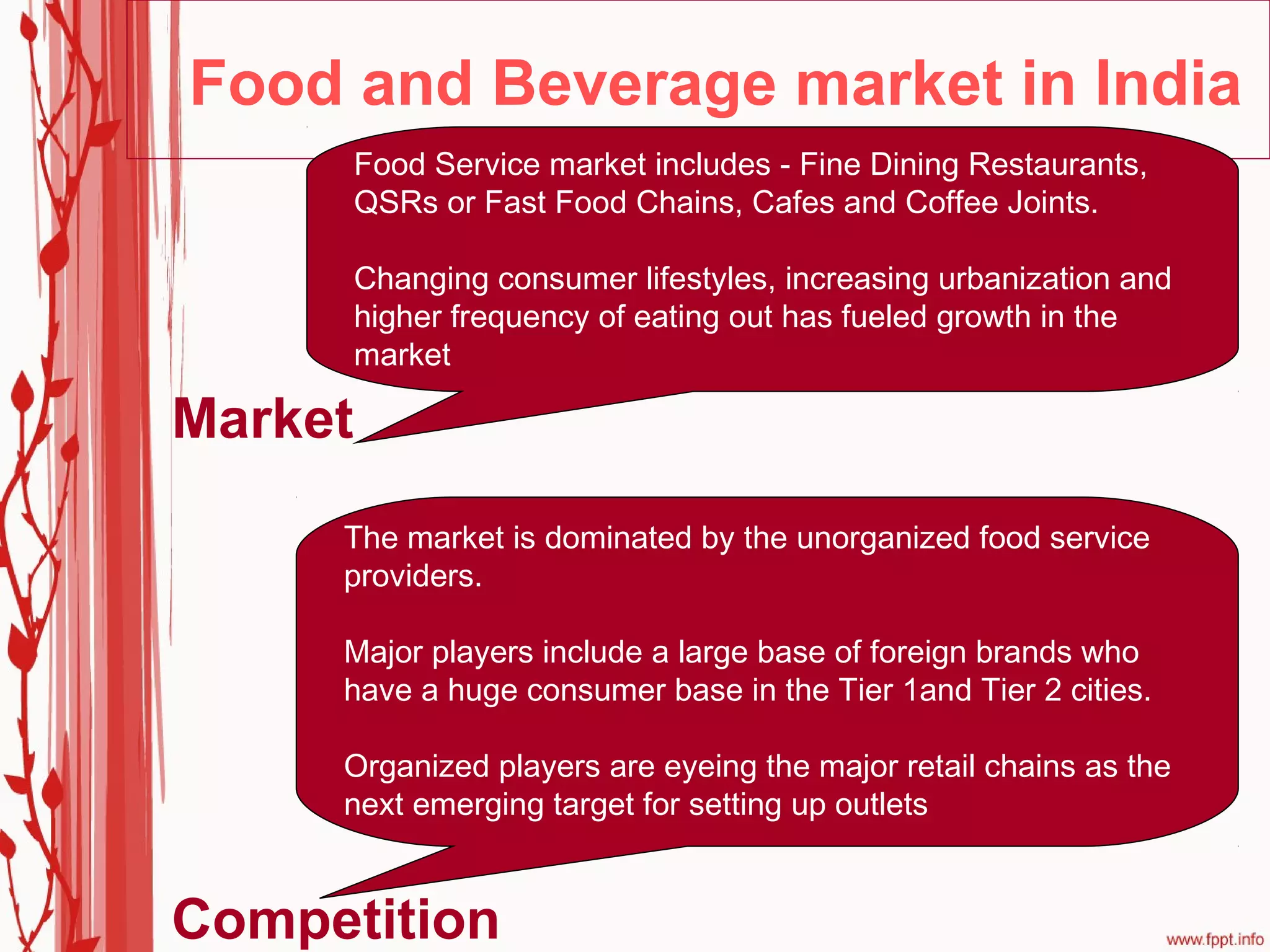
Food and Beveragemarket in India
Food Service market includes - Fine Dining Restaurants,
QSRs or Fast Food Chains, Cafes and Coffee Joints.
Changing consumer lifestyles, increasing urbanization and
higher frequency of eating out has fueled growth in the
market
Market
The market is dominated by the unorganized food service
providers.
Major players include a large base of foreign brands who
have a huge consumer base in the Tier 1and Tier 2 cities.
Organized players are eyeing the major retail chains as the
next emerging target for setting up outlets
Competition
4.
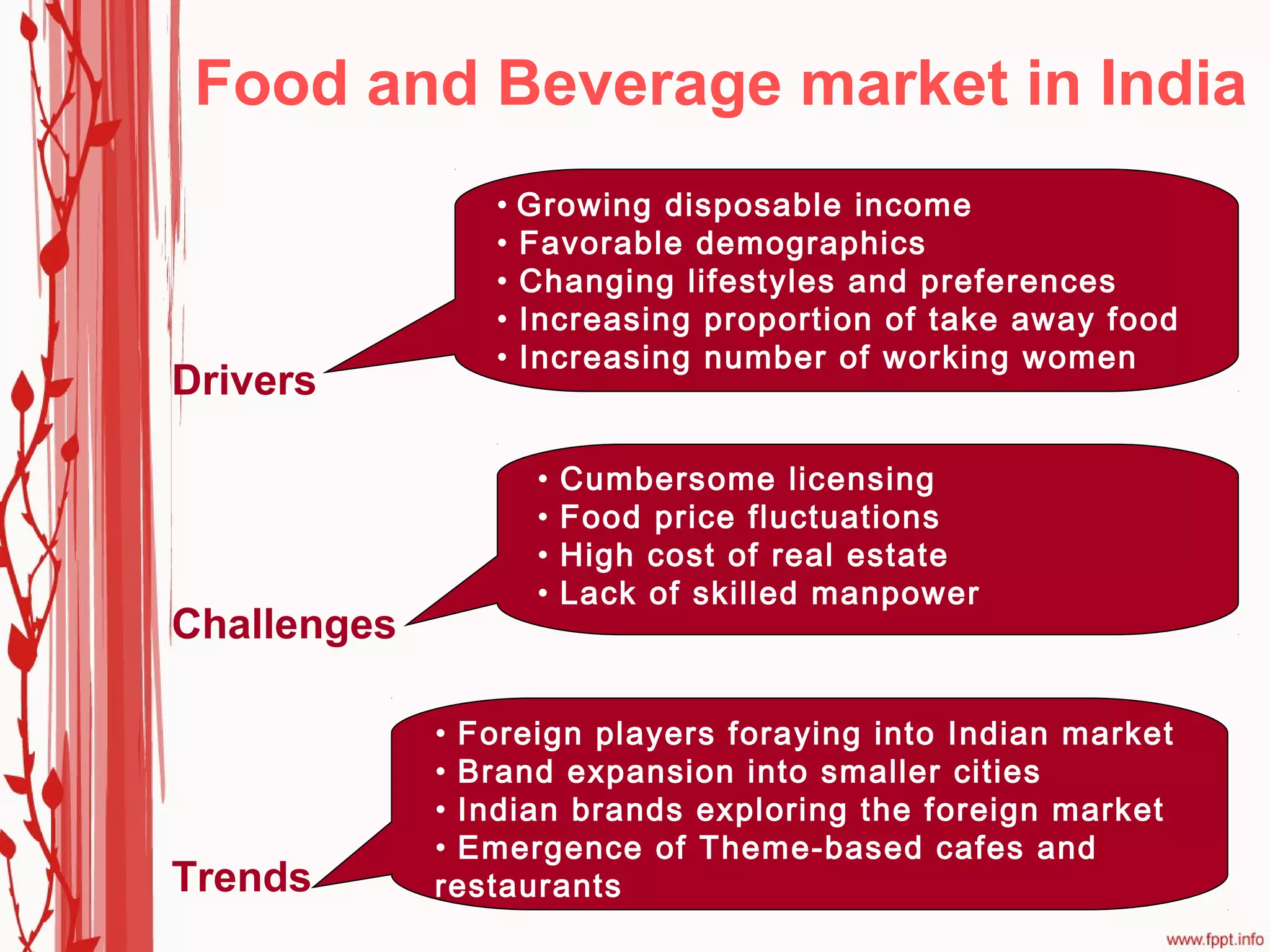
Food and Beveragemarket in India
• Growing disposable income
• Favorable demographics
• Changing lifestyles and preferences
• Increasing proportion of take away food
• Increasing number of working women
Drivers
• Cumbersome licensing
• Food price fluctuations
• High cost of real estate
• Lack of skilled manpower
Challenges
• Foreign players foraying into Indian market
• Brand expansion into smaller cities
• Indian brands exploring the foreign market
• Emergence of Theme-based cafes and
Trends restaurants
5.
Chipotle – SWOTAnalysis
STRENGTH WEAKNESS
• Innovation • Availability of brand specific
• Strong management team sourced foods
• Strong brand equity • Limited menu
• Strong financial position • Higher price point than
• Reputation management competitors
• Community Involvement
OPPORTUNITY THREAT
• Asset leverage • Competition
• Emerging markets and • Economic slowdown
expansion abroad • External changes (government,
politics, taxes, etc)
• 40% Saturated • Lower cost competitors or
imports
• Price wars
• Many other similar themed
chains in the market
6.
Chipotle – PESTAnalysis
POLITICAL Local government corruption leading to
P unfair treatment of foreign entities. Diversify to
different states. Enter with JV partner familiar with
Indian Politics.
ECONOMICAL INR/USD XR fluctuations lead to
E higher investment than anticipated. Limit currency
risk exposure to initial investment
SOCIAL Adapt menu to cultural taste and
S preferences. General social and cultural acceptance
of type of cuisine. Leverage relationship with
experienced JV partner
TECHNOLOGICAL Methods to preserve the raw
T product.
7.
Recommendations:- Chipotle
Moving to India
Strategy Profitability Risks
“Few Things Well” $10M Initial FDI JV for Social and Legal
Use Joint Venture Risk Mitigation
40% Contribution Margin
Two Locations Controlled Political and
8-Year Breakeven Point
Technological Risks
New Delhi 12.5% Return on
Volatile Rupee: 39 to 51
Bangalore Investment
Decision: Go (with the Right Partner)
8.
Recommendations:- Chipotle
Moving to India
Consistent Key
Strengths
• Financial Stability
• Available Capital
• Restaurant Efficiency
Key Weakness
ID Key Resource Improvement Strategy
1 Marketable Cuisine Adapt menu to address demographic
3 Brand Improve brand awareness in India with similar US promotions
8 Improve via strong JV partner for expansion into right markets and
Business Acumen
conduct business operations
9.
By
Ekta Bawa
Naina Deo
Rupsikha Borah
Subhodeep Ray Chaudhury