Objective
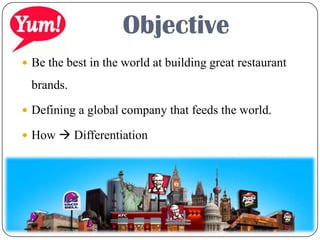
 Be the best in the world at building great restaurant
brands.
 Defining a global company that feeds the world.
 How  Differentiation
Growth Strategies
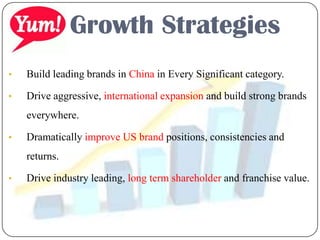
• Build leading brands in China in Every Significant category.
• Drive aggressive, international expansion and build strong brands
everywhere.
• Dramatically improve US brand positions, consistencies and
returns.
• Drive industry leading, long term shareholder and franchise value.
First Strategy
“Build leading brands in China in every significant
category.”
 Main goal is to expand and grow regardless of all weaknesses and threats.
 The strategy will accomplish the expectation because it is specific to
China. Since, it is transitioning to a consumer based economy thus giving
rise to the middle class segment which is the company’s main customer
base.
 How?
by opening more branches in China.
Second Strategy
“Drive aggressive, international expansion and build strong
brands everywhere.”
 4 divisions: YRI (Yum Restaurants International), China Division, US
Division, India Division.
 To establish a strong brand recognition along with even more branches.
 Implementation:
India: Treated as a separate division due to expected future forecasts of
India being the largest consumer market in 2030.
Russia: Bought Rostik’s business (Russia’s leading chicken chain)
Africa: First-mover advantage.
Third Strategy
“Dramatically improve US brand positions, consistencies and
returns.”
Reversed negative same-store sales of KFC by investing in
product innovation and Improving franchise relations.
Implementation:
Expand Taco Bell branches from 5,000 to 8,000 units and
Pizza Hut from 6,000 to 8,000 units.
Fourth Strategy
“Drive industry leading, long term shareholder and
franchise value.”
High Cash from operations
High return
Consistent dividend yield
Implementation:
Reducing ownership in highly penetrated markets (UK & US)
and increasing their ownership in international markets.
Maintain strong social responsibility.
Management Key
Assumptions
India will be the highest consumption country in the
world by 2030
Applying the same strategy followed for the past 10
years will increase sales
More branches means more profit
Getting back on their feet under any external threats
such as disease from poultry.
Policy Alternative
 Fast Grow:
Aggressive growth strategy, pursue larger market
share or a stronger position in untapped markets
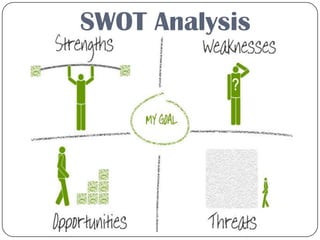
SWOT Analysis
Strengths
 Management
 Adapted favorable cost structure
 Efficient same-store sales.
 Geographic diversification
 Quick responds to shifts in demand
 Strong brand recognition
 Pending litigation, lawsuits
 Underperformance and slowing of U.S. sales specifically with KFC
and Pizza Hut brands
 Suffer a setback in China following an investigation into KFC
China’s poultry supply which resulted in a sharp decline in sales.
 Relatively small market share in oversaturated U.S. fast food
industry
 Older U.S. restaurant units losing sales annually
Weaknesses
 Increase and maintain growth in rapidly expanding China market
 Invest in India market
 food options coinciding with religious beliefs
 Penetrate other new growth markets before competitors
 Target international youth consumer to build up brand awareness
 Increase number of health conscious menu options
Opportunities
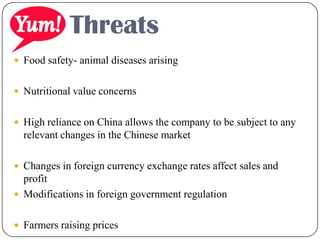
 Food safety- animal diseases arising
 Nutritional value concerns
 High reliance on China allows the company to be subject to any
relevant changes in the Chinese market
 Changes in foreign currency exchange rates affect sales and
profit
 Modifications in foreign government regulation
 Farmers raising prices
Threats
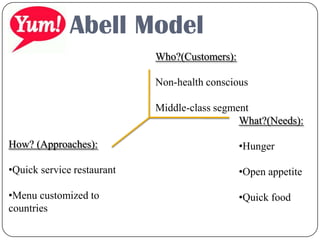
Abell Model
How? (Approaches):
•Quick service restaurant
•Menu customized to
countries
Who?(Customers):
Non-health conscious
Middle-class segment
What?(Needs):
•Hunger
•Open appetite
•Quick food
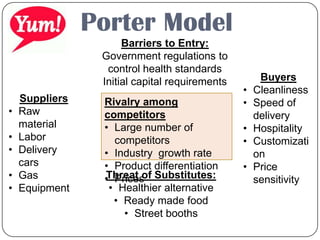
Porter Model
Rivalry among
competitors
• Large number of
competitors
• Industry growth rate
• Product differentiation
• Prices
Buyers
• Cleanliness
• Speed of
delivery
• Hospitality
• Customizati
on
• Price
sensitivity
Suppliers
• Raw
material
• Labor
• Delivery
cars
• Gas
• Equipment
Barriers to Entry:
Government regulations to
control health standards
Initial capital requirements
Threat of Substitutes:
• Healthier alternative
• Ready made food
• Street booths
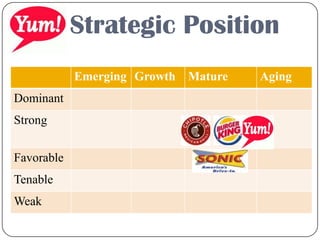
Strategic Position
Emerging Growth Mature Aging
Dominant
Strong
Favorable
Tenable
Weak
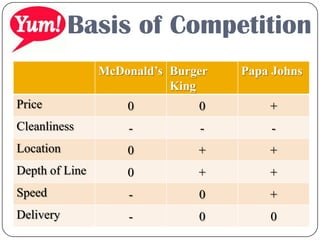
Basis of Competition
McDonald’s Burger
King
Papa Johns
Price 0 0 +
Cleanliness - - -
Location 0 + +
Depth of Line 0 + +
Speed - 0 +
Delivery - 0 0
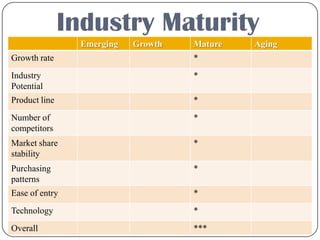
Industry Maturity
Emerging Growth Mature Aging
Growth rate *
Industry
Potential
*
Product line *
Number of
competitors
*
Market share
stability
*
Purchasing
patterns
*
Ease of entry *
Technology *
Overall ***
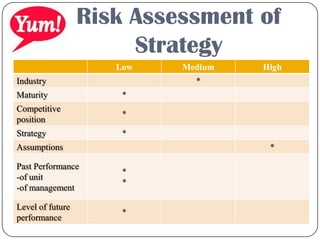
Risk Assessment of
Strategy
Low Medium High
Industry *
Maturity *
Competitive
position
*
Strategy *
Assumptions *
Past Performance
-of unit
-of management
*
*
Level of future
performance
*
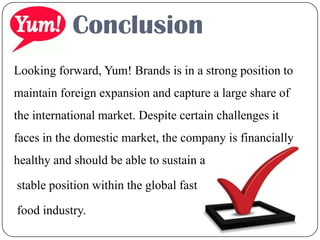
Conclusion
Looking forward, Yum! Brands is in a strong position to
maintain foreign expansion and capture a large share of
the international market. Despite certain challenges it
faces in the domestic market, the company is financially
healthy and should be able to sustain a
stable position within the global fast
food industry.

Yum! Brands

  • 2.
    Objective  Be thebest in the world at building great restaurant brands.  Defining a global company that feeds the world.  How  Differentiation
  • 3.
    Growth Strategies • Buildleading brands in China in Every Significant category. • Drive aggressive, international expansion and build strong brands everywhere. • Dramatically improve US brand positions, consistencies and returns. • Drive industry leading, long term shareholder and franchise value.
  • 4.
    First Strategy “Build leadingbrands in China in every significant category.”  Main goal is to expand and grow regardless of all weaknesses and threats.  The strategy will accomplish the expectation because it is specific to China. Since, it is transitioning to a consumer based economy thus giving rise to the middle class segment which is the company’s main customer base.  How? by opening more branches in China.
  • 5.
    Second Strategy “Drive aggressive,international expansion and build strong brands everywhere.”  4 divisions: YRI (Yum Restaurants International), China Division, US Division, India Division.  To establish a strong brand recognition along with even more branches.  Implementation: India: Treated as a separate division due to expected future forecasts of India being the largest consumer market in 2030. Russia: Bought Rostik’s business (Russia’s leading chicken chain) Africa: First-mover advantage.
  • 6.
    Third Strategy “Dramatically improveUS brand positions, consistencies and returns.” Reversed negative same-store sales of KFC by investing in product innovation and Improving franchise relations. Implementation: Expand Taco Bell branches from 5,000 to 8,000 units and Pizza Hut from 6,000 to 8,000 units.
  • 7.
    Fourth Strategy “Drive industryleading, long term shareholder and franchise value.” High Cash from operations High return Consistent dividend yield Implementation: Reducing ownership in highly penetrated markets (UK & US) and increasing their ownership in international markets. Maintain strong social responsibility.
  • 8.
    Management Key Assumptions India willbe the highest consumption country in the world by 2030 Applying the same strategy followed for the past 10 years will increase sales More branches means more profit Getting back on their feet under any external threats such as disease from poultry.
  • 9.
    Policy Alternative  FastGrow: Aggressive growth strategy, pursue larger market share or a stronger position in untapped markets
  • 10.
  • 11.
    Strengths  Management  Adaptedfavorable cost structure  Efficient same-store sales.  Geographic diversification  Quick responds to shifts in demand  Strong brand recognition
  • 12.
     Pending litigation,lawsuits  Underperformance and slowing of U.S. sales specifically with KFC and Pizza Hut brands  Suffer a setback in China following an investigation into KFC China’s poultry supply which resulted in a sharp decline in sales.  Relatively small market share in oversaturated U.S. fast food industry  Older U.S. restaurant units losing sales annually Weaknesses
  • 13.
     Increase andmaintain growth in rapidly expanding China market  Invest in India market  food options coinciding with religious beliefs  Penetrate other new growth markets before competitors  Target international youth consumer to build up brand awareness  Increase number of health conscious menu options Opportunities
  • 14.
     Food safety-animal diseases arising  Nutritional value concerns  High reliance on China allows the company to be subject to any relevant changes in the Chinese market  Changes in foreign currency exchange rates affect sales and profit  Modifications in foreign government regulation  Farmers raising prices Threats
  • 15.
    Abell Model How? (Approaches): •Quickservice restaurant •Menu customized to countries Who?(Customers): Non-health conscious Middle-class segment What?(Needs): •Hunger •Open appetite •Quick food
  • 16.
    Porter Model Rivalry among competitors •Large number of competitors • Industry growth rate • Product differentiation • Prices Buyers • Cleanliness • Speed of delivery • Hospitality • Customizati on • Price sensitivity Suppliers • Raw material • Labor • Delivery cars • Gas • Equipment Barriers to Entry: Government regulations to control health standards Initial capital requirements Threat of Substitutes: • Healthier alternative • Ready made food • Street booths
  • 17.
    Strategic Position Emerging GrowthMature Aging Dominant Strong Favorable Tenable Weak
  • 18.
    Basis of Competition McDonald’sBurger King Papa Johns Price 0 0 + Cleanliness - - - Location 0 + + Depth of Line 0 + + Speed - 0 + Delivery - 0 0
  • 19.
    Industry Maturity Emerging GrowthMature Aging Growth rate * Industry Potential * Product line * Number of competitors * Market share stability * Purchasing patterns * Ease of entry * Technology * Overall ***
  • 20.
    Risk Assessment of Strategy LowMedium High Industry * Maturity * Competitive position * Strategy * Assumptions * Past Performance -of unit -of management * * Level of future performance *
  • 21.
    Conclusion Looking forward, Yum!Brands is in a strong position to maintain foreign expansion and capture a large share of the international market. Despite certain challenges it faces in the domestic market, the company is financially healthy and should be able to sustain a stable position within the global fast food industry.

Editor's Notes

  • #5 Weaknesses: decline in salesThreats: unforeseen extraordinary events such disease outbreaks, pandemic, epidemic and flus.
  • #13 1 restaurant for every 10 McDonald’s stores