
GOOD GOVERNANCE ISSUES
AND POLICIES IN
IMPERATIVES
Done by:
M.Mohsin Shahzad
From:
Lahore, Pakistan
INTRODUCTION
 Exercise of political, economic and administrative
authority
 Complex mechanisms, processes, relationships and
institutions
 Exercise of rights and obligations and mediating their
differences
 Continuing process of divergent opinions and desires
Dimensions of Governance
 The political regime
 The systems and procedures for exercising authority
 The capacity of governments
Good Governance
 Subset of governance
 Effectively managing public resources and problems
 Public participation, accountability and transparency
 Effective and equitable
 Promotes the rule of law fairly
 Sustaining human development
 Consensus among stakeholders
 State
 Creates conducive political and legal environment
 Private sector
 Generates jobs and income
 Civil society
 Facilitates political and social interaction
 Balance between taking advantage of emerging
market opportunities and providing a secure and
stable social and economic environment domestically
GOOD GOVERNANCE-ACONCEPTUAL
FRAMEWORK
 Foundations of good governance
 Principle of freedom of thought
 Principle of freedom of speech
 Equality
 Equity
 Justice
 Honesty
 Transparency
 Accountability
 Based on lessons from history
 Definition used by the World Bank
 The manner in which power is exercised in the management of a
country’s economic and social resources
 Definition adopted by the Commission on Global
Governance
 The sum of the many ways in which individuals and institutions, public
and private, manage their common affairs
 Good Governance in the context of Pakistan
 To go well beyond ‘good’ politics or even the creation of a ‘decent’
society
 Enable the state, civil society and the private sector to enhance
both social development and economic growth as a means to
greater human development and increased levels of human
welfare
Six components of a broad conceptual framework
for good governance
 Leaders/Decision makers
 Constituencies
 Agenda
 Institutions
 Information
 Accountability Processes
Core characteristics of good governance
 Participation
 Rule of law
 Transparency
 Responsiveness
 Consensus orientation
Core characteristics of good governance continued
 Equity
 Effectiveness and efficiency
 Accountability
 Strategic vision
Issues Of Good Governance
 Institutional Imbalance
 Poor relations between center and federating units
 Political Instability
 Poor planning and development
 Inability to provide justice
Issues of Good Governance Continued
 Corruption
 Poor Fiscal Administration
 Inefficient Economic Management
 Expenditure Mismanagement
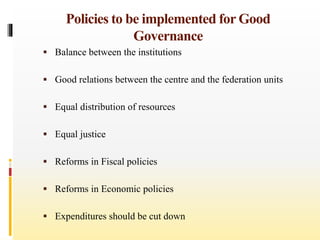
Policies to be implemented for Good
Governance
 Balance between the institutions
 Good relations between the centre and the federation units
 Equal distribution of resources
 Equal justice
 Reforms in Fiscal policies
 Reforms in Economic policies
 Expenditures should be cut down
Policies Continued
 Accountability from the top
 Establishment of anti-corruption courts
 Exclusive corruption courts
 Enact legislation to improve accountability.
 Independent private sector auditors
 Diagnosing corrupt systems by people
 Implementation of core institutional reforms and repairing of
corruption courts
 Freedom of media
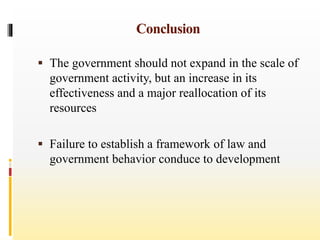
Conclusion
 The government should not expand in the scale of
government activity, but an increase in its
effectiveness and a major reallocation of its
resources
 Failure to establish a framework of law and
government behavior conduce to development
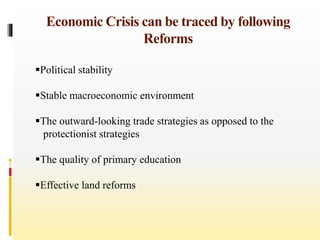
Economic Crisis can be traced by following
Reforms
Political stability
Stable macroeconomic environment
The outward-looking trade strategies as opposed to the
protectionist strategies
The quality of primary education
Effective land reforms
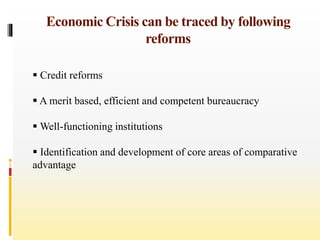
Economic Crisis can be traced by following
reforms
 Credit reforms
 A merit based, efficient and competent bureaucracy
 Well-functioning institutions
 Identification and development of core areas of comparative
advantage
Solutions
 Pakistan needs to redirect its priorities
 Invest in basic human needs
 Government must ensure equity and social justice
 Provide a major stimulus to economic growth
Good governance in pakistan

Good governance in pakistan

  • 1.
    GOOD GOVERNANCE ISSUES ANDPOLICIES IN IMPERATIVES Done by: M.Mohsin Shahzad From: Lahore, Pakistan
  • 2.
    INTRODUCTION  Exercise ofpolitical, economic and administrative authority  Complex mechanisms, processes, relationships and institutions  Exercise of rights and obligations and mediating their differences  Continuing process of divergent opinions and desires
  • 3.
    Dimensions of Governance The political regime  The systems and procedures for exercising authority  The capacity of governments
  • 4.
    Good Governance  Subsetof governance  Effectively managing public resources and problems  Public participation, accountability and transparency  Effective and equitable  Promotes the rule of law fairly
  • 5.
     Sustaining humandevelopment  Consensus among stakeholders  State  Creates conducive political and legal environment  Private sector  Generates jobs and income  Civil society  Facilitates political and social interaction  Balance between taking advantage of emerging market opportunities and providing a secure and stable social and economic environment domestically
  • 6.
    GOOD GOVERNANCE-ACONCEPTUAL FRAMEWORK  Foundationsof good governance  Principle of freedom of thought  Principle of freedom of speech  Equality  Equity  Justice  Honesty  Transparency  Accountability  Based on lessons from history
  • 7.
     Definition usedby the World Bank  The manner in which power is exercised in the management of a country’s economic and social resources  Definition adopted by the Commission on Global Governance  The sum of the many ways in which individuals and institutions, public and private, manage their common affairs  Good Governance in the context of Pakistan  To go well beyond ‘good’ politics or even the creation of a ‘decent’ society  Enable the state, civil society and the private sector to enhance both social development and economic growth as a means to greater human development and increased levels of human welfare
  • 8.
    Six components ofa broad conceptual framework for good governance  Leaders/Decision makers  Constituencies  Agenda  Institutions  Information  Accountability Processes
  • 9.
    Core characteristics ofgood governance  Participation  Rule of law  Transparency  Responsiveness  Consensus orientation
  • 10.
    Core characteristics ofgood governance continued  Equity  Effectiveness and efficiency  Accountability  Strategic vision
  • 11.
    Issues Of GoodGovernance  Institutional Imbalance  Poor relations between center and federating units  Political Instability  Poor planning and development  Inability to provide justice
  • 12.
    Issues of GoodGovernance Continued  Corruption  Poor Fiscal Administration  Inefficient Economic Management  Expenditure Mismanagement
  • 13.
    Policies to beimplemented for Good Governance  Balance between the institutions  Good relations between the centre and the federation units  Equal distribution of resources  Equal justice  Reforms in Fiscal policies  Reforms in Economic policies  Expenditures should be cut down
  • 14.
    Policies Continued  Accountabilityfrom the top  Establishment of anti-corruption courts  Exclusive corruption courts  Enact legislation to improve accountability.  Independent private sector auditors  Diagnosing corrupt systems by people  Implementation of core institutional reforms and repairing of corruption courts  Freedom of media
  • 15.
    Conclusion  The governmentshould not expand in the scale of government activity, but an increase in its effectiveness and a major reallocation of its resources  Failure to establish a framework of law and government behavior conduce to development
  • 16.
    Economic Crisis canbe traced by following Reforms Political stability Stable macroeconomic environment The outward-looking trade strategies as opposed to the protectionist strategies The quality of primary education Effective land reforms
  • 17.
    Economic Crisis canbe traced by following reforms  Credit reforms  A merit based, efficient and competent bureaucracy  Well-functioning institutions  Identification and development of core areas of comparative advantage
  • 18.
    Solutions  Pakistan needsto redirect its priorities  Invest in basic human needs  Government must ensure equity and social justice  Provide a major stimulus to economic growth