CHINESE LANGUAGE
CHINESE : THE SECOND INTERNATIONAL LANGUAGE
MAIN CONTENTS
 Intro of Chinese
 Chinese Culture
 Comparison
 Global Language
SUB CONTENTS
 History/Background
 Dialect
 Chinese Day
 Difficult Language
WHAT IS LANGUAGE ?
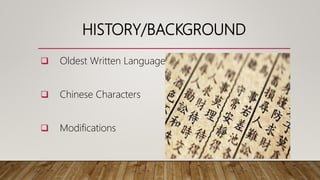
HISTORY/BACKGROUND
 Oldest Written Language
 Chinese Characters
 Modifications
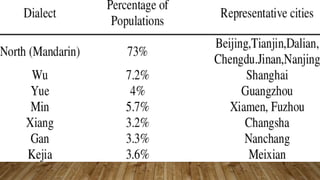
DIALECTS
 Mandarin
 Wu
 Gan
 Xiang
 Hakka
 Yue
CHINESE DAY
 12 November, 2010
 20 April, 2011
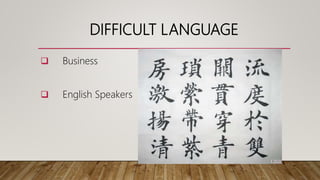
DIFFICULT LANGUAGE
 Business
 English Speakers
CHINESE CULTURE
WHAT IS CULTURE?
• Culture–ways of living, built up by a group of human
beings, that are transmitted from one generation to
another
• Through social institutions---family, educational, religious
and business institutions
• A society is a group of people who share a common set of
values and norms
• Culture has both conscious and unconscious values, ideas,
attitudes, and symbols
4-12
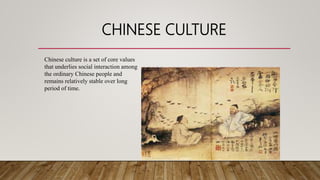
CHINESE CULTURE
Chinese culture is a set of core values
that underlies social interaction among
the ordinary Chinese people and
remains relatively stable over long
period of time.
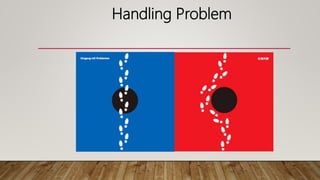
Handling Problem
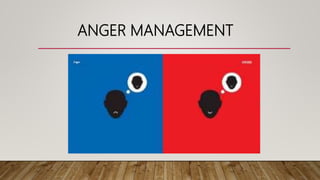
ANGER MANAGEMENT
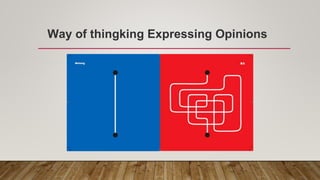
Way of thingking Expressing Opinions
A Language Comparison
English and Mandarin Chinese
KEY FEATURES OF MANDARIN CHINESE
 It is a logographic language. It uses symbols to convey meaning.
 It is a tonal language.
 There are no consonant blends.
 Tense changes are not marked inflectionally.
 Word order is very important in determining meaning.
 There are no definite or indefinite articles.
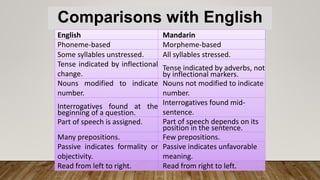
Comparisons with English
English Mandarin
Phoneme-based Morpheme-based
Some syllables unstressed. All syllables stressed.
Tense indicated by inflectional
change.
Tense indicated by adverbs, not
by inflectional markers.
Nouns modified to indicate
number.
Nouns not modified to indicate
number.
Interrogatives found at the
beginning of a question.
Interrogatives found mid-
sentence.
Part of speech is assigned. Part of speech depends on its
position in the sentence.
Many prepositions. Few prepositions.
Passive indicates formality or
objectivity.
Passive indicates unfavorable
meaning.
Read from left to right. Read from right to left.
How does Mandarin impact the acquisition of English?
 Mandarin speakers are accustomed to symbols so they will likely
acquire vocabulary quickly when it is paired with visuals.
 Pronunciation will be difficult due to English’s unstressed syllables,
voiced and voiceless consonants, and consonant blends.
 Speakers will be able to respond to yes/no questions but will need
time to learn how to ask WH- questions.
Hu Xuan
A case study
 9th grade student at Wilson High School
 Arrived in the United States in March, 2011
 Spends her mornings in the ESL room and attends core academic
classes in the afternoon.
Observations
 Hu Xuan struggled with the pronunciation of consonant blends
such as ‘husband’ and ‘businesswoman’.
 Hu Xuan’s pronunciation was very staccato.
 Subject/verb agreement is still developing.
 Hu Xuan is aware that gerunds and infinitives exist in English, but
she is still mastering their usage.
 Articles are frequently omitted. Preposition selection is inconsistent
 Orthographic skills are still developing.
BASIC ENGLISH SENTENCES TO CHINESE LANGUAGE
Chinese language

Chinese language

  • 2.
    CHINESE LANGUAGE CHINESE :THE SECOND INTERNATIONAL LANGUAGE
  • 3.
    MAIN CONTENTS  Introof Chinese  Chinese Culture  Comparison  Global Language
  • 4.
    SUB CONTENTS  History/Background Dialect  Chinese Day  Difficult Language
  • 5.
  • 6.
    HISTORY/BACKGROUND  Oldest WrittenLanguage  Chinese Characters  Modifications
  • 7.
    DIALECTS  Mandarin  Wu Gan  Xiang  Hakka  Yue
  • 9.
    CHINESE DAY  12November, 2010  20 April, 2011
  • 10.
  • 11.
  • 12.
    WHAT IS CULTURE? •Culture–ways of living, built up by a group of human beings, that are transmitted from one generation to another • Through social institutions---family, educational, religious and business institutions • A society is a group of people who share a common set of values and norms • Culture has both conscious and unconscious values, ideas, attitudes, and symbols 4-12
  • 13.
    CHINESE CULTURE Chinese cultureis a set of core values that underlies social interaction among the ordinary Chinese people and remains relatively stable over long period of time.
  • 14.
  • 15.
  • 16.
    Way of thingkingExpressing Opinions
  • 17.
    A Language Comparison Englishand Mandarin Chinese
  • 18.
    KEY FEATURES OFMANDARIN CHINESE  It is a logographic language. It uses symbols to convey meaning.  It is a tonal language.  There are no consonant blends.  Tense changes are not marked inflectionally.  Word order is very important in determining meaning.  There are no definite or indefinite articles.
  • 19.
    Comparisons with English EnglishMandarin Phoneme-based Morpheme-based Some syllables unstressed. All syllables stressed. Tense indicated by inflectional change. Tense indicated by adverbs, not by inflectional markers. Nouns modified to indicate number. Nouns not modified to indicate number. Interrogatives found at the beginning of a question. Interrogatives found mid- sentence. Part of speech is assigned. Part of speech depends on its position in the sentence. Many prepositions. Few prepositions. Passive indicates formality or objectivity. Passive indicates unfavorable meaning. Read from left to right. Read from right to left.
  • 21.
    How does Mandarinimpact the acquisition of English?  Mandarin speakers are accustomed to symbols so they will likely acquire vocabulary quickly when it is paired with visuals.  Pronunciation will be difficult due to English’s unstressed syllables, voiced and voiceless consonants, and consonant blends.  Speakers will be able to respond to yes/no questions but will need time to learn how to ask WH- questions.
  • 22.
    Hu Xuan A casestudy  9th grade student at Wilson High School  Arrived in the United States in March, 2011  Spends her mornings in the ESL room and attends core academic classes in the afternoon.
  • 23.
    Observations  Hu Xuanstruggled with the pronunciation of consonant blends such as ‘husband’ and ‘businesswoman’.  Hu Xuan’s pronunciation was very staccato.  Subject/verb agreement is still developing.  Hu Xuan is aware that gerunds and infinitives exist in English, but she is still mastering their usage.  Articles are frequently omitted. Preposition selection is inconsistent  Orthographic skills are still developing.
  • 25.
    BASIC ENGLISH SENTENCESTO CHINESE LANGUAGE

Editor's Notes

  • #13 Culture shock is a normal human reaction to the new and unknown. Successful global marketers strive to comprehend human experience from the local point of view. As they endeavor to understand cultural factors, outsides gradually become insiders and develop cultural empathy.
  • #14 Picture: old Chinese drawing Chinese culture gives the Chinese people their basic identity. The core values are unique and consistent, shaped by a tradition of 6000 years of history and maintained by the same languages. We explores the Chinese cultural system in terms of what has made it the way it is, and how the system may affect your business. This section focuses on the major underlying forces, such as Chinese ways of thinking and believing that have formed and sustained the Chinese cultural system to provide some fundamental guidance, not quick fixed recommendation. For example, The American concept of “privacy” sound more like an alien notion than an individual right to many Chinese, whose culture lacks a similar social norm.
  • #15 When handling a problem, Chinese stress on finding way than finding the truth. Chinese may conduct back-and-forth haggling to settle differences Chinese seek a path. American seek the truth.
  • #16 Chinese are self-retrained and emphasize the harmony in social relationship. They may still smile to others when they are angry.
  • #17 Chinese thinking is indirect. American thinking is direct and straightforward.