The Atmosphere
BIG Idea:
• The composition, structure, and
properties of Earth’s
atmosphere form the basis of
Earth’s weather and climate.
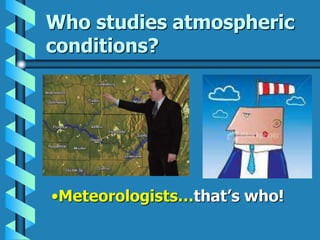
Who studies atmospheric
conditions?
•Meteorologists…that’s who!
• How would you describe the
difference between
WEATHER and CLIMATE?
I. Characteristics
of the Atmosphere
• Weather = day-to-day changes
in atmospheric conditions.
•These conditions include:
•Temperature
•Air movements
•Moisture content
• Climate = general weather
conditions averaged over
many (about 30) years
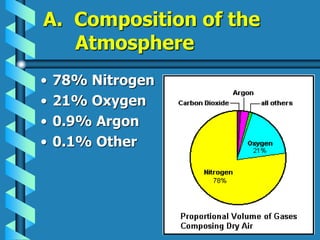
A. Composition of the
Atmosphere
• 78% Nitrogen
• 21% Oxygen
• 0.9% Argon
• 0.1% Other
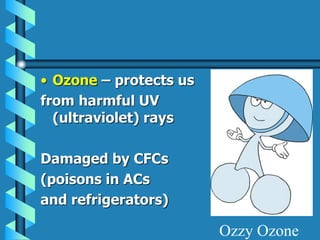
• Ozone – protects us
from harmful UV
(ultraviolet) rays
Damaged by CFCs
(poisons in ACs
and refrigerators)
Ozzy Ozone
B. Properties of the
Atmosphere
1)Temperature
2)Air Pressure
3)Humidity
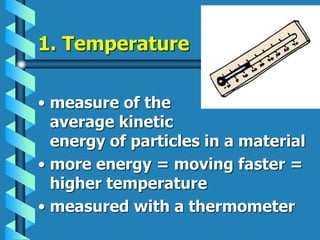
1. Temperature
• measure of the
average kinetic
energy of particles in a material
• more energy = moving faster =
higher temperature
• measured with a thermometer
2. Atmospheric (Air)
Pressure
• the ratio of the force of the
air to the area of the surface
on which it presses
• the weight of the atmosphere
pressing down on Earth’s
surface
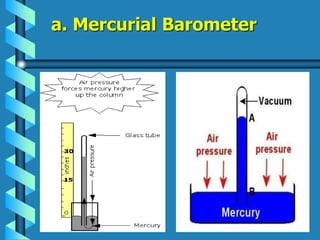
BAROMETER
• an instrument that measures
atmospheric pressure
a. Mercurial Barometer
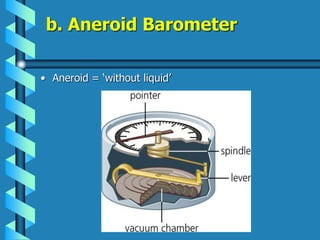
b. Aneroid Barometer
• Aneroid = ‘without liquid’
3. Humidity
• the amount of water vapor in
the atmosphere at a given
location on Earth’s surface
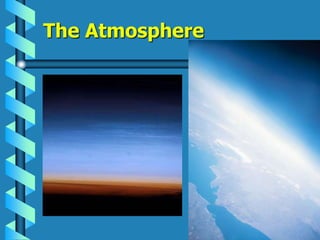
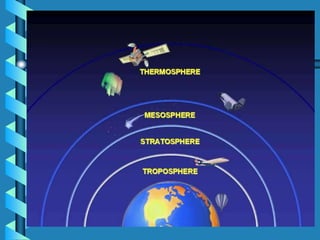
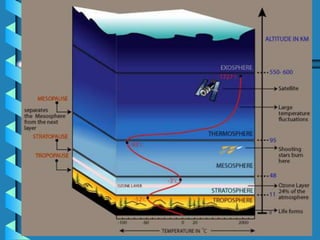
C. Layers of the
Atmosphere
- Based on temperature
differences, scientists
identify four layers of
Earth’s atmosphere
- Each layer is separated by a
“pause”
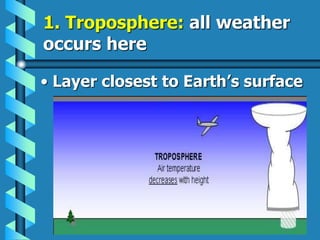
1. Troposphere: all weather
occurs here
• Layer closest to Earth’s surface
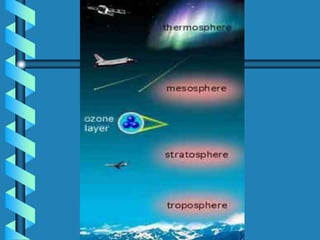
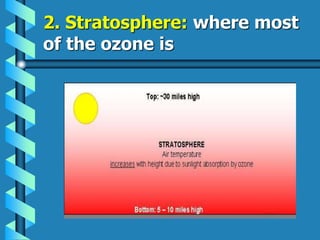
2. Stratosphere: where most
of the ozone is
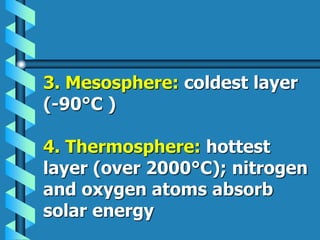
3. Mesosphere: coldest layer
(-90°C )
4. Thermosphere: hottest
layer (over 2000°C); nitrogen
and oxygen atoms absorb
solar energy
II. Solar Energy
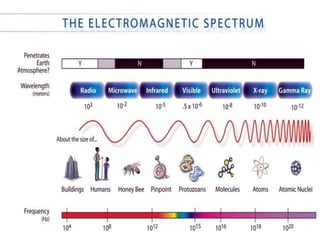
A. Radiation: all
forms of energy
that travel
through space
as waves
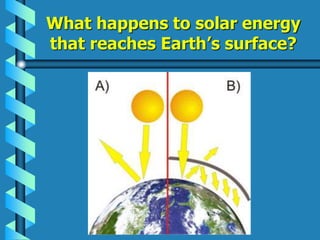
What happens to solar energy
that reaches Earth’s surface?
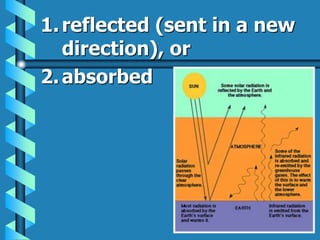
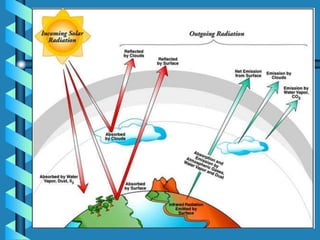
1.reflected (sent in a new
direction), or
2.absorbed
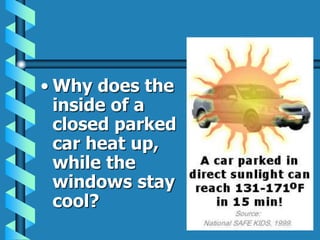
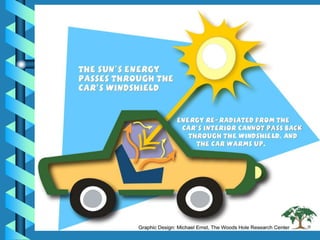
• Why does the
inside of a
closed parked
car heat up,
while the
windows stay
cool?
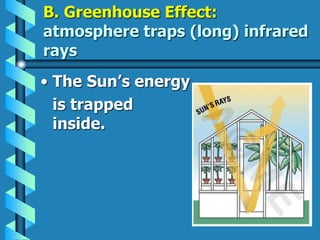
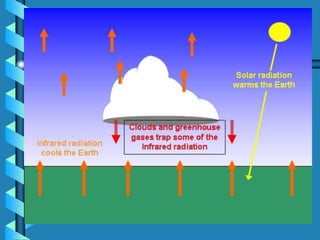
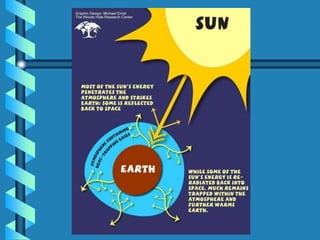
B. Greenhouse Effect:
atmosphere traps (long) infrared
rays
• The Sun’s energy
is trapped
inside.
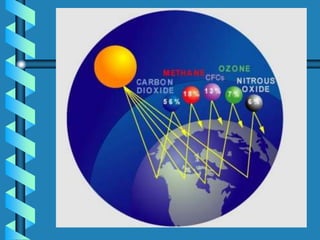
• What are the ‘greenhouse
gases’ that trap heat within
our atmosphere?
1. Water vapor
2. Carbon dioxide
 produced by humans
 burning of fossil fuels (oil,
gas, coal)
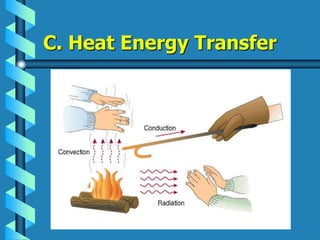
C. Heat Energy Transfer
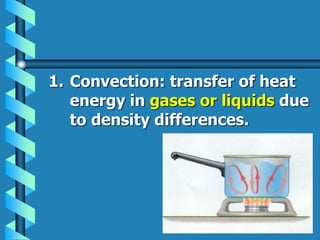
1. Convection: transfer of heat
energy in gases or liquids due
to density differences.
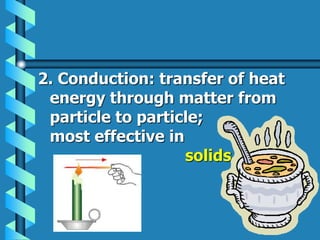
2. Conduction: transfer of heat
energy through matter from
particle to particle;
most effective in
solids.
3. Radiation: waves that directly
transport energy through
space; brings
HEAT to our
planet.
III. Winds
• Created by uneven heat
distribution at Earth’s surface
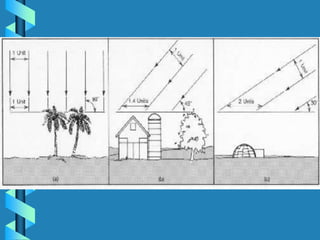
–The amount of energy
reaching any given point on
Earth’s surface is controlled
by the angle of sunlight
striking the surface
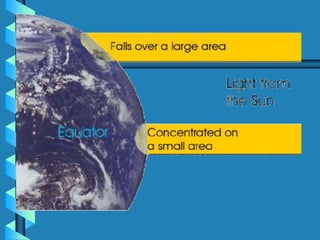
• What causes the amount
of energy to vary?
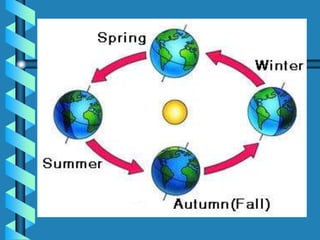
• Our tilt!
• Where on Earth will you
receive more of the sun’s
energy per unit area?
• Where will you receive
less?
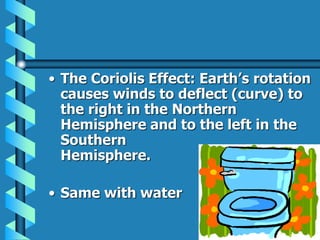
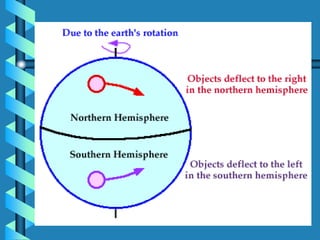
• The Coriolis Effect: Earth’s rotation
causes winds to deflect (curve) to
the right in the Northern
Hemisphere and to the left in the
Southern
Hemisphere.
• Same with water
A. Global Winds
Winds are named according to the
direction FROM which they flow!
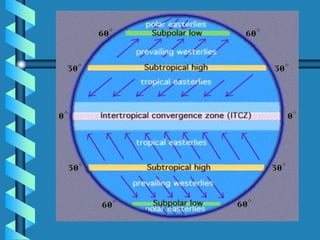
1. Trade Winds (Tropical Easterlies) –
winds in both hemispheres
flowing towards the equator
 between 30° (N and S) and 0°
latitude
a. Doldrums – weak and
unpredictable air mix, 5° N and S
of the equator
*winds CONVERGE here to form an
area of LOW pressure
b. Horse Latitudes – very weak air
movement 30°- 35° N and S
2. Westerlies – between 30° and 60°
N and S.
3. Polar Easterlies – weak winds at
60° N and S that flow away from
the poles.
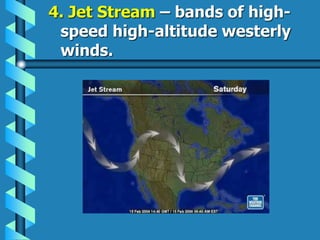
4. Jet Stream – bands of high-
speed high-altitude westerly
winds.
B. Local Winds / Breezes
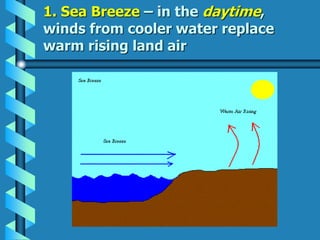
1. Sea Breeze – in the daytime,
winds from cooler water replace
warm rising land air
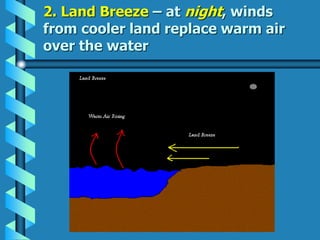
2. Land Breeze – at night, winds
from cooler land replace warm air
over the water
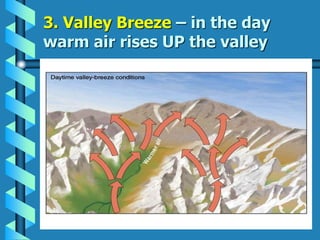
3. Valley Breeze – in the day
warm air rises UP the valley
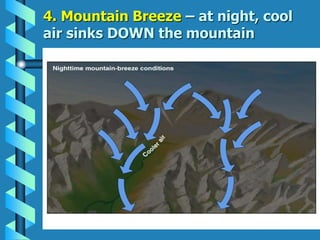
4. Mountain Breeze – at night, cool
air sinks DOWN the mountain
What causes weather?
• uneven heating by the
Sun due to Earth’s axis
tilt
• energy transfer between
Earth’s surface and the
atmosphere

Chemistry of-the-atmosphere-1

  • 1.
  • 2.
    BIG Idea: • Thecomposition, structure, and properties of Earth’s atmosphere form the basis of Earth’s weather and climate.
  • 3.
  • 4.
    • How wouldyou describe the difference between WEATHER and CLIMATE?
  • 6.
    I. Characteristics of theAtmosphere • Weather = day-to-day changes in atmospheric conditions. •These conditions include: •Temperature •Air movements •Moisture content
  • 7.
    • Climate =general weather conditions averaged over many (about 30) years
  • 8.
    A. Composition ofthe Atmosphere • 78% Nitrogen • 21% Oxygen • 0.9% Argon • 0.1% Other
  • 9.
    • Ozone –protects us from harmful UV (ultraviolet) rays Damaged by CFCs (poisons in ACs and refrigerators) Ozzy Ozone
  • 10.
    B. Properties ofthe Atmosphere 1)Temperature 2)Air Pressure 3)Humidity
  • 11.
    1. Temperature • measureof the average kinetic energy of particles in a material • more energy = moving faster = higher temperature • measured with a thermometer
  • 12.
    2. Atmospheric (Air) Pressure •the ratio of the force of the air to the area of the surface on which it presses • the weight of the atmosphere pressing down on Earth’s surface
  • 13.
    BAROMETER • an instrumentthat measures atmospheric pressure
  • 14.
  • 15.
    b. Aneroid Barometer •Aneroid = ‘without liquid’
  • 16.
    3. Humidity • theamount of water vapor in the atmosphere at a given location on Earth’s surface
  • 17.
    C. Layers ofthe Atmosphere - Based on temperature differences, scientists identify four layers of Earth’s atmosphere - Each layer is separated by a “pause”
  • 20.
    1. Troposphere: allweather occurs here • Layer closest to Earth’s surface
  • 21.
    2. Stratosphere: wheremost of the ozone is
  • 22.
    3. Mesosphere: coldestlayer (-90°C ) 4. Thermosphere: hottest layer (over 2000°C); nitrogen and oxygen atoms absorb solar energy
  • 24.
    II. Solar Energy A.Radiation: all forms of energy that travel through space as waves
  • 26.
    What happens tosolar energy that reaches Earth’s surface?
  • 27.
    1.reflected (sent ina new direction), or 2.absorbed
  • 29.
    • Why doesthe inside of a closed parked car heat up, while the windows stay cool?
  • 32.
    B. Greenhouse Effect: atmospheretraps (long) infrared rays • The Sun’s energy is trapped inside.
  • 34.
    • What arethe ‘greenhouse gases’ that trap heat within our atmosphere?
  • 35.
    1. Water vapor 2.Carbon dioxide  produced by humans  burning of fossil fuels (oil, gas, coal)
  • 38.
  • 39.
    1. Convection: transferof heat energy in gases or liquids due to density differences.
  • 40.
    2. Conduction: transferof heat energy through matter from particle to particle; most effective in solids.
  • 41.
    3. Radiation: wavesthat directly transport energy through space; brings HEAT to our planet.
  • 42.
    III. Winds • Createdby uneven heat distribution at Earth’s surface –The amount of energy reaching any given point on Earth’s surface is controlled by the angle of sunlight striking the surface
  • 43.
    • What causesthe amount of energy to vary?
  • 45.
    • Our tilt! •Where on Earth will you receive more of the sun’s energy per unit area? • Where will you receive less?
  • 48.
    • The CoriolisEffect: Earth’s rotation causes winds to deflect (curve) to the right in the Northern Hemisphere and to the left in the Southern Hemisphere. • Same with water
  • 50.
    A. Global Winds Windsare named according to the direction FROM which they flow! 1. Trade Winds (Tropical Easterlies) – winds in both hemispheres flowing towards the equator  between 30° (N and S) and 0° latitude
  • 51.
    a. Doldrums –weak and unpredictable air mix, 5° N and S of the equator *winds CONVERGE here to form an area of LOW pressure b. Horse Latitudes – very weak air movement 30°- 35° N and S
  • 52.
    2. Westerlies –between 30° and 60° N and S. 3. Polar Easterlies – weak winds at 60° N and S that flow away from the poles.
  • 54.
    4. Jet Stream– bands of high- speed high-altitude westerly winds.
  • 55.
    B. Local Winds/ Breezes
  • 56.
    1. Sea Breeze– in the daytime, winds from cooler water replace warm rising land air
  • 57.
    2. Land Breeze– at night, winds from cooler land replace warm air over the water
  • 58.
    3. Valley Breeze– in the day warm air rises UP the valley
  • 59.
    4. Mountain Breeze– at night, cool air sinks DOWN the mountain
  • 60.
    What causes weather? •uneven heating by the Sun due to Earth’s axis tilt • energy transfer between Earth’s surface and the atmosphere