Atiqa Khan
2019-MS-CM-15
Abdul Qadir Jilani
2018-MS-CM-30
Shi Wenchao
2018-MS-CM-22
Our Team
A chemical hazard is a type of occupational hazard caused
by exposure to chemicals in the workplace.
 Acute or Chronic diseases if exposed for a longer period of time or if
proper precautionary measures are not taken.
 Long-term exposure to chemicals have been shown to increase risk of
diseases such as:
• Heart disease
• Stroke
• High blood pressure
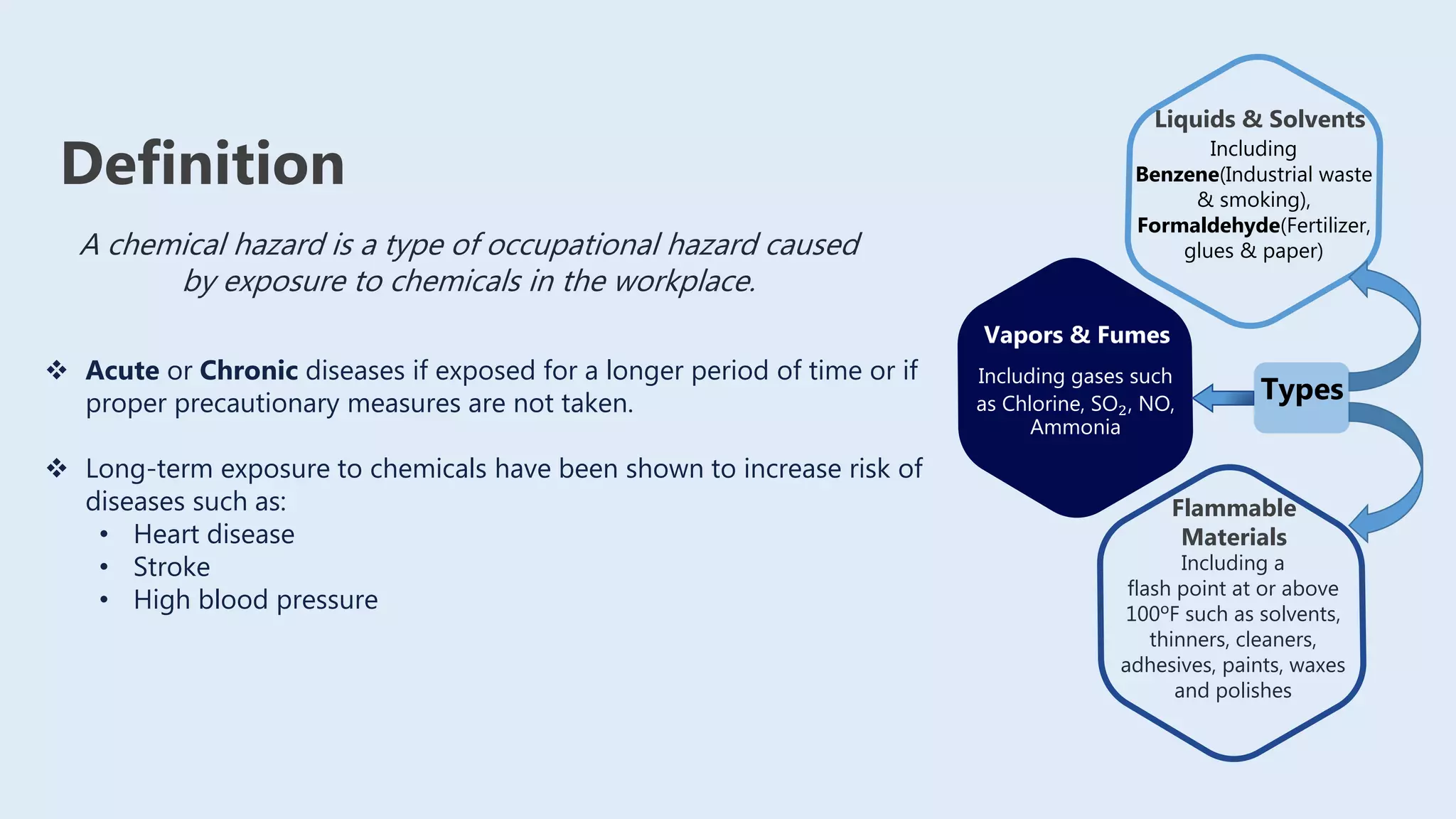
Definition Including
Benzene(Industrial waste
& smoking),
Formaldehyde(Fertilizer,
glues & paper)
Liquids & Solvents
Including gases such
as Chlorine, SO2, NO,
Ammonia
Vapors & Fumes
Including a
flash point at or above
100ºF such as solvents,
thinners, cleaners,
adhesives, paints, waxes
and polishes
Flammable
Materials
Types
Chemical Hazards
Chemicals can exist in the form of:
• Dusts, fumes, fibers (solids)
• Liquids, mists
• Gases, vapors
Chemicals are found in variety of products used at construction sites. Workers may also be
exposed to chemicals generated during construction activities.
• Asbestos
• Lead
• Silica
• Cadmium
• Carbon monoxide
• Welding fumes
• Spray paints
• Cutting oil mists
• Solvents
Examples of
chemical
hazards found
in construction
work:
Routes to Exposure
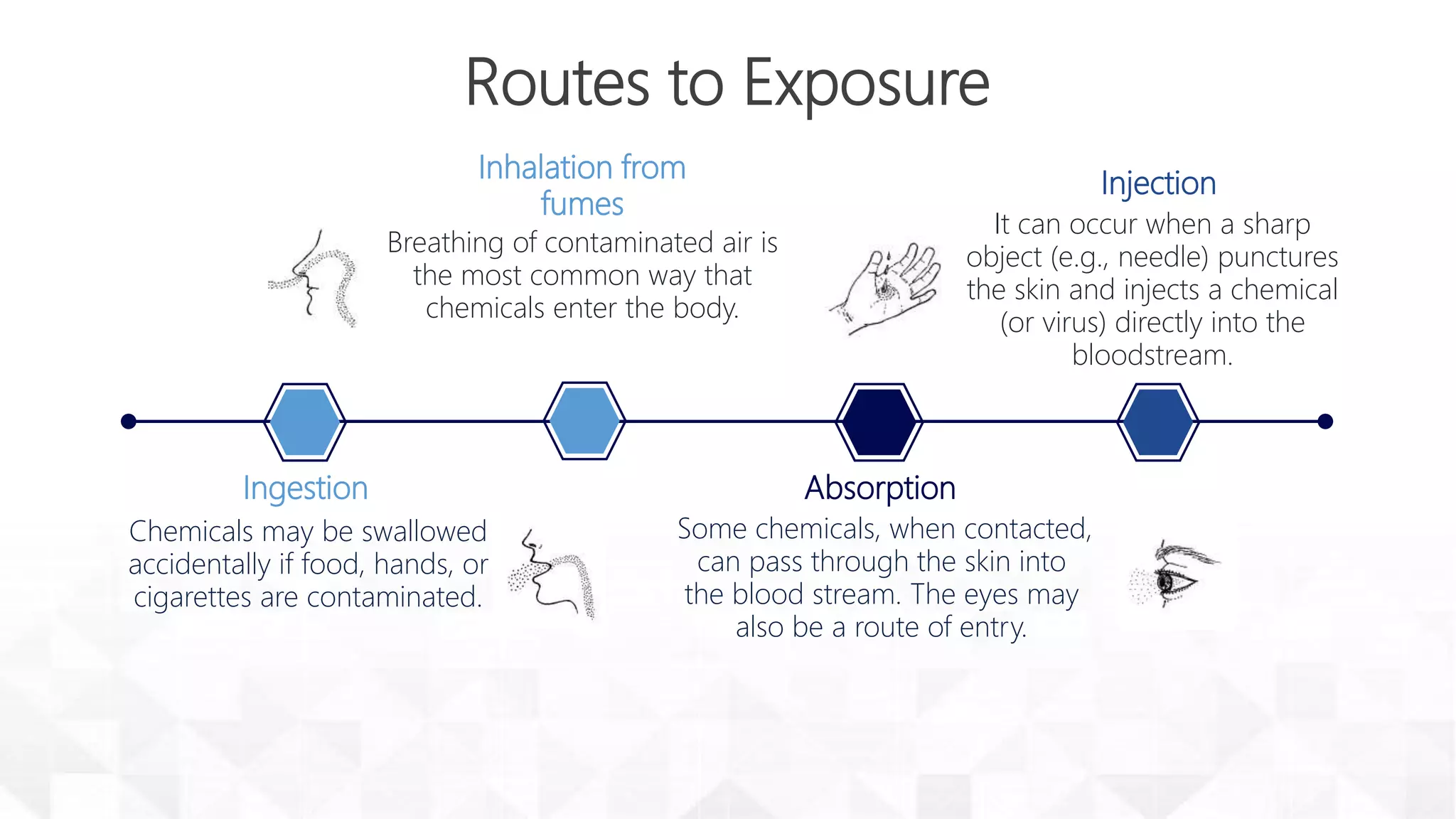
Ingestion
Chemicals may be swallowed
accidentally if food, hands, or
cigarettes are contaminated.
Injection
It can occur when a sharp
object (e.g., needle) punctures
the skin and injects a chemical
(or virus) directly into the
bloodstream.
Inhalation from
fumes
Breathing of contaminated air is
the most common way that
chemicals enter the body.
Absorption
Some chemicals, when contacted,
can pass through the skin into
the blood stream. The eyes may
also be a route of entry.
ASBESTOS
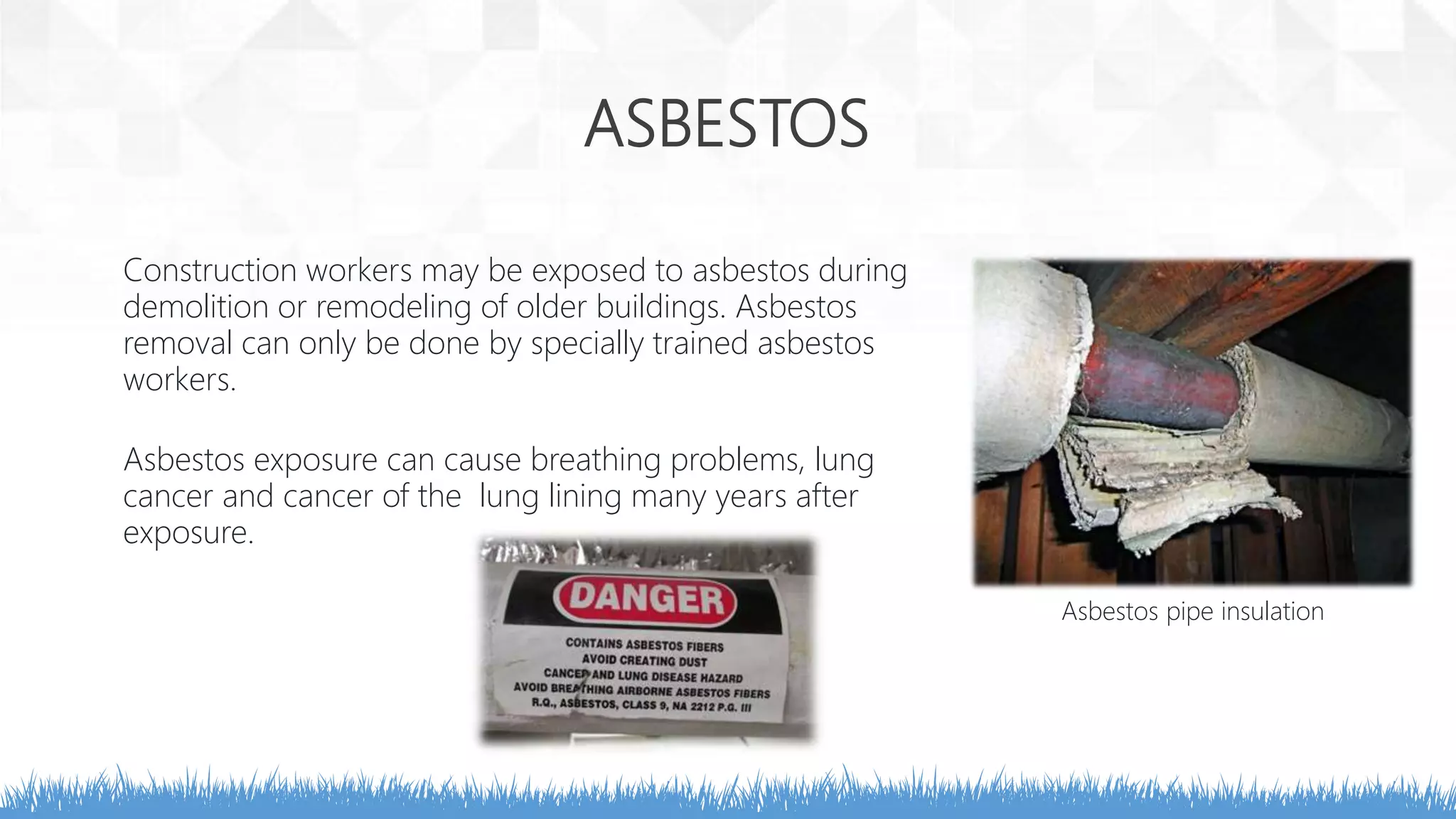
Asbestos pipe insulation
Construction workers may be exposed to asbestos during
demolition or remodeling of older buildings. Asbestos
removal can only be done by specially trained asbestos
workers.
Asbestos exposure can cause breathing problems, lung
cancer and cancer of the lung lining many years after
exposure.
WELDING FUMES
Welding fumes contain a variety of
chemicals depending on what is
being welded on, chemical makeup
of welding rods, fluxes and
shielding gases.
Generally, welding in confined
spaces or welding on stainless steel
which generates hexavalent
chromium, are the most hazardous
welding activities. Welding on a stainless steel
tank
Welding in a confined
space
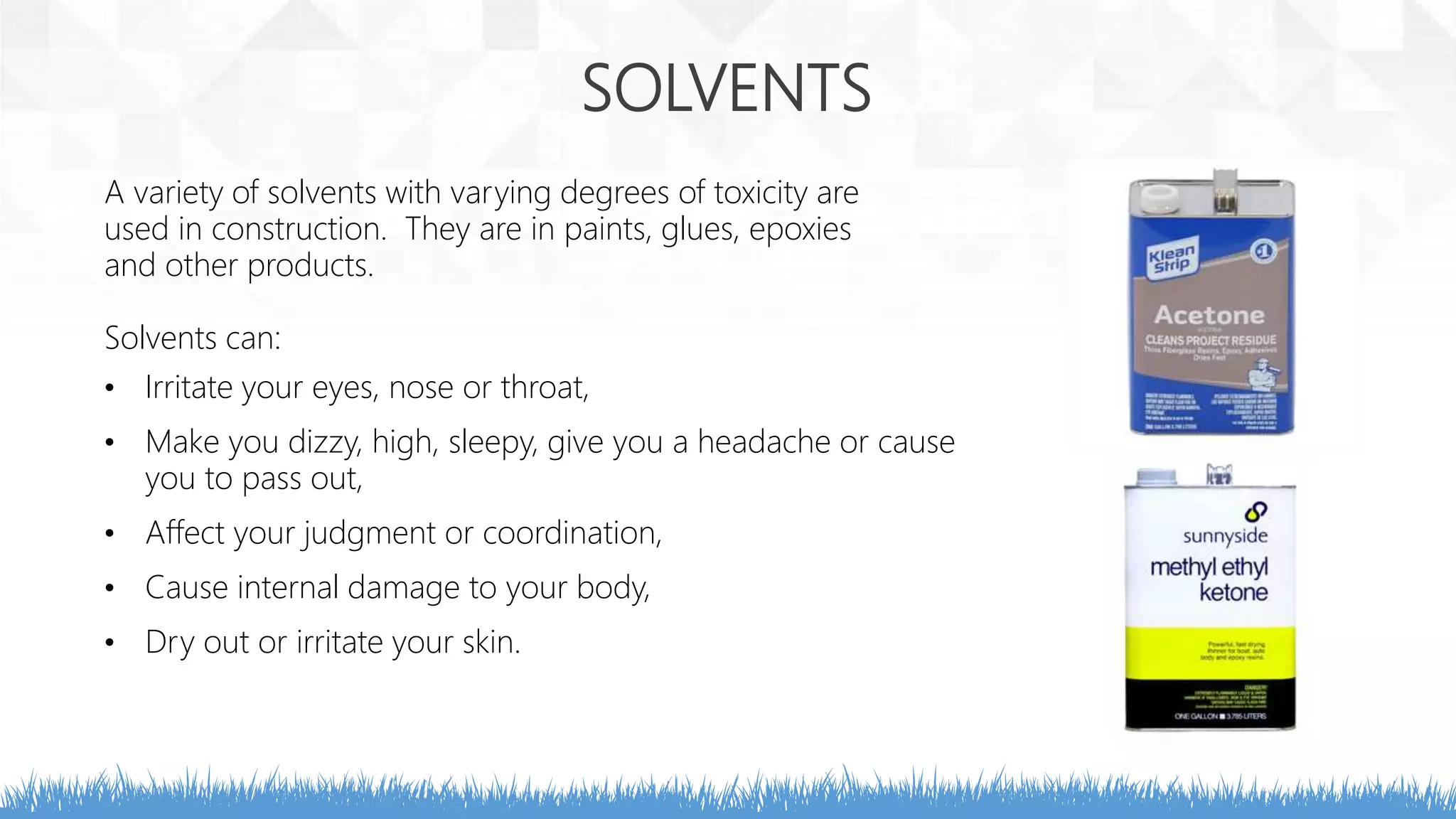
SOLVENTS
A variety of solvents with varying degrees of toxicity are
used in construction. They are in paints, glues, epoxies
and other products.
Solvents can:
• Irritate your eyes, nose or throat,
• Make you dizzy, high, sleepy, give you a headache or cause
you to pass out,
• Affect your judgment or coordination,
• Cause internal damage to your body,
• Dry out or irritate your skin.
SILICA
Silica or quartz dust exposure is very common in construction from drilling, cutting or
grinding on concrete, sandblasting, rock drilling or in masonry work. Exposure causes
lung scarring and lung disease over time.
Brick cutting Concrete cuttingBlowing concrete dust with
compressed air
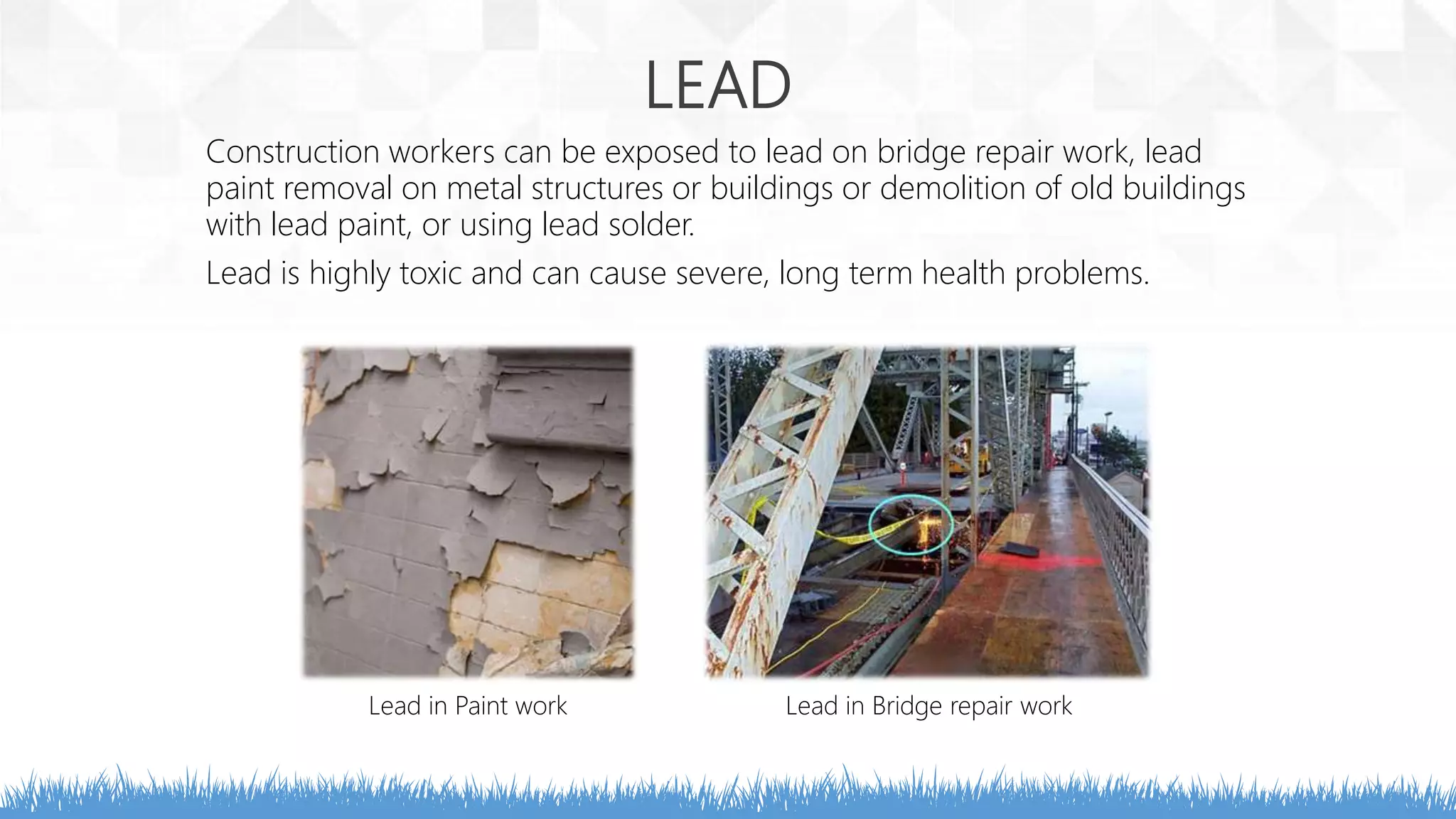
LEAD
Construction workers can be exposed to lead on bridge repair work, lead
paint removal on metal structures or buildings or demolition of old buildings
with lead paint, or using lead solder.
Lead is highly toxic and can cause severe, long term health problems.
Lead in Bridge repair workLead in Paint work
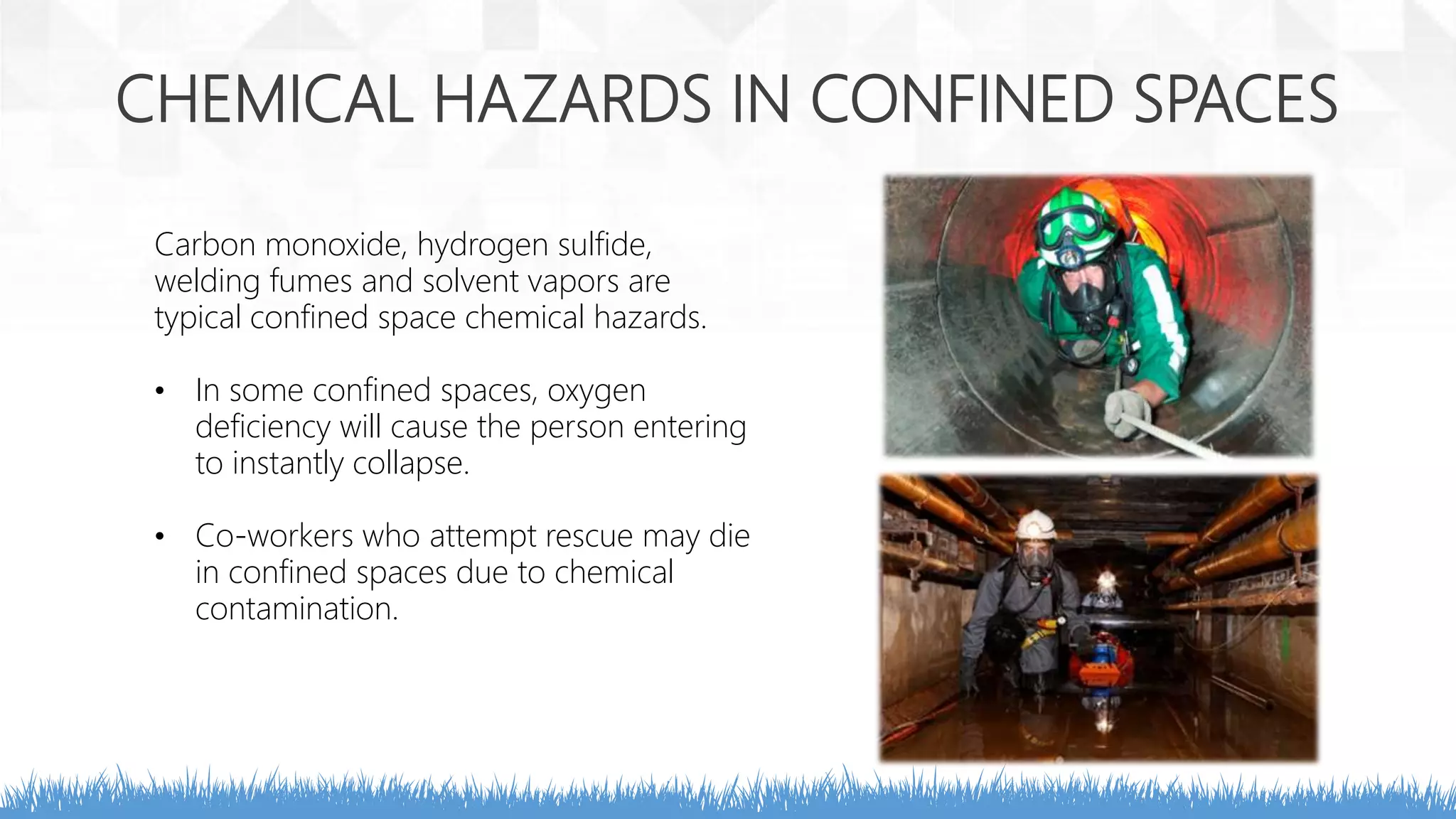
CHEMICAL HAZARDS IN CONFINED SPACES
Carbon monoxide, hydrogen sulfide,
welding fumes and solvent vapors are
typical confined space chemical hazards.
• In some confined spaces, oxygen
deficiency will cause the person entering
to instantly collapse.
• Co-workers who attempt rescue may die
in confined spaces due to chemical
contamination.
Chemicals that are extremely toxic to aquatic life;
affect public health; damage the ozone layer
Environmental Toxic
RELEVANT SYMBOLS
Chemicals that can ignite
• Self-reactive
• Pyrophoric self-heating
• Emits flammable gas
• Organic peroxides
Flammable
Damages metals & living tissues on contact
• Skin corrosion
• Serious damage to eyes
• Corrosive to metals
Corrosives
Chemicals that may cause cancer,
allergy, asthma & adversely
affect organs
Serious health hazard
Chemicals that can escape at
velocity of missile, causing
explosion, harming health
Gas under pressure
Chemicals that are harmful on exposure,
if swallowed, inhaled; cause skin
irritation & allergies
Harmful/Irritant
Chemicals that can support & intensify
combustion causing rapid fire on contact
Oxidizers
Chemicals that are fatal or toxic to
health
Acute toxicity
Chemicals that can detonate
• Explosives
• Self-reactive
• Organic Peroxide
Explosives
OSHA’s Guidelines
Chemical manufacturers and importers are required to evaluate the hazards of the chemicals they produce or import, and prepare
labels and safety data sheets to convey the hazard information to their downstream customers.
All employers with hazardous chemicals in their workplaces must have labels and safety data sheets for their exposed workers, and
train them to handle the chemicals appropriately. The training for employees must also include information on the hazards of the
chemicals in their work area and the measures to be used to protect themselves.
OSHA's Hazard Communication Standard (HCS)
Every employer who analyses a sample of any material to determine whether it contains asbestos shall ensure that he meets criteria
equivalent to those set out in the paragraphs of ISO 17025 which cover organisation, quality systems, control of records, personnel,
accommodation and environmental conditions, test and calibration methods, method validation, equipment, handling of test and
calibration items, and reporting results.
Control of Asbestos at Work Regulations
It states general requirements imposed on employers to protect employees and other persons from the hazards of substances used at
work by risk assessment, control of exposure, health surveillance and incident planning. There are also duties on employees' to take
care of their own exposure to hazardous substances and prohibitions on the import of certain substances into the European Economic
Area.
Control of Substances Hazardous to Health Regulations (COSHH)
OSHA sets enforceable permissible exposure limits (PELs) to protect workers against the health effects of exposure to hazardous
substances, including limits on the airborne concentrations of hazardous chemicals in the air. Most OSHA PELs are 8-hour time-
weighted averages (TWA), although there are also Ceiling and Peak limits, and many chemicals include a skin designation to warn
against skin contact.
OSHA Permissible Exposure Limits (PELs).
First Aid Treatment
Providing express first aid to the victim
is meant to mitigate the toxic
substance as fast as possible, while
seeking medical assistance,
maintaining breathing, blood
circulation and other vital signs.
To correctly provide first aid, one should:
1. Make sure that there is no other risk - for
you or the victim - due to administering first
aid.
2. If possible:
• Identify the poison.
• Identify the dosage or the intake of
such substance.
• Verify the duration (since how long has
the victim taken it).
• The Victim’s age and weight.
Contd..
3. Observe the symptoms (acute or mild).
4. If the victim vomits, keep the vomited
material (for test purposes by the concerned
authorities).
5. Call the Poison Control or hospital and get
the first aid advice.
6. Call the ambulance or medical assistance, or
carry the victim to the nearest hospital.
7. If the victim is unconscious: Check his breath
and provide C.P.R if needed.
Poisonous Contamination of Skin
First Aid in cases of Chemical Poisoning:
1. Check breath and provide C.P.R if
needed.
2. Give cold milk and egg white.
3. Give strong pain reliever.
4. Do not force victim to vomit.
5. No gastric lavage.
6. No acids, such as vinegar and lime juice
in case of acid poisoning.
7. Take victim immediately to hospital.
Inhalation Poisoning:
1. Take the victim immediately to clean air, while removing
any tight clothes and untying the necktie.
2. Provide rescue breaths in case of respiratory failure of
difficulty after removing anything inside the mouth as
follows:
a) Titling the head back to open the airway, while
closing the nose trills with two fingers, taking a
deep breath, blowing air into the victim’s lungs
through the mouth; then watching the victim’s chest
rise accordingly.
b) Allow the victim to exhale which watching his chest
fall.
c) Repeat same procedure till the victim breathes
normally.
3. Warm up victim if sign of cold or chill is found.
4. Calm down the victim if conscious.
5. Take patient immediately to hospital.
Eye Poisoning:
1. Open eyelids and wash with running
water (at low pressure) for at least 10
minutes.
2. No eye drops.
3. Take patient immediately to hospital.
REQUIREMENTS OF FOOD AND DRINKING WATER
• Portable containers
• Pure water
• Clearly marked glasses
• Common drinking cups to be avoided
• Single service cups
• Food in designated areas only
• Hygienic food
Any risk that comes from the biosphere – people, plants, and animals can be considered biological
hazards.
Some Examples of Biological Hazards are:
• Mold and Fungi
• Blood and Body Fluids
• Sewage
• Airborne pathogens
• Stinging insects
• Harmful plants
• Animal and Bird Droppings
Definition
Solid
Waste
Liquid
Waste
Sharp
Waste
Pathol
ogical
Waste
Microbio
logical
Waste
Any non-sharp
material that contacts
human or animal
specimens.
It is any medical
device that could be
infectious and is sharp
enough to puncture
the skin.
Liquid medical waste
is body fluids or blood
that may contain an
infectious agent.
Microbiological waste
contains infectious agents,
microorganisms, and
biologicals and is most
common in laboratories.
Pathological waste includes
any removed animal or
human organs, tissues, and
body parts.
BIOLOGICAL HAZARDS IN CONSTRUCTION
Exposure may occur during demolition, renovation, sewer work, work on air
handling systems, or other construction work from contact with
contaminated or disease-carrying sources. i.e.
• Soil
• Water
• Insects (mosquitoes, ticks)
• Bird or bat droppings
• Animals
• Structures
Pigeon droppings in abandoned
building
RADIATION
• Alpha particles
• Beta particles
• Gamma rays
• X-Rays
Symbol for
Radiation
BLOODBORNE PATHOGENS
• Hepatitis B Virus (HBV)
• Hepatitis C Virus (HCV)
• Human Immunodeficiency Virus
(HIV)
Symbol for
Bloodborne Pathogen
ULTRAVIOLET RADIATION (UV)
Bad Work Practice – not wearing a
shirt will result in skin damage.
Bad Work Practice – welder
unprotected from ultraviolet radiation.
Drugs and Alcohol
• Any persons caught in possession of or
under the influence of drugs or alcohol will
be removed from site
• If you are on drugs for any medical reason,
please inform your supervisor at once
Vibration
• Hand Arm Vibration Syndrome (HAVS) and
Vibration White Finger (VWF) are very
debilitating
• You need to protect yourself from excessive
usage of vibrating tools such as breakers
and drills etc
POISONOUS PLANTS
Poison Ivy Poison Oak
Poison Sumac
POISONOUS & INFECTIOUS ANIMALS
Rodents
Dogs (Rabies)
Snakes
PREVENTION METHODS
Gloves
Shoe Covers
Sterilization
Surgical masks
N95 or higher level respirators
Powered Air Purifying Respirator
Air-supplying respirators
Personal hygiene
Goggles/Face shields
Protective clothing
CONTROL
MEASURES Engineering controls such as
improvement of ventilation, partial
isolation of the contamination source,
installation of negative pressure and
separate ventilation and air
conditioning system and the use of
ultraviolet lamps can help contain the
spread of contaminants.
Elimination of the source of contamination
is fundamental to the prevention and
control of biological hazards. Washing
hands with liquid soap is the simplest and
most basic method to avoid infection.
However, it is often neglected.
OSHA’s Guidelines
Development of an Exposure Control Plan. A written program (by the employer) that outlines
the protective measures an employer will take to minimize employee exposure to blood and
other biohazardous waste.
Personal protective equipment (PPE). Those exposed to blood or biological fluids should wear
PPE such as gloves, booties, full-body suits, and respirators.
Training for employees. All employees with occupational exposure to biohazardous waste
should receive initial and annual training.
Communication of biohazardous materials to employees. A biohazard warning label must be
included on every bag or container of medical waste.
Mandatory Hepatitis B vaccinations. The employer is responsible for the cost of Hepatitis B
vaccinations for employees exposed to biohazardous waste.
OSHA's
Blood borne
Pathogens
Standard
By Phil Hughes
Ed Ferrett
Introduction To Health & Safety At Work
- 3rd Edition
Safety & Health Topics – OSHA biohazardous waste
standards
Occupational Safety & Health Organization
Safety & Health Topics – Chemical Hazards & Toxic
Substances
Occupational Safety & Health Organization
3
2
1
THANKS FOR YOUR
VALUABLE TIME
YOU MAY ASK QUESTIONS NOW!

CHEMICAL & BIOLOGICAL HAZARDS IN CONSTRUCTION

  • 1.
    Atiqa Khan 2019-MS-CM-15 Abdul QadirJilani 2018-MS-CM-30 Shi Wenchao 2018-MS-CM-22 Our Team
  • 4.
    A chemical hazardis a type of occupational hazard caused by exposure to chemicals in the workplace.  Acute or Chronic diseases if exposed for a longer period of time or if proper precautionary measures are not taken.  Long-term exposure to chemicals have been shown to increase risk of diseases such as: • Heart disease • Stroke • High blood pressure Definition Including Benzene(Industrial waste & smoking), Formaldehyde(Fertilizer, glues & paper) Liquids & Solvents Including gases such as Chlorine, SO2, NO, Ammonia Vapors & Fumes Including a flash point at or above 100ºF such as solvents, thinners, cleaners, adhesives, paints, waxes and polishes Flammable Materials Types
  • 5.
    Chemical Hazards Chemicals canexist in the form of: • Dusts, fumes, fibers (solids) • Liquids, mists • Gases, vapors Chemicals are found in variety of products used at construction sites. Workers may also be exposed to chemicals generated during construction activities. • Asbestos • Lead • Silica • Cadmium • Carbon monoxide • Welding fumes • Spray paints • Cutting oil mists • Solvents Examples of chemical hazards found in construction work:
  • 6.
    Routes to Exposure Ingestion Chemicalsmay be swallowed accidentally if food, hands, or cigarettes are contaminated. Injection It can occur when a sharp object (e.g., needle) punctures the skin and injects a chemical (or virus) directly into the bloodstream. Inhalation from fumes Breathing of contaminated air is the most common way that chemicals enter the body. Absorption Some chemicals, when contacted, can pass through the skin into the blood stream. The eyes may also be a route of entry.
  • 7.
    ASBESTOS Asbestos pipe insulation Constructionworkers may be exposed to asbestos during demolition or remodeling of older buildings. Asbestos removal can only be done by specially trained asbestos workers. Asbestos exposure can cause breathing problems, lung cancer and cancer of the lung lining many years after exposure.
  • 8.
    WELDING FUMES Welding fumescontain a variety of chemicals depending on what is being welded on, chemical makeup of welding rods, fluxes and shielding gases. Generally, welding in confined spaces or welding on stainless steel which generates hexavalent chromium, are the most hazardous welding activities. Welding on a stainless steel tank Welding in a confined space
  • 9.
    SOLVENTS A variety ofsolvents with varying degrees of toxicity are used in construction. They are in paints, glues, epoxies and other products. Solvents can: • Irritate your eyes, nose or throat, • Make you dizzy, high, sleepy, give you a headache or cause you to pass out, • Affect your judgment or coordination, • Cause internal damage to your body, • Dry out or irritate your skin.
  • 10.
    SILICA Silica or quartzdust exposure is very common in construction from drilling, cutting or grinding on concrete, sandblasting, rock drilling or in masonry work. Exposure causes lung scarring and lung disease over time. Brick cutting Concrete cuttingBlowing concrete dust with compressed air
  • 11.
    LEAD Construction workers canbe exposed to lead on bridge repair work, lead paint removal on metal structures or buildings or demolition of old buildings with lead paint, or using lead solder. Lead is highly toxic and can cause severe, long term health problems. Lead in Bridge repair workLead in Paint work
  • 12.
    CHEMICAL HAZARDS INCONFINED SPACES Carbon monoxide, hydrogen sulfide, welding fumes and solvent vapors are typical confined space chemical hazards. • In some confined spaces, oxygen deficiency will cause the person entering to instantly collapse. • Co-workers who attempt rescue may die in confined spaces due to chemical contamination.
  • 13.
    Chemicals that areextremely toxic to aquatic life; affect public health; damage the ozone layer Environmental Toxic RELEVANT SYMBOLS Chemicals that can ignite • Self-reactive • Pyrophoric self-heating • Emits flammable gas • Organic peroxides Flammable Damages metals & living tissues on contact • Skin corrosion • Serious damage to eyes • Corrosive to metals Corrosives Chemicals that may cause cancer, allergy, asthma & adversely affect organs Serious health hazard Chemicals that can escape at velocity of missile, causing explosion, harming health Gas under pressure Chemicals that are harmful on exposure, if swallowed, inhaled; cause skin irritation & allergies Harmful/Irritant Chemicals that can support & intensify combustion causing rapid fire on contact Oxidizers Chemicals that are fatal or toxic to health Acute toxicity Chemicals that can detonate • Explosives • Self-reactive • Organic Peroxide Explosives
  • 14.
    OSHA’s Guidelines Chemical manufacturersand importers are required to evaluate the hazards of the chemicals they produce or import, and prepare labels and safety data sheets to convey the hazard information to their downstream customers. All employers with hazardous chemicals in their workplaces must have labels and safety data sheets for their exposed workers, and train them to handle the chemicals appropriately. The training for employees must also include information on the hazards of the chemicals in their work area and the measures to be used to protect themselves. OSHA's Hazard Communication Standard (HCS) Every employer who analyses a sample of any material to determine whether it contains asbestos shall ensure that he meets criteria equivalent to those set out in the paragraphs of ISO 17025 which cover organisation, quality systems, control of records, personnel, accommodation and environmental conditions, test and calibration methods, method validation, equipment, handling of test and calibration items, and reporting results. Control of Asbestos at Work Regulations It states general requirements imposed on employers to protect employees and other persons from the hazards of substances used at work by risk assessment, control of exposure, health surveillance and incident planning. There are also duties on employees' to take care of their own exposure to hazardous substances and prohibitions on the import of certain substances into the European Economic Area. Control of Substances Hazardous to Health Regulations (COSHH) OSHA sets enforceable permissible exposure limits (PELs) to protect workers against the health effects of exposure to hazardous substances, including limits on the airborne concentrations of hazardous chemicals in the air. Most OSHA PELs are 8-hour time- weighted averages (TWA), although there are also Ceiling and Peak limits, and many chemicals include a skin designation to warn against skin contact. OSHA Permissible Exposure Limits (PELs).
  • 16.
    First Aid Treatment Providingexpress first aid to the victim is meant to mitigate the toxic substance as fast as possible, while seeking medical assistance, maintaining breathing, blood circulation and other vital signs.
  • 17.
    To correctly providefirst aid, one should: 1. Make sure that there is no other risk - for you or the victim - due to administering first aid. 2. If possible: • Identify the poison. • Identify the dosage or the intake of such substance. • Verify the duration (since how long has the victim taken it). • The Victim’s age and weight.
  • 18.
    Contd.. 3. Observe thesymptoms (acute or mild). 4. If the victim vomits, keep the vomited material (for test purposes by the concerned authorities). 5. Call the Poison Control or hospital and get the first aid advice. 6. Call the ambulance or medical assistance, or carry the victim to the nearest hospital. 7. If the victim is unconscious: Check his breath and provide C.P.R if needed.
  • 19.
    Poisonous Contamination ofSkin First Aid in cases of Chemical Poisoning: 1. Check breath and provide C.P.R if needed. 2. Give cold milk and egg white. 3. Give strong pain reliever. 4. Do not force victim to vomit. 5. No gastric lavage. 6. No acids, such as vinegar and lime juice in case of acid poisoning. 7. Take victim immediately to hospital.
  • 20.
    Inhalation Poisoning: 1. Takethe victim immediately to clean air, while removing any tight clothes and untying the necktie. 2. Provide rescue breaths in case of respiratory failure of difficulty after removing anything inside the mouth as follows: a) Titling the head back to open the airway, while closing the nose trills with two fingers, taking a deep breath, blowing air into the victim’s lungs through the mouth; then watching the victim’s chest rise accordingly. b) Allow the victim to exhale which watching his chest fall. c) Repeat same procedure till the victim breathes normally. 3. Warm up victim if sign of cold or chill is found. 4. Calm down the victim if conscious. 5. Take patient immediately to hospital.
  • 21.
    Eye Poisoning: 1. Openeyelids and wash with running water (at low pressure) for at least 10 minutes. 2. No eye drops. 3. Take patient immediately to hospital.
  • 22.
    REQUIREMENTS OF FOODAND DRINKING WATER • Portable containers • Pure water • Clearly marked glasses • Common drinking cups to be avoided • Single service cups • Food in designated areas only • Hygienic food
  • 24.
    Any risk thatcomes from the biosphere – people, plants, and animals can be considered biological hazards. Some Examples of Biological Hazards are: • Mold and Fungi • Blood and Body Fluids • Sewage • Airborne pathogens • Stinging insects • Harmful plants • Animal and Bird Droppings Definition Solid Waste Liquid Waste Sharp Waste Pathol ogical Waste Microbio logical Waste Any non-sharp material that contacts human or animal specimens. It is any medical device that could be infectious and is sharp enough to puncture the skin. Liquid medical waste is body fluids or blood that may contain an infectious agent. Microbiological waste contains infectious agents, microorganisms, and biologicals and is most common in laboratories. Pathological waste includes any removed animal or human organs, tissues, and body parts.
  • 25.
    BIOLOGICAL HAZARDS INCONSTRUCTION Exposure may occur during demolition, renovation, sewer work, work on air handling systems, or other construction work from contact with contaminated or disease-carrying sources. i.e. • Soil • Water • Insects (mosquitoes, ticks) • Bird or bat droppings • Animals • Structures Pigeon droppings in abandoned building
  • 26.
    RADIATION • Alpha particles •Beta particles • Gamma rays • X-Rays Symbol for Radiation
  • 27.
    BLOODBORNE PATHOGENS • HepatitisB Virus (HBV) • Hepatitis C Virus (HCV) • Human Immunodeficiency Virus (HIV) Symbol for Bloodborne Pathogen
  • 28.
    ULTRAVIOLET RADIATION (UV) BadWork Practice – not wearing a shirt will result in skin damage. Bad Work Practice – welder unprotected from ultraviolet radiation.
  • 29.
    Drugs and Alcohol •Any persons caught in possession of or under the influence of drugs or alcohol will be removed from site • If you are on drugs for any medical reason, please inform your supervisor at once
  • 30.
    Vibration • Hand ArmVibration Syndrome (HAVS) and Vibration White Finger (VWF) are very debilitating • You need to protect yourself from excessive usage of vibrating tools such as breakers and drills etc
  • 31.
    POISONOUS PLANTS Poison IvyPoison Oak Poison Sumac
  • 32.
    POISONOUS & INFECTIOUSANIMALS Rodents Dogs (Rabies) Snakes
  • 33.
    PREVENTION METHODS Gloves Shoe Covers Sterilization Surgicalmasks N95 or higher level respirators Powered Air Purifying Respirator Air-supplying respirators Personal hygiene Goggles/Face shields Protective clothing CONTROL MEASURES Engineering controls such as improvement of ventilation, partial isolation of the contamination source, installation of negative pressure and separate ventilation and air conditioning system and the use of ultraviolet lamps can help contain the spread of contaminants. Elimination of the source of contamination is fundamental to the prevention and control of biological hazards. Washing hands with liquid soap is the simplest and most basic method to avoid infection. However, it is often neglected.
  • 34.
    OSHA’s Guidelines Development ofan Exposure Control Plan. A written program (by the employer) that outlines the protective measures an employer will take to minimize employee exposure to blood and other biohazardous waste. Personal protective equipment (PPE). Those exposed to blood or biological fluids should wear PPE such as gloves, booties, full-body suits, and respirators. Training for employees. All employees with occupational exposure to biohazardous waste should receive initial and annual training. Communication of biohazardous materials to employees. A biohazard warning label must be included on every bag or container of medical waste. Mandatory Hepatitis B vaccinations. The employer is responsible for the cost of Hepatitis B vaccinations for employees exposed to biohazardous waste. OSHA's Blood borne Pathogens Standard
  • 35.
    By Phil Hughes EdFerrett Introduction To Health & Safety At Work - 3rd Edition Safety & Health Topics – OSHA biohazardous waste standards Occupational Safety & Health Organization Safety & Health Topics – Chemical Hazards & Toxic Substances Occupational Safety & Health Organization 3 2 1
  • 36.
    THANKS FOR YOUR VALUABLETIME YOU MAY ASK QUESTIONS NOW!