Final Report: Group 3
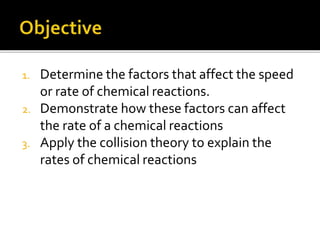
1. Determine the factors that affect the speed 
or rate of chemical reactions. 
2. Demonstrate how these factors can affect 
the rate of a chemical reactions 
3. Apply the collision theory to explain the 
rates of chemical reactions
RANK METAL OBSERVVATION CHEMICAL 
EQUATION 
5 Cu Nothing 
Happened 
Cu + 2HCl -> 
CuCl2 + H2 
2 Fe Forms into 
green 
viscous 
2Fe + 6HCl -> 
2FeCl3 + 3H2 
4 Zn It keeps 
reacting 
Zn + 2HCl -> 
ZnCl2 + H2 
3 Al It keeps 
reacting 
2Al + 2HCl -> 
2AlCl + H2 
1 Mg Completely 
disolve 
Mg + 2HCl -> 
MgCl2 + H2 
 Explain how the nature of 
reactants affects the rate of the 
reaction in terms of the activity 
series of metals and hydrogen. 
-The elements have their different solubility
RANK METAL OBSERVATION 
2 Powder 
Zinc 
It dissolves 
slower and 
more heat 
1 Mossy 
Zinc 
It dissolves 
faster and 
least heat 
SAMPLE mL Starch-sulfite 
mL KIO3 mL H2O TIME(SEC) 
Standard 
run 
1 1 8 14sec 
1 1 2 7 17sec 
2 1 3 6 18sec 
3 1 4 5 13.5sec 
4 4 1 5 3.5sec 
5 3 1 6 2sec 
6 2 1 7 12sec 
BALANCED EQUATION 
Zn + 2HCl -> ZnCl2 + H2 
BALANCED EQUATION 
Mg + 2HCl -> MgCl2 + H2
 Based on the above 
observation, explain the effect 
of changing the concentration 
on reaction rates. 
- the higher the concentration of 
reactants, the faster the 
reaction will proceed. This is 
simply because there are more 
molecules to react, so the 
likelihood of them colliding is 
increased. 
 What is collision theory? Briefly 
explain the observation using 
this theory. 
-it explains that gas-phase chemical 
reactions occur when molecules 
collide with sufficient kinetic 
energy.
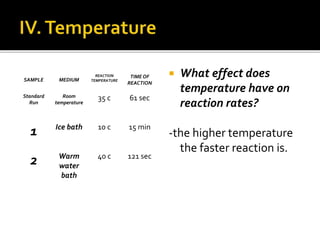
SAMPLE MEDIUM 
REACTION 
TEMPERATURE 
TIME OF 
REACTION 
Standard 
Run 
Room 
temperature 
35 c 61 sec 
1 Ice bath 10 c 15 min 
2 Warm 
water 
bath 
40 c 121 sec 
 What effect does 
temperature have on 
reaction rates? 
-the higher temperature 
the faster reaction is.
SAMPLE OBSERVATION 
RELATIVE 
RATE OF 
REACTION 
Without 
CuSO4 
The zinc 
turns into 
bubble but 
not 
dissolving 
With CuSO4 The zinc 
turns silver 
into 
brownish 
 What gas is formed in the above 
reaction? What effect did CuSO4 
have on the reaction between 
zinc and sulfuric acid? 
- If bubbles are produced faster 
from zinc and dilute sulfuric acid 
in the presence of copper metal, 
then it must be the copper metal 
that makes the difference and 
acting as a catalyst. 
BALANCED EQUATION 
Zn + H2SO4 -> ZnSO4 + H2
SAMPLE OBSERVATION 
RELATIVE 
RATE OF 
REACTION 
Without 
amylase 
White 
viscous 
With 
amylase 
White 
viscous w/ 
bubbles 
 Which of the reactants used is 
responsible for the observed 
color? What is the role of 
amylase in the reaction? 
- the amylase acts a catalyst and 
breaks the starch down to the 
sugar maltose at a certain 
temperature.
 What is a catalyst? Based on your above 
observations, what can you conclude about the 
effect of adding a catalyst on chemical reactions? 
- to initiate or accelerate the rate of a chemical 
reaction.
 Other than those illustrated in the experiment, give two reactions that 
occur very slowly (those that take longer time, for instance takes 
several days for the reaction to occur). Give also two examples that 
occur rapidly. 
- In the experiment that we perform, the slowest reaction between the two 
or more compound is that the powder zinc in the 6M HCl, while the 
rapidly react on the compound is that the magnesium in the HCl solution.
 List down the factors that influence reaction rates and for each factor, 
cite a practical example and tell whether the reaction is desirable or 
not. If it is undesirable, suggest means of preventing the reaction to 
happen. 
-Concentration effects which two substances cannot possibly react with 
each other, Temperature effects which increasing the temperature of a 
system increases the average kinetic energy of its constituent particles, 
Surface Area effects when two reactants are in the same fluid phase, 
their particles collide more frequently than when one or both reactants 
are solids, Solvent effects which can also affect the reaction rates of 
solute particles like sodium acetate solution reacts with methyl iodide, 
and Catalyst effects often determine the product of a reaction by 
accelerating only one of several possible reactions that could occur.
 Distinguish between homogeneous catalysis, heterogenous catalysis 
and enzyme catalysis. Provide an example for each, show chemical 
equations when possible. 
- In a heterogenous reaction, the catalyst is in a different phase from the 
reactants. While in a homogeneous reaction, the catalyst is in the same 
phase as the reactants.

CHM023L - B06 Final Report Group 3 Experiment 2 (Chemical Kinetics: Factors Affecting Reaction Rates)

  • 1.
  • 2.
    1. Determine thefactors that affect the speed or rate of chemical reactions. 2. Demonstrate how these factors can affect the rate of a chemical reactions 3. Apply the collision theory to explain the rates of chemical reactions
  • 3.
    RANK METAL OBSERVVATIONCHEMICAL EQUATION 5 Cu Nothing Happened Cu + 2HCl -> CuCl2 + H2 2 Fe Forms into green viscous 2Fe + 6HCl -> 2FeCl3 + 3H2 4 Zn It keeps reacting Zn + 2HCl -> ZnCl2 + H2 3 Al It keeps reacting 2Al + 2HCl -> 2AlCl + H2 1 Mg Completely disolve Mg + 2HCl -> MgCl2 + H2  Explain how the nature of reactants affects the rate of the reaction in terms of the activity series of metals and hydrogen. -The elements have their different solubility
  • 4.
    RANK METAL OBSERVATION 2 Powder Zinc It dissolves slower and more heat 1 Mossy Zinc It dissolves faster and least heat SAMPLE mL Starch-sulfite mL KIO3 mL H2O TIME(SEC) Standard run 1 1 8 14sec 1 1 2 7 17sec 2 1 3 6 18sec 3 1 4 5 13.5sec 4 4 1 5 3.5sec 5 3 1 6 2sec 6 2 1 7 12sec BALANCED EQUATION Zn + 2HCl -> ZnCl2 + H2 BALANCED EQUATION Mg + 2HCl -> MgCl2 + H2
  • 5.
     Based onthe above observation, explain the effect of changing the concentration on reaction rates. - the higher the concentration of reactants, the faster the reaction will proceed. This is simply because there are more molecules to react, so the likelihood of them colliding is increased.  What is collision theory? Briefly explain the observation using this theory. -it explains that gas-phase chemical reactions occur when molecules collide with sufficient kinetic energy.
  • 6.
    SAMPLE MEDIUM REACTION TEMPERATURE TIME OF REACTION Standard Run Room temperature 35 c 61 sec 1 Ice bath 10 c 15 min 2 Warm water bath 40 c 121 sec  What effect does temperature have on reaction rates? -the higher temperature the faster reaction is.
  • 7.
    SAMPLE OBSERVATION RELATIVE RATE OF REACTION Without CuSO4 The zinc turns into bubble but not dissolving With CuSO4 The zinc turns silver into brownish  What gas is formed in the above reaction? What effect did CuSO4 have on the reaction between zinc and sulfuric acid? - If bubbles are produced faster from zinc and dilute sulfuric acid in the presence of copper metal, then it must be the copper metal that makes the difference and acting as a catalyst. BALANCED EQUATION Zn + H2SO4 -> ZnSO4 + H2
  • 8.
    SAMPLE OBSERVATION RELATIVE RATE OF REACTION Without amylase White viscous With amylase White viscous w/ bubbles  Which of the reactants used is responsible for the observed color? What is the role of amylase in the reaction? - the amylase acts a catalyst and breaks the starch down to the sugar maltose at a certain temperature.
  • 9.
     What isa catalyst? Based on your above observations, what can you conclude about the effect of adding a catalyst on chemical reactions? - to initiate or accelerate the rate of a chemical reaction.
  • 10.
     Other thanthose illustrated in the experiment, give two reactions that occur very slowly (those that take longer time, for instance takes several days for the reaction to occur). Give also two examples that occur rapidly. - In the experiment that we perform, the slowest reaction between the two or more compound is that the powder zinc in the 6M HCl, while the rapidly react on the compound is that the magnesium in the HCl solution.
  • 11.
     List downthe factors that influence reaction rates and for each factor, cite a practical example and tell whether the reaction is desirable or not. If it is undesirable, suggest means of preventing the reaction to happen. -Concentration effects which two substances cannot possibly react with each other, Temperature effects which increasing the temperature of a system increases the average kinetic energy of its constituent particles, Surface Area effects when two reactants are in the same fluid phase, their particles collide more frequently than when one or both reactants are solids, Solvent effects which can also affect the reaction rates of solute particles like sodium acetate solution reacts with methyl iodide, and Catalyst effects often determine the product of a reaction by accelerating only one of several possible reactions that could occur.
  • 12.
     Distinguish betweenhomogeneous catalysis, heterogenous catalysis and enzyme catalysis. Provide an example for each, show chemical equations when possible. - In a heterogenous reaction, the catalyst is in a different phase from the reactants. While in a homogeneous reaction, the catalyst is in the same phase as the reactants.