Checking Out Me History
Dem tell me
Dem tell me
Wha dem want to tell me
Bandage up me eye with me won history
Blind me to me own identity
Dem tell me about 1066 and all dat
dem tell me bout Dick Whittington and he cat
but Toussaint L’Ouverture
no dem never tell me bout dat
Toussaint
a slave
with vision
lick back
Napoleon
battalion
and first Black
Republic born
Toussaint de thorn
to de French
Toussaint de beacon
of de Haitian Revolution
Dem tell me bout de man who discover de balloon
and de cow who jump over de moon
Dem tell me bout de dish ran away with de spoon
but dem never tell me bout Nanny de maroon
Nanny
see-far woman
of mountain dream
fire-woman struggle
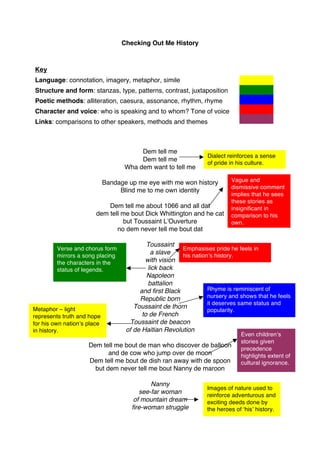
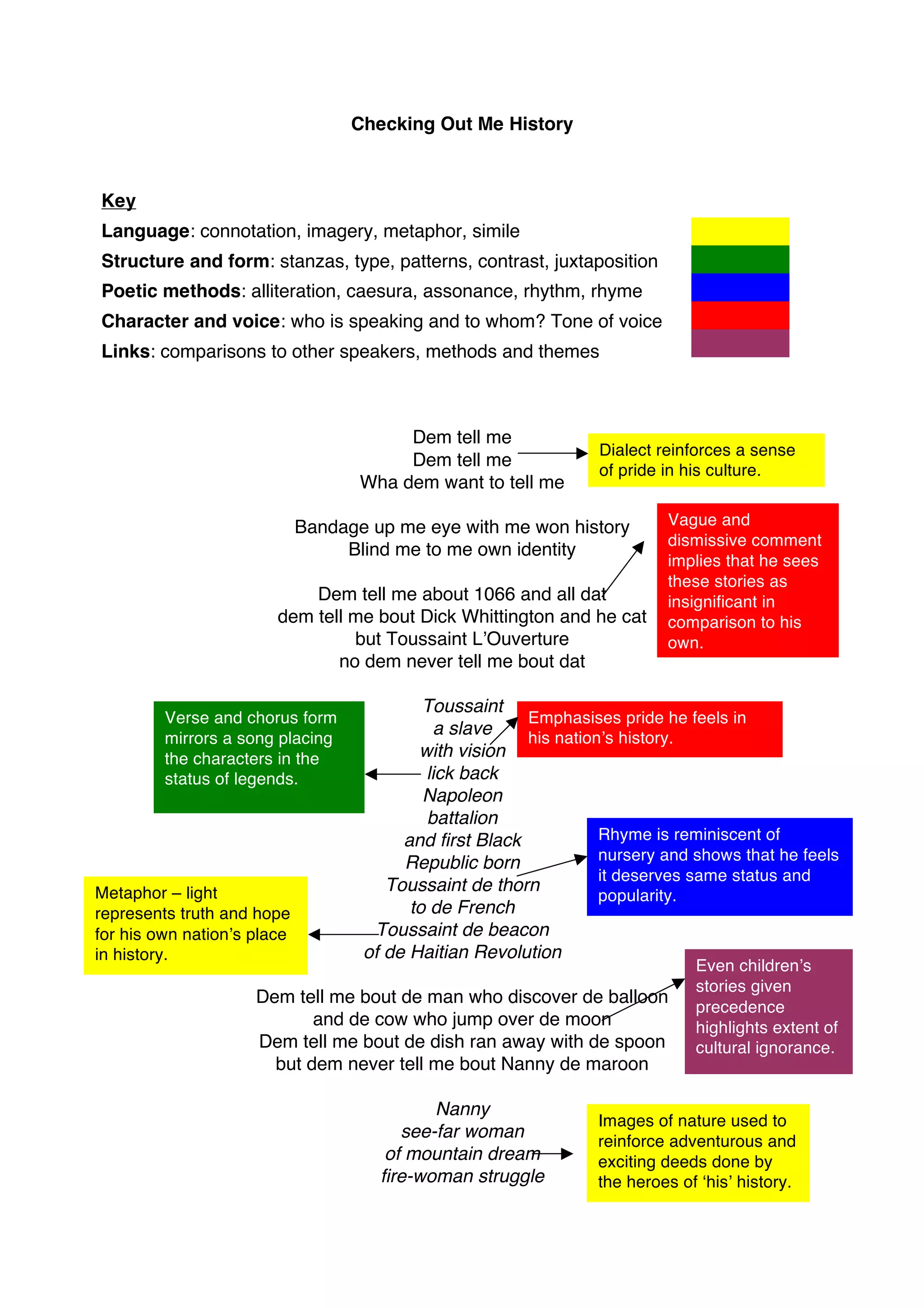
Dialect reinforces a sense
of pride in his culture.
Vague and
dismissive comment
implies that he sees
these stories as
insignificant in
comparison to his
own.
Emphasises pride he feels in
his nation’s history.
Verse and chorus form
mirrors a song placing
the characters in the
status of legends.
Rhyme is reminiscent of
nursery and shows that he feels
it deserves same status and
popularity.Metaphor – light
represents truth and hope
for his own nation’s place
in history.
Even children’s
stories given
precedence
highlights extent of
cultural ignorance.
Images of nature used to
reinforce adventurous and
exciting deeds done by
the heroes of ‘his’ history.
Key
Language: connotation, imagery, metaphor, simile
Structure and form: stanzas, type, patterns, contrast, juxtaposition
Poetic methods: alliteration, caesura, assonance, rhythm, rhyme
Character and voice: who is speaking and to whom? Tone of voice
Links: comparisons to other speakers, methods and themes
hopeful stream
to freedom river
Dem tell me bout Lord Nelson and Waterloo
but dem never tell bout Shaka de great Zulu
Dem tell me bout Columbus and 1492
but what happens to de Caribs and De Arawaks too
Dem tell me bout Florence Nightingale and she lamp
and how Robin Hood used to camp
Dem tell me bout old King Cole was a merry ole soul
but dem never tell me bout Mary Seacole
From Jamaica
she travels far
to the Crimean War
she volunteer to go
and even when de British said no
she still brave the Russian snow
a healing star
among the wounded
a yellow sunrise
to the dying
Dem tell me
Dem tell me wha dem want to tell me
But now I checking out me own history
I carving out me identity
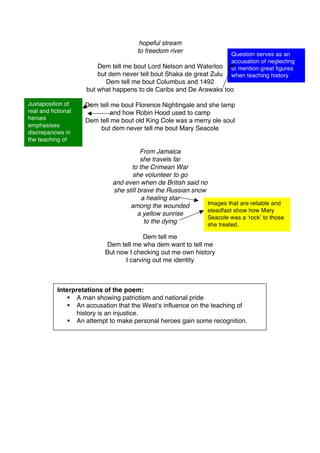
Question serves as an
accusation of neglecting
to mention great figures
when teaching history
Juxtaposition of
real and fictional
heroes
emphasises
discrepancies in
the teaching of
history.
Images that are reliable and
steadfast show how Mary
Seacole was a ‘rock’ to those
she treated.
Interpretations of the poem:
 A man showing patriotism and national pride
 An accusation that the West’s influence on the teaching of
history is an injustice.
 An attempt to make personal heroes gain some recognition.

Checking out me history

  • 1.
    Checking Out MeHistory Dem tell me Dem tell me Wha dem want to tell me Bandage up me eye with me won history Blind me to me own identity Dem tell me about 1066 and all dat dem tell me bout Dick Whittington and he cat but Toussaint L’Ouverture no dem never tell me bout dat Toussaint a slave with vision lick back Napoleon battalion and first Black Republic born Toussaint de thorn to de French Toussaint de beacon of de Haitian Revolution Dem tell me bout de man who discover de balloon and de cow who jump over de moon Dem tell me bout de dish ran away with de spoon but dem never tell me bout Nanny de maroon Nanny see-far woman of mountain dream fire-woman struggle Dialect reinforces a sense of pride in his culture. Vague and dismissive comment implies that he sees these stories as insignificant in comparison to his own. Emphasises pride he feels in his nation’s history. Verse and chorus form mirrors a song placing the characters in the status of legends. Rhyme is reminiscent of nursery and shows that he feels it deserves same status and popularity.Metaphor – light represents truth and hope for his own nation’s place in history. Even children’s stories given precedence highlights extent of cultural ignorance. Images of nature used to reinforce adventurous and exciting deeds done by the heroes of ‘his’ history. Key Language: connotation, imagery, metaphor, simile Structure and form: stanzas, type, patterns, contrast, juxtaposition Poetic methods: alliteration, caesura, assonance, rhythm, rhyme Character and voice: who is speaking and to whom? Tone of voice Links: comparisons to other speakers, methods and themes
  • 2.
    hopeful stream to freedomriver Dem tell me bout Lord Nelson and Waterloo but dem never tell bout Shaka de great Zulu Dem tell me bout Columbus and 1492 but what happens to de Caribs and De Arawaks too Dem tell me bout Florence Nightingale and she lamp and how Robin Hood used to camp Dem tell me bout old King Cole was a merry ole soul but dem never tell me bout Mary Seacole From Jamaica she travels far to the Crimean War she volunteer to go and even when de British said no she still brave the Russian snow a healing star among the wounded a yellow sunrise to the dying Dem tell me Dem tell me wha dem want to tell me But now I checking out me own history I carving out me identity Question serves as an accusation of neglecting to mention great figures when teaching history Juxtaposition of real and fictional heroes emphasises discrepancies in the teaching of history. Images that are reliable and steadfast show how Mary Seacole was a ‘rock’ to those she treated. Interpretations of the poem:  A man showing patriotism and national pride  An accusation that the West’s influence on the teaching of history is an injustice.  An attempt to make personal heroes gain some recognition.