TONGUE TWISTER MONDAY
Who is the character?
What do you know about him?
What is his motto in life?
How did you come to know these things about him?
From her appearance, who do
you think this woman is?
what does she do?
CHARACTERIZATION &
STEAL METHOD
28/11/2016
What is characterization?
Characterization is the way writers create and
describe a character for the reader.
There are two types of characterization:
1. Direct characterization
2. Indirect characterization
Direct characterization
If a writer tells you that a character is mean-tempered or
friendly, that is direct characterization.
For Example:
When Amaya brought home a pet rabbit,
her mother did not object. She knew
Amaya was a caring, responsible girl who
would take excellent care of the animal.
Direct characterization gives you exact information.
Characterization: Direct Characterization
Practice
What words give you direct information about Dr. Chang’s
character?
Dr. Chang was the best dentist in the practice.
He had a charming smile, a gentle manner, and a
warm personality. He made a trip to the dentist a
pleasant experience—despite the discomfort.
THE STEAL METHOD
• When you meet somebody for the first time what
are the things you notice about them first?
• When you are reading a book what are the clues
that you look for to understand the characters?
• What do you think STEAL stands for?
Indirect Characterization
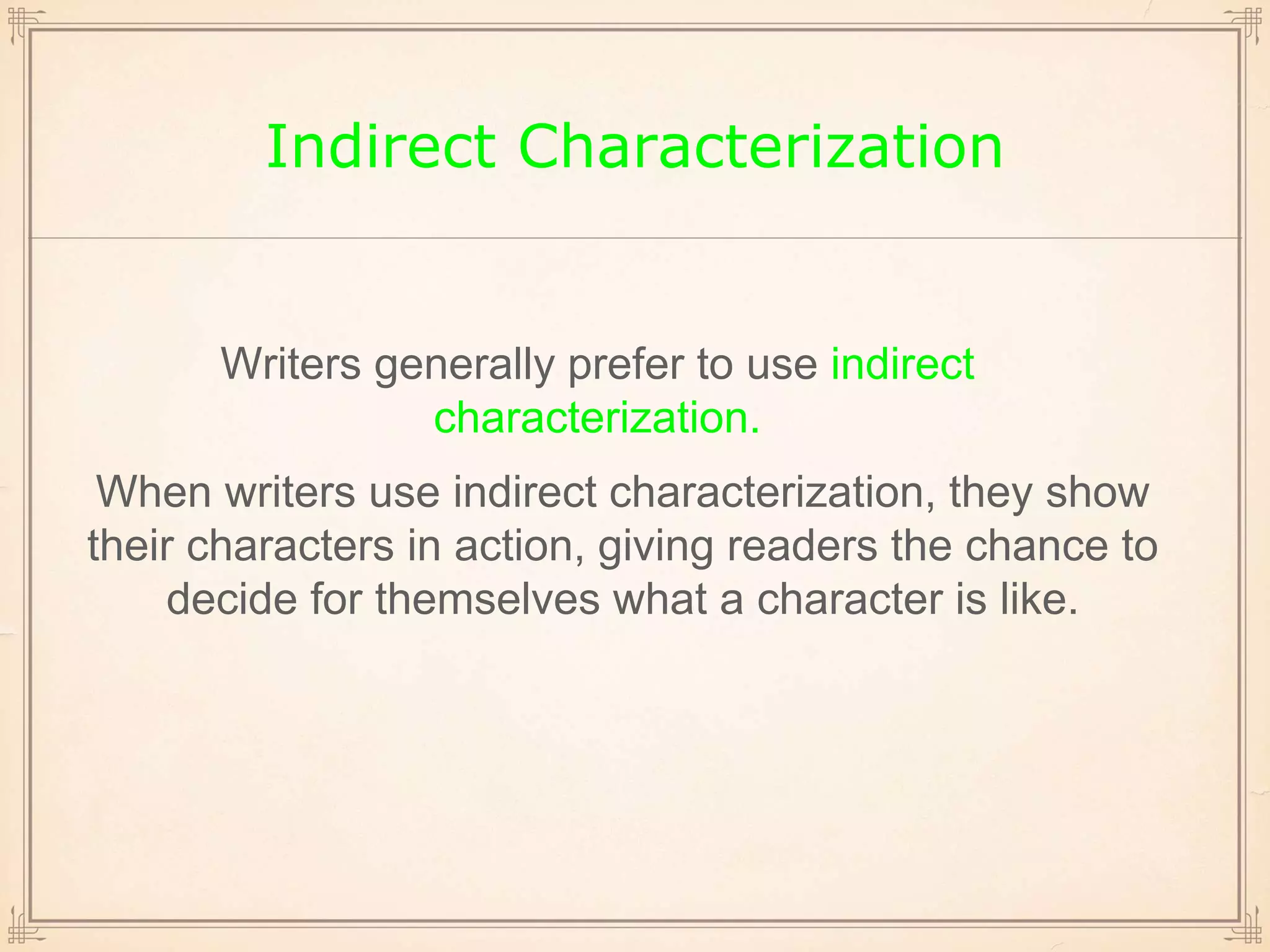
When writers use indirect characterization, they show
their characters in action, giving readers the chance to
decide for themselves what a character is like.
Writers generally prefer to use indirect
characterization.
Indirect characterization
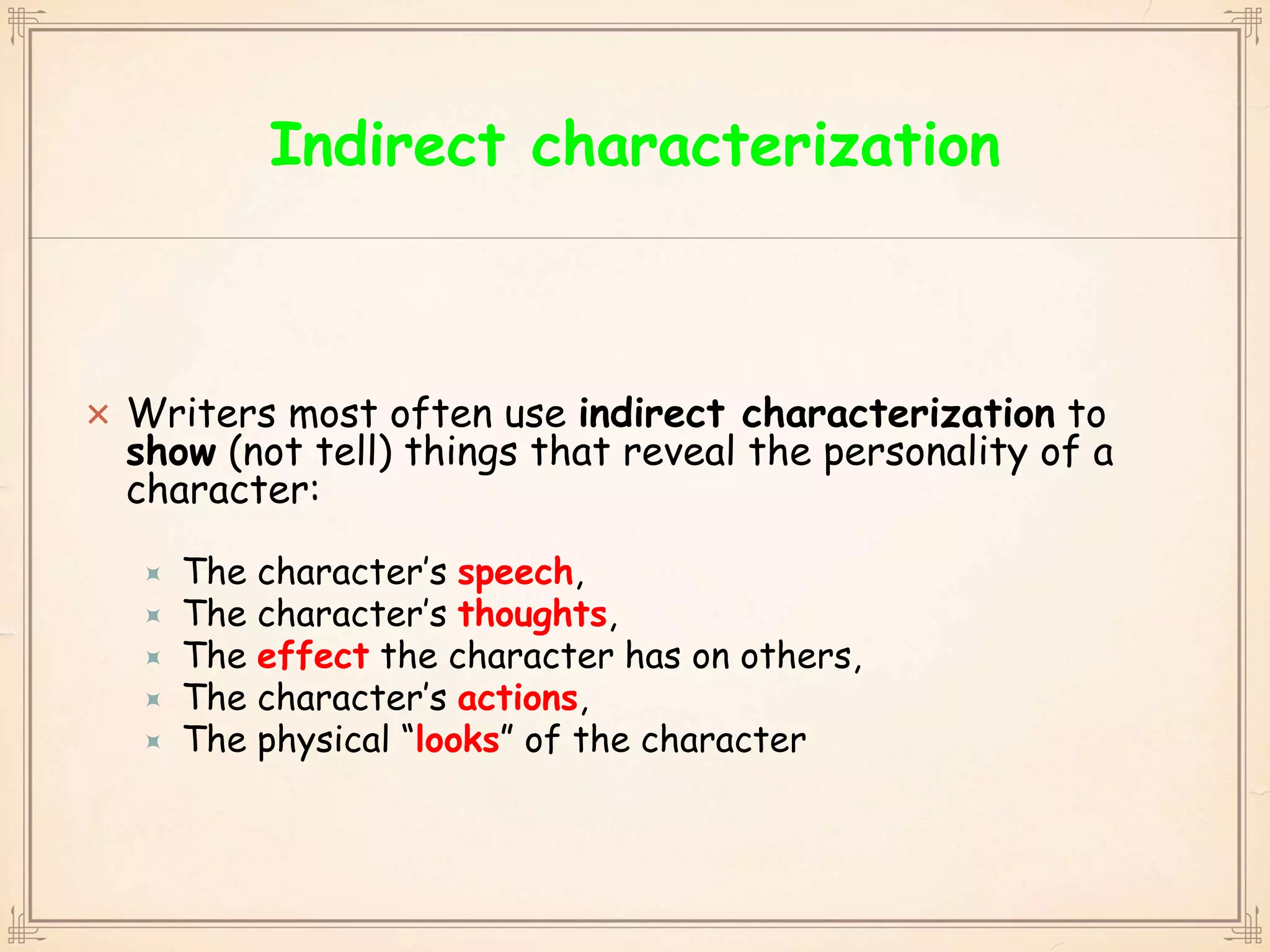
 Writers most often use indirect characterization to
show (not tell) things that reveal the personality of a
character:
 The character’s speech,
 The character’s thoughts,
 The effect the character has on others,
 The character’s actions,
 The physical “looks” of the character
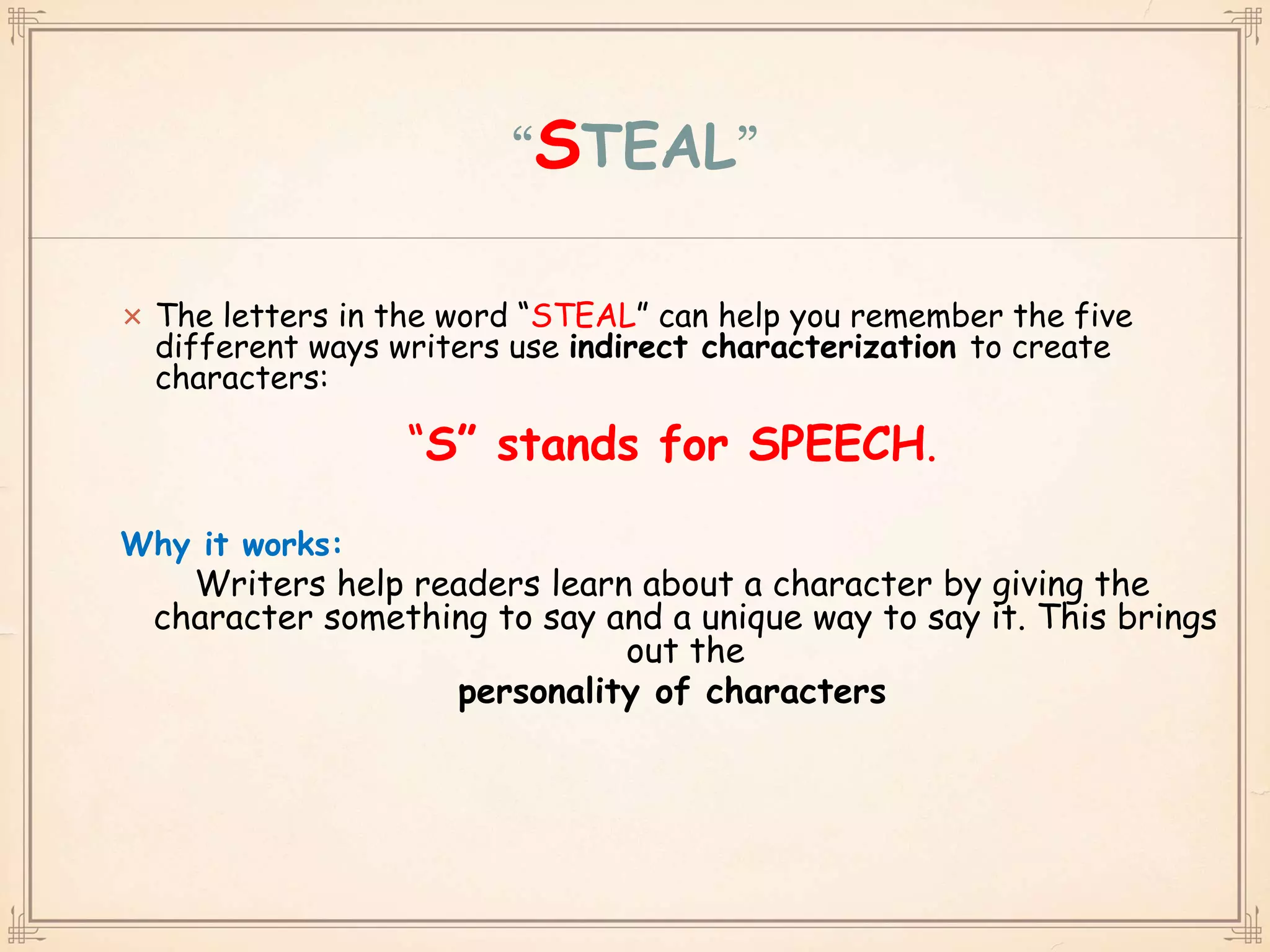
“STEAL”
 The letters in the word “STEAL” can help you remember the five
different ways writers use indirect characterization to create
characters:
“S” stands for SPEECH.
Why it works:
Writers help readers learn about a character by giving the
character something to say and a unique way to say it. This brings
out the
personality of characters
STEAL
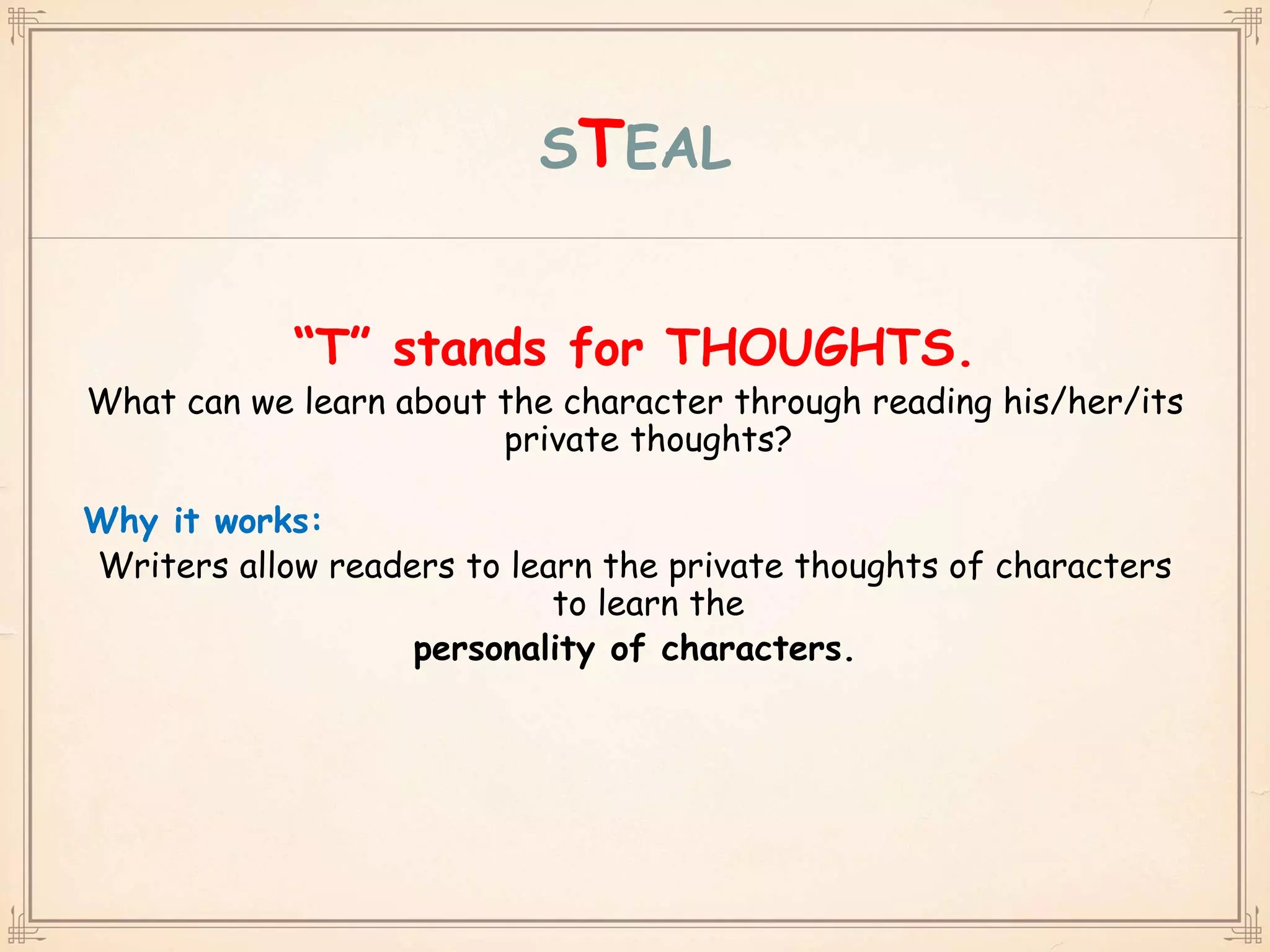
“T” stands for THOUGHTS.
What can we learn about the character through reading his/her/its
private thoughts?
Why it works:
Writers allow readers to learn the private thoughts of characters
to learn the
personality of characters.
STEAL
“E” stands for
EFFECT ON OTHERS
What can be learned about the character by reading how other
characters feel or act around the him/her/it?
Why it works:
Writers create relationships for characters to help readers learn
the personality of characters.
“STEAL”
“A” stands for ACTIONS.
What does the character do?
How does the character behave?
Why it works:
Writers create actions for characters
to help readers learn the
personality of characters.
“STEAL”
“L” stands for LOOKS.
What does the character look like?
How does the character dress?
Why it works:
Writers use descriptions of characters’ physical attributes to help
readers learn the
personality of characters.
YOUR TURN
Now that you know what
the steal method is, with
your shoulder buddy
create a mind map in
your copybooks
describing Horton, from
Horton Hears A Who.

Characterization steal method

  • 1.
  • 2.
    Who is thecharacter? What do you know about him? What is his motto in life? How did you come to know these things about him?
  • 3.
    From her appearance,who do you think this woman is? what does she do?
  • 4.
  • 5.
    What is characterization? Characterizationis the way writers create and describe a character for the reader. There are two types of characterization: 1. Direct characterization 2. Indirect characterization
  • 6.
    Direct characterization If awriter tells you that a character is mean-tempered or friendly, that is direct characterization. For Example: When Amaya brought home a pet rabbit, her mother did not object. She knew Amaya was a caring, responsible girl who would take excellent care of the animal. Direct characterization gives you exact information.
  • 7.
    Characterization: Direct Characterization Practice Whatwords give you direct information about Dr. Chang’s character? Dr. Chang was the best dentist in the practice. He had a charming smile, a gentle manner, and a warm personality. He made a trip to the dentist a pleasant experience—despite the discomfort.
  • 8.
    THE STEAL METHOD •When you meet somebody for the first time what are the things you notice about them first? • When you are reading a book what are the clues that you look for to understand the characters? • What do you think STEAL stands for?
  • 9.
    Indirect Characterization When writersuse indirect characterization, they show their characters in action, giving readers the chance to decide for themselves what a character is like. Writers generally prefer to use indirect characterization.
  • 10.
    Indirect characterization  Writersmost often use indirect characterization to show (not tell) things that reveal the personality of a character:  The character’s speech,  The character’s thoughts,  The effect the character has on others,  The character’s actions,  The physical “looks” of the character
  • 11.
    “STEAL”  The lettersin the word “STEAL” can help you remember the five different ways writers use indirect characterization to create characters: “S” stands for SPEECH. Why it works: Writers help readers learn about a character by giving the character something to say and a unique way to say it. This brings out the personality of characters
  • 12.
    STEAL “T” stands forTHOUGHTS. What can we learn about the character through reading his/her/its private thoughts? Why it works: Writers allow readers to learn the private thoughts of characters to learn the personality of characters.
  • 13.
    STEAL “E” stands for EFFECTON OTHERS What can be learned about the character by reading how other characters feel or act around the him/her/it? Why it works: Writers create relationships for characters to help readers learn the personality of characters.
  • 14.
    “STEAL” “A” stands forACTIONS. What does the character do? How does the character behave? Why it works: Writers create actions for characters to help readers learn the personality of characters.
  • 15.
    “STEAL” “L” stands forLOOKS. What does the character look like? How does the character dress? Why it works: Writers use descriptions of characters’ physical attributes to help readers learn the personality of characters.
  • 16.
    YOUR TURN Now thatyou know what the steal method is, with your shoulder buddy create a mind map in your copybooks describing Horton, from Horton Hears A Who.