Goffman’s Character Theory
 A character theory in the context of media, such as 
print or electronic media texts or productions such as 
films and plays, is useful for analysing and 
understanding media in which people take on the role 
of an actor or social actor. 
 Character theories are popular with academics 
teaching and researching media and film studies as 
they are useful for appreciating the structure of 
different types of media and the roles of the characters, 
fictional or otherwise that are portrayed in them. 
 Character theories are often based on stereotypes, and 
the different characteristics that make them up can 
either be used for positive or negatives purposes
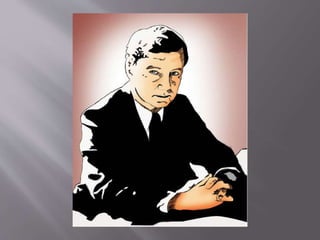
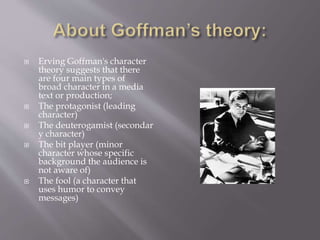
 Erving Goffman's character 
theory suggests that there 
are four main types of 
broad character in a media 
text or production; 
 The protagonist (leading 
character) 
 The deuterogamist (secondar 
y character) 
 The bit player (minor 
character whose specific 
background the audience is 
not aware of) 
 The fool (a character that 
uses humor to convey 
messages)
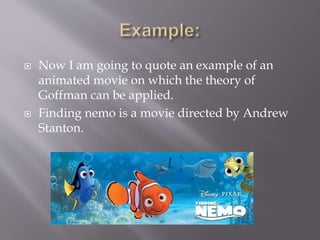
 Now I am going to quote an example of an 
animated movie on which the theory of 
Goffman can be applied. 
 Finding nemo is a movie directed by Andrew 
Stanton.
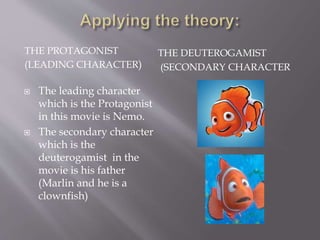
THE PROTAGONIST 
(LEADING CHARACTER) 
THE DEUTEROGAMIST 
(SECONDARY CHARACTER 
 The leading character 
which is the Protagonist 
in this movie is Nemo. 
 The secondary character 
which is the 
deuterogamist in the 
movie is his father 
(Marlin and he is a 
clownfish)
 There’s is no bit player in this movie. I couldn’t 
find any bit player. 
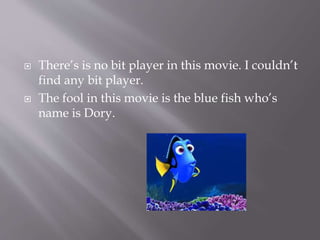
 The fool in this movie is the blue fish who’s 
name is Dory.
Minal Neel

Character Theory

  • 1.
  • 3.
     A charactertheory in the context of media, such as print or electronic media texts or productions such as films and plays, is useful for analysing and understanding media in which people take on the role of an actor or social actor.  Character theories are popular with academics teaching and researching media and film studies as they are useful for appreciating the structure of different types of media and the roles of the characters, fictional or otherwise that are portrayed in them.  Character theories are often based on stereotypes, and the different characteristics that make them up can either be used for positive or negatives purposes
  • 4.
     Erving Goffman'scharacter theory suggests that there are four main types of broad character in a media text or production;  The protagonist (leading character)  The deuterogamist (secondar y character)  The bit player (minor character whose specific background the audience is not aware of)  The fool (a character that uses humor to convey messages)
  • 5.
     Now Iam going to quote an example of an animated movie on which the theory of Goffman can be applied.  Finding nemo is a movie directed by Andrew Stanton.
  • 6.
    THE PROTAGONIST (LEADINGCHARACTER) THE DEUTEROGAMIST (SECONDARY CHARACTER  The leading character which is the Protagonist in this movie is Nemo.  The secondary character which is the deuterogamist in the movie is his father (Marlin and he is a clownfish)
  • 7.
     There’s isno bit player in this movie. I couldn’t find any bit player.  The fool in this movie is the blue fish who’s name is Dory.
  • 8.