The Vitamins
88
Copyright © 2017 Cengage Learning. All Rights Reserved.
© Cengage Learning 2017
The Vitamins—An Overview
• Potent, essential, non-kcaloric, and
organic nutrients are needed from foods in
trace amounts to perform specific
functions
– Promote growth, reproduction, and the
maintenance of health and life
• U.S. intakes of vitamins A, D, E, and C
and folate may fall below
recommendations
Copyright © 2017 Cengage Learning. All Rights Reserved.
© Cengage Learning 2017
The Vitamins—An Overview (cont’d.)
• How do vitamins differ from
carbohydrates, fats, and proteins?
– Structure: individual units
– Function: not energy yielding
– Dietary intakes: micro- or milligrams
• Bioavailability
– What is a vitamin’s bioavailability?
Copyright © 2017 Cengage Learning. All Rights Reserved.
© Cengage Learning 2017
The Vitamins—An Overview (cont’d.)
• Bioavailability
– Factors affecting the bioavailability of a
vitamin:
• Digestion efficiency and GI tract transit time
• Previous nutrient intake and nutrition status
• Other foods consumed at the same time
• Method of food preparation
• Nutrient source (naturally occurring, synthetic,
fortified)
Copyright © 2017 Cengage Learning. All Rights Reserved.
© Cengage Learning 2017
The Vitamins—An Overview (cont’d.)
• Precursors (provitamins)
– Some vitamins consumed as precursors that
must be converted into the active form
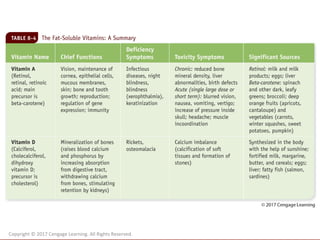
– Listed in Tables 8-4 and 8-5
• Organic nature
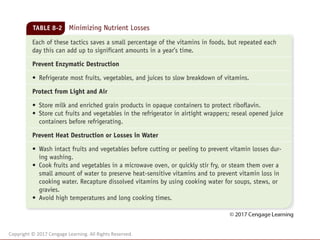
– Can be destroyed during processing
– Vulnerable to heat, light, and/or oxygen
exposure
Copyright © 2017 Cengage Learning. All Rights Reserved.
© Cengage Learning 2017
The Vitamins—An Overview (cont’d.)
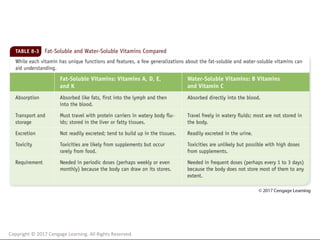
• Solubility: two classes
– Water-soluble: B vitamins and vitamin C
– Fat soluble: vitamins A, D, E, and K
– Solubility affects absorption, transport,
storage, and excretion
Copyright © 2017 Cengage Learning. All Rights Reserved.
© Cengage Learning 2017
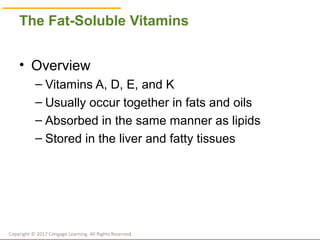
The Fat-Soluble Vitamins
• Overview
– Vitamins A, D, E, and K
– Usually occur together in fats and oils
– Absorbed in the same manner as lipids
– Stored in the liver and fatty tissues
Copyright © 2017 Cengage Learning. All Rights Reserved.
© Cengage Learning 2017
The Fat-Soluble Vitamins
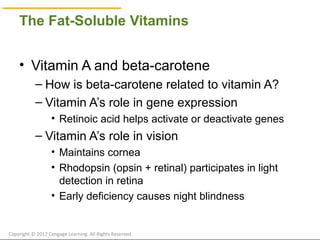
• Vitamin A and beta-carotene
– How is beta-carotene related to vitamin A?
– Vitamin A’s role in gene expression
• Retinoic acid helps activate or deactivate genes
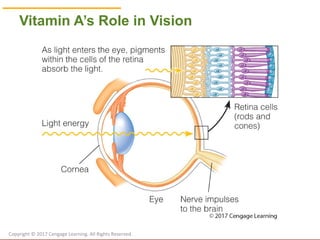
– Vitamin A’s role in vision
• Maintains cornea
• Rhodopsin (opsin + retinal) participates in light
detection in retina
• Early deficiency causes night blindness
Copyright © 2017 Cengage Learning. All Rights Reserved.
© Cengage Learning 2017
Vitamin A’s Role in Vision
Copyright © 2017 Cengage Learning. All Rights Reserved.
© Cengage Learning 2017
The Fat-Soluble Vitamins:
Vitamin A and Beta-Carotene (cont’d.)
• Vitamin A’s role in protein synthesis and
cell differentiation
– Differentiation: development of specific
functions during cell maturation
• Vitamin A’s role in immunity
– Immune defenses
– Regulation of related genes
Copyright © 2017 Cengage Learning. All Rights Reserved.
© Cengage Learning 2017
The Fat-Soluble Vitamins:
Vitamin A and Beta-Carotene (cont’d.)
• Vitamin A’s role in reproduction, growth,
and development
– Sperm development
– Fetal growth and development
• Beta-carotene’s role as an antioxidant
– Antioxidant: compound that protects other
compounds from oxygen by itself reacting
with oxygen
Copyright © 2017 Cengage Learning. All Rights Reserved.
© Cengage Learning 2017
The Fat-Soluble Vitamins:
Vitamin A and Beta-Carotene (cont’d.)
• Vitamin A deficiency
– All epithelial surfaces: cells harden (produce
keratin) and flatten
– Major cause of preventable blindness
(xerophthalmia) via damage to cornea
• Xerosis (dryness) → keratomalacia (softening)
– Increased susceptibility to infection
Copyright © 2017 Cengage Learning. All Rights Reserved.
© Cengage Learning 2017
The Fat-Soluble Vitamins:
Vitamin A and Beta-Carotene (cont’d.)
• Vitamin A toxicity
– Caused by excessive preformed vitamin A
– Teratogenic risk (birth defects)
– Weakens bones
• Beta-carotene conversion and toxicity
– Retinol activity equivalents (RAE)
– High intake from foods not hazardous
– High intake from supplements may be
Copyright © 2017 Cengage Learning. All Rights Reserved.
© Cengage Learning 2017
The Fat-Soluble Vitamins:
Vitamin A and Beta-Carotene (cont’d.)
• Vitamin A in foods
– Preformed vitamin A: liver, fish oil, milk,
cheese, fortified cereals
• Beta-carotene in foods
– Bright orange produce: carrots, sweet
potatoes, pumpkins, cantaloupe, apricots
– Dark green vegetables: spinach, other
greens, broccoli
Copyright © 2017 Cengage Learning. All Rights Reserved.
© Cengage Learning 2017
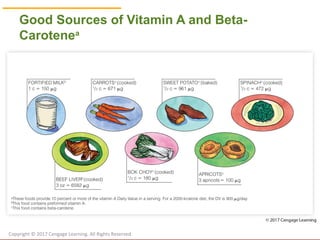
Good Sources of Vitamin A and Beta-
Carotenea
Copyright © 2017 Cengage Learning. All Rights Reserved.
© Cengage Learning 2017
The Fat-Soluble Vitamins (cont’d.)
• Vitamin D (calciferol)
– Body can synthesize it with help of sunlight
– Two major forms:
• Vitamin D2 (ergocalciferol): plant foods form
• Vitamin D3 (cholecalciferol): animal foods form;
form synthesized in human skin
– Vitamin D’s metabolic conversions
• Requires conversions by the liver and kidneys
Copyright © 2017 Cengage Learning. All Rights Reserved.
© Cengage Learning 2017
The Fat-Soluble Vitamins: Vitamin D
(cont’d.)
• Vitamin D’s metabolic conversions
– Liver manufactures precursor
– In skin, this compound converted to second
precursor in the presence of ultraviolet rays
– Requires additional conversions by the liver
and then the kidneys to produce active
vitamin
• This step necessary with dietary vitamin D as well
Copyright © 2017 Cengage Learning. All Rights Reserved.
© Cengage Learning 2017
The Fat-Soluble Vitamins: Vitamin D
(cont’d.)
• Vitamin D’s potential roles in health
– Why is vitamin D actually a hormone?
– Possible roles under investigation relate to:
• Brain and nerve cells
• Muscle cells
• Immune cells
• Adipose tissue (obesity)
• Diseases such as high blood pressure, type 2
diabetes, and some cancers
Copyright © 2017 Cengage Learning. All Rights Reserved.
© Cengage Learning 2017
The Fat-Soluble Vitamins: Vitamin D
(cont’d.)
• Vitamin D’s role in bone growth
– Maintains bone health by assisting in calcium
and phosphorus absorption
– Regulates blood concentrations of bone
minerals:
• Enhances their absorption from GI tract
• Stimulates reabsorption from blood by the kidneys
• Triggers mobilization from bones into blood
Copyright © 2017 Cengage Learning. All Rights Reserved.
© Cengage Learning 2017
The Fat-Soluble Vitamins: Vitamin D
(cont’d.)
• Vitamin D deficiency
– Contributing factors: dark skin, breastfeeding
without supplementation, lack of sunlight, and
not consuming fortified milk
– Diseases
• Rickets (in children): weakening of bones
• Osteomalacia: softening of bones
• Osteoporosis: reduced density of bones
Copyright © 2017 Cengage Learning. All Rights Reserved.
© Cengage Learning 2017
The Fat-Soluble Vitamins: Vitamin D
(cont’d.)
• Vitamin D toxicity
– Causes excess blood calcium, calcification
• Vitamin D from the sun
– Can pose risk of skin cancer, but not vitamin
D toxicity
– 5 to 10 minutes sun exposure (hands, face,
arm) a few times a week in summer adequate
for most
• Affected by skin color, latitude, season, time of day
Copyright © 2017 Cengage Learning. All Rights Reserved.
© Cengage Learning 2017
The Fat-Soluble Vitamins: Vitamin D
(cont’d.)
• Vitamin D in foods
– Eggs, liver, butter, some fatty fish, and fortified
milk
– Supplements for breastfed infants
• Vitamin D recommendations
– DRI assume no skin synthesis
– Why does the RDA for vitamin D increase with
age?
Copyright © 2017 Cengage Learning. All Rights Reserved.
© Cengage Learning 2017
The Fat-Soluble Vitamins (cont’d.)
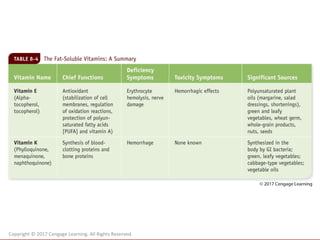
• Vitamin E (alpha-tocopherol)
– Vitamin E as an antioxidant
• Prevents oxidation of polyunsaturated fatty acids
and other lipids
• Protects the lungs
• May reduce LDL oxidation and thus reduce
atherosclerosis
Copyright © 2017 Cengage Learning. All Rights Reserved.
© Cengage Learning 2017
The Fat-Soluble Vitamins: Vitamin E
(cont’d.)
• Vitamin E deficiency
– Erythrocyte hemolysis in premature infants
– Adults
• Loss of muscle coordination and reflexes
• Impaired movement, vision, and speech
• Usually occurs with diseases of the liver,
gallbladder, or pancreas
Copyright © 2017 Cengage Learning. All Rights Reserved.
© Cengage Learning 2017
The Fat-Soluble Vitamins: Vitamin E
(cont’d.)
• Vitamin E toxicity
– Associated with supplement use
– Interferes with blood clotting
• Vitamin E in foods
– Vegetable oils and products made from them
– Wheat germ oil
– Whole grains, fruits, vegetables, nuts
Copyright © 2017 Cengage Learning. All Rights Reserved.
© Cengage Learning 2017
The Fat-Soluble Vitamins (cont’d.)
• Vitamin K
– Roles in blood clotting and bone protein
synthesis
– Blood clotting: needed for activation of several
proteins involved in blood clot formation
Copyright © 2017 Cengage Learning. All Rights Reserved.
© Cengage Learning 2017
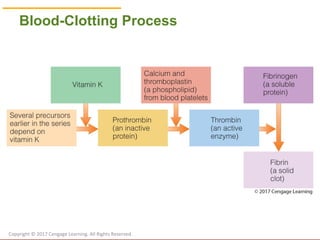
Blood-Clotting Process
Copyright © 2017 Cengage Learning. All Rights Reserved.
© Cengage Learning 2017
The Fat-Soluble Vitamins: Vitamin K
(cont’d.)
• Intestinal synthesis (by bacteria)
– Insufficient as a sole source
• Vitamin K deficiency
– Fat malabsorption
– Antibiotics or anticoagulants
Copyright © 2017 Cengage Learning. All Rights Reserved.
© Cengage Learning 2017
The Fat-Soluble Vitamins: Vitamin K
(cont’d.)
• Vitamin K nutrition for newborns
– Single dose given a birth
• Vitamin K toxicity
– Rare; no UL established
– High doses interfere with anticoagulants
• Vitamin K in foods
– Green leafy vegetables, cabbage family, some
vegetable oils
Copyright © 2017 Cengage Learning. All Rights Reserved.
© Cengage Learning 2017
The Water-Soluble Vitamins
• Overview
– B vitamins and vitamin C
– Easily absorbed into the bloodstream
– Easily excreted when blood concentrations
rise too high
Copyright © 2017 Cengage Learning. All Rights Reserved.
© Cengage Learning 2017
The Water-Soluble Vitamins (cont’d.)
• The B vitamins
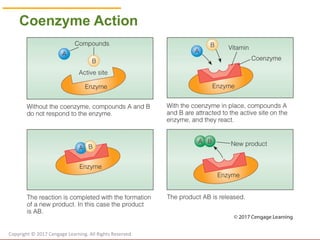
– Coenzymes: small molecules that work with
enzymes to promote their activities
• Help the body use energy-yielding nutrients
• B vitamins are components in coenzymes
• Help cells multiply
• Assist enzymes in performing molecular
conversions
Copyright © 2017 Cengage Learning. All Rights Reserved.
© Cengage Learning 2017
Coenzyme Action
Copyright © 2017 Cengage Learning. All Rights Reserved.
© Cengage Learning 2017
The Water-Soluble Vitamins:
The B Vitamins (cont’d.)
• B vitamin deficiencies
– Thiamin ► beriberi
– Niacin deficiency ► pellagra
• Interdependent systems
• B vitamin enrichment of foods
– How do fortification and enrichment protect
people against deficiencies?
Copyright © 2017 Cengage Learning. All Rights Reserved.
© Cengage Learning 2017
The Water-Soluble Vitamins (cont’d.)
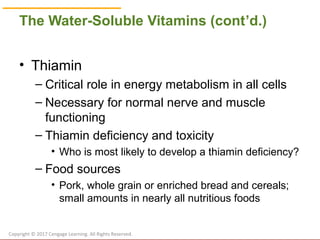
• Thiamin
– Critical role in energy metabolism in all cells
– Necessary for normal nerve and muscle
functioning
– Thiamin deficiency and toxicity
• Who is most likely to develop a thiamin deficiency?
– Food sources
• Pork, whole grain or enriched bread and cereals;
small amounts in nearly all nutritious foods
Copyright © 2017 Cengage Learning. All Rights Reserved.
© Cengage Learning 2017
The Water-Soluble Vitamins (cont’d.)
• Riboflavin
– Serves as a coenzyme in energy metabolism
– Riboflavin deficiency and toxicity
• Deficiency causes cracks at corners of mouth and
sore throat
– Riboflavin in foods
• Milk and milk products, enriched grain products,
green vegetables, meats
– Effects of light
• Light sensitive, but heat stable
Copyright © 2017 Cengage Learning. All Rights Reserved.
© Cengage Learning 2017
The Water-Soluble Vitamins (cont’d.)
• Niacin
– Coenzyme in energy metabolism in all cells
– Body can produce niacin from tryptophan
• Niacin equivalents (NE)
– UL (prevents “niacin flush”): 35 mg NE
– Niacin (nicotinic acid) used as a medication
• Large (pharmacological) doses lower blood
cholesterol
• Used in atherosclerosis treatment
Copyright © 2017 Cengage Learning. All Rights Reserved.
© Cengage Learning 2017
The Water-Soluble Vitamins (cont’d.)
• Niacin
– Niacin in foods: meat, poultry, fish, legumes,
enriched and whole grains
• Pantothenic acid and biotin
– Important in energy metabolism
– Pantothenic acid and biotin in foods:
widespread
– Biotin deficiency: intravenous feeding, avidin
Copyright © 2017 Cengage Learning. All Rights Reserved.
© Cengage Learning 2017
The Water-Soluble Vitamins (cont’d.)
• Vitamin B6
– Metabolic roles of vitamin B6
• Macronutrient metabolism
• Conversion of amino acids to other, nonessential
amino acids
• Synthesis of hemoglobin and neurotransmitters
• Release of stored glucose from glycogen
Copyright © 2017 Cengage Learning. All Rights Reserved.
© Cengage Learning 2017
The Water-Soluble Vitamins (cont’d.)
• Vitamin B6
– Vitamin B6 deficiency
• Symptoms: weakness, depression, confusion,
irritability, dermatitis, anemia, convulsions
– Vitamin B6 toxicity
• Results from supplement use (2 g/day)
• Recovery after discontinuing supplements
Copyright © 2017 Cengage Learning. All Rights Reserved.
© Cengage Learning 2017
The Water-Soluble Vitamins (cont’d.)
• Vitamin B6
– Vitamin B6 recommendations
• RDA based on amounts needed to maintain
adequate coenzyme levels
– Vitamin B6 in foods
• Protein-rich meat, fish, poultry, potatoes
• Heat sensitive
Copyright © 2017 Cengage Learning. All Rights Reserved.
© Cengage Learning 2017
The Water-Soluble Vitamins (cont’d.)
• Folate
– Active in cell division
– Folate, alcohol, and drugs: negative impact on
folate status
• Alcohol: impairs absorption, increases excretion
• Medications: aspirin, oral contraceptives, and
anticonvulsants
• Smoking
Copyright © 2017 Cengage Learning. All Rights Reserved.
© Cengage Learning 2017
The Water-Soluble Vitamins (cont’d.)
• Folate
– Folate and neural tube defects (NTD)
• Prevented by supplements in early pregnancy
• UL: 1000 µg/day from fortified foods and
supplements
– Folate in foods
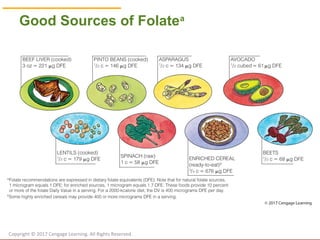
• Liver, legumes, beets, and leafy green vegetables
• Dietary folate equivalents (DFE) (Box 8-1)
Copyright © 2017 Cengage Learning. All Rights Reserved.
© Cengage Learning 2017
Good Sources of Folatea
Copyright © 2017 Cengage Learning. All Rights Reserved.
© Cengage Learning 2017
The Water-Soluble Vitamins (cont’d.)
• Vitamin B12
– Vitamin B12, folate, and cell division
• Accepts carbon groups from folate, regenerating
folate’s active form
• Macrocytic anemia
– Vitamin B12 and the nervous system
• Maintains nerve fibers
• What dangers are associated with folate
supplementation masking a vitamin B12 deficiency?
Copyright © 2017 Cengage Learning. All Rights Reserved.
© Cengage Learning 2017
The Water-Soluble Vitamins (cont’d.)
• Vitamin B12
– Vitamin B12 absorption
• Requires intrinsic factor
• Atrophic gastritis and pernicious anemia
– Vitamin B12 in foods
• Found almost exclusively in animal-derived foods
• Fortified foods (e.g., soy milk), supplements
– Vitamin B12 deficiency in vegans
Copyright © 2017 Cengage Learning. All Rights Reserved.
© Cengage Learning 2017
The Water-Soluble Vitamins (cont’d.)
• Non-B vitamins
– Serve as coenzymes in metabolism
– Inositol, choline, and carnitine
• Choline assigned AI
– Other non-B vitamins
• Para-aminobenzoic acid (PABA), bioflavonoids
(vitamin P or hesperidin), and ubiquinone
Copyright © 2017 Cengage Learning. All Rights Reserved.
© Cengage Learning 2017
The Water-Soluble Vitamins (cont’d.)
• Vitamin C
– Antiscurvy factor: ascorbic acid
– Metabolic roles of vitamin C
– Vitamin C’s role in collagen formation
– Vitamin C as an antioxidant
– Vitamin C in amino acid metabolism
– Role of stress
– Vitamin C as a possible antihistamine
Copyright © 2017 Cengage Learning. All Rights Reserved.
© Cengage Learning 2017
The Water-Soluble Vitamins:
Vitamin C (cont’d.)
• Vitamin C’s role in cancer prevention and
treatment
• Vitamin C deficiency
– Affect on blood vessels: bleeding gums and
pinpoint hemorrhages
– What are symptoms of scurvy?
Copyright © 2017 Cengage Learning. All Rights Reserved.
© Cengage Learning 2017
The Water-Soluble Vitamins:
Vitamin C (cont’d.)
• Vitamin C toxicity
– GI symptoms, food-drug interactions, false
urine test results
– Increased kidney stone risk with gout or
genetic abnormality in vitamin C metabolism
• Recommended intakes of vitamin C
– RDA for men: 90 mg
– RDA for women: 75 mg
Copyright © 2017 Cengage Learning. All Rights Reserved.
© Cengage Learning 2017
The Water-Soluble Vitamins:
Vitamin C (cont’d.)
• Special needs for vitamin C
– Infections, burns, surgery, extremely high or
low temperatures, toxic doses of heavy
metals, chronic medication use
– Smokers: recommendation of 125 mg/day for
men and 110 mg/day for women
• Safe limits
– 100 to 300 mg per day
Copyright © 2017 Cengage Learning. All Rights Reserved.
© Cengage Learning 2017
The Water-Soluble Vitamins:
Vitamin C (cont’d.)
• Vitamin C in foods
– Many fruits and vegetables
• Vitamin C and iron absorption
– How does vitamin C impact iron absorption?
Copyright © 2017 Cengage Learning. All Rights Reserved.
© Cengage Learning 2017
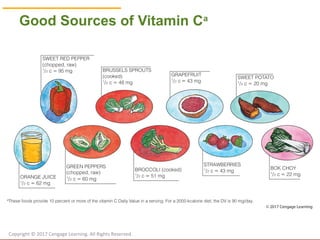
Good Sources of Vitamin Ca
Copyright © 2017 Cengage Learning. All Rights Reserved.
© Cengage Learning 2017
Nutrition in Practice:
Phytochemicals and Functional Foods
• Phytochemicals: bioactive plant
compounds
– Flavonoids
– Carotenoids (beta-carotene, lycopene)
– Compounds in soy foods, flaxseed
• Functional foods
– Are manufactured variety foods or drugs?
– Potential benefits and disadvantages
Copyright © 2017 Cengage Learning. All Rights Reserved.

Chapter 8: The Vitamins

  • 1.
    The Vitamins 88 Copyright ©2017 Cengage Learning. All Rights Reserved.
  • 2.
    © Cengage Learning2017 The Vitamins—An Overview • Potent, essential, non-kcaloric, and organic nutrients are needed from foods in trace amounts to perform specific functions – Promote growth, reproduction, and the maintenance of health and life • U.S. intakes of vitamins A, D, E, and C and folate may fall below recommendations Copyright © 2017 Cengage Learning. All Rights Reserved.
  • 3.
    Copyright © 2017Cengage Learning. All Rights Reserved.
  • 4.
    © Cengage Learning2017 The Vitamins—An Overview (cont’d.) • How do vitamins differ from carbohydrates, fats, and proteins? – Structure: individual units – Function: not energy yielding – Dietary intakes: micro- or milligrams • Bioavailability – What is a vitamin’s bioavailability? Copyright © 2017 Cengage Learning. All Rights Reserved.
  • 5.
    © Cengage Learning2017 The Vitamins—An Overview (cont’d.) • Bioavailability – Factors affecting the bioavailability of a vitamin: • Digestion efficiency and GI tract transit time • Previous nutrient intake and nutrition status • Other foods consumed at the same time • Method of food preparation • Nutrient source (naturally occurring, synthetic, fortified) Copyright © 2017 Cengage Learning. All Rights Reserved.
  • 6.
    © Cengage Learning2017 The Vitamins—An Overview (cont’d.) • Precursors (provitamins) – Some vitamins consumed as precursors that must be converted into the active form – Listed in Tables 8-4 and 8-5 • Organic nature – Can be destroyed during processing – Vulnerable to heat, light, and/or oxygen exposure Copyright © 2017 Cengage Learning. All Rights Reserved.
  • 7.
    Copyright © 2017Cengage Learning. All Rights Reserved.
  • 8.
    © Cengage Learning2017 The Vitamins—An Overview (cont’d.) • Solubility: two classes – Water-soluble: B vitamins and vitamin C – Fat soluble: vitamins A, D, E, and K – Solubility affects absorption, transport, storage, and excretion Copyright © 2017 Cengage Learning. All Rights Reserved.
  • 9.
    Copyright © 2017Cengage Learning. All Rights Reserved.
  • 10.
    © Cengage Learning2017 The Fat-Soluble Vitamins • Overview – Vitamins A, D, E, and K – Usually occur together in fats and oils – Absorbed in the same manner as lipids – Stored in the liver and fatty tissues Copyright © 2017 Cengage Learning. All Rights Reserved.
  • 11.
    © Cengage Learning2017 The Fat-Soluble Vitamins • Vitamin A and beta-carotene – How is beta-carotene related to vitamin A? – Vitamin A’s role in gene expression • Retinoic acid helps activate or deactivate genes – Vitamin A’s role in vision • Maintains cornea • Rhodopsin (opsin + retinal) participates in light detection in retina • Early deficiency causes night blindness Copyright © 2017 Cengage Learning. All Rights Reserved.
  • 12.
    © Cengage Learning2017 Vitamin A’s Role in Vision Copyright © 2017 Cengage Learning. All Rights Reserved.
  • 13.
    © Cengage Learning2017 The Fat-Soluble Vitamins: Vitamin A and Beta-Carotene (cont’d.) • Vitamin A’s role in protein synthesis and cell differentiation – Differentiation: development of specific functions during cell maturation • Vitamin A’s role in immunity – Immune defenses – Regulation of related genes Copyright © 2017 Cengage Learning. All Rights Reserved.
  • 14.
    © Cengage Learning2017 The Fat-Soluble Vitamins: Vitamin A and Beta-Carotene (cont’d.) • Vitamin A’s role in reproduction, growth, and development – Sperm development – Fetal growth and development • Beta-carotene’s role as an antioxidant – Antioxidant: compound that protects other compounds from oxygen by itself reacting with oxygen Copyright © 2017 Cengage Learning. All Rights Reserved.
  • 15.
    © Cengage Learning2017 The Fat-Soluble Vitamins: Vitamin A and Beta-Carotene (cont’d.) • Vitamin A deficiency – All epithelial surfaces: cells harden (produce keratin) and flatten – Major cause of preventable blindness (xerophthalmia) via damage to cornea • Xerosis (dryness) → keratomalacia (softening) – Increased susceptibility to infection Copyright © 2017 Cengage Learning. All Rights Reserved.
  • 16.
    © Cengage Learning2017 The Fat-Soluble Vitamins: Vitamin A and Beta-Carotene (cont’d.) • Vitamin A toxicity – Caused by excessive preformed vitamin A – Teratogenic risk (birth defects) – Weakens bones • Beta-carotene conversion and toxicity – Retinol activity equivalents (RAE) – High intake from foods not hazardous – High intake from supplements may be Copyright © 2017 Cengage Learning. All Rights Reserved.
  • 17.
    © Cengage Learning2017 The Fat-Soluble Vitamins: Vitamin A and Beta-Carotene (cont’d.) • Vitamin A in foods – Preformed vitamin A: liver, fish oil, milk, cheese, fortified cereals • Beta-carotene in foods – Bright orange produce: carrots, sweet potatoes, pumpkins, cantaloupe, apricots – Dark green vegetables: spinach, other greens, broccoli Copyright © 2017 Cengage Learning. All Rights Reserved.
  • 18.
    © Cengage Learning2017 Good Sources of Vitamin A and Beta- Carotenea Copyright © 2017 Cengage Learning. All Rights Reserved.
  • 19.
    © Cengage Learning2017 The Fat-Soluble Vitamins (cont’d.) • Vitamin D (calciferol) – Body can synthesize it with help of sunlight – Two major forms: • Vitamin D2 (ergocalciferol): plant foods form • Vitamin D3 (cholecalciferol): animal foods form; form synthesized in human skin – Vitamin D’s metabolic conversions • Requires conversions by the liver and kidneys Copyright © 2017 Cengage Learning. All Rights Reserved.
  • 20.
    © Cengage Learning2017 The Fat-Soluble Vitamins: Vitamin D (cont’d.) • Vitamin D’s metabolic conversions – Liver manufactures precursor – In skin, this compound converted to second precursor in the presence of ultraviolet rays – Requires additional conversions by the liver and then the kidneys to produce active vitamin • This step necessary with dietary vitamin D as well Copyright © 2017 Cengage Learning. All Rights Reserved.
  • 21.
    © Cengage Learning2017 The Fat-Soluble Vitamins: Vitamin D (cont’d.) • Vitamin D’s potential roles in health – Why is vitamin D actually a hormone? – Possible roles under investigation relate to: • Brain and nerve cells • Muscle cells • Immune cells • Adipose tissue (obesity) • Diseases such as high blood pressure, type 2 diabetes, and some cancers Copyright © 2017 Cengage Learning. All Rights Reserved.
  • 22.
    © Cengage Learning2017 The Fat-Soluble Vitamins: Vitamin D (cont’d.) • Vitamin D’s role in bone growth – Maintains bone health by assisting in calcium and phosphorus absorption – Regulates blood concentrations of bone minerals: • Enhances their absorption from GI tract • Stimulates reabsorption from blood by the kidneys • Triggers mobilization from bones into blood Copyright © 2017 Cengage Learning. All Rights Reserved.
  • 23.
    © Cengage Learning2017 The Fat-Soluble Vitamins: Vitamin D (cont’d.) • Vitamin D deficiency – Contributing factors: dark skin, breastfeeding without supplementation, lack of sunlight, and not consuming fortified milk – Diseases • Rickets (in children): weakening of bones • Osteomalacia: softening of bones • Osteoporosis: reduced density of bones Copyright © 2017 Cengage Learning. All Rights Reserved.
  • 24.
    © Cengage Learning2017 The Fat-Soluble Vitamins: Vitamin D (cont’d.) • Vitamin D toxicity – Causes excess blood calcium, calcification • Vitamin D from the sun – Can pose risk of skin cancer, but not vitamin D toxicity – 5 to 10 minutes sun exposure (hands, face, arm) a few times a week in summer adequate for most • Affected by skin color, latitude, season, time of day Copyright © 2017 Cengage Learning. All Rights Reserved.
  • 25.
    © Cengage Learning2017 The Fat-Soluble Vitamins: Vitamin D (cont’d.) • Vitamin D in foods – Eggs, liver, butter, some fatty fish, and fortified milk – Supplements for breastfed infants • Vitamin D recommendations – DRI assume no skin synthesis – Why does the RDA for vitamin D increase with age? Copyright © 2017 Cengage Learning. All Rights Reserved.
  • 26.
    © Cengage Learning2017 The Fat-Soluble Vitamins (cont’d.) • Vitamin E (alpha-tocopherol) – Vitamin E as an antioxidant • Prevents oxidation of polyunsaturated fatty acids and other lipids • Protects the lungs • May reduce LDL oxidation and thus reduce atherosclerosis Copyright © 2017 Cengage Learning. All Rights Reserved.
  • 27.
    © Cengage Learning2017 The Fat-Soluble Vitamins: Vitamin E (cont’d.) • Vitamin E deficiency – Erythrocyte hemolysis in premature infants – Adults • Loss of muscle coordination and reflexes • Impaired movement, vision, and speech • Usually occurs with diseases of the liver, gallbladder, or pancreas Copyright © 2017 Cengage Learning. All Rights Reserved.
  • 28.
    © Cengage Learning2017 The Fat-Soluble Vitamins: Vitamin E (cont’d.) • Vitamin E toxicity – Associated with supplement use – Interferes with blood clotting • Vitamin E in foods – Vegetable oils and products made from them – Wheat germ oil – Whole grains, fruits, vegetables, nuts Copyright © 2017 Cengage Learning. All Rights Reserved.
  • 29.
    © Cengage Learning2017 The Fat-Soluble Vitamins (cont’d.) • Vitamin K – Roles in blood clotting and bone protein synthesis – Blood clotting: needed for activation of several proteins involved in blood clot formation Copyright © 2017 Cengage Learning. All Rights Reserved.
  • 30.
    © Cengage Learning2017 Blood-Clotting Process Copyright © 2017 Cengage Learning. All Rights Reserved.
  • 31.
    © Cengage Learning2017 The Fat-Soluble Vitamins: Vitamin K (cont’d.) • Intestinal synthesis (by bacteria) – Insufficient as a sole source • Vitamin K deficiency – Fat malabsorption – Antibiotics or anticoagulants Copyright © 2017 Cengage Learning. All Rights Reserved.
  • 32.
    © Cengage Learning2017 The Fat-Soluble Vitamins: Vitamin K (cont’d.) • Vitamin K nutrition for newborns – Single dose given a birth • Vitamin K toxicity – Rare; no UL established – High doses interfere with anticoagulants • Vitamin K in foods – Green leafy vegetables, cabbage family, some vegetable oils Copyright © 2017 Cengage Learning. All Rights Reserved.
  • 33.
    Copyright © 2017Cengage Learning. All Rights Reserved.
  • 34.
    Copyright © 2017Cengage Learning. All Rights Reserved.
  • 35.
    © Cengage Learning2017 The Water-Soluble Vitamins • Overview – B vitamins and vitamin C – Easily absorbed into the bloodstream – Easily excreted when blood concentrations rise too high Copyright © 2017 Cengage Learning. All Rights Reserved.
  • 36.
    © Cengage Learning2017 The Water-Soluble Vitamins (cont’d.) • The B vitamins – Coenzymes: small molecules that work with enzymes to promote their activities • Help the body use energy-yielding nutrients • B vitamins are components in coenzymes • Help cells multiply • Assist enzymes in performing molecular conversions Copyright © 2017 Cengage Learning. All Rights Reserved.
  • 37.
    © Cengage Learning2017 Coenzyme Action Copyright © 2017 Cengage Learning. All Rights Reserved.
  • 38.
    © Cengage Learning2017 The Water-Soluble Vitamins: The B Vitamins (cont’d.) • B vitamin deficiencies – Thiamin ► beriberi – Niacin deficiency ► pellagra • Interdependent systems • B vitamin enrichment of foods – How do fortification and enrichment protect people against deficiencies? Copyright © 2017 Cengage Learning. All Rights Reserved.
  • 39.
    © Cengage Learning2017 The Water-Soluble Vitamins (cont’d.) • Thiamin – Critical role in energy metabolism in all cells – Necessary for normal nerve and muscle functioning – Thiamin deficiency and toxicity • Who is most likely to develop a thiamin deficiency? – Food sources • Pork, whole grain or enriched bread and cereals; small amounts in nearly all nutritious foods Copyright © 2017 Cengage Learning. All Rights Reserved.
  • 40.
    © Cengage Learning2017 The Water-Soluble Vitamins (cont’d.) • Riboflavin – Serves as a coenzyme in energy metabolism – Riboflavin deficiency and toxicity • Deficiency causes cracks at corners of mouth and sore throat – Riboflavin in foods • Milk and milk products, enriched grain products, green vegetables, meats – Effects of light • Light sensitive, but heat stable Copyright © 2017 Cengage Learning. All Rights Reserved.
  • 41.
    © Cengage Learning2017 The Water-Soluble Vitamins (cont’d.) • Niacin – Coenzyme in energy metabolism in all cells – Body can produce niacin from tryptophan • Niacin equivalents (NE) – UL (prevents “niacin flush”): 35 mg NE – Niacin (nicotinic acid) used as a medication • Large (pharmacological) doses lower blood cholesterol • Used in atherosclerosis treatment Copyright © 2017 Cengage Learning. All Rights Reserved.
  • 42.
    © Cengage Learning2017 The Water-Soluble Vitamins (cont’d.) • Niacin – Niacin in foods: meat, poultry, fish, legumes, enriched and whole grains • Pantothenic acid and biotin – Important in energy metabolism – Pantothenic acid and biotin in foods: widespread – Biotin deficiency: intravenous feeding, avidin Copyright © 2017 Cengage Learning. All Rights Reserved.
  • 43.
    © Cengage Learning2017 The Water-Soluble Vitamins (cont’d.) • Vitamin B6 – Metabolic roles of vitamin B6 • Macronutrient metabolism • Conversion of amino acids to other, nonessential amino acids • Synthesis of hemoglobin and neurotransmitters • Release of stored glucose from glycogen Copyright © 2017 Cengage Learning. All Rights Reserved.
  • 44.
    © Cengage Learning2017 The Water-Soluble Vitamins (cont’d.) • Vitamin B6 – Vitamin B6 deficiency • Symptoms: weakness, depression, confusion, irritability, dermatitis, anemia, convulsions – Vitamin B6 toxicity • Results from supplement use (2 g/day) • Recovery after discontinuing supplements Copyright © 2017 Cengage Learning. All Rights Reserved.
  • 45.
    © Cengage Learning2017 The Water-Soluble Vitamins (cont’d.) • Vitamin B6 – Vitamin B6 recommendations • RDA based on amounts needed to maintain adequate coenzyme levels – Vitamin B6 in foods • Protein-rich meat, fish, poultry, potatoes • Heat sensitive Copyright © 2017 Cengage Learning. All Rights Reserved.
  • 46.
    © Cengage Learning2017 The Water-Soluble Vitamins (cont’d.) • Folate – Active in cell division – Folate, alcohol, and drugs: negative impact on folate status • Alcohol: impairs absorption, increases excretion • Medications: aspirin, oral contraceptives, and anticonvulsants • Smoking Copyright © 2017 Cengage Learning. All Rights Reserved.
  • 47.
    © Cengage Learning2017 The Water-Soluble Vitamins (cont’d.) • Folate – Folate and neural tube defects (NTD) • Prevented by supplements in early pregnancy • UL: 1000 µg/day from fortified foods and supplements – Folate in foods • Liver, legumes, beets, and leafy green vegetables • Dietary folate equivalents (DFE) (Box 8-1) Copyright © 2017 Cengage Learning. All Rights Reserved.
  • 48.
    © Cengage Learning2017 Good Sources of Folatea Copyright © 2017 Cengage Learning. All Rights Reserved.
  • 49.
    © Cengage Learning2017 The Water-Soluble Vitamins (cont’d.) • Vitamin B12 – Vitamin B12, folate, and cell division • Accepts carbon groups from folate, regenerating folate’s active form • Macrocytic anemia – Vitamin B12 and the nervous system • Maintains nerve fibers • What dangers are associated with folate supplementation masking a vitamin B12 deficiency? Copyright © 2017 Cengage Learning. All Rights Reserved.
  • 50.
    © Cengage Learning2017 The Water-Soluble Vitamins (cont’d.) • Vitamin B12 – Vitamin B12 absorption • Requires intrinsic factor • Atrophic gastritis and pernicious anemia – Vitamin B12 in foods • Found almost exclusively in animal-derived foods • Fortified foods (e.g., soy milk), supplements – Vitamin B12 deficiency in vegans Copyright © 2017 Cengage Learning. All Rights Reserved.
  • 51.
    © Cengage Learning2017 The Water-Soluble Vitamins (cont’d.) • Non-B vitamins – Serve as coenzymes in metabolism – Inositol, choline, and carnitine • Choline assigned AI – Other non-B vitamins • Para-aminobenzoic acid (PABA), bioflavonoids (vitamin P or hesperidin), and ubiquinone Copyright © 2017 Cengage Learning. All Rights Reserved.
  • 52.
    © Cengage Learning2017 The Water-Soluble Vitamins (cont’d.) • Vitamin C – Antiscurvy factor: ascorbic acid – Metabolic roles of vitamin C – Vitamin C’s role in collagen formation – Vitamin C as an antioxidant – Vitamin C in amino acid metabolism – Role of stress – Vitamin C as a possible antihistamine Copyright © 2017 Cengage Learning. All Rights Reserved.
  • 53.
    © Cengage Learning2017 The Water-Soluble Vitamins: Vitamin C (cont’d.) • Vitamin C’s role in cancer prevention and treatment • Vitamin C deficiency – Affect on blood vessels: bleeding gums and pinpoint hemorrhages – What are symptoms of scurvy? Copyright © 2017 Cengage Learning. All Rights Reserved.
  • 54.
    © Cengage Learning2017 The Water-Soluble Vitamins: Vitamin C (cont’d.) • Vitamin C toxicity – GI symptoms, food-drug interactions, false urine test results – Increased kidney stone risk with gout or genetic abnormality in vitamin C metabolism • Recommended intakes of vitamin C – RDA for men: 90 mg – RDA for women: 75 mg Copyright © 2017 Cengage Learning. All Rights Reserved.
  • 55.
    © Cengage Learning2017 The Water-Soluble Vitamins: Vitamin C (cont’d.) • Special needs for vitamin C – Infections, burns, surgery, extremely high or low temperatures, toxic doses of heavy metals, chronic medication use – Smokers: recommendation of 125 mg/day for men and 110 mg/day for women • Safe limits – 100 to 300 mg per day Copyright © 2017 Cengage Learning. All Rights Reserved.
  • 56.
    © Cengage Learning2017 The Water-Soluble Vitamins: Vitamin C (cont’d.) • Vitamin C in foods – Many fruits and vegetables • Vitamin C and iron absorption – How does vitamin C impact iron absorption? Copyright © 2017 Cengage Learning. All Rights Reserved.
  • 57.
    © Cengage Learning2017 Good Sources of Vitamin Ca Copyright © 2017 Cengage Learning. All Rights Reserved.
  • 58.
    Copyright © 2017Cengage Learning. All Rights Reserved.
  • 59.
    Copyright © 2017Cengage Learning. All Rights Reserved.
  • 60.
    © Cengage Learning2017 Nutrition in Practice: Phytochemicals and Functional Foods • Phytochemicals: bioactive plant compounds – Flavonoids – Carotenoids (beta-carotene, lycopene) – Compounds in soy foods, flaxseed • Functional foods – Are manufactured variety foods or drugs? – Potential benefits and disadvantages Copyright © 2017 Cengage Learning. All Rights Reserved.

Editor's Notes

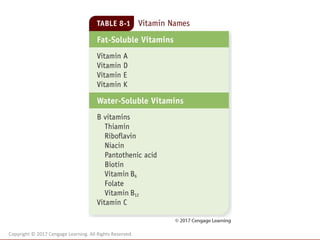
  • #4 Table 8-1 Vitamin Names
  • #5 Answer: The rate and extent to which that vitamin is absorbed and used by the body.
  • #8 Table 8-2 Minimizing Nutrient Losses
  • #10 Table 8-3 Fat-Soluble and Water-Soluble Vitamins Compared
  • #12 Answer: Beta-carotene is a precursor of vitamin A made by plants (it is an orange pigment).
  • #13 Figure 8-1 Vitamin A’s Role in Vision
  • #14 Answer: Beta-carotene is a precursor of vitamin A made by plants (it is an orange pigment).
  • #15 Answer: Beta-carotene is a precursor of vitamin A made by plants (it is an orange pigment).
  • #19 Figure 8-3 Good Sources of Vitamin A and Beta-Carotenea aThese foods provide 10 percent or more of the vitamin A Daily Value in a serving. For a 2000-kcalorie diet, the DV is 900 μg/day. bThis food contains preformed vitamin A. cThis food contains beta-carotene.
  • #22 Answer: The active form of vitamin D serves as a hormone in the body by acting on the small intestine, kidneys, bones, and many other target tissues to affect their functioning.
  • #23 Answer: The active form of vitamin D serves as a hormone in the body by acting on the small intestine, kidneys, bones, and many other target tissues to affect their functioning.
  • #26 Answer: Advancing age increases the risk of vitamin D deficiency.
  • #31 Figure 8-6 Blood-Clotting Process When blood is exposed to air, foreign substances, or secretions from injured tissues, platelets (small, cell-like structures in the blood) release a phospholipid known as thromboplastin. Thromboplastin catalyzes the conversion of the inactive protein prothrombin to the active enzyme thrombin. Thrombin then catalyzes the conversion of the precursor protein fibrinogen to the active protein fibrin that forms the clot.
  • #34 Table 8-4 The Fat-Soluble Vitamins: A Summary
  • #35 Table 8-4 The Fat-Soluble Vitamins: A Summary
  • #38 Figure 8-8 Coenzyme Action
  • #39 Answer: Refined grains as staple foods pose a deficiency risk because B vitamins are lost when grains are refined. The enrichment of refined breads and cereals restores thiamin, riboflavin, niacin, and folate so these foods are sources of these vitamins and thus appropriate as staple foods.
  • #40 Answer: Malnourished and homeless people and those whose diets are high in empty-kcal foods/ beverages such as alcohol. Many alcoholics are thiamin deficient due to poor intakes and also because alcohol impairs thiamin absorption and enhances its excretion. Some develop the severe form of deficiency called Wernicke-Korsakoff syndrome.
  • #49 Figure 8-13 Good Sources of Folatea aFolate recommendations are expressed in dietary folate equivalents (DFE). Note that for natural folate sources, 1 microgram equals 1 DFE; for enriched sources, 1 microgram equals 1.7 DFE. These foods provide 10 percent or more of the folate Daily Value in a serving. For a 2000-kcalorie diet, the DV is 400 micrograms per day. bSome highly enriched cereals may provide 400 or more micrograms DFE in a serving.
  • #50 Answer: High intakes alleviate the macrocytic anemia of B12 deficiency, removing the most obvious symptom, but do not prevent nerve damage that results since folate is not involved in this aspect of B12’s functions. Permanent nerve damage and paralysis can then develop before the B12 deficiency is detected and treated.
  • #54 Answer: Besides bleeding gums and pinpoint hemorrhages, symptoms include muscle degeneration; rough, brown, scaly, and dry skin; poor wound healing; softened, malformed, and painful ends of long bones; increased fracture risk; tooth loss; anemia; and infections.
  • #57 Answer: Vitamin C consumed at the same meal doubles or triples absorption of nonheme iron from foods.
  • #58 Figure 8-14 Good Sources of Vitamin Ca aThese foods provide 10 percent or more of the vitamin C Daily Value in a serving. For a 2000-kcalorie diet, the DV is 60 mg/day.
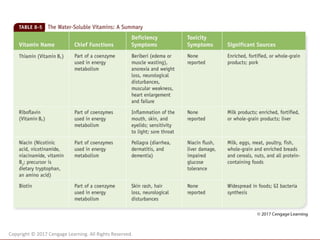
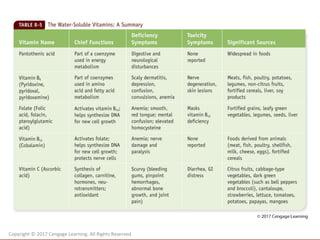
  • #59 Table 8-5 The Water-Soluble Vitamins: A Summary
  • #60 Table 8-5 The Water-Soluble Vitamins: A Summary (cont’d.)