Chapter 8: Digestive System


         Presented by Juliet Lutakome-
         Nambiro
Digestive System

Definitions of the following terms:

     Colonoscopy
     Serum Bilirubin
     Hernioplasty
     Anastomosis
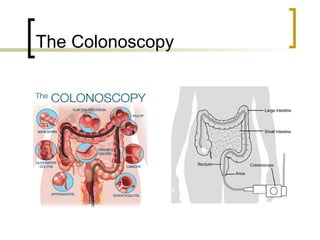
The Colonoscopy
Colonoscopy…

What is a colonoscopy?

       Colonoscopy is a procedure that enables an examiner
        (usually a gastroenterologist) to evaluate the inside of the
        colon (large intestine or large bowel).
       The colonoscope is a four foot long, flexible tube about the
        thickness of a finger with a camera and a source of light at
        its tip.
       The tip of the colonoscope is inserted into the anus and
        then is advanced slowly, under visual control, into the
        rectum and through the colon usually as far as the cecum,
        which is the first part of the colon.
Why is a colonoscopy done?
Colonoscopy may be done for a variety of reasons:

    Blood in the stool
   Abdominal pain
   Diarrhea
   a change in bowel habit
   or an abnormality found on colonic X-rays or a computerized
    axial tomography (CT) scan.
   Individuals with a previous history of polyps or colon cancer
    and certain individuals with a family history of some types of
    non-colonic cancers or colonic problems that may be
    associated with colon cancer (such as ulcerative colitis and
    colonic polyps) may be advised to have periodic
    colonoscopies because their risks are greater for polyps or
    colon cancer.
Serum Bilirubin
   Bilirubin is a yellowish pigment found in bile,
    a fluid made by the liver.
   A small amount of older red blood cells are
    replaced by new blood cells every day.
    Bilirubin is left after these older blood cells
    are removed. The liver helps break down
    bilirubin so that it can be removed by the
    body in the stool.
Why the Test is Performed?
   Large amounts of bilirubin in the blood can
    lead to jaundice. Jaundice is a yellow color
    in the skin, mucus membranes, or eyes.
   Jaundice is the most common reason to
    check bilirubin levels.
   Most newborns have some jaundice.
    The doctor or nurse will often check
    the newborn's bilirubin level.
Bilirubin Contd.

Jaundice can also occur when more red
  blood cells than normal are broken
  down. This can be caused by:
 •Erythroblastosis fetalis

 •Hemolytic anemia

 •Transfusion reaction
Hernioplasty
   hernia is usually because of weakness
    in an individual’s abdominal wall,
    which allows the inner tissue or organs
    to protrude as a bulge on the skin.

   Most often, hernias are found in the
    abdomen or in the groin area.
Bilirubin Contd.

The following liver problems may also
  cause jaundice or high bilirubin levels:
 •Cirrhosis (scarring of the liver)

 •Hepatitis

 •Gilbert's disease
Bilirubin Contd.

The following problems with gallbladder
  or bile ducts may cause higher
  bilirubin levels:
 •Biliary stricture

 •Cancer of the pancreas or gallbladder

 •Gallstones
Bilirubin contd.

It is normal to have some bilirubin in your
    blood. Normal levels are:
 •Direct (also called conjugated)
    bilirubin: 0 to 0.3 mg/dL
 •Total bilirubin: 0.3 to 1.9 mg/dL

 Note: mg/dL = milligrams per deciliter
Hernioplasty
   Hernia repair refers to a
    surgical operation for the correction of a
    hernia (a bulging of internal organs or
    tissues through a defect in the wall of a
    body cavity).
   Hernias can occur in many places, including
    the abdomen, groin, diaphragm, brain, and
    at the site of a previous operation.
   Hernia repair is often performed as an
    ambulatory procedure.
   Repair may correct inguinal hernia, femoral
    hernia, umbilical hernia, or other hernias
Hernioplasty…
   Mesh patches of synthetic material are now
    being widely used to repair hernias
    (hernioplasty).

   This is especially true for hernias that recur
    and for large hernias. Patches are sewn
    over the weakened area in the abdominal
    wall after the hernia is pushed back into
    place. The patch decreases the tension on
    the weakened abdominal wall, reducing the
    risk that a hernia will recur.
Anastomosis

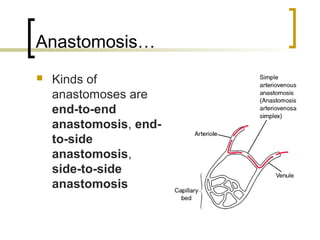
1. A connection between two vessels.
2. A surgical joining of two ducts, blood
   vessels, or bowel segments to allow
   flow from one to the other.
Anastomosis…
   Kinds of
    anastomoses are
    end-to-end
    anastomosis, end-
    to-side
    anastomosis,
    side-to-side
    anastomosis

Chapter 8 digestive

  • 1.
    Chapter 8: DigestiveSystem Presented by Juliet Lutakome- Nambiro
  • 2.
    Digestive System Definitions ofthe following terms:  Colonoscopy  Serum Bilirubin  Hernioplasty  Anastomosis
  • 3.
  • 4.
    Colonoscopy… What is acolonoscopy?  Colonoscopy is a procedure that enables an examiner (usually a gastroenterologist) to evaluate the inside of the colon (large intestine or large bowel).  The colonoscope is a four foot long, flexible tube about the thickness of a finger with a camera and a source of light at its tip.  The tip of the colonoscope is inserted into the anus and then is advanced slowly, under visual control, into the rectum and through the colon usually as far as the cecum, which is the first part of the colon.
  • 5.
    Why is acolonoscopy done? Colonoscopy may be done for a variety of reasons:  Blood in the stool  Abdominal pain  Diarrhea  a change in bowel habit  or an abnormality found on colonic X-rays or a computerized axial tomography (CT) scan.  Individuals with a previous history of polyps or colon cancer and certain individuals with a family history of some types of non-colonic cancers or colonic problems that may be associated with colon cancer (such as ulcerative colitis and colonic polyps) may be advised to have periodic colonoscopies because their risks are greater for polyps or colon cancer.
  • 6.
    Serum Bilirubin  Bilirubin is a yellowish pigment found in bile, a fluid made by the liver.  A small amount of older red blood cells are replaced by new blood cells every day. Bilirubin is left after these older blood cells are removed. The liver helps break down bilirubin so that it can be removed by the body in the stool.
  • 7.
    Why the Testis Performed?  Large amounts of bilirubin in the blood can lead to jaundice. Jaundice is a yellow color in the skin, mucus membranes, or eyes.  Jaundice is the most common reason to check bilirubin levels.  Most newborns have some jaundice. The doctor or nurse will often check the newborn's bilirubin level.
  • 8.
    Bilirubin Contd. Jaundice canalso occur when more red blood cells than normal are broken down. This can be caused by:  •Erythroblastosis fetalis  •Hemolytic anemia  •Transfusion reaction
  • 9.
    Hernioplasty  hernia is usually because of weakness in an individual’s abdominal wall, which allows the inner tissue or organs to protrude as a bulge on the skin.  Most often, hernias are found in the abdomen or in the groin area.
  • 10.
    Bilirubin Contd. The followingliver problems may also cause jaundice or high bilirubin levels:  •Cirrhosis (scarring of the liver)  •Hepatitis  •Gilbert's disease
  • 11.
    Bilirubin Contd. The followingproblems with gallbladder or bile ducts may cause higher bilirubin levels:  •Biliary stricture  •Cancer of the pancreas or gallbladder  •Gallstones
  • 12.
    Bilirubin contd. It isnormal to have some bilirubin in your blood. Normal levels are:  •Direct (also called conjugated) bilirubin: 0 to 0.3 mg/dL  •Total bilirubin: 0.3 to 1.9 mg/dL  Note: mg/dL = milligrams per deciliter
  • 13.
    Hernioplasty  Hernia repair refers to a surgical operation for the correction of a hernia (a bulging of internal organs or tissues through a defect in the wall of a body cavity).  Hernias can occur in many places, including the abdomen, groin, diaphragm, brain, and at the site of a previous operation.  Hernia repair is often performed as an ambulatory procedure.  Repair may correct inguinal hernia, femoral hernia, umbilical hernia, or other hernias
  • 14.
    Hernioplasty…  Mesh patches of synthetic material are now being widely used to repair hernias (hernioplasty).  This is especially true for hernias that recur and for large hernias. Patches are sewn over the weakened area in the abdominal wall after the hernia is pushed back into place. The patch decreases the tension on the weakened abdominal wall, reducing the risk that a hernia will recur.
  • 15.
    Anastomosis 1. A connectionbetween two vessels. 2. A surgical joining of two ducts, blood vessels, or bowel segments to allow flow from one to the other.
  • 16.
    Anastomosis…  Kinds of anastomoses are end-to-end anastomosis, end- to-side anastomosis, side-to-side anastomosis