More Related Content

DOCX
Science grade 7 Module- Table of Contents 
PPTX

PDF

PDF
Science gr. 7 learners matls (q1&2) 
PDF

PDF

PDF
Lg g10 quarter ii module iii on template 
PDF
What's hot

PDF
G7 science teachers guide 
PDF
Integrated Science Module for Grade 7 --Quarter 3-4 
PPTX
lesson in projectile motion, grade 9.pptx 
PPTX
Lesson 1- Earthquakes and Fault.pptx 
PPTX

PPTX
Unlocking of Difficulties(unscrambled).pptx 
PPTX
PROCESSES AND LANDFORMS ALONG PLATE BOUNDARIES 
PPT
Momentum in Grade 9 Physics 
PPTX
Volcanoes In the Philippines 
PDF
Grade 8 science teacher's guide 
PPT
Process skills in Science 
PPTX
Comets, asteroids & meteors 
PPT
Earthquakes and faults (Grade 8 Lesson) 
DOC
Worksheets on Locating Places on a Map -Geography and History 
PDF
Detailed lesson-plan-in-science-8docx-pdf-free 
PPT

PDF

PDF
K to 12 - Grade 8 Science Learner Module 
DOCX
FIRST PERIODICAL EXAM IN SCIENCE 7,SCIENCE 8 AND AUTOMOTIVE SERVICING 8 WITH TOS 
DOCX
Sample Semi-detailed Lesson Plan for Grade 8 Science, Prepared by: Edsyl Ber... Science grade 8 module table of contents
- 1.
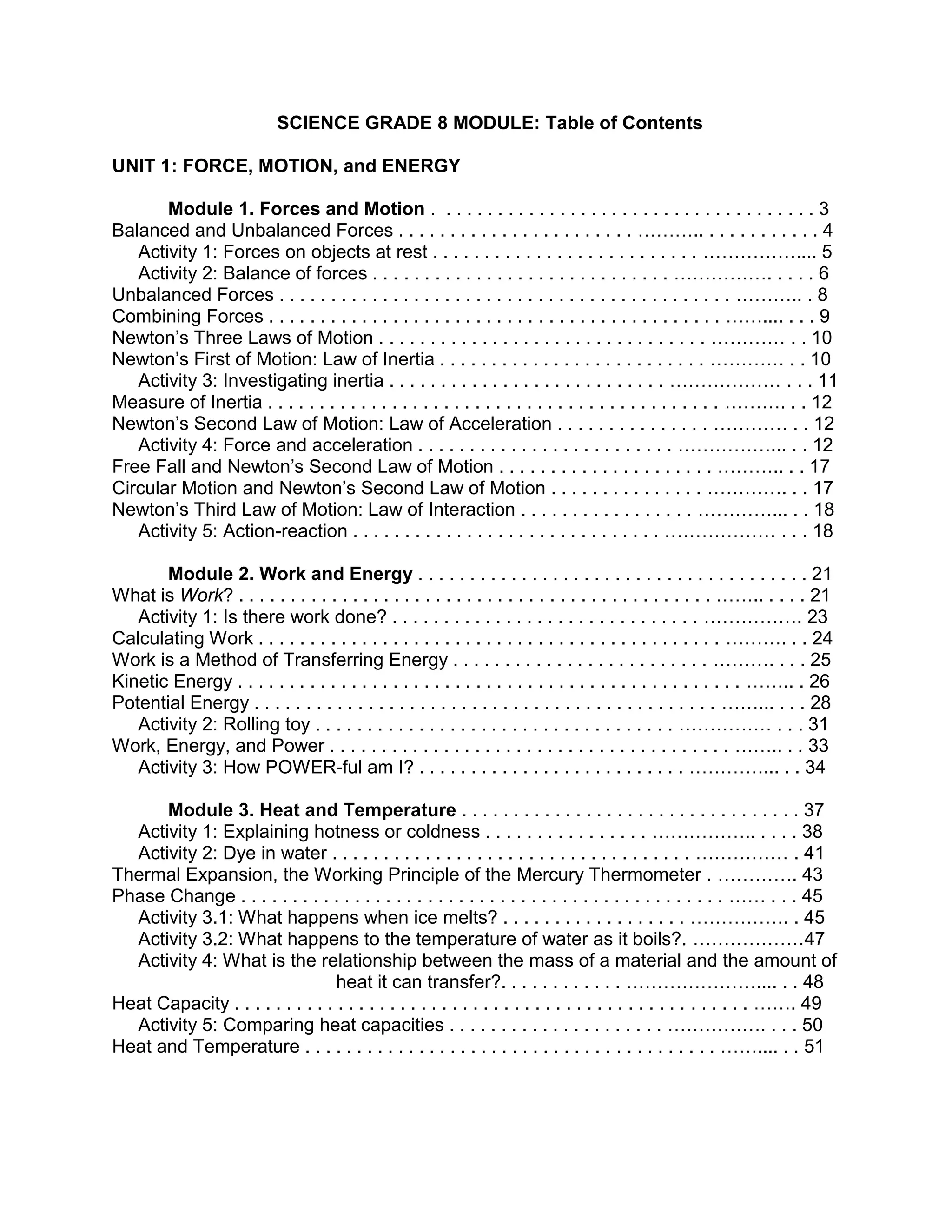
SCIENCE GRADE 8MODULE: Table of Contents
UNIT 1: FORCE, MOTION, and ENERGY
Module 1. Forces and Motion . . . . . . . . . . . . . . . . . . . . . . . . . . . . . . . . . . . . . 3
Balanced and Unbalanced Forces . . . . . . . . . . . . . . . . . . . . . . . ……….. . . . . . . . . . . . 4
Activity 1: Forces on objects at rest . . . . . . . . . . . . . . . . . . . . . . . . . . …………….... 5
Activity 2: Balance of forces . . . . . . . . . . . . . . . . . . . . . . . . . . . . . ……………. . . . . 6
Unbalanced Forces . . . . . . . . . . . . . . . . . . . . . . . . . . . . . . . . . . . . . . . . . . . . ……….. . 8
Combining Forces . . . . . . . . . . . . . . . . . . . . . . . . . . . . . . . . . . . . . . . . . . . . …….... . . . 9
Newton’s Three Laws of Motion . . . . . . . . . . . . . . . . . . . . . . . . . . . . . . . . ………… . . 10
Newton’s First of Motion: Law of Inertia . . . . . . . . . . . . . . . . . . . . . . . . . . ………… . . 10
Activity 3: Investigating inertia . . . . . . . . . . . . . . . . . . . . . . . . . . . ……………… . . . 11
Measure of Inertia . . . . . . . . . . . . . . . . . . . . . . . . . . . . . . . . . . . . . . . . . . . . ………. . . 12
Newton’s Second Law of Motion: Law of Acceleration . . . . . . . . . . . . . . . ………… . . 12
Activity 4: Force and acceleration . . . . . . . . . . . . . . . . . . . . . . . . . ……………... . . 12
Free Fall and Newton’s Second Law of Motion . . . . . . . . . . . . . . . . . . . . . ……….. . . 17
Circular Motion and Newton’s Second Law of Motion . . . . . . . . . . . . . . . …………. . . 17
Newton’s Third Law of Motion: Law of Interaction . . . . . . . . . . . . . . . . . …………... . . 18
Activity 5: Action-reaction . . . . . . . . . . . . . . . . . . . . . . . . . . . . . . ……………… . . . 18
Module 2. Work and Energy . . . . . . . . . . . . . . . . . . . . . . . . . . . . . . . . . . . . . . 21
What is Work? . . . . . . . . . . . . . . . . . . . . . . . . . . . . . . . . . . . . . . . . . . . . . . …….. . . . . 21
Activity 1: Is there work done? . . . . . . . . . . . . . . . . . . . . . . . . . . . . . . ……………. 23
Calculating Work . . . . . . . . . . . . . . . . . . . . . . . . . . . . . . . . . . . . . . . . . . . . . ………. . . 24
Work is a Method of Transferring Energy . . . . . . . . . . . . . . . . . . . . . . . . . ………. . . . 25
Kinetic Energy . . . . . . . . . . . . . . . . . . . . . . . . . . . . . . . . . . . . . . . . . . . . . . . . . …….. . 26
Potential Energy . . . . . . . . . . . . . . . . . . . . . . . . . . . . . . . . . . . . . . . . . . . . . ……... . . . 28
Activity 2: Rolling toy . . . . . . . . . . . . . . . . . . . . . . . . . . . . . . . . . . . …………… . . . 31
Work, Energy, and Power . . . . . . . . . . . . . . . . . . . . . . . . . . . . . . . . . . . . . . . …….. . . 33
Activity 3: How POWER-ful am I? . . . . . . . . . . . . . . . . . . . . . . . . . . …………... . . 34
Module 3. Heat and Temperature . . . . . . . . . . . . . . . . . . . . . . . . . . . . . . . . . 37
Activity 1: Explaining hotness or coldness . . . . . . . . . . . . . . . . …………….. . . . . 38
Activity 2: Dye in water . . . . . . . . . . . . . . . . . . . . . . . . . . . . . . . . . . . …………… . 41
Thermal Expansion, the Working Principle of the Mercury Thermometer . …………. 43
Phase Change . . . . . . . . . . . . . . . . . . . . . . . . . . . . . . . . . . . . . . . . . . . . . . . …… . . . 45
Activity 3.1: What happens when ice melts? . . . . . . . . . . . . . . . . . . ……………. . 45
Activity 3.2: What happens to the temperature of water as it boils?. ………………47
Activity 4: What is the relationship between the mass of a material and the amount of
heat it can transfer?. . . . . . . . . . . . ………………….... . . 48
Heat Capacity . . . . . . . . . . . . . . . . . . . . . . . . . . . . . . . . . . . . . . . . . . . . . . . . . . ……. 49
Activity 5: Comparing heat capacities . . . . . . . . . . . . . . . . . . . . . ……………. . . . 50
Heat and Temperature . . . . . . . . . . . . . . . . . . . . . . . . . . . . . . . . . . . . . . . . …….... . . 51
- 2.
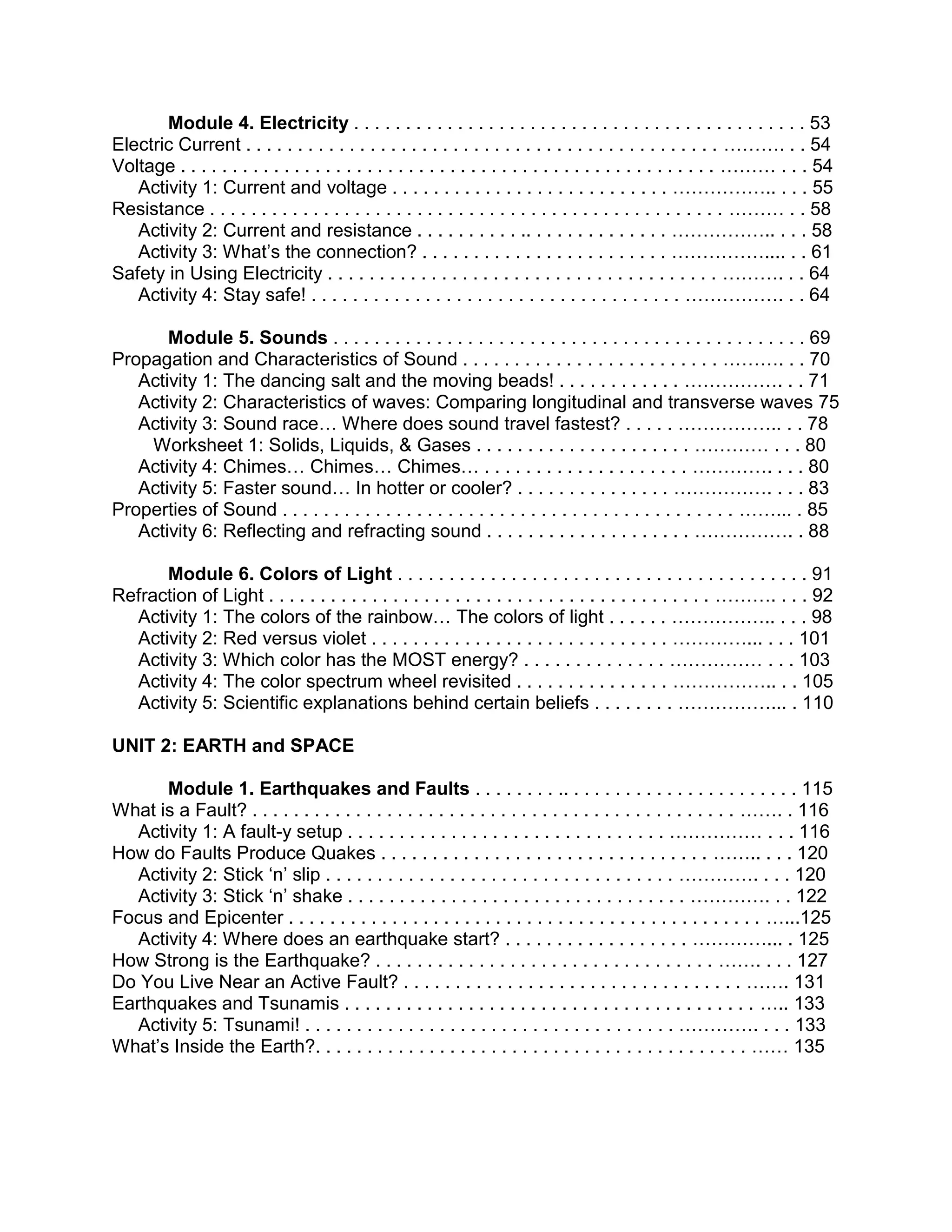
Module 4. Electricity. . . . . . . . . . . . . . . . . . . . . . . . . . . . . . . . . . . . . . . . . . . . 53
Electric Current . . . . . . . . . . . . . . . . . . . . . . . . . . . . . . . . . . . . . . . . . . . . . . ………. . . 54
Voltage . . . . . . . . . . . . . . . . . . . . . . . . . . . . . . . . . . . . . . . . . . . . . . . . . . . . ……… . . . 54
Activity 1: Current and voltage . . . . . . . . . . . . . . . . . . . . . . . . . . . …………….. . . . 55
Resistance . . . . . . . . . . . . . . . . . . . . . . . . . . . . . . . . . . . . . . . . . . . . . . . . . . ……… . . 58
Activity 2: Current and resistance . . . . . . . . . . .. . . . . . . . . . . . . . …………….. . . . 58
Activity 3: What’s the connection? . . . . . . . . . . . . . . . . . . . . . . . . …………….... . . 61
Safety in Using Electricity . . . . . . . . . . . . . . . . . . . . . . . . . . . . . . . . . . . . . . ………. . . 64
Activity 4: Stay safe! . . . . . . . . . . . . . . . . . . . . . . . . . . . . . . . . . . . . ……………. . . 64
Module 5. Sounds . . . . . . . . . . . . . . . . . . . . . . . . . . . . . . . . . . . . . . . . . . . . . . 69
Propagation and Characteristics of Sound . . . . . . . . . . . . . . . . . . . . . . . . . ………. . . 70
Activity 1: The dancing salt and the moving beads! . . . . . . . . . . . . ……………. . . 71
Activity 2: Characteristics of waves: Comparing longitudinal and transverse waves 75
Activity 3: Sound race… Where does sound travel fastest? . . . . . …………….. . . 78
Worksheet 1: Solids, Liquids, & Gases . . . . . . . . . . . . . . . . . . . . . ………… . . . 80
Activity 4: Chimes… Chimes… Chimes… . . . . . . . . . . . . . . . . . . . . …………. . . . 80
Activity 5: Faster sound… In hotter or cooler? . . . . . . . . . . . . . . . ……………. . . . 83
Properties of Sound . . . . . . . . . . . . . . . . . . . . . . . . . . . . . . . . . . . . . . . . . . . . ……... . 85
Activity 6: Reflecting and refracting sound . . . . . . . . . . . . . . . . . . . . ……………. . 88
Module 6. Colors of Light . . . . . . . . . . . . . . . . . . . . . . . . . . . . . . . . . . . . . . . . 91
Refraction of Light . . . . . . . . . . . . . . . . . . . . . . . . . . . . . . . . . . . . . . . . . . . ………. . . . 92
Activity 1: The colors of the rainbow… The colors of light . . . . . . …………….. . . . 98
Activity 2: Red versus violet . . . . . . . . . . . . . . . . . . . . . . . . . . . . . …………... . . . 101
Activity 3: Which color has the MOST energy? . . . . . . . . . . . . . . …………… . . . 103
Activity 4: The color spectrum wheel revisited . . . . . . . . . . . . . . . …………….. . . 105
Activity 5: Scientific explanations behind certain beliefs . . . . . . . . ……………... . 110
UNIT 2: EARTH and SPACE
Module 1. Earthquakes and Faults . . . . . . . . .. . . . . . . . . . . . . . . . . . . . . . . 115
What is a Fault? . . . . . . . . . . . . . . . . . . . . . . . . . . . . . . . . . . . . . . . . . . . . . . . ……. . 116
Activity 1: A fault-y setup . . . . . . . . . . . . . . . . . . . . . . . . . . . . . . . …………… . . . 116
How do Faults Produce Quakes . . . . . . . . . . . . . . . . . . . . . . . . . . . . . . . . …….. . . . 120
Activity 2: Stick ‘n’ slip . . . . . . . . . . . . . . . . . . . . . . . . . . . . . . . . . . …………. . . . 120
Activity 3: Stick ‘n’ shake . . . . . . . . . . . . . . . . . . . . . . . . . . . . . . . . . …………. . . 122
Focus and Epicenter . . . . . . . . . . . . . . . . . . . . . . . . . . . . . . . . . . . . . . . . . . . . . . …...125
Activity 4: Where does an earthquake start? . . . . . . . . . . . . . . . . . . …………... . 125
How Strong is the Earthquake? . . . . . . . . . . . . . . . . . . . . . . . . . . . . . . . . . ……. . . . 127
Do You Live Near an Active Fault? . . . . . . . . . . . . . . . . . . . . . . . . . . . . . . . . . ……. 131
Earthquakes and Tsunamis . . . . . . . . . . . . . . . . . . . . . . . . . . . . . . . . . . . . . . . . ….. 133
Activity 5: Tsunami! . . . . . . . . . . . . . . . . . . . . . . . . . . . . . . . . . . . . …………. . . . 133
What’s Inside the Earth?. . . . . . . . . . . . . . . . . . . . . . . . . . . . . . . . . . . . . . . . . . …… 135
- 3.
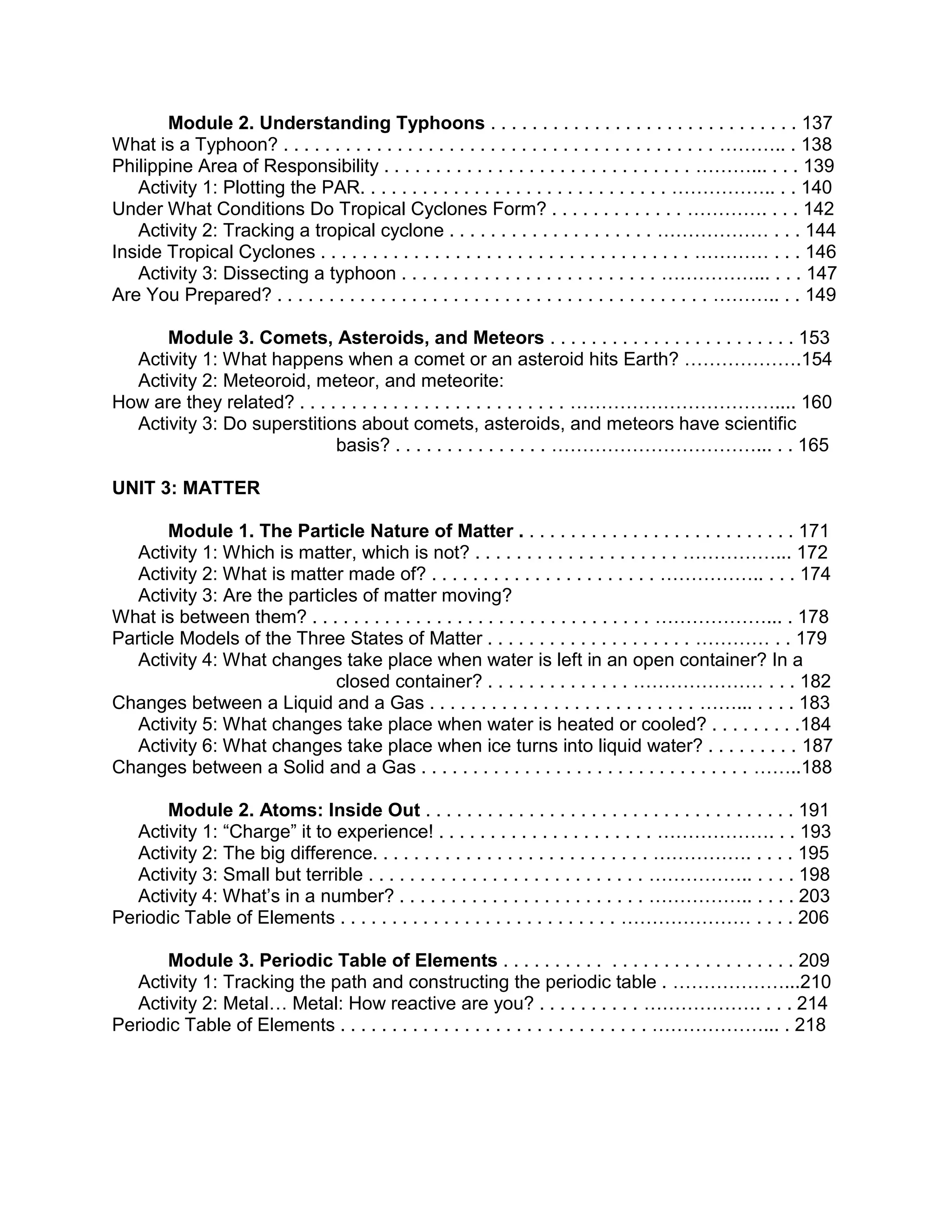
Module 2. UnderstandingTyphoons . . . . . . . . . . . . . . . . . . . . . . . . . . . . . . 137
What is a Typhoon? . . . . . . . . . . . . . . . . . . . . . . . . . . . . . . . . . . . . . . . . . . ……….. . 138
Philippine Area of Responsibility . . . . . . . . . . . . . . . . . . . . . . . . . . . . . . ………... . . . 139
Activity 1: Plotting the PAR. . . . . . . . . . . . . . . . . . . . . . . . . . . . . . …………….. . . 140
Under What Conditions Do Tropical Cyclones Form? . . . . . . . . . . . . . …………. . . . 142
Activity 2: Tracking a tropical cyclone . . . . . . . . . . . . . . . . . . . . ……………… . . . 144
Inside Tropical Cyclones . . . . . . . . . . . . . . . . . . . . . . . . . . . . . . . . . . . . ………… . . . 146
Activity 3: Dissecting a typhoon . . . . . . . . . . . . . . . . . . . . . . . . . ……………... . . . 147
Are You Prepared? . . . . . . . . . . . . . . . . . . . . . . . . . . . . . . . . . . . . . . . . . . ……….. . . 149
Module 3. Comets, Asteroids, and Meteors . . . . . . . . . . . . . . . . . . . . . . . . 153
Activity 1: What happens when a comet or an asteroid hits Earth? ……………….154
Activity 2: Meteoroid, meteor, and meteorite:
How are they related? . . . . . . . . . . . . . . . . . . . . . . . . . . …………………………….... 160
Activity 3: Do superstitions about comets, asteroids, and meteors have scientific
basis? . . . . . . . . . . . . . . . ……………………………... . . 165
UNIT 3: MATTER
Module 1. The Particle Nature of Matter . . . . . . . . . . . . . . . . . . . . . . . . . . . 171
Activity 1: Which is matter, which is not? . . . . . . . . . . . . . . . . . . . . ……………... 172
Activity 2: What is matter made of? . . . . . . . . . . . . . . . . . . . . . . …………….. . . . 174
Activity 3: Are the particles of matter moving?
What is between them? . . . . . . . . . . . . . . . . . . . . . . . . . . . . . . . . . ………………... . 178
Particle Models of the Three States of Matter . . . . . . . . . . . . . . . . . . . . ………… . . 179
Activity 4: What changes take place when water is left in an open container? In a
closed container? . . . . . . . . . . . . . . ………………… . . . 182
Changes between a Liquid and a Gas . . . . . . . . . . . . . . . . . . . . . . . . . . ……... . . . . 183
Activity 5: What changes take place when water is heated or cooled? . . . . . . . . .184
Activity 6: What changes take place when ice turns into liquid water? . . . . . . . . . 187
Changes between a Solid and a Gas . . . . . . . . . . . . . . . . . . . . . . . . . . . . . . . . ……..188
Module 2. Atoms: Inside Out . . . . . . . . . . . . . . . . . . . . . . . . . . . . . . . . . . . . 191
Activity 1: “Charge” it to experience! . . . . . . . . . . . . . . . . . . . . . ………………. . . 193
Activity 2: The big difference. . . . . . . . . . . . . . . . . . . . . . . . . . . ……………. . . . . 195
Activity 3: Small but terrible . . . . . . . . . . . . . . . . . . . . . . . . . . . …………….. . . . . 198
Activity 4: What’s in a number? . . . . . . . . . . . . . . . . . . . . . . . . …………….. . . . . 203
Periodic Table of Elements . . . . . . . . . . . . . . . . . . . . . . . . . . . ………………… . . . . 206
Module 3. Periodic Table of Elements . . . . . . . . . . . . . . . . . . . . . . . . . . . . 209
Activity 1: Tracking the path and constructing the periodic table . ………………...210
Activity 2: Metal… Metal: How reactive are you? . . . . . . . . . . ………………. . . . 214
Periodic Table of Elements . . . . . . . . . . . . . . . . . . . . . . . . . . . . . . ………………... . 218
- 4.
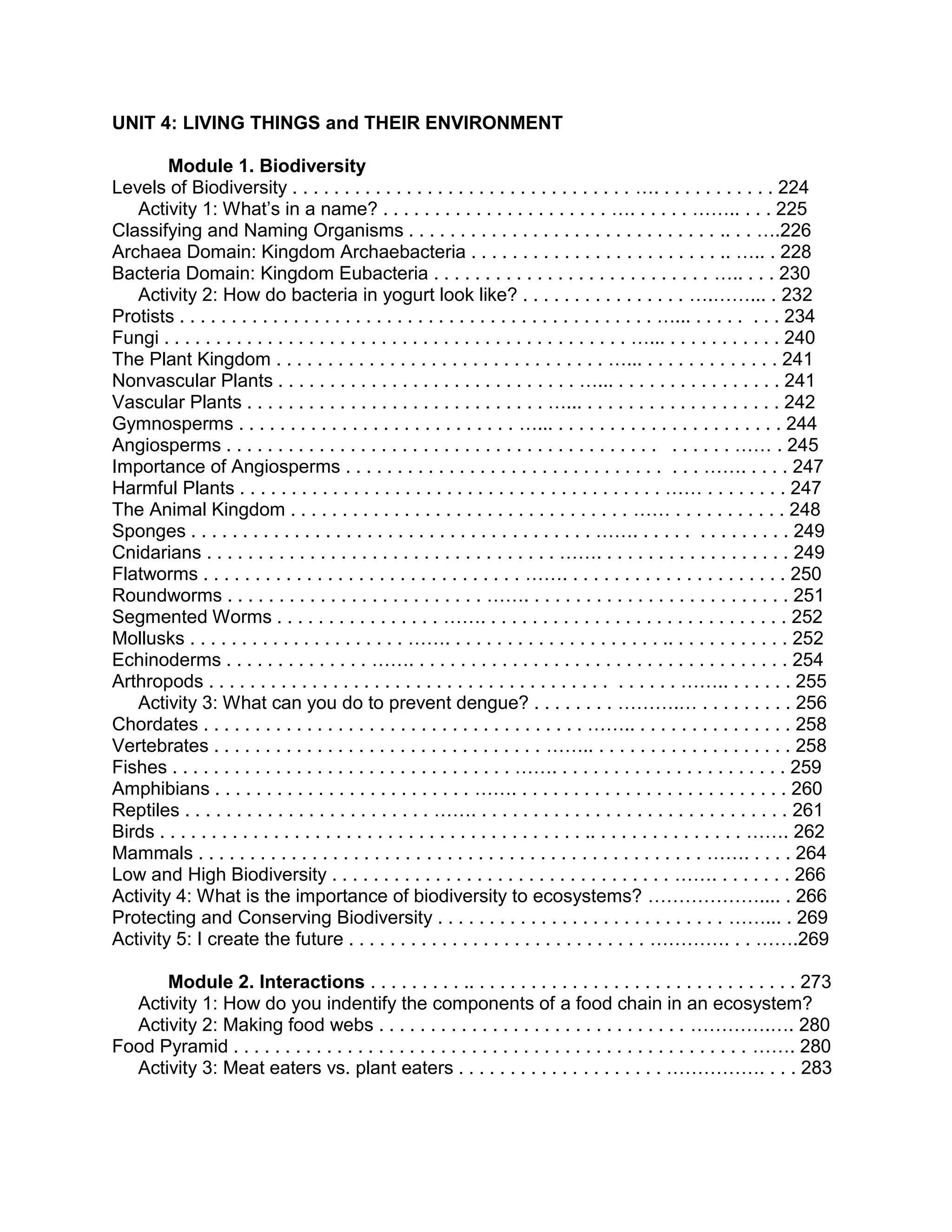
UNIT 4: LIVINGTHINGS and THEIR ENVIRONMENT
Module 1. Biodiversity
Levels of Biodiversity . . . . . . . . . . . . . . . . . . . . . . . . . . . . . . . . . …. . . . . . . . . . . . 224
Activity 1: What’s in a name? . . . . . . . . . . . . . . . . . . . . . . …. . . . . . …….. . . . 225
Classifying and Naming Organisms . . . . . . . . . . . . . . . . . . . . . . . . . . . . . . .. . . ….226
Archaea Domain: Kingdom Archaebacteria . . . . . . . . . . . . . . . . . . . . . . . . .. ….. . 228
Bacteria Domain: Kingdom Eubacteria . . . . . . . . . . . . . . . . . . . . . . . . . . . ….. . . . 230
Activity 2: How do bacteria in yogurt look like? . . . . . . . . . . . . . . . . ….……... . 232
Protists . . . . . . . . . . . . . . . . . . . . . . . . . . . . . . . . . . . . . . . . . . . . . . …... . . . . . . . . 234
Fungi . . . . . . . . . . . . . . . . . . . . . . . . . . . . . . . . . . . . . . . . . . . . . …... . . . . . . . . . . . 240
The Plant Kingdom . . . . . . . . . . . . . . . . . . . . . . . . . . . . . . . . …... . . . . . . . . . . . . . 241
Nonvascular Plants . . . . . . . . . . . . . . . . . . . . . . . . . . . . . …... . . . . . . . . . . . . . . . . 241
Vascular Plants . . . . . . . . . . . . . . . . . . . . . . . . . . . . . …... . . . . . . . . . . . . . . . . . . . 242
Gymnosperms . . . . . . . . . . . . . . . . . . . . . . . . . . . …... . . . . . . . . . . . . . . . . . . . . . . 244
Angiosperms . . . . . . . . . . . . . . . . . . . . . . . . . . . . . . . . . . . . . . . . . . . . . . . . …… . 245
Importance of Angiosperms . . . . . . . . . . . . . . . . . . . . . . . . . . . . . . . . . . ……. . . . . 247
Harmful Plants . . . . . . . . . . . . . . . . . . . . . . . . . . . . . . . . . . . . . . . . . …… . . . . . . . . 247
The Animal Kingdom . . . . . . . . . . . . . . . . . . . . . . . . . . . . . . . . . …… . . . . . . . . . . . 248
Sponges . . . . . . . . . . . . . . . . . . . . . . . . . . . . . . . . . . . . . . . ……. . . . . . . . . . . . . . . 249
Cnidarians . . . . . . . . . . . . . . . . . . . . . . . . . . . . . . . . . . ……. . . . . . . . . . . . . . . . . . . 249
Flatworms . . . . . . . . . . . . . . . . . . . . . . . . . . . . . . . ……. . . . . . . . . . . . . . . . . . . . . . 250
Roundworms . . . . . . . . . . . . . . . . . . . . . . . . . ……. . . . . . . . . . . . . . . . . . . . . . . . . . 251
Segmented Worms . . . . . . . . . . . . . . . . ……. . . . . . . . . . . . . . . . . . . . . . . . . . . . . . 252
Mollusks . . . . . . . . . . . . . . . . . . . . . ……. . . . . . . . . . . . . . . . . . . . . .. . . . . . . . . . . . 252
Echinoderms . . . . . . . . . . . . . . ……. . . . . . . . . . . . . . . . . . . . . . . . . . . . . . . . . . . . . 254
Arthropods . . . . . . . . . . . . . . . . . . . . . . . . . . . . . . . . . . . . . . . . . . . . . …….. . . . . . . 255
Activity 3: What can you do to prevent dengue? . . . . . . . . ……….… . . . . . . . . . 256
Chordates . . . . . . . . . . . . . . . . . . . . . . . . . . . . . . . . . . . . . …….. . . . . . . . . . . . . . . . 258
Vertebrates . . . . . . . . . . . . . . . . . . . . . . . . . . . . . . . . …….. . . . . . . . . . . . . . . . . . . . 258
Fishes . . . . . . . . . . . . . . . . . . . . . . . . . . . . . . . . . ……. . . . . . . . . . . . . . . . . . . . . . . 259
Amphibians . . . . . . . . . . . . . . . . . . . . . . . . . ……. . . . . . . . . . . . . . . . . . . . . . . . . . . 260
Reptiles . . . . . . . . . . . . . . . . . . . . . . . . ……. . . . . . . . . . . . . . . . . . . . . . . . . . . . . . . 261
Birds . . . . . . . . . . . . . . . . . . . . . . . . . . . . . . . . . . . . . . . . . .. . . . . . . . . . . . . . . ……. 262
Mammals . . . . . . . . . . . . . . . . . . . . . . . . . . . . . . . . . . . . . . . . . . . . . . . . . ……. . . . . 264
Low and High Biodiversity . . . . . . . . . . . . . . . . . . . . . . . . . . . . . . . . . ……. . . . . . . . 266
Activity 4: What is the importance of biodiversity to ecosystems? ……………….... . 266
Protecting and Conserving Biodiversity . . . . . . . . . . . . . . . . . . . . . . . . . . . . ……... . 269
Activity 5: I create the future . . . . . . . . . . . . . . . . . . . . . . . . . . . . . …………. . . …….269
Module 2. Interactions . . . . . . . . . .. . . . . . . . . . . . . . . . . . . . . . . . . . . . . . . . 273
Activity 1: How do you indentify the components of a food chain in an ecosystem?
Activity 2: Making food webs . . . . . . . . . . . . . . . . . . . . . . . . . . . . . . ………….…. 280
Food Pyramid . . . . . . . . . . . . . . . . . . . . . . . . . . . . . . . . . . . . . . . . . . . . . . . . . . ……. 280
Activity 3: Meat eaters vs. plant eaters . . . . . . . . . . . . . . . . . . . . ……………. . . . 283
- 5.
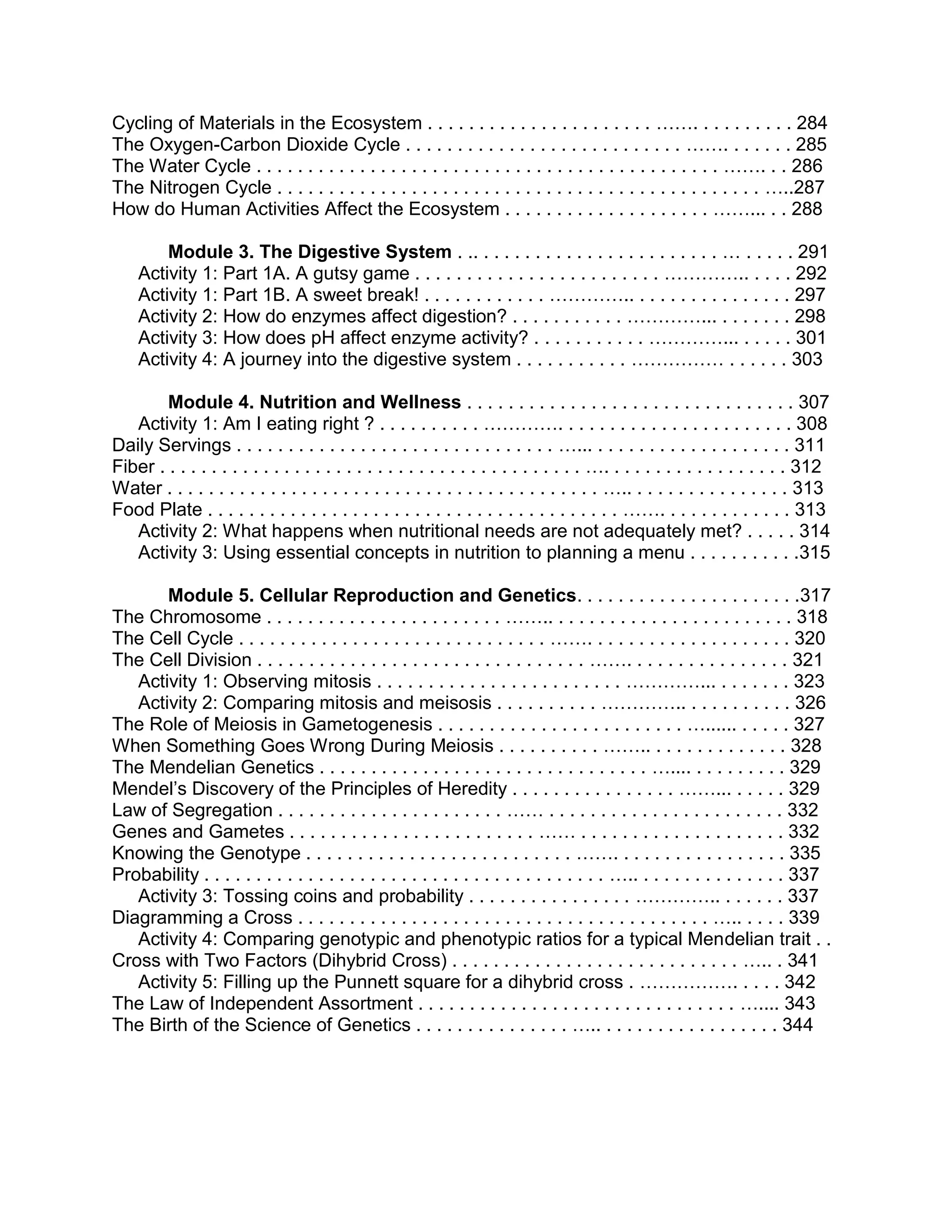
Cycling of Materialsin the Ecosystem . . . . . . . . . . . . . . . . . . . . . . ……. . . . . . . . . . 284
The Oxygen-Carbon Dioxide Cycle . . . . . . . . . . . . . . . . . . . . . . . . . . . ……. . . . . . . 285
The Water Cycle . . . . . . . . . . . . . . . . . . . . . . . . . . . . . . . . . . . . . . . . . . . . . ……. . . 286
The Nitrogen Cycle . . . . . . . . . . . . . . . . . . . . . . . . . . . . . . . . . . . . . . . . . . . . . . . …..287
How do Human Activities Affect the Ecosystem . . . . . . . . . . . . . . . . . . . . ……... . . 288
Module 3. The Digestive System . .. . . . . . . . . . . . . . . . . . . . . . . . … . . . . . 291
Activity 1: Part 1A. A gutsy game . . . . . . . . . . . . . . . . . . . . . . . . ………….. . . . . 292
Activity 1: Part 1B. A sweet break! . . . . . . . . . . . . ………….. . . . . . . . . . . . . . . . 297
Activity 2: How do enzymes affect digestion? . . . . . . . . . . . …………... . . . . . . . 298
Activity 3: How does pH affect enzyme activity? . . . . . . . . . . . …………... . . . . . 301
Activity 4: A journey into the digestive system . . . . . . . . . . . …………… . . . . . . 303
Module 4. Nutrition and Wellness . . . . . . . . . . . . . . . . . . . . . . . . . . . . . . . . 307
Activity 1: Am I eating right ? . . . . . . . . . . …………. . . . . . . . . . . . . . . . . . . . . . . 308
Daily Servings . . . . . . . . . . . . . . . . . . . . . . . . . . . . . . . …... . . . . . . . . . . . . . . . . . . . 311
Fiber . . . . . . . . . . . . . . . . . . . . . . . . . . . . . . . . . . . . . . . . . …. . . . . . . . . . . . . . . . . . 312
Water . . . . . . . . . . . . . . . . . . . . . . . . . . . . . . . . . . . . . . . . . . ….. . . . . . . . . . . . . . . . 313
Food Plate . . . . . . . . . . . . . . . . . . . . . . . . . . . . . . . . . . . . . . . . ……. . . . . . . . . . . . . 313
Activity 2: What happens when nutritional needs are not adequately met? . . . . . 314
Activity 3: Using essential concepts in nutrition to planning a menu . . . . . . . . . . .315
Module 5. Cellular Reproduction and Genetics. . . . . . . . . . . . . . . . . . . . . .317
The Chromosome . . . . . . . . . . . . . . . . . . . . . . . …….. . . . . . . . . . . . . . . . . . . . . . . . 318
The Cell Cycle . . . . . . . . . . . . . . . . . . . . . . . . . . . . . . ……. . . . . . . . . . . . . . . . . . . . 320
The Cell Division . . . . . . . . . . . . . . . . . . . . . . . . . . . . . . . . ……. . . . . . . . . . . . . . . . 321
Activity 1: Observing mitosis . . . . . . . . . . . . . . . . . . . . . . . . …………... . . . . . . . 323
Activity 2: Comparing mitosis and meisosis . . . . . . . . . . ………….. . . . . . . . . . . 326
The Role of Meiosis in Gametogenesis . . . . . . . . . . . . . . . . . . . . . . . . …...... . . . . . 327
When Something Goes Wrong During Meiosis . . . . . . . . . . …….. . . . . . . . . . . . . . 328
The Mendelian Genetics . . . . . . . . . . . . . . . . . . . . . . . . . . . . . . . . ….... . . . . . . . . . 329
Mendel’s Discovery of the Principles of Heredity . . . . . . . . . . . . . . . . ……... . . . . . 329
Law of Segregation . . . . . . . . . . . . . . . . . . . . . . …… . . . . . . . . . . . . . . . . . . . . . . . 332
Genes and Gametes . . . . . . . . . . . . . . . . . . . . . . . . …… . . . . . . . . . . . . . . . . . . . . 332
Knowing the Genotype . . . . . . . . . . . . . . . . . . . . . . . . . . ……. . . . . . . . . . . . . . . . . 335
Probability . . . . . . . . . . . . . . . . . . . . . . . . . . . . . . . . . . . . . . . ….. . . . . . . . . . . . . . . 337
Activity 3: Tossing coins and probability . . . . . . . . . . . . . . . . ………….. . . . . . . 337
Diagramming a Cross . . . . . . . . . . . . . . . . . . . . . . . . . . . . . . . . . . . . . . . . ….. . . . . 339
Activity 4: Comparing genotypic and phenotypic ratios for a typical Mendelian trait . .
Cross with Two Factors (Dihybrid Cross) . . . . . . . . . . . . . . . . . . . . . . . . . . . . ….. . 341
Activity 5: Filling up the Punnett square for a dihybrid cross . ……………. . . . . 342
The Law of Independent Assortment . . . . . . . . . . . . . . . . . . . . . . . . . . . . . . . ….... 343
The Birth of the Science of Genetics . . . . . . . . . . . . . . . ….. . . . . . . . . . . . . . . . . . 344
- 6.
Non-Mendelian Patterns ofInheritance . . . . . . . . . . . . . . . … . . . . . . . . . . . . . . 345
Activity 6: Phenotypes and genotypes in incomplete dominance. . ………. . 345
Activity 7: Inferring genotypes of ABO blood types based on the parental blood
types. . . . . . . . . . . . . . . . ……………….. . . . . . . . . 347
Sex Chromosomes and Sex Determination . . . . . . . . . . . . . . . . . . . .. . . . . . . . 348