Managerial skill and
organizational hierarchy
relationship
Managerial skill
managerial skills are the knowledge and ability of the
individuals in a managerial position to fulfill some
specific managerial activities or tasks.
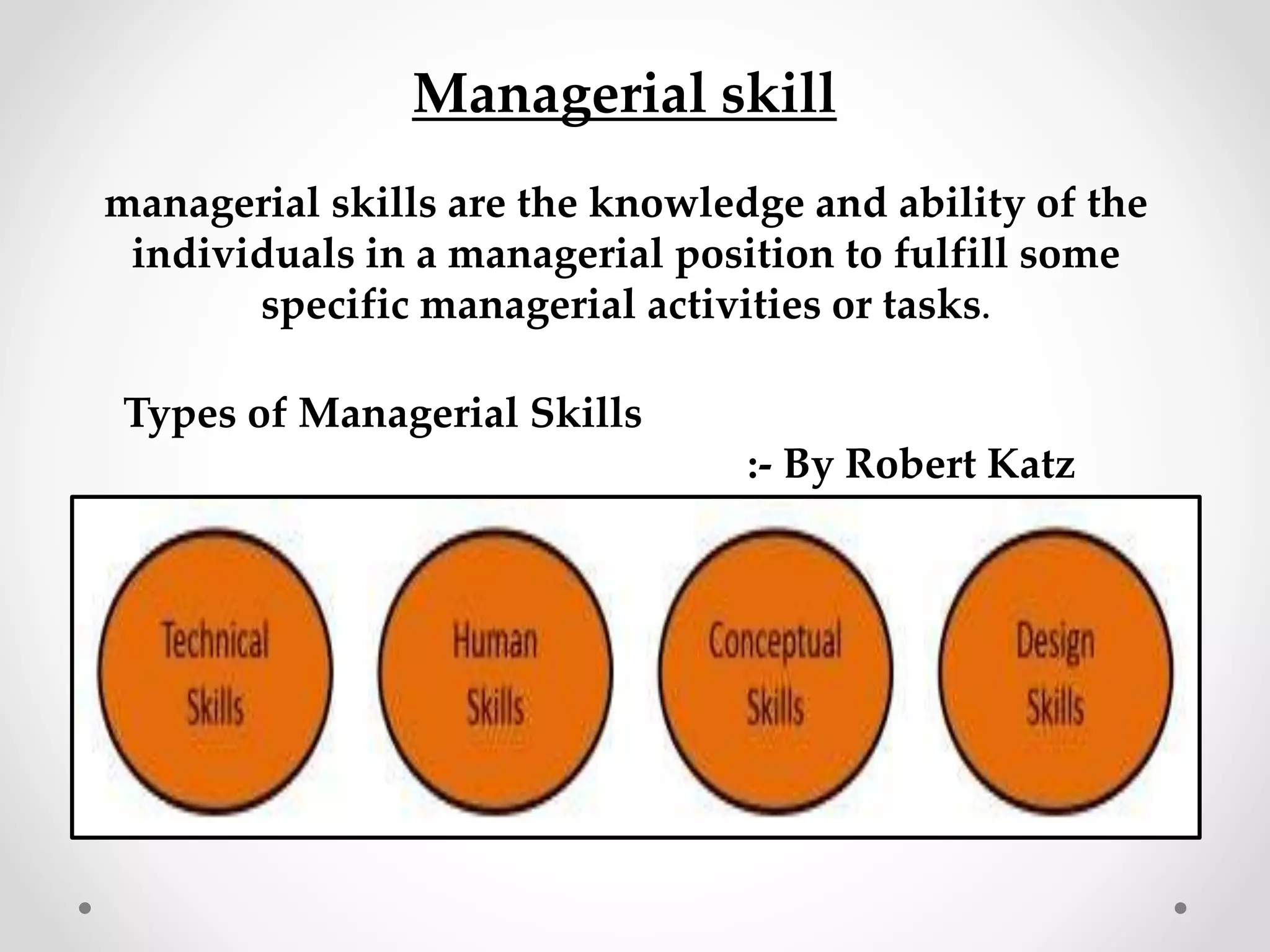
Types of Managerial Skills
:- By Robert Katz
Technical Skills:
refers to the ability of a person to carry
out a specific activity.
Human Skills:
refers to the ability of a person to work
well with other people in a group.
Conceptual Skills:
refer to the ability of a person to think
and conceptualize abstract situations.
Design Skills:
refers to the ability of a person to find solutions to
the problems in ways beneficial to the
organization.
organizational hierarchy
The organizational hierarchy depicts
the relationships between the various
organizational units (OUs).
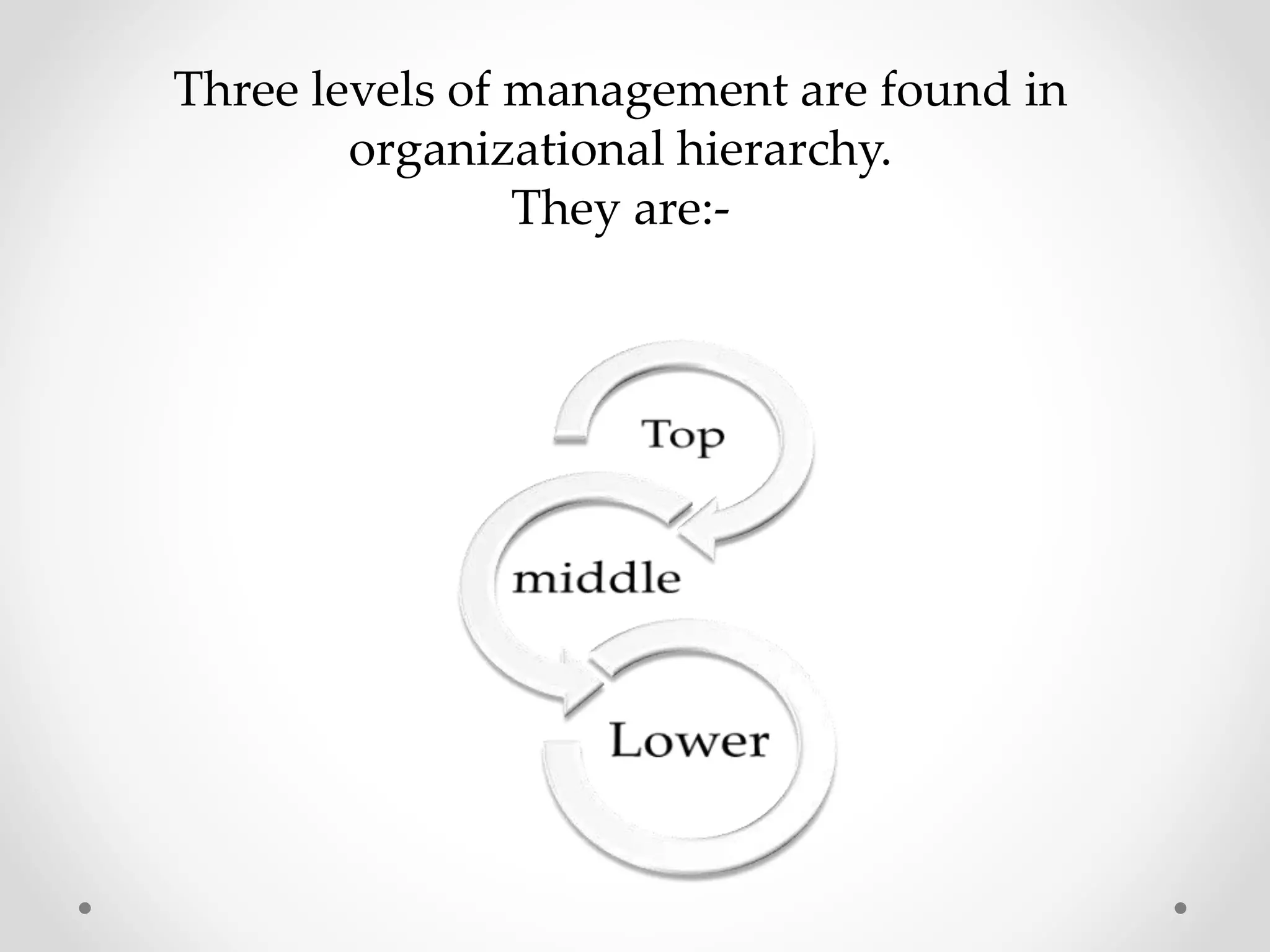
Three levels of management are found in
organizational hierarchy.
They are:-
Top-Level Management
Top-level managers, or top managers, are also called senior
management or executives. Leaders of the organization are
setting in top-level management.
• Top-level managers make decisions affecting the
entirety of the firm.
• Top managers are ultimately responsible for the
performance of the organization, and often, these
managers have very visible jobs.
Middle-Level Management
Middle-level managers, or middle managers, are those in
the levels below top managers. Middle managers’ job titles
include General Manager, Plant manager, Regional
manager, and Divisional manager.
• Middle manager’s controls, motivate, and assist first-
line managers to achieve business objectives.
• Inspiring and providing guidance to low-level
managers towards better performance.
• Defining and discussing information and policies
from top management to lower management; and
most importantly
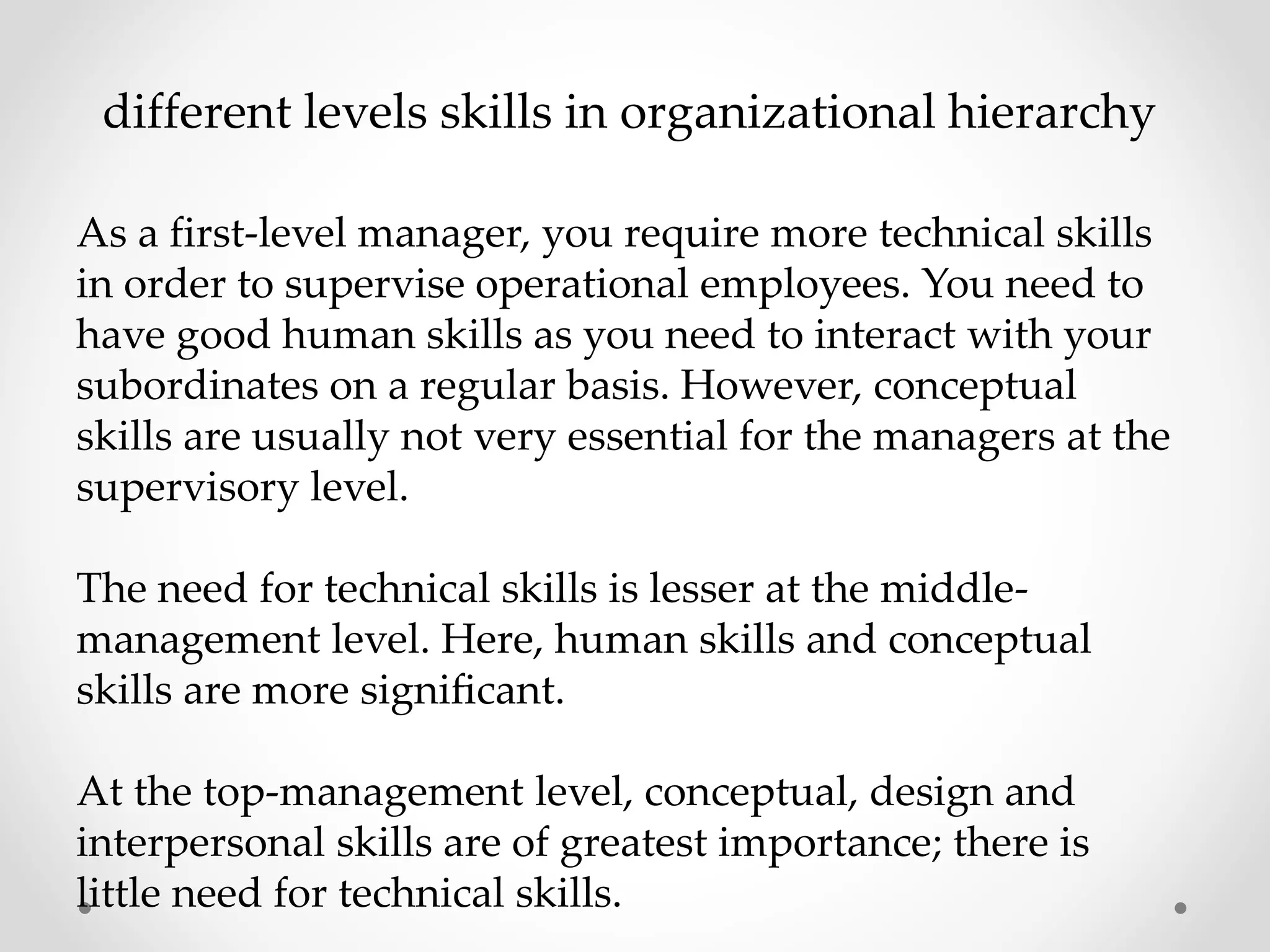
supervisors, section leads, and foremen are examples of
low-level management titles. These managers focus on
controlling and directing.
Low-level managers usually have the responsibility of:
• Assigning employees tasks;
• Guiding and supervising employees on day-to-day
activities;
• Ensuring the quality and quantity of production;
• Making recommendations and suggestions; and
• Up channeling employee problems.
Lower level management
different levels skills in organizational hierarchy
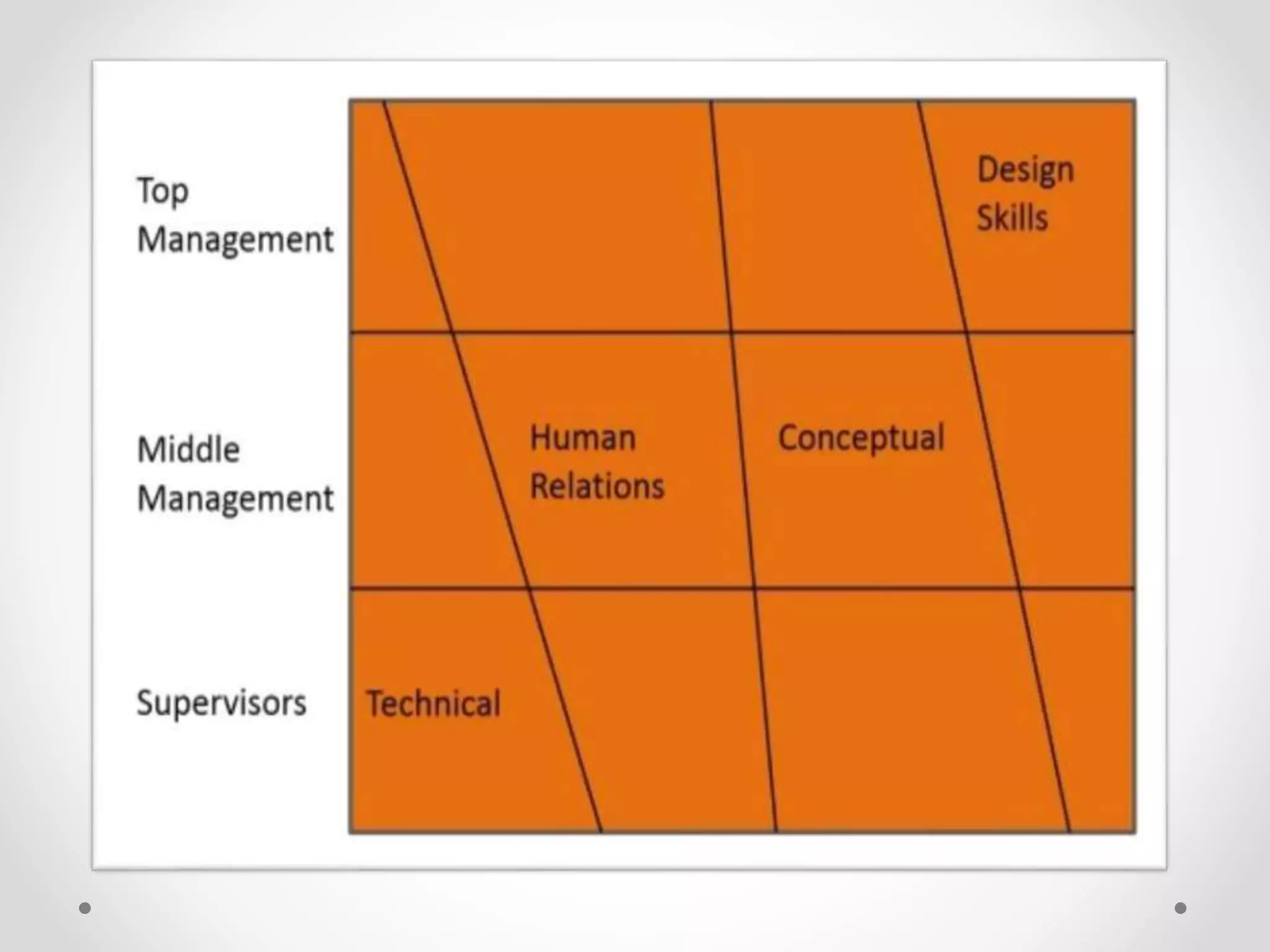
As a first-level manager, you require more technical skills
in order to supervise operational employees. You need to
have good human skills as you need to interact with your
subordinates on a regular basis. However, conceptual
skills are usually not very essential for the managers at the
supervisory level.
The need for technical skills is lesser at the middle-
management level. Here, human skills and conceptual
skills are more significant.
At the top-management level, conceptual, design and
interpersonal skills are of greatest importance; there is
little need for technical skills.

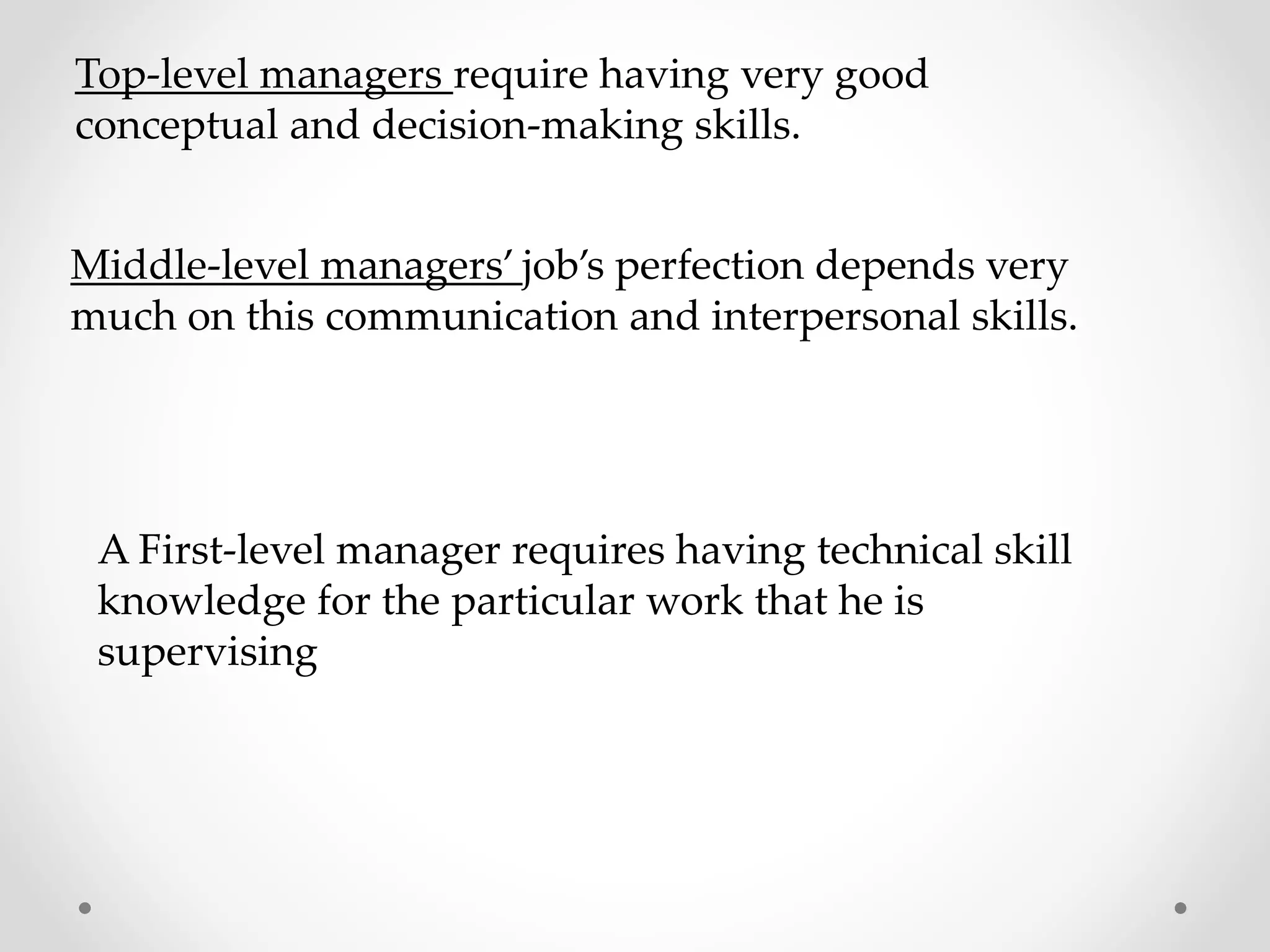
Top-level managers require having very good
conceptual and decision-making skills.
Middle-level managers’ job’s perfection depends very
much on this communication and interpersonal skills.
A First-level manager requires having technical skill
knowledge for the particular work that he is
supervising
Thank you
managerial skill and organizational hierarchy relatipship

managerial skill and organizational hierarchy relatipship

  • 1.
  • 2.
    Managerial skill managerial skillsare the knowledge and ability of the individuals in a managerial position to fulfill some specific managerial activities or tasks. Types of Managerial Skills :- By Robert Katz
  • 3.
    Technical Skills: refers tothe ability of a person to carry out a specific activity. Human Skills: refers to the ability of a person to work well with other people in a group.
  • 4.
    Conceptual Skills: refer tothe ability of a person to think and conceptualize abstract situations. Design Skills: refers to the ability of a person to find solutions to the problems in ways beneficial to the organization.
  • 5.
    organizational hierarchy The organizationalhierarchy depicts the relationships between the various organizational units (OUs).
  • 6.
    Three levels ofmanagement are found in organizational hierarchy. They are:-
  • 7.
    Top-Level Management Top-level managers,or top managers, are also called senior management or executives. Leaders of the organization are setting in top-level management. • Top-level managers make decisions affecting the entirety of the firm. • Top managers are ultimately responsible for the performance of the organization, and often, these managers have very visible jobs.
  • 8.
    Middle-Level Management Middle-level managers,or middle managers, are those in the levels below top managers. Middle managers’ job titles include General Manager, Plant manager, Regional manager, and Divisional manager. • Middle manager’s controls, motivate, and assist first- line managers to achieve business objectives. • Inspiring and providing guidance to low-level managers towards better performance. • Defining and discussing information and policies from top management to lower management; and most importantly
  • 9.
    supervisors, section leads,and foremen are examples of low-level management titles. These managers focus on controlling and directing. Low-level managers usually have the responsibility of: • Assigning employees tasks; • Guiding and supervising employees on day-to-day activities; • Ensuring the quality and quantity of production; • Making recommendations and suggestions; and • Up channeling employee problems. Lower level management
  • 10.
    different levels skillsin organizational hierarchy As a first-level manager, you require more technical skills in order to supervise operational employees. You need to have good human skills as you need to interact with your subordinates on a regular basis. However, conceptual skills are usually not very essential for the managers at the supervisory level. The need for technical skills is lesser at the middle- management level. Here, human skills and conceptual skills are more significant. At the top-management level, conceptual, design and interpersonal skills are of greatest importance; there is little need for technical skills.

  • 11.
    Top-level managers requirehaving very good conceptual and decision-making skills. Middle-level managers’ job’s perfection depends very much on this communication and interpersonal skills. A First-level manager requires having technical skill knowledge for the particular work that he is supervising
  • 13.