Chapter 6: Intimacy
within Partnerships and
       Families
     Kristen Blake and Morgan Alfiero
Introduction
Family Connections, whether solid or
fragile, depend on communication efforts
to create connection and intimacy
Intimacy: A feeling of closeness and
connectedness that develops through
communication between partners or
groups.
Different Intimacies
Marital Intimacy Involves:
   •   A close familiar and usually affectionate or loving
       personal relationship
   •   A familiar experience
   •   Sexual Relations
Family Intimacy Involves:
   •   A Close familiar and usually affectionate or loving
       personal relationship
   •   A familiar experience
   •   Interpersonal devotion along intellectual,
       emotional, and physical dimensions
Commitment
   Commitment: Intense singular energy directed
   towards sustaining a relationship

-Includes personal dedication and constraint

:Personal dedication- ones internal devotion to the
   relationship

:Constraint- factors that bind people in relationships
   regardless of devotion eg: religious benefits, promises,
   children, finances, parental/social pressures
Self- Disclosure
Self-Disclosure: described as occurring when one person intentionally
tells another individual personal or private information about him or
herself that the other is unable to discover in a different manner.

Self-Disclosure involves risk, but intimacy develops when the “other” is
responsive.

 A verbal or nonverbal response is necessary to convey validation,
 understanding, and caring to develop this connection

 Trust is the emotional basis where emotional safety allows you to
 WANT to self-disclose

 Self-disclosure creates Mental love maps: permit access to deeper
 parts of his/her life

 High levels of negative disclosure can result in conflict and anger
Family Background

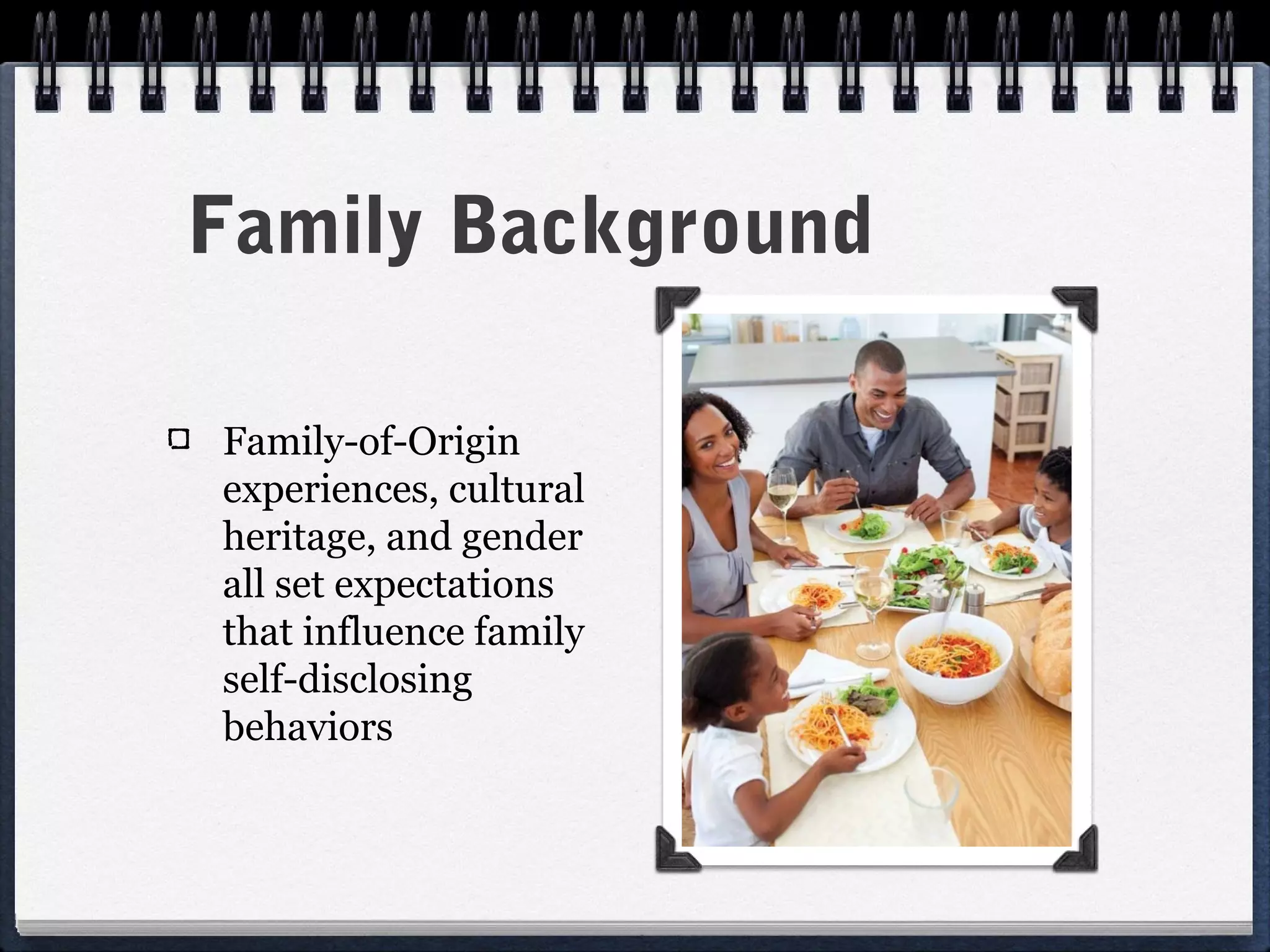
Family-of-Origin
experiences, cultural
heritage, and gender
all set expectations
that influence family
self-disclosing
behaviors
Partner Relationships
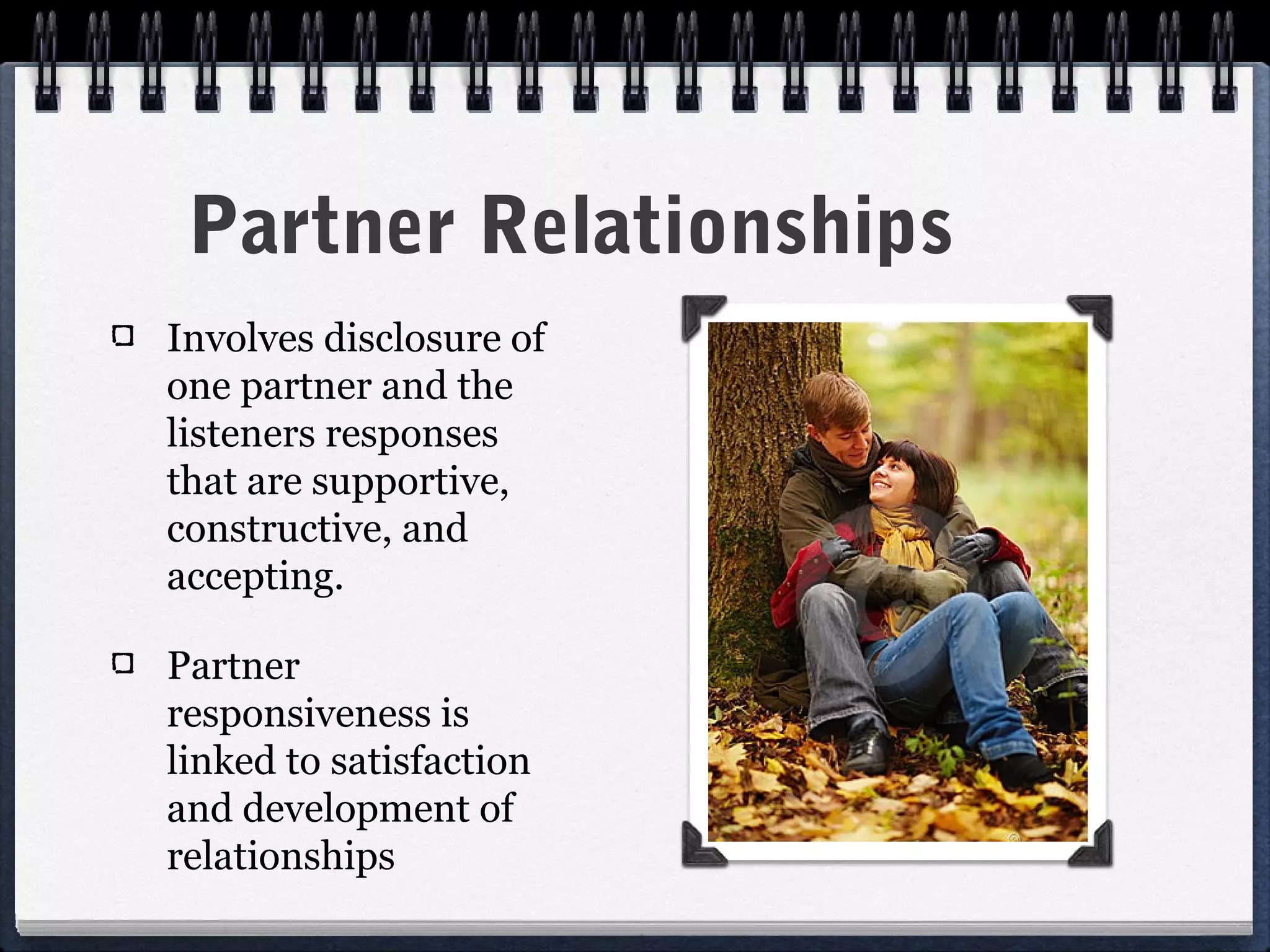
Involves disclosure of
one partner and the
listeners responses
that are supportive,
constructive, and
accepting.

Partner
responsiveness is
linked to satisfaction
and development of
relationships
Parent- Child Responsiveness
   revealing self-disclosure does not involve all family
   members equally

   most mothers receive more self-disclosure than
   fathers

   parents perceived as nurturing and supportive get
   more disclosure from children that find it rewarding

   small families usually remain more interconnected:
   all members are connected
Practicing Self-Disclosure
   Debriefing Conversations: talking about how their
   day unfolded, and partners are more likely to
   experience marital satisfaction
                     Give a good framework
                     to discuss riskier topics

   Sibling disclosure increases as children age and learn
   to share significant feelings as well as sibling
   confidence

   Self-disclosure has direct links to family levels of
   cohesion and flexibility
Sexuality and Communication
   Sexually healthy adult partnerships require more than just
   physical performance

• sexual identities
• history of sexual issues
• mutual perceptions of each others needs
• feelings for their partner
• messages contained within sexual expressions
• the nature of sexual communication
Family Sexuality
   Healthy sexuality reflects a balanced expression of
   sexuality to enhance personal identity

Parental conversations about sexuality with their children
   AND parental comfort with the area of sexuality will
   influence the family climate


 -This is not just “sex talks” but in certain
 households sexuality with teens and young adults
 including sexual orientation requires an open,
 supportive and connected household.
Partner Communication
   When individuals develop sexual experiences and a sexual
   identity

   couples establish their own patterns of sexual activity early on in
   the relationship and they typically continue

   Discourse of Intercourse: sexual conversation prior, during and
   after sex

-Some partners find this very difficult

-Satisfied couples are able to directly discuss issues or feelings about
   sex frequencies, sexual techniques, and to avoid “mind reading”
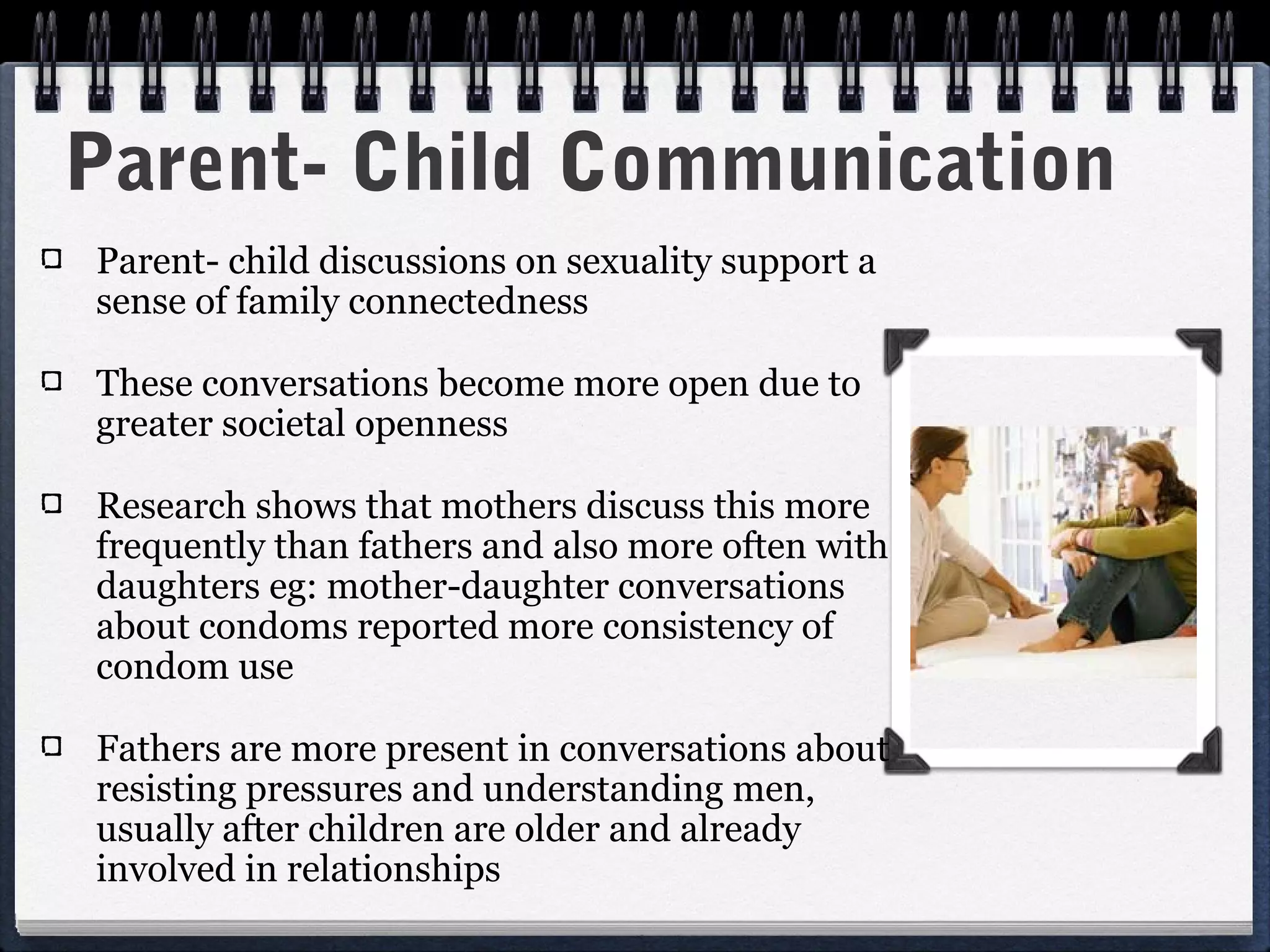
Parent- Child Communication
Parent- child discussions on sexuality support a
sense of family connectedness

These conversations become more open due to
greater societal openness

Research shows that mothers discuss this more
frequently than fathers and also more often with
daughters eg: mother-daughter conversations
about condoms reported more consistency of
condom use

Fathers are more present in conversations about
resisting pressures and understanding men,
usually after children are older and already
involved in relationships
Communication Researchers Found:

1.   Satisfaction with family discussions about sex is dependent on
     mutual dialogue eg: having teens facilitate the conversation and get
     involved

2.   The ability to communicate supportively about sex revolves around
     an attitude of openness- teens want parents to talk WITH them not
     AT them .

3.   To have the greatest impact, they should become a pattern before the
     child is 16- parents shouldn’t put off these conversations

4.   Parent-child communication about sex that is frequent and effective
     facilitates openness when dating partners
Sexually Healthy Families

1.   Respect both genders

2.   Have boundaries that are appropriate and
     support gender identities

3.   Effective and flexible communication patterns
     that support intimacy

4.   Shared system of culturally relevant values
Intimacy Factors
Effort
  Effort is required because many factors compete
   for attention in life eg: work, school, families
Sacrifice

 1.)Implies giving up something in order to please or assist another
       2.)Could involve high levels of effort or commitment
Forgiveness
 Relational process whereby harmful conduct is acknowledged by
  one or both partners; the harmed partner extends undeserved
  mercy to the transgressor; one or both partners experienced a
   transformation from negative to positive states and the the
                    relationship is reconciled
Barriers to Intimacy
   Building marital and familial intimacy involves effort and risk
• Fears of Intimacy
Merger: implies losing personal boundaries or identity
    “sense of self” is developed poorly
Exposure: revealed as weak, or inadequate if they get close to
  another
    low self-esteem
Attack: distrust others; protect themselves from avoiding self-
   disclosure
Abandonment: the feeling of being overwhelmed and helpless
  when the love object is gone, effects people with excessive
  separations and relational losses
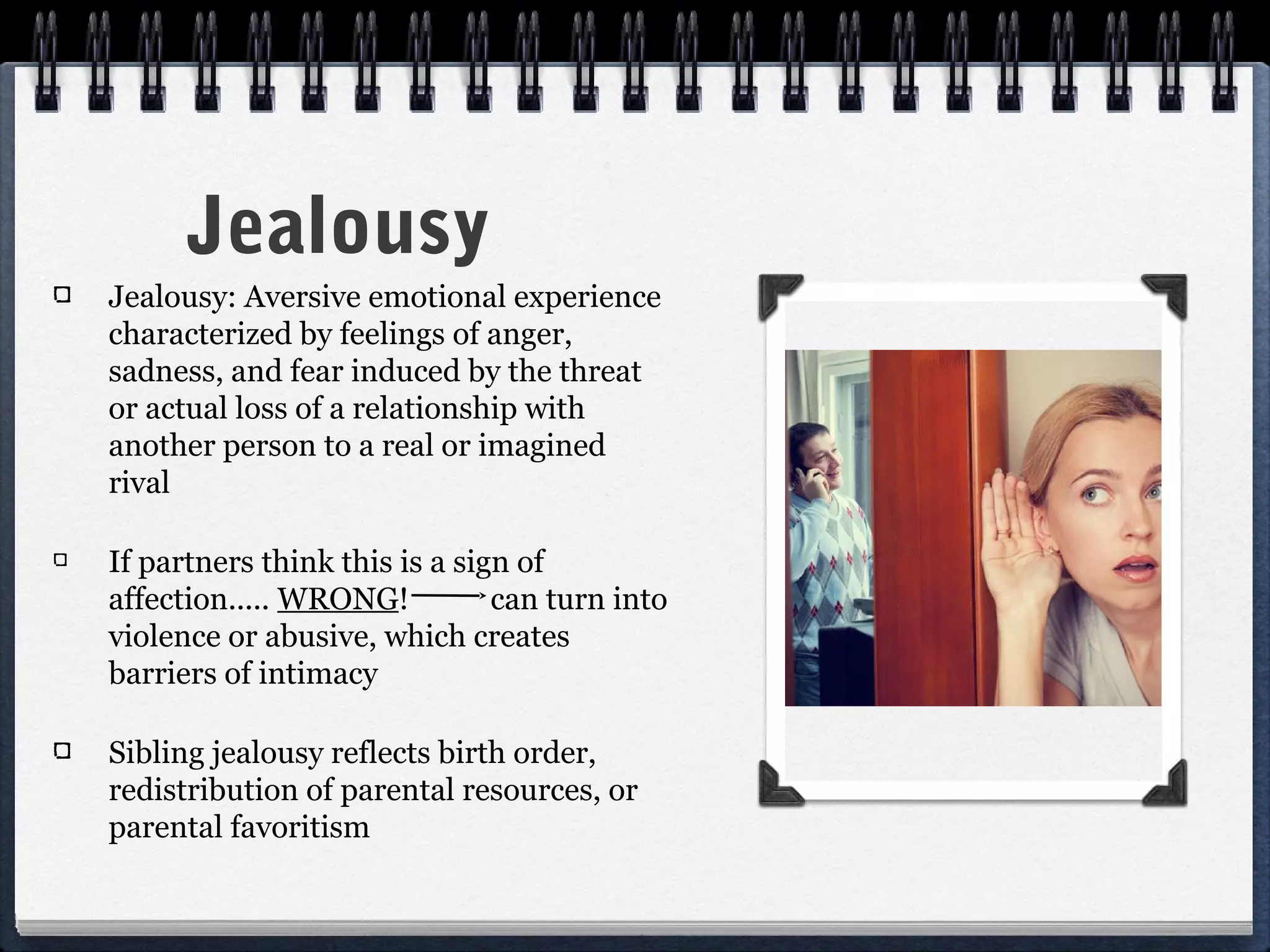
Jealousy
Jealousy: Aversive emotional experience
characterized by feelings of anger,
sadness, and fear induced by the threat
or actual loss of a relationship with
another person to a real or imagined
rival

If partners think this is a sign of
affection..... WRONG!          can turn into
violence or abusive, which creates
barriers of intimacy

Sibling jealousy reflects birth order,
redistribution of parental resources, or
parental favoritism
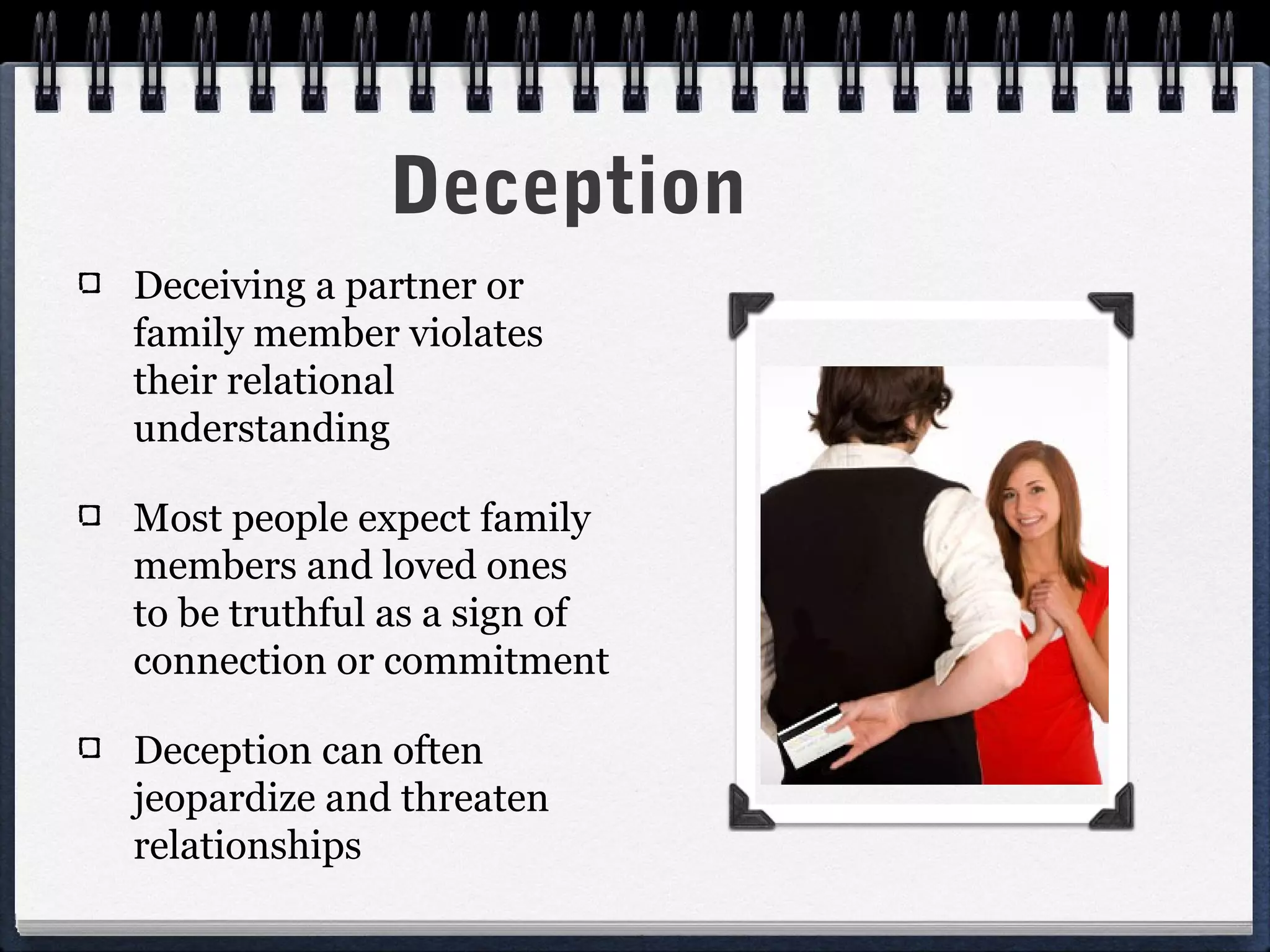
Deception
Deceiving a partner or
family member violates
their relational
understanding

Most people expect family
members and loved ones
to be truthful as a sign of
connection or commitment

Deception can often
jeopardize and threaten
relationships
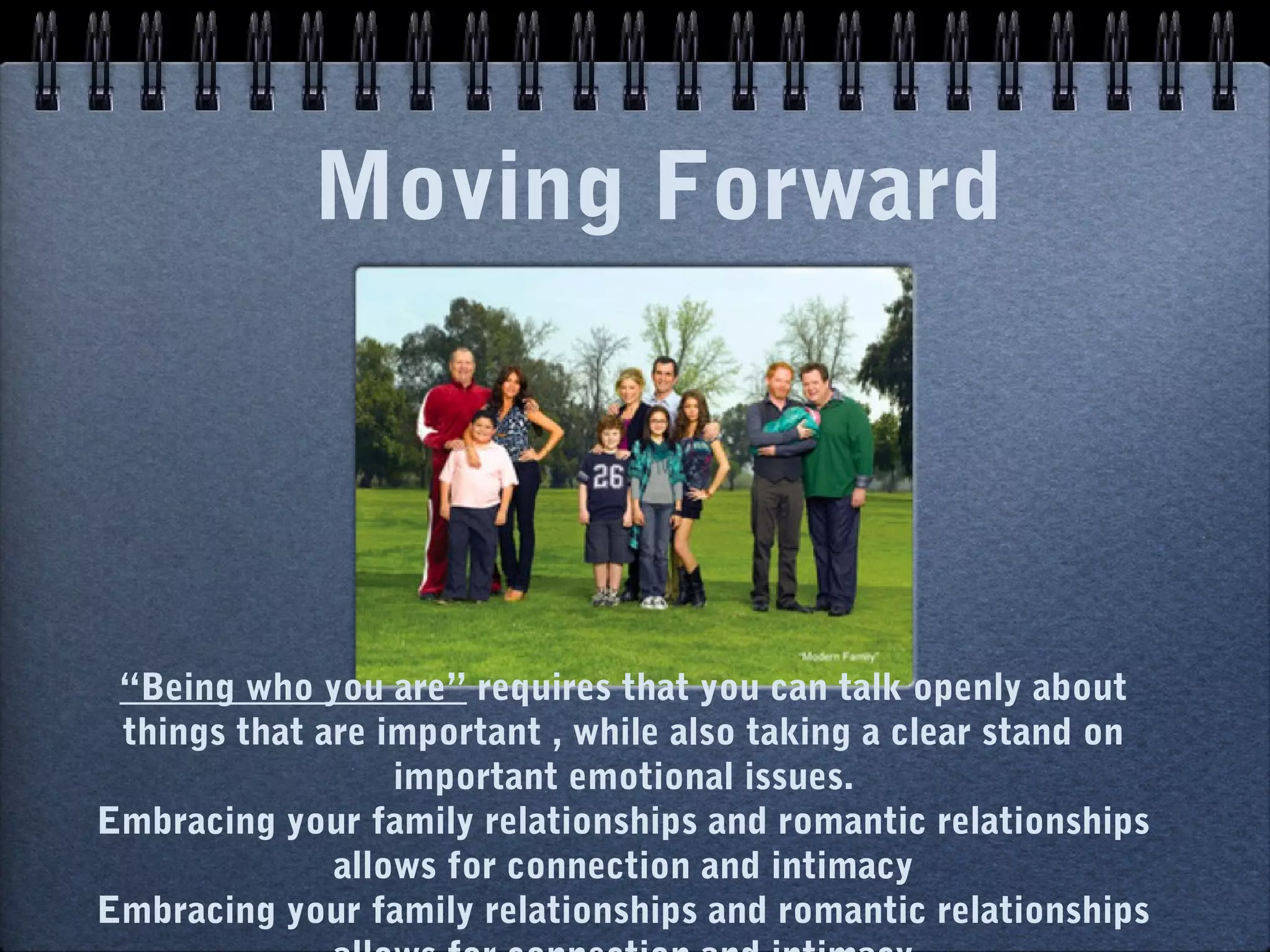
Moving Forward


 “Being who you are” requires that you can talk openly about
 things that are important , while also taking a clear stand on
                  important emotional issues.
Embracing your family relationships and romantic relationships
              allows for connection and intimacy
Embracing your family relationships and romantic relationships
Conclusion
The chapter explores a range of
communication practices that lead to
intimacy within adult partnerships and
families


Looks closely at relationships between
intimacy and communication behaviors
that encourage intimacy within marital and
family systems : commitment, self-
disclosure, and sexual communication


All humans long for intimacy and
connection in family relationships and
partnerships

Chapter 6 intimacy presentation ppt2

  • 1.
    Chapter 6: Intimacy withinPartnerships and Families Kristen Blake and Morgan Alfiero
  • 2.
    Introduction Family Connections, whethersolid or fragile, depend on communication efforts to create connection and intimacy Intimacy: A feeling of closeness and connectedness that develops through communication between partners or groups.
  • 3.
    Different Intimacies Marital IntimacyInvolves: • A close familiar and usually affectionate or loving personal relationship • A familiar experience • Sexual Relations Family Intimacy Involves: • A Close familiar and usually affectionate or loving personal relationship • A familiar experience • Interpersonal devotion along intellectual, emotional, and physical dimensions
  • 4.
    Commitment Commitment: Intense singular energy directed towards sustaining a relationship -Includes personal dedication and constraint :Personal dedication- ones internal devotion to the relationship :Constraint- factors that bind people in relationships regardless of devotion eg: religious benefits, promises, children, finances, parental/social pressures
  • 5.
    Self- Disclosure Self-Disclosure: describedas occurring when one person intentionally tells another individual personal or private information about him or herself that the other is unable to discover in a different manner. Self-Disclosure involves risk, but intimacy develops when the “other” is responsive. A verbal or nonverbal response is necessary to convey validation, understanding, and caring to develop this connection Trust is the emotional basis where emotional safety allows you to WANT to self-disclose Self-disclosure creates Mental love maps: permit access to deeper parts of his/her life High levels of negative disclosure can result in conflict and anger
  • 6.
    Family Background Family-of-Origin experiences, cultural heritage,and gender all set expectations that influence family self-disclosing behaviors
  • 7.
    Partner Relationships Involves disclosureof one partner and the listeners responses that are supportive, constructive, and accepting. Partner responsiveness is linked to satisfaction and development of relationships
  • 8.
    Parent- Child Responsiveness revealing self-disclosure does not involve all family members equally most mothers receive more self-disclosure than fathers parents perceived as nurturing and supportive get more disclosure from children that find it rewarding small families usually remain more interconnected: all members are connected
  • 9.
    Practicing Self-Disclosure Debriefing Conversations: talking about how their day unfolded, and partners are more likely to experience marital satisfaction Give a good framework to discuss riskier topics Sibling disclosure increases as children age and learn to share significant feelings as well as sibling confidence Self-disclosure has direct links to family levels of cohesion and flexibility
  • 10.
    Sexuality and Communication Sexually healthy adult partnerships require more than just physical performance • sexual identities • history of sexual issues • mutual perceptions of each others needs • feelings for their partner • messages contained within sexual expressions • the nature of sexual communication
  • 11.
    Family Sexuality Healthy sexuality reflects a balanced expression of sexuality to enhance personal identity Parental conversations about sexuality with their children AND parental comfort with the area of sexuality will influence the family climate -This is not just “sex talks” but in certain households sexuality with teens and young adults including sexual orientation requires an open, supportive and connected household.
  • 12.
    Partner Communication When individuals develop sexual experiences and a sexual identity couples establish their own patterns of sexual activity early on in the relationship and they typically continue Discourse of Intercourse: sexual conversation prior, during and after sex -Some partners find this very difficult -Satisfied couples are able to directly discuss issues or feelings about sex frequencies, sexual techniques, and to avoid “mind reading”
  • 13.
    Parent- Child Communication Parent-child discussions on sexuality support a sense of family connectedness These conversations become more open due to greater societal openness Research shows that mothers discuss this more frequently than fathers and also more often with daughters eg: mother-daughter conversations about condoms reported more consistency of condom use Fathers are more present in conversations about resisting pressures and understanding men, usually after children are older and already involved in relationships
  • 14.
    Communication Researchers Found: 1. Satisfaction with family discussions about sex is dependent on mutual dialogue eg: having teens facilitate the conversation and get involved 2. The ability to communicate supportively about sex revolves around an attitude of openness- teens want parents to talk WITH them not AT them . 3. To have the greatest impact, they should become a pattern before the child is 16- parents shouldn’t put off these conversations 4. Parent-child communication about sex that is frequent and effective facilitates openness when dating partners
  • 15.
    Sexually Healthy Families 1. Respect both genders 2. Have boundaries that are appropriate and support gender identities 3. Effective and flexible communication patterns that support intimacy 4. Shared system of culturally relevant values
  • 16.
    Intimacy Factors Effort Effort is required because many factors compete for attention in life eg: work, school, families Sacrifice 1.)Implies giving up something in order to please or assist another 2.)Could involve high levels of effort or commitment Forgiveness Relational process whereby harmful conduct is acknowledged by one or both partners; the harmed partner extends undeserved mercy to the transgressor; one or both partners experienced a transformation from negative to positive states and the the relationship is reconciled
  • 17.
    Barriers to Intimacy Building marital and familial intimacy involves effort and risk • Fears of Intimacy Merger: implies losing personal boundaries or identity “sense of self” is developed poorly Exposure: revealed as weak, or inadequate if they get close to another low self-esteem Attack: distrust others; protect themselves from avoiding self- disclosure Abandonment: the feeling of being overwhelmed and helpless when the love object is gone, effects people with excessive separations and relational losses
  • 18.
    Jealousy Jealousy: Aversive emotionalexperience characterized by feelings of anger, sadness, and fear induced by the threat or actual loss of a relationship with another person to a real or imagined rival If partners think this is a sign of affection..... WRONG! can turn into violence or abusive, which creates barriers of intimacy Sibling jealousy reflects birth order, redistribution of parental resources, or parental favoritism
  • 19.
    Deception Deceiving a partneror family member violates their relational understanding Most people expect family members and loved ones to be truthful as a sign of connection or commitment Deception can often jeopardize and threaten relationships
  • 20.
    Moving Forward “Beingwho you are” requires that you can talk openly about things that are important , while also taking a clear stand on important emotional issues. Embracing your family relationships and romantic relationships allows for connection and intimacy Embracing your family relationships and romantic relationships
  • 21.
    Conclusion The chapter exploresa range of communication practices that lead to intimacy within adult partnerships and families Looks closely at relationships between intimacy and communication behaviors that encourage intimacy within marital and family systems : commitment, self- disclosure, and sexual communication All humans long for intimacy and connection in family relationships and partnerships