Lesson 5
OSI Reference Model
Overview
 Definition of OSI Model.
 Services in the OSI model
 Different layers of OSI Model
 OSI Reference Model - internationally
standardised network architecture.
 OSI = Open Systems Interconnection: deals with
open systems, i.e. systems open for
communications with other systems.
 Model has 7 layers.
OSI Reference Model
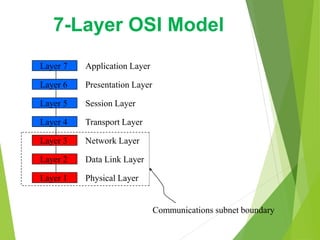
7-Layer OSI Model
Layer 7
Layer 6
Layer 5
Layer 4
Layer 3
Layer 2
Layer 1
Application Layer
Presentation Layer
Session Layer
Transport Layer
Network Layer
Data Link Layer
Physical Layer
Communications subnet boundary
 In OSI model, each layer provide services to
layer above, and ‘consumes’ services
provided by layer below.
 Active elements in a layer called entities.
 Entities in same layer in different machines
called peer entities.
 Layers can offer connection-oriented or
connectionless services.
 Connection-oriented like telephone system.
 Connectionless like postal system.
 Each service has an associated Quality-of-
service (e.g. reliable or unreliable).
Services in the OSI Model
 Reliable services never lose/corrupt data.
 Reliable service costs more.
 Typical application for reliable service is file
transfer.
 Typical application not needing reliable
service is voice traffic.
 Not all applications need connections.
Services in the OSI Model
 Transmits bits from one computer to another
 Regulates the transmission of a stream of bits
over a physical medium.
 Defines how the cable is attached to the network
adapter and what transmission technique is used
to send data over the cable. Deals with issues
like
 The definition of 0 and 1, e.g. how many volts represents a
1, and how long a bit lasts?
 Whether the channel is simplex or duplex?
 How many pins a connector has, and what the function of
each pin is?
Layer 1: Physical Layer
 Packages raw bits from the Physical layer
into frames (logical, structured packets for
data).
 Provides reliable transmission of frames
 It waits for an acknowledgment from the receiving
computer.
 Retransmits frames for which acknowledgement not
received
Layer 2: Data Link Layer
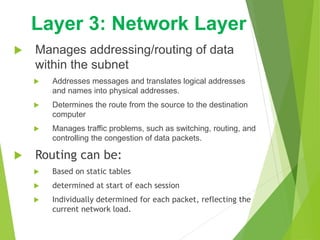
 Manages addressing/routing of data
within the subnet
 Addresses messages and translates logical addresses
and names into physical addresses.
 Determines the route from the source to the destination
computer
 Manages traffic problems, such as switching, routing, and
controlling the congestion of data packets.
 Routing can be:
 Based on static tables
 determined at start of each session
 Individually determined for each packet, reflecting the
current network load.
Layer 3: Network Layer
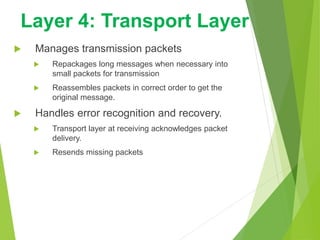
 Manages transmission packets
 Repackages long messages when necessary into
small packets for transmission
 Reassembles packets in correct order to get the
original message.
 Handles error recognition and recovery.
 Transport layer at receiving acknowledges packet
delivery.
 Resends missing packets
Layer 4: Transport Layer
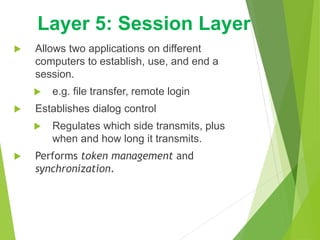
 Allows two applications on different
computers to establish, use, and end a
session.
 e.g. file transfer, remote login
 Establishes dialog control
 Regulates which side transmits, plus
when and how long it transmits.
 Performs token management and
synchronization.
Layer 5: Session Layer
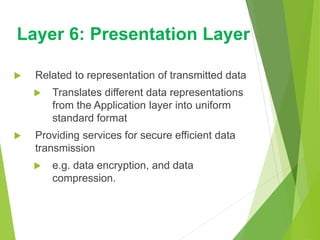
 Related to representation of transmitted data
 Translates different data representations
from the Application layer into uniform
standard format
 Providing services for secure efficient data
transmission
 e.g. data encryption, and data
compression.
Layer 6: Presentation Layer
 Level at which applications access network
services.
 Represents services that directly support
software applications for file transfers,
database access, and electronic mail etc.
Layer 7: Application Layer

Chapter 5 OSI Model.ppt

  • 1.
  • 2.
    Overview  Definition ofOSI Model.  Services in the OSI model  Different layers of OSI Model
  • 3.
     OSI ReferenceModel - internationally standardised network architecture.  OSI = Open Systems Interconnection: deals with open systems, i.e. systems open for communications with other systems.  Model has 7 layers. OSI Reference Model
  • 4.
    7-Layer OSI Model Layer7 Layer 6 Layer 5 Layer 4 Layer 3 Layer 2 Layer 1 Application Layer Presentation Layer Session Layer Transport Layer Network Layer Data Link Layer Physical Layer Communications subnet boundary
  • 5.
     In OSImodel, each layer provide services to layer above, and ‘consumes’ services provided by layer below.  Active elements in a layer called entities.  Entities in same layer in different machines called peer entities.  Layers can offer connection-oriented or connectionless services.  Connection-oriented like telephone system.  Connectionless like postal system.  Each service has an associated Quality-of- service (e.g. reliable or unreliable). Services in the OSI Model
  • 6.
     Reliable servicesnever lose/corrupt data.  Reliable service costs more.  Typical application for reliable service is file transfer.  Typical application not needing reliable service is voice traffic.  Not all applications need connections. Services in the OSI Model
  • 7.
     Transmits bitsfrom one computer to another  Regulates the transmission of a stream of bits over a physical medium.  Defines how the cable is attached to the network adapter and what transmission technique is used to send data over the cable. Deals with issues like  The definition of 0 and 1, e.g. how many volts represents a 1, and how long a bit lasts?  Whether the channel is simplex or duplex?  How many pins a connector has, and what the function of each pin is? Layer 1: Physical Layer
  • 8.
     Packages rawbits from the Physical layer into frames (logical, structured packets for data).  Provides reliable transmission of frames  It waits for an acknowledgment from the receiving computer.  Retransmits frames for which acknowledgement not received Layer 2: Data Link Layer
  • 9.
     Manages addressing/routingof data within the subnet  Addresses messages and translates logical addresses and names into physical addresses.  Determines the route from the source to the destination computer  Manages traffic problems, such as switching, routing, and controlling the congestion of data packets.  Routing can be:  Based on static tables  determined at start of each session  Individually determined for each packet, reflecting the current network load. Layer 3: Network Layer
  • 10.
     Manages transmissionpackets  Repackages long messages when necessary into small packets for transmission  Reassembles packets in correct order to get the original message.  Handles error recognition and recovery.  Transport layer at receiving acknowledges packet delivery.  Resends missing packets Layer 4: Transport Layer
  • 11.
     Allows twoapplications on different computers to establish, use, and end a session.  e.g. file transfer, remote login  Establishes dialog control  Regulates which side transmits, plus when and how long it transmits.  Performs token management and synchronization. Layer 5: Session Layer
  • 12.
     Related torepresentation of transmitted data  Translates different data representations from the Application layer into uniform standard format  Providing services for secure efficient data transmission  e.g. data encryption, and data compression. Layer 6: Presentation Layer
  • 13.
     Level atwhich applications access network services.  Represents services that directly support software applications for file transfers, database access, and electronic mail etc. Layer 7: Application Layer