Advanced SEO Certification Chapter 5: Content Optimization Strategy
Chapter 5
Content Optimization
Strategy
Advanced SEO Certification Chapter 5: Content Optimization Strategy
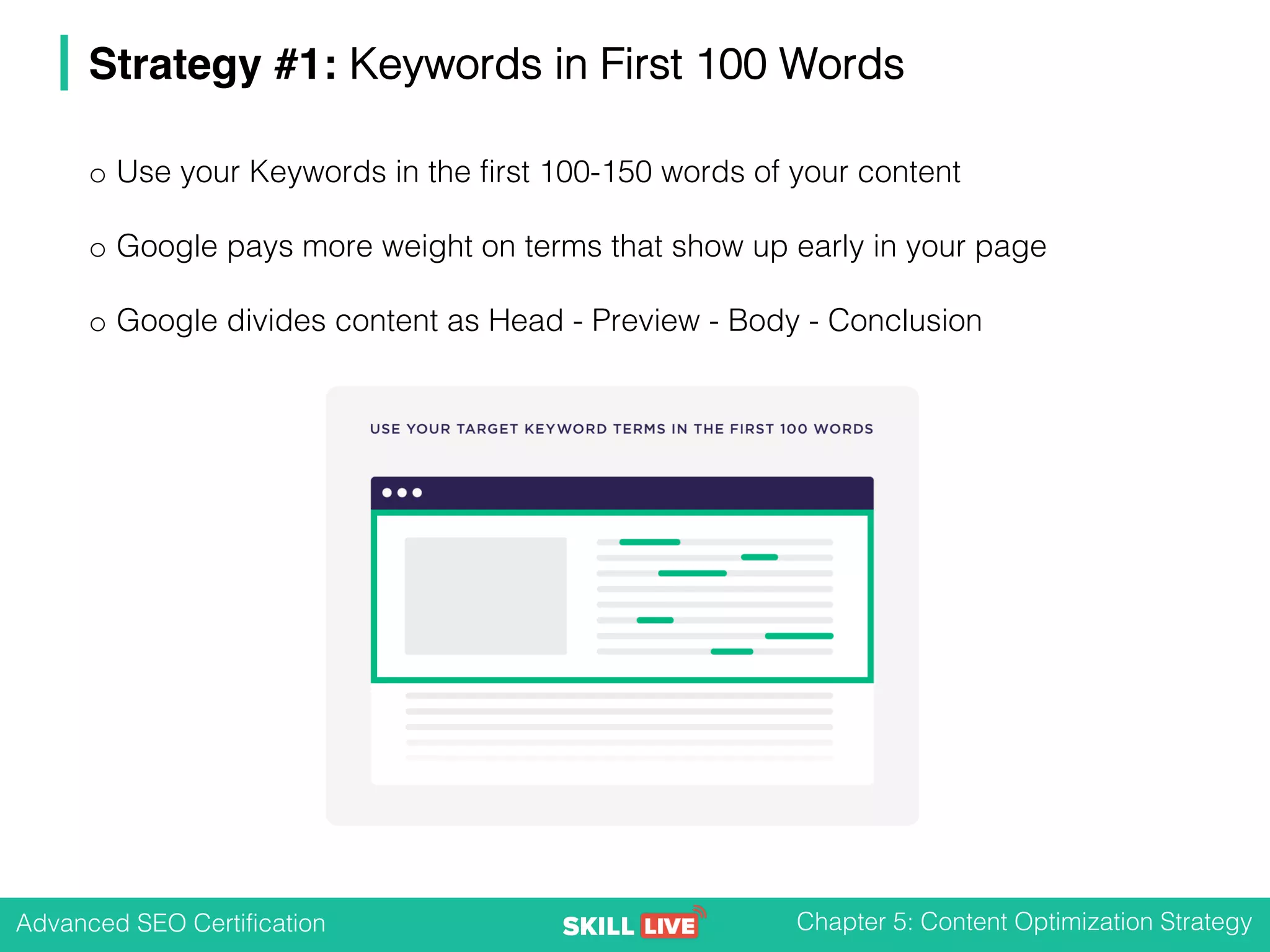
Strategy #1: Keywords in First 100 Words
o Use your Keywords in the first 100-150 words of your content
o Google pays more weight on terms that show up early in your page
o Google divides content as Head - Preview - Body - Conclusion
Advanced SEO Certification Chapter 5: Content Optimization Strategy
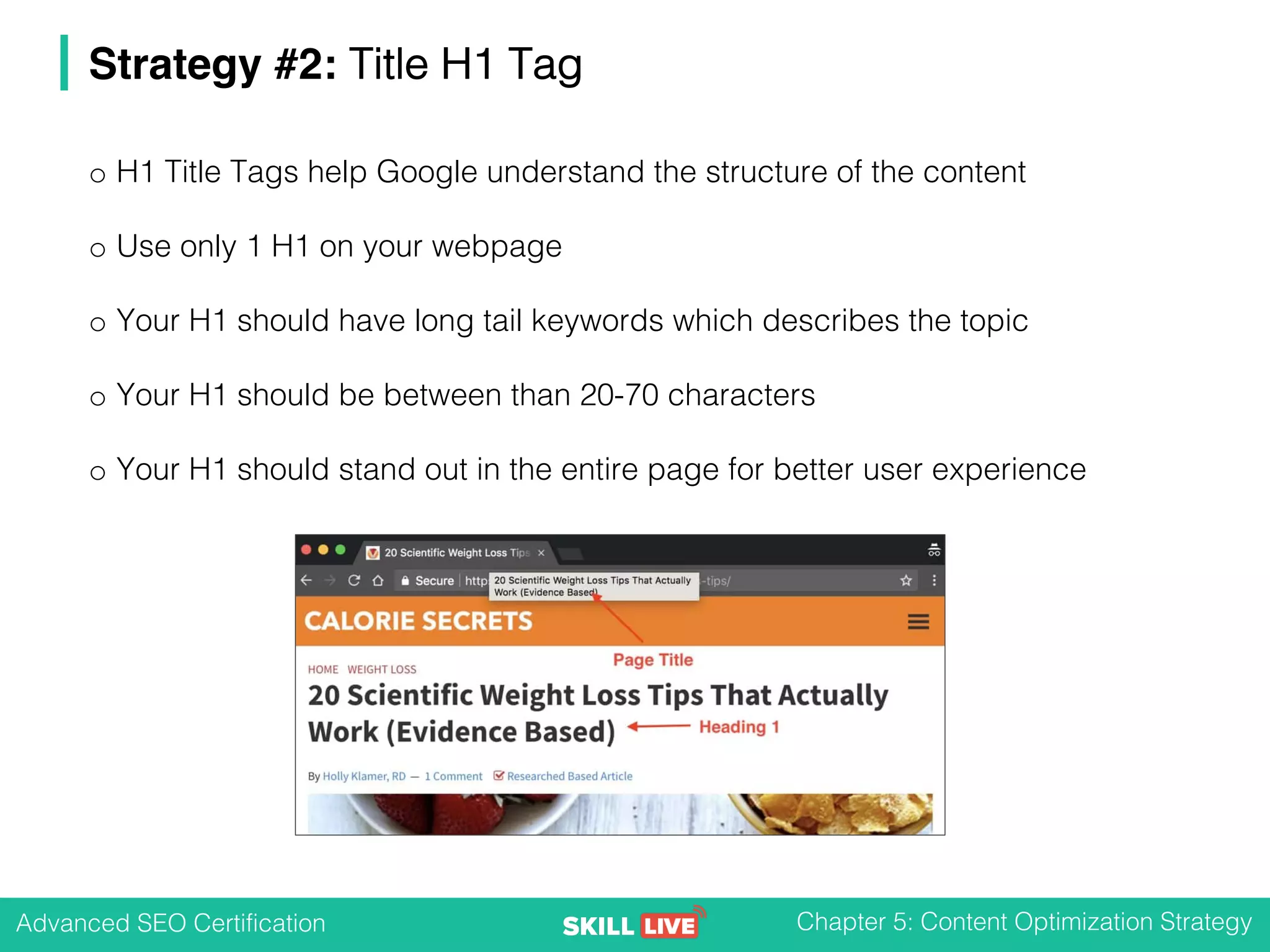
Strategy #2: Title H1 Tag
o H1 Title Tags help Google understand the structure of the content
o Use only 1 H1 on your webpage
o Your H1 should have long tail keywords which describes the topic
o Your H1 should be between than 20-70 characters
o Your H1 should stand out in the entire page for better user experience
Advanced SEO Certification Chapter 5: Content Optimization Strategy
Strategy #3: Title Tags
o Title Tags are short high-volume keywords which increases the efficiency
of your long-tail keyword.
o Use Title Tags when you update old content
o Title Tags are words like “best”, “updated”, “checklist”, ”fast”, “review”,
“evidence based”, “year” etc.
o Another best practice is to use question title tags like “Do you want to
create professional online video for FREE..?”
Advanced SEO Certification Chapter 5: Content Optimization Strategy
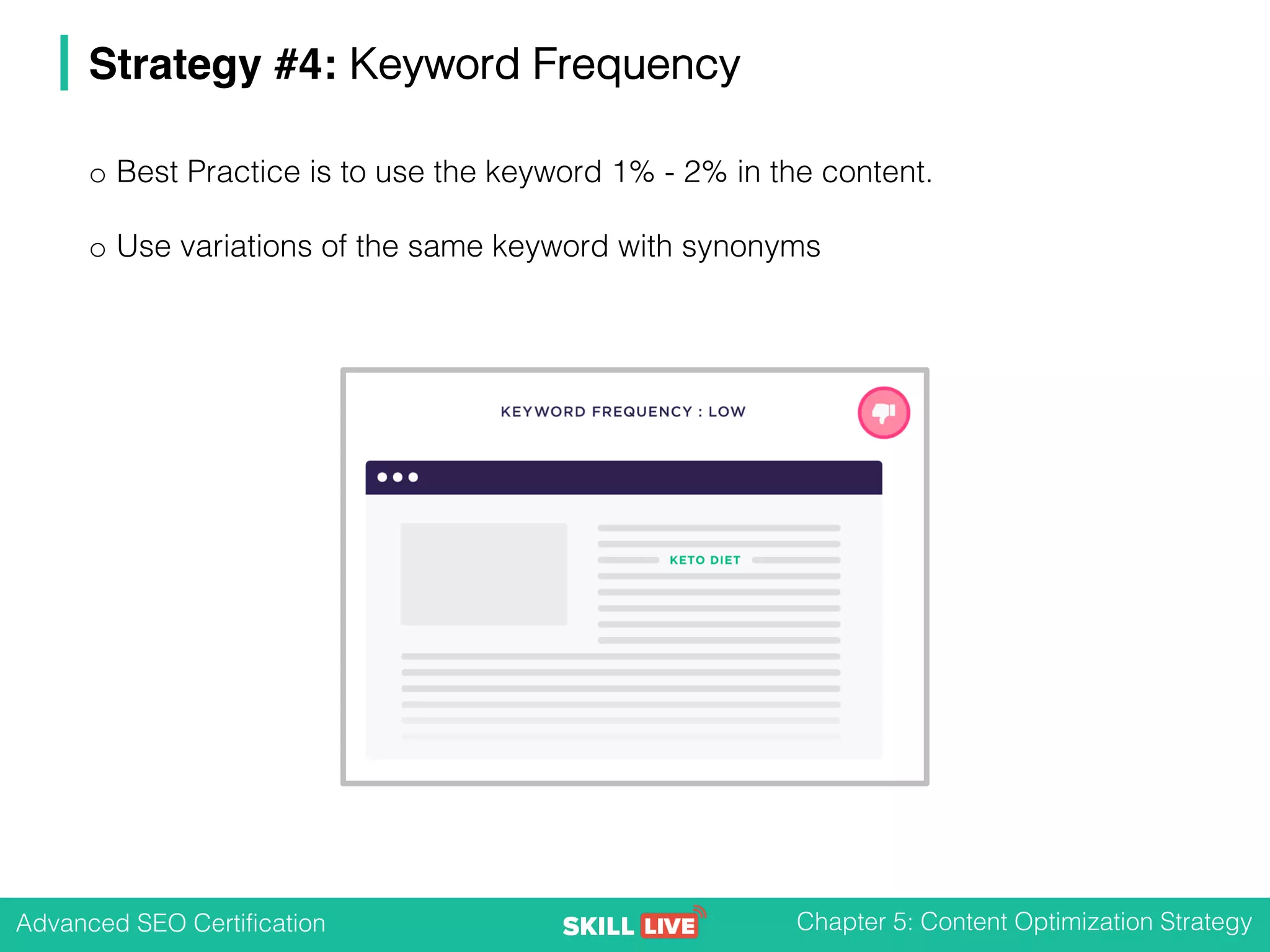
Strategy #4: Keyword Frequency
o Best Practice is to use the keyword 1% - 2% in the content.
o Use variations of the same keyword with synonyms
Advanced SEO Certification Chapter 5: Content Optimization Strategy
Strategy #5: Use External Links
o External links through Anchor Text helps Google to understand your
content better.
o External Links to high authority sites creates a lot of credibility
o If you are publishing a blog post ensure you have anchor text which
connects to Wikipedia or any high authrority websites like .gov or .edu
Advanced SEO Certification Chapter 5: Content Optimization Strategy
Strategy #6: Optimize Images
o A study shows that using unique and new images (and not stock images)
increases your ranking.
o Images should be relevant to the topic of the content
o Use image captions & alt-text to help Google understand the content
o In Wordpress, use plugins to reduce the size of images without losing
quality to increase page speed.
o In recent times Isometric images are in great demand. Try to customize
such images and put on your content.
o Avoid copying images from Google and pasting on your content. It’s very
negative for SEO.
Advanced SEO Certification Chapter 5: Content Optimization Strategy
Strategy #7: Infographic Content
o Research & Gather Data
o Create nice Infographics
o Write related content on the data
o Share with concerned people and ask them to provide a link from their
website
o A best practice of doing is to visit Wikipedia and search for your niche
o Once you have collected content then go to Google and type [Your Niche
Keyword] + ”infographic”
o If you don’t see any related content, you can use Wikipedia content to
draft your own infograhic and publish on your webpage.
Advanced SEO Certification Chapter 5: Content Optimization Strategy
Strategy #7: Free Resources
o Target a topic on your niche
o Research articles and blogs online for the topic
o Write fresh content adding infographics & high-quality images
o Offer free resources in the form of templates, PDFs etc.
o If you are offering PDF download name the attachment as [Content Topic]
o Google search results can also show only PDF versions
Advanced SEO Certification Chapter 5: Content Optimization Strategy
End of Chapter 5

Chapter 5: Content Optimization Strategy

  • 1.
    Advanced SEO CertificationChapter 5: Content Optimization Strategy Chapter 5 Content Optimization Strategy
  • 2.
    Advanced SEO CertificationChapter 5: Content Optimization Strategy Strategy #1: Keywords in First 100 Words o Use your Keywords in the first 100-150 words of your content o Google pays more weight on terms that show up early in your page o Google divides content as Head - Preview - Body - Conclusion
  • 3.
    Advanced SEO CertificationChapter 5: Content Optimization Strategy Strategy #2: Title H1 Tag o H1 Title Tags help Google understand the structure of the content o Use only 1 H1 on your webpage o Your H1 should have long tail keywords which describes the topic o Your H1 should be between than 20-70 characters o Your H1 should stand out in the entire page for better user experience
  • 4.
    Advanced SEO CertificationChapter 5: Content Optimization Strategy Strategy #3: Title Tags o Title Tags are short high-volume keywords which increases the efficiency of your long-tail keyword. o Use Title Tags when you update old content o Title Tags are words like “best”, “updated”, “checklist”, ”fast”, “review”, “evidence based”, “year” etc. o Another best practice is to use question title tags like “Do you want to create professional online video for FREE..?”
  • 5.
    Advanced SEO CertificationChapter 5: Content Optimization Strategy Strategy #4: Keyword Frequency o Best Practice is to use the keyword 1% - 2% in the content. o Use variations of the same keyword with synonyms
  • 6.
    Advanced SEO CertificationChapter 5: Content Optimization Strategy Strategy #5: Use External Links o External links through Anchor Text helps Google to understand your content better. o External Links to high authority sites creates a lot of credibility o If you are publishing a blog post ensure you have anchor text which connects to Wikipedia or any high authrority websites like .gov or .edu
  • 7.
    Advanced SEO CertificationChapter 5: Content Optimization Strategy Strategy #6: Optimize Images o A study shows that using unique and new images (and not stock images) increases your ranking. o Images should be relevant to the topic of the content o Use image captions & alt-text to help Google understand the content o In Wordpress, use plugins to reduce the size of images without losing quality to increase page speed. o In recent times Isometric images are in great demand. Try to customize such images and put on your content. o Avoid copying images from Google and pasting on your content. It’s very negative for SEO.
  • 8.
    Advanced SEO CertificationChapter 5: Content Optimization Strategy Strategy #7: Infographic Content o Research & Gather Data o Create nice Infographics o Write related content on the data o Share with concerned people and ask them to provide a link from their website o A best practice of doing is to visit Wikipedia and search for your niche o Once you have collected content then go to Google and type [Your Niche Keyword] + ”infographic” o If you don’t see any related content, you can use Wikipedia content to draft your own infograhic and publish on your webpage.
  • 9.
    Advanced SEO CertificationChapter 5: Content Optimization Strategy Strategy #7: Free Resources o Target a topic on your niche o Research articles and blogs online for the topic o Write fresh content adding infographics & high-quality images o Offer free resources in the form of templates, PDFs etc. o If you are offering PDF download name the attachment as [Content Topic] o Google search results can also show only PDF versions
  • 10.
    Advanced SEO CertificationChapter 5: Content Optimization Strategy End of Chapter 5