This document summarizes key aspects of transportation costing and pricing. It discusses how pricing was regulated prior to deregulation, with rates published in tariffs and based largely on carrier costs. Post-deregulation, prices are largely determined by market forces, with carrier costs as part of the dynamic between customer demand and supply conditions. The document also outlines different market structure models, including perfect competition and monopoly, and explores cost-of-service and value-of-service pricing approaches. It provides an overview of general ratemaking practices, including class rate systems to simplify pricing complexity.
Overview of transportation and the purpose of discussing costing and pricing in transport.
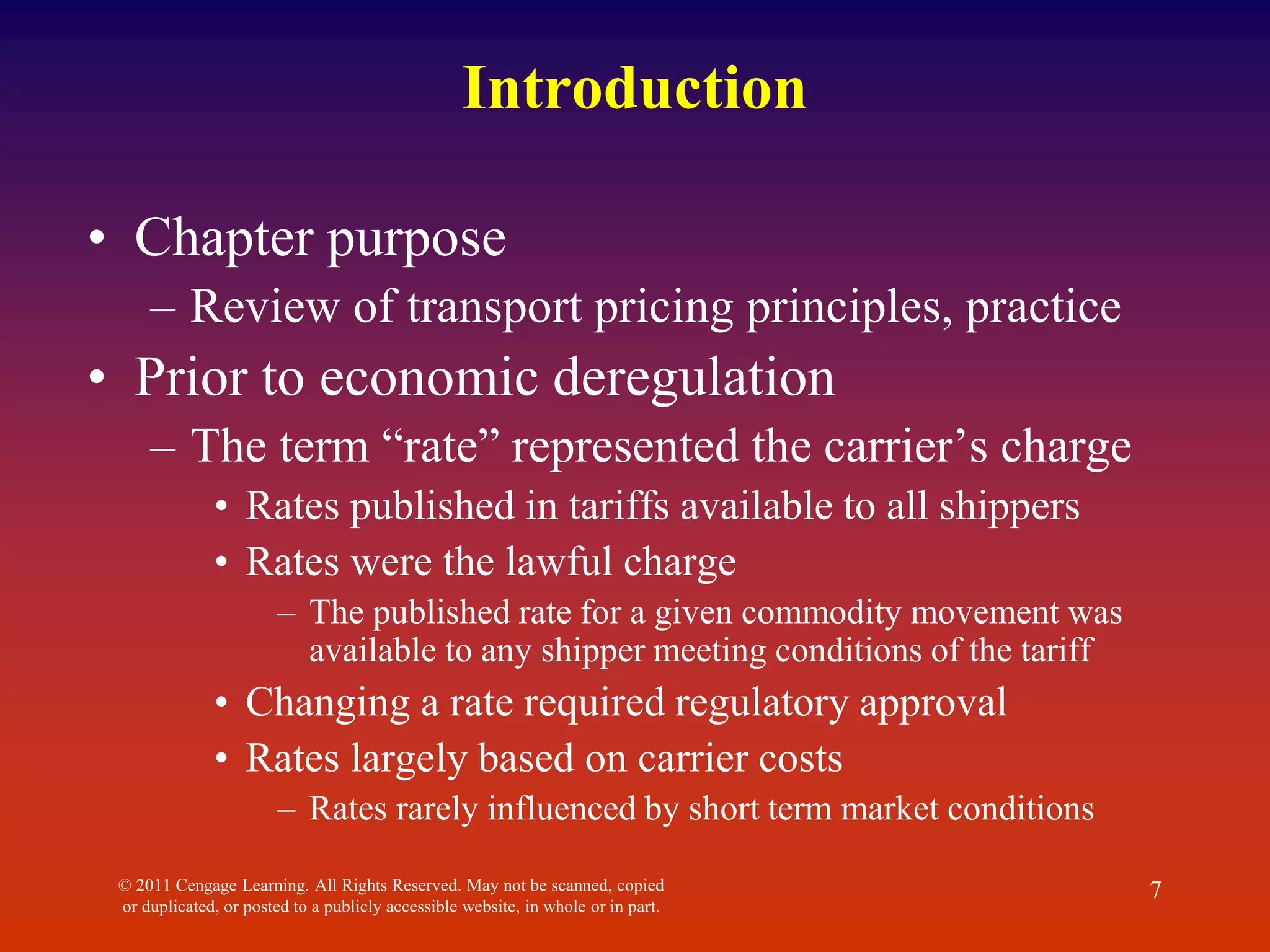
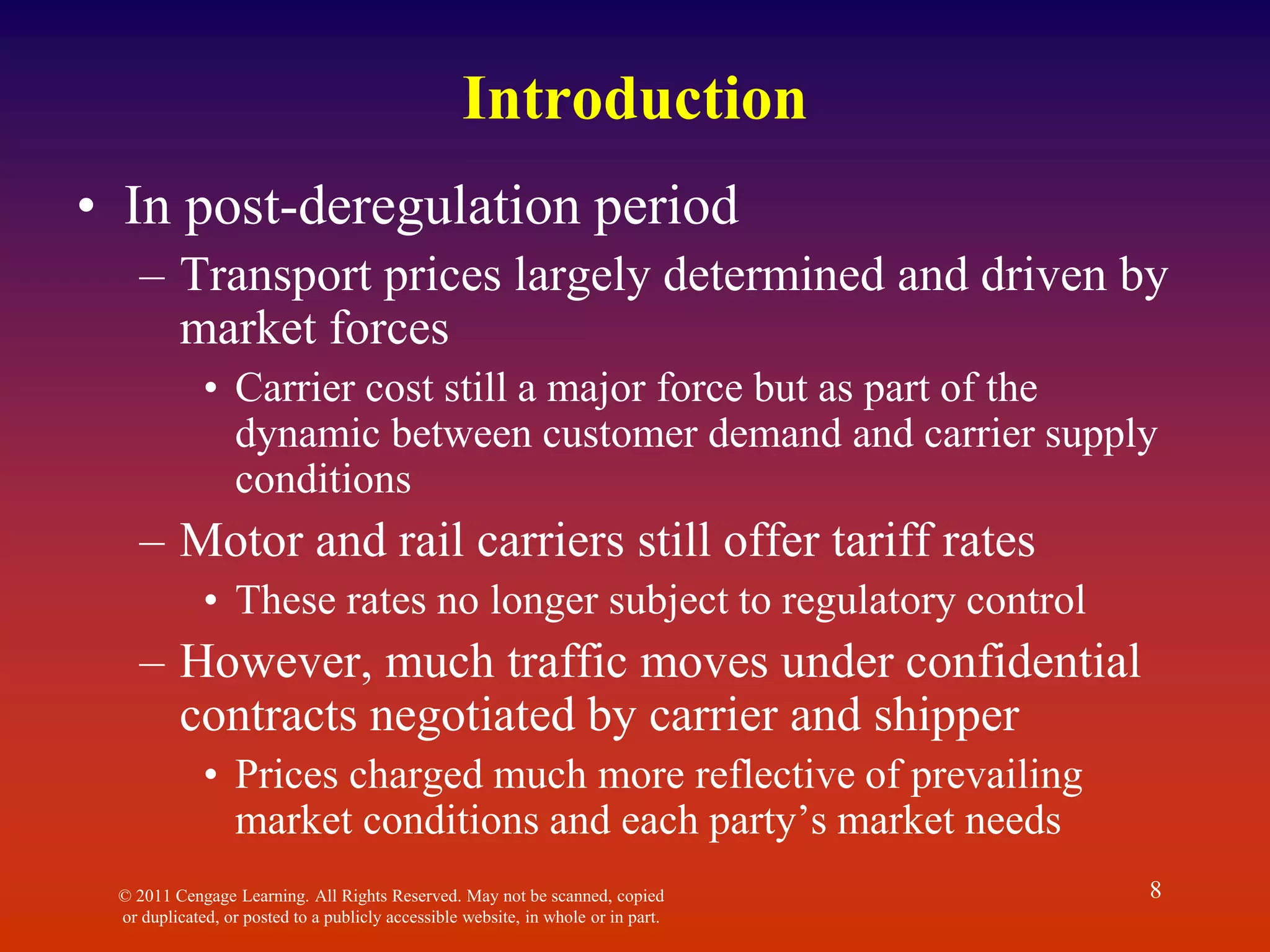
Transport pricing principles pre- and post-deregulation; impact of market forces on pricing.
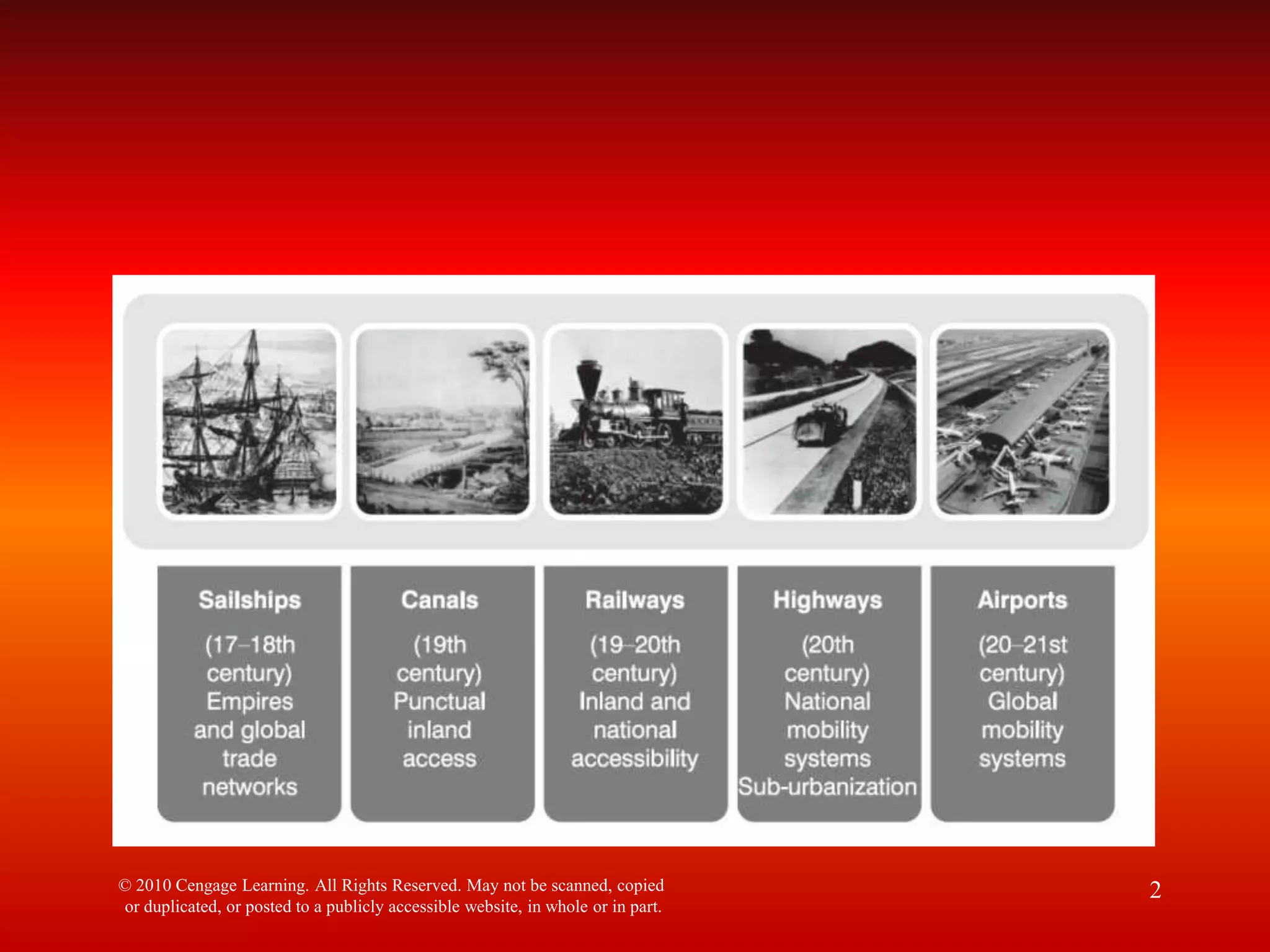
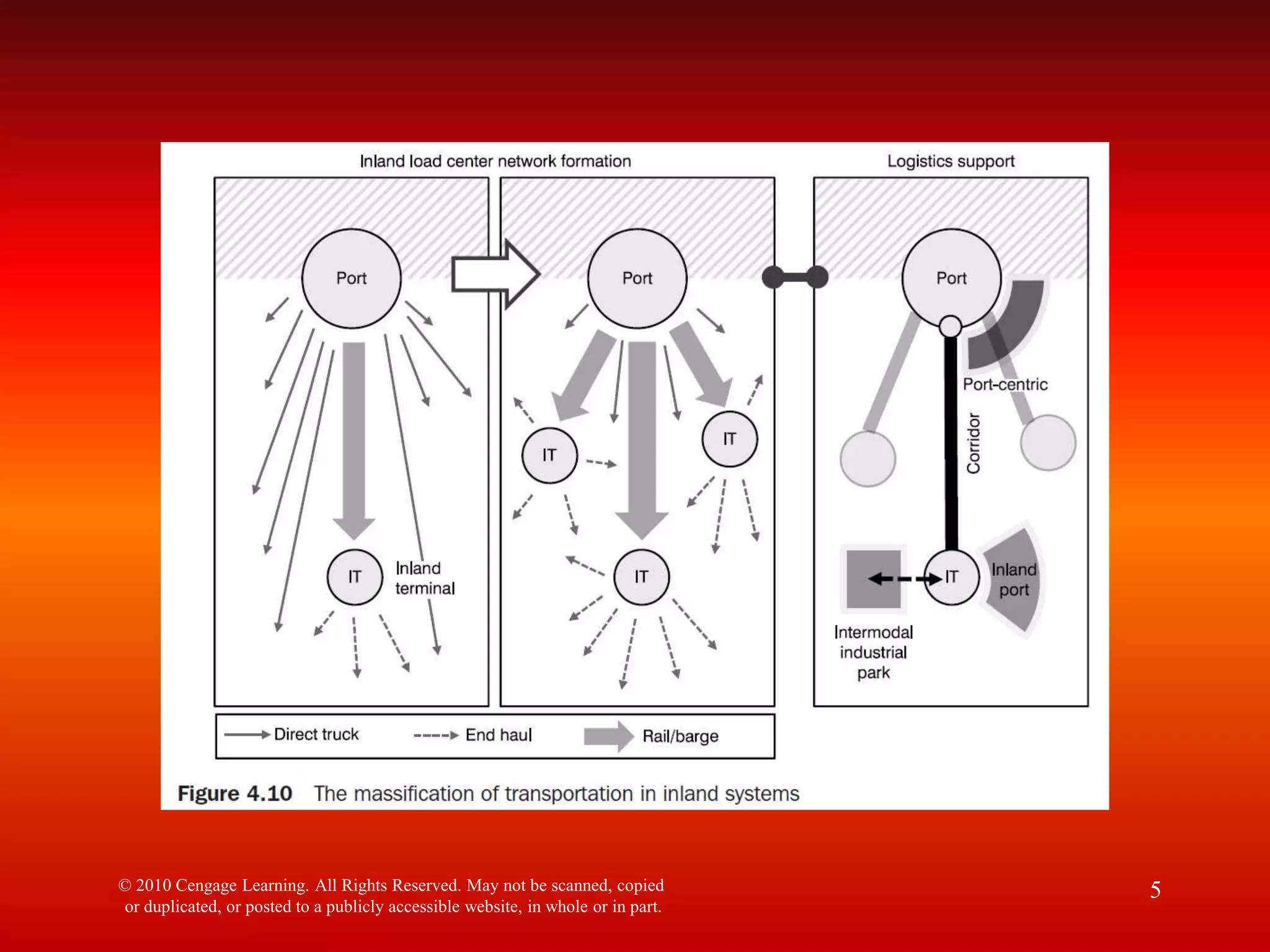
Relation between transportation systems and economic development; costs arising from lack of infrastructure.
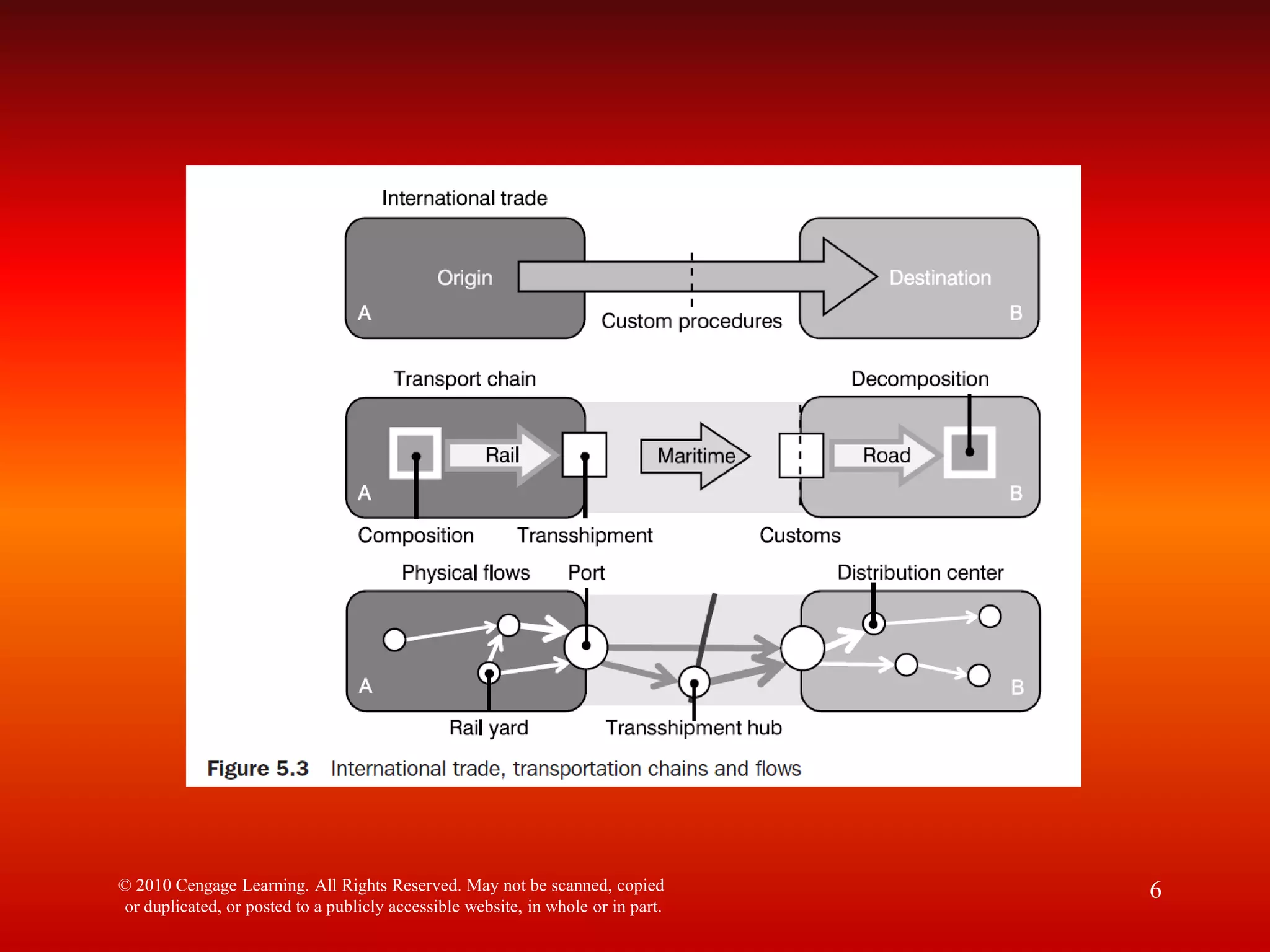
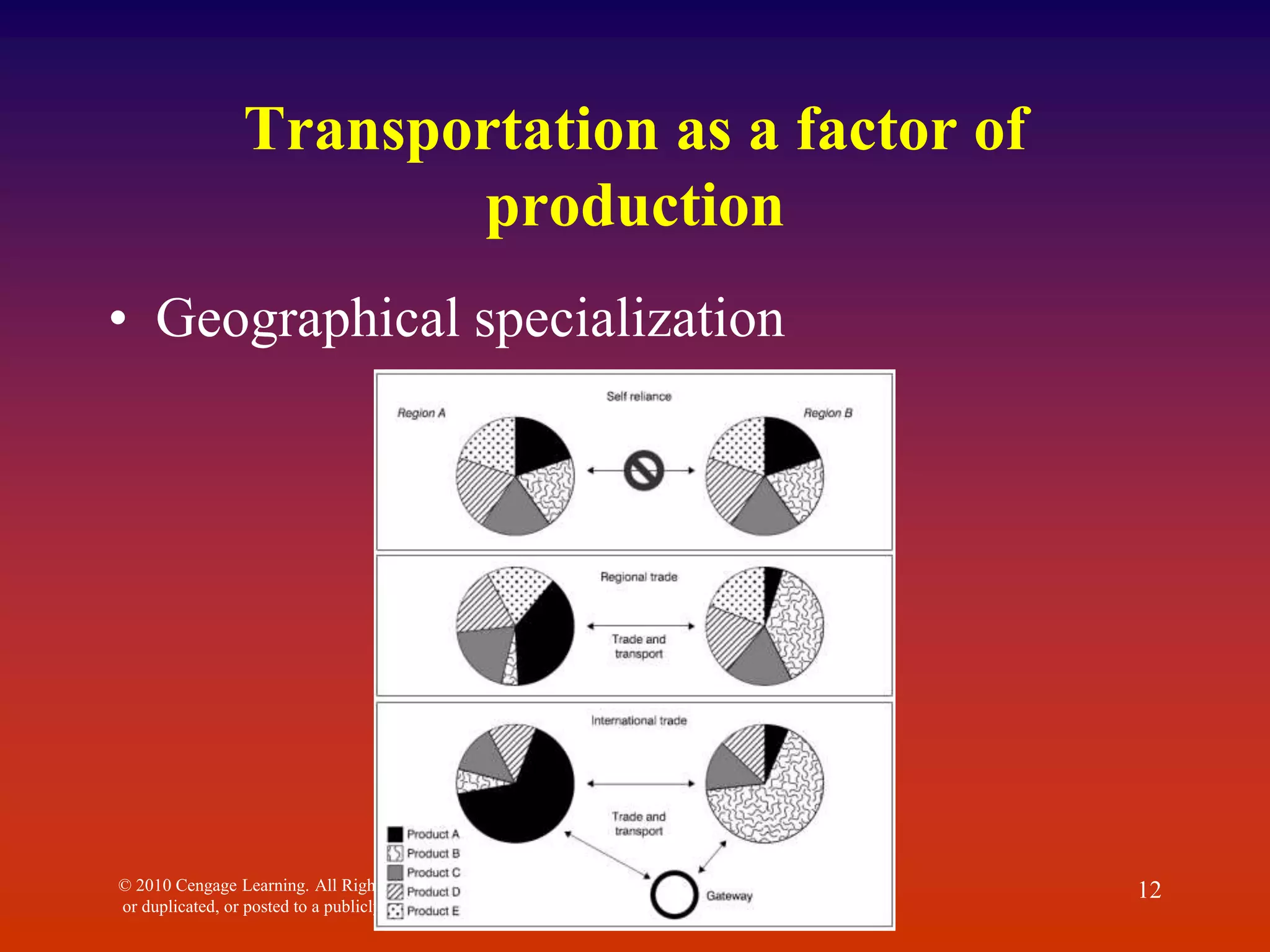
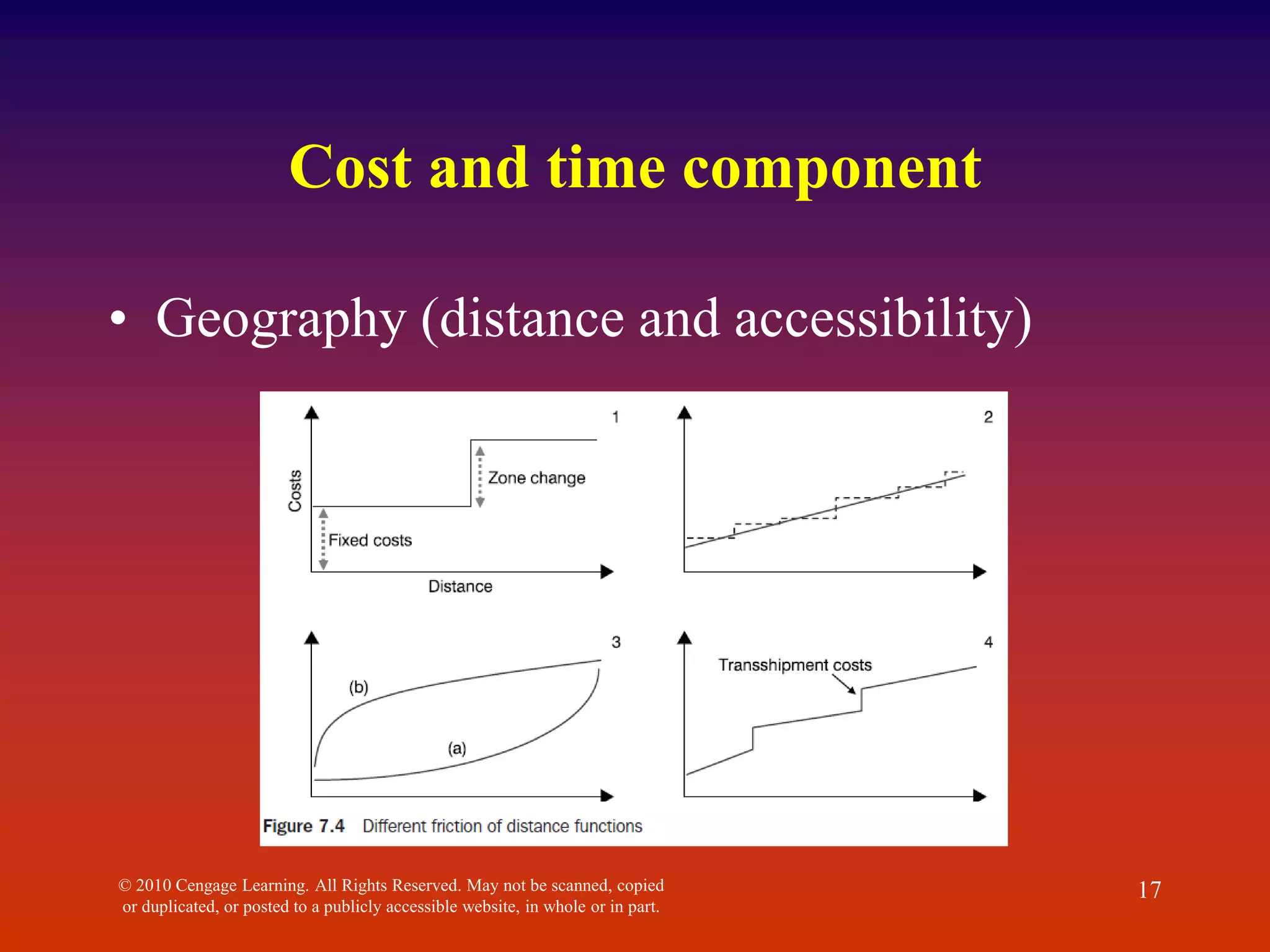
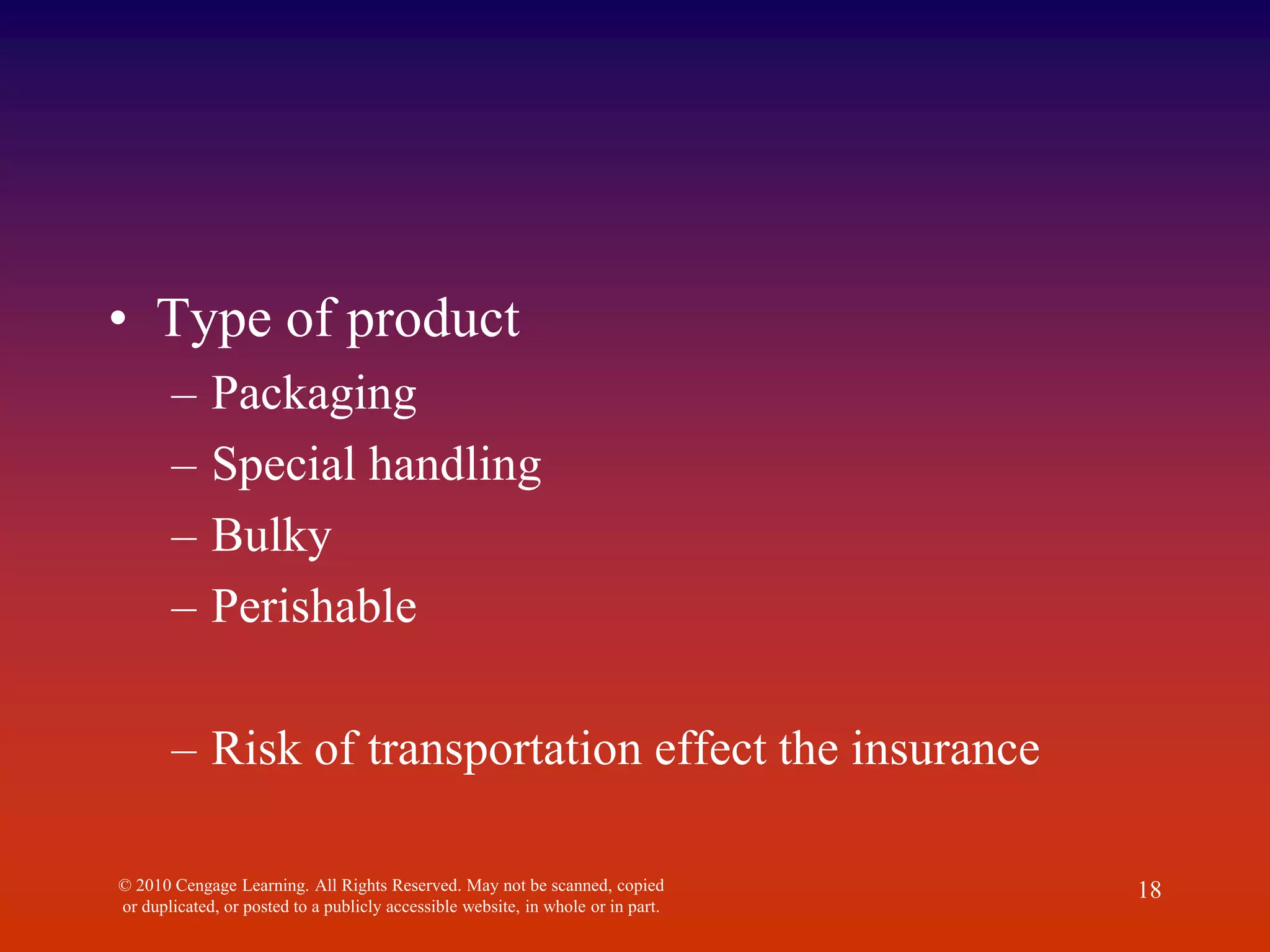
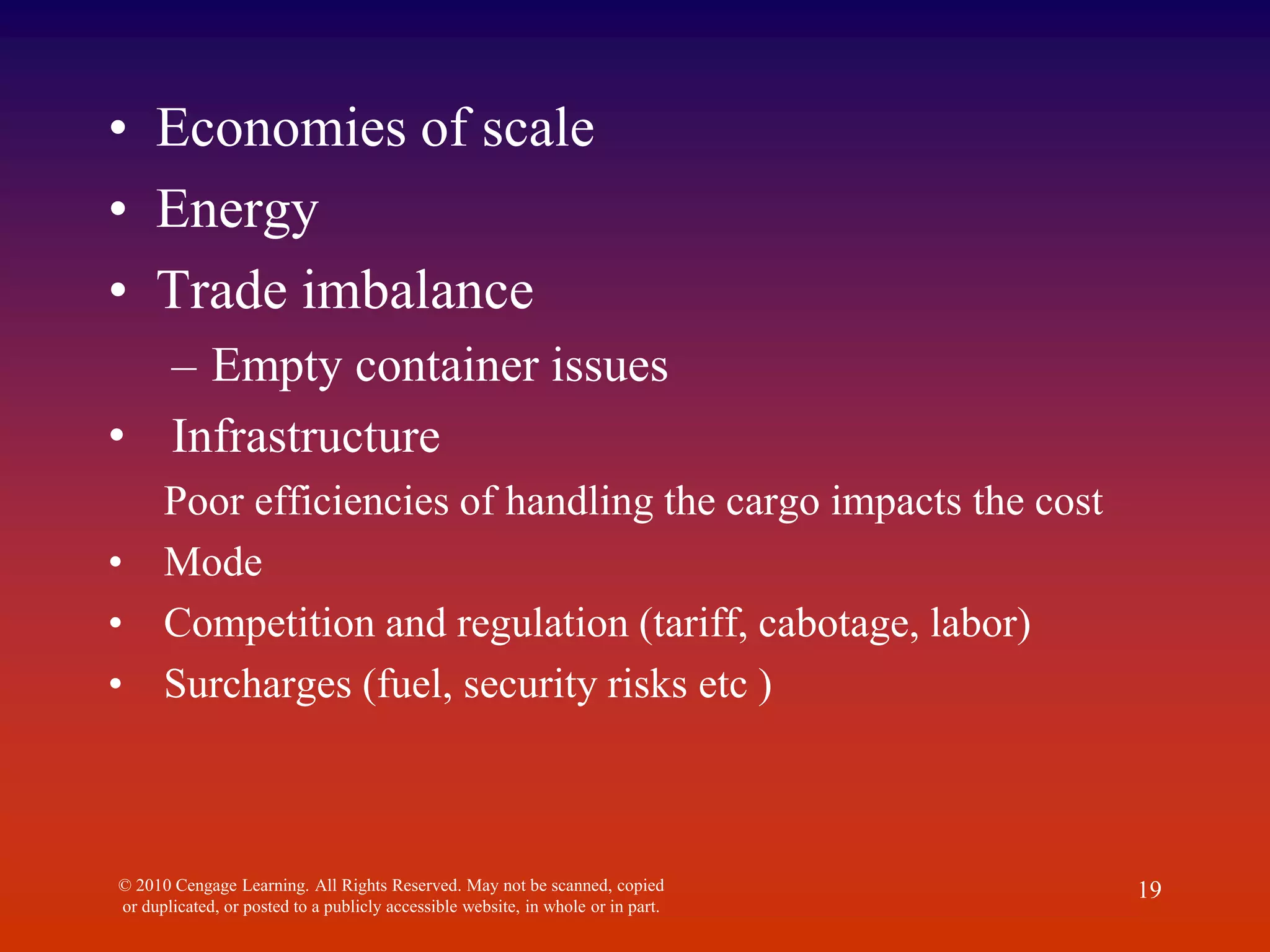
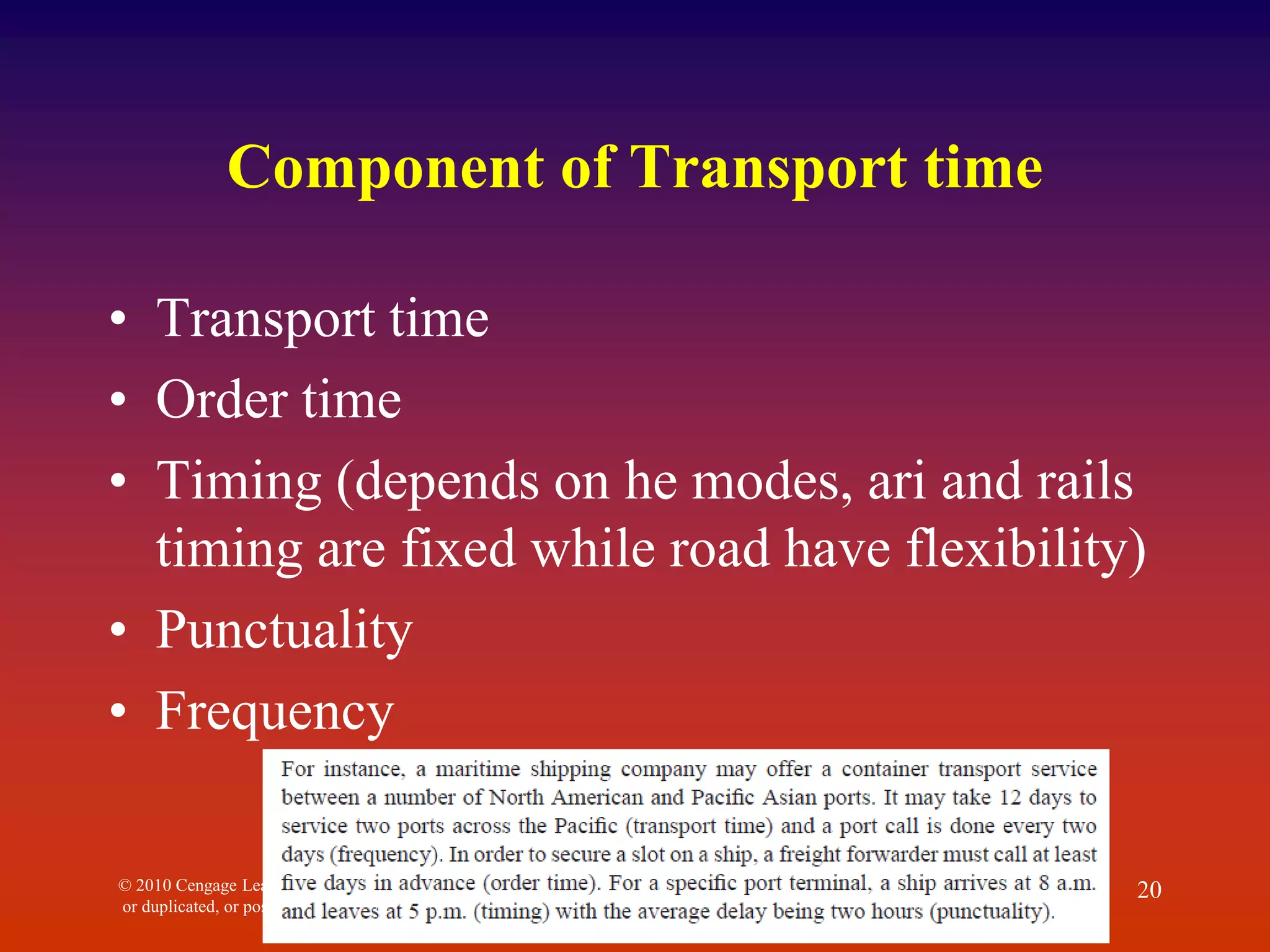
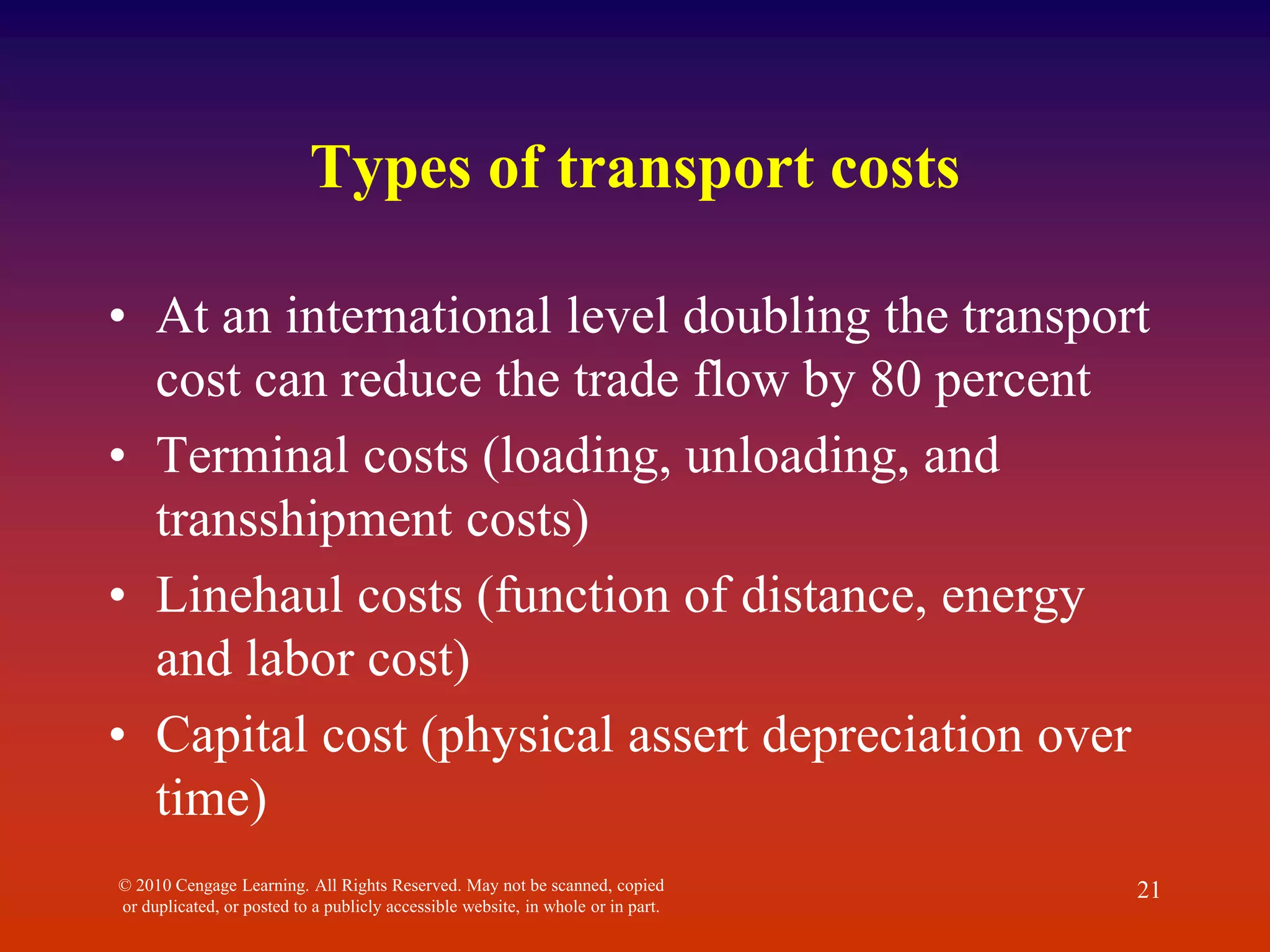
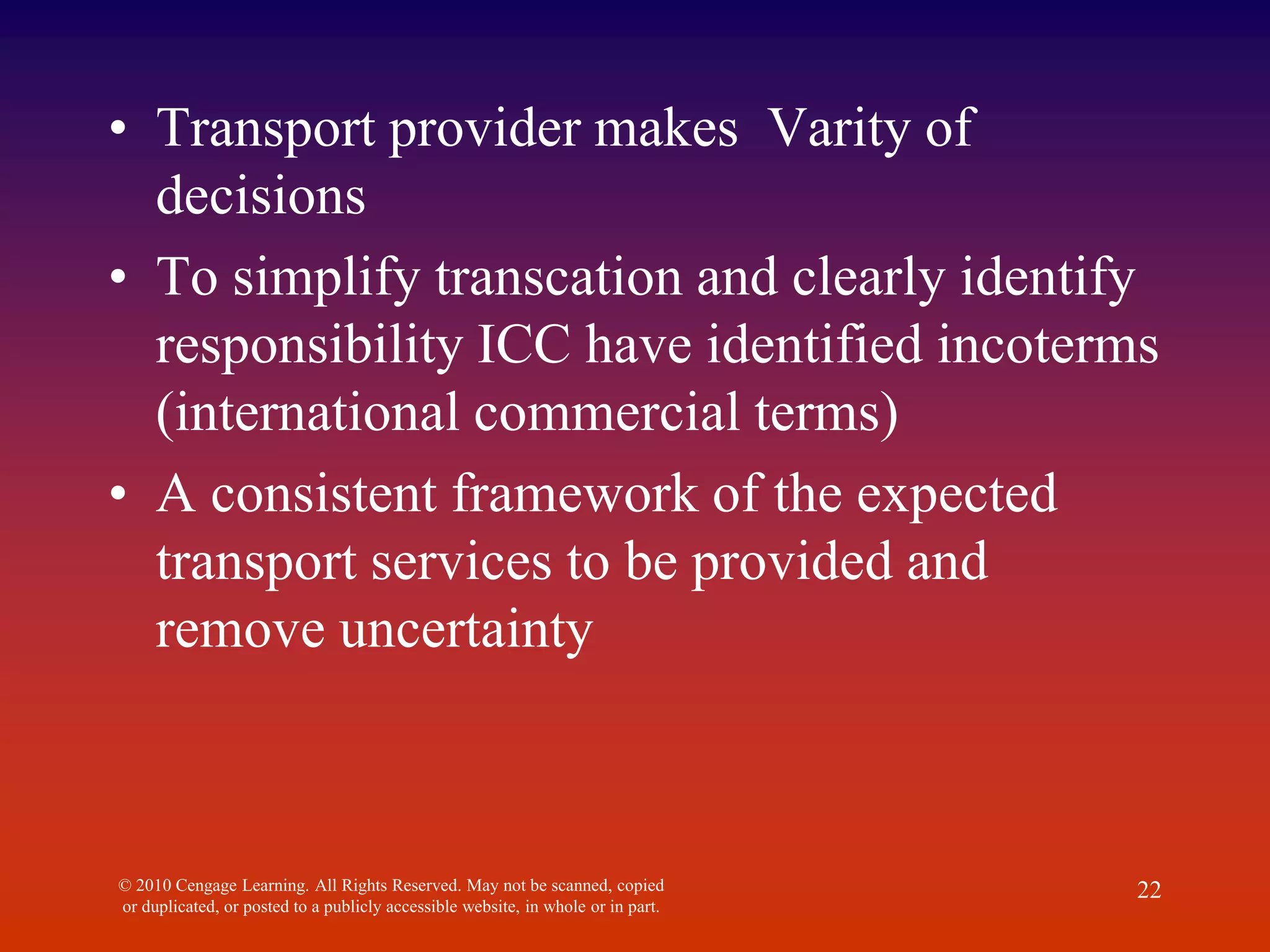
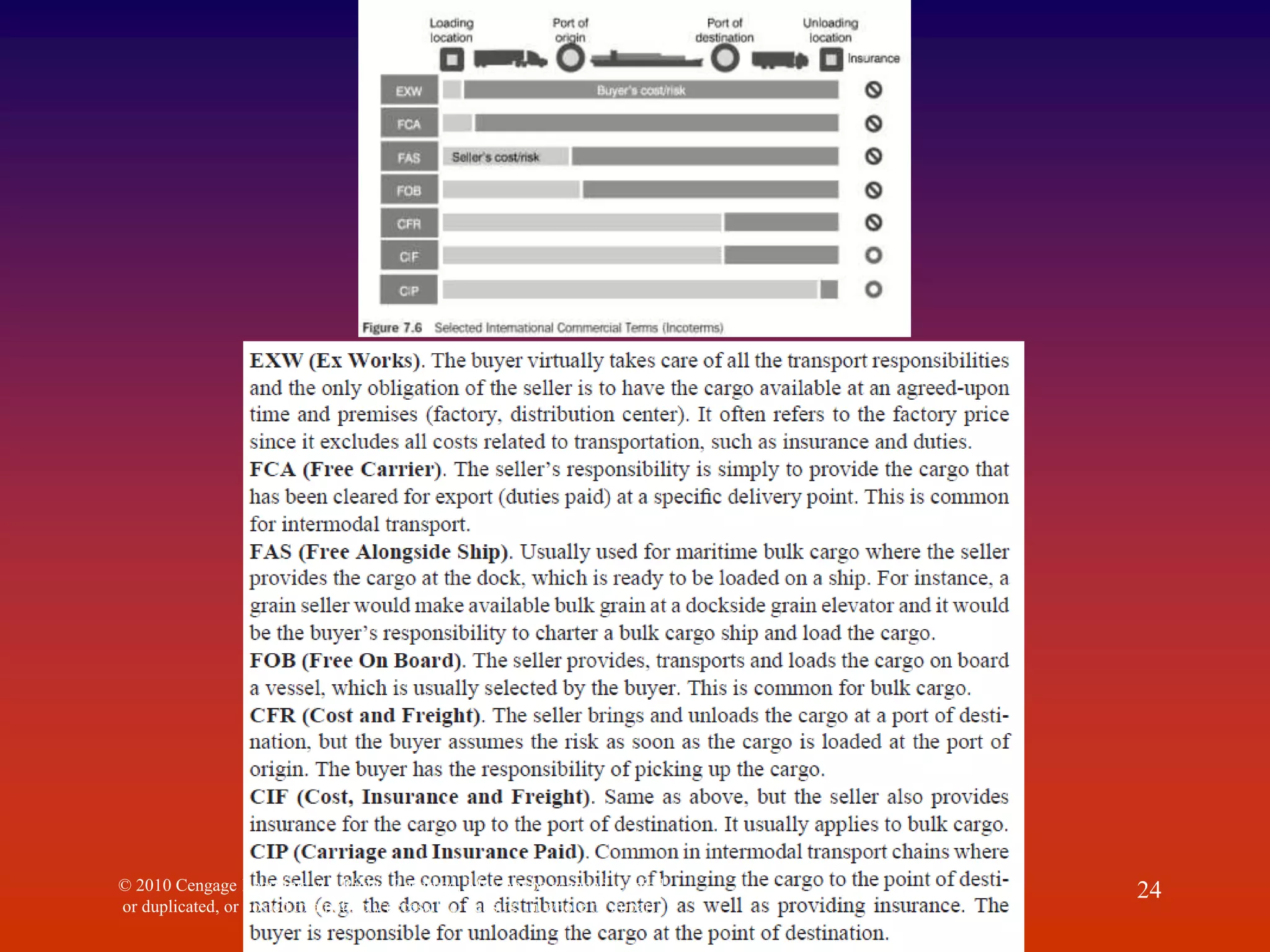
Transport as a production factor; details on transport costs, factors affecting costs, and market effects. Explanation of transport rates, their factors, and types of cost structures impacting transport pricing.
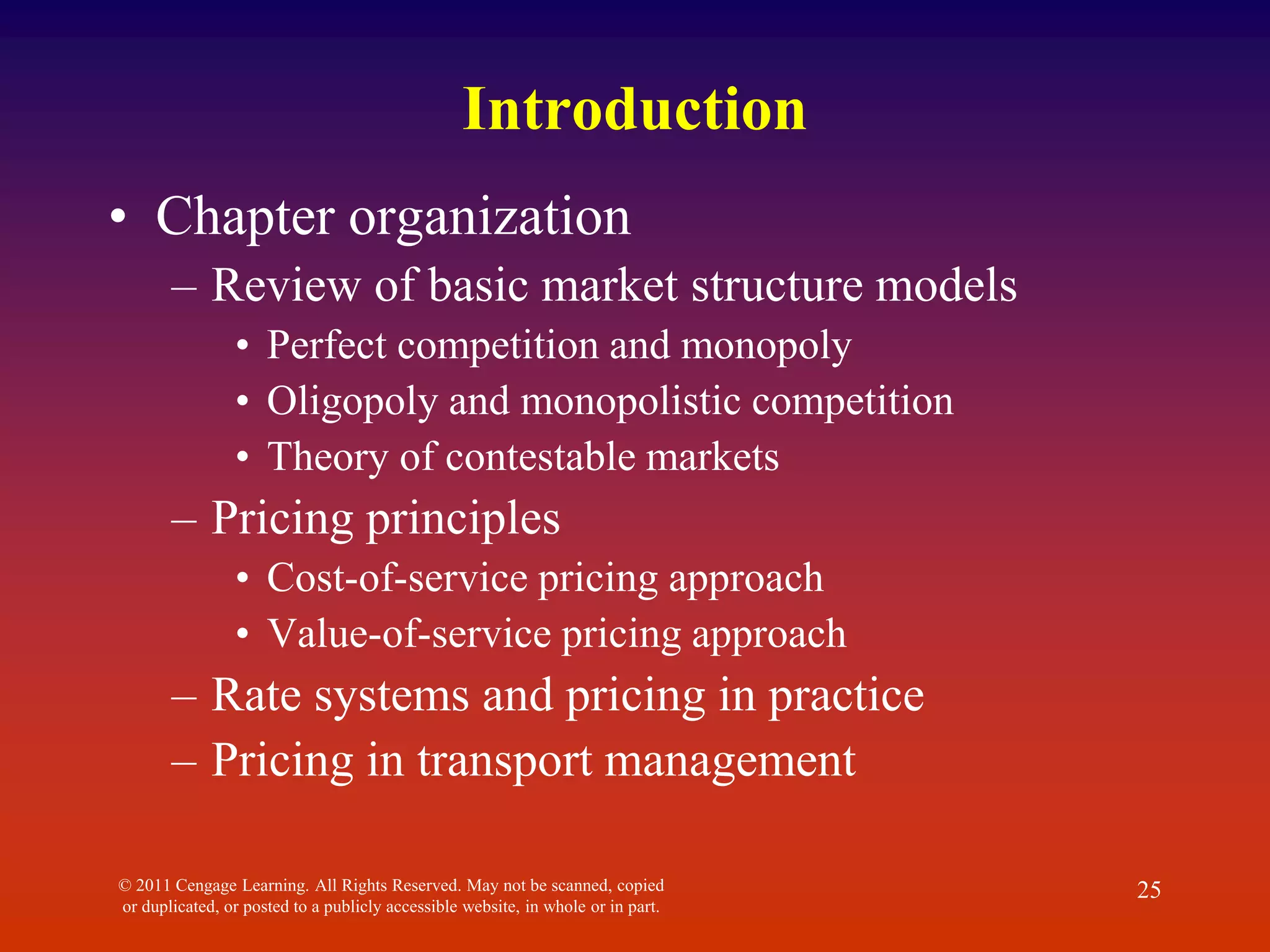
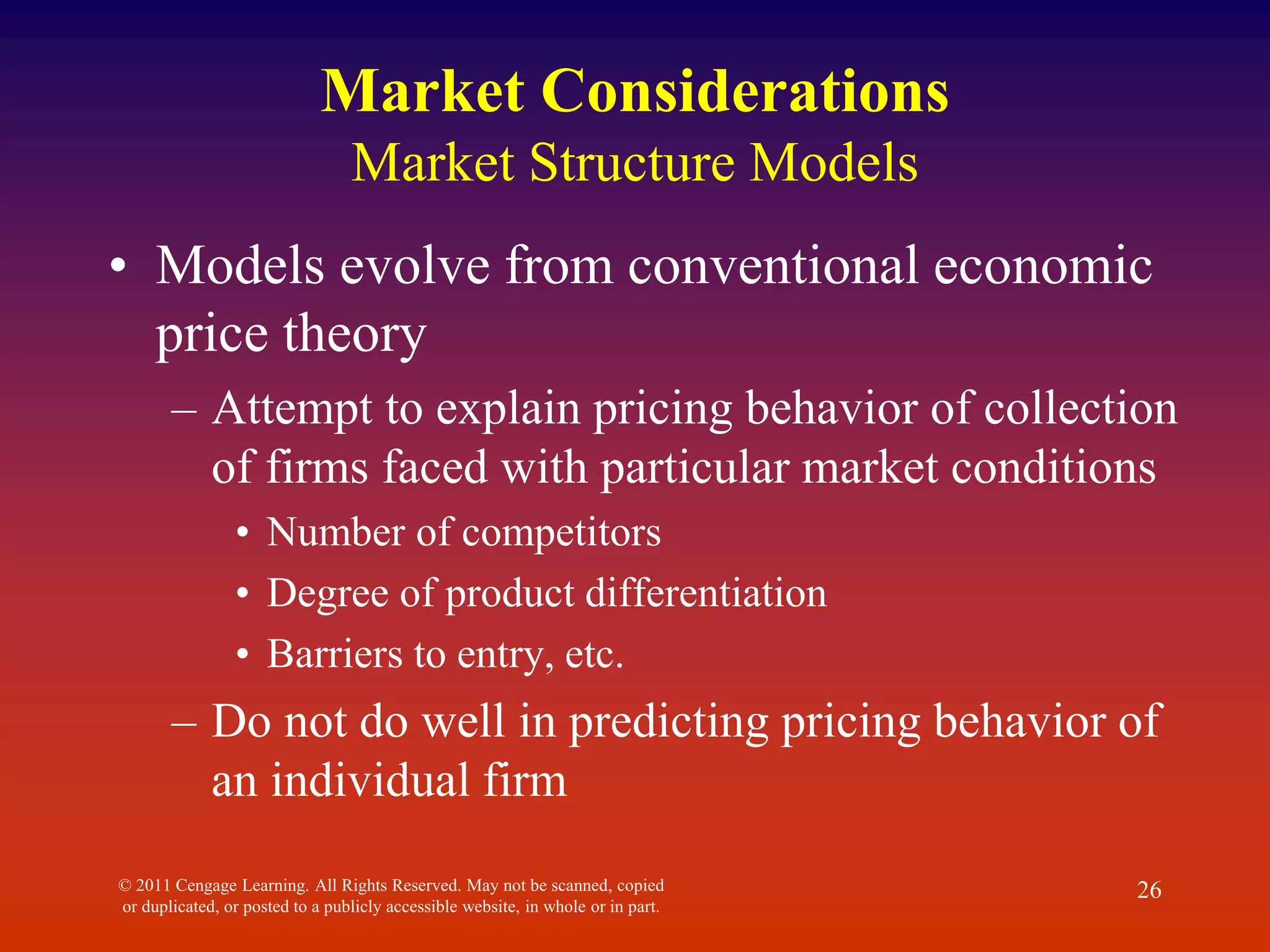
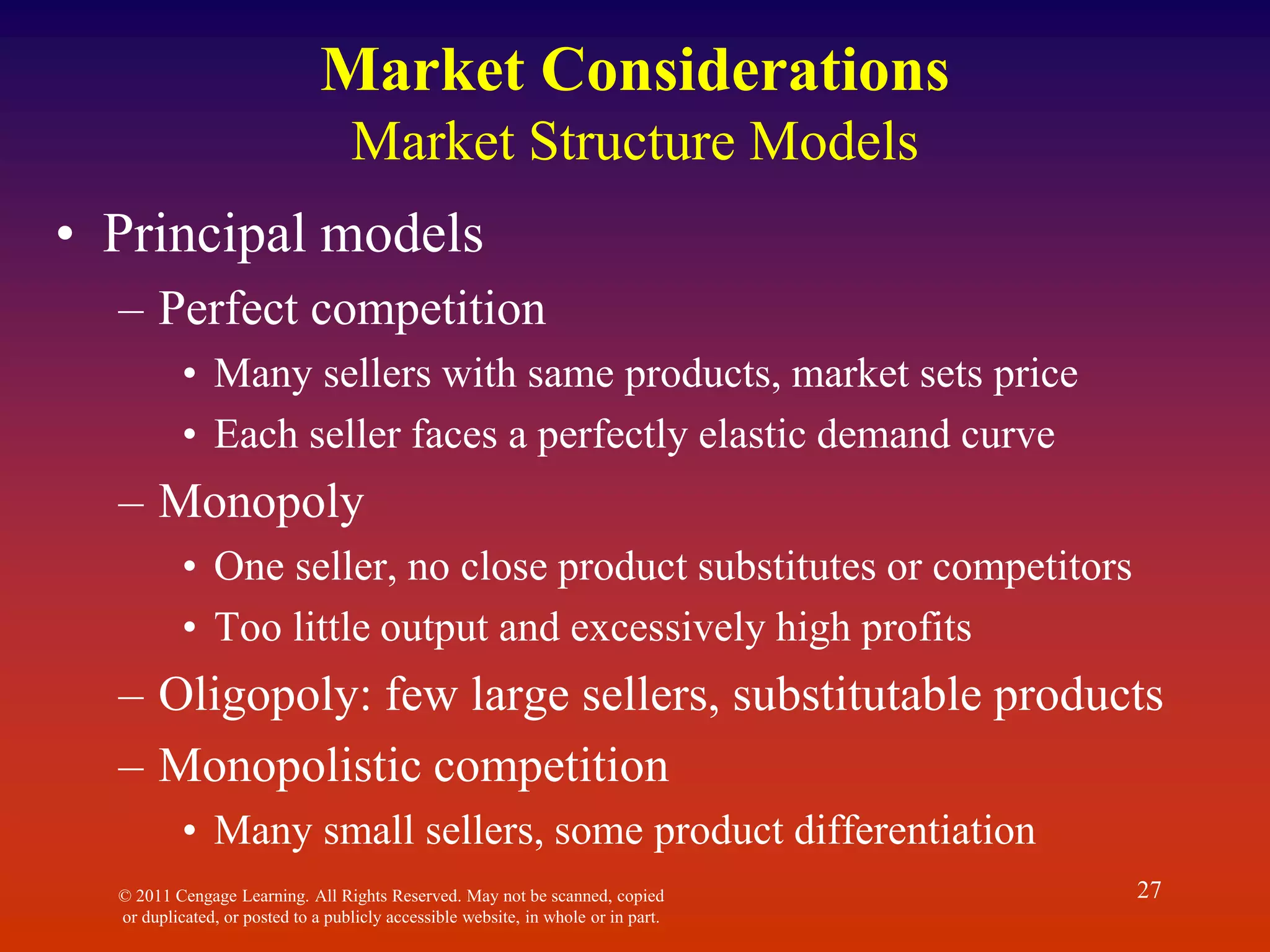
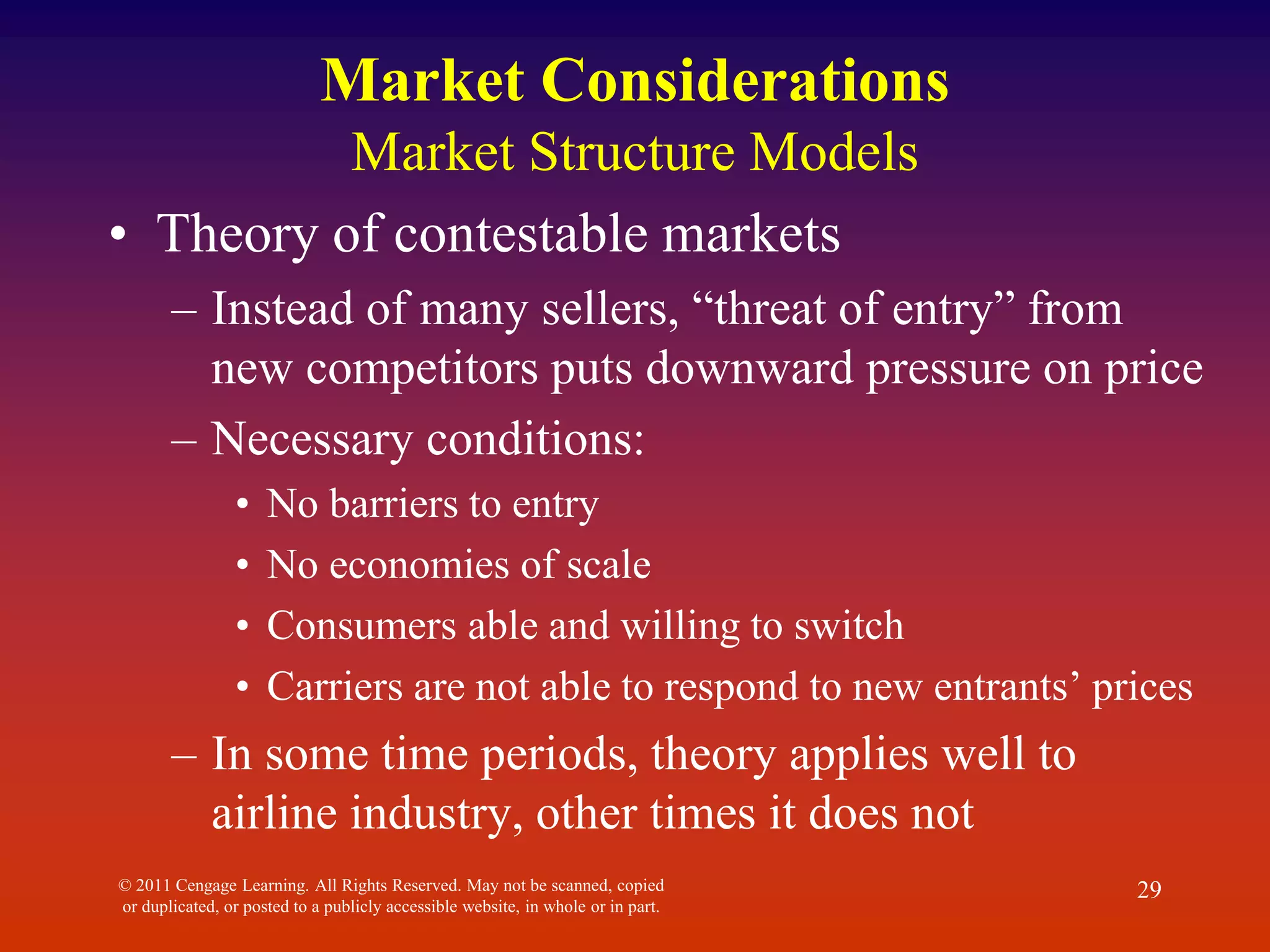
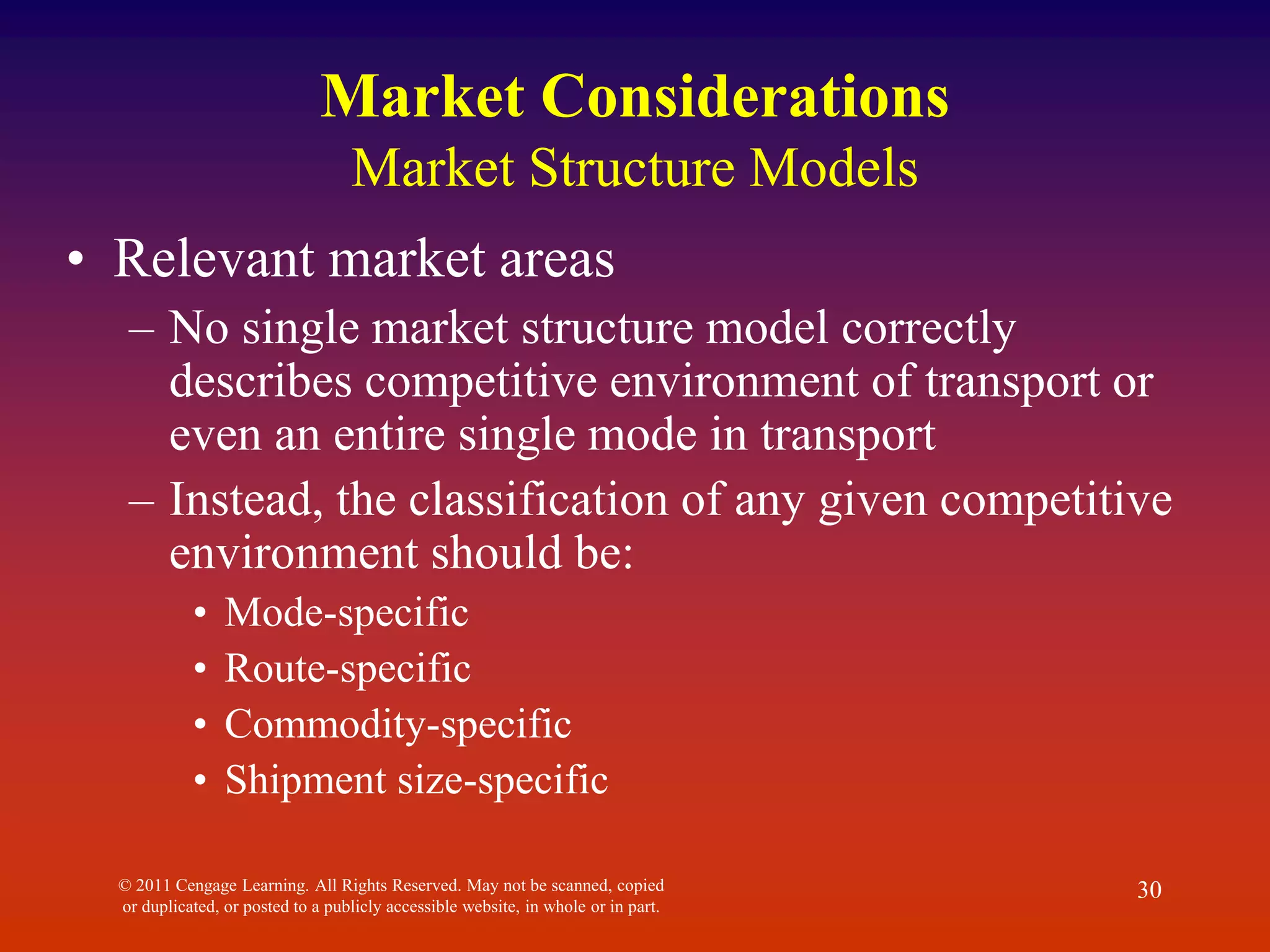
Discussion of market structure models; perfect competition to monopoly; competition’s impact on transport.
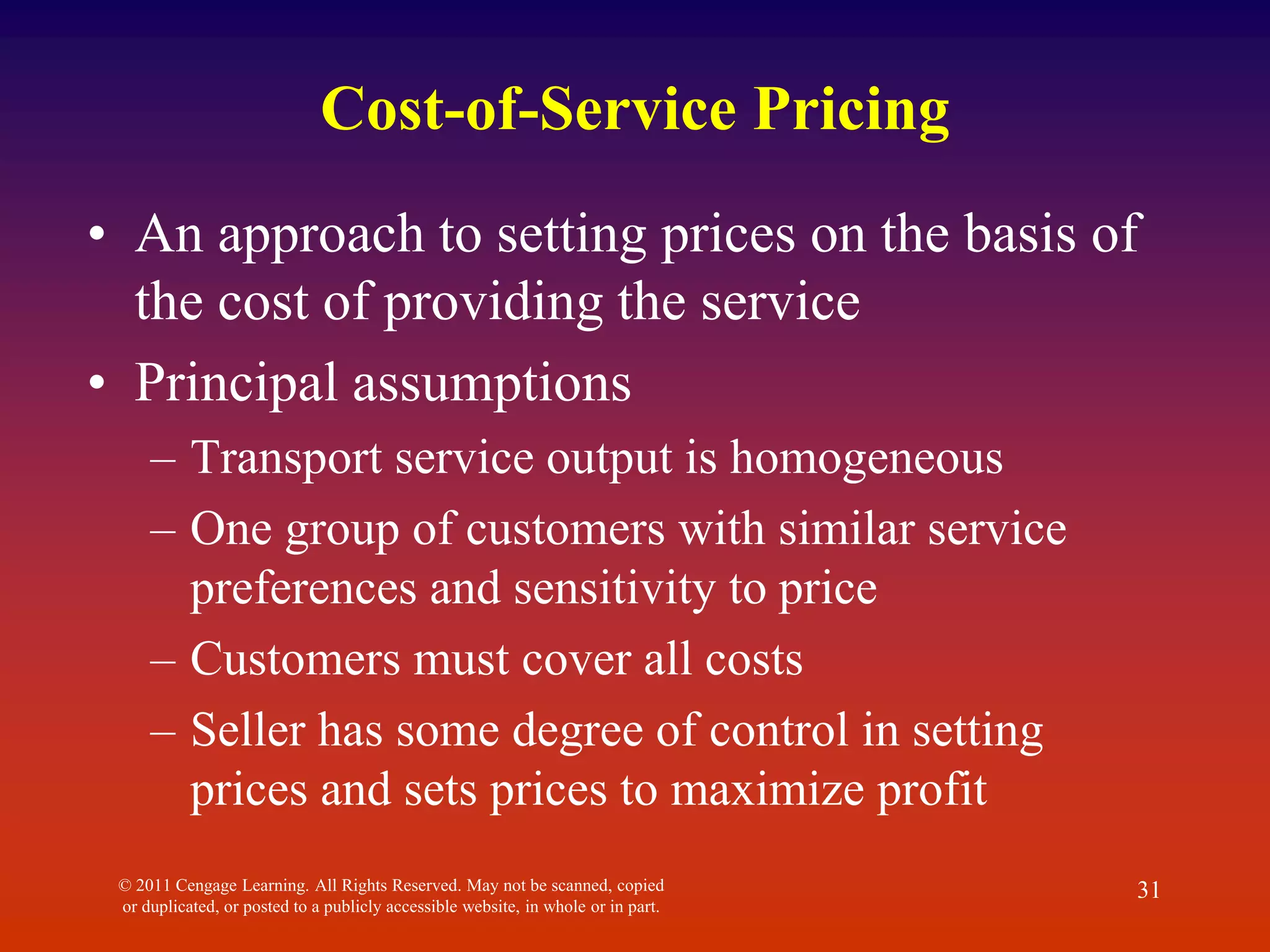
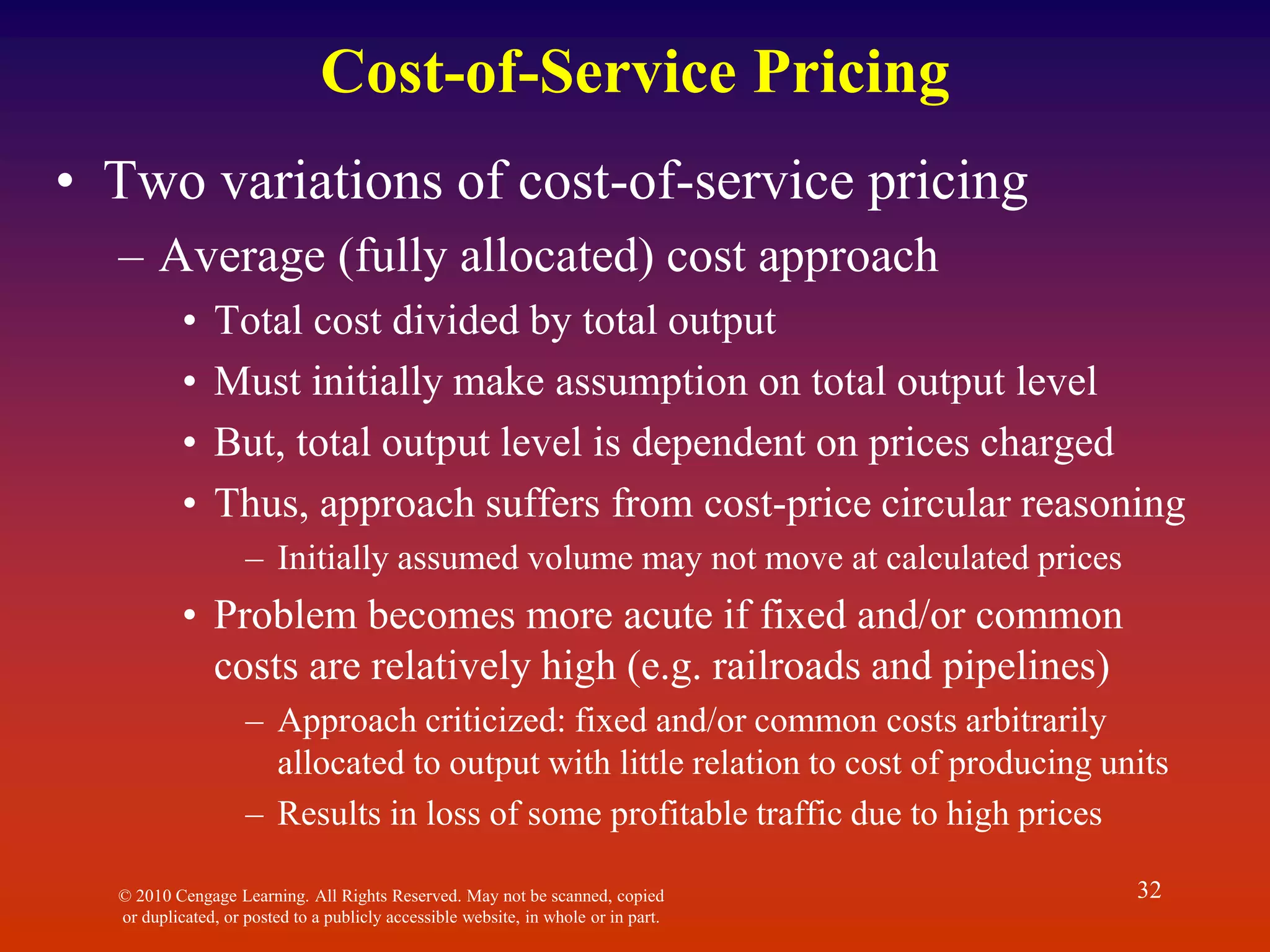
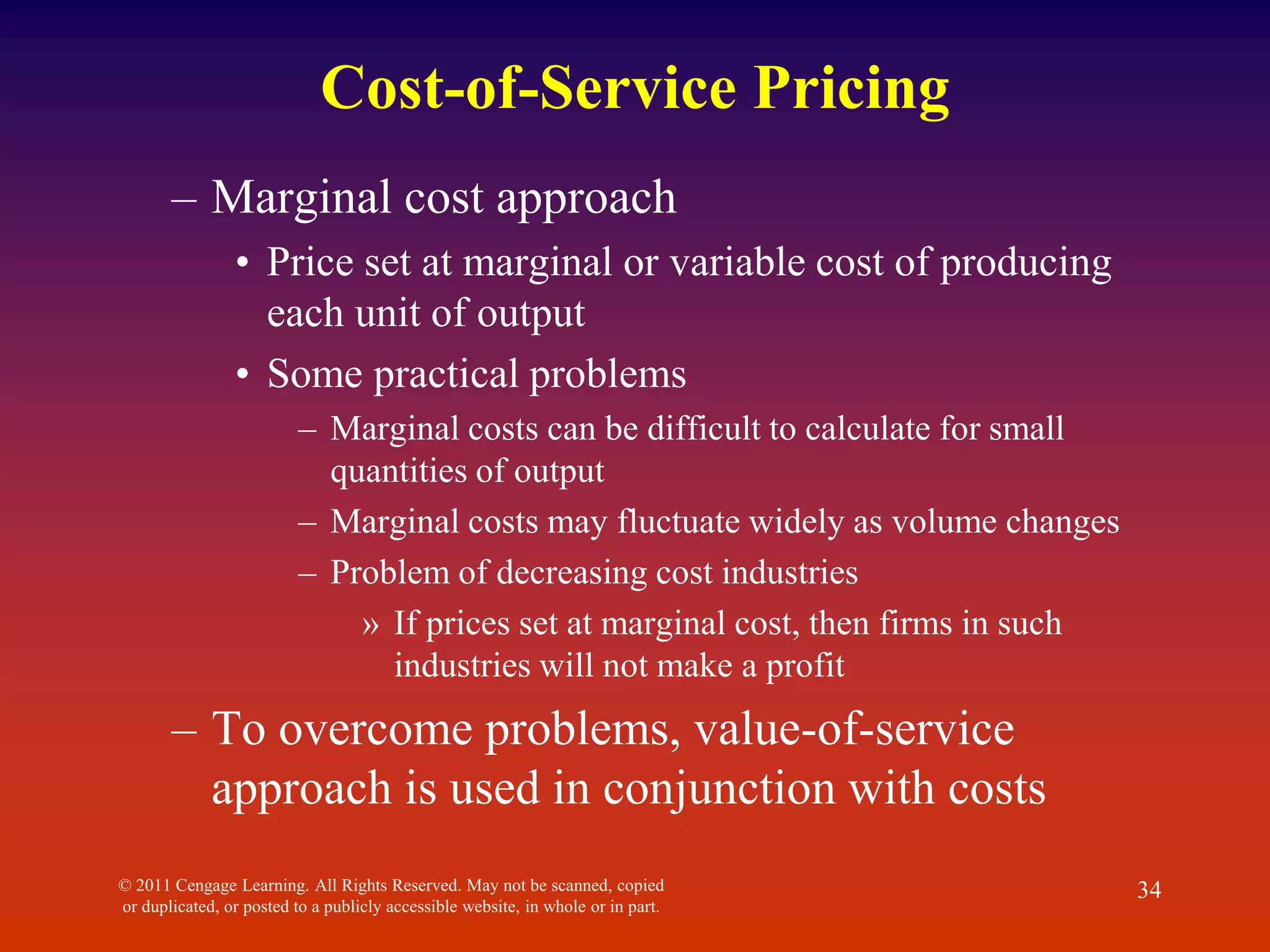
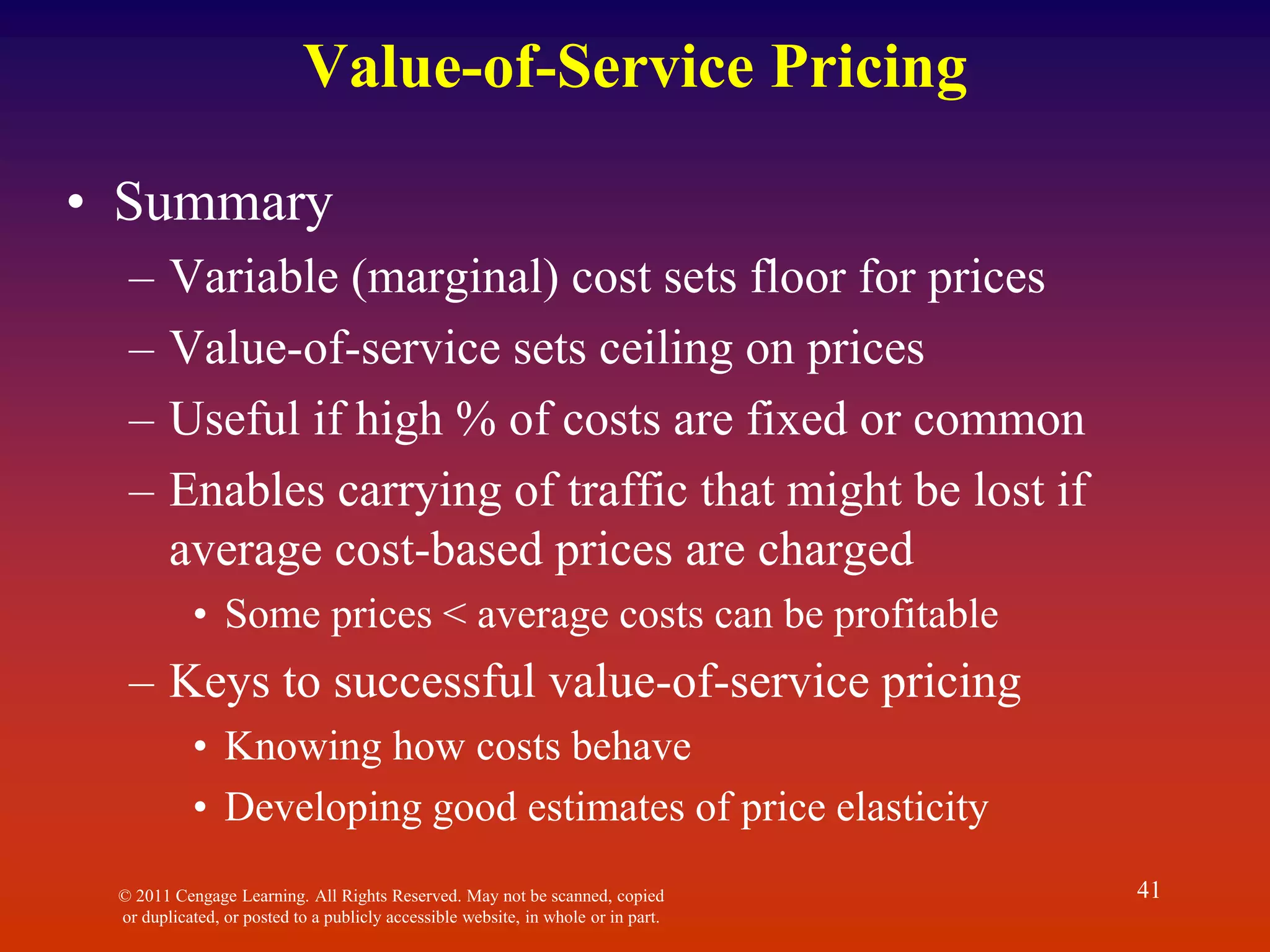
Approaches to pricing based on services provided; challenges of cost-price relationships in transport.
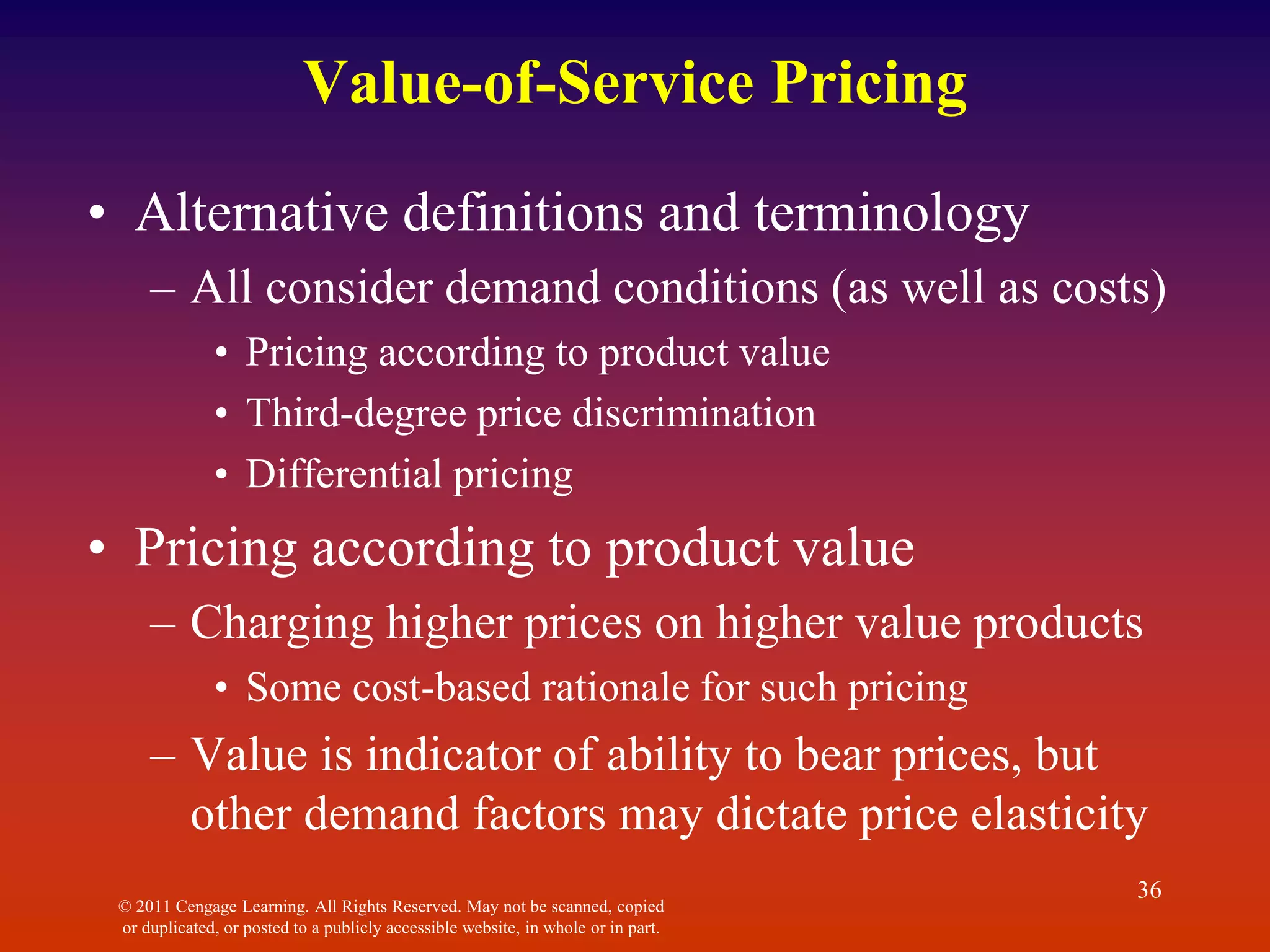
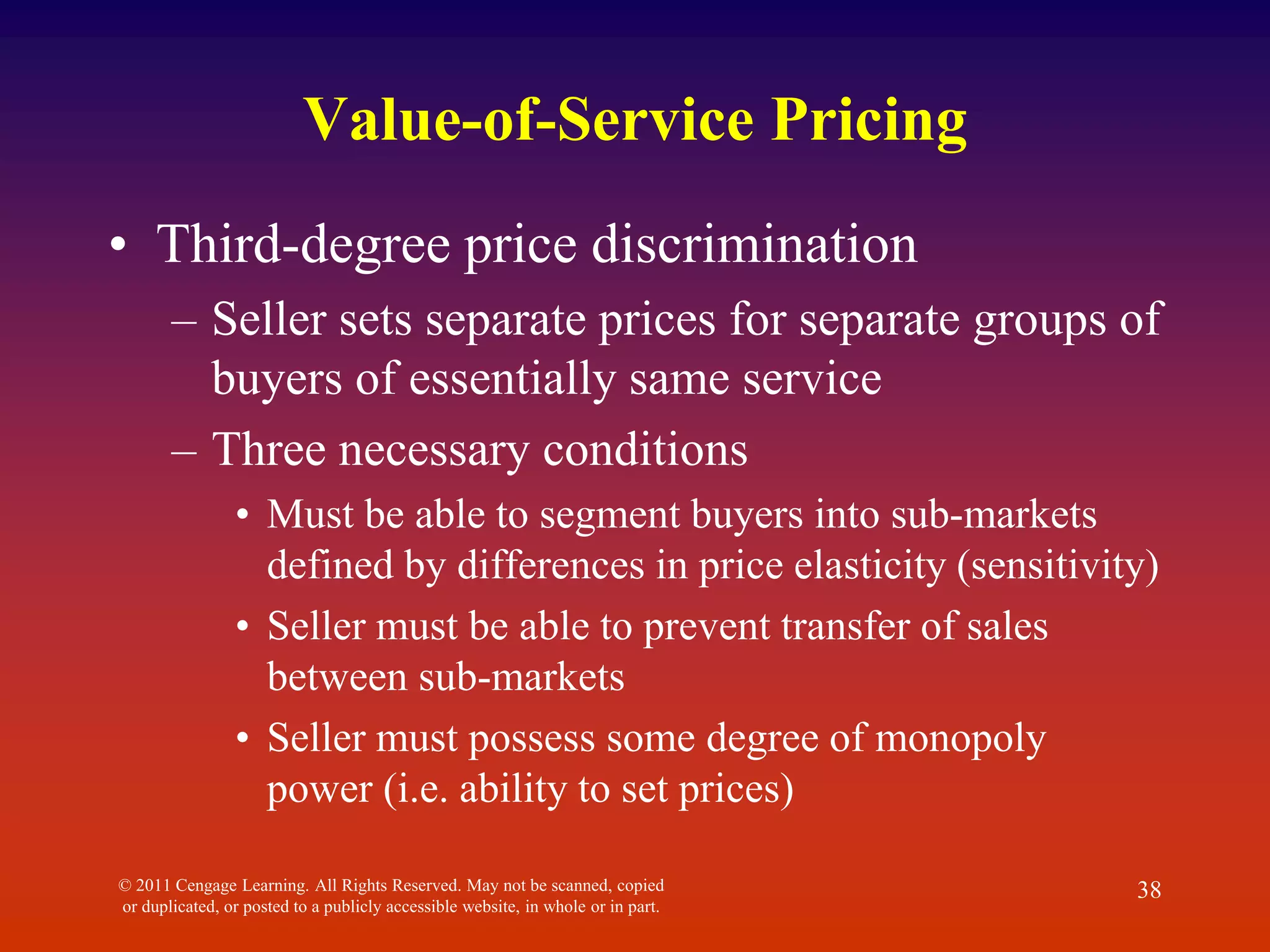
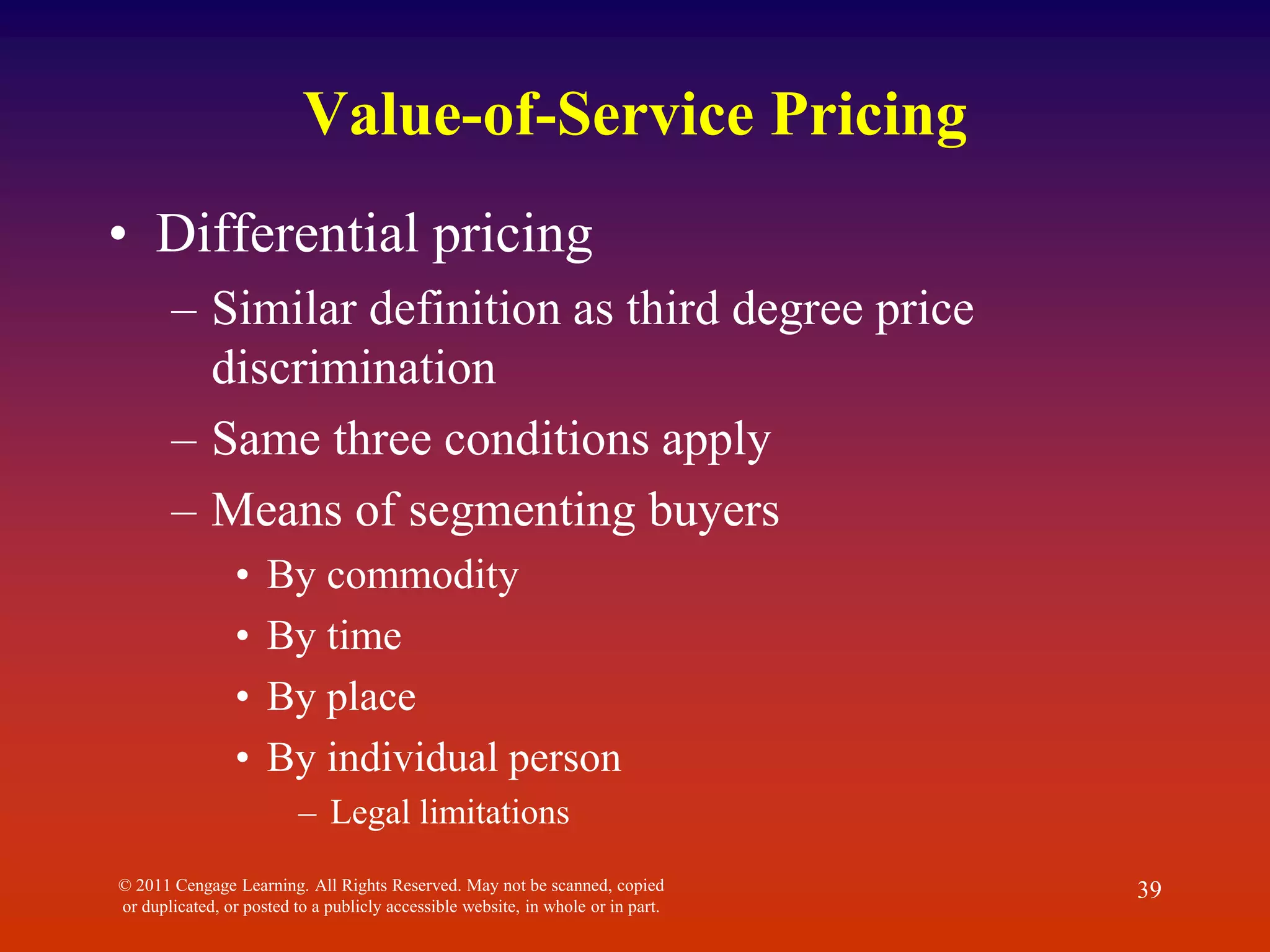
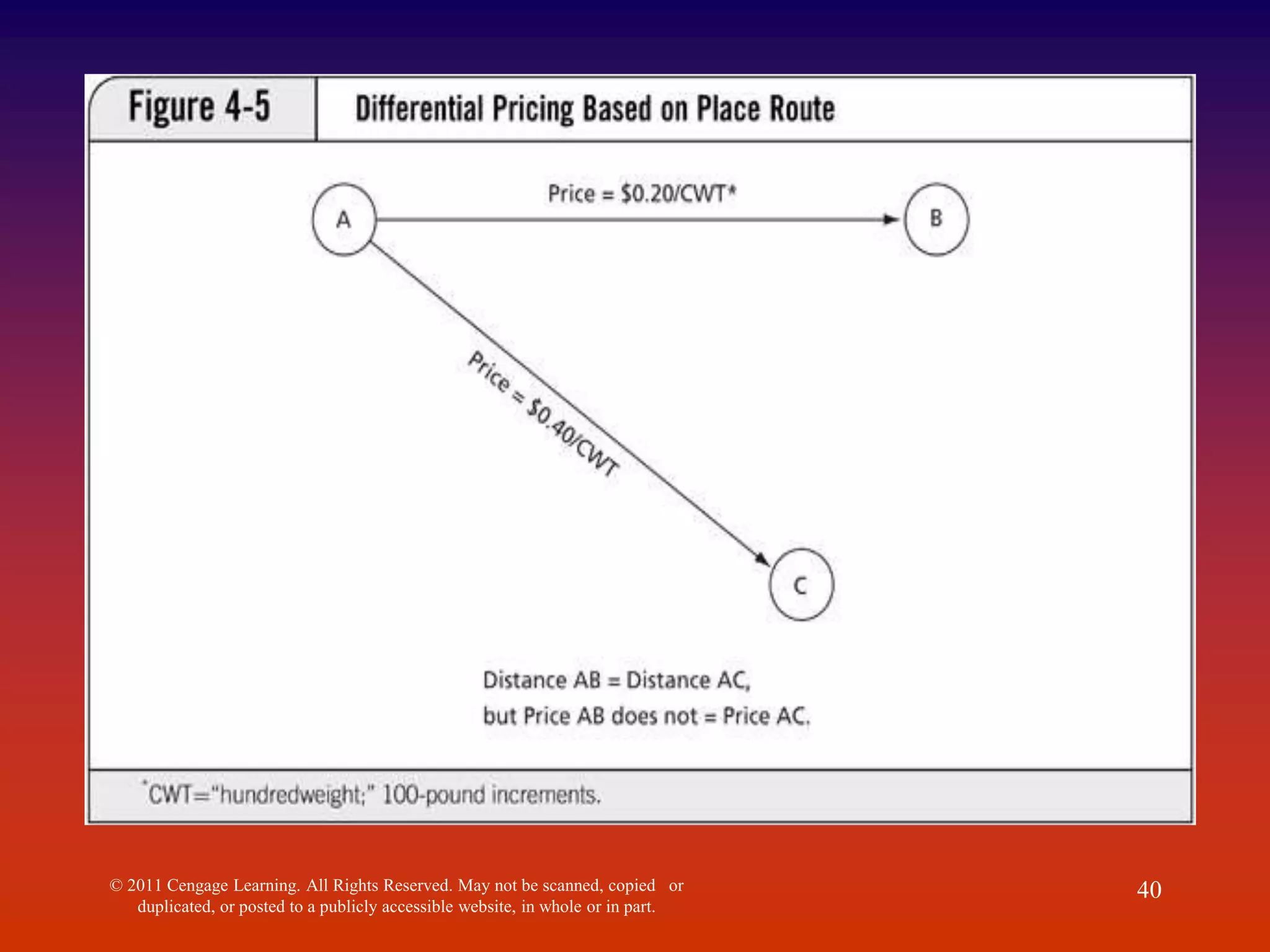
Definitions and methods of pricing according to product value; implications of price elasticity on pricing.
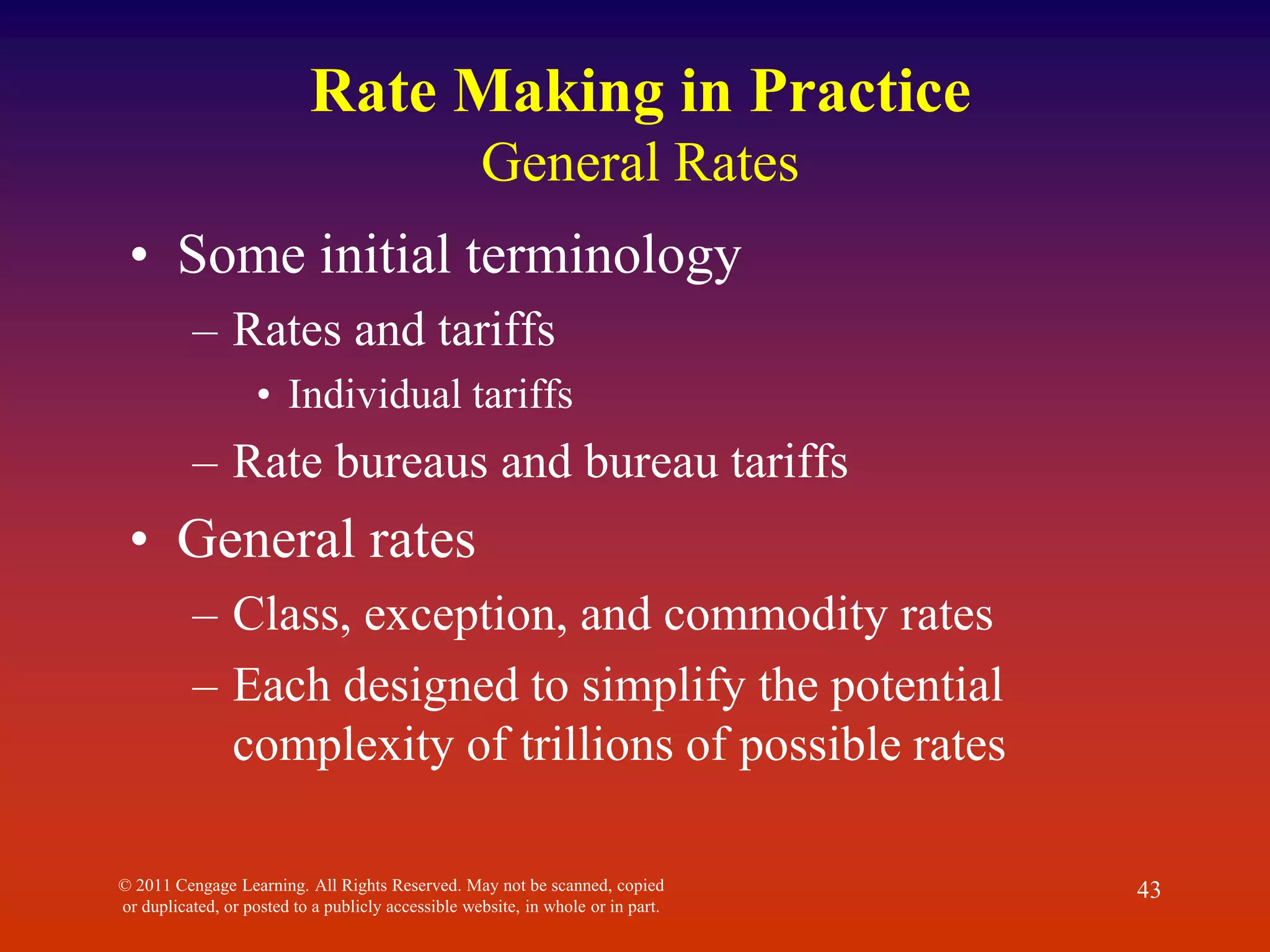
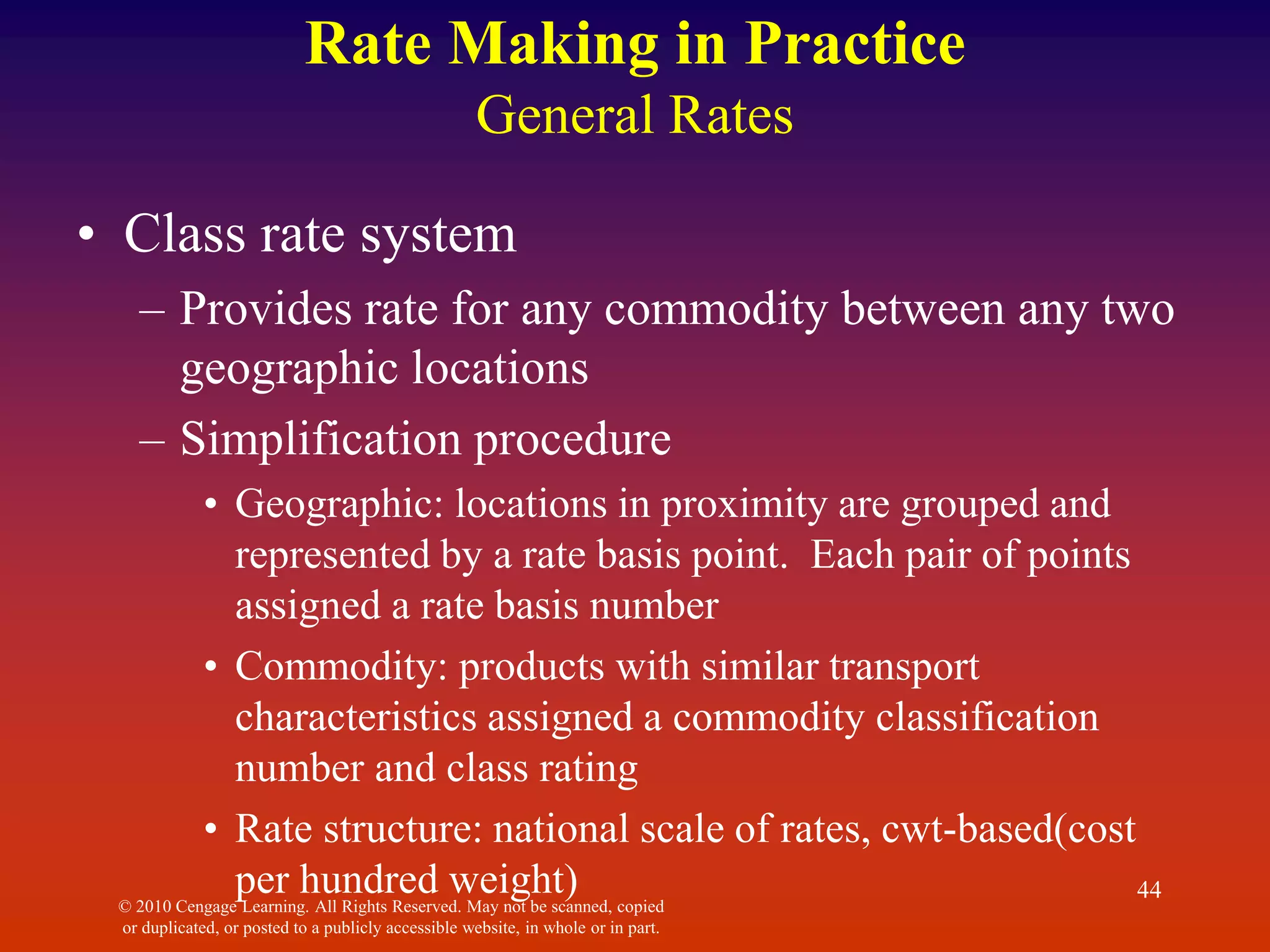
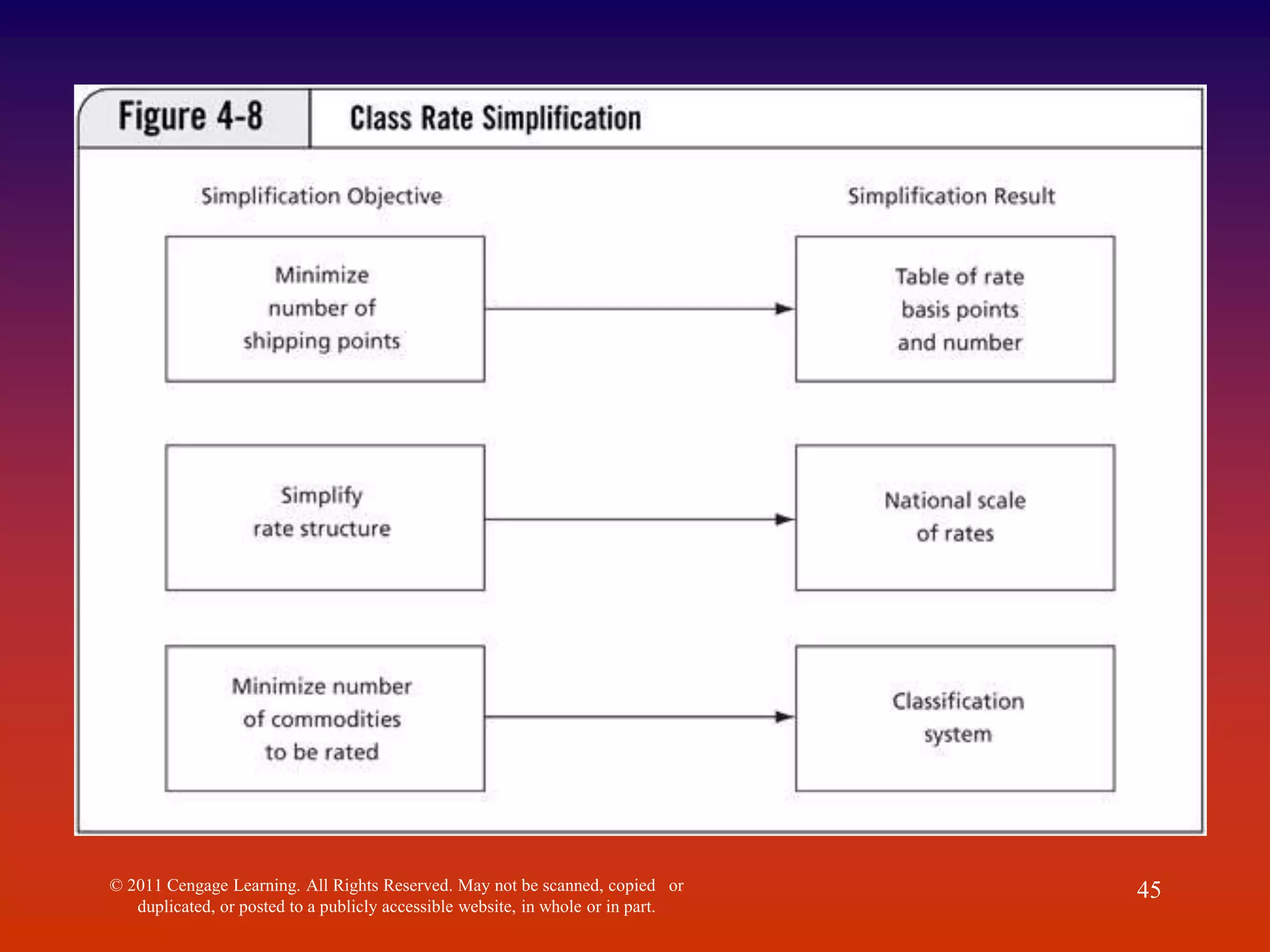
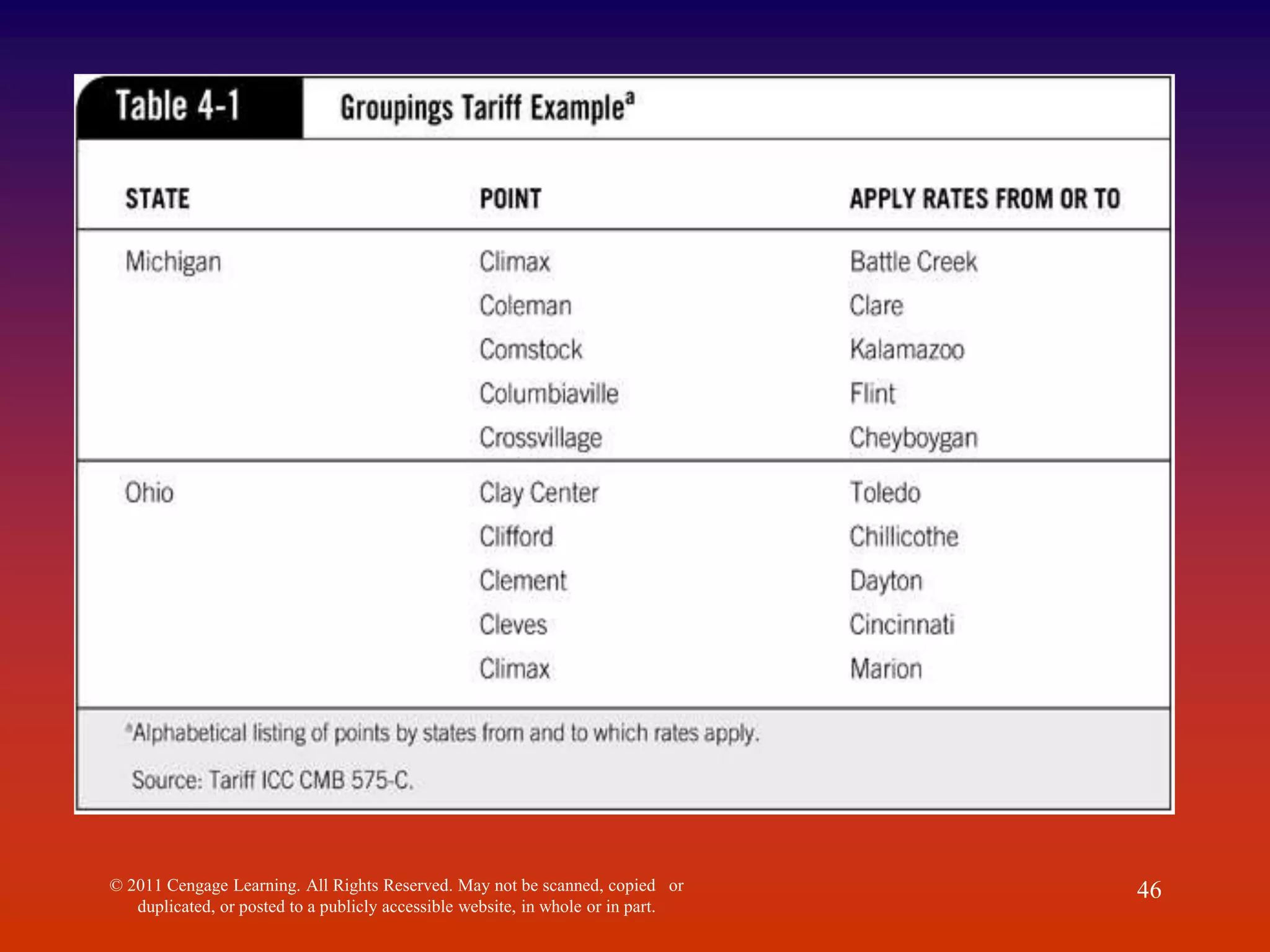
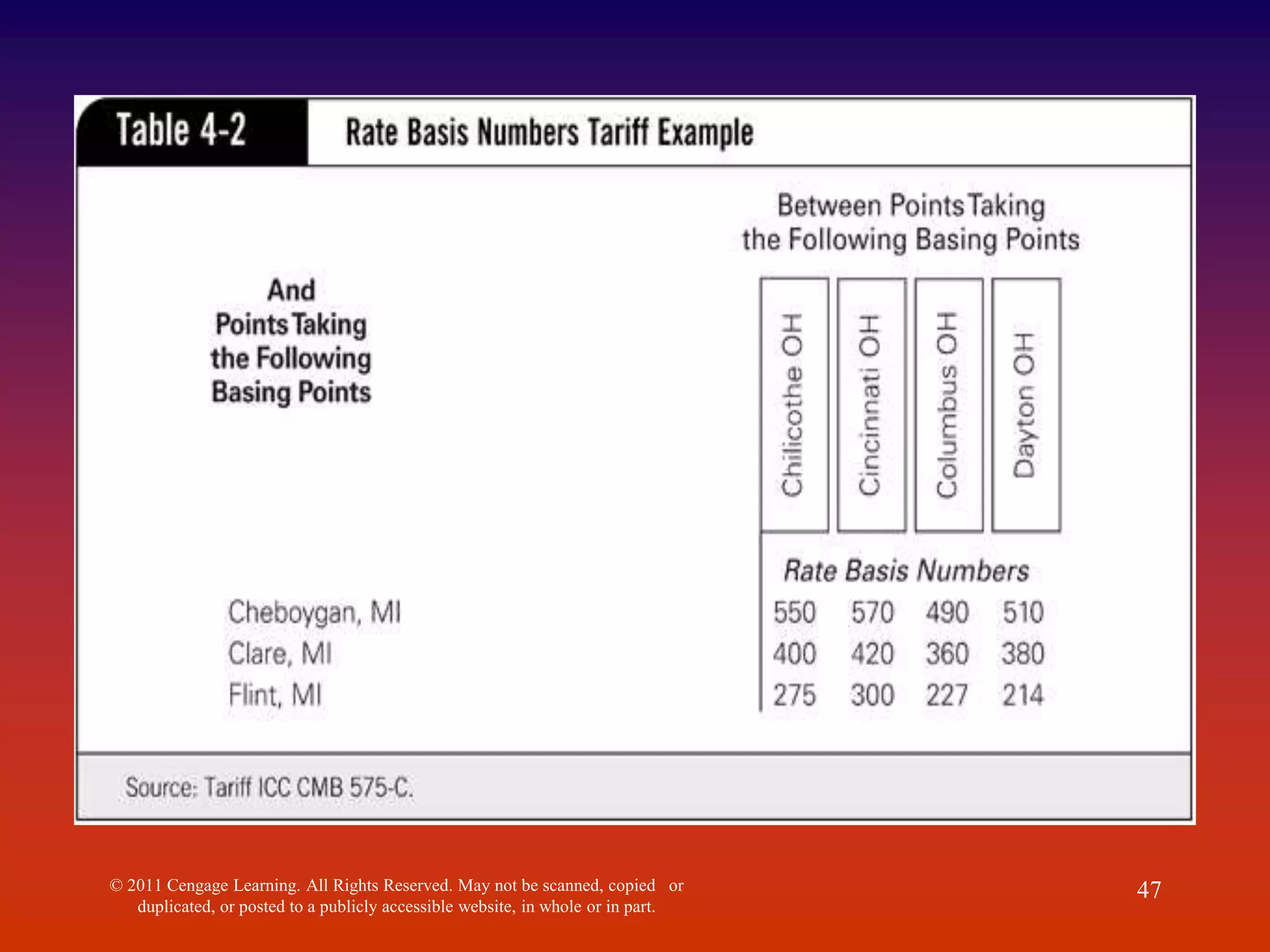
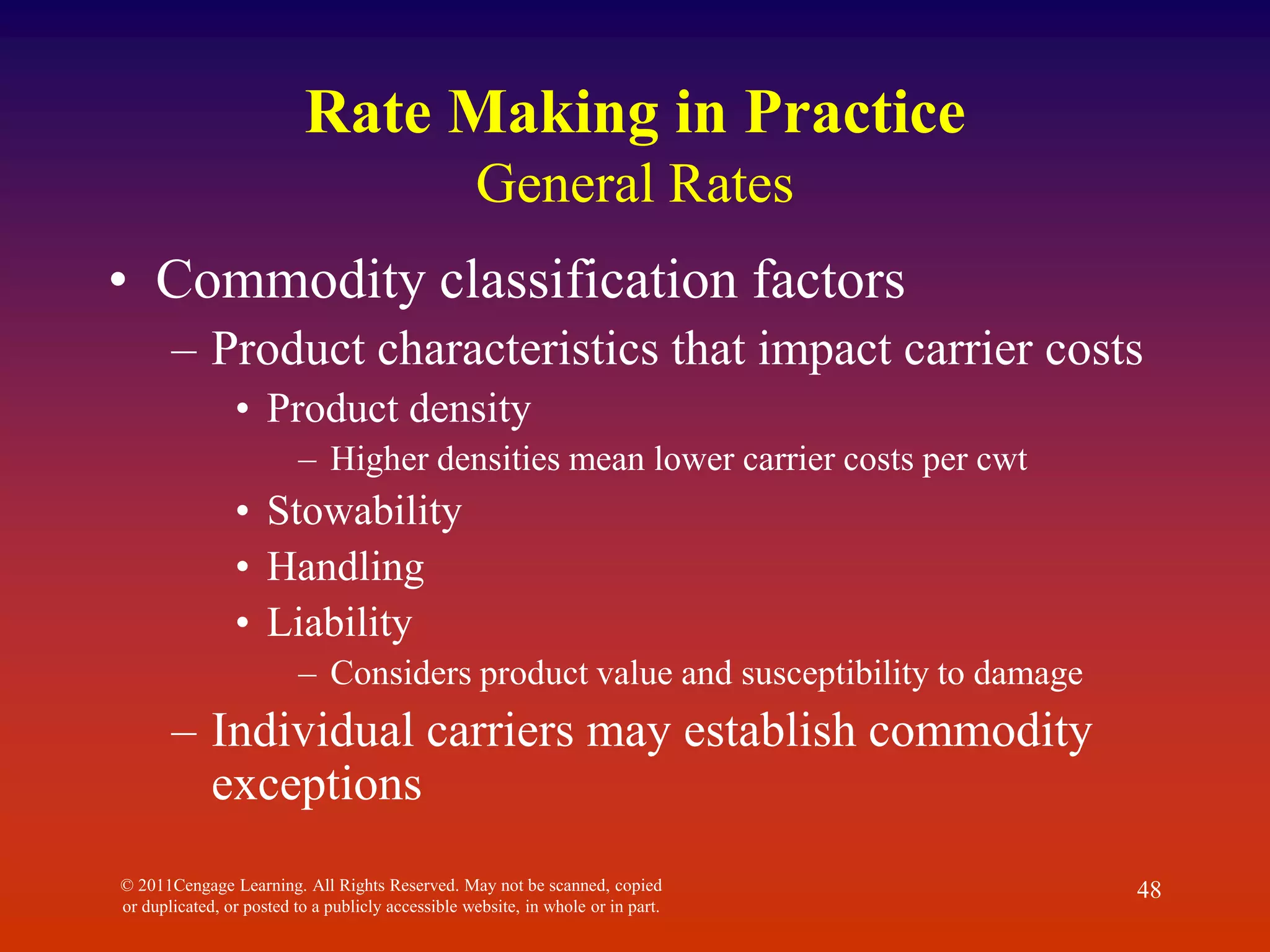
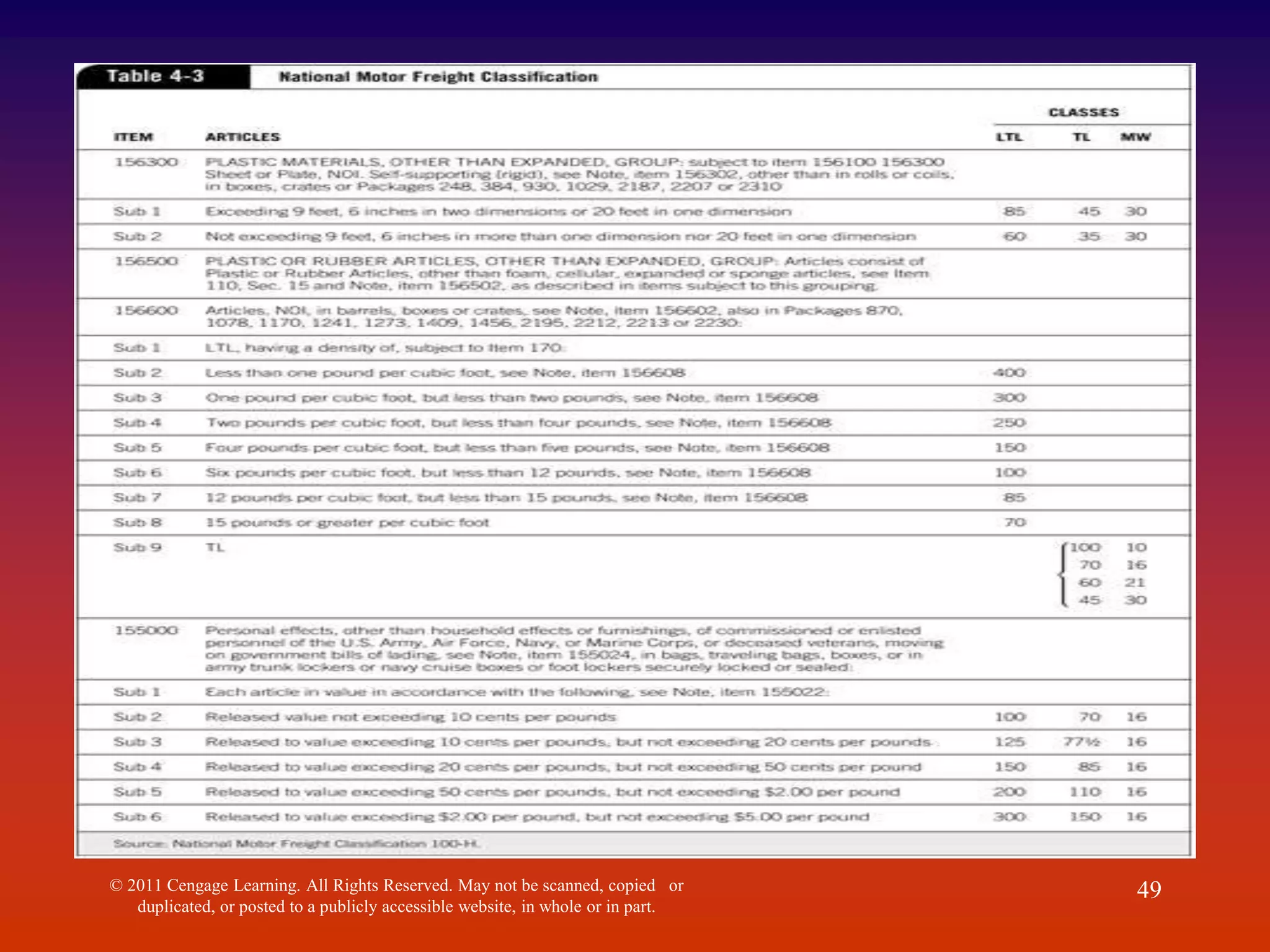
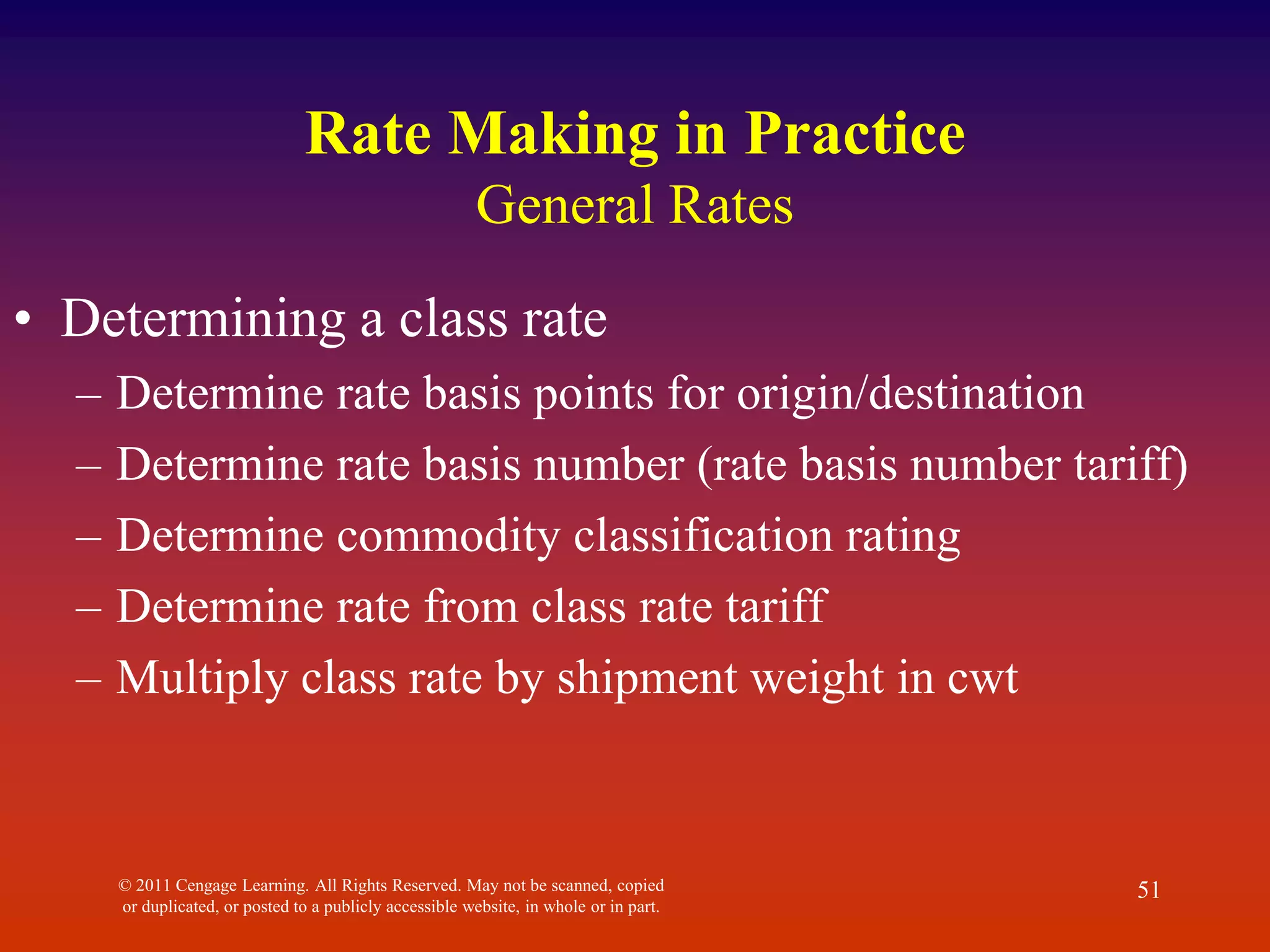
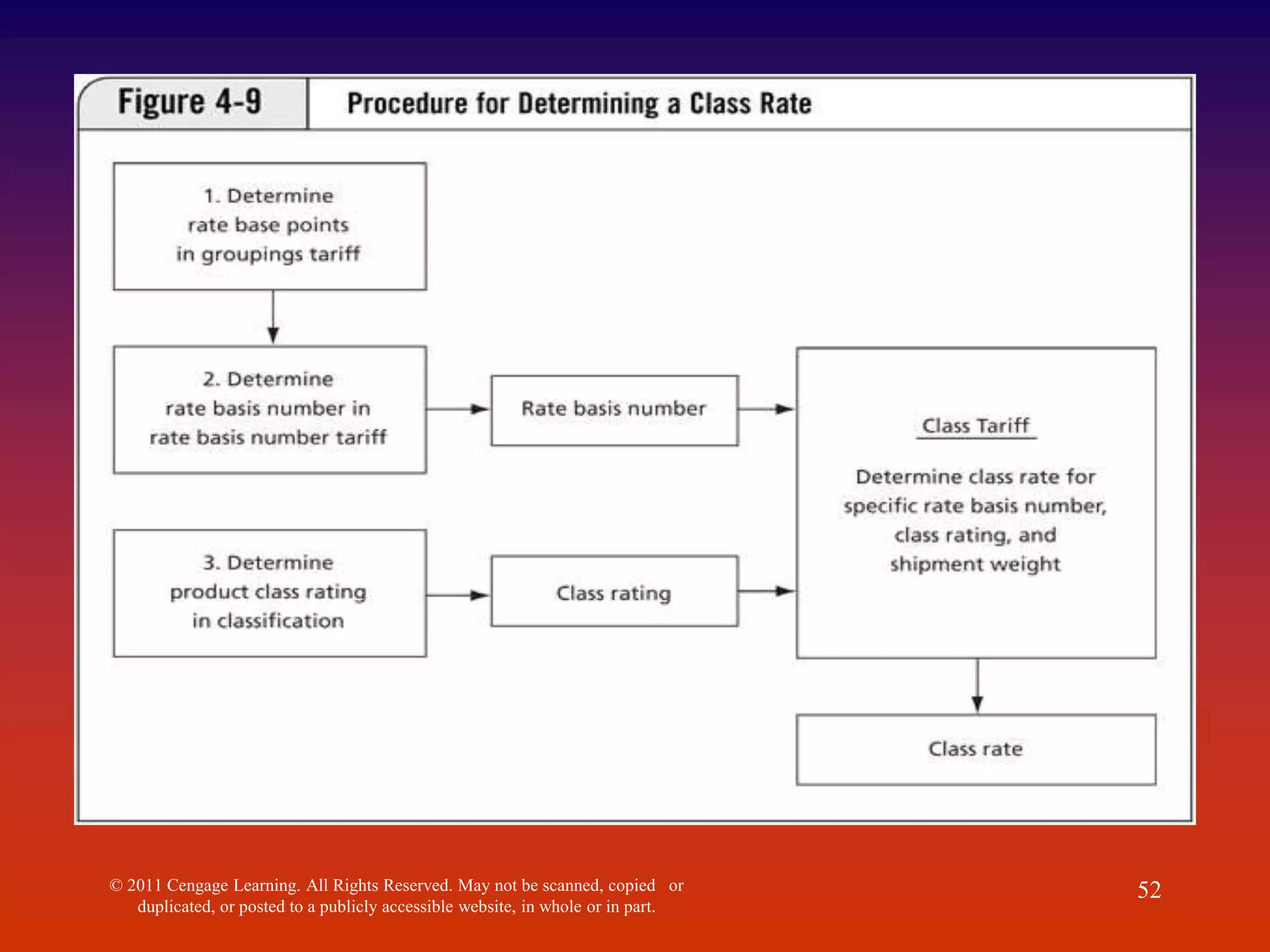
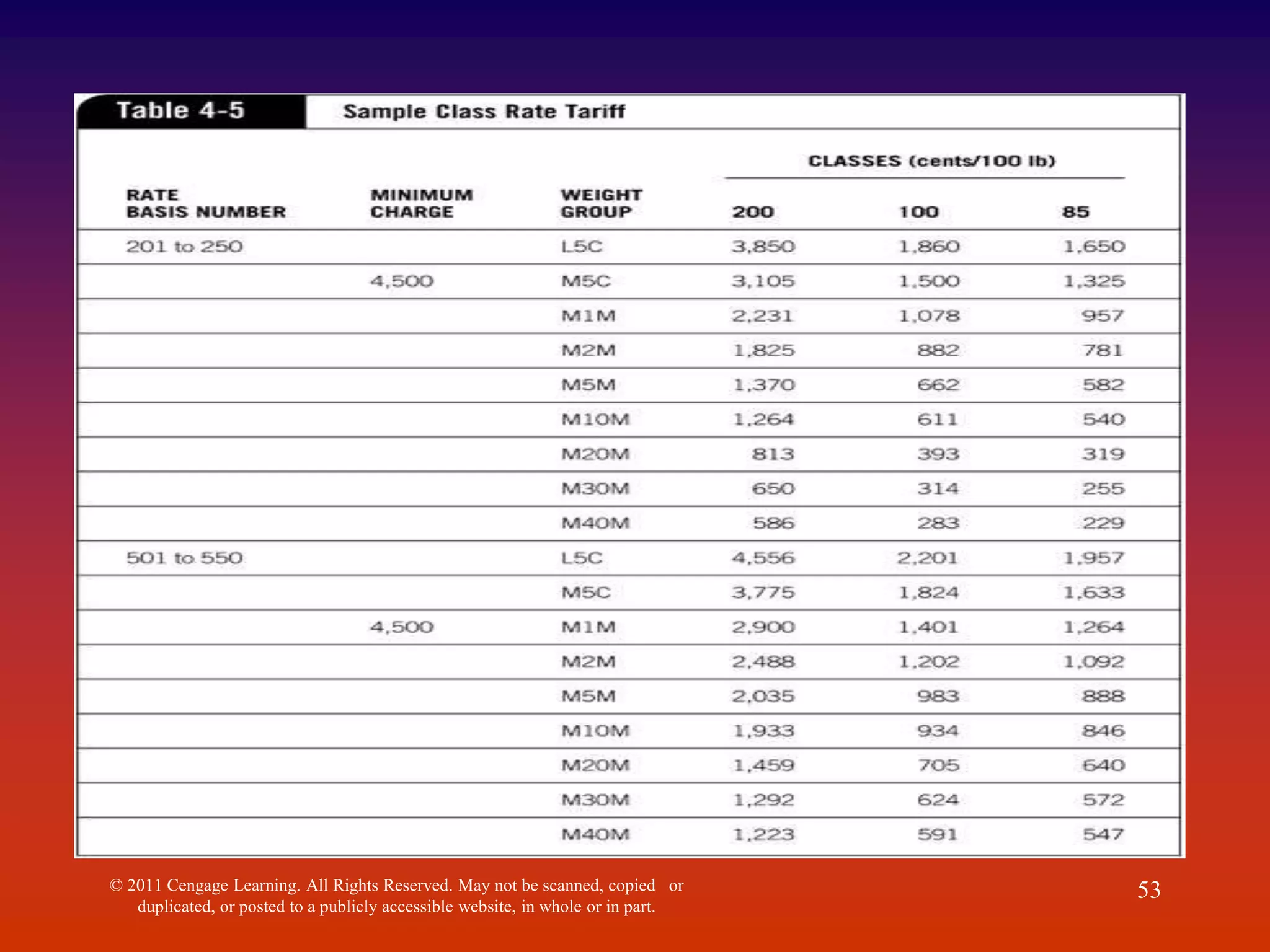
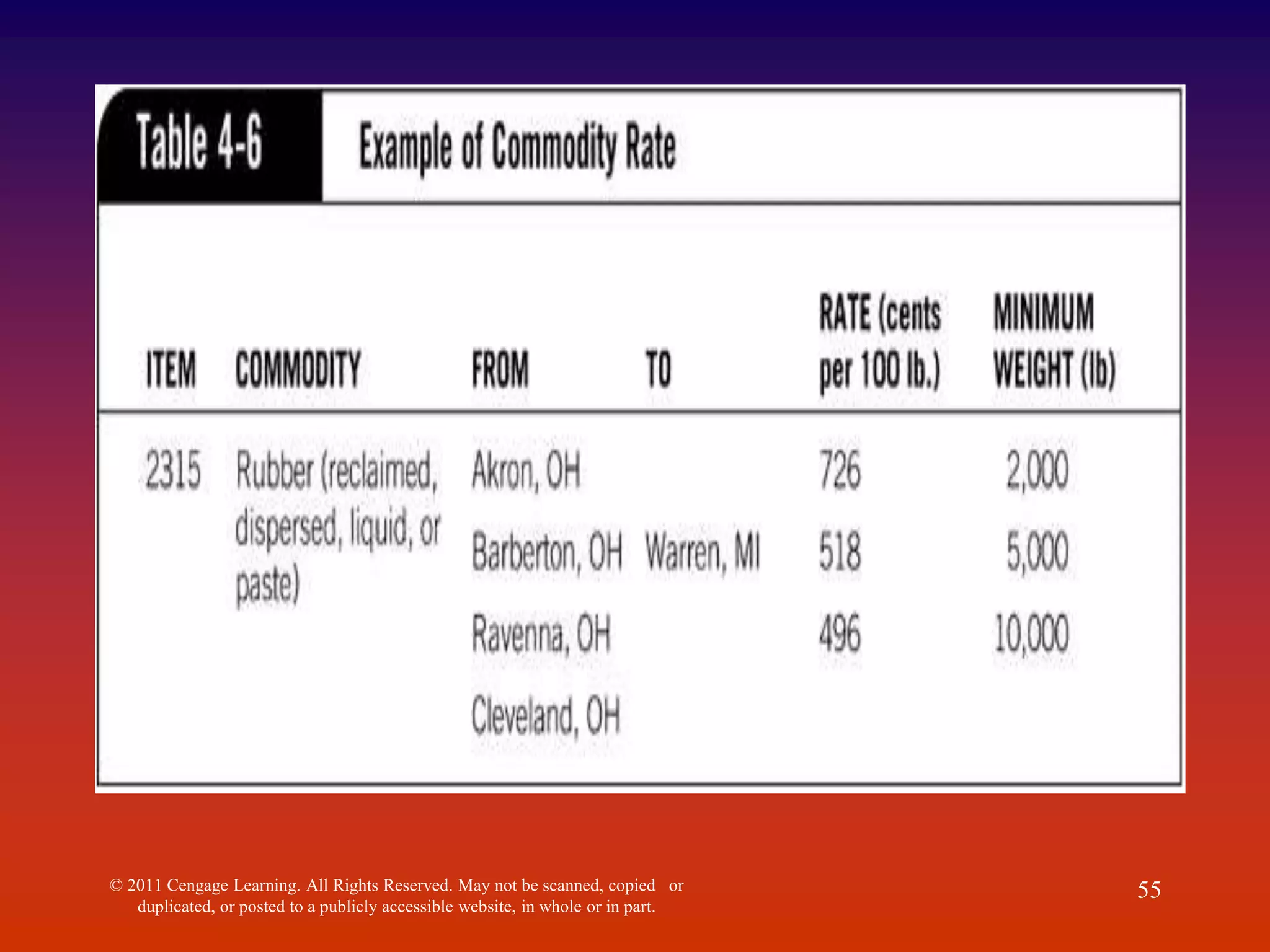
Introduction to rate making in transport; classification of rates for simplification of transport pricing.
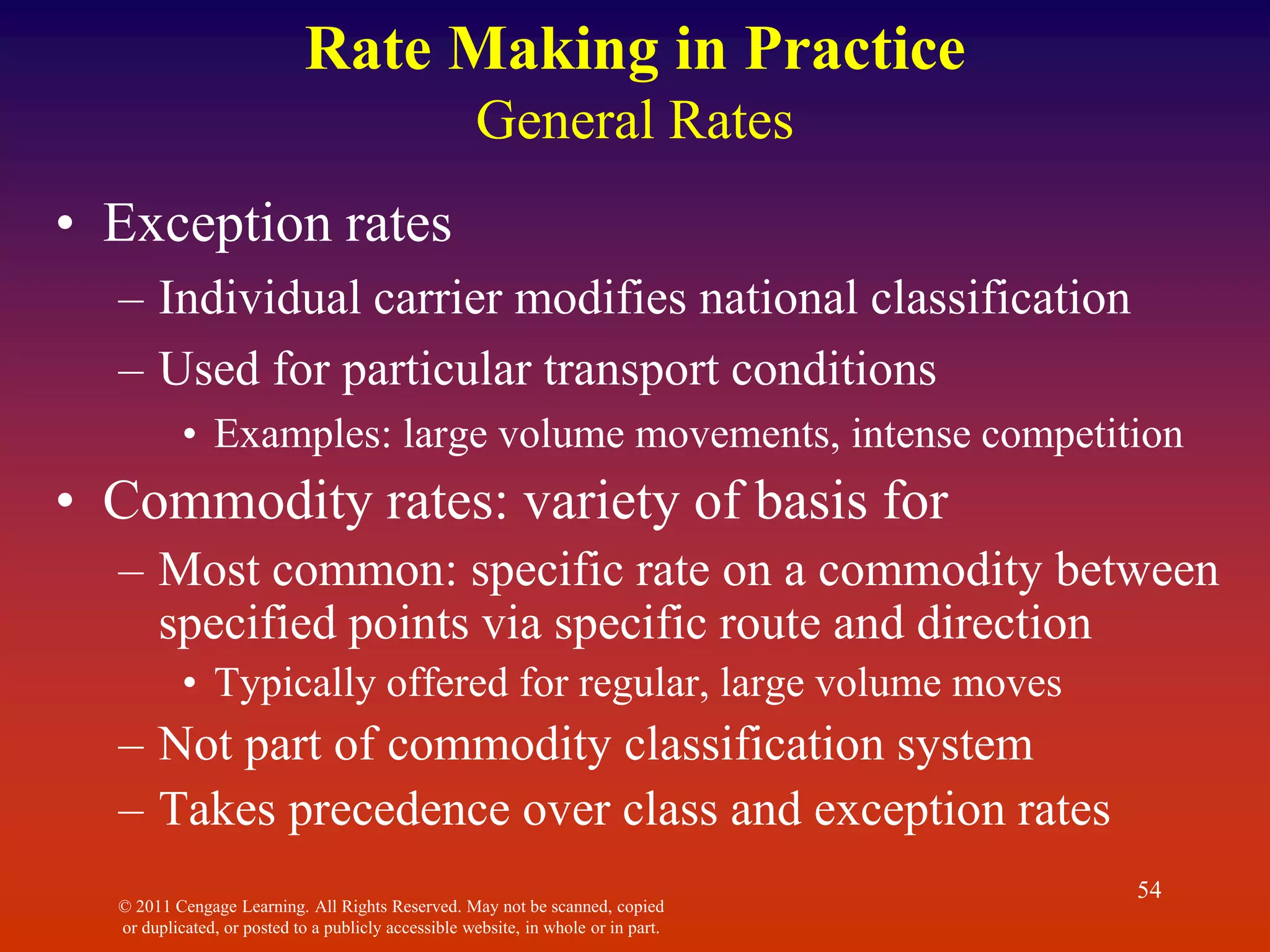
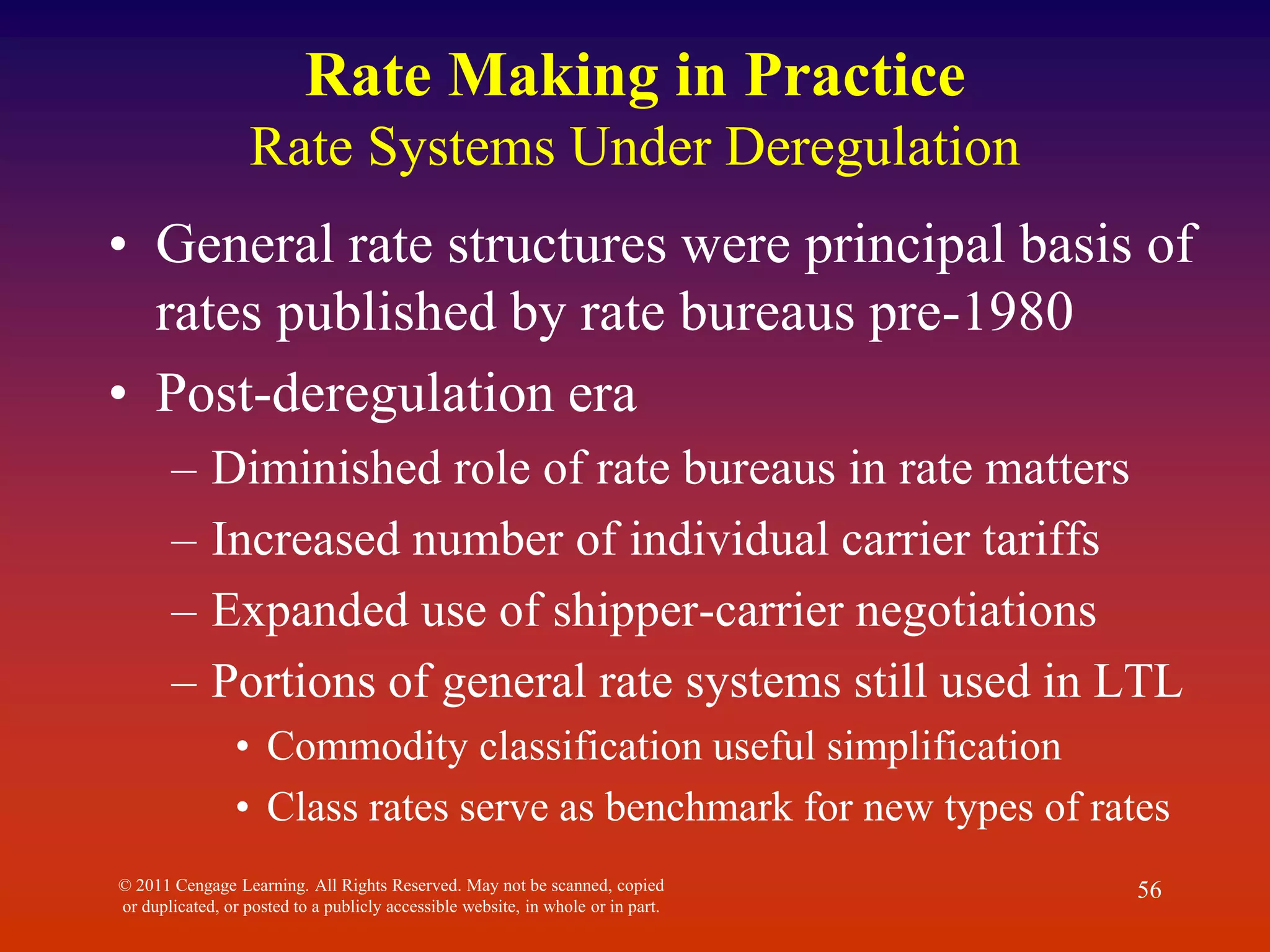
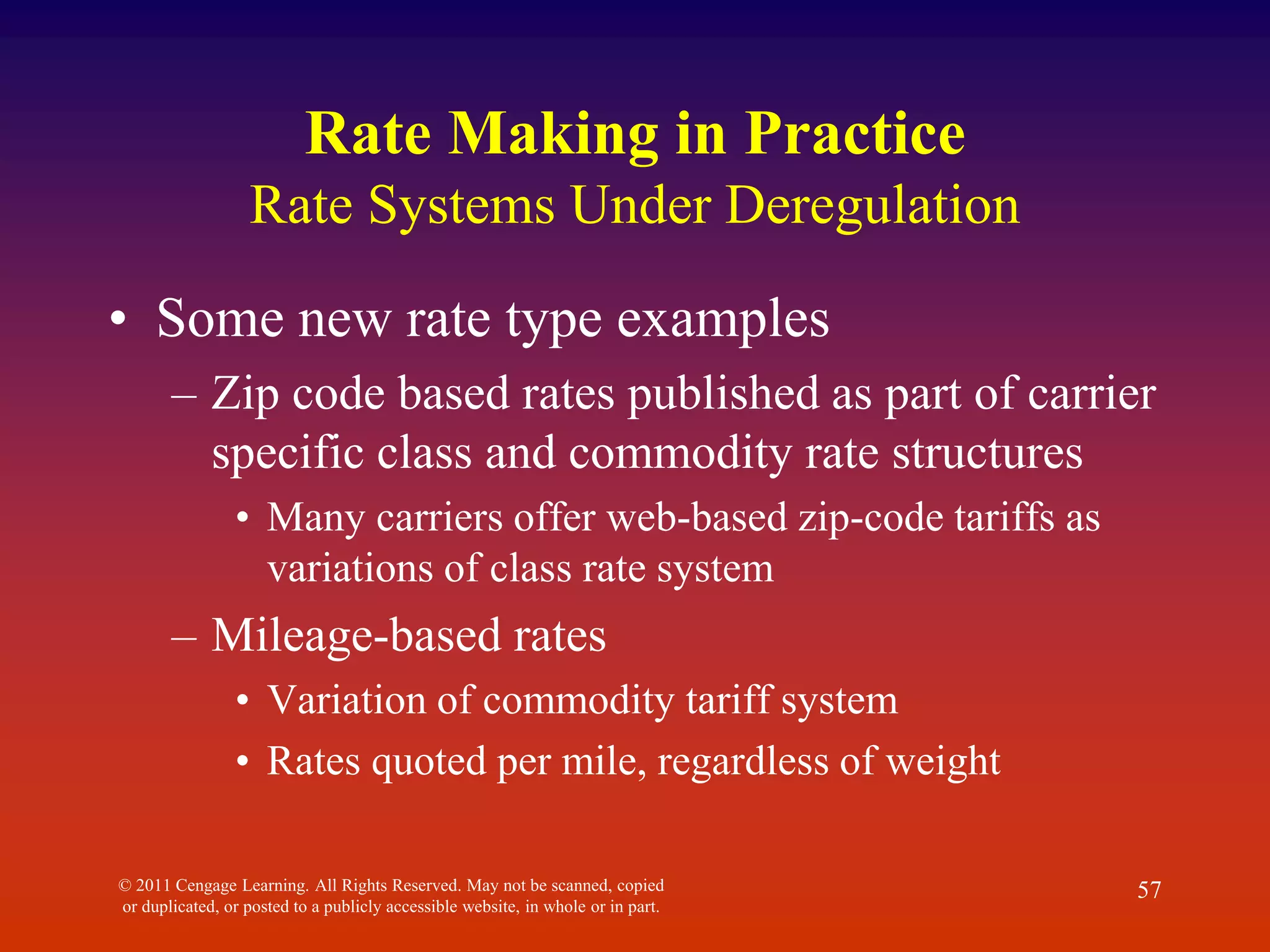
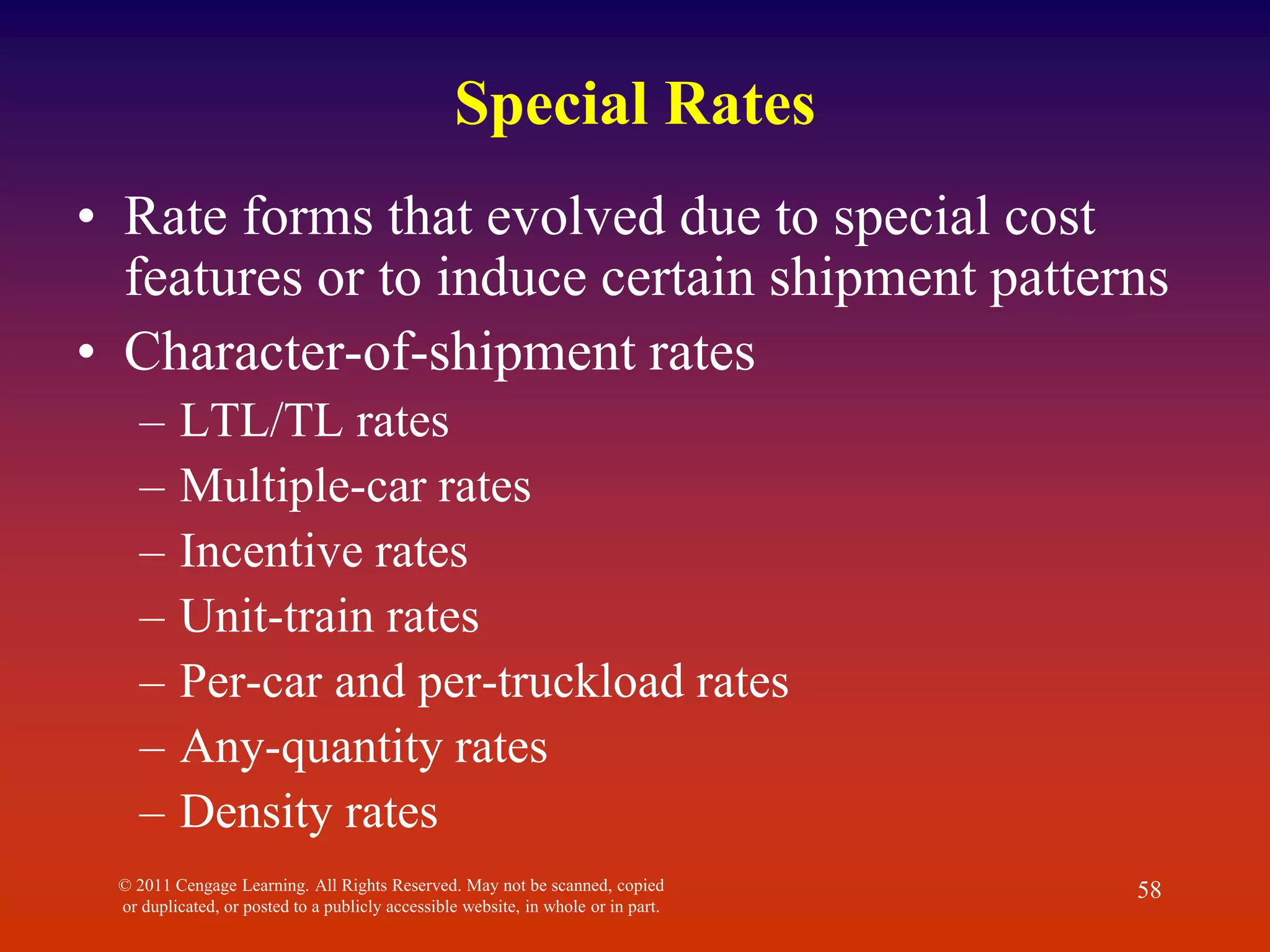
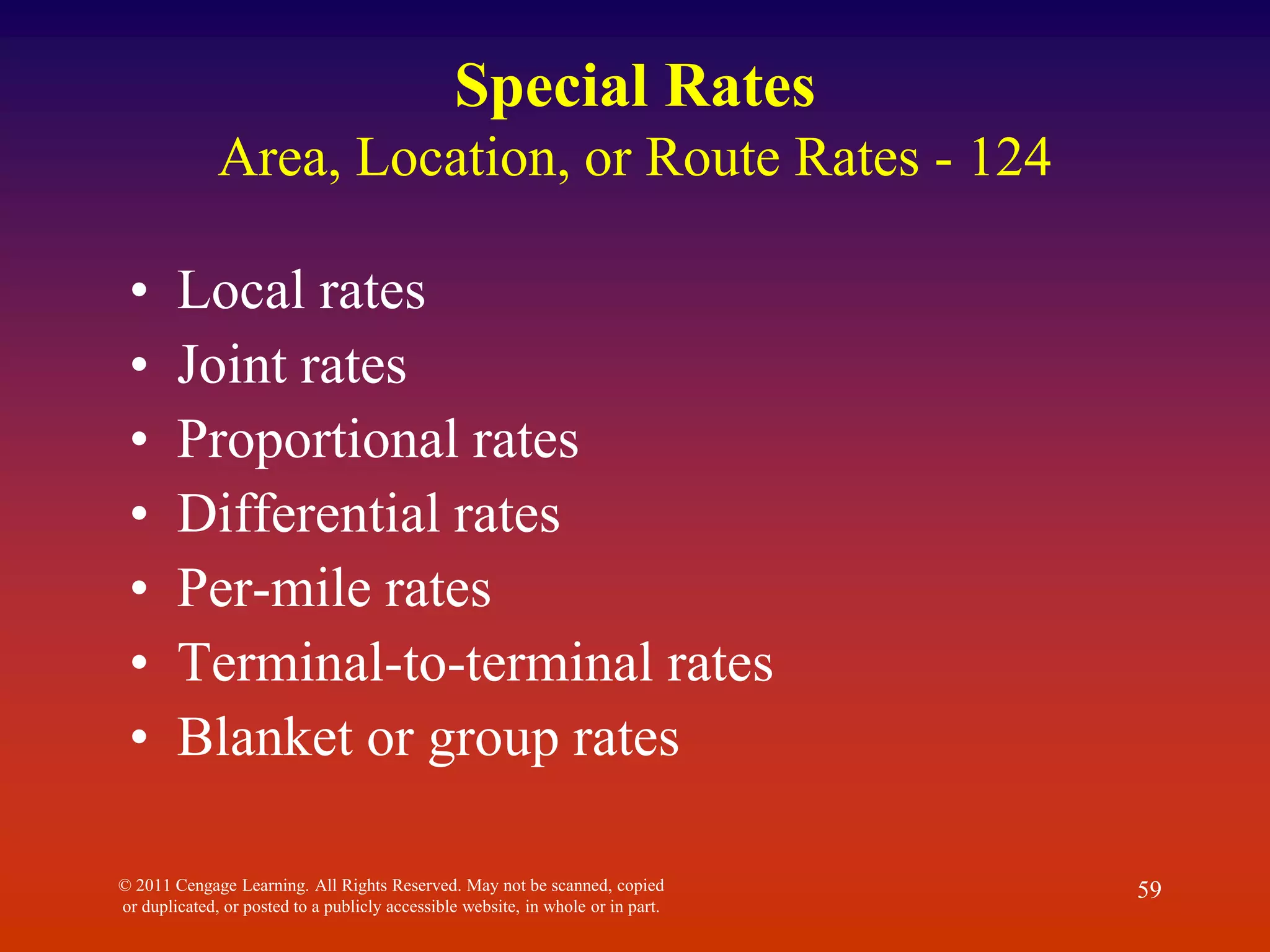
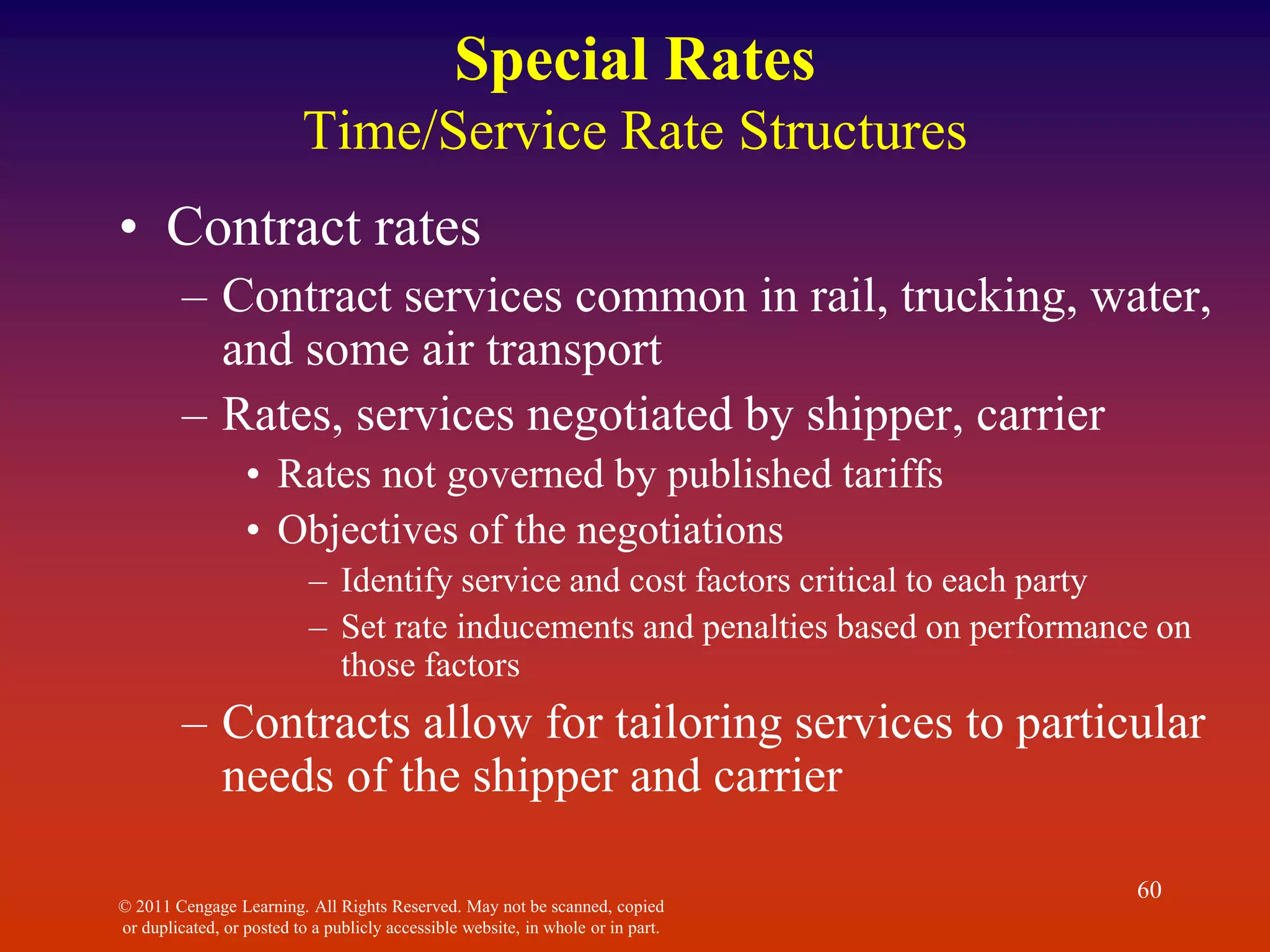
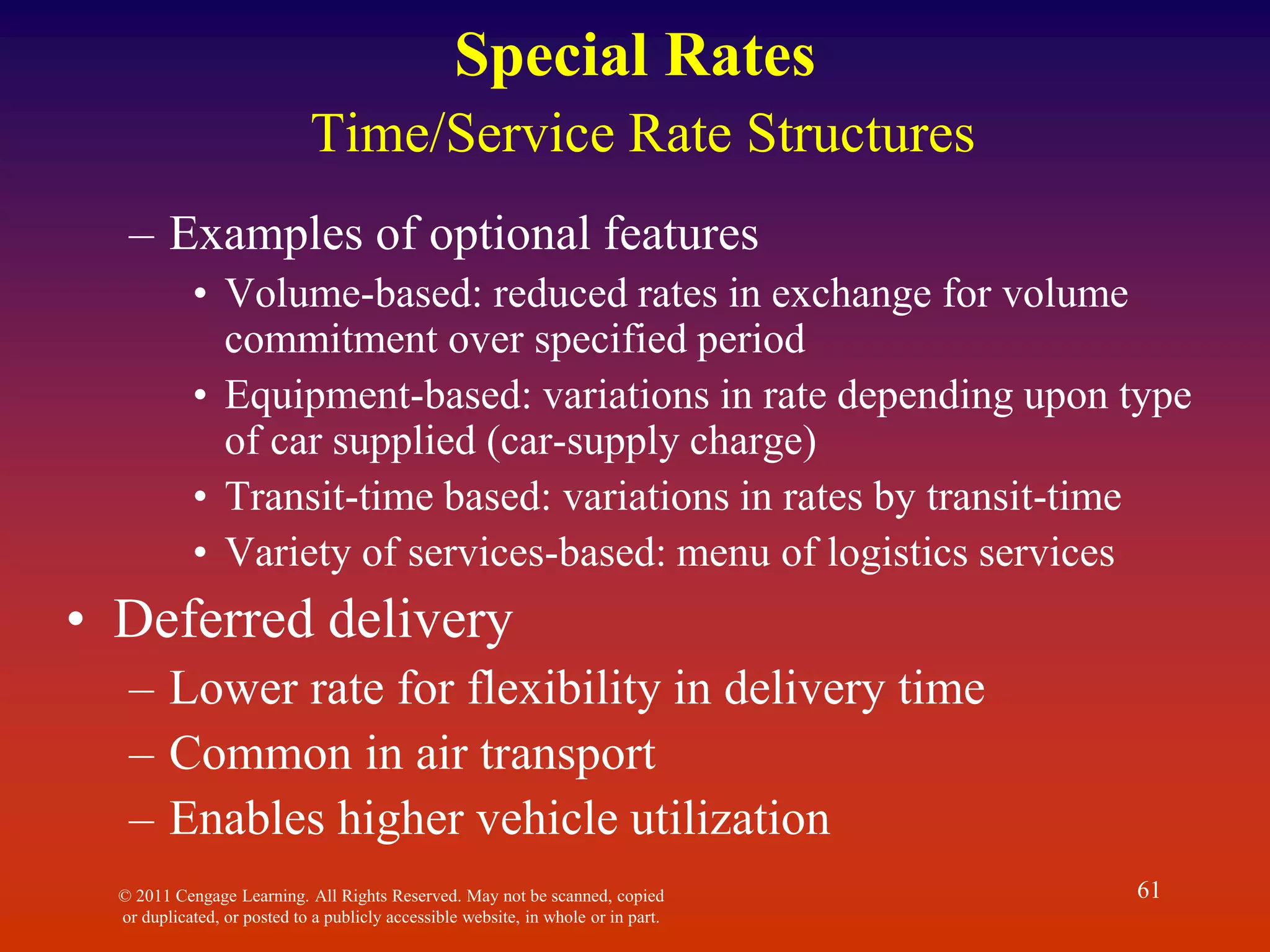
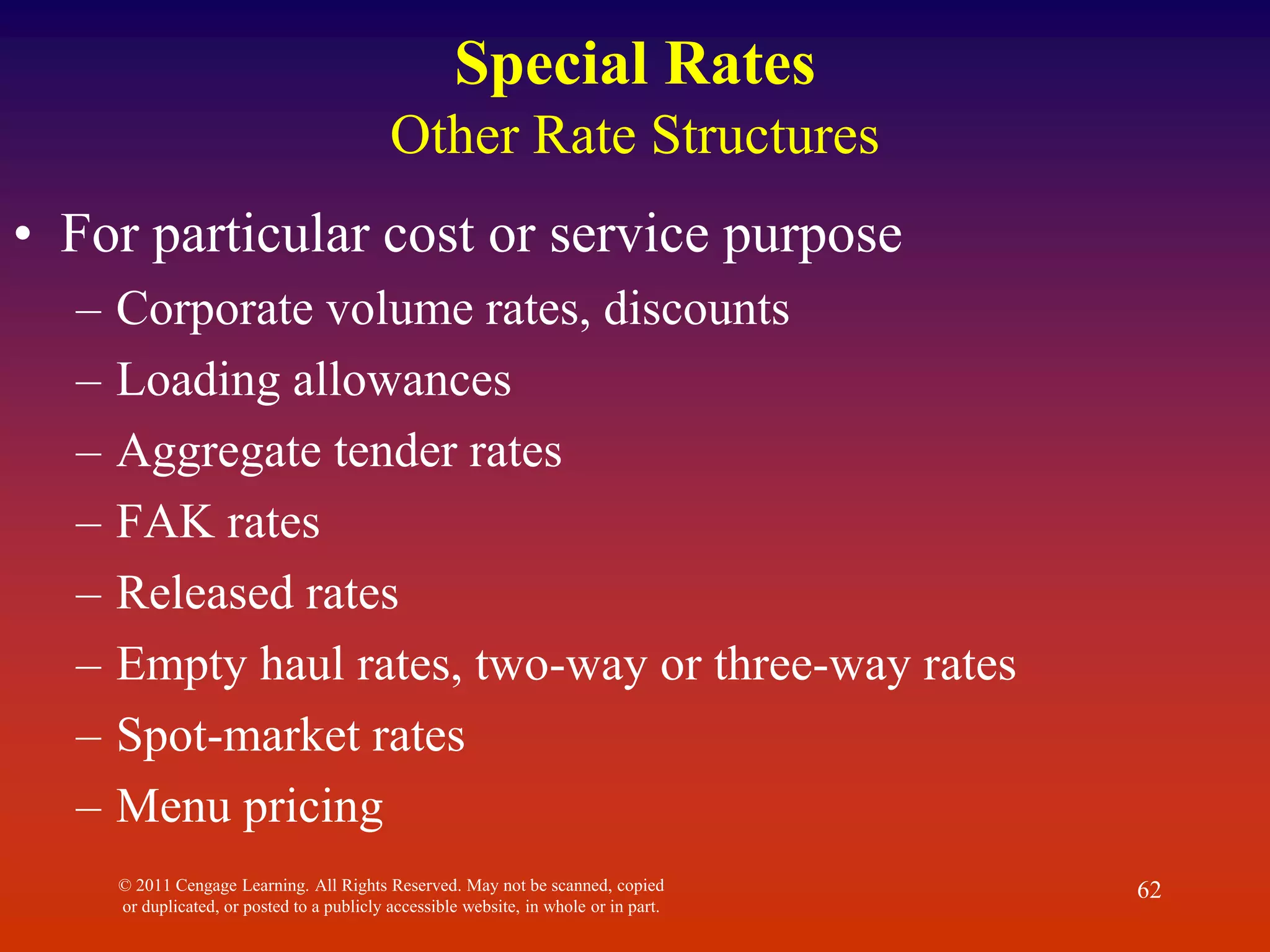
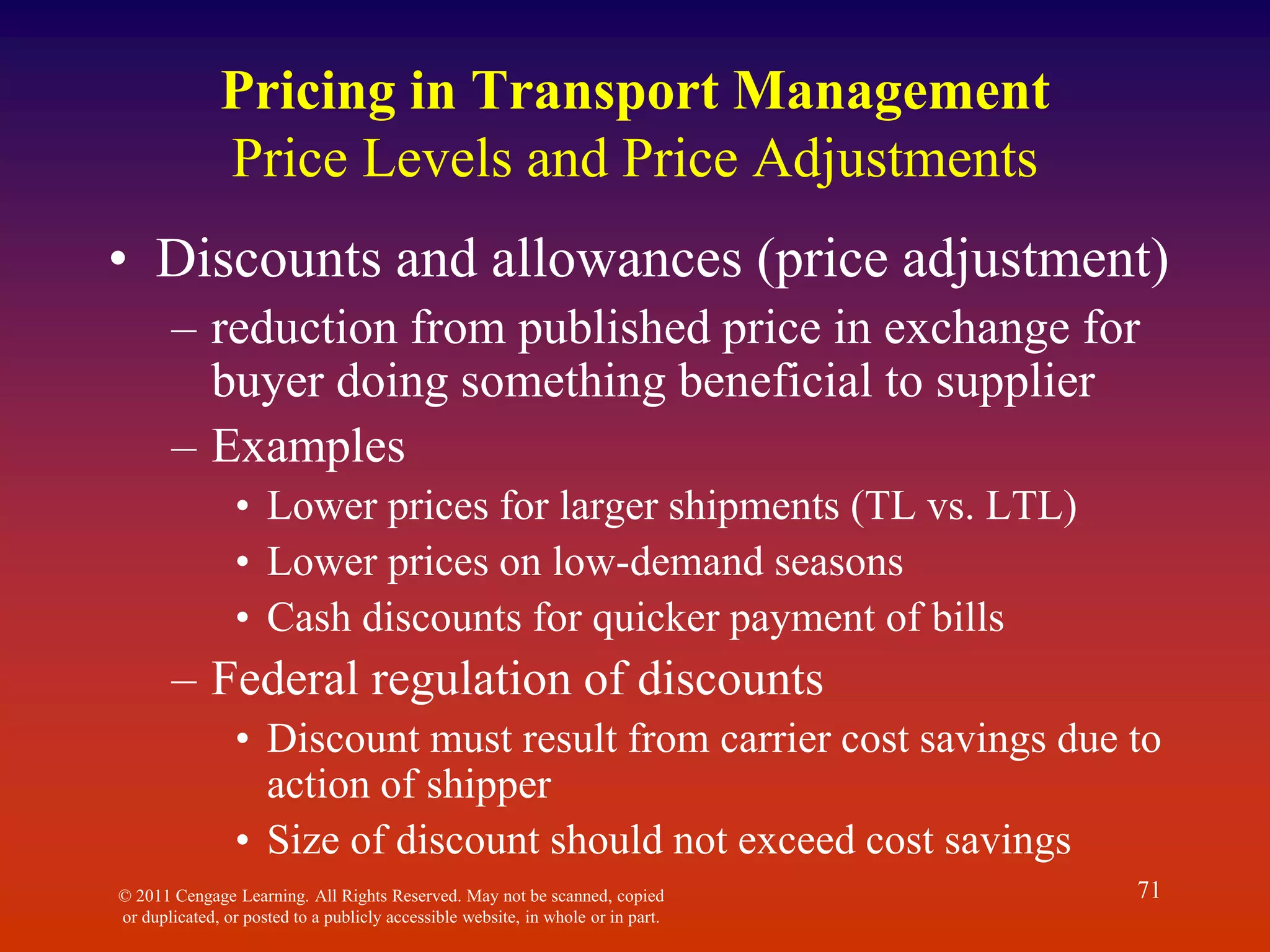
Changes in pricing structures due to deregulation; increased negotiation and new pricing types. Overview of various special rates established for unique transport circumstances and service requirements.
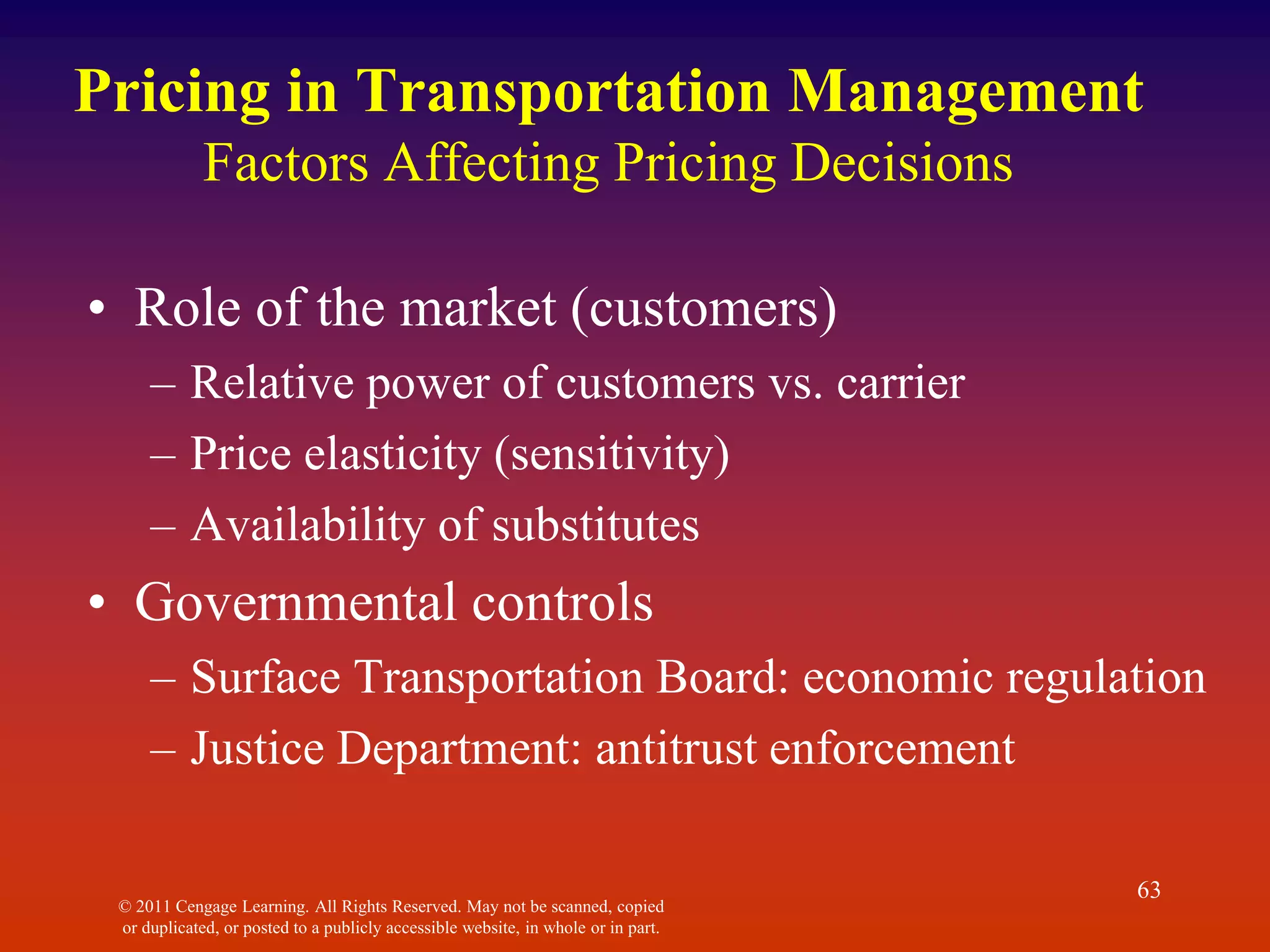
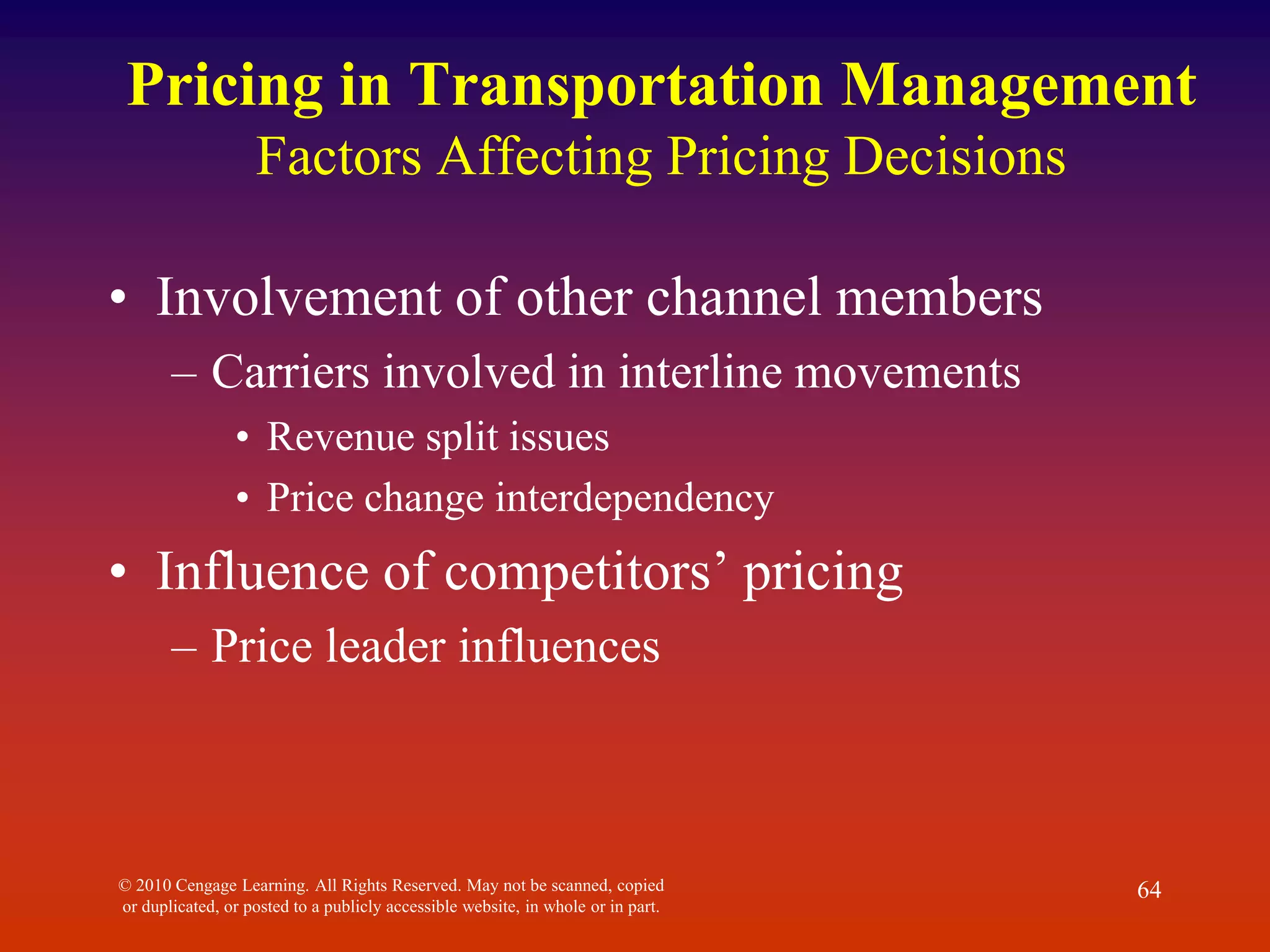
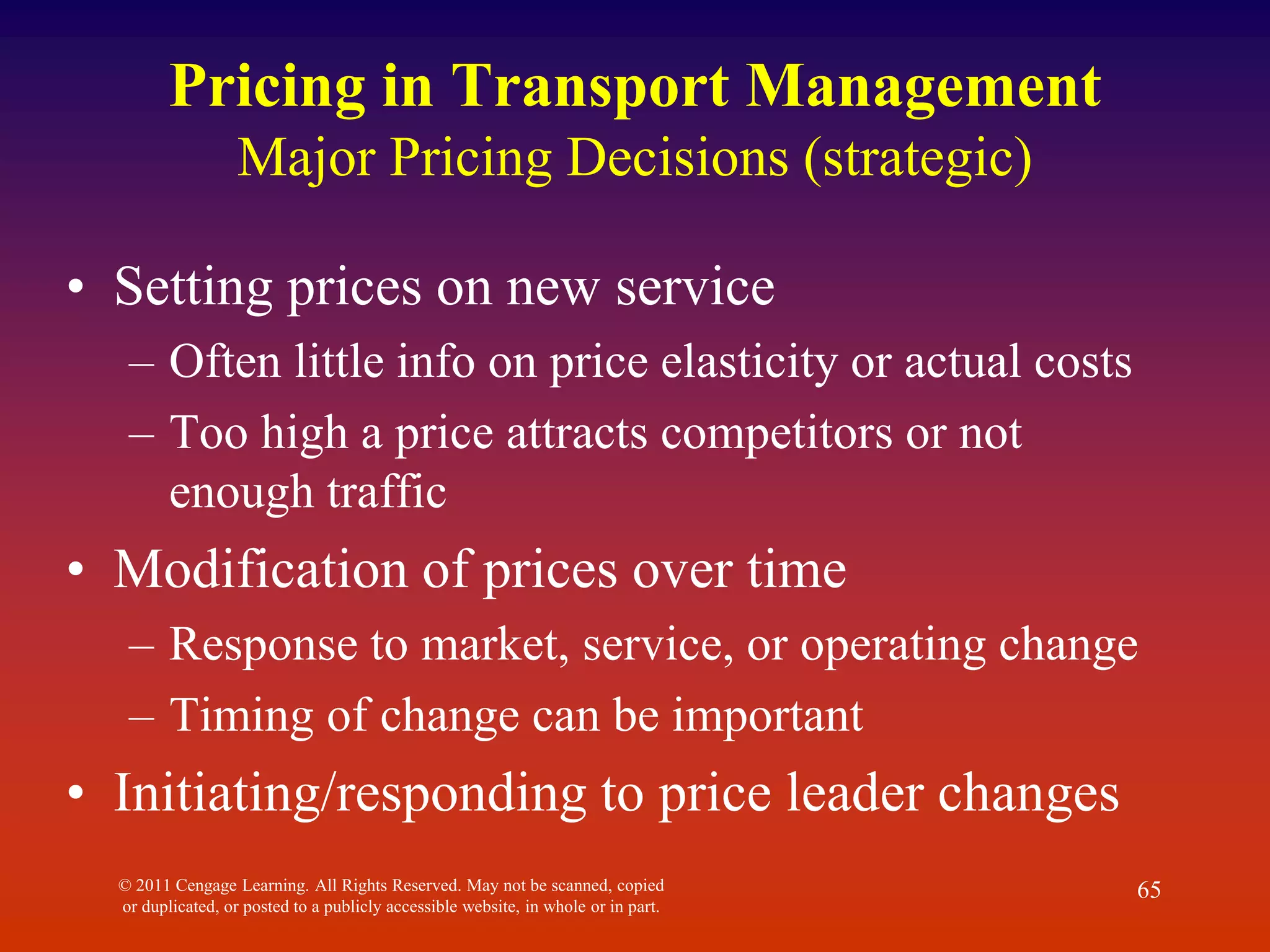
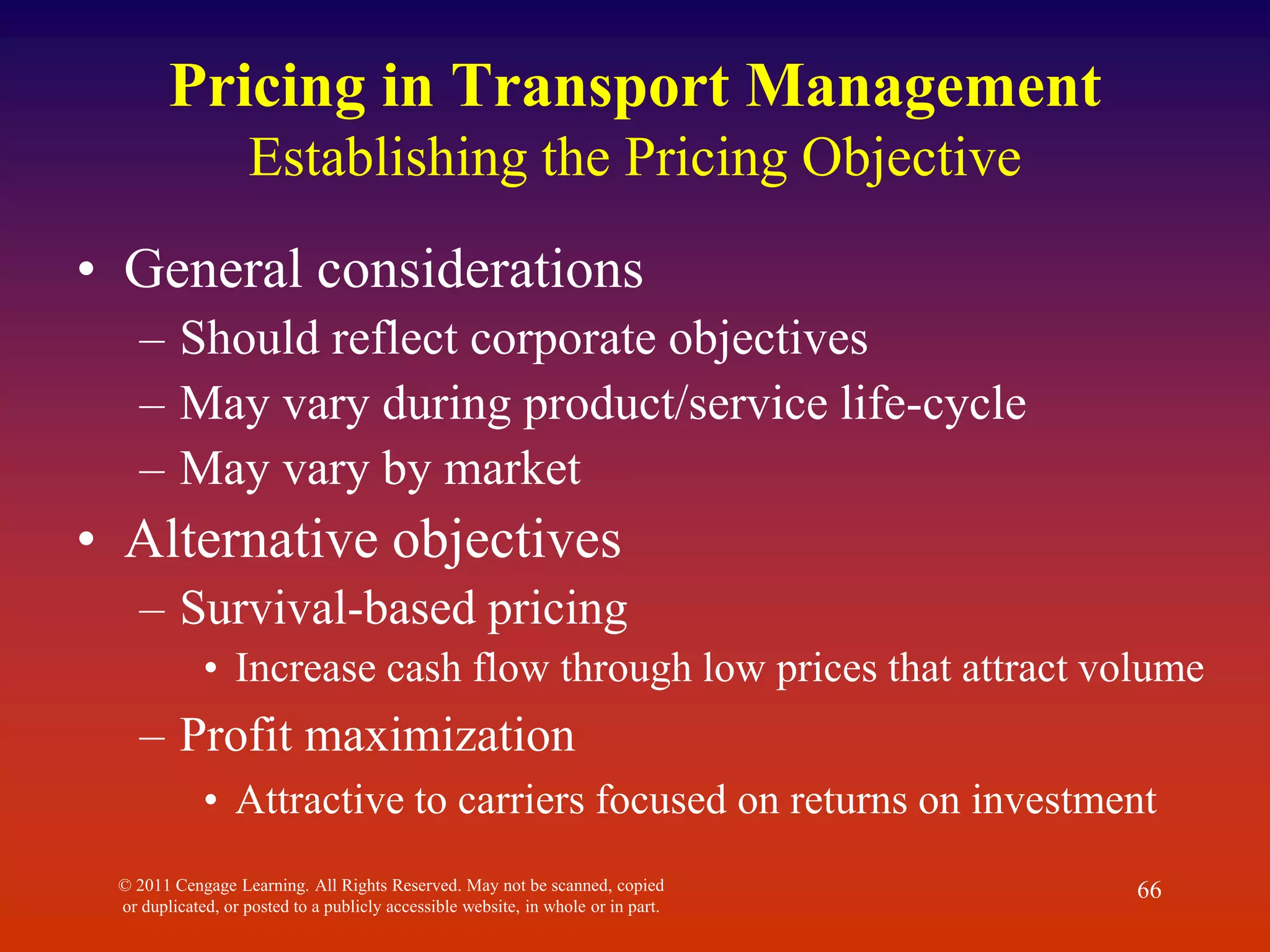
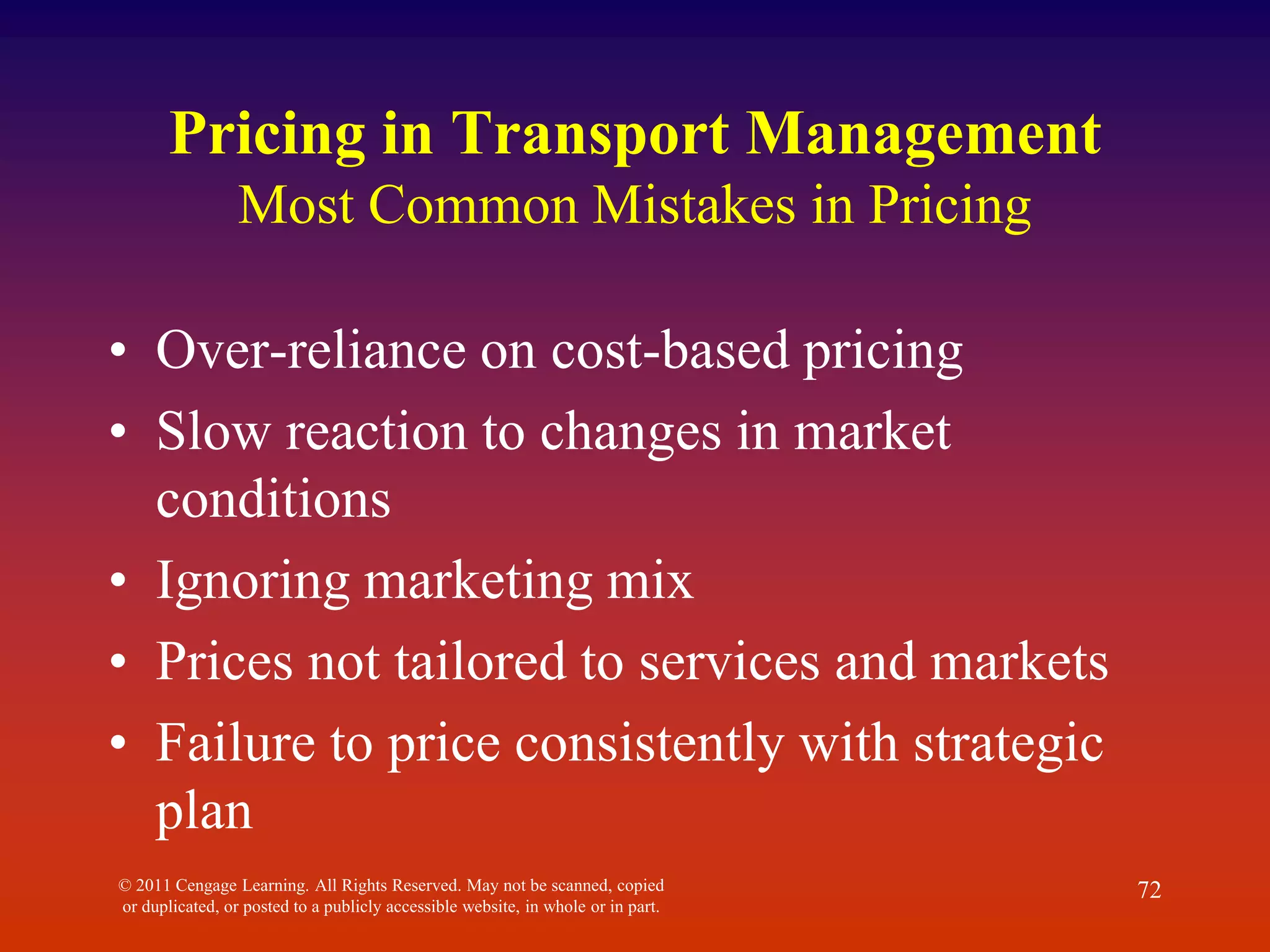
Major factors affecting transport pricing decisions including market dynamics, governmental controls, and competition.