Air Transport
AIR TRANSPORT 
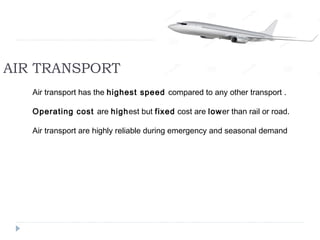
Air transport has the highest speed compared to any other transport . 
Operating cost are highest but fixed cost are lower than rail or road. 
Air transport are highly reliable during emergency and seasonal demand
ADVANTAGES 
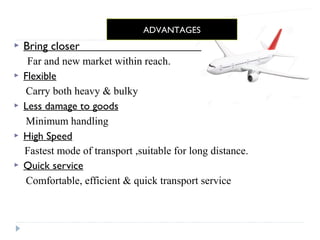
 Bring closer 
Far and new market within reach. 
 Flexible 
Carry both heavy & bulky 
 Less damage to goods 
Minimum handling 
 High Speed 
Fastest mode of transport ,suitable for long distance. 
 Quick service 
Comfortable, efficient & quick transport service
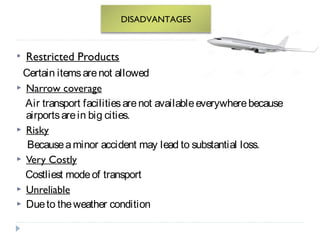
DISADVANTAGES 
 Restricted Products 
Certain items are not allowed 
 Narrow coverage 
Air transport facilities are not available everywhere because 
airports are in big cities. 
 Risky 
Because a minor accident may lead to substantial loss. 
 Very Costly 
Costliest mode of transport 
 Unreliable 
 Due to the weather condition
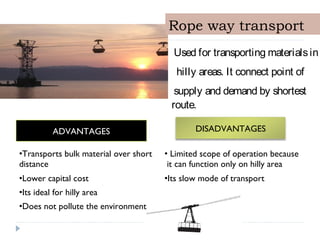
Rope way transport 
Used for transporting materials in 
hilly areas. It connect point of 
supply and demand by shortest 
route. 
ADVANTAGES DISADVANTAGES 
•Transports bulk material over short 
distance 
• Limited scope of operation because 
it can function only on hilly area 
•Lower capital cost •Its slow mode of transport 
•Its ideal for hilly area 
•Does not pollute the environment
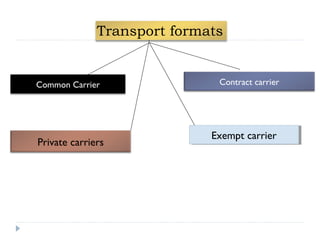
Transport formats 
Common Carrier 
Private carriers 
Contract carrier 
EExxeemmpptt ccaarrrrieierr
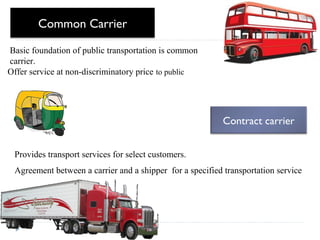
Common Carrier 
Basic foundation of public transportation is common 
carrier. 
Offer service at non-discriminatory price to public 
Contract carrier 
Provides transport services for select customers. 
Agreement between a carrier and a shipper for a specified transportation service
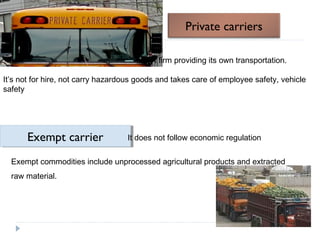
Private carriers 
A firm providing its own transportation. 
It’s not for hire, not carry hazardous goods and takes care of employee safety, vehicle 
safety 
E E x x e e m m p p t t c c a a r r r r i ie e r r It does not follow economic regulation 
Exempt commodities include unprocessed agricultural products and extracted 
raw material.
Factors influencing transportation cost and 
Product related 
pricing 
 Density 
Refers to weight and space aspects 
Weight and space are important 
 Stowability 
Product dimensions 
Items with rectangular shapes 
Market related 
Product related factors
 Handling 
Equipments required for loading or unloading 
 Liability 
products are prone to damage 
 Location 
 Govt regulation 
 transportation 
Market related factors
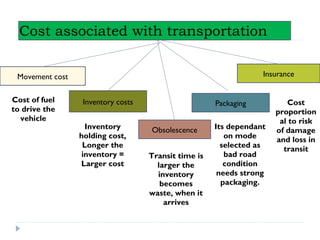
Cost associated with transportation 
Movement cost 
Inventory costs 
Obsolescence 
Insurance 
Cost of fuel Packaging 
to drive the 
vehicle 
Inventory 
holding cost, 
Longer the 
inventory = 
Larger cost 
Transit time is 
larger the 
inventory 
becomes 
waste, when it 
arrives 
Its dependant 
on mode 
selected as 
bad road 
condition 
needs strong 
packaging. 
Cost 
proportion 
al to risk 
of damage 
and loss in 
transit
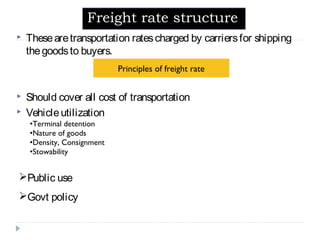
Freight rate structure 
 These are transportation rates charged by carriers for shipping 
the goods to buyers. 
Principles of freight rate 
 Should cover all cost of transportation 
 Vehicle utilization 
•Terminal detention 
•Nature of goods 
•Density, Consignment 
•Stowability 
Public use 
Govt policy
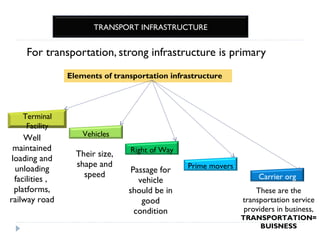
TRANSPORT INFRASTRUCTURE 
For transportation, strong infrastructure is primary 
Elements of transportation infrastructure 
Terminal 
Facility 
Vehicles 
Right of Way 
Prime movers 
Carrier org 
Well 
maintained 
loading and 
unloading 
facilities , 
platforms, 
railway road 
Their size, 
shape and 
speed Passage for 
vehicle 
should be in 
good 
condition 
These are the 
transportation service 
providers in business, 
TRANSPORTATION= 
BUISNESS
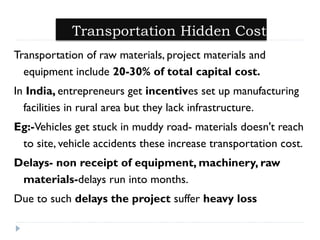
Transportation Hidden Cost 
Transportation of raw materials, project materials and 
equipment include 20-30% of total capital cost. 
In India, entrepreneurs get incentives set up manufacturing 
facilities in rural area but they lack infrastructure. 
Eg:-Vehicles get stuck in muddy road- materials doesn't reach 
to site, vehicle accidents these increase transportation cost. 
Delays- non receipt of equipment, machinery, raw 
materials-delays run into months. 
Due to such delays the project suffer heavy loss
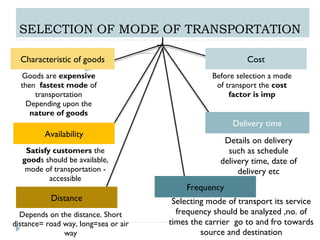
SELECTION OF MODE OF TRANSPORTATION 
Characteristic of goods Cost 
Availability 
Delivery time 
Distance 
Frequency 
Goods are expensive 
then fastest mode of 
transportation 
Depending upon the 
nature of goods 
Satisfy customers the 
goods should be available, 
mode of transportation - 
accessible 
Depends on the distance. Short 
distance= road way, long=sea or air 
way 
Before selection a mode 
of transport the cost 
factor is imp 
Details on delivery 
such as schedule 
delivery time, date of 
delivery etc 
Selecting mode of transport its service 
frequency should be analyzed ,no. of 
times the carrier go to and fro towards 
source and destination
Modes of Transportation

Modes of Transportation

  • 1.
  • 2.
    AIR TRANSPORT Airtransport has the highest speed compared to any other transport . Operating cost are highest but fixed cost are lower than rail or road. Air transport are highly reliable during emergency and seasonal demand
  • 3.
    ADVANTAGES  Bringcloser Far and new market within reach.  Flexible Carry both heavy & bulky  Less damage to goods Minimum handling  High Speed Fastest mode of transport ,suitable for long distance.  Quick service Comfortable, efficient & quick transport service
  • 4.
    DISADVANTAGES  RestrictedProducts Certain items are not allowed  Narrow coverage Air transport facilities are not available everywhere because airports are in big cities.  Risky Because a minor accident may lead to substantial loss.  Very Costly Costliest mode of transport  Unreliable  Due to the weather condition
  • 5.
    Rope way transport Used for transporting materials in hilly areas. It connect point of supply and demand by shortest route. ADVANTAGES DISADVANTAGES •Transports bulk material over short distance • Limited scope of operation because it can function only on hilly area •Lower capital cost •Its slow mode of transport •Its ideal for hilly area •Does not pollute the environment
  • 6.
    Transport formats CommonCarrier Private carriers Contract carrier EExxeemmpptt ccaarrrrieierr
  • 7.
    Common Carrier Basicfoundation of public transportation is common carrier. Offer service at non-discriminatory price to public Contract carrier Provides transport services for select customers. Agreement between a carrier and a shipper for a specified transportation service
  • 8.
    Private carriers Afirm providing its own transportation. It’s not for hire, not carry hazardous goods and takes care of employee safety, vehicle safety E E x x e e m m p p t t c c a a r r r r i ie e r r It does not follow economic regulation Exempt commodities include unprocessed agricultural products and extracted raw material.
  • 9.
    Factors influencing transportationcost and Product related pricing  Density Refers to weight and space aspects Weight and space are important  Stowability Product dimensions Items with rectangular shapes Market related Product related factors
  • 10.
     Handling Equipmentsrequired for loading or unloading  Liability products are prone to damage  Location  Govt regulation  transportation Market related factors
  • 11.
    Cost associated withtransportation Movement cost Inventory costs Obsolescence Insurance Cost of fuel Packaging to drive the vehicle Inventory holding cost, Longer the inventory = Larger cost Transit time is larger the inventory becomes waste, when it arrives Its dependant on mode selected as bad road condition needs strong packaging. Cost proportion al to risk of damage and loss in transit
  • 12.
    Freight rate structure  These are transportation rates charged by carriers for shipping the goods to buyers. Principles of freight rate  Should cover all cost of transportation  Vehicle utilization •Terminal detention •Nature of goods •Density, Consignment •Stowability Public use Govt policy
  • 13.
    TRANSPORT INFRASTRUCTURE Fortransportation, strong infrastructure is primary Elements of transportation infrastructure Terminal Facility Vehicles Right of Way Prime movers Carrier org Well maintained loading and unloading facilities , platforms, railway road Their size, shape and speed Passage for vehicle should be in good condition These are the transportation service providers in business, TRANSPORTATION= BUISNESS
  • 14.
    Transportation Hidden Cost Transportation of raw materials, project materials and equipment include 20-30% of total capital cost. In India, entrepreneurs get incentives set up manufacturing facilities in rural area but they lack infrastructure. Eg:-Vehicles get stuck in muddy road- materials doesn't reach to site, vehicle accidents these increase transportation cost. Delays- non receipt of equipment, machinery, raw materials-delays run into months. Due to such delays the project suffer heavy loss
  • 15.
    SELECTION OF MODEOF TRANSPORTATION Characteristic of goods Cost Availability Delivery time Distance Frequency Goods are expensive then fastest mode of transportation Depending upon the nature of goods Satisfy customers the goods should be available, mode of transportation - accessible Depends on the distance. Short distance= road way, long=sea or air way Before selection a mode of transport the cost factor is imp Details on delivery such as schedule delivery time, date of delivery etc Selecting mode of transport its service frequency should be analyzed ,no. of times the carrier go to and fro towards source and destination