Chapter # 4
Human Resource Planning
By
Ms Madiha Zeeshan
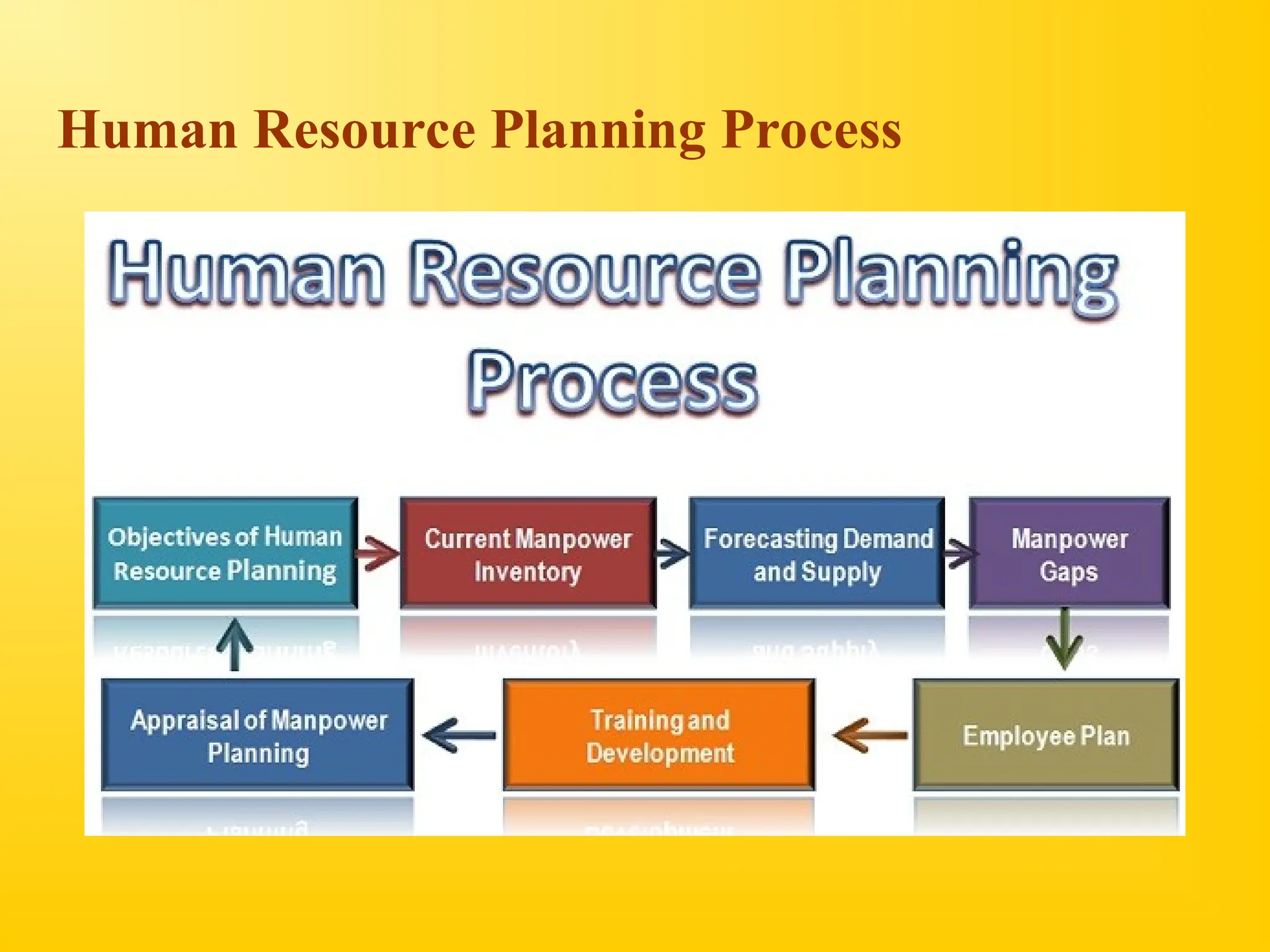
Human Resource Planning Process
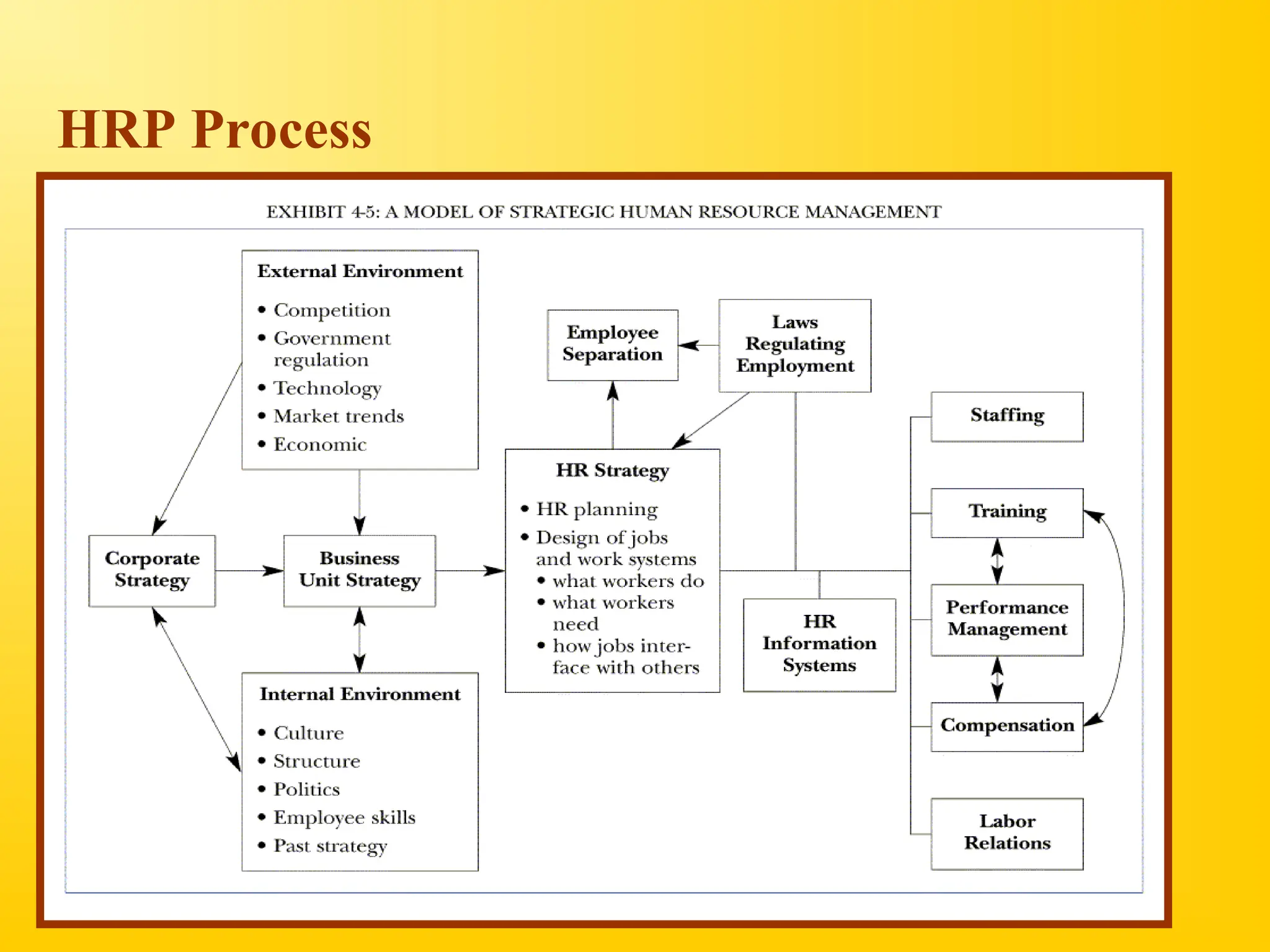
HRP Process
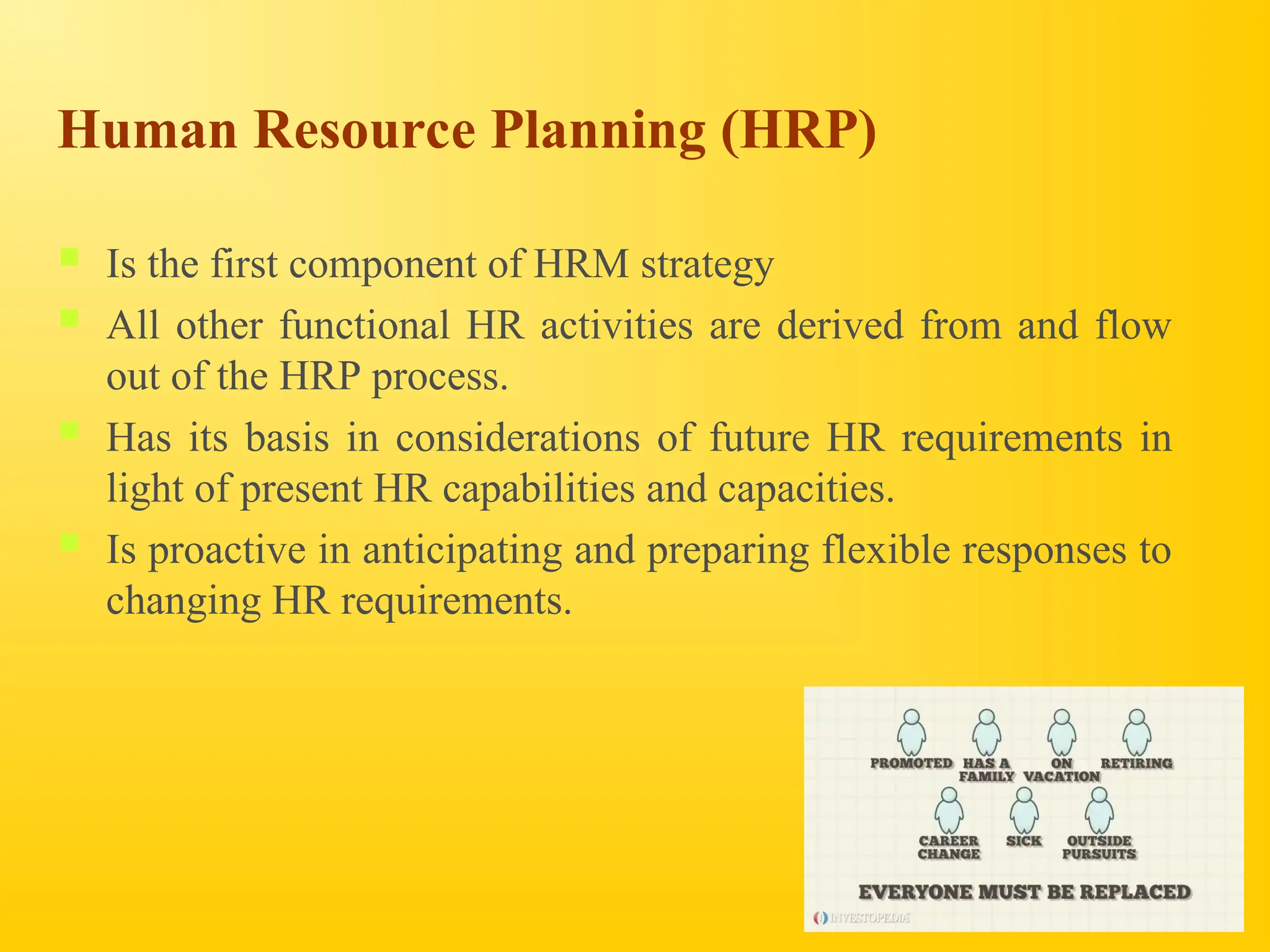
Human Resource Planning (HRP)
 Is the first component of HRM strategy
 All other functional HR activities are derived from and flow
out of the HRP process.
 Has its basis in considerations of future HR requirements in
light of present HR capabilities and capacities.
 Is proactive in anticipating and preparing flexible responses to
changing HR requirements.
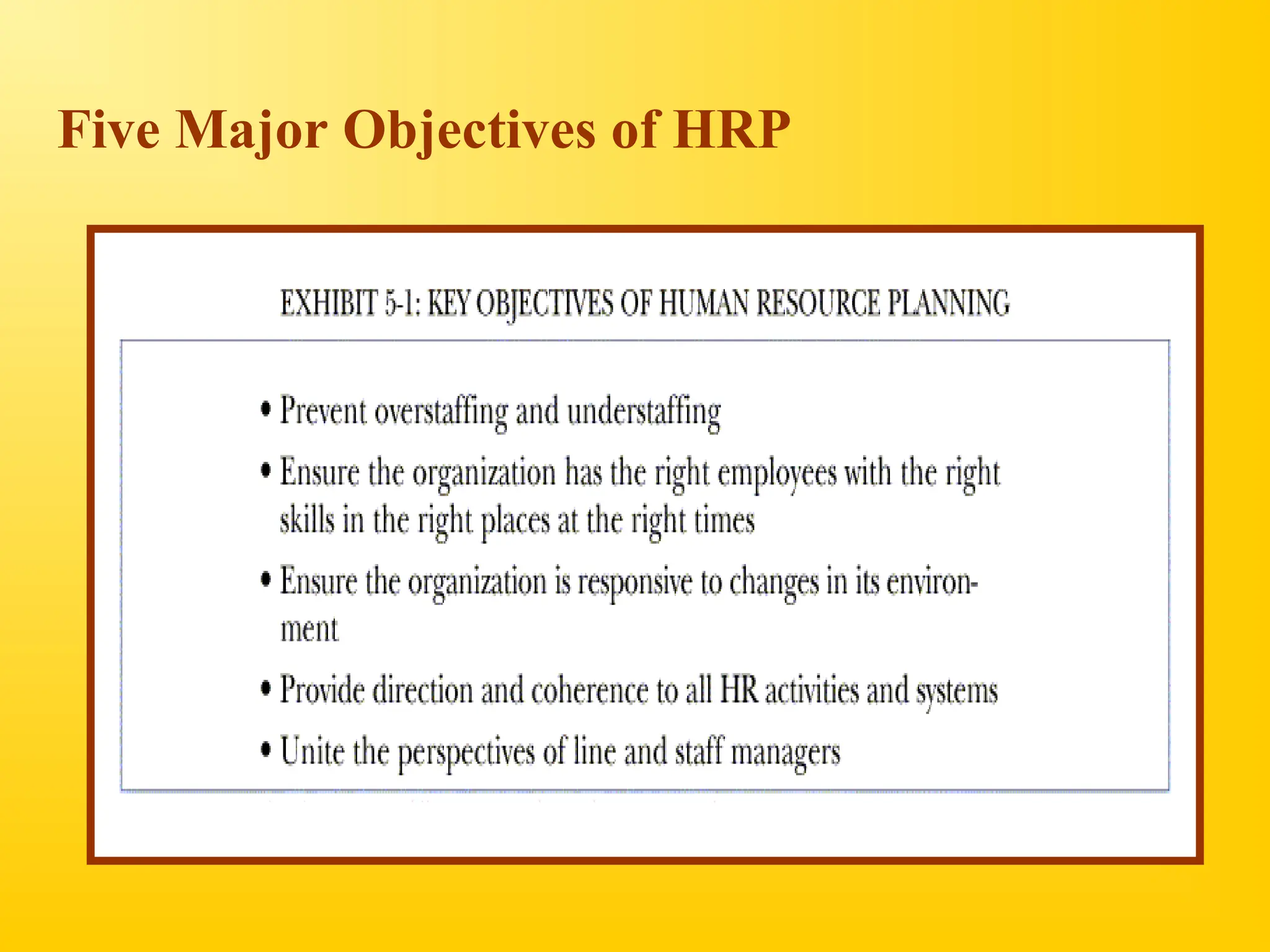
Five Major Objectives of HRP
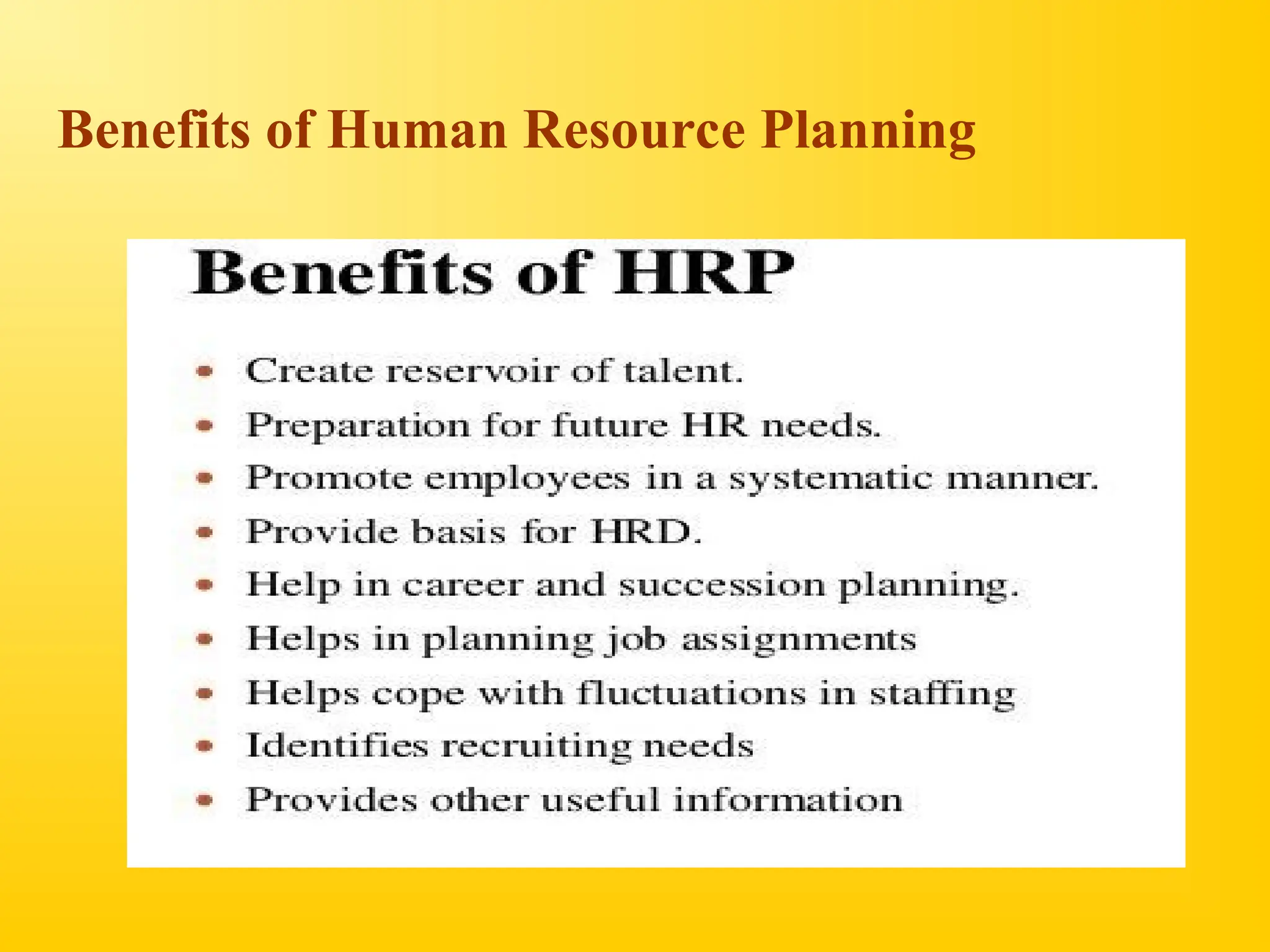
Benefits of Human Resource Planning
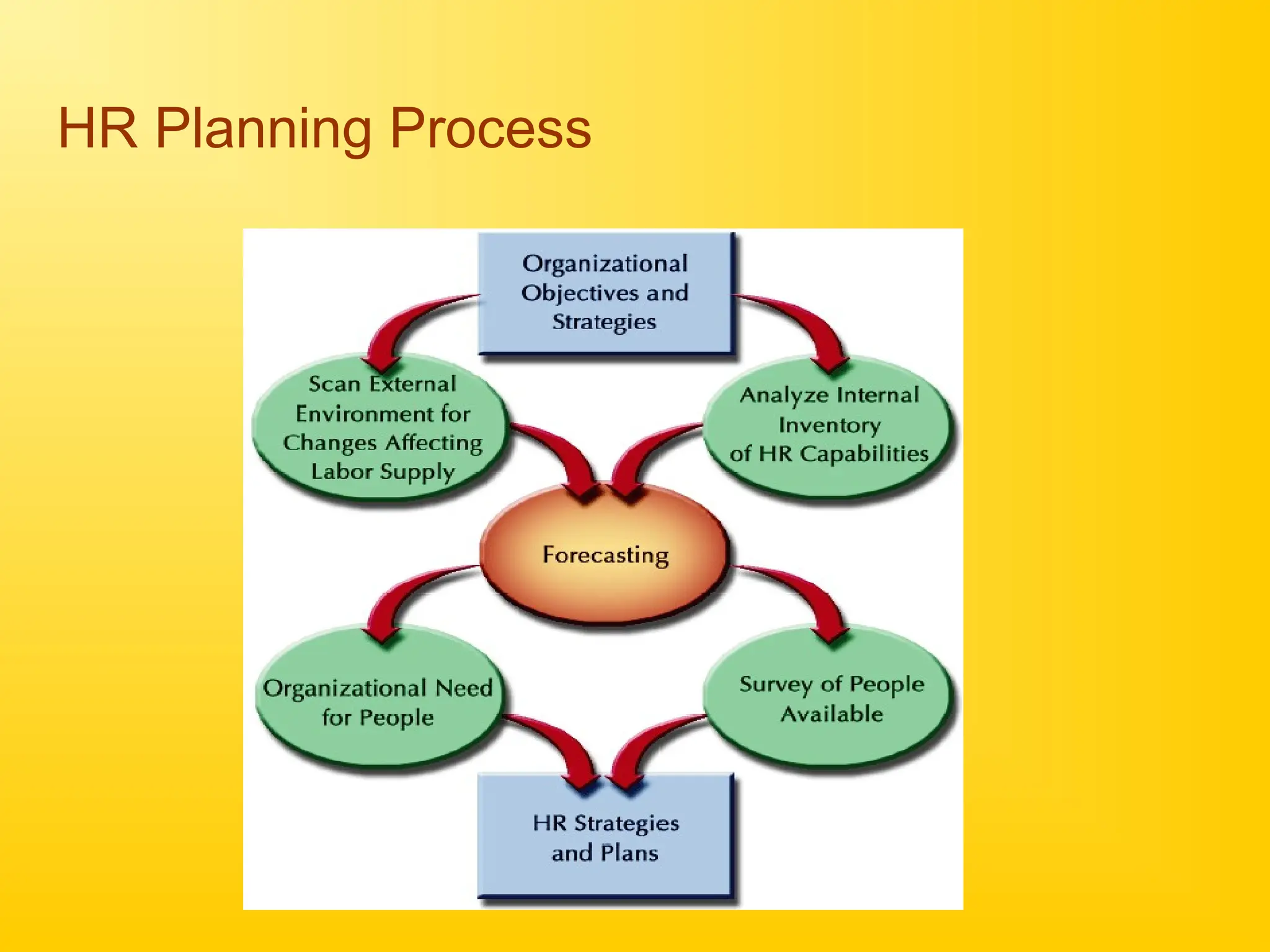
HR Planning Process
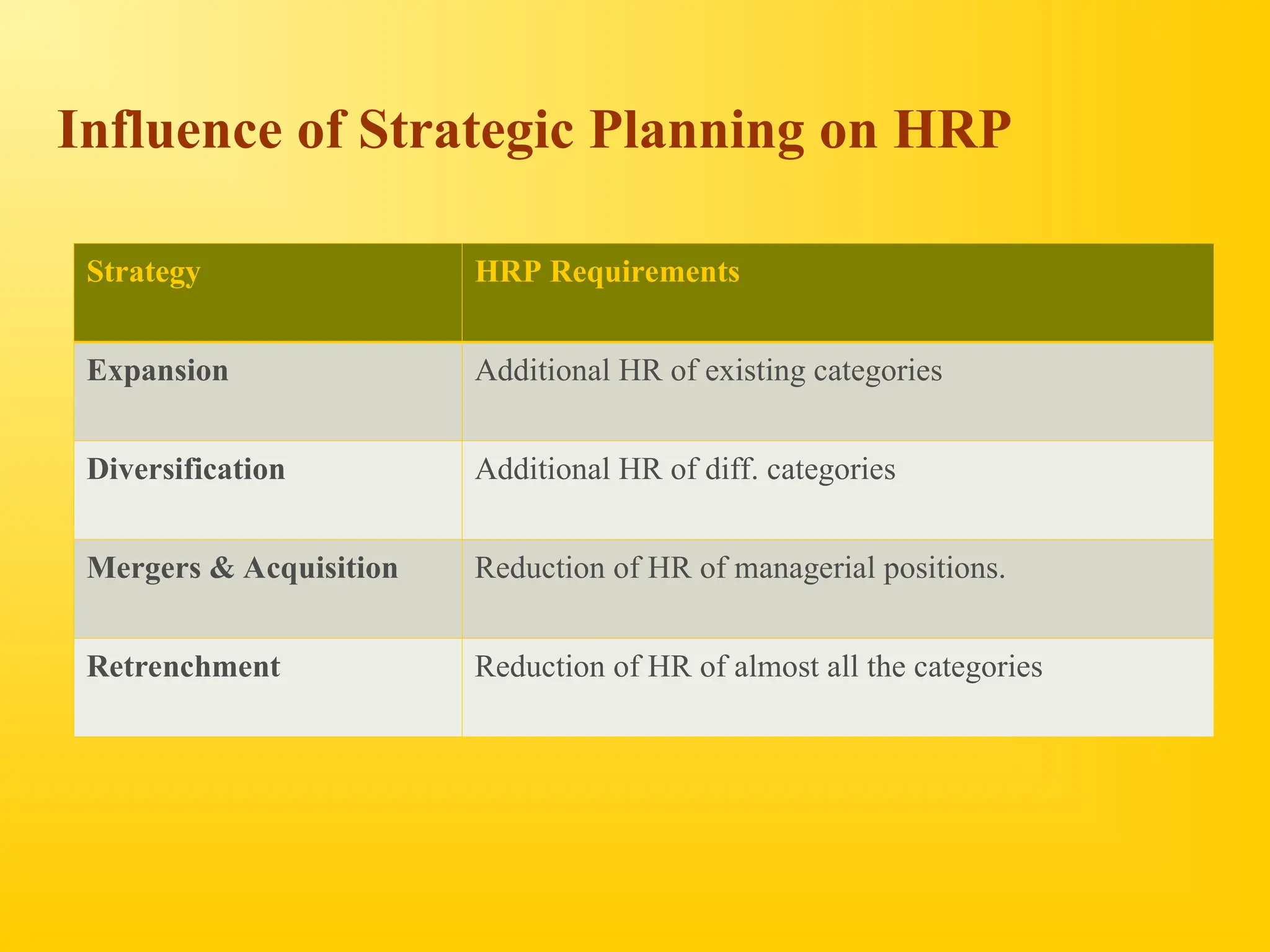
Influence of Strategic Planning on HRP
Strategy HRP Requirements
Expansion Additional HR of existing categories
Diversification Additional HR of diff. categories
Mergers & Acquisition Reduction of HR of managerial positions.
Retrenchment Reduction of HR of almost all the categories
Types of Planning
 Aggregate Planning
 Anticipating the needs for groups of employees in specific,
usually lower level jobs and the general skills employees
will need to ensure sustained high performance.
 Succession Planning
 Focuses on ensuring that key individual management
positions in the organization remain filled with individuals
who provide the best fit for these critical positions.
Human Resource Forecasting Methods
I. Extrapolation: Studying the past staffing needs over a period of
years to predict the future needs.
II. Indexation: Use of ratios between one or more business factors and
the staffing to predict the human need.
III. Simulations: Use computer modulations and advance statistical
formulas.
IV. Managerial Judgement: They play a crucial role as the trends and
ratios are unlikely to continue unchanged, therefore their judgement is
needed to modify the forecast based on the factors that are likely to be
changed.
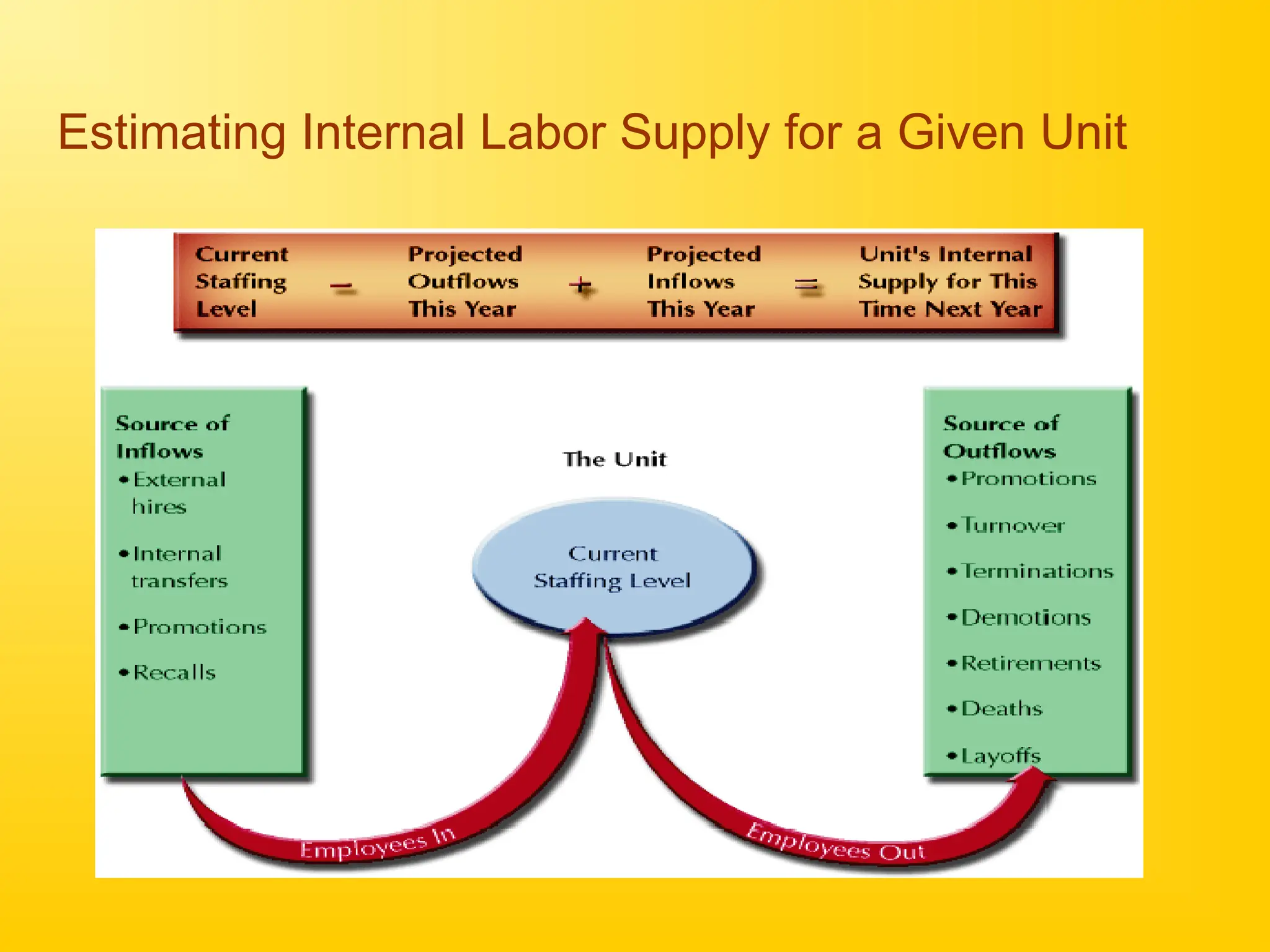
Estimating Internal Labor Supply for a Given Unit
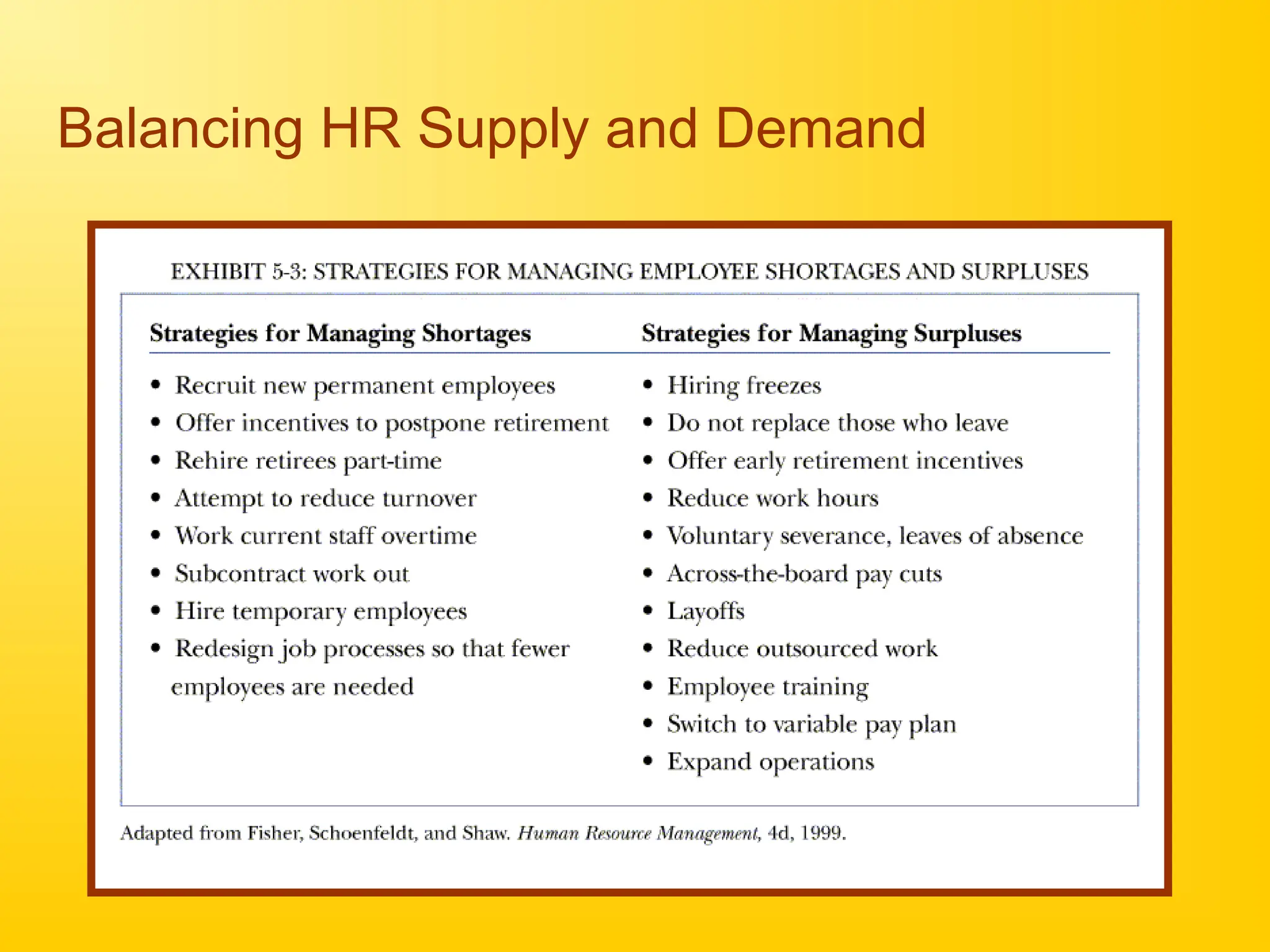
Balancing HR Supply and Demand
Succession Planning
 Involves identifying key management positions the
organization cannot afford to have vacant.
 Purposes of Succession Planning
 Facilitates transition when an employee leaves.
 Identifies the development needs of high-potential employees and
assists in their career planning.
 In actual practice, many organizations fails to implement
succession planning effectively.
 Qualified successors may seek external career advancement
opportunities if succession is not forthcoming
Succession Planning
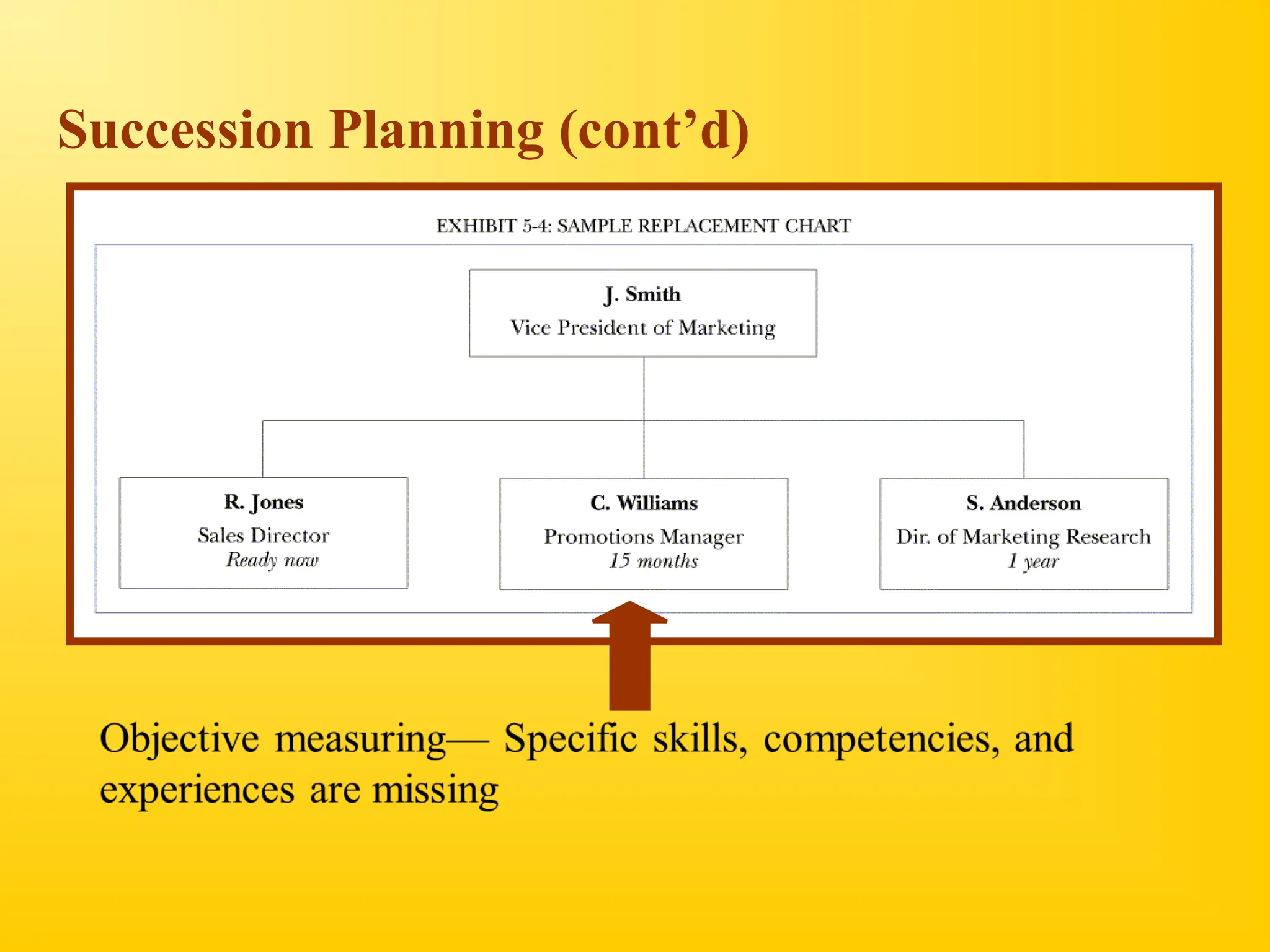
 “Replacement chart” identifies
 Key positions
 Possible successors for each of these positions
 Whether each potential successor currently has the
background to assume the job responsibilities
 The expected amount of time it will take for the potential
successor to be ready
Succession Planning (cont’d)
Succession Planning Design Shifts
 Key design shifts for succession systems:
 Identify core strategic capabilities/competencies related to key
positions and develop a leadership model.
 Place initiative and responsibility for individual development in
the hands of candidate employees.
 Have a development process that aligns mastery of competencies
with the firm’s strategic goals and mission.
 Create a succession process that is more open and less exclusive
and secretive.
 Design the succession process for ongoing and frequent
(quarterly rather than annual) review.
https://www.youtube.com/watch?v=DiaZsat2rwM
https://www.youtube.com/watch?v=GZ8C3ie0drw

Chapter # 4 Human Resource Planning.pptb

  • 1.
    Chapter # 4 HumanResource Planning By Ms Madiha Zeeshan
  • 2.
  • 3.
  • 4.
    Human Resource Planning(HRP)  Is the first component of HRM strategy  All other functional HR activities are derived from and flow out of the HRP process.  Has its basis in considerations of future HR requirements in light of present HR capabilities and capacities.  Is proactive in anticipating and preparing flexible responses to changing HR requirements.
  • 5.
  • 6.
    Benefits of HumanResource Planning
  • 7.
  • 8.
    Influence of StrategicPlanning on HRP Strategy HRP Requirements Expansion Additional HR of existing categories Diversification Additional HR of diff. categories Mergers & Acquisition Reduction of HR of managerial positions. Retrenchment Reduction of HR of almost all the categories
  • 9.
    Types of Planning Aggregate Planning  Anticipating the needs for groups of employees in specific, usually lower level jobs and the general skills employees will need to ensure sustained high performance.  Succession Planning  Focuses on ensuring that key individual management positions in the organization remain filled with individuals who provide the best fit for these critical positions.
  • 10.
    Human Resource ForecastingMethods I. Extrapolation: Studying the past staffing needs over a period of years to predict the future needs. II. Indexation: Use of ratios between one or more business factors and the staffing to predict the human need. III. Simulations: Use computer modulations and advance statistical formulas. IV. Managerial Judgement: They play a crucial role as the trends and ratios are unlikely to continue unchanged, therefore their judgement is needed to modify the forecast based on the factors that are likely to be changed.
  • 11.
    Estimating Internal LaborSupply for a Given Unit
  • 12.
  • 13.
    Succession Planning  Involvesidentifying key management positions the organization cannot afford to have vacant.  Purposes of Succession Planning  Facilitates transition when an employee leaves.  Identifies the development needs of high-potential employees and assists in their career planning.  In actual practice, many organizations fails to implement succession planning effectively.  Qualified successors may seek external career advancement opportunities if succession is not forthcoming
  • 14.
    Succession Planning  “Replacementchart” identifies  Key positions  Possible successors for each of these positions  Whether each potential successor currently has the background to assume the job responsibilities  The expected amount of time it will take for the potential successor to be ready
  • 15.
  • 16.
    Succession Planning DesignShifts  Key design shifts for succession systems:  Identify core strategic capabilities/competencies related to key positions and develop a leadership model.  Place initiative and responsibility for individual development in the hands of candidate employees.  Have a development process that aligns mastery of competencies with the firm’s strategic goals and mission.  Create a succession process that is more open and less exclusive and secretive.  Design the succession process for ongoing and frequent (quarterly rather than annual) review.
  • 17.