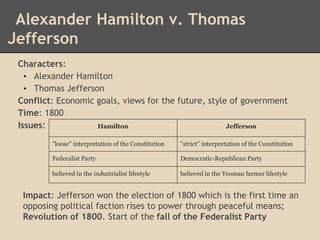
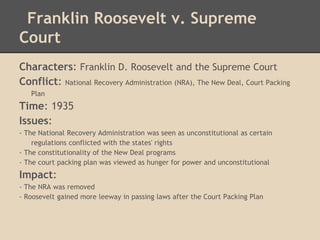
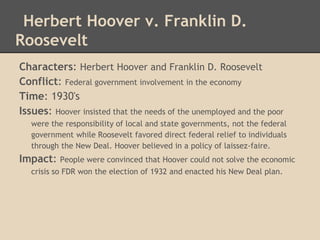
Woodrow Wilson and Henry Cabot Lodge disagreed over the United States joining the League of Nations after World War I, with Wilson supporting it and Lodge opposing it, which ultimately led to the US not joining the League. Alexander Hamilton and Thomas Jefferson had opposing views on economic policies and the role of government, with Hamilton supporting a strong federal government and Jefferson favoring states' rights, leading to the rise of opposing political parties. Franklin Roosevelt's New Deal programs were challenged by the Supreme Court but the conflict ended with the court granting Roosevelt more leeway in passing laws.