

Skills in Dealing with
Clients in a Travel Agency
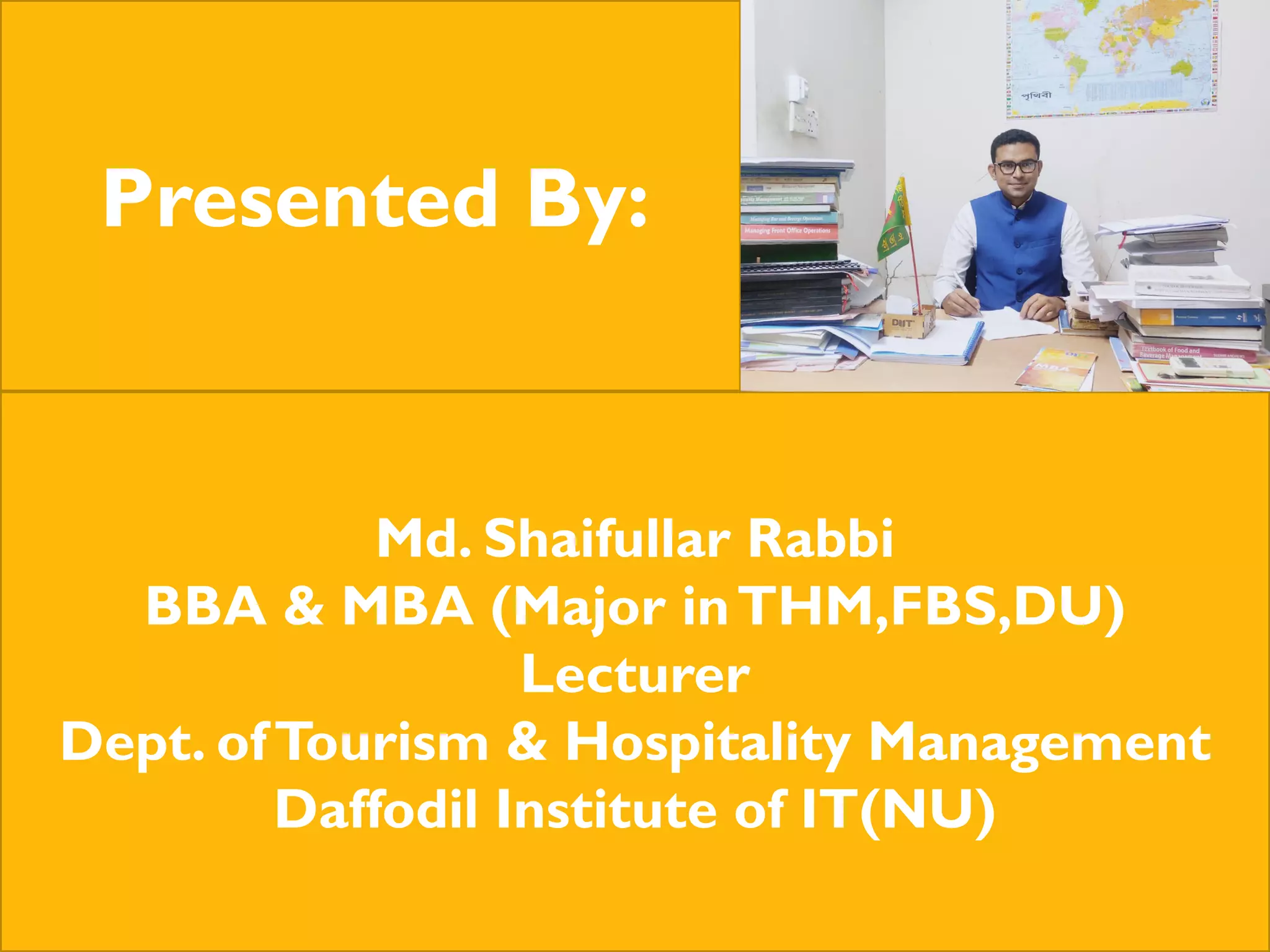
Presented By:
Md. Shaifullar Rabbi
BBA & MBA (Major inTHM,FBS,DU)
Lecturer
Dept. ofTourism & Hospitality Management
Daffodil Institute of IT(NU)
Travel Agent
 A person engaged in selling and arranging
transportation, accommodations, tours, or trips for
travelers. A travel agency is a private retailer or
public service that provides travel and tourism-
related services to the general public on behalf of
accommodation or travel suppliers. Travel
agencies can also serve as general sales agents for
airlines that do not have offices in a specific region.
 How to become a travel agent
 College ,University, Professional Training Courses
 Apprenticeship
 Working towards this role
QUALITIES OF A TRAVEL AGENT
 Resourcefulness: One of the good qualities of a travel agent is that he
must be resourceful. In their line of work, things could change at short
notice.
 Honesty/integrity: Another good quality of a travel agent is that he or
she must be an honest person and his or her integrity must above
board.
 Expectation management skills: Travelers expect that whatever they
require, the travel agent must be able to get it for them for as long as
the services are listed in their advertisement.
 Good understanding of ICT: A good travelling agent must have ICT
skills. The world is now technologically advanced in many fronts
including the world of tourism.
 Marketing skills: The travel agent must also possess marketing skills.
He must be able to market what he is doing in order to attract clients.
 Good communication skills: The travel agent must have very good
communication skills. In their line of work, they come across people
with diverse backgrounds and levels of exposure.
 Timeliness: Again, the travel agent must be time conscious in all his
dealings with the client. In tourism, time is of great essence.
Skills and knowledge
You'll need:
Customer service skills
Excellent verbal communication skills
The ability to sell products and services
To be thorough and pay attention to detail
Administration skills
Active listening skills
Persuading skills
A desire to help people
To be able to carry out basic tasks on a
computer or hand-held device
Day-to-day tasks
Depending on your role, your day-to-day tasks may include:
 Understanding and meeting customers' needs
 Using your geographical knowledge to help customers find a
suitable package holiday or plan independent travel
 Making bookings and payments using online computer systems
 Advising customers about passports, insurance, visas,
vaccinations, tours and vehicle hire
 Informing customers of changes like cancelled flights
 Arranging refunds and handling complaints
 Meeting sales targets
 Keeping up to date with developments in the travel industry
Characteristics of a Travel Agent
Knowledge
Professionalism
Enthusiasm
People Skills
Integrity
Resourcefulness
Empathy
CHARACTERISTICS OF
SUCCESSFULTRAVEL AGENTS
 THEY ARE HIGHLY ORGANIZED : Travel agents are great planners.
For them, juggling calls, bookings, and communication is an everyday
balancing act.
 THEY HAVE VISION: Not only do travel agents have to be
administrative gurus, they also have to be visionaries. Planning a
phenomenal vacation requires an inspired mind.
 THEY HAVE GREAT PEOPLE SKILLS: Successful travel agents have
excellent communication skills and the ability to inspire and influence
people.
 THEY ARE SELF-STARTERS: The travel agents who really thrive in the
industry are self-motivated with lots of drive.
 THEY ARE INTERNET SAVVY: Travel agents compete with limitless
online travel resources and information, so it’s best for them to stay
on top of what’s happening online.
 THEY ARE NATURAL EXPLORERS: An innate sense of adventure is
vital to this job. Travel agents love to explore the world, both
physically and online.
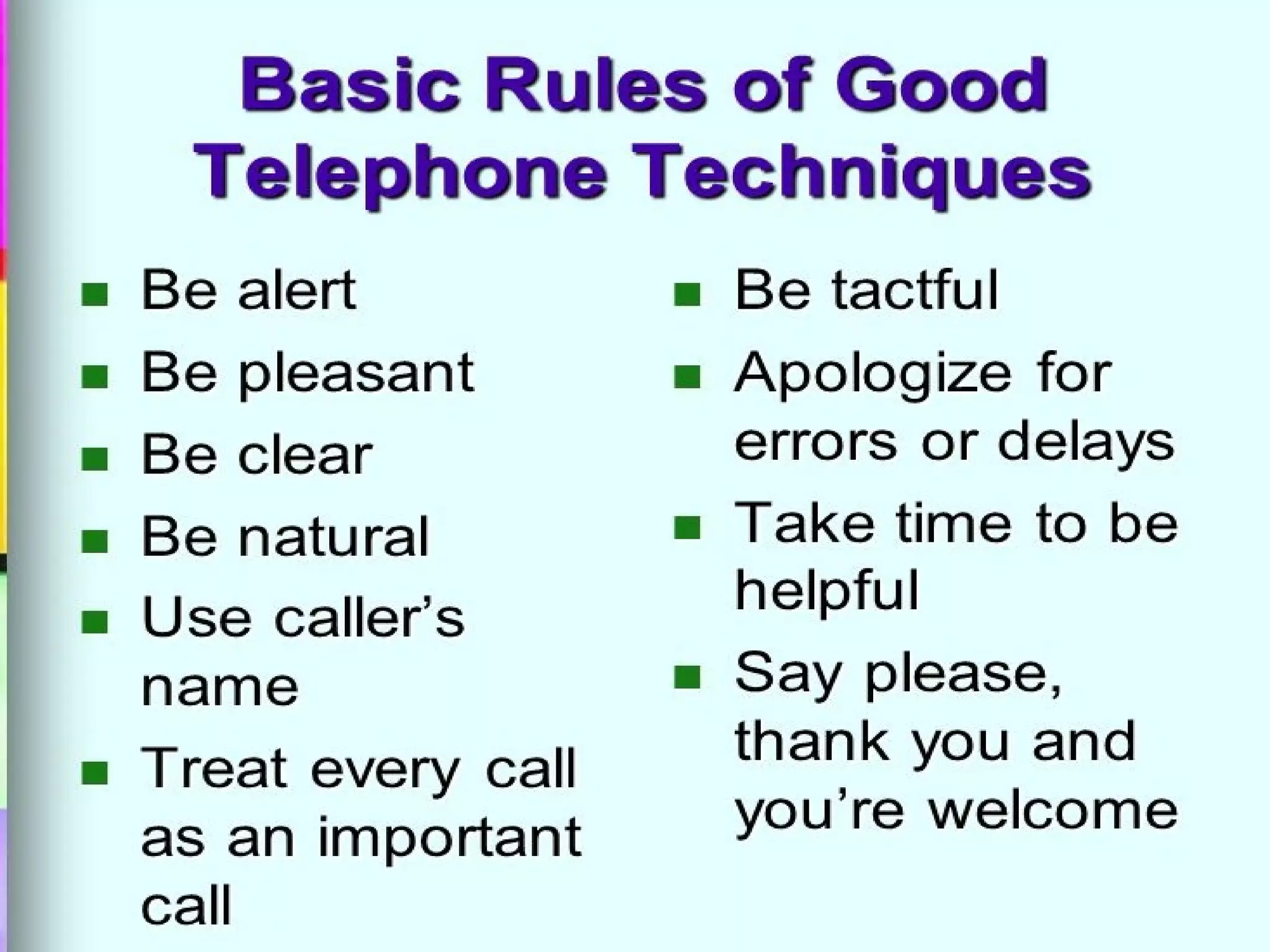
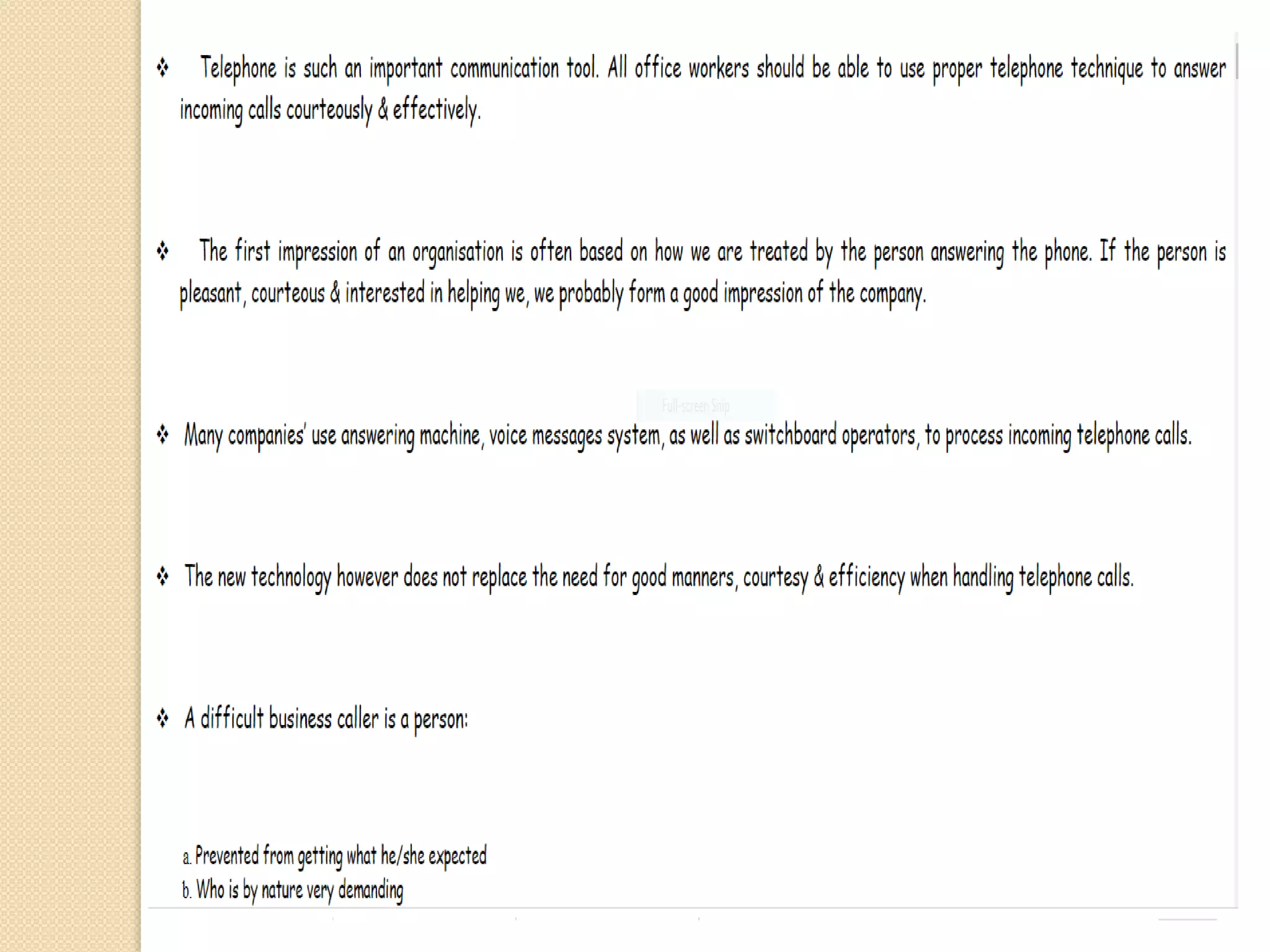
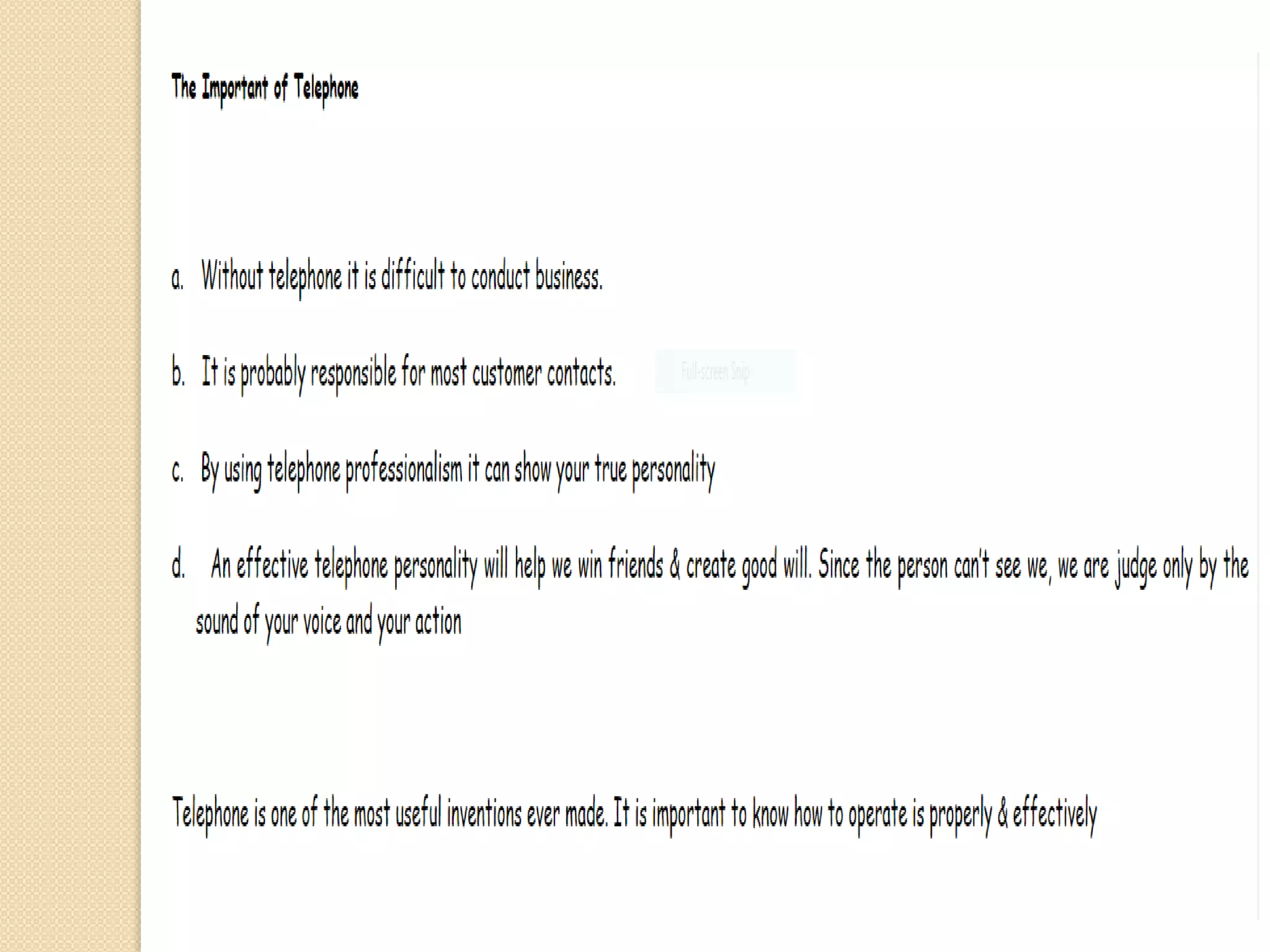
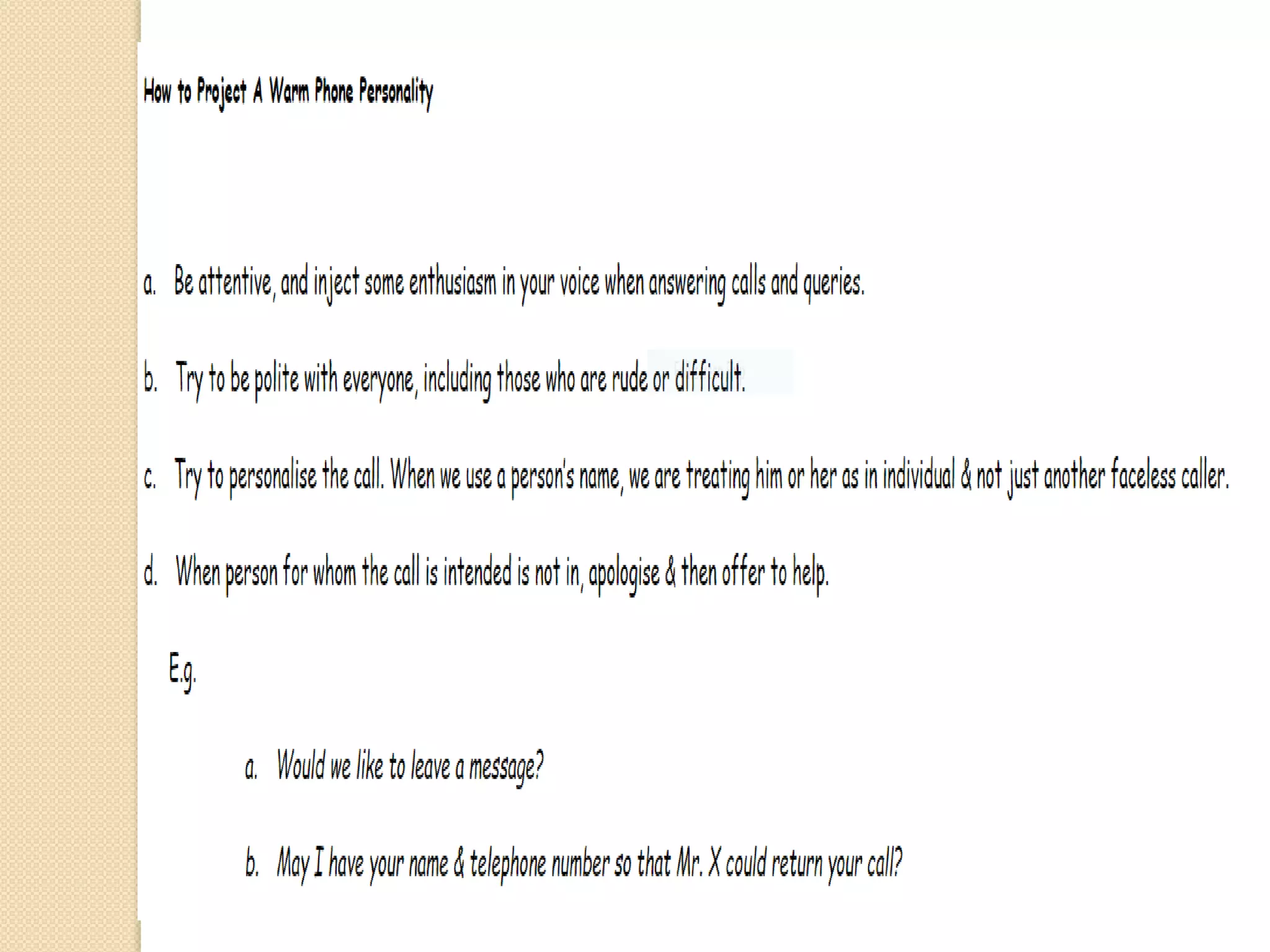
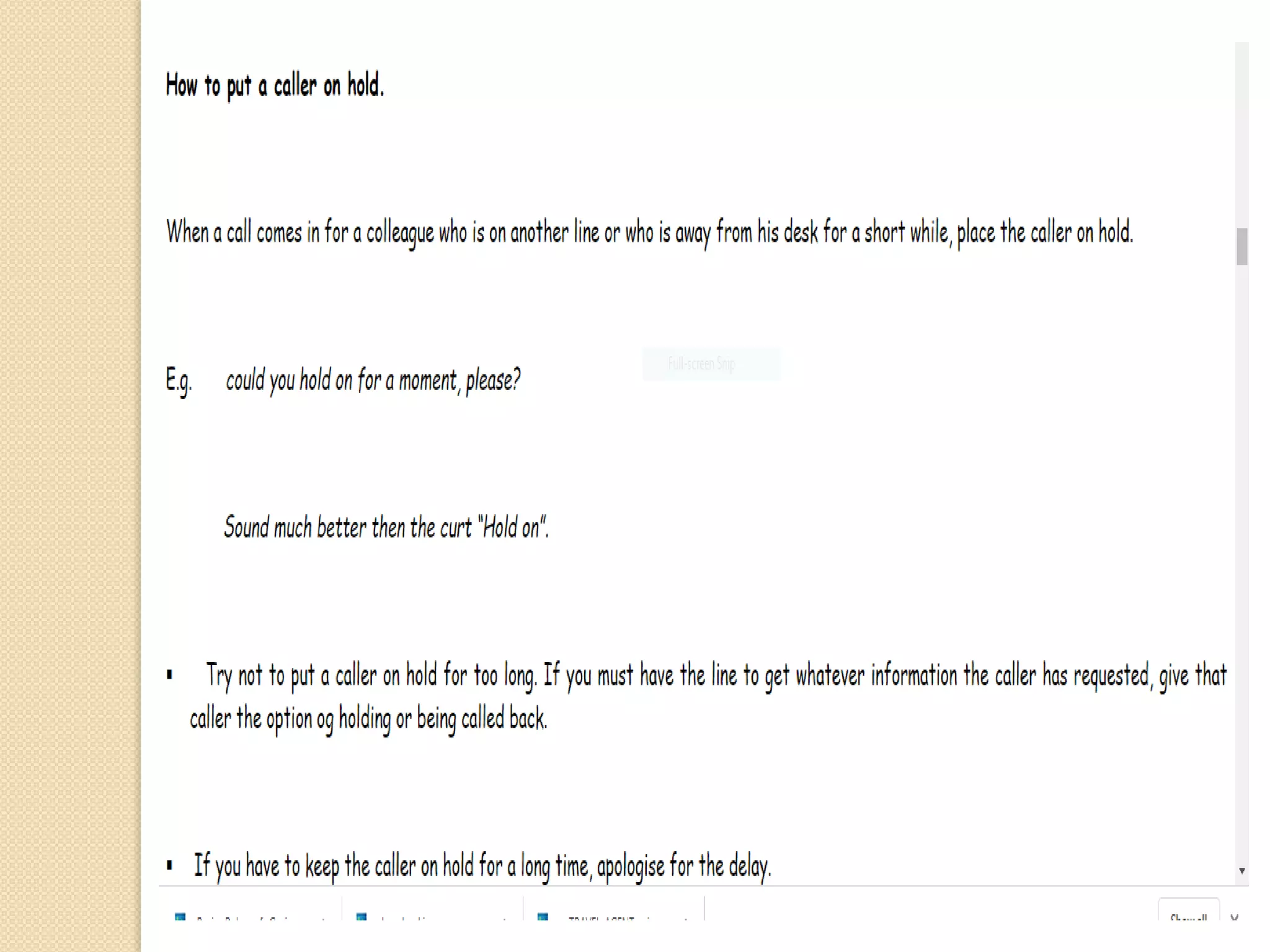
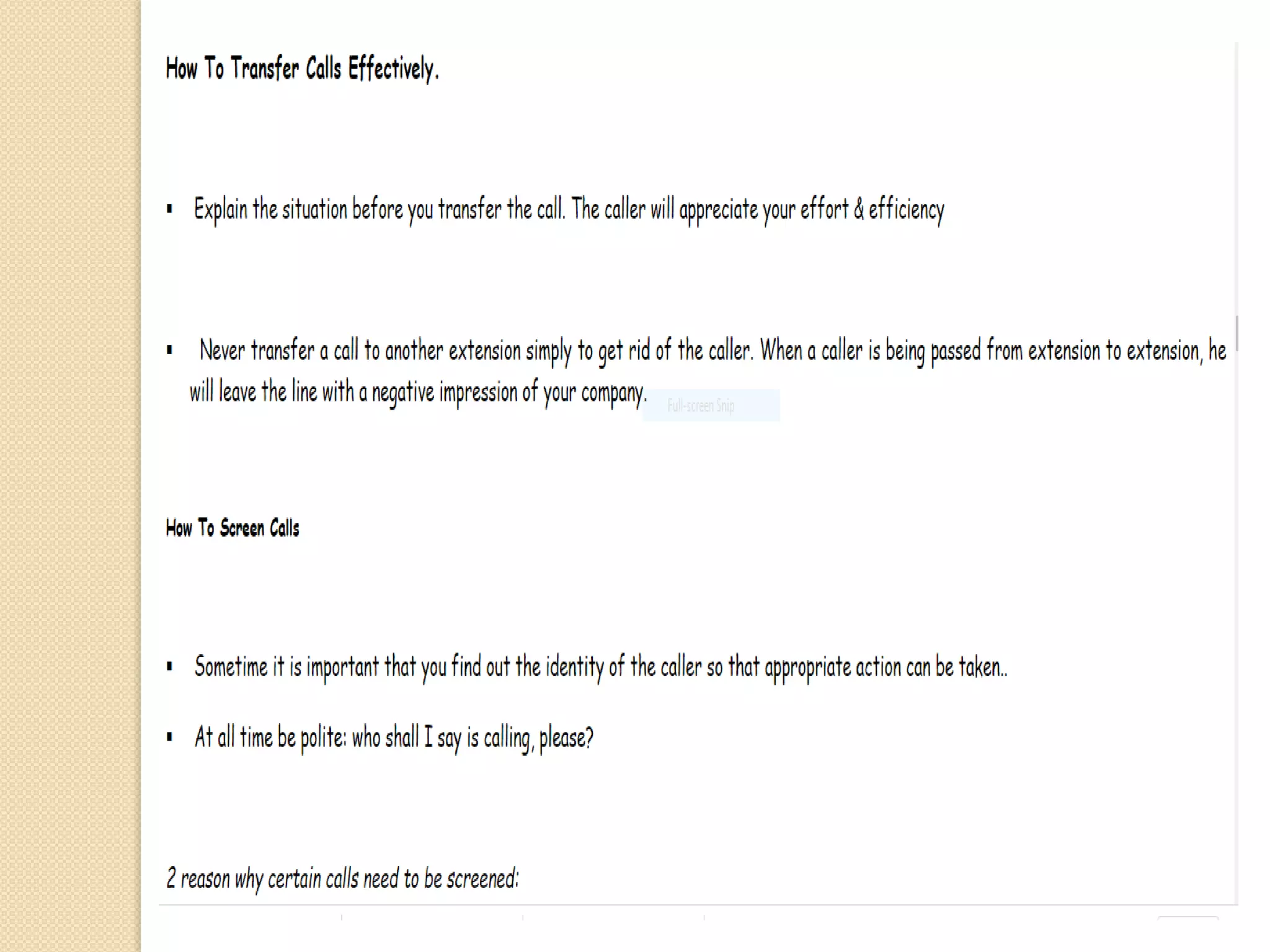
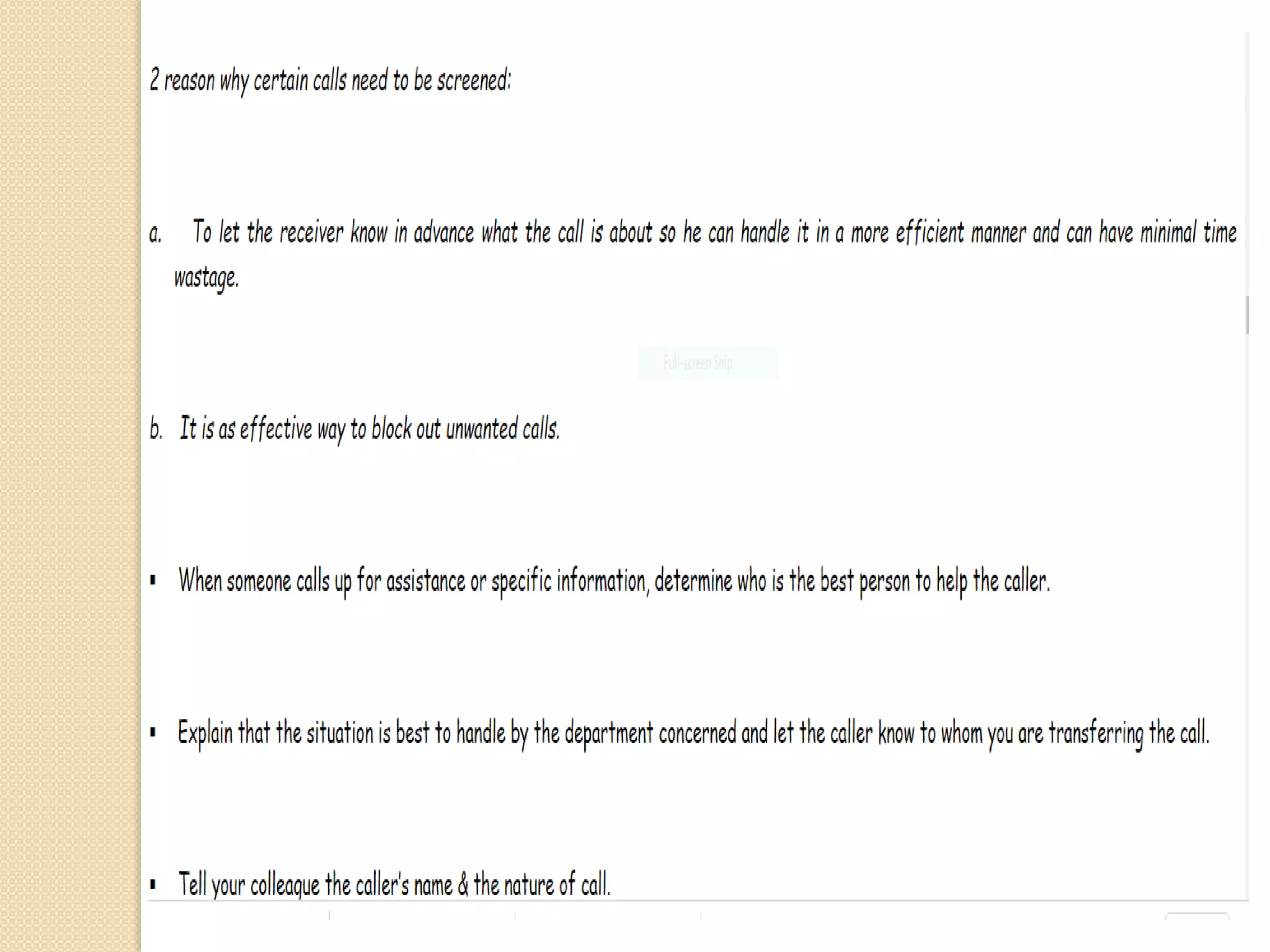
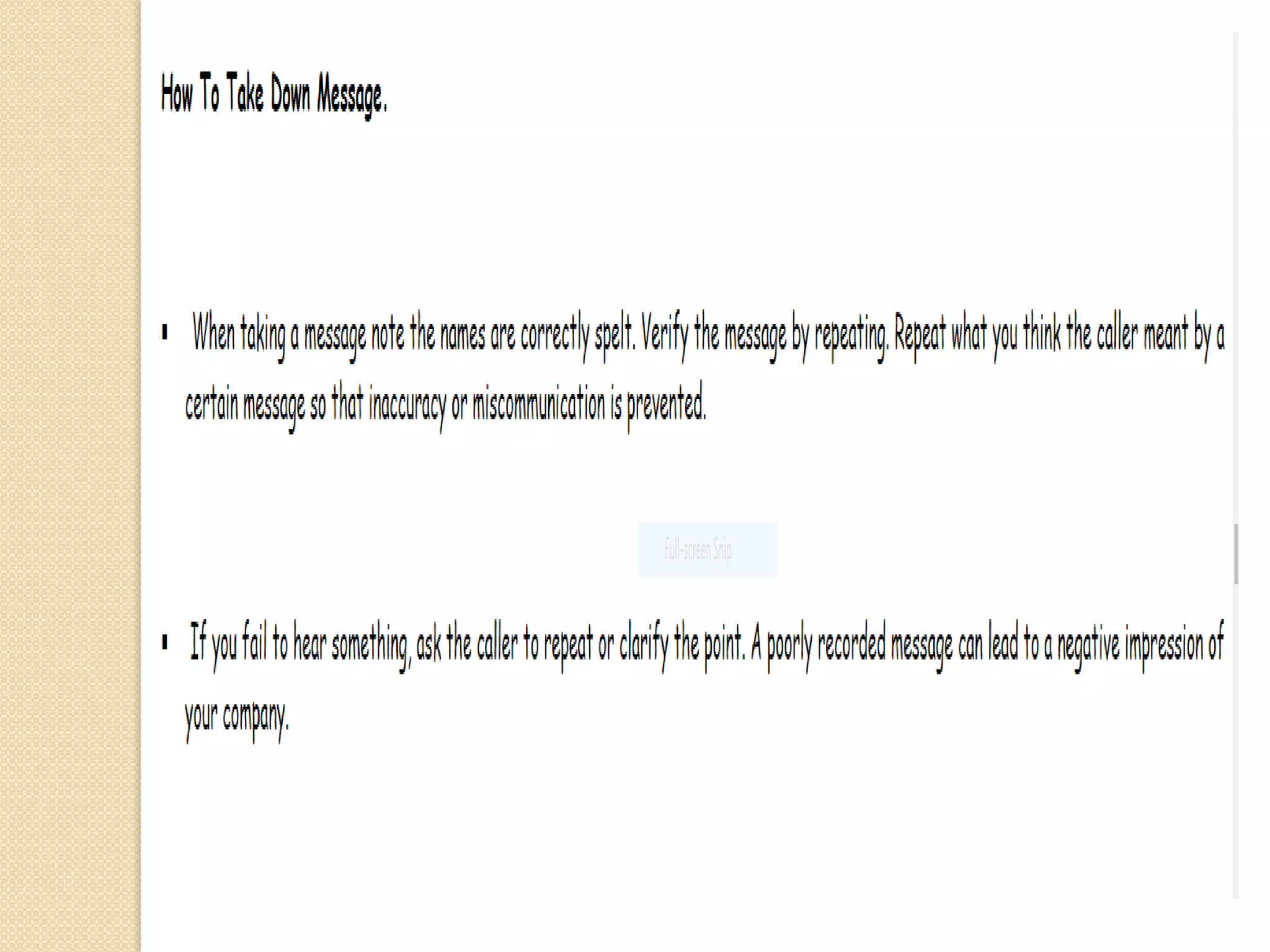
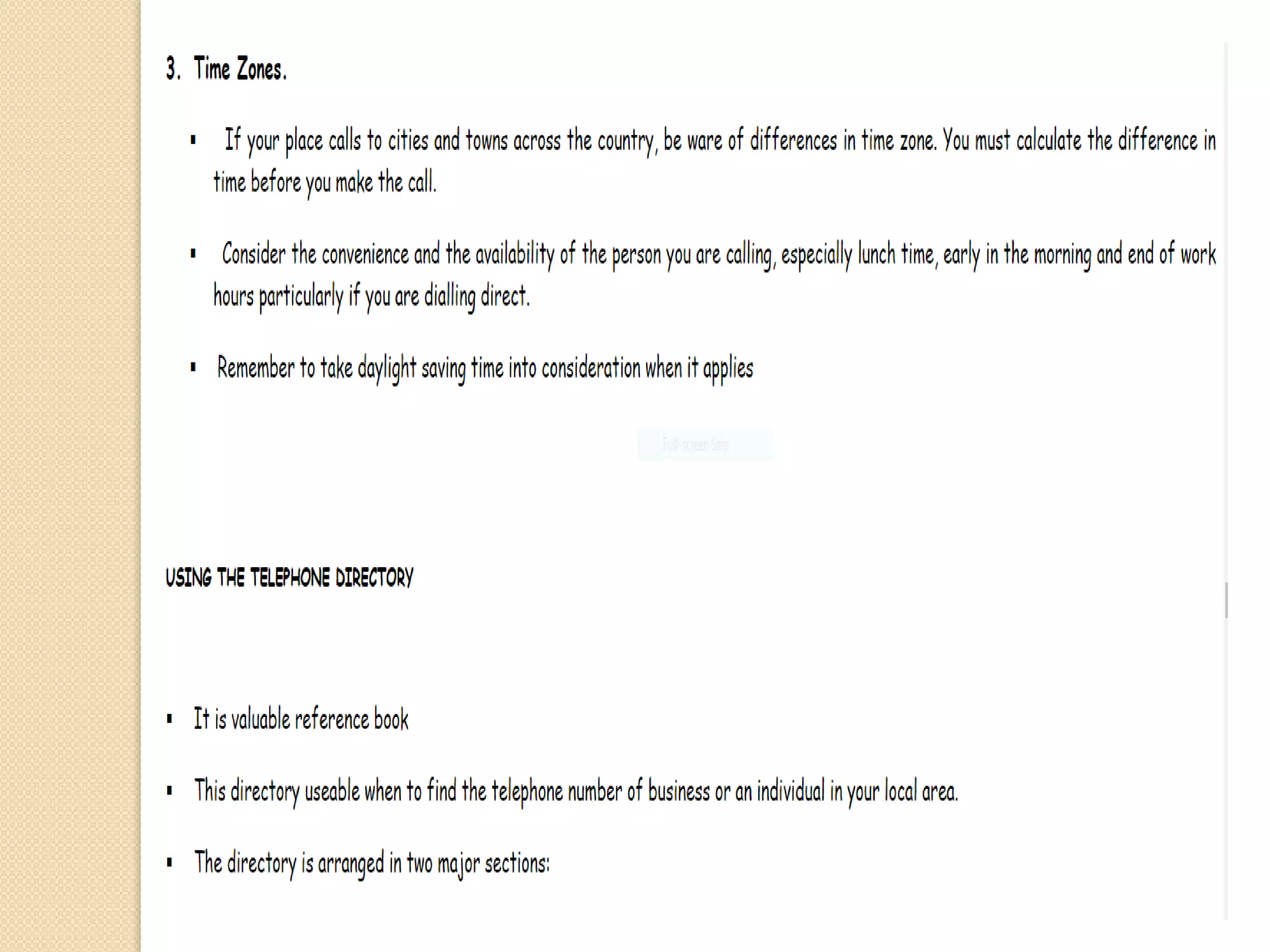
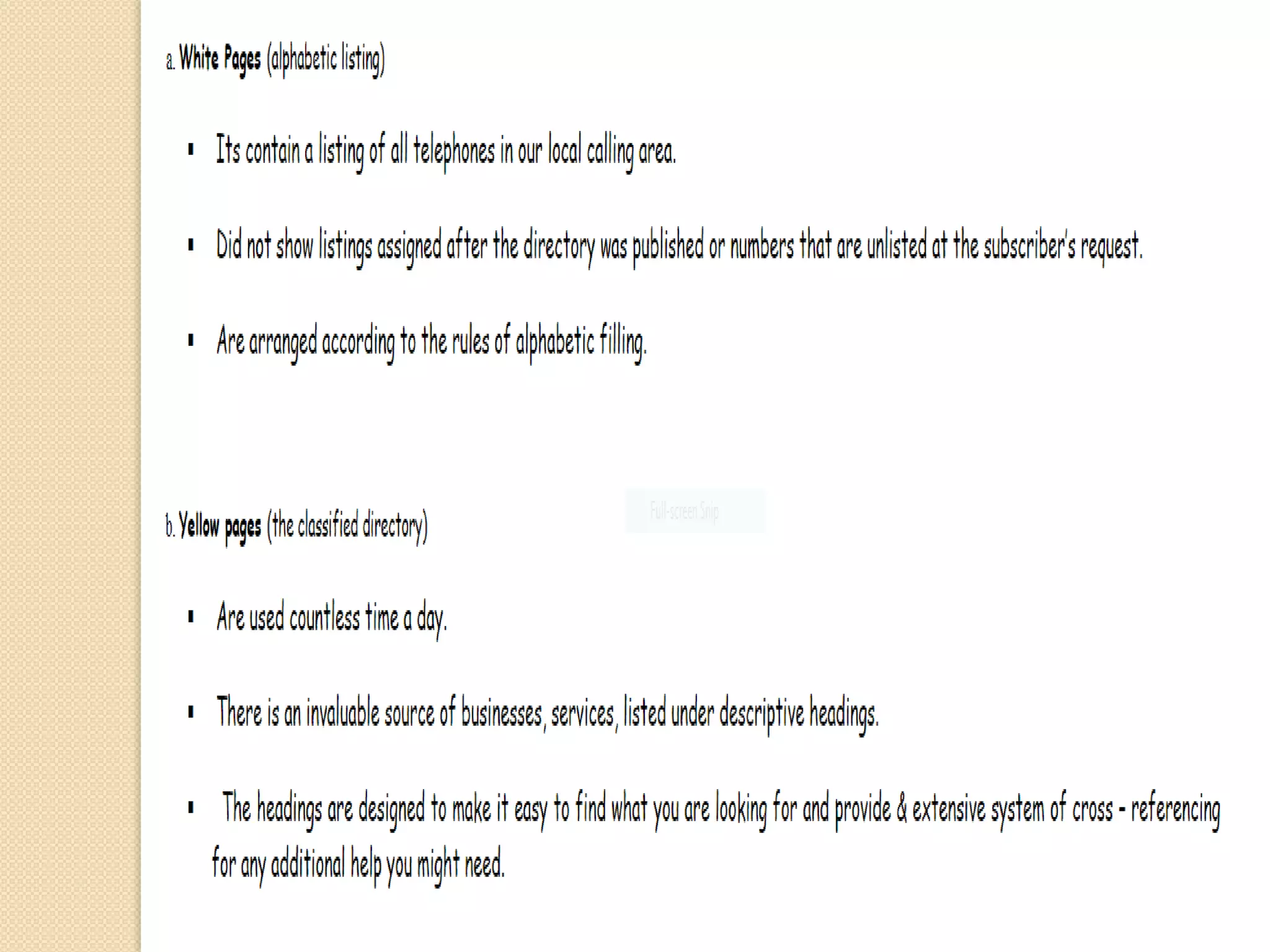
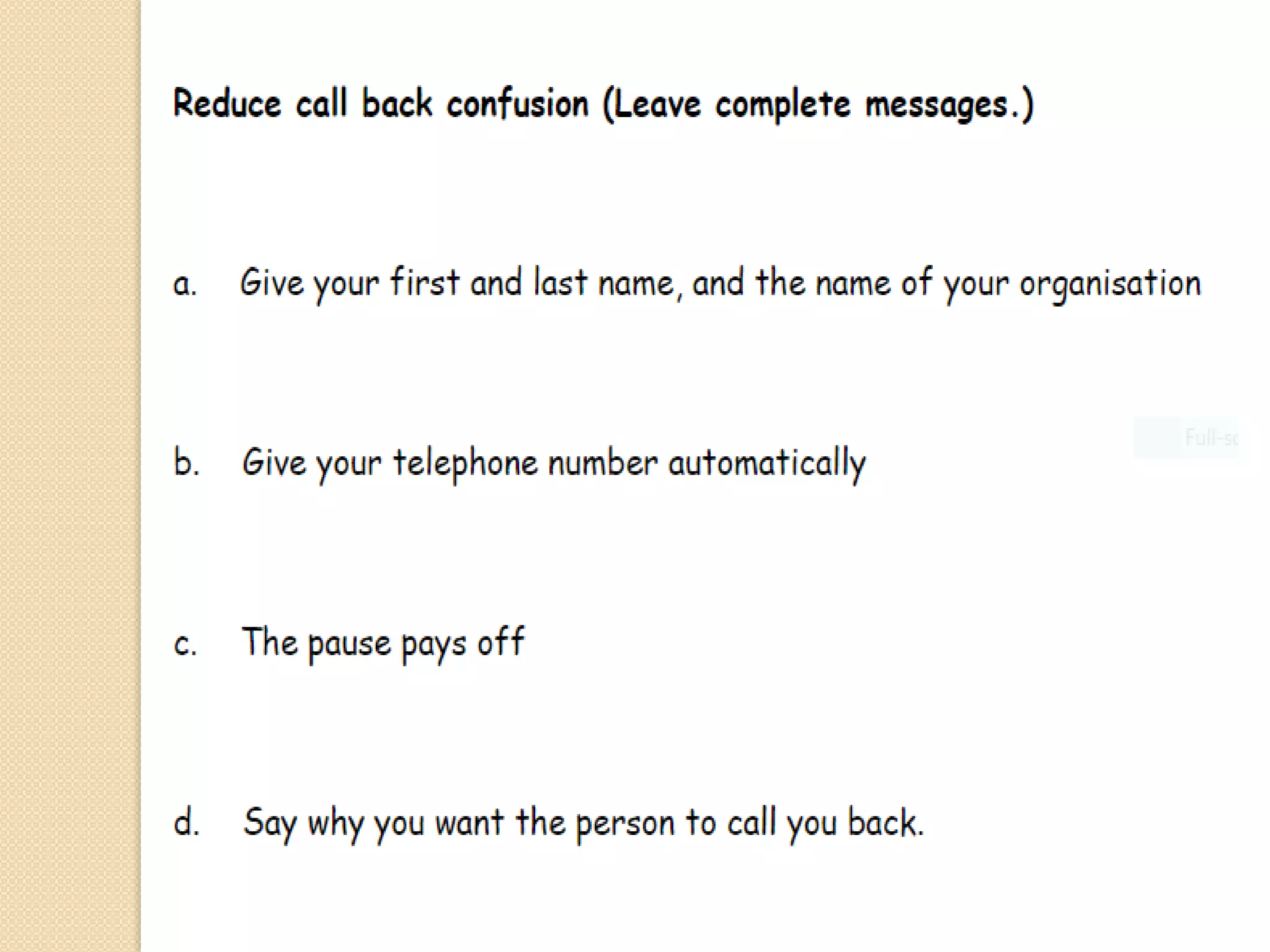
Telephone Technique
Telephone is such an important
communication tool. All office
workers should be able to use
proper telephone technique to
answer incoming calls
courteously & effectively. The first
impression of an organization is
often based on how we are treated
by the person answering the
phone.
Skills in presenting products to clients
 Make the presentation relevant to your prospect: One of
the most common mistakes people make when discussing
their product or service is to use a generic presentation.
 Create a connection between your product/service and
the prospect: In a presentation to a prospective client, I
prepared a sample of the product they would eventually use
in their program.
 Get to the point: Today’s business people are far too busy
to listen to long-winded discussions.
 Be animated: The majority of sales presentations I have
heard have been boring and unimaginative.
 Use Salesmanship: In the book, The Sales Advantage, an
example is given how a vending sales person lays a heavy
sheet of paper on the floor and asks his prospect.
 Use a physical demonstration: A friend of mine sells sales
training and he often uses the whiteboard or flipchart in the
prospect’s boardroom during his presentation.
 Believe in your product/service: Without doubt, this is the
most critical component of any presentation.
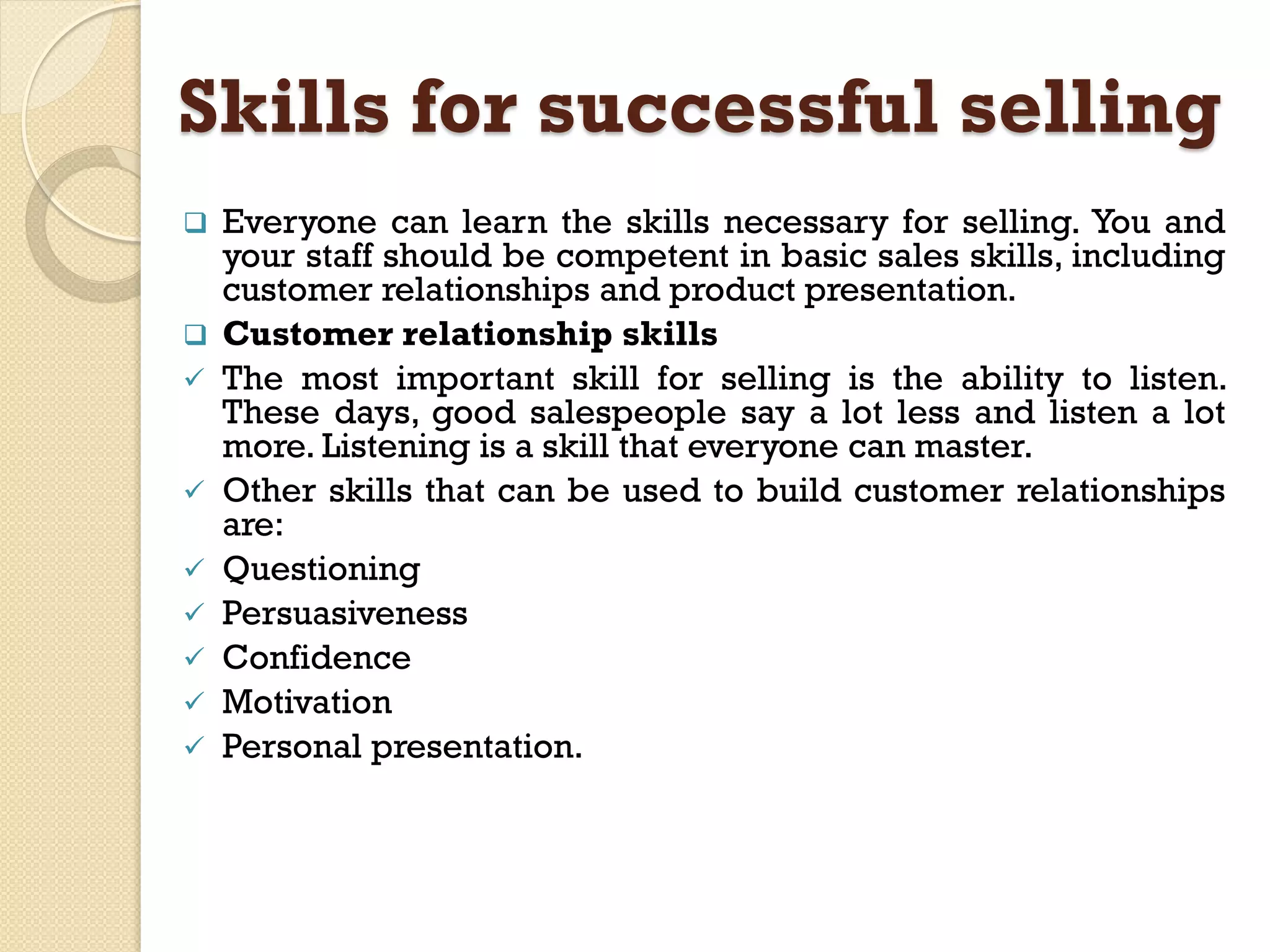
Skills for successful selling
 Everyone can learn the skills necessary for selling. You and
your staff should be competent in basic sales skills, including
customer relationships and product presentation.
 Customer relationship skills
 The most important skill for selling is the ability to listen.
These days, good salespeople say a lot less and listen a lot
more. Listening is a skill that everyone can master.
 Other skills that can be used to build customer relationships
are:
 Questioning
 Persuasiveness
 Confidence
 Motivation
 Personal presentation.
Product presentation skills
 The skill of turning product features into
benefits is essential for good salespeople.
Product knowledge is the key to
communicating benefits to a customer, and
will help you in each step of the selling
process.
 Features are physical, tangible, measurable
characteristics of a product. Benefits are the
advantage that a product feature has for a
specific customer.
Using customer service to make sales
 Businesses that priorities excellent customer
service have a greater chance of capturing
and keeping loyal customers. By doing this,
your business can generate higher profits and
achieve a greater market share.
How to Deal with Difficult Customers
 Practice reflective listening.
 Consider their affect heuristic.
 Tap into the beginner's mind.
 Let go of fear.
 "Chunk" the problem.
 Remember, anger is natural.
 Keep calm and carry on.
 Use your support resources.
How to Deal with Angry Customers
 Remain calm.
 Practice active listening.
 Repeat back what your customers say.
 Thank them for bringing the issue to
your attention.
 Explain the steps you'll take to solve the
problem.
 Set a time to follow-up with them, if
needed.
 Be sincere.
 Highlight the case's priority.
How to identify client needs
Know their business
Listen (really listen)
Ask questions and paraphrase
for understanding
Bring new ideas to the table
Continue to circle back with
the client
Skills in Dealing with Clients in a Travel Agency (Travel Agency & Tour Operations)

Skills in Dealing with Clients in a Travel Agency (Travel Agency & Tour Operations)

  • 1.
    Skills in Dealingwith Clients in a Travel Agency
  • 2.
    Presented By: Md. ShaifullarRabbi BBA & MBA (Major inTHM,FBS,DU) Lecturer Dept. ofTourism & Hospitality Management Daffodil Institute of IT(NU)
  • 3.
    Travel Agent  Aperson engaged in selling and arranging transportation, accommodations, tours, or trips for travelers. A travel agency is a private retailer or public service that provides travel and tourism- related services to the general public on behalf of accommodation or travel suppliers. Travel agencies can also serve as general sales agents for airlines that do not have offices in a specific region.  How to become a travel agent  College ,University, Professional Training Courses  Apprenticeship  Working towards this role
  • 4.
    QUALITIES OF ATRAVEL AGENT  Resourcefulness: One of the good qualities of a travel agent is that he must be resourceful. In their line of work, things could change at short notice.  Honesty/integrity: Another good quality of a travel agent is that he or she must be an honest person and his or her integrity must above board.  Expectation management skills: Travelers expect that whatever they require, the travel agent must be able to get it for them for as long as the services are listed in their advertisement.  Good understanding of ICT: A good travelling agent must have ICT skills. The world is now technologically advanced in many fronts including the world of tourism.  Marketing skills: The travel agent must also possess marketing skills. He must be able to market what he is doing in order to attract clients.  Good communication skills: The travel agent must have very good communication skills. In their line of work, they come across people with diverse backgrounds and levels of exposure.  Timeliness: Again, the travel agent must be time conscious in all his dealings with the client. In tourism, time is of great essence.
  • 5.
    Skills and knowledge You'llneed: Customer service skills Excellent verbal communication skills The ability to sell products and services To be thorough and pay attention to detail Administration skills Active listening skills Persuading skills A desire to help people To be able to carry out basic tasks on a computer or hand-held device
  • 6.
    Day-to-day tasks Depending onyour role, your day-to-day tasks may include:  Understanding and meeting customers' needs  Using your geographical knowledge to help customers find a suitable package holiday or plan independent travel  Making bookings and payments using online computer systems  Advising customers about passports, insurance, visas, vaccinations, tours and vehicle hire  Informing customers of changes like cancelled flights  Arranging refunds and handling complaints  Meeting sales targets  Keeping up to date with developments in the travel industry
  • 7.
    Characteristics of aTravel Agent Knowledge Professionalism Enthusiasm People Skills Integrity Resourcefulness Empathy
  • 8.
    CHARACTERISTICS OF SUCCESSFULTRAVEL AGENTS THEY ARE HIGHLY ORGANIZED : Travel agents are great planners. For them, juggling calls, bookings, and communication is an everyday balancing act.  THEY HAVE VISION: Not only do travel agents have to be administrative gurus, they also have to be visionaries. Planning a phenomenal vacation requires an inspired mind.  THEY HAVE GREAT PEOPLE SKILLS: Successful travel agents have excellent communication skills and the ability to inspire and influence people.  THEY ARE SELF-STARTERS: The travel agents who really thrive in the industry are self-motivated with lots of drive.  THEY ARE INTERNET SAVVY: Travel agents compete with limitless online travel resources and information, so it’s best for them to stay on top of what’s happening online.  THEY ARE NATURAL EXPLORERS: An innate sense of adventure is vital to this job. Travel agents love to explore the world, both physically and online.
  • 9.
    Telephone Technique Telephone issuch an important communication tool. All office workers should be able to use proper telephone technique to answer incoming calls courteously & effectively. The first impression of an organization is often based on how we are treated by the person answering the phone.
  • 31.
    Skills in presentingproducts to clients  Make the presentation relevant to your prospect: One of the most common mistakes people make when discussing their product or service is to use a generic presentation.  Create a connection between your product/service and the prospect: In a presentation to a prospective client, I prepared a sample of the product they would eventually use in their program.  Get to the point: Today’s business people are far too busy to listen to long-winded discussions.  Be animated: The majority of sales presentations I have heard have been boring and unimaginative.  Use Salesmanship: In the book, The Sales Advantage, an example is given how a vending sales person lays a heavy sheet of paper on the floor and asks his prospect.  Use a physical demonstration: A friend of mine sells sales training and he often uses the whiteboard or flipchart in the prospect’s boardroom during his presentation.  Believe in your product/service: Without doubt, this is the most critical component of any presentation.
  • 32.
    Skills for successfulselling  Everyone can learn the skills necessary for selling. You and your staff should be competent in basic sales skills, including customer relationships and product presentation.  Customer relationship skills  The most important skill for selling is the ability to listen. These days, good salespeople say a lot less and listen a lot more. Listening is a skill that everyone can master.  Other skills that can be used to build customer relationships are:  Questioning  Persuasiveness  Confidence  Motivation  Personal presentation.
  • 33.
    Product presentation skills The skill of turning product features into benefits is essential for good salespeople. Product knowledge is the key to communicating benefits to a customer, and will help you in each step of the selling process.  Features are physical, tangible, measurable characteristics of a product. Benefits are the advantage that a product feature has for a specific customer. Using customer service to make sales  Businesses that priorities excellent customer service have a greater chance of capturing and keeping loyal customers. By doing this, your business can generate higher profits and achieve a greater market share.
  • 34.
    How to Dealwith Difficult Customers  Practice reflective listening.  Consider their affect heuristic.  Tap into the beginner's mind.  Let go of fear.  "Chunk" the problem.  Remember, anger is natural.  Keep calm and carry on.  Use your support resources.
  • 35.
    How to Dealwith Angry Customers  Remain calm.  Practice active listening.  Repeat back what your customers say.  Thank them for bringing the issue to your attention.  Explain the steps you'll take to solve the problem.  Set a time to follow-up with them, if needed.  Be sincere.  Highlight the case's priority.
  • 36.
    How to identifyclient needs Know their business Listen (really listen) Ask questions and paraphrase for understanding Bring new ideas to the table Continue to circle back with the client