Itinerary Planning
• An itinerary is a written plan describing the plan of the
trip day wise or on an hourly basis. It is designed to identify
the origin, destination and all the en-route stopping points
along with the transportation, accommodation and other
services on the trip.
Helping a client select a tour with an appropriate
itinerary is an essential function for a professional
travel-agent & is an effective way to gain client
trust. .
Types of Itineraries
1. Tourist Itinerary
A tourist’s itinerary
is a basic outline of
the trip that a
tourist is planning.
It is the starting
point of the
itinerary designing
process.
• This is the most important type of
Itinerary because this acquaints the
customer, the traveling passenger as
to what all will be his schedule as
long as he is on the tour.
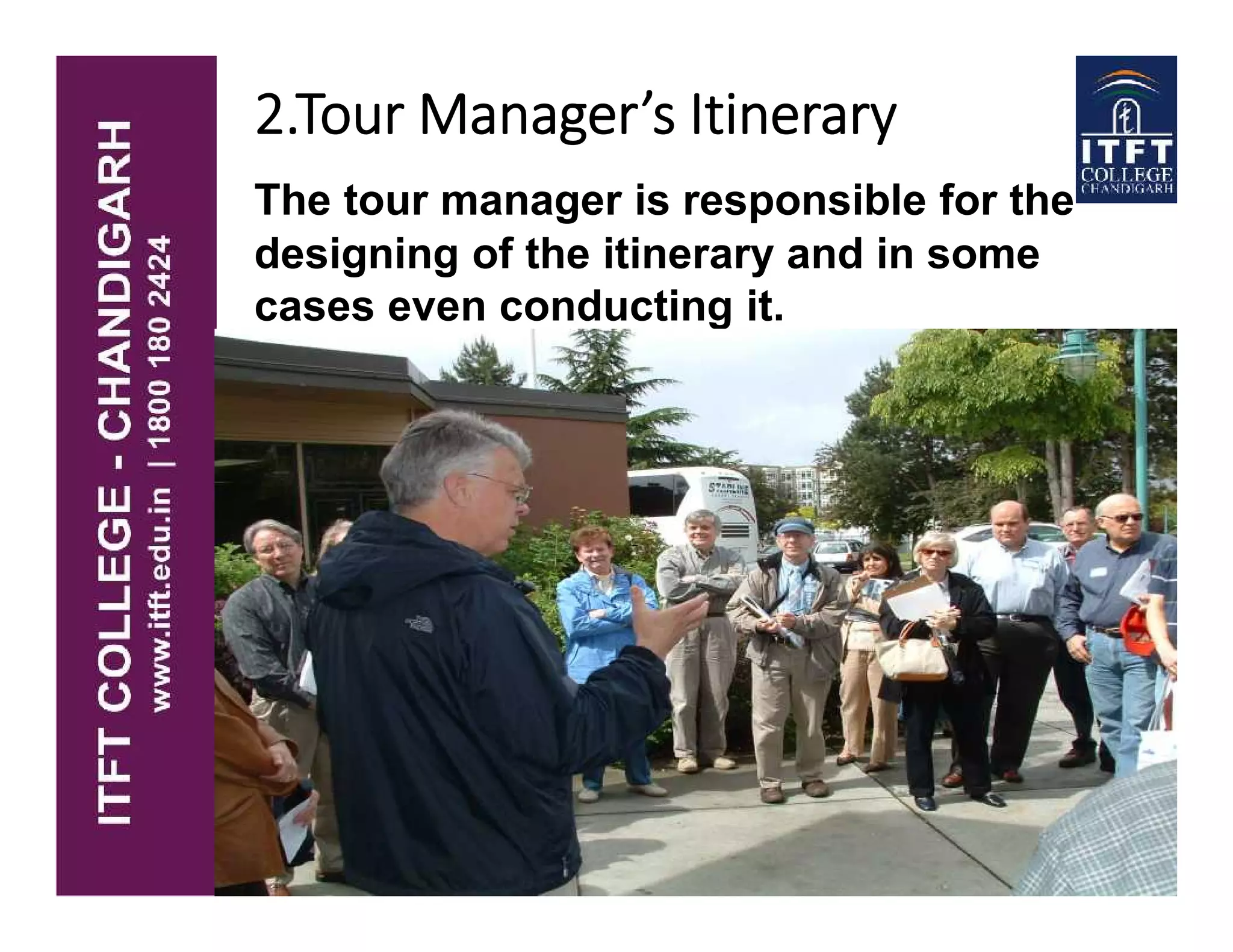
2.Tour Manager’s Itinerary
The tour manager is responsible for the
designing of the itinerary and in some
cases even conducting it.
He has a comprehensive itinerary
having the minutest details
relating to the tour like the tour
arrangements, tour formalities and
contact persons at the
destinations and attractions.
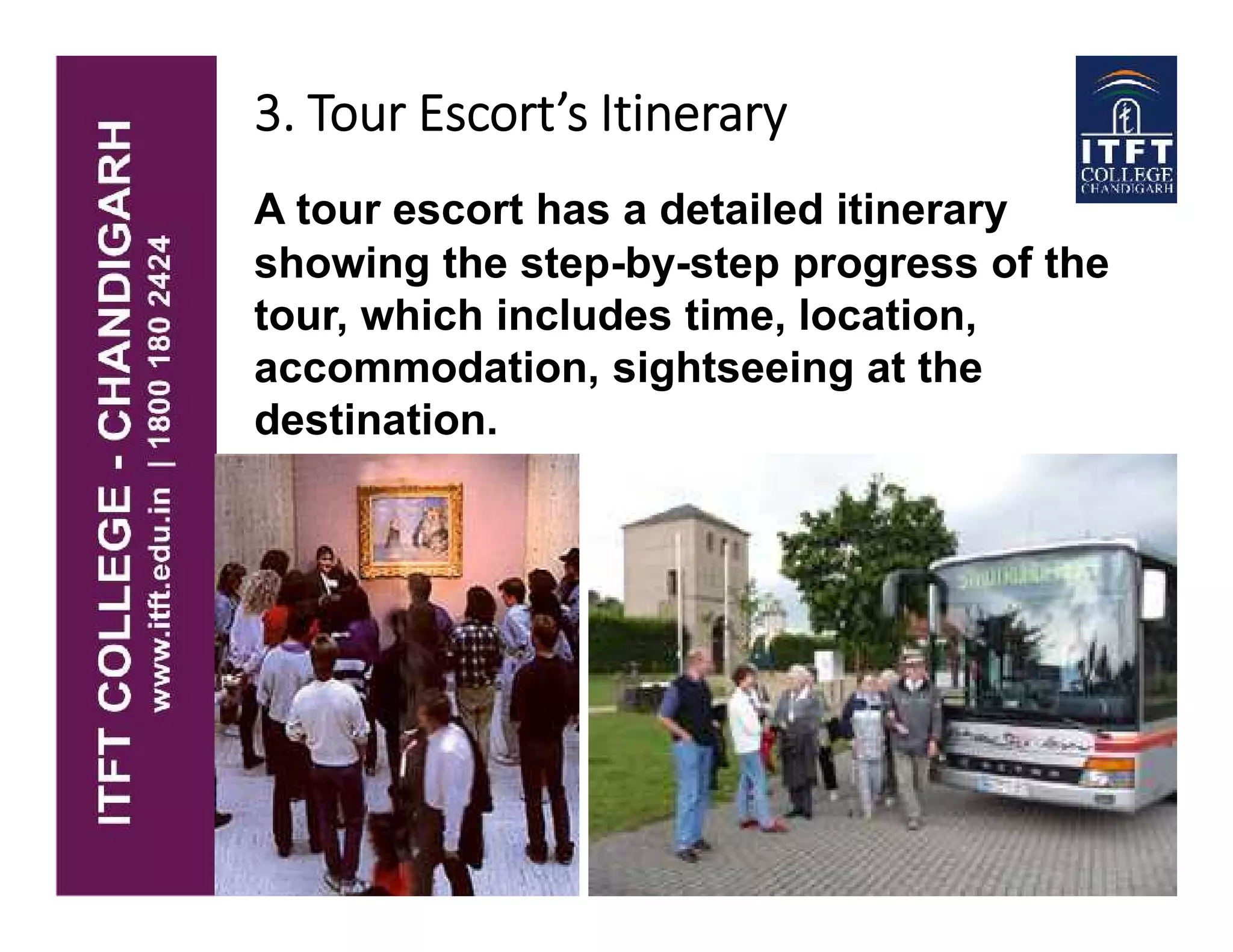
3. Tour Escort’s Itinerary
A tour escort has a detailed itinerary
showing the step-by-step progress of the
tour, which includes time, location,
accommodation, sightseeing at the
destination.
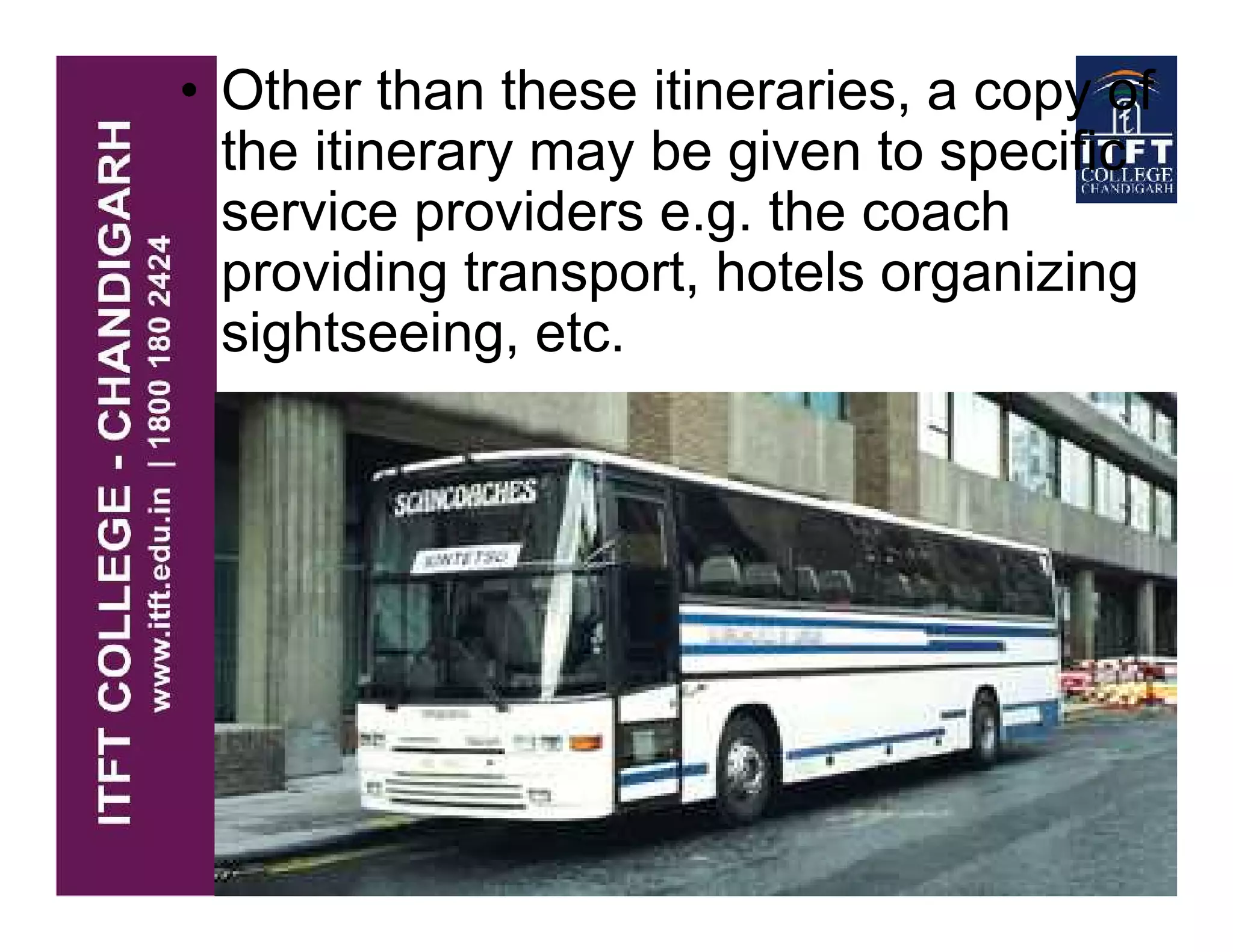
• Other than these itineraries, a copy of
the itinerary may be given to specific
service providers e.g. the coach
providing transport, hotels organizing
sightseeing, etc.
Factors to be kept in mind while Planning an
Itinerary
•
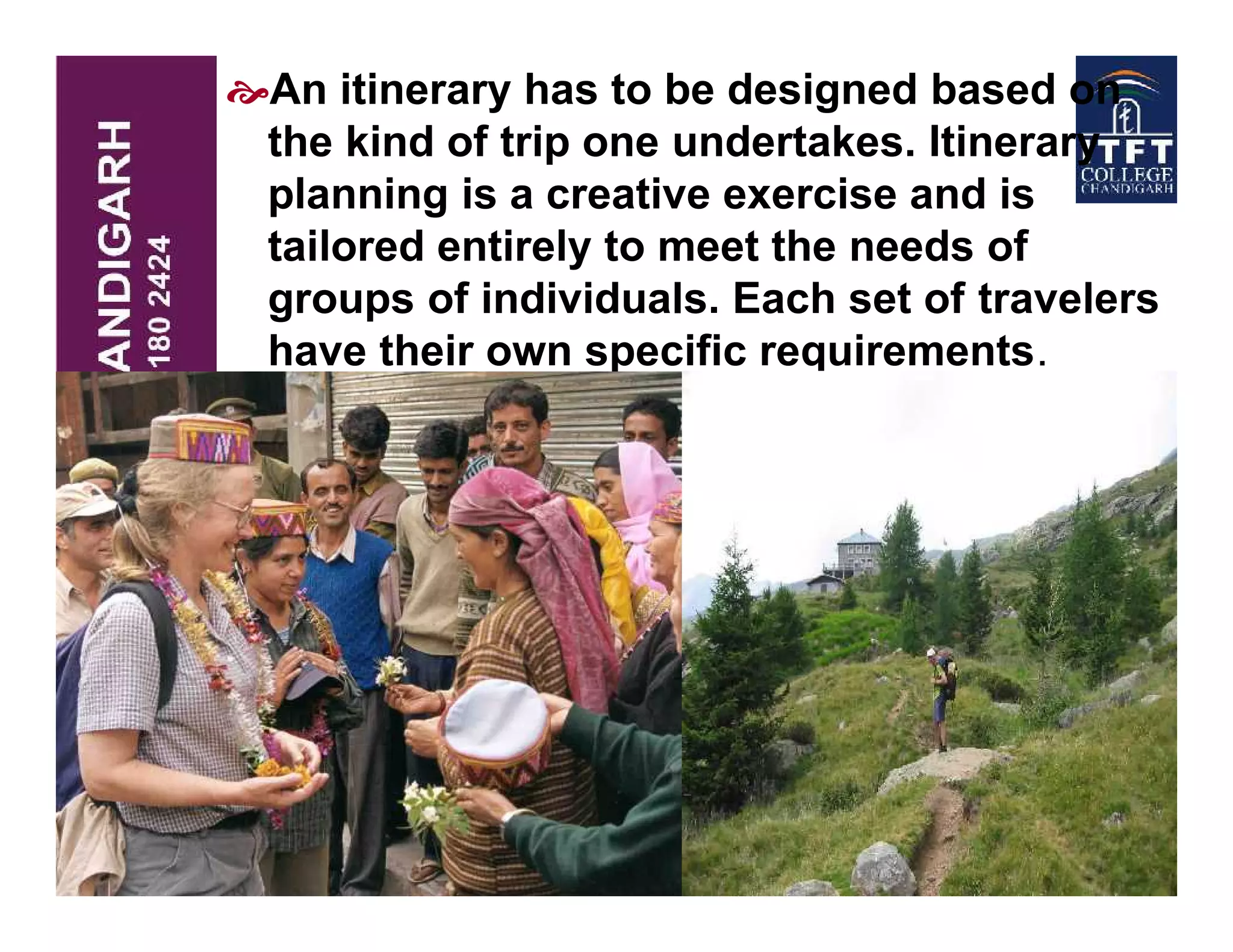
ļ‚šAn itinerary has to be designed based on
the kind of trip one undertakes. Itinerary
planning is a creative exercise and is
tailored entirely to meet the needs of
groups of individuals. Each set of travelers
have their own specific requirements.
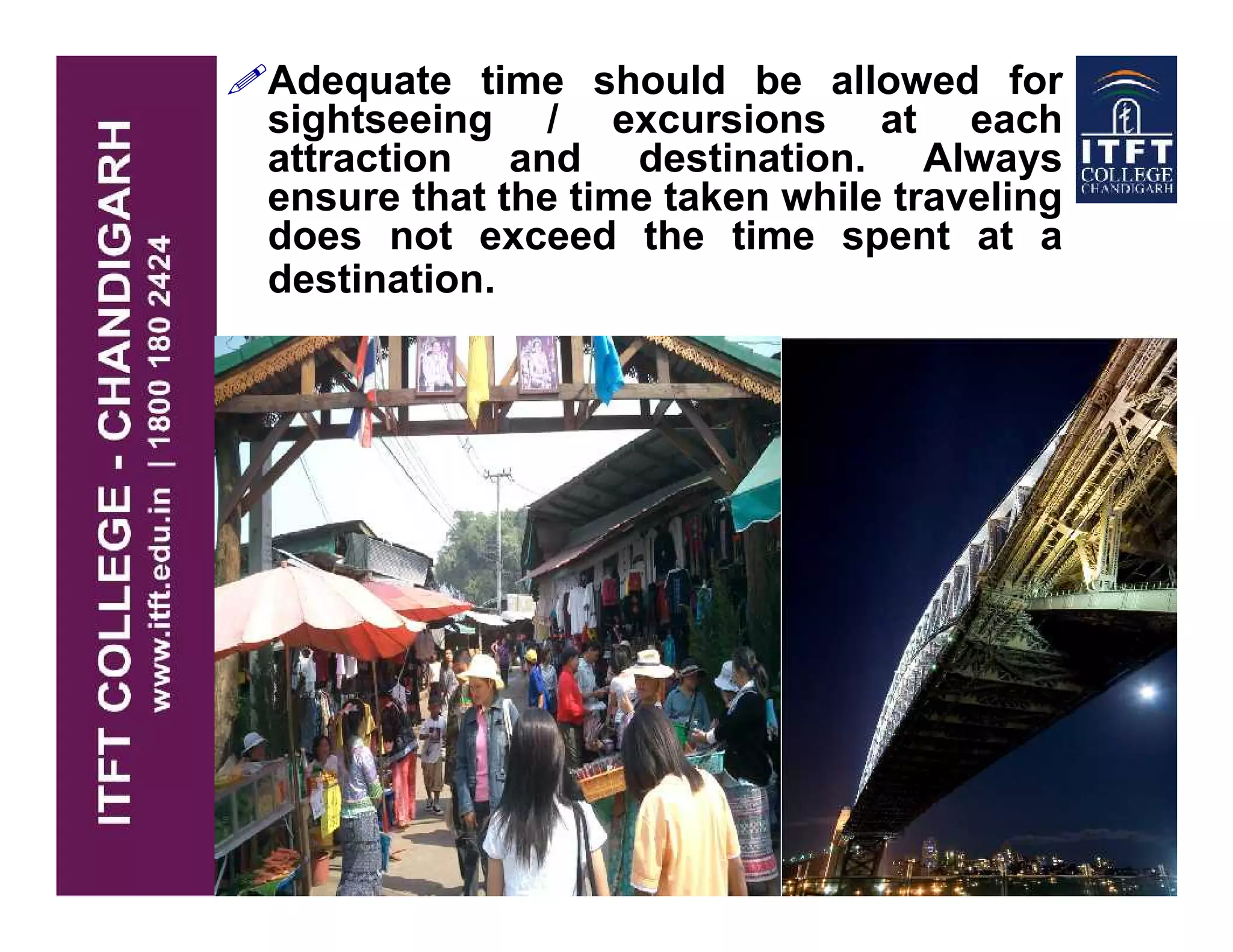
Adequate time should be allowed for
sightseeing / excursions at each
attraction and destination. Always
ensure that the time taken while traveling
does not exceed the time spent at a
destination.
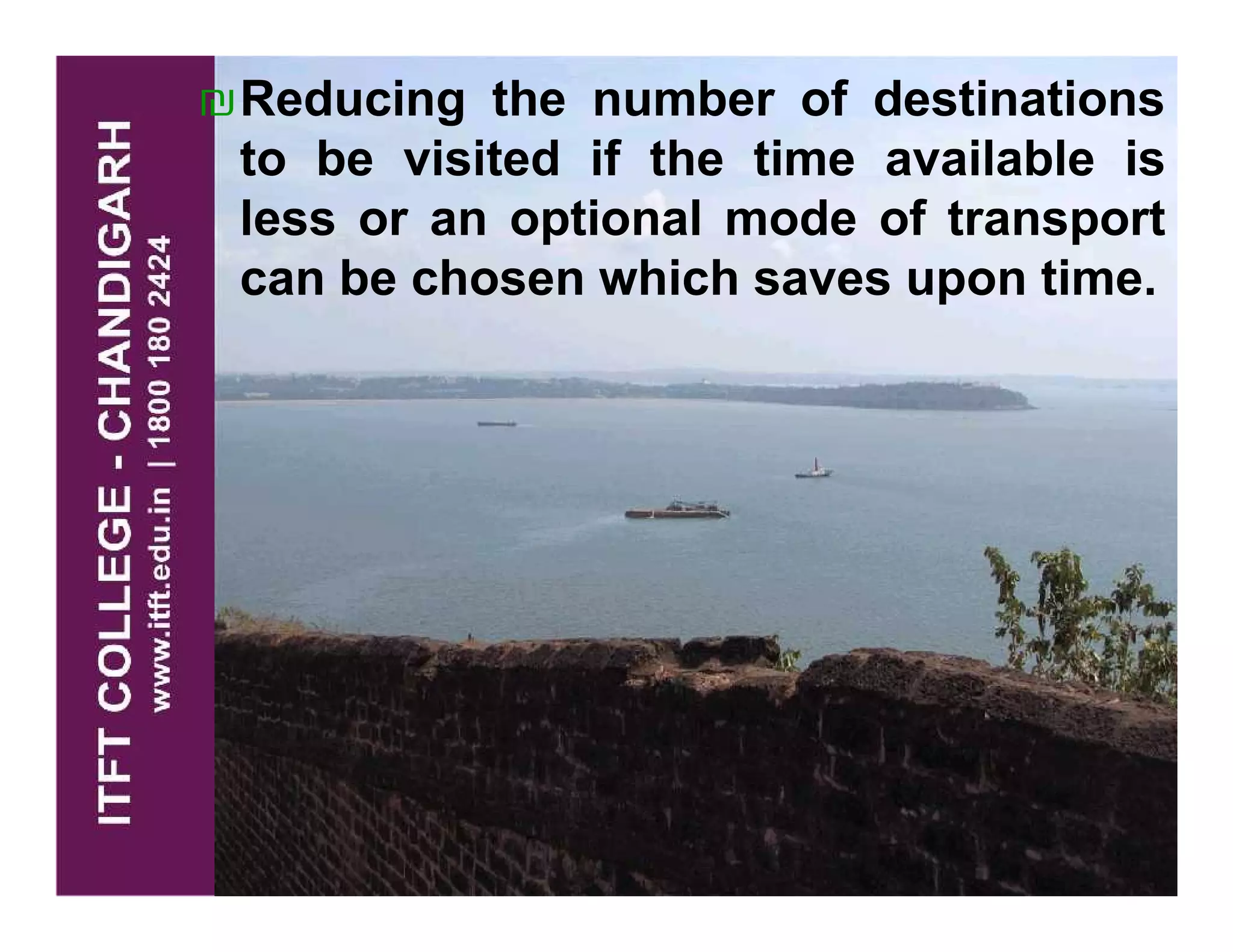
₪Reducing the number of destinations
to be visited if the time available is
less or an optional mode of transport
can be chosen which saves upon time.
Other than the
time allocated to
the attractions at
a destination,
some time
should also be
given to the
client for his own
recreation like
shopping and
exploration
unless the
services of the
guide are
requested at all
times.
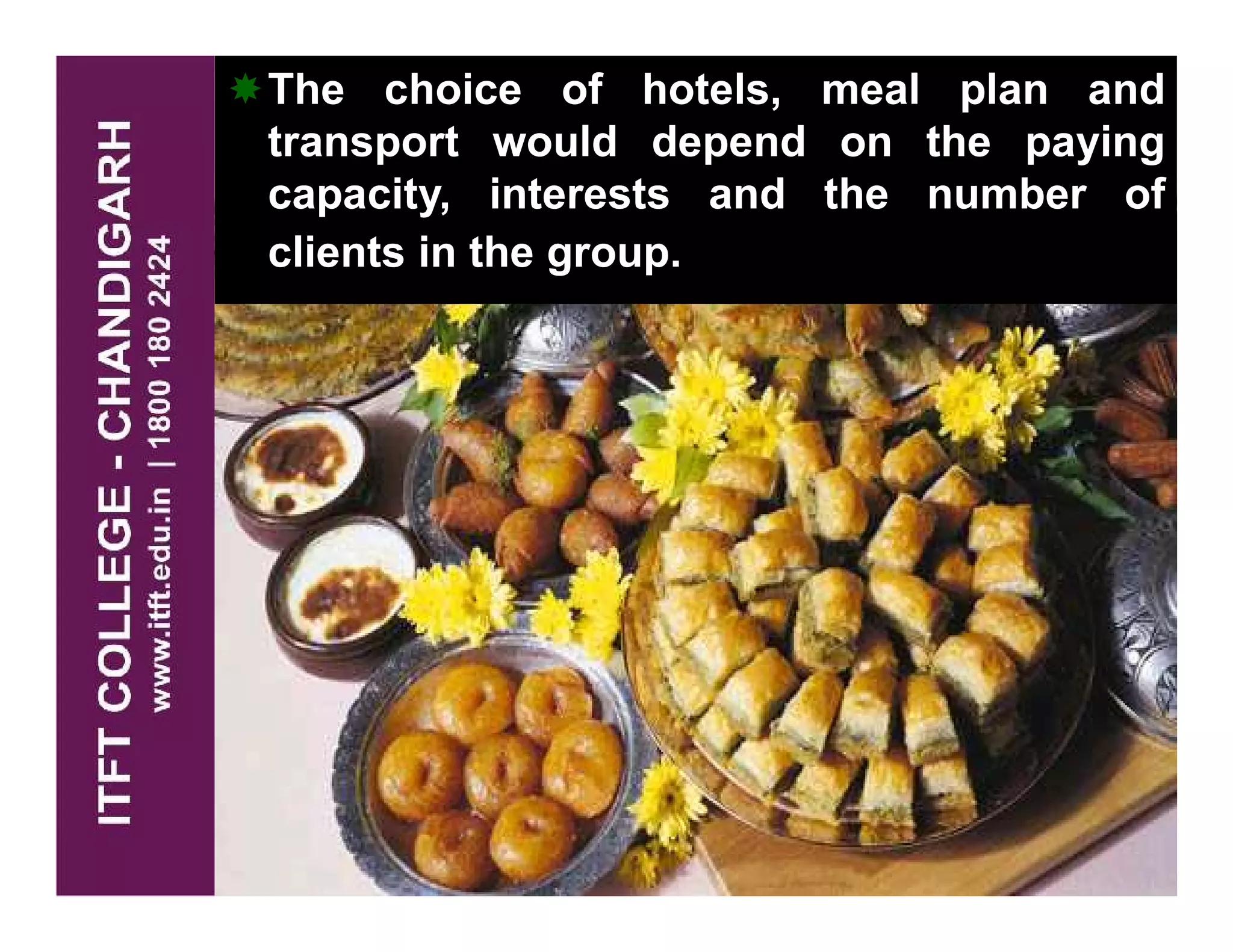
ļ‚­The choice of hotels, meal plan and
transport would depend on the paying
capacity, interests and the number of
clients in the group.
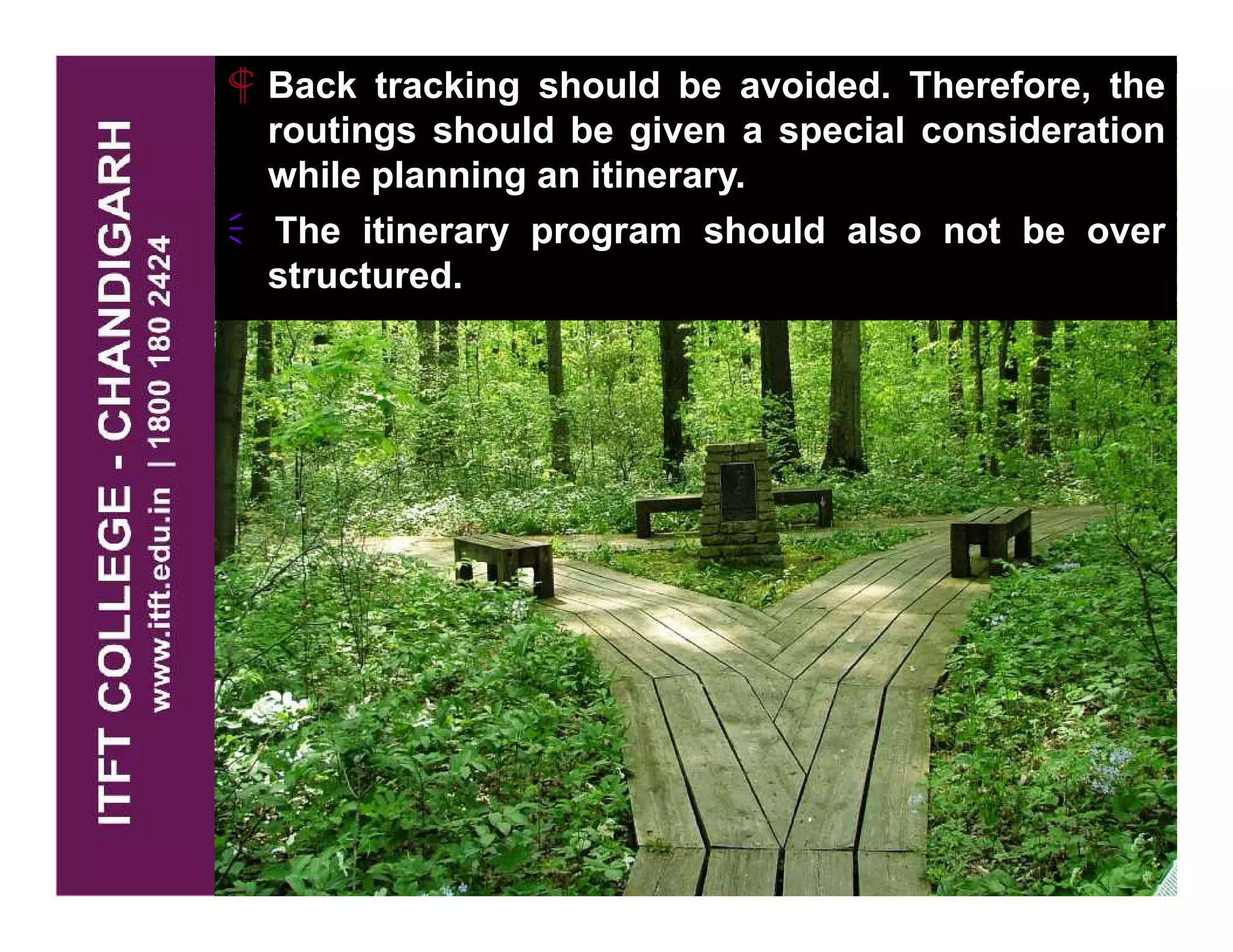
ļ‚„ Back tracking should be avoided. Therefore, the
routings should be given a special consideration
while planning an itinerary.
The itinerary program should also not be over
structured.
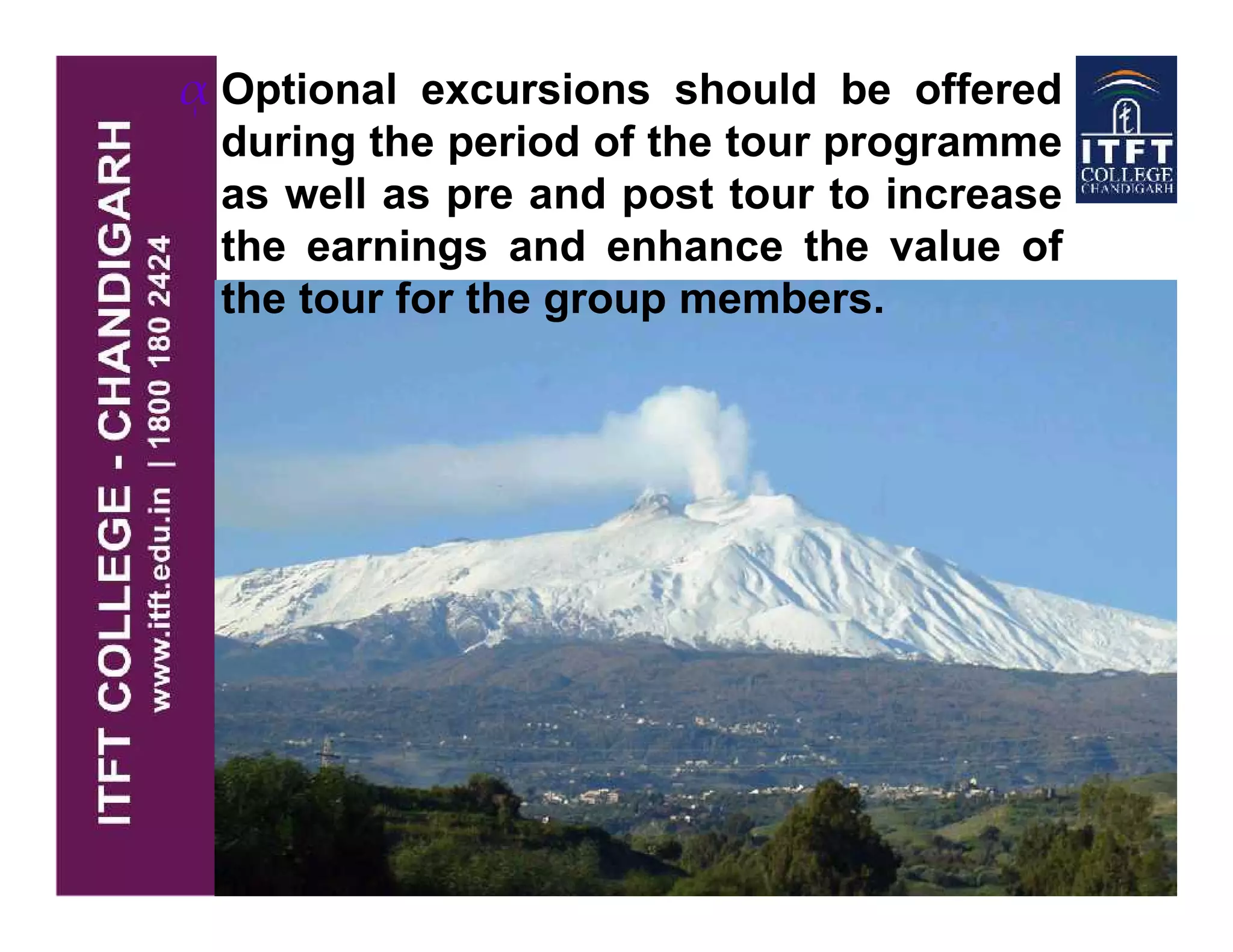
į¾³ Optional excursions should be offered
during the period of the tour programme
as well as pre and post tour to increase
the earnings and enhance the value of
the tour for the group members.
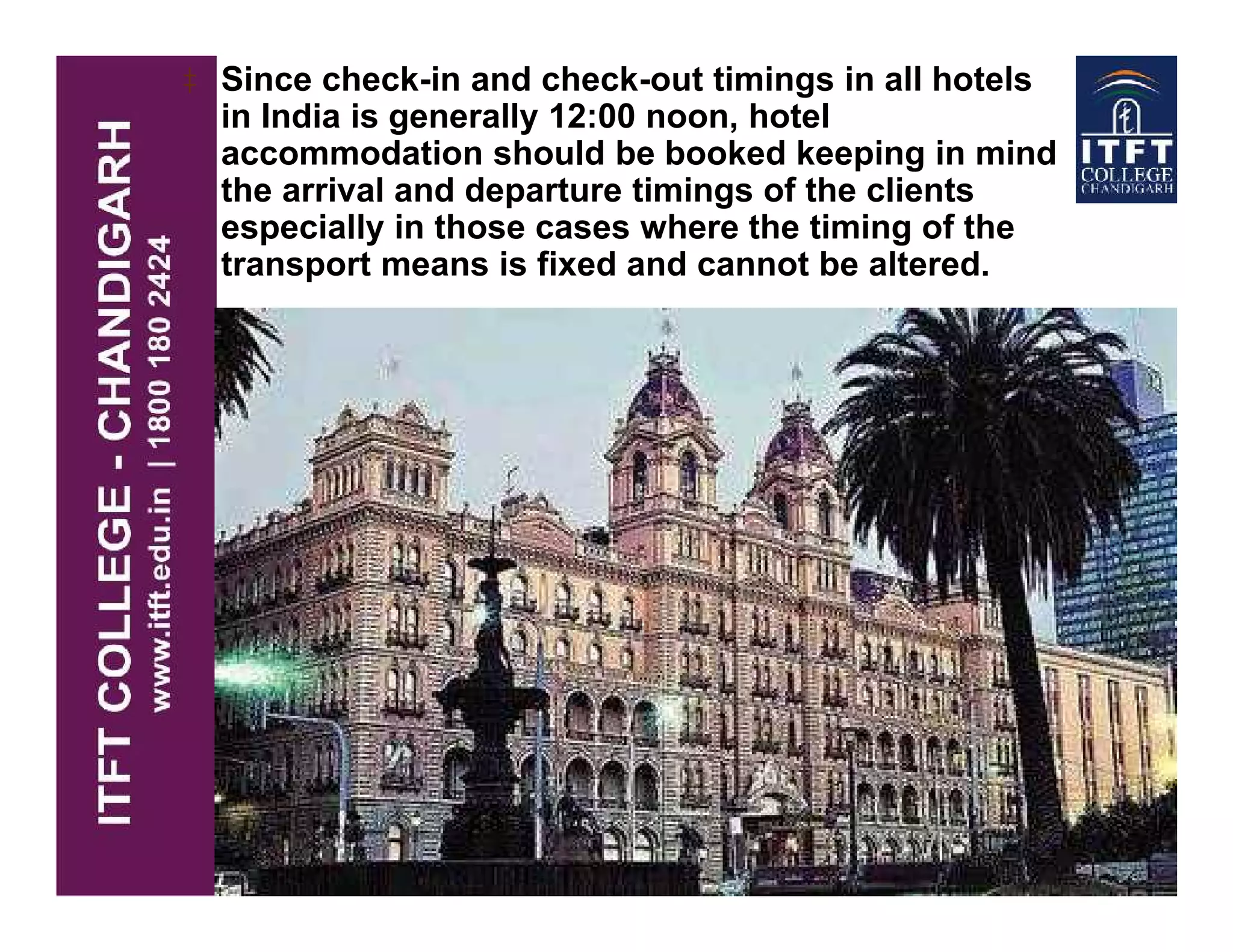
— Since check-in and check-out timings in all hotels
in India is generally 12:00 noon, hotel
accommodation should be booked keeping in mind
the arrival and departure timings of the clients
especially in those cases where the timing of the
transport means is fixed and cannot be altered.
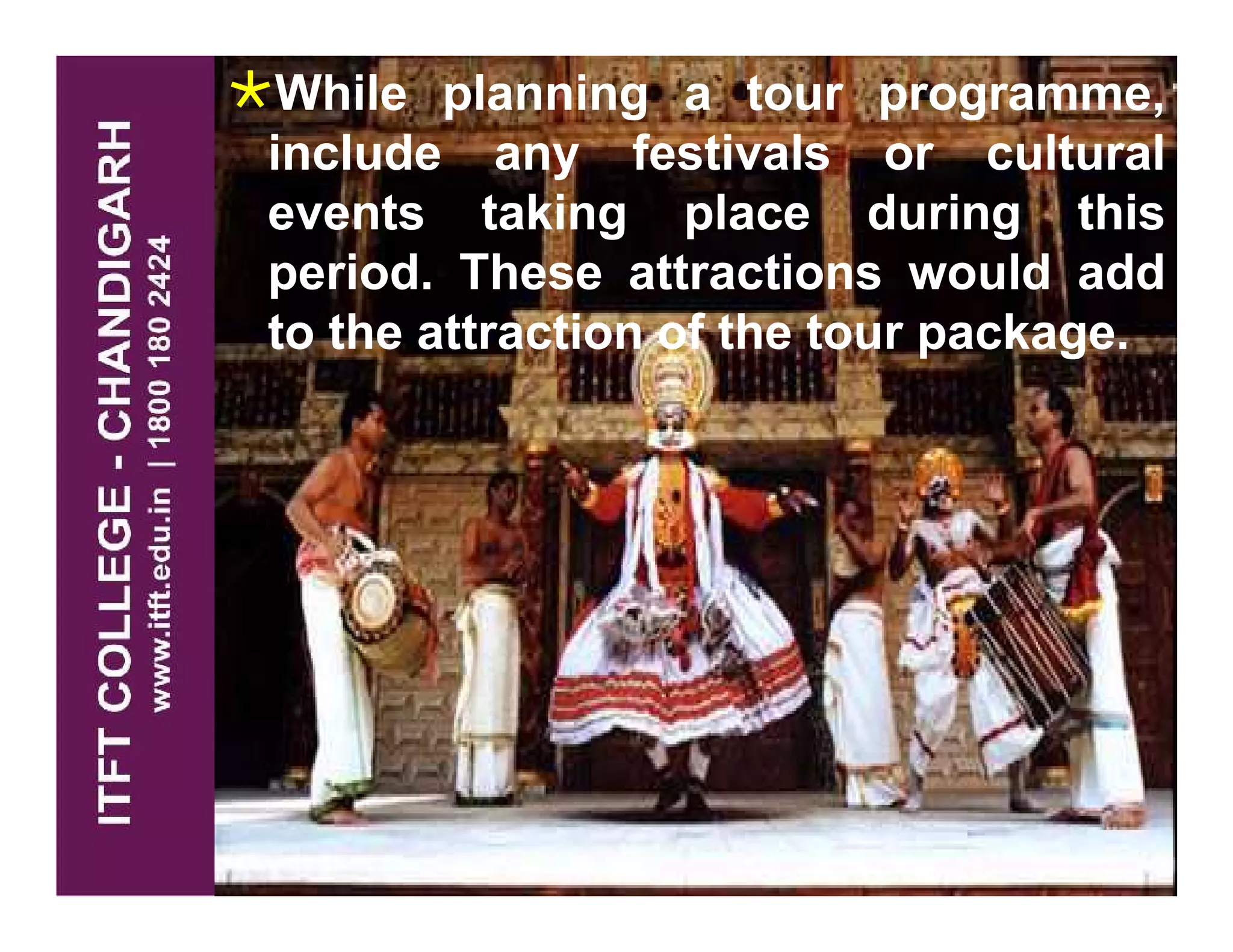
ļƒ–While planning a tour programme,
include any festivals or cultural
events taking place during this
period. These attractions would add
to the attraction of the tour package.
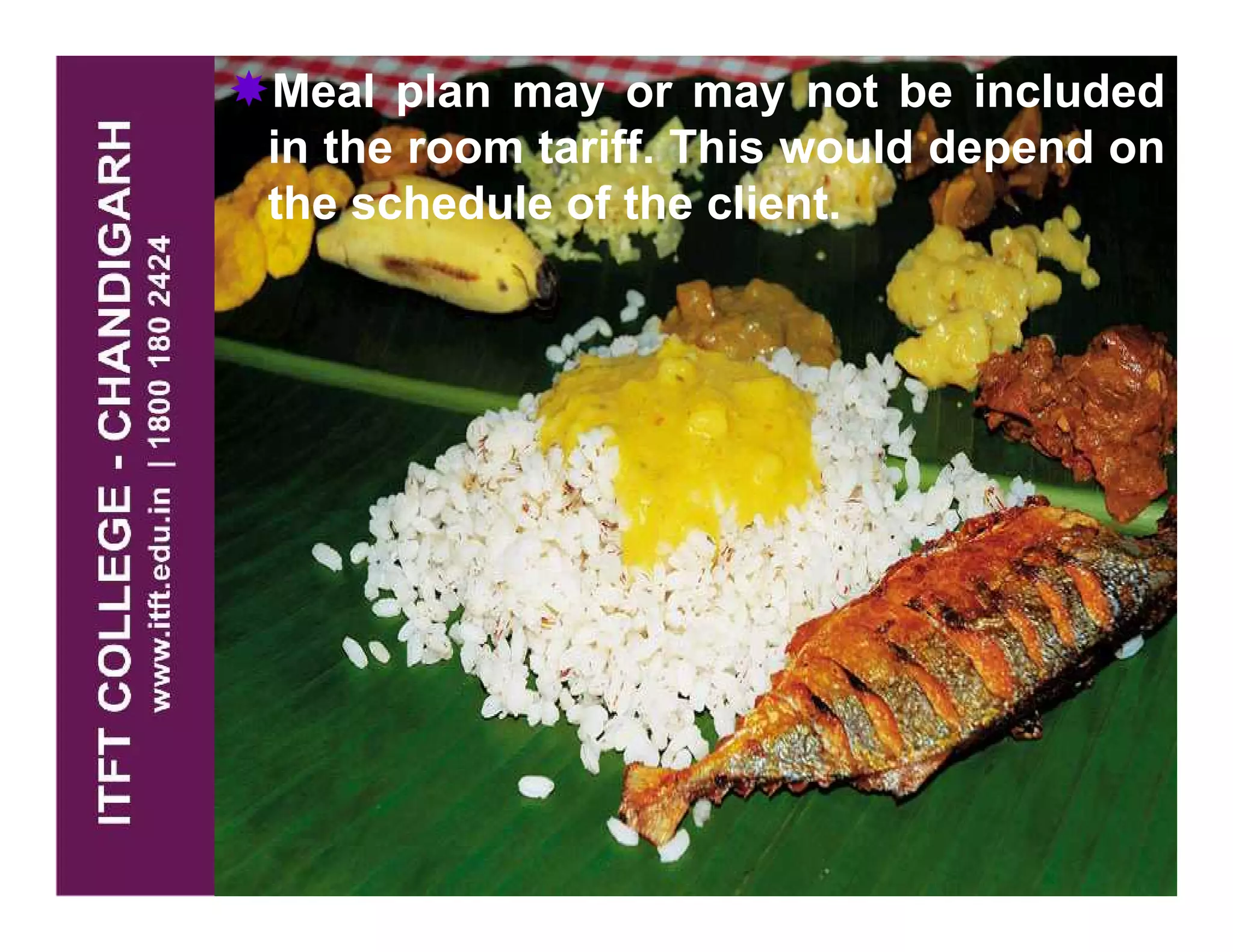
ļ‚­Meal plan may or may not be included
in the room tariff. This would depend on
the schedule of the client.
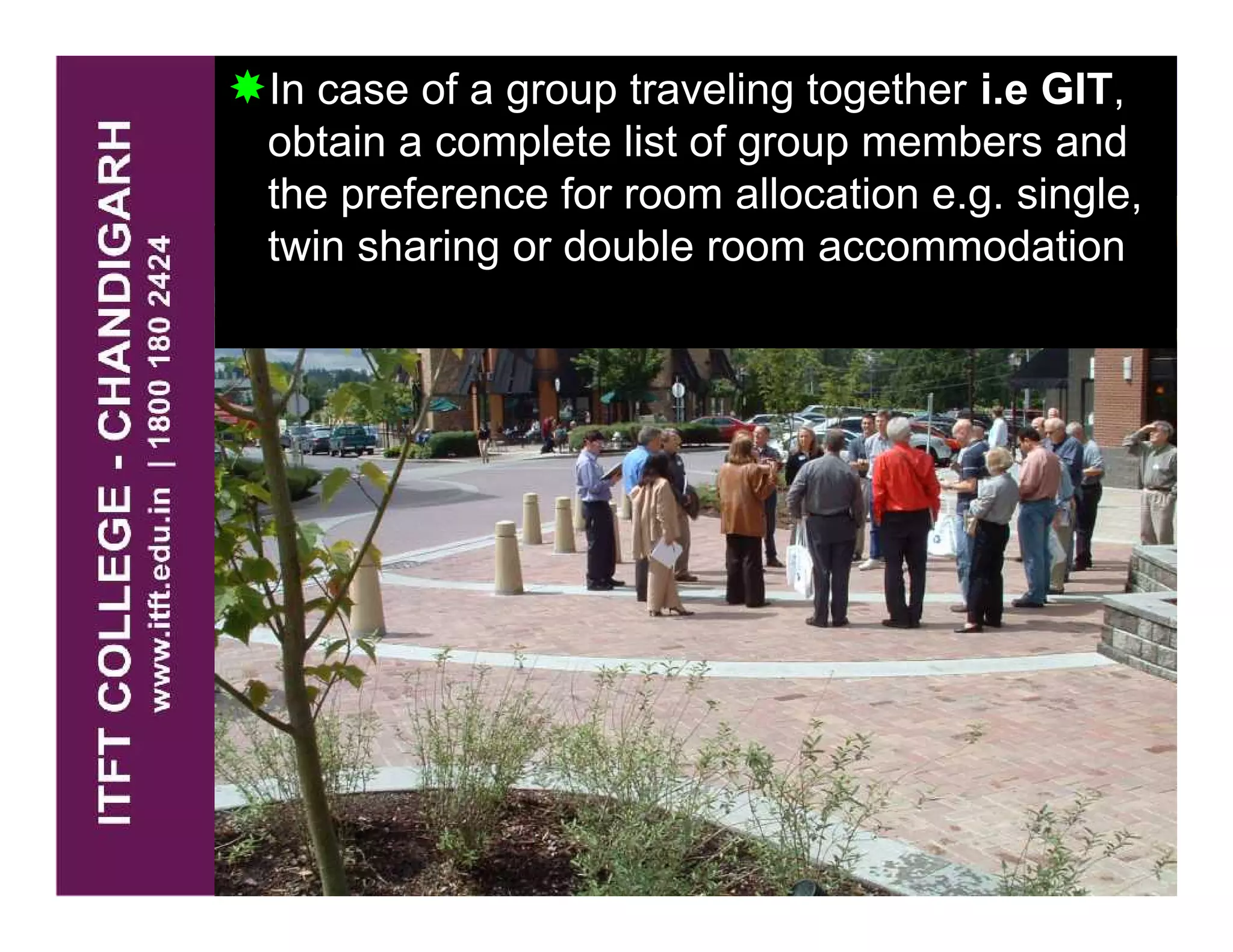
ļ‚­In case of a group traveling together i.e GIT,
obtain a complete list of group members and
the preference for room allocation e.g. single,
twin sharing or double room accommodation
ļ‚šSpecify clearly the services included in the
final cost of the tour and those which are
not included.
ļ‚šIn case of requirement of foreign language
speaking local guides, advance notice
should be taken to ensure their services on
time.
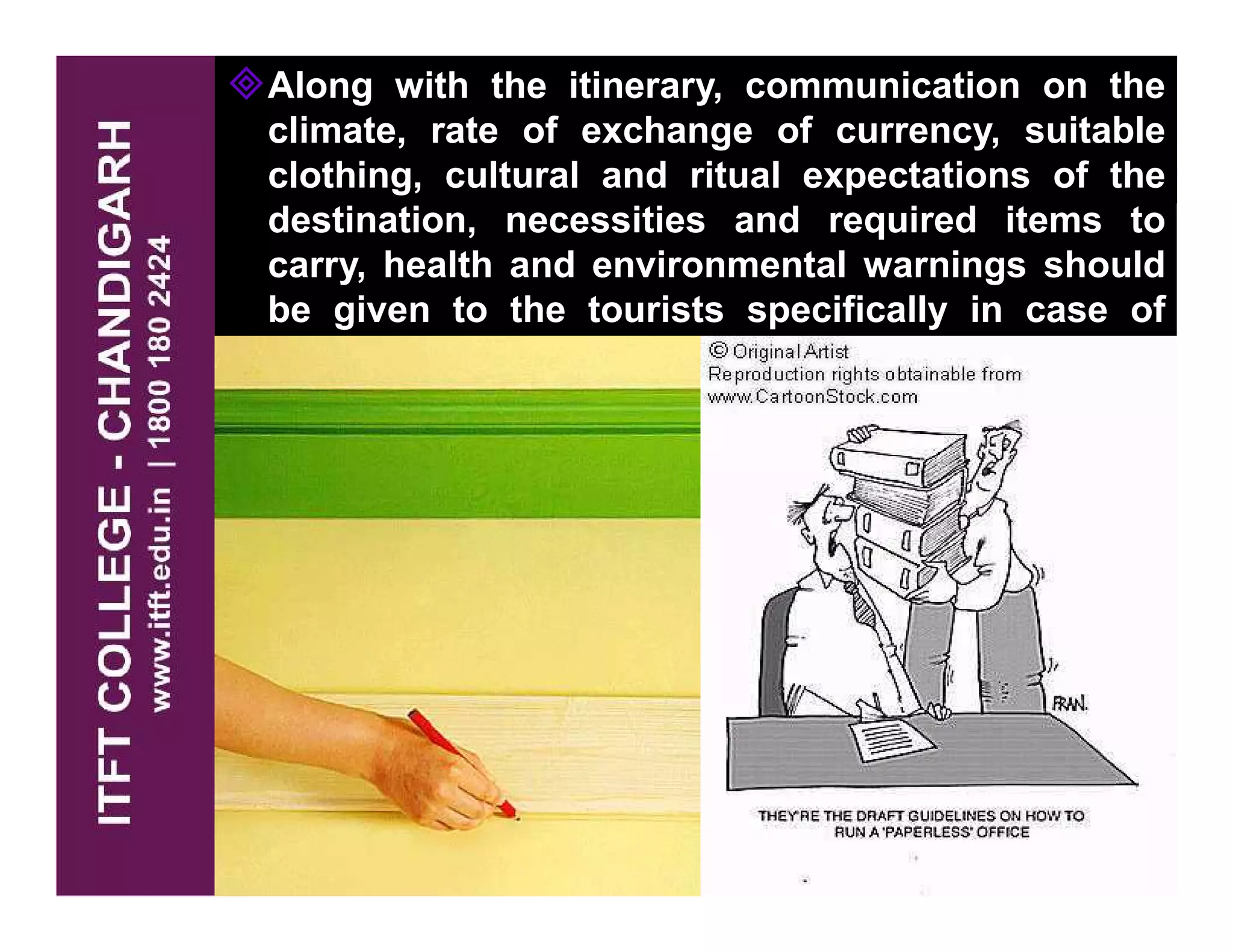
Along with the itinerary, communication on the
climate, rate of exchange of currency, suitable
clothing, cultural and ritual expectations of the
destination, necessities and required items to
carry, health and environmental warnings should
be given to the tourists specifically in case of
foreign tourists.
Factors to be Considered
while Planning an Itinerary:
 Where to go-Destination/Cities
to be Included in the Itinerary
 When to go-Period of travel,
total tour duration, Minimum
Time for visiting each City.
• Why to go-Purpose of Travel-leisure,
business, relaxation or VFR(visiting friends
and relatives).
• How to go-Mode of main/inter-City Travel
• With whom to go -No. of paxs- FIT/GIT

ITFT-Itinerary Plannig & its Factors

  • 1.
  • 2.
    • An itineraryis a written plan describing the plan of the trip day wise or on an hourly basis. It is designed to identify the origin, destination and all the en-route stopping points along with the transportation, accommodation and other services on the trip.
  • 3.
    Helping a clientselect a tour with an appropriate itinerary is an essential function for a professional travel-agent & is an effective way to gain client trust. .
  • 4.
  • 5.
    1. Tourist Itinerary Atourist’s itinerary is a basic outline of the trip that a tourist is planning. It is the starting point of the itinerary designing process.
  • 6.
    • This isthe most important type of Itinerary because this acquaints the customer, the traveling passenger as to what all will be his schedule as long as he is on the tour.
  • 7.
    2.Tour Manager’s Itinerary Thetour manager is responsible for the designing of the itinerary and in some cases even conducting it.
  • 8.
    He has acomprehensive itinerary having the minutest details relating to the tour like the tour arrangements, tour formalities and contact persons at the destinations and attractions.
  • 9.
    3. Tour Escort’sItinerary A tour escort has a detailed itinerary showing the step-by-step progress of the tour, which includes time, location, accommodation, sightseeing at the destination.
  • 10.
    • Other thanthese itineraries, a copy of the itinerary may be given to specific service providers e.g. the coach providing transport, hotels organizing sightseeing, etc.
  • 11.
    Factors to bekept in mind while Planning an Itinerary •
  • 12.
    ļ‚šAn itinerary hasto be designed based on the kind of trip one undertakes. Itinerary planning is a creative exercise and is tailored entirely to meet the needs of groups of individuals. Each set of travelers have their own specific requirements.
  • 13.
    Adequate time shouldbe allowed for sightseeing / excursions at each attraction and destination. Always ensure that the time taken while traveling does not exceed the time spent at a destination.
  • 14.
    ₪Reducing the numberof destinations to be visited if the time available is less or an optional mode of transport can be chosen which saves upon time.
  • 15.
    Other than the timeallocated to the attractions at a destination, some time should also be given to the client for his own recreation like shopping and exploration unless the services of the guide are requested at all times.
  • 16.
    ļ‚­The choice ofhotels, meal plan and transport would depend on the paying capacity, interests and the number of clients in the group.
  • 17.
    ļ‚„ Back trackingshould be avoided. Therefore, the routings should be given a special consideration while planning an itinerary. The itinerary program should also not be over structured.
  • 18.
    į¾³ Optional excursionsshould be offered during the period of the tour programme as well as pre and post tour to increase the earnings and enhance the value of the tour for the group members.
  • 19.
    — Since check-inand check-out timings in all hotels in India is generally 12:00 noon, hotel accommodation should be booked keeping in mind the arrival and departure timings of the clients especially in those cases where the timing of the transport means is fixed and cannot be altered.
  • 20.
    ļƒ–While planning atour programme, include any festivals or cultural events taking place during this period. These attractions would add to the attraction of the tour package.
  • 21.
    ļ‚­Meal plan mayor may not be included in the room tariff. This would depend on the schedule of the client.
  • 22.
    ļ‚­In case ofa group traveling together i.e GIT, obtain a complete list of group members and the preference for room allocation e.g. single, twin sharing or double room accommodation
  • 23.
    ļ‚šSpecify clearly theservices included in the final cost of the tour and those which are not included.
  • 24.
    ļ‚šIn case ofrequirement of foreign language speaking local guides, advance notice should be taken to ensure their services on time.
  • 25.
    Along with theitinerary, communication on the climate, rate of exchange of currency, suitable clothing, cultural and ritual expectations of the destination, necessities and required items to carry, health and environmental warnings should be given to the tourists specifically in case of foreign tourists.
  • 26.
    Factors to beConsidered while Planning an Itinerary:
  • 27.
     Where togo-Destination/Cities to be Included in the Itinerary  When to go-Period of travel, total tour duration, Minimum Time for visiting each City.
  • 28.
    • Why togo-Purpose of Travel-leisure, business, relaxation or VFR(visiting friends and relatives). • How to go-Mode of main/inter-City Travel • With whom to go -No. of paxs- FIT/GIT