Chapter One: Introduction
1.1.Definition of organizational Behavior
Reminding section
What is management?
1. management functions
A. Planning : is the process of determining
an organization's desired future position and
the best means of getting there.
Conti…
B. Organizing: is the process of designing jobs,
grouping jobs into units, and establishing
patterns of authority between jobs and units.
C. *Leading: is the process of getting the
organization’s members to work together
toward the organization's goals.
D. Controlling: is the process of monitoring and
correcting the actions of the organization and
its members to keep them directed towards
their goals.
continued
2. Managerial Roles
Category Role Example
*Interpersonal Figurehead Attend employee
retirement ceremony
Leader Encourage workers to
increase productivity
Liaison coordinate activities of
two committees
continued
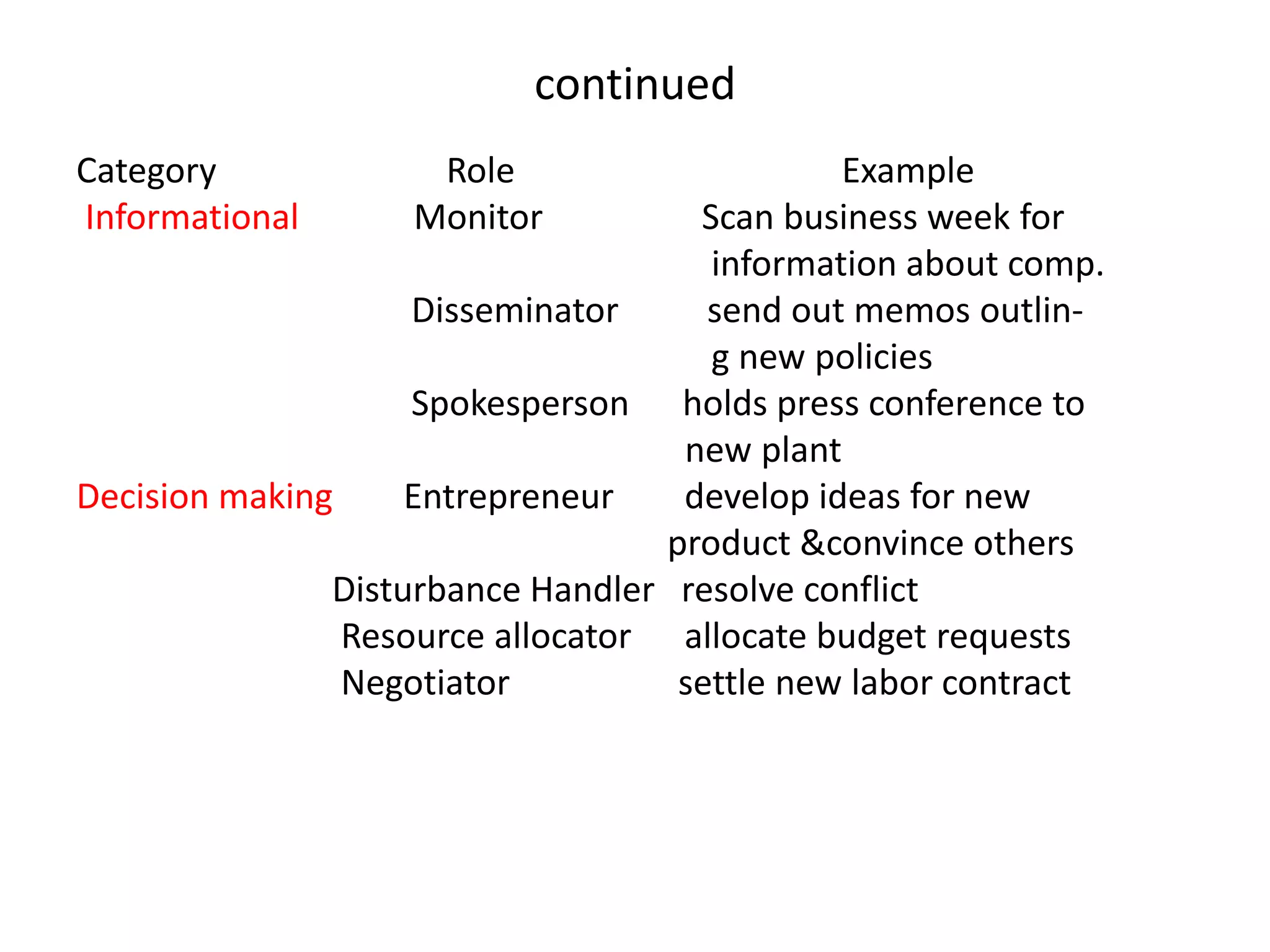
Category Role Example
Informational Monitor Scan business week for
information about comp.
Disseminator send out memos outlin-
g new policies
Spokesperson holds press conference to
new plant
Decision making Entrepreneur develop ideas for new
product &convince others
Disturbance Handler resolve conflict
Resource allocator allocate budget requests
Negotiator settle new labor contract
continued
3. Management Skills
A. Technical skill: the ability to apply
specialized knowledge or expertise
B. *Human Skill: the ability to work with,
understand and motivate others both
individually and in groups.
C. Conceptual skill: mental ability to analyze
and diagnose complex situations.
Definition of Organizational Behavior
 What is OB?
 OB is afield of study that investigates the
impact that individuals, groups &structure
have on behavior within an organization for
the purpose of applying such knowledge
towards improving an organization’s
effectiveness.
continued
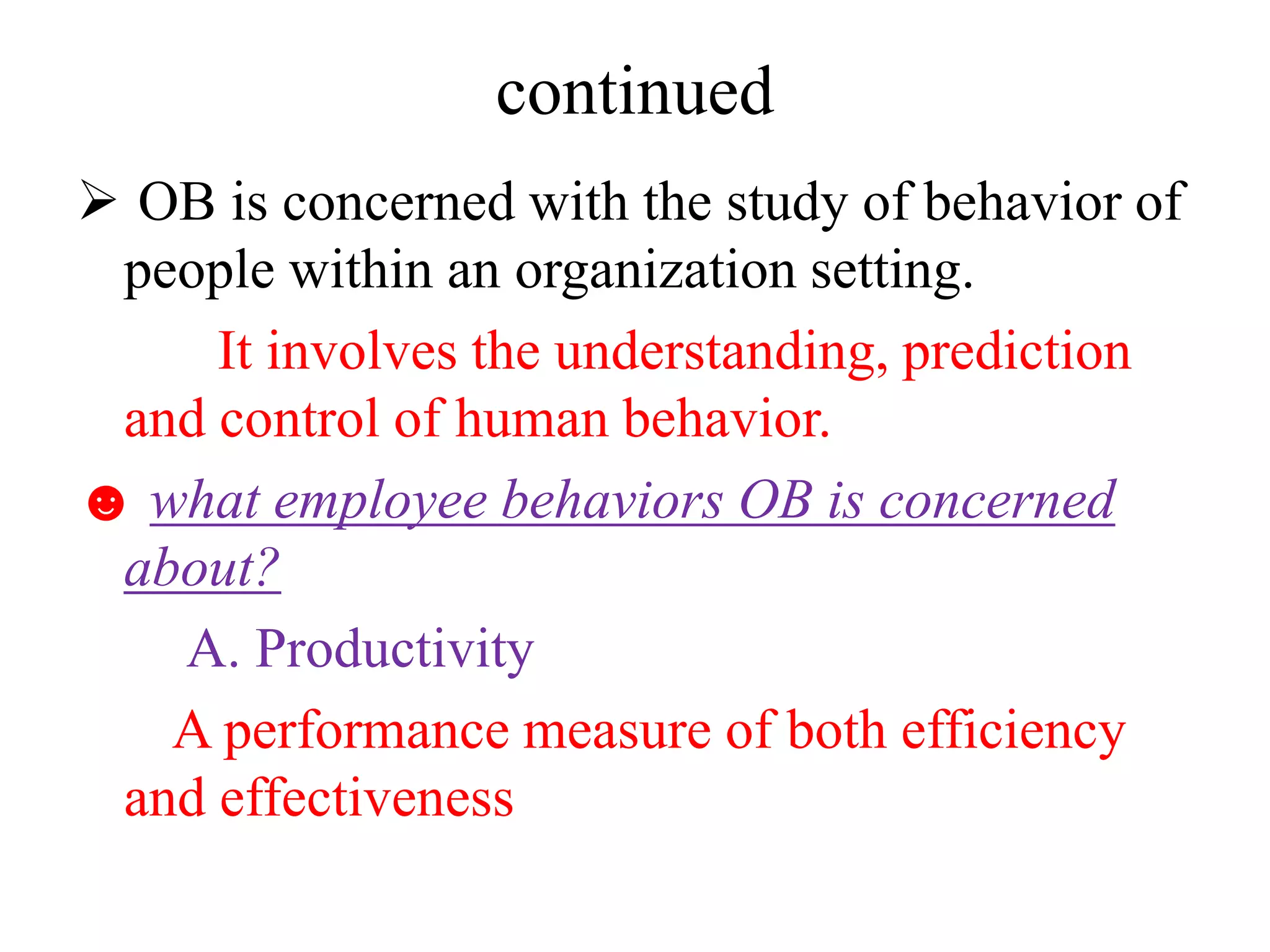
 OB is concerned with the study of behavior of
people within an organization setting.
It involves the understanding, prediction
and control of human behavior.
☻ what employee behaviors OB is concerned
about?
A. Productivity
A performance measure of both efficiency
and effectiveness
continued
B. Absenteeism
failure to report to work.
C. Turnover
the voluntary and involuntary permanent
withdrawal from an organization
D. Job Satisfaction
An employee’s general attitude toward his or her job
E. Organizational Citizenship Behavior
Discretionary behavior that is not part of an
employee’s formal job requirement but which
promotes the effective functioning of the organization.
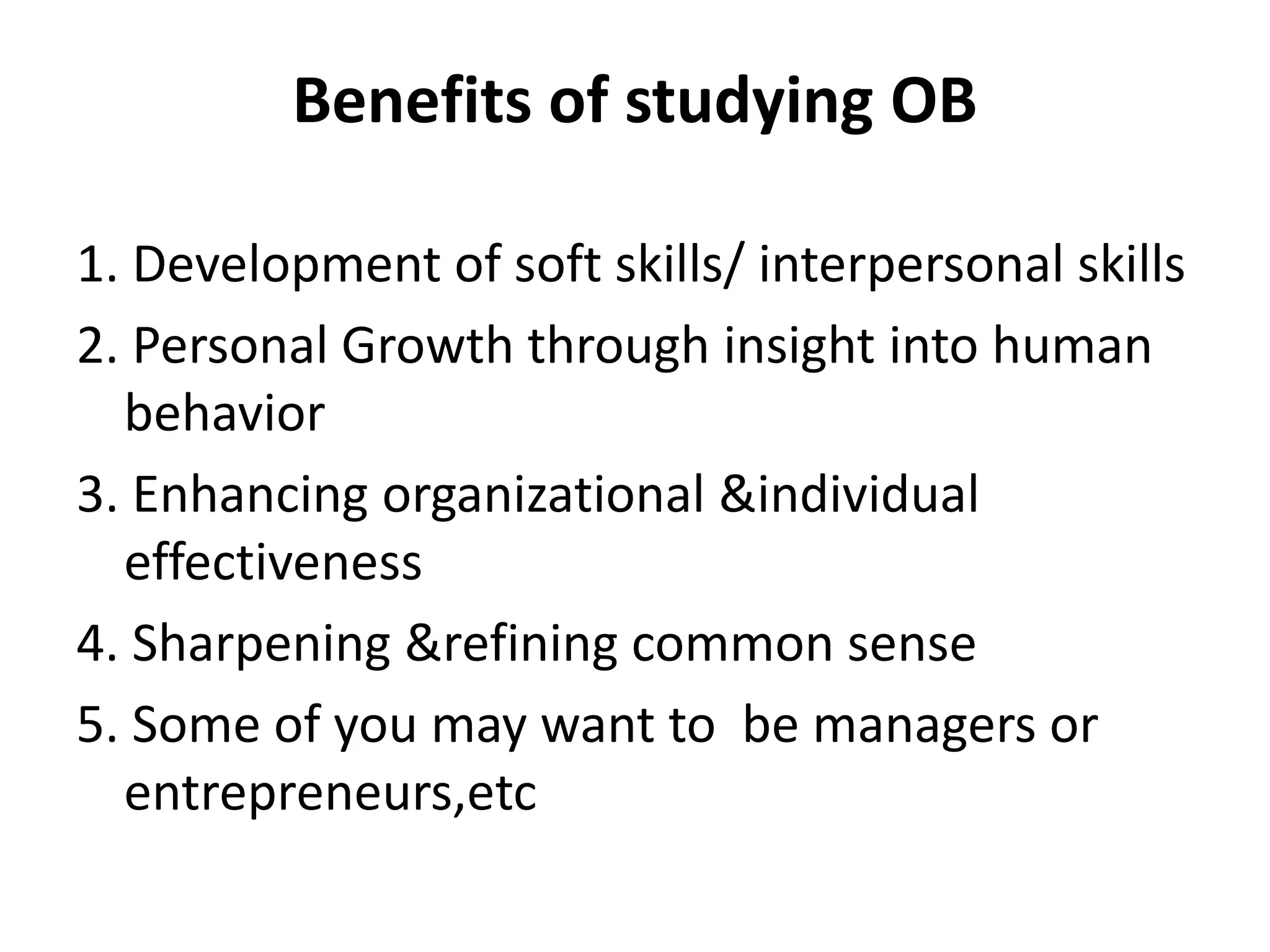
Benefits of studying OB
1. Development of soft skills/ interpersonal skills
2. Personal Growth through insight into human
behavior
3. Enhancing organizational &individual
effectiveness
4. Sharpening &refining common sense
5. Some of you may want to be managers or
entrepreneurs,etc
Disciplines /Behavioral sciences/ contributing
OB
 OB is multidisciplinary field
It has got its identity from the contribution of a number of
behavioral disciplines:
A. Psychology
Is the science that seeks to measure, explain &sometimes
change the behavior of humans & other animals
knowledge about
learning,perception,emotions,training,leadership,motivation,
etc at individual level is acquired from psychology
B. Anthropology
it is a study of society to learn about human beings &their activities.
knowledge about culture, values, attitude, environment is
result of anthropologists
continued
C. Political Science
the study of the behavior of individuals
&groups within a political environment.
topics like conflict, allocation of power,
power manipulation for self interest, etc
D. Sociology
it is the study of people in relation to their
fellow human beings
Group dynamics, design of work teams,etc are
from sociology
The End of the chapter!!!

Chapter 1.ppt

  • 1.
    Chapter One: Introduction 1.1.Definitionof organizational Behavior Reminding section What is management? 1. management functions A. Planning : is the process of determining an organization's desired future position and the best means of getting there.
  • 2.
    Conti… B. Organizing: isthe process of designing jobs, grouping jobs into units, and establishing patterns of authority between jobs and units. C. *Leading: is the process of getting the organization’s members to work together toward the organization's goals. D. Controlling: is the process of monitoring and correcting the actions of the organization and its members to keep them directed towards their goals.
  • 3.
    continued 2. Managerial Roles CategoryRole Example *Interpersonal Figurehead Attend employee retirement ceremony Leader Encourage workers to increase productivity Liaison coordinate activities of two committees
  • 4.
    continued Category Role Example InformationalMonitor Scan business week for information about comp. Disseminator send out memos outlin- g new policies Spokesperson holds press conference to new plant Decision making Entrepreneur develop ideas for new product &convince others Disturbance Handler resolve conflict Resource allocator allocate budget requests Negotiator settle new labor contract
  • 5.
    continued 3. Management Skills A.Technical skill: the ability to apply specialized knowledge or expertise B. *Human Skill: the ability to work with, understand and motivate others both individually and in groups. C. Conceptual skill: mental ability to analyze and diagnose complex situations.
  • 6.
    Definition of OrganizationalBehavior  What is OB?  OB is afield of study that investigates the impact that individuals, groups &structure have on behavior within an organization for the purpose of applying such knowledge towards improving an organization’s effectiveness.
  • 7.
    continued  OB isconcerned with the study of behavior of people within an organization setting. It involves the understanding, prediction and control of human behavior. ☻ what employee behaviors OB is concerned about? A. Productivity A performance measure of both efficiency and effectiveness
  • 8.
    continued B. Absenteeism failure toreport to work. C. Turnover the voluntary and involuntary permanent withdrawal from an organization D. Job Satisfaction An employee’s general attitude toward his or her job E. Organizational Citizenship Behavior Discretionary behavior that is not part of an employee’s formal job requirement but which promotes the effective functioning of the organization.
  • 9.
    Benefits of studyingOB 1. Development of soft skills/ interpersonal skills 2. Personal Growth through insight into human behavior 3. Enhancing organizational &individual effectiveness 4. Sharpening &refining common sense 5. Some of you may want to be managers or entrepreneurs,etc
  • 10.
    Disciplines /Behavioral sciences/contributing OB  OB is multidisciplinary field It has got its identity from the contribution of a number of behavioral disciplines: A. Psychology Is the science that seeks to measure, explain &sometimes change the behavior of humans & other animals knowledge about learning,perception,emotions,training,leadership,motivation, etc at individual level is acquired from psychology B. Anthropology it is a study of society to learn about human beings &their activities. knowledge about culture, values, attitude, environment is result of anthropologists
  • 11.
    continued C. Political Science thestudy of the behavior of individuals &groups within a political environment. topics like conflict, allocation of power, power manipulation for self interest, etc D. Sociology it is the study of people in relation to their fellow human beings Group dynamics, design of work teams,etc are from sociology
  • 12.
    The End ofthe chapter!!!