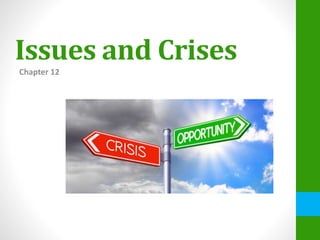
Issues and Crises
Chapter 12
Key learning outcomes
• Analyze responses ranging from advocacy to accommodation
in public relations conflict cases.
• Identify the stages in the issues lifecycle.
• Describe how issues management can prevent or lessen the
impact of crises.
• Discuss how traditional media, social media and offline word
of mouth interact in the spread of crisis information.
• Assess competing values in ethical conflicts of interest in the
context of public relations issues and crises.
Kelleher,PublicRelations,1e
OxfordUniversityPress
2
Managing conflict
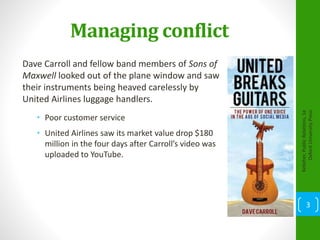
Dave Carroll and fellow band members of Sons of
Maxwell looked out of the plane window and saw
their instruments being heaved carelessly by
United Airlines luggage handlers.
• Poor customer service
• United Airlines saw its market value drop $180
million in the four days after Carroll’s video was
uploaded to YouTube.
Kelleher,PublicRelations,1e
OxfordUniversityPress
3
Managing conflict
Contingency theory suggests that the best course of action
in any situation depends on the specifics of the situation.
Kelleher,PublicRelations,1e
OxfordUniversityPress
4
In conflict, the action or communication tactic that a
public relations person chooses depends on factors
internal and external to the organization.
Case Study
Is the customeralways right?
. . . A big winfor Little Italy
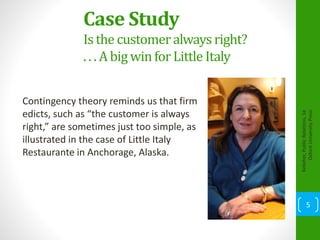
Contingency theory reminds us that firm
edicts, such as “the customer is always
right,” are sometimes just too simple, as
illustrated in the case of Little Italy
Restaurante in Anchorage, Alaska.
Kelleher,PublicRelations,1e
OxfordUniversityPress
5
Managing issues
Proactive monitoring and management to prevent crises
Stages in the issue lifecycle:
1. Early/potential: when a few people begin to become
aware of possible problems
2. Emerging: when more people begin to notice and
express concern
3. Current/crisis: when the negative impact on an
organization becomes public and pressure on the
organization builds
4. Dormant: when the organization has no choice but to
accept the long-term consequences
Kelleher,PublicRelations,1e
OxfordUniversityPress
6
Case Study
The Issue Lifecycle
of Volkswagen’s Dieselgate
Volkswagen’s diesel emissions scandal, dubbed “dieselgate” by some
and “the diesel dupe” by others, provides an example of how an
issue can grow into a full-blown crisis with major consequences.
• Early/potential
• Emerging
• Current/Crisis
• Dormant
Kelleher,PublicRelations,1e
OxfordUniversityPress
7
Proactive issues
management
Regester and Larkin’s seven-step process:
1. Monitoring
2. Identification
3. Prioritization
4. Analysis
5. Strategy decision
6. Implementation
7. Evaluation
Kelleher,PublicRelations,1e
OxfordUniversityPress
8
Monitoring
What is being said about your organization offline, on social media,
and in traditional media?
One example of systematic monitoring is the practice of responsible
supply chain management:
• Monitor all stages of production and distribution.
• Ensure that working conditions are safe.
• Ensure wages are fair.
• Ensure high ethical standards of social and
environmental responsibility are maintained.
Kelleher,PublicRelations,1e
OxfordUniversityPress
9
Identification
Once you notice an issue, you’ll need to be able to describe it
and determine if it is something significant or just a random blip
on the radar.
• Think about financial data. Company stock values rise
and fall every day. It may not mean that the
organization faces a crisis.
• Even in a small organization, you have to assess the
environment and look for patterns.
Kelleher,PublicRelations,1e
OxfordUniversityPress
10
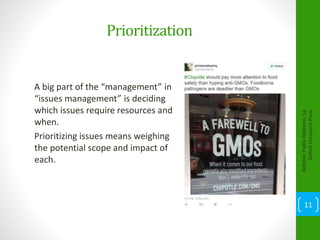
Prioritization
A big part of the “management” in
“issues management” is deciding
which issues require resources and
when.
Prioritizing issues means weighing
the potential scope and impact of
each.
Kelleher,PublicRelations,1e
OxfordUniversityPress
11
Analysis
Analysis should determine how issues might affect the
organization and its publics.
Evaluate these two different scenarios:
• Chipotle
• Volkswagen
Analysis should include all sorts of publics besides customers.
• How, specifically, will employees be affected?
• Will they have to work longer hours? Take less pay?
• Will they face public criticism?
Kelleher,PublicRelations,1e
OxfordUniversityPress
12
Strategic planning
Develop communication and relationship management
strategies.
• The strategic action response to the issue
• The messages that will be communicated in
conjunction with that response
For example, on the same day that the CDC released one of its
key reports about the E. coli outbreak, Chipotle announced new
food-safety procedures that it had developed, including improved
programs for training employees for safer food handling.
Kelleher,PublicRelations,1e
OxfordUniversityPress
13
Implementation
Implementation includes both action and
communication.
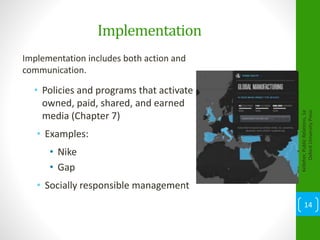
• Policies and programs that activate
owned, paid, shared, and earned
media (Chapter 7)
• Examples:
• Nike
• Gap
• Socially responsible management
Kelleher,PublicRelations,1e
OxfordUniversityPress
14
Evaluation
Assess the results, just as you would with any other public
relations strategy (Chapter 8).
How can you measure beneficial outcomes?
• Work with clearly articulated goals and objectives
from your strategy.
Many of the most important results of issues management
stem from the crises prevented or negative outcomes averted.
Kelleher,PublicRelations,1e
OxfordUniversityPress
15
Crisis types
How organizations respond to crises should depend on the
degree to which people attribute responsibility for the crisis to
the organization.
Public relations scholars Coombs and Holladay have developed
one of the most well-researched and practical theories for crisis
management, called situational crisis communication theory
(SCCT).
Kelleher,PublicRelations,1e
OxfordUniversityPress
16
Crisis groups
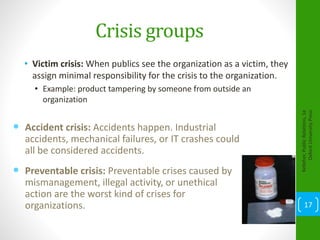
• Victim crisis: When publics see the organization as a victim, they
assign minimal responsibility for the crisis to the organization.
• Example: product tampering by someone from outside an
organization
Kelleher,PublicRelations,1e
OxfordUniversityPress
17
 Accident crisis: Accidents happen. Industrial
accidents, mechanical failures, or IT crashes could
all be considered accidents.
 Preventable crisis: Preventable crises caused by
mismanagement, illegal activity, or unethical
action are the worst kind of crises for
organizations.
Crisis response strategies
SCCT recommends selecting a response strategy appropriate
to the situation.
Coombs and Holladay’s crisis response strategies include the
following:
• Deny: efforts to absolve the organization of
responsibility
• Diminish: acknowledging the existence of a crisis,
but minimizing the organization’s responsibility for
it or any bad intentions
Kelleher,PublicRelations,1e
OxfordUniversityPress
18
Crisis response strategies
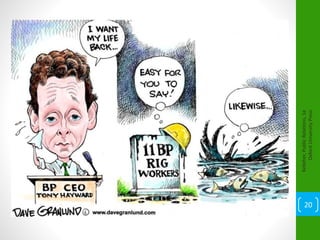
Rebuild: accepting responsibility and asking for
forgiveness or understanding
Reinforce: reminding people of all the good things your
organization has done in the past
• Bolstering
• Ingratiation
Kelleher,PublicRelations,1e
OxfordUniversityPress
19
Kelleher,PublicRelations,1e
OxfordUniversityPress
20
Social media and crises
Handling the rapid spread of information and the constant
demand for that information is a challenge in crisis
management.
Social media reduces the “golden hours,” the first few
hours after a crisis breaks, to minutes or even seconds.
Kelleher,PublicRelations,1e
OxfordUniversityPress
21
Social media and crises
The SMCC identifies three types of social media users for public
relations practitioners to pay attention to during a crisis:
• Influential social media creators are among the first to
identify crises online and then post about them.
• Social media followers receive their information from the
influential creators.
• Social media inactives receive information from traditional
media and offline word of mouth.
Kelleher,PublicRelations,1e
OxfordUniversityPress
22
Ethics
Conflicts of interest
PR professionals can face a challenge when balancing conflicting
loyalties among various publics.
• Managing conflicts to reduce the potential of crisis
• Negotiating ethical dilemmas
Know where to begin.
• Where does/should the PR professional stand?
• Where does the conflict originate?
Kelleher,PublicRelations,1e
OxfordUniversityPress
23
Summary
• Analyze responses ranging from advocacy to accommodation
in public relations conflict cases.
• Identify the stages in the issues lifecycle.
• Describe how issues management can prevent or lessen the
impact of crises.
• Discuss how traditional media, social media, and offline word
of mouth interact in the spread of crisis information.
• Assess competing values in ethical conflicts of interest in the
context of public relations issues and crises.
Kelleher,PublicRelations,1e
OxfordUniversityPress
24

Chapter 12 - Issues and Crises

  • 1.
  • 2.
    Key learning outcomes •Analyze responses ranging from advocacy to accommodation in public relations conflict cases. • Identify the stages in the issues lifecycle. • Describe how issues management can prevent or lessen the impact of crises. • Discuss how traditional media, social media and offline word of mouth interact in the spread of crisis information. • Assess competing values in ethical conflicts of interest in the context of public relations issues and crises. Kelleher,PublicRelations,1e OxfordUniversityPress 2
  • 3.
    Managing conflict Dave Carrolland fellow band members of Sons of Maxwell looked out of the plane window and saw their instruments being heaved carelessly by United Airlines luggage handlers. • Poor customer service • United Airlines saw its market value drop $180 million in the four days after Carroll’s video was uploaded to YouTube. Kelleher,PublicRelations,1e OxfordUniversityPress 3
  • 4.
    Managing conflict Contingency theorysuggests that the best course of action in any situation depends on the specifics of the situation. Kelleher,PublicRelations,1e OxfordUniversityPress 4 In conflict, the action or communication tactic that a public relations person chooses depends on factors internal and external to the organization.
  • 5.
    Case Study Is thecustomeralways right? . . . A big winfor Little Italy Contingency theory reminds us that firm edicts, such as “the customer is always right,” are sometimes just too simple, as illustrated in the case of Little Italy Restaurante in Anchorage, Alaska. Kelleher,PublicRelations,1e OxfordUniversityPress 5
  • 6.
    Managing issues Proactive monitoringand management to prevent crises Stages in the issue lifecycle: 1. Early/potential: when a few people begin to become aware of possible problems 2. Emerging: when more people begin to notice and express concern 3. Current/crisis: when the negative impact on an organization becomes public and pressure on the organization builds 4. Dormant: when the organization has no choice but to accept the long-term consequences Kelleher,PublicRelations,1e OxfordUniversityPress 6
  • 7.
    Case Study The IssueLifecycle of Volkswagen’s Dieselgate Volkswagen’s diesel emissions scandal, dubbed “dieselgate” by some and “the diesel dupe” by others, provides an example of how an issue can grow into a full-blown crisis with major consequences. • Early/potential • Emerging • Current/Crisis • Dormant Kelleher,PublicRelations,1e OxfordUniversityPress 7
  • 8.
    Proactive issues management Regester andLarkin’s seven-step process: 1. Monitoring 2. Identification 3. Prioritization 4. Analysis 5. Strategy decision 6. Implementation 7. Evaluation Kelleher,PublicRelations,1e OxfordUniversityPress 8
  • 9.
    Monitoring What is beingsaid about your organization offline, on social media, and in traditional media? One example of systematic monitoring is the practice of responsible supply chain management: • Monitor all stages of production and distribution. • Ensure that working conditions are safe. • Ensure wages are fair. • Ensure high ethical standards of social and environmental responsibility are maintained. Kelleher,PublicRelations,1e OxfordUniversityPress 9
  • 10.
    Identification Once you noticean issue, you’ll need to be able to describe it and determine if it is something significant or just a random blip on the radar. • Think about financial data. Company stock values rise and fall every day. It may not mean that the organization faces a crisis. • Even in a small organization, you have to assess the environment and look for patterns. Kelleher,PublicRelations,1e OxfordUniversityPress 10
  • 11.
    Prioritization A big partof the “management” in “issues management” is deciding which issues require resources and when. Prioritizing issues means weighing the potential scope and impact of each. Kelleher,PublicRelations,1e OxfordUniversityPress 11
  • 12.
    Analysis Analysis should determinehow issues might affect the organization and its publics. Evaluate these two different scenarios: • Chipotle • Volkswagen Analysis should include all sorts of publics besides customers. • How, specifically, will employees be affected? • Will they have to work longer hours? Take less pay? • Will they face public criticism? Kelleher,PublicRelations,1e OxfordUniversityPress 12
  • 13.
    Strategic planning Develop communicationand relationship management strategies. • The strategic action response to the issue • The messages that will be communicated in conjunction with that response For example, on the same day that the CDC released one of its key reports about the E. coli outbreak, Chipotle announced new food-safety procedures that it had developed, including improved programs for training employees for safer food handling. Kelleher,PublicRelations,1e OxfordUniversityPress 13
  • 14.
    Implementation Implementation includes bothaction and communication. • Policies and programs that activate owned, paid, shared, and earned media (Chapter 7) • Examples: • Nike • Gap • Socially responsible management Kelleher,PublicRelations,1e OxfordUniversityPress 14
  • 15.
    Evaluation Assess the results,just as you would with any other public relations strategy (Chapter 8). How can you measure beneficial outcomes? • Work with clearly articulated goals and objectives from your strategy. Many of the most important results of issues management stem from the crises prevented or negative outcomes averted. Kelleher,PublicRelations,1e OxfordUniversityPress 15
  • 16.
    Crisis types How organizationsrespond to crises should depend on the degree to which people attribute responsibility for the crisis to the organization. Public relations scholars Coombs and Holladay have developed one of the most well-researched and practical theories for crisis management, called situational crisis communication theory (SCCT). Kelleher,PublicRelations,1e OxfordUniversityPress 16
  • 17.
    Crisis groups • Victimcrisis: When publics see the organization as a victim, they assign minimal responsibility for the crisis to the organization. • Example: product tampering by someone from outside an organization Kelleher,PublicRelations,1e OxfordUniversityPress 17  Accident crisis: Accidents happen. Industrial accidents, mechanical failures, or IT crashes could all be considered accidents.  Preventable crisis: Preventable crises caused by mismanagement, illegal activity, or unethical action are the worst kind of crises for organizations.
  • 18.
    Crisis response strategies SCCTrecommends selecting a response strategy appropriate to the situation. Coombs and Holladay’s crisis response strategies include the following: • Deny: efforts to absolve the organization of responsibility • Diminish: acknowledging the existence of a crisis, but minimizing the organization’s responsibility for it or any bad intentions Kelleher,PublicRelations,1e OxfordUniversityPress 18
  • 19.
    Crisis response strategies Rebuild:accepting responsibility and asking for forgiveness or understanding Reinforce: reminding people of all the good things your organization has done in the past • Bolstering • Ingratiation Kelleher,PublicRelations,1e OxfordUniversityPress 19
  • 20.
  • 21.
    Social media andcrises Handling the rapid spread of information and the constant demand for that information is a challenge in crisis management. Social media reduces the “golden hours,” the first few hours after a crisis breaks, to minutes or even seconds. Kelleher,PublicRelations,1e OxfordUniversityPress 21
  • 22.
    Social media andcrises The SMCC identifies three types of social media users for public relations practitioners to pay attention to during a crisis: • Influential social media creators are among the first to identify crises online and then post about them. • Social media followers receive their information from the influential creators. • Social media inactives receive information from traditional media and offline word of mouth. Kelleher,PublicRelations,1e OxfordUniversityPress 22
  • 23.
    Ethics Conflicts of interest PRprofessionals can face a challenge when balancing conflicting loyalties among various publics. • Managing conflicts to reduce the potential of crisis • Negotiating ethical dilemmas Know where to begin. • Where does/should the PR professional stand? • Where does the conflict originate? Kelleher,PublicRelations,1e OxfordUniversityPress 23
  • 24.
    Summary • Analyze responsesranging from advocacy to accommodation in public relations conflict cases. • Identify the stages in the issues lifecycle. • Describe how issues management can prevent or lessen the impact of crises. • Discuss how traditional media, social media, and offline word of mouth interact in the spread of crisis information. • Assess competing values in ethical conflicts of interest in the context of public relations issues and crises. Kelleher,PublicRelations,1e OxfordUniversityPress 24