5th edition
John V Pavlik & Shawn McIntosh
Chapter 6:
Interactive Media: The Internet, Video Games,
and Augmented Reality
INTERACTIVITY DEFINED
Interactivity: Two or more parties
communicating through an ongoing
give-and-take of messages
Elements of interactivity:
 Dialog
 Dialog affects feedback/content
 Audience control
INTERACTIVE MEDIA VS. MASS MEDIA
Interactive media:
encourages users to learn
and explore
changes our concepts of
narrative and what makes a
story
Traditional media
 Control in hands of producers
HISTORICAL DEVELOPMENT OF USER
INTERFACES
Television interfaces
Intuitive interfaces
Keyboards
Computer mouse
Touch screens
Natural input methods
Graphical user interfaces
HISTORICAL DEVELOPMENT OF
THE INTERNET AND WORLD WIDE
WEB
 Internet protocol
 World Wide Web
 Graphical web
browsers
 Broadband
 Distribution dynamics
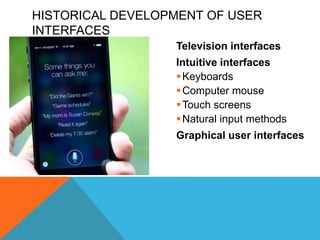
VIDEO GAMES
Played on computers or other electronic devices
with graphic capabilities, video games—whose
content is often borrowed freely from movies,
television shows, and other areas of pop culture—
demonstrate convergence in action
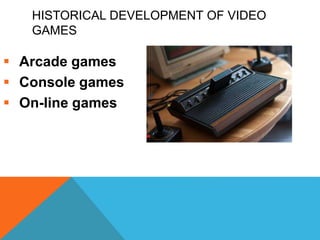
HISTORICAL DEVELOPMENT OF VIDEO
GAMES
 Arcade games
 Console games
 On-line games
TYPES OF VIDEO GAMES
 Popular genres: Sports,
action, racing, role-playing,
simulation, and shooter
 MMOGs: Massively multiplayer
online games
 MMORPGs: Massively
multiplayer online role-playing
games
VIDEO GAME INDUSTRY
 Big-name make up
46% of the total
market
 Most games from
subsidiaries of
large game
publisher
companies
TRENDS IN VIDEO GAMES
 Players of early
console games have
grown up – and
continue to play
 Games are released on
multiple platforms
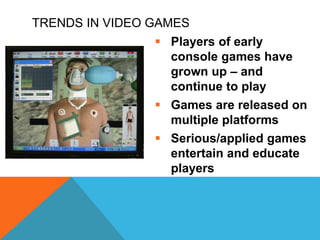
 Serious/applied games
entertain and educate
players
GAMIFICATION
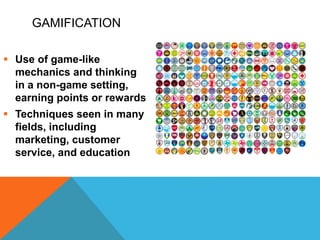
 Use of game-like
mechanics and thinking
in a non-game setting,
earning points or rewards
 Techniques seen in many
fields, including
marketing, customer
service, and education
AUGMENTED REALITY
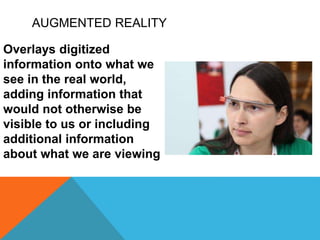
Overlays digitized
information onto what we
see in the real world,
adding information that
would not otherwise be
visible to us or including
additional information
about what we are viewing
ETHICS OF INTERACTIVE MEDIA
 Requires faith in others; users must
trust those they deal with on the Web
 Advertising influence
 Violence in video games
 Behavioral targeting

Chapter 6 - Interactive Media

  • 1.
    5th edition John VPavlik & Shawn McIntosh Chapter 6: Interactive Media: The Internet, Video Games, and Augmented Reality
  • 2.
    INTERACTIVITY DEFINED Interactivity: Twoor more parties communicating through an ongoing give-and-take of messages Elements of interactivity:  Dialog  Dialog affects feedback/content  Audience control
  • 3.
    INTERACTIVE MEDIA VS.MASS MEDIA Interactive media: encourages users to learn and explore changes our concepts of narrative and what makes a story Traditional media  Control in hands of producers
  • 4.
    HISTORICAL DEVELOPMENT OFUSER INTERFACES Television interfaces Intuitive interfaces Keyboards Computer mouse Touch screens Natural input methods Graphical user interfaces
  • 5.
    HISTORICAL DEVELOPMENT OF THEINTERNET AND WORLD WIDE WEB  Internet protocol  World Wide Web  Graphical web browsers  Broadband  Distribution dynamics
  • 6.
    VIDEO GAMES Played oncomputers or other electronic devices with graphic capabilities, video games—whose content is often borrowed freely from movies, television shows, and other areas of pop culture— demonstrate convergence in action
  • 7.
    HISTORICAL DEVELOPMENT OFVIDEO GAMES  Arcade games  Console games  On-line games
  • 8.
    TYPES OF VIDEOGAMES  Popular genres: Sports, action, racing, role-playing, simulation, and shooter  MMOGs: Massively multiplayer online games  MMORPGs: Massively multiplayer online role-playing games
  • 9.
    VIDEO GAME INDUSTRY Big-name make up 46% of the total market  Most games from subsidiaries of large game publisher companies
  • 10.
    TRENDS IN VIDEOGAMES  Players of early console games have grown up – and continue to play  Games are released on multiple platforms  Serious/applied games entertain and educate players
  • 11.
    GAMIFICATION  Use ofgame-like mechanics and thinking in a non-game setting, earning points or rewards  Techniques seen in many fields, including marketing, customer service, and education
  • 12.
    AUGMENTED REALITY Overlays digitized informationonto what we see in the real world, adding information that would not otherwise be visible to us or including additional information about what we are viewing
  • 13.
    ETHICS OF INTERACTIVEMEDIA  Requires faith in others; users must trust those they deal with on the Web  Advertising influence  Violence in video games  Behavioral targeting