Foundation of Organization Structure
Organizational Behavior
CHAPTER #10
By: Mohammad Qasim AYAZ
Lecturer, Altaqwa institute of Management Sciences
Mohammadqasimayaz@gmail.com
This Chapter includes
• Defining Organization.
• What is organizational Structure?
• Types of ORG Structure.
• line organization Structure.
• Divisional Organizational Structure.
• Project Organizational Structure.
• Matrix Organizational Structure.
• Common organizational Designs.
• Organization Culture.
• Creating an Ethical Organizational Culture.
• Creating a positive organization culture.
Defining Organization.
• An organized group of people with a particular purpose, such as a
business or government department.
• A social unit of people that is structured and managed to meet a need
or to pursue collective goals.
What is organizational Structure?
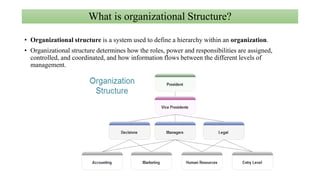
• Organizational structure is a system used to define a hierarchy within an organization.
• Organizational structure determines how the roles, power and responsibilities are assigned,
controlled, and coordinated, and how information flows between the different levels of
management.
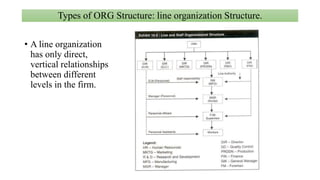
Types of ORG Structure: line organization Structure.
• A line organization
has only direct,
vertical relationships
between different
levels in the firm.
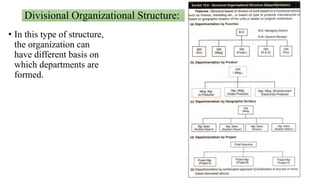
Divisional Organizational Structure:
• In this type of structure,
the organization can
have different basis on
which departments are
formed.
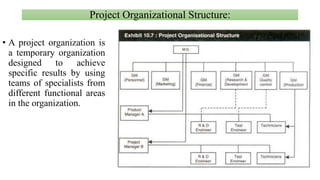
Project Organizational Structure:
• A project organization is
a temporary organization
designed to achieve
specific results by using
teams of specialists from
different functional areas
in the organization.
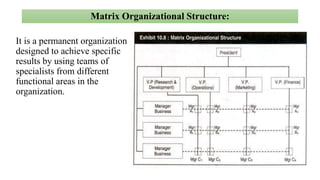
Matrix Organizational Structure:
It is a permanent organization
designed to achieve specific
results by using teams of
specialists from different
functional areas in the
organization.
Common organizational Designs.
1. Simple Structure- A simple structure is defined as a design with low departmentalization, wide
spans of control, centralized authority, and little formalization. This type of design is very common in
small start up businesses.
2. Functional Structure- A functional structure is defined as a design that groups similar or related
occupational specialties together.
3. Divisional Structure- A divisional structure is made up of separate, divisions. Within one
corporation there may be many different divisions and each division has its own goals to accomplish.
4. Team Structure- A team structure is a design in which an organization is made up of teams, and each
team works towards a common goal.
5. Matrix Structure- A matrix structure is one that assigns specialists from different functional
departments to work on one or more projects.
6. Project Structure- A project structure is an organizational structure in which employees
continuously work on projects.
7. Learning Organization - learning organization is defined as an organization that has developed the
capacity to continuously learn, adapt, and change.
Organization Culture.
Organizational culture is a system of shared norms, values, and beliefs, which
governs how people behave in organizations. These shared values have a strong
influence on the people in the organization and dictate how they dress, act, and
perform their jobs.
Organizational culture mainly deal with.
1. The ways the organization conducts its business.
2. Treats its employees.
3. The extent to which freedom is allowed in decision making.
4. Developing new ideas.
5. How power and information flow through its hierarchy.
6. How committed employees are towards collective objectives.
Creating an Ethical Organizational Culture.
1. Be a role model and be visible. Your employees look to the behavior of top
management as a model of what’s acceptable behavior in the workplace. When
senior management is observed it sends a positive message for all employees.
2. Communicate ethical expectations. Ethical uncertainties can be reduced
by creating and spreading an organizational code of ethics.
3. Offer ethics training. Set up seminars, workshops, and similar ethical training
programs.
4. Visibly reward ethical acts and punish unethical ones. Performance
appraisals of managers should include a point-by-point evaluation of how his or
her decisions measure up against the organization’s code of ethics.
5. Provide protective mechanisms. The organization needs to provide
formal mechanisms so that employees can discuss ethical dilemmas and
report unethical behavior without fear of reprimand.
Creating a positive organization culture.
1. Believing that the customer is always right.
2. Hiring the right people (those who are service-oriented)
3. Empowering employees.
4. Humbly sharing our knowledge.
5. Building a culture that supports and encourages each other to be best and task
oriented.
6. Listening and acting on feedback.

Chapter #10

  • 1.
    Foundation of OrganizationStructure Organizational Behavior CHAPTER #10 By: Mohammad Qasim AYAZ Lecturer, Altaqwa institute of Management Sciences Mohammadqasimayaz@gmail.com
  • 2.
    This Chapter includes •Defining Organization. • What is organizational Structure? • Types of ORG Structure. • line organization Structure. • Divisional Organizational Structure. • Project Organizational Structure. • Matrix Organizational Structure. • Common organizational Designs. • Organization Culture. • Creating an Ethical Organizational Culture. • Creating a positive organization culture.
  • 3.
    Defining Organization. • Anorganized group of people with a particular purpose, such as a business or government department. • A social unit of people that is structured and managed to meet a need or to pursue collective goals.
  • 4.
    What is organizationalStructure? • Organizational structure is a system used to define a hierarchy within an organization. • Organizational structure determines how the roles, power and responsibilities are assigned, controlled, and coordinated, and how information flows between the different levels of management.
  • 5.
    Types of ORGStructure: line organization Structure. • A line organization has only direct, vertical relationships between different levels in the firm.
  • 6.
    Divisional Organizational Structure: •In this type of structure, the organization can have different basis on which departments are formed.
  • 7.
    Project Organizational Structure: •A project organization is a temporary organization designed to achieve specific results by using teams of specialists from different functional areas in the organization.
  • 8.
    Matrix Organizational Structure: Itis a permanent organization designed to achieve specific results by using teams of specialists from different functional areas in the organization.
  • 9.
    Common organizational Designs. 1.Simple Structure- A simple structure is defined as a design with low departmentalization, wide spans of control, centralized authority, and little formalization. This type of design is very common in small start up businesses. 2. Functional Structure- A functional structure is defined as a design that groups similar or related occupational specialties together. 3. Divisional Structure- A divisional structure is made up of separate, divisions. Within one corporation there may be many different divisions and each division has its own goals to accomplish. 4. Team Structure- A team structure is a design in which an organization is made up of teams, and each team works towards a common goal. 5. Matrix Structure- A matrix structure is one that assigns specialists from different functional departments to work on one or more projects. 6. Project Structure- A project structure is an organizational structure in which employees continuously work on projects. 7. Learning Organization - learning organization is defined as an organization that has developed the capacity to continuously learn, adapt, and change.
  • 10.
    Organization Culture. Organizational cultureis a system of shared norms, values, and beliefs, which governs how people behave in organizations. These shared values have a strong influence on the people in the organization and dictate how they dress, act, and perform their jobs. Organizational culture mainly deal with. 1. The ways the organization conducts its business. 2. Treats its employees. 3. The extent to which freedom is allowed in decision making. 4. Developing new ideas. 5. How power and information flow through its hierarchy. 6. How committed employees are towards collective objectives.
  • 11.
    Creating an EthicalOrganizational Culture. 1. Be a role model and be visible. Your employees look to the behavior of top management as a model of what’s acceptable behavior in the workplace. When senior management is observed it sends a positive message for all employees. 2. Communicate ethical expectations. Ethical uncertainties can be reduced by creating and spreading an organizational code of ethics. 3. Offer ethics training. Set up seminars, workshops, and similar ethical training programs. 4. Visibly reward ethical acts and punish unethical ones. Performance appraisals of managers should include a point-by-point evaluation of how his or her decisions measure up against the organization’s code of ethics. 5. Provide protective mechanisms. The organization needs to provide formal mechanisms so that employees can discuss ethical dilemmas and report unethical behavior without fear of reprimand.
  • 12.
    Creating a positiveorganization culture. 1. Believing that the customer is always right. 2. Hiring the right people (those who are service-oriented) 3. Empowering employees. 4. Humbly sharing our knowledge. 5. Building a culture that supports and encourages each other to be best and task oriented. 6. Listening and acting on feedback.