CChhaapptteerr 11 
SSttuuddyy GGuuiiddee RReevviieeww
II.. VVooccaabbuullaarryy
collapsed 
âť– Letter J: To fail suddenly or completely
mosaic 
âť– Letter B: A picture made up of small pieces of tile, glass, 
or colored stones.
scribe 
âť– Letter F: A person trained to write or copy directions by 
hand.
Roman Empire 
âť– Letter G: At its height, around 200 C.E, it spanned the 
Mediterranean world and most of Europe
proverb 
âť– Letter C: A popular saying that is meant to express 
something wise or true.
empire 
âť– Letter D: A large territory in which several groups of 
people are ruled by a single leader or government
corruption 
âť– Letter H: A pattern of illegal or immoral activities by 
government officials
decline 
âť– Letter E: A slow breakdown or failure
philosophy 
âť– Letter A: The study of wisdom, knowledge, and the 
nature of reality
aqueduct 
âť– Letter I: A pipe or channel built to carry water between 
distant places
Constantine 
âť– Letter K: Roman Emperor who, in 330 C.E., moved the 
capital to Byzantium and later renamed it Constantinople
IIII.. FFaallll ooff RRoommee 
RReeaassoonnss
Social Reasons 
âť– growing corruption within the empire 
❖ decline in the spirit of citizenship (didn’t feel like “they” 
belonged in the empire.) 
âť– Emperors wasted a lot of money. 
❖ Increase in crime made the empire’s cities and roads 
unsafe.
Political Reasons 
âť– Never figured out a way to peacefully transfer political 
power to a new leader. 
❖ Rivals would often take the “throne” when an emperor 
died. 
âť– No good system of selecting a new emperor 
❖ The Praetorian Guard, the emperor’s army, would often 
pick the next emperor based on what was in it for 
them...not was best for the empire.
Economic Reasons 
❖ To pay for the large armies, Rome’s citizens had to pay 
Heavy Taxes. 
âť– Heavy taxes put many people into poverty 
âť– Trade suffered 
âť– Unemployment became a problem 
âť– Large landowners took over large estates which meant 
the small landowners were left with nothing.
Size of the Empire Reasons 
âť– The empire was too large to defend. 
âť– Roman armies could not communicate with other leaders 
in the army that may be stationed in different parts of the 
empire. 
âť– When new areas were taken over, these new citizens 
joined Rome’s army, but didn’t have the same loyalty as 
people who were born in Rome.
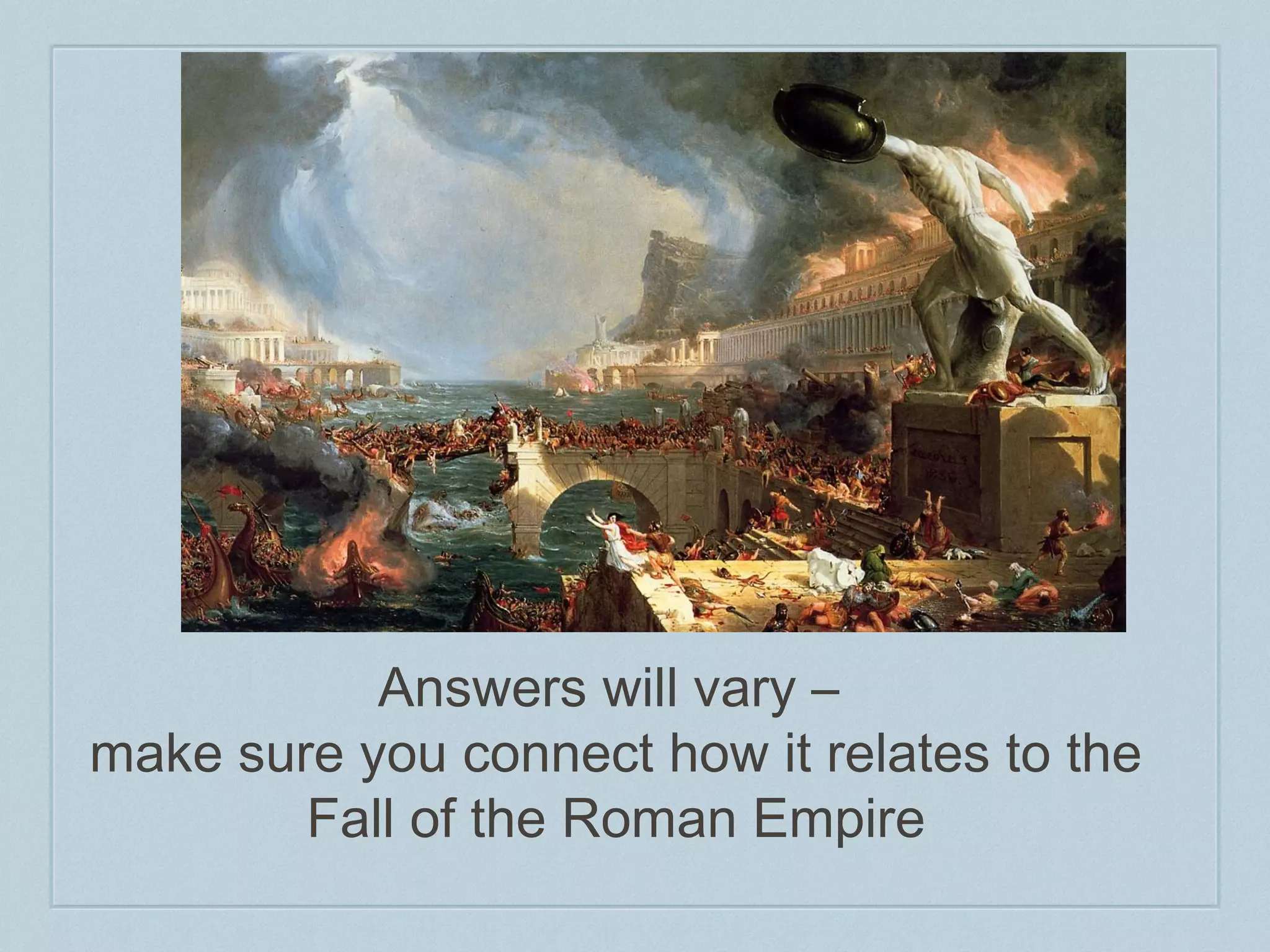
IIIIII.. PPiiccttuurree AAnnaallyyssiiss
Answers will vary – 
make sure you connect how it relates to the 
Fall of the Roman Empire
IIVV.. GGeenneerraall QQuueessttiioonnss
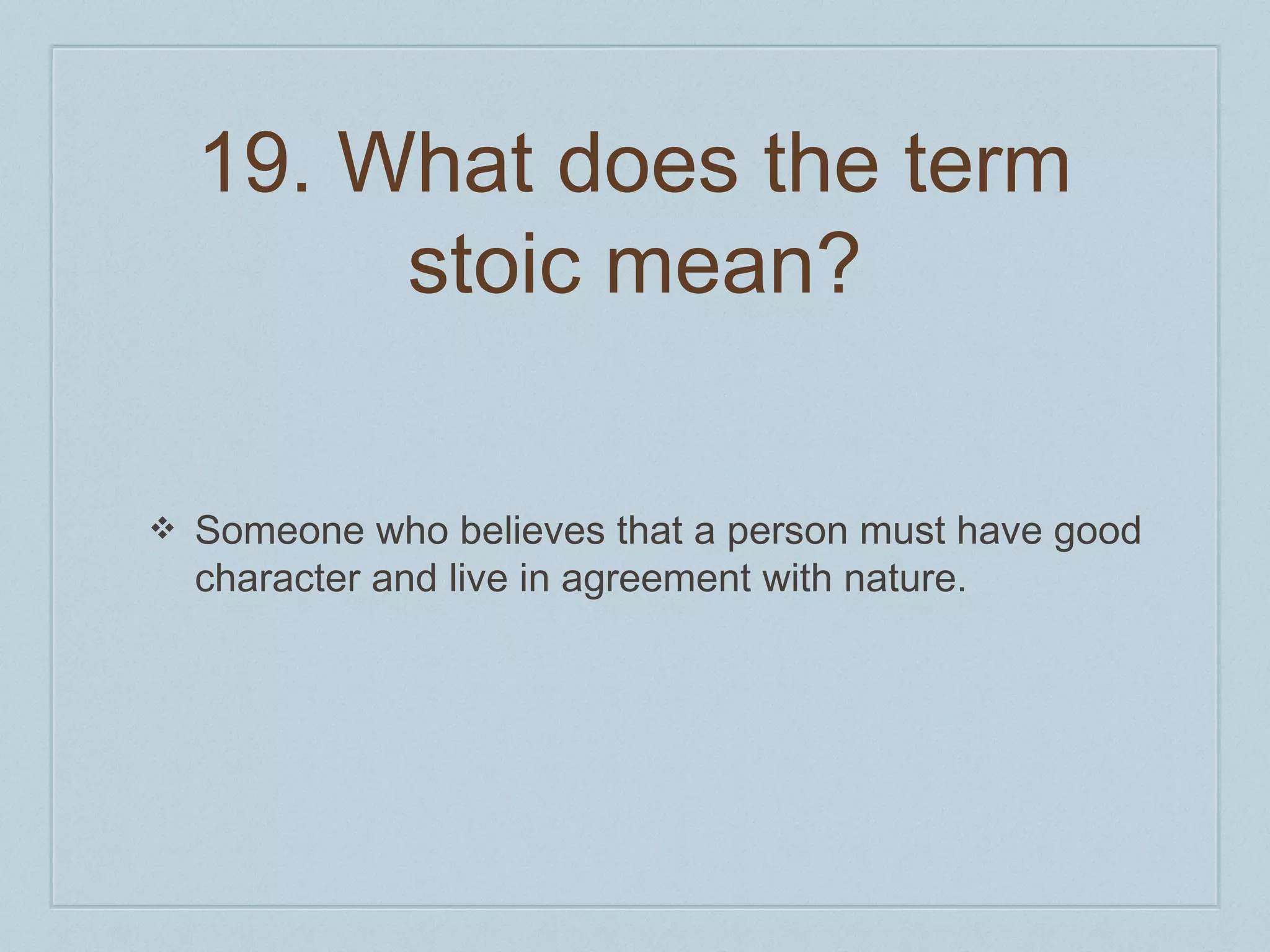
19. What does the term 
stoic mean? 
âť– Someone who believes that a person must have good 
character and live in agreement with nature.
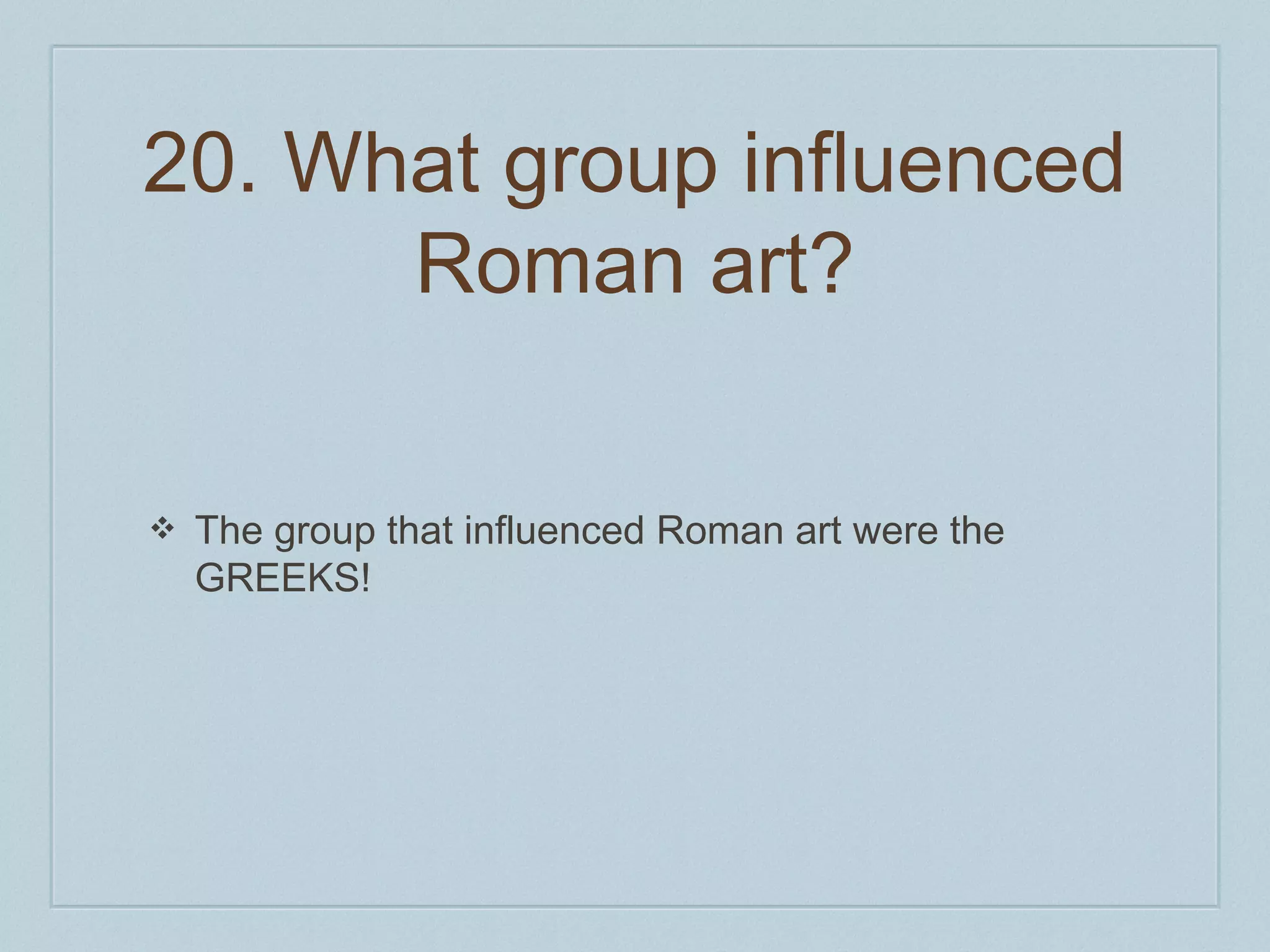
20. What group influenced 
Roman art? 
âť– The group that influenced Roman art were the 
GREEKS!
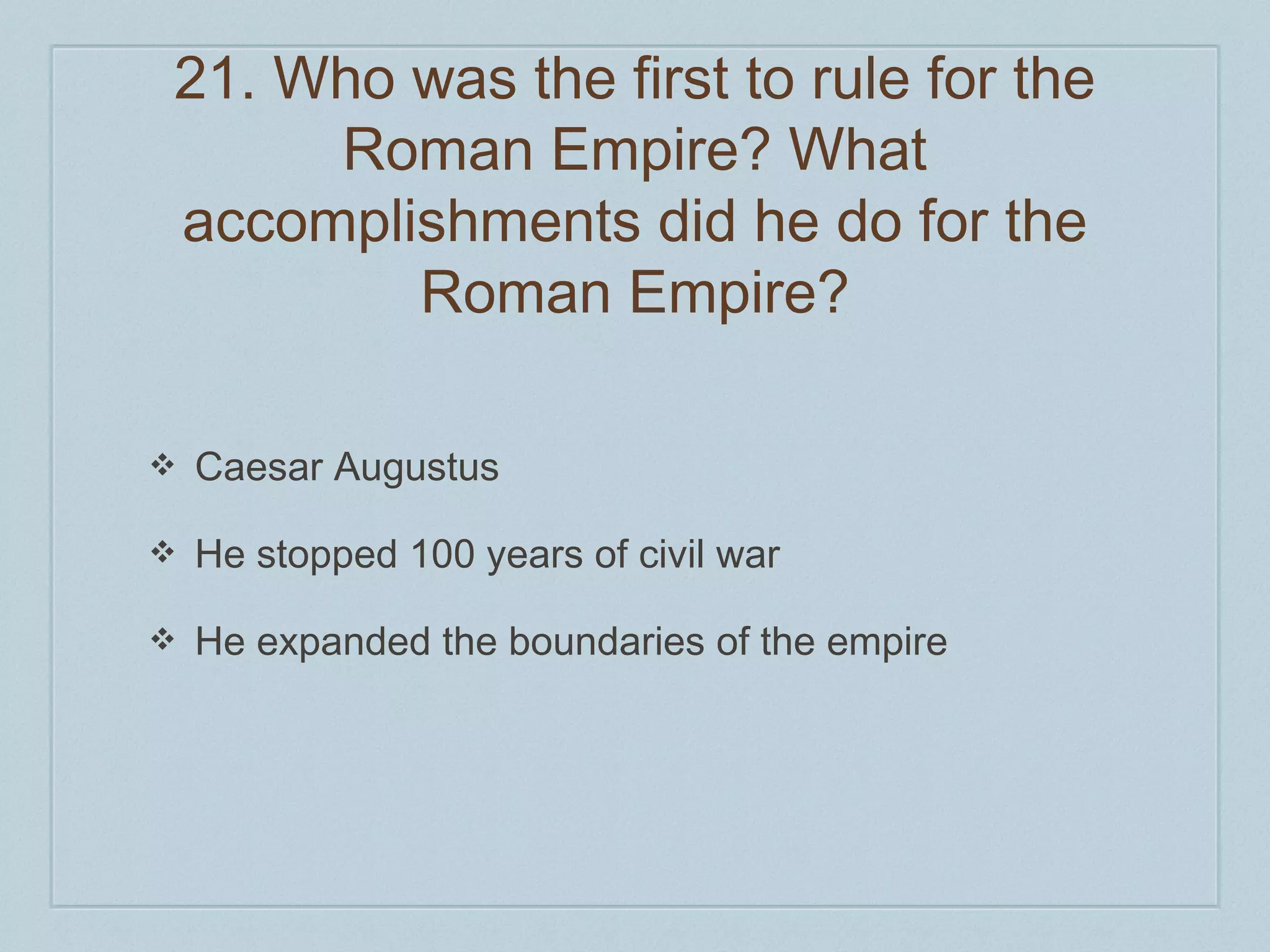
21. Who was the first to rule for the 
Roman Empire? What 
accomplishments did he do for the 
Roman Empire? 
âť– Caesar Augustus 
âť– He stopped 100 years of civil war 
âť– He expanded the boundaries of the empire
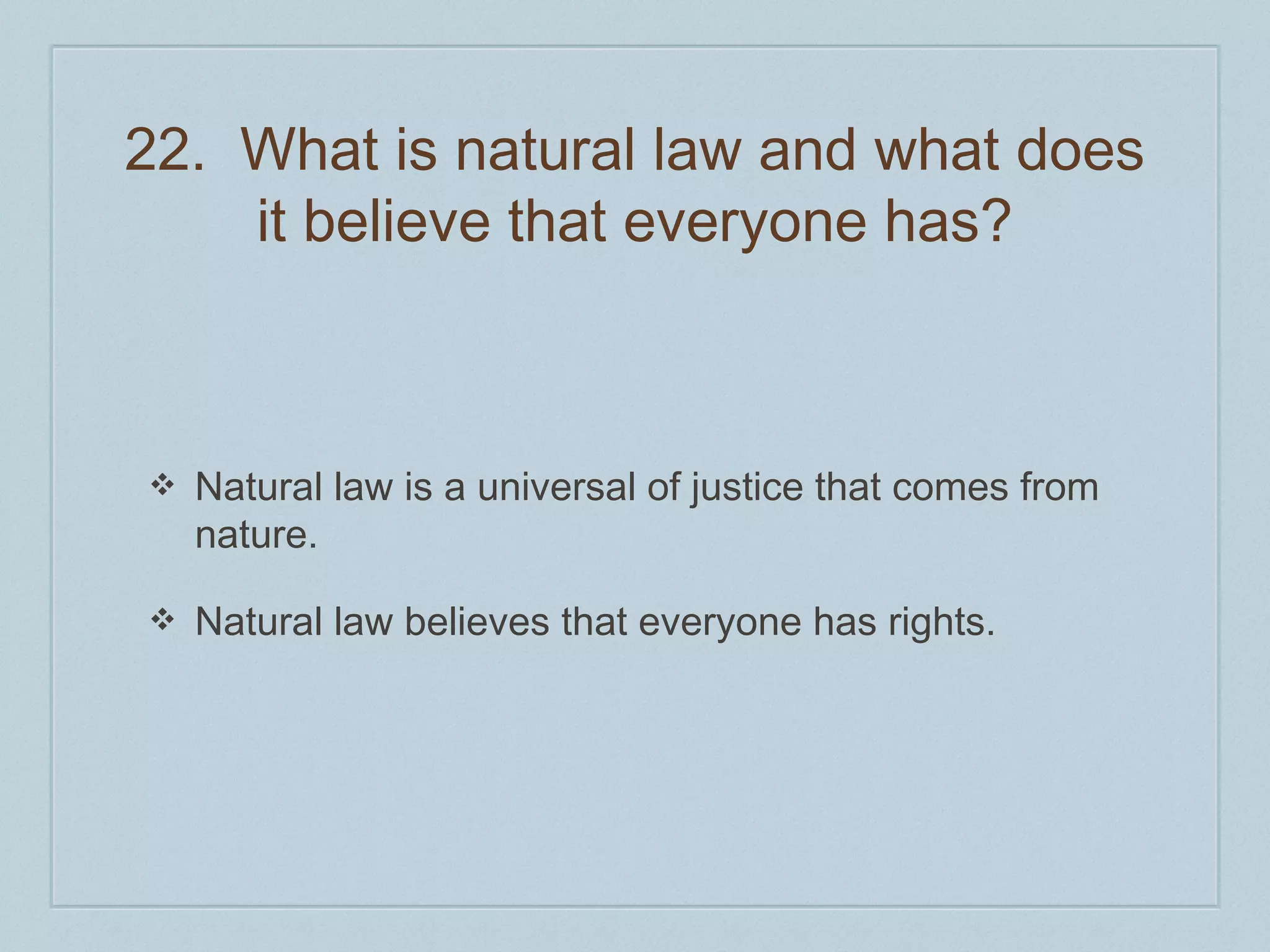
22. What is natural law and what does 
it believe that everyone has? 
âť– Natural law is a universal of justice that comes from 
nature. 
âť– Natural law believes that everyone has rights.
23. How did Latin help influence the 
English language? 
❖ Words in English use many of Latin’s prefixes as well 
as root words.
24. What does the word engineering 
mean? 
âť– The branch of science and technology concerned with 
the design, building, and use of engines, machines, 
and structures. 
âť– Many times it deals with how something works!!
25. What does the word architecture 
mean? 
âť– The art or practice of designing and constructing 
buildings.
VV.. OOppiinniioonn QQuueessttiioonnss
26. “All Roads lead to 
Rome” 
âť– Answers will Vary
27. “Rome perished, yet it 
lived on” 
âť– Answers will vary
28. Engineering or 
Architecture....greatest 
impact? 
âť– Answers will vary

Chapter 1 study guide review

  • 1.
    CChhaapptteerr 11 SSttuuddyyGGuuiiddee RReevviieeww
  • 2.
  • 3.
    collapsed âť– LetterJ: To fail suddenly or completely
  • 4.
    mosaic âť– LetterB: A picture made up of small pieces of tile, glass, or colored stones.
  • 5.
    scribe âť– LetterF: A person trained to write or copy directions by hand.
  • 6.
    Roman Empire âť–Letter G: At its height, around 200 C.E, it spanned the Mediterranean world and most of Europe
  • 7.
    proverb âť– LetterC: A popular saying that is meant to express something wise or true.
  • 8.
    empire âť– LetterD: A large territory in which several groups of people are ruled by a single leader or government
  • 9.
    corruption âť– LetterH: A pattern of illegal or immoral activities by government officials
  • 10.
    decline âť– LetterE: A slow breakdown or failure
  • 11.
    philosophy âť– LetterA: The study of wisdom, knowledge, and the nature of reality
  • 12.
    aqueduct âť– LetterI: A pipe or channel built to carry water between distant places
  • 13.
    Constantine âť– LetterK: Roman Emperor who, in 330 C.E., moved the capital to Byzantium and later renamed it Constantinople
  • 14.
    IIII.. FFaallll ooffRRoommee RReeaassoonnss
  • 15.
    Social Reasons ❖growing corruption within the empire ❖ decline in the spirit of citizenship (didn’t feel like “they” belonged in the empire.) ❖ Emperors wasted a lot of money. ❖ Increase in crime made the empire’s cities and roads unsafe.
  • 16.
    Political Reasons ❖Never figured out a way to peacefully transfer political power to a new leader. ❖ Rivals would often take the “throne” when an emperor died. ❖ No good system of selecting a new emperor ❖ The Praetorian Guard, the emperor’s army, would often pick the next emperor based on what was in it for them...not was best for the empire.
  • 17.
    Economic Reasons ❖To pay for the large armies, Rome’s citizens had to pay Heavy Taxes. ❖ Heavy taxes put many people into poverty ❖ Trade suffered ❖ Unemployment became a problem ❖ Large landowners took over large estates which meant the small landowners were left with nothing.
  • 18.
    Size of theEmpire Reasons ❖ The empire was too large to defend. ❖ Roman armies could not communicate with other leaders in the army that may be stationed in different parts of the empire. ❖ When new areas were taken over, these new citizens joined Rome’s army, but didn’t have the same loyalty as people who were born in Rome.
  • 19.
  • 20.
    Answers will vary– make sure you connect how it relates to the Fall of the Roman Empire
  • 21.
  • 22.
    19. What doesthe term stoic mean? âť– Someone who believes that a person must have good character and live in agreement with nature.
  • 23.
    20. What groupinfluenced Roman art? âť– The group that influenced Roman art were the GREEKS!
  • 24.
    21. Who wasthe first to rule for the Roman Empire? What accomplishments did he do for the Roman Empire? âť– Caesar Augustus âť– He stopped 100 years of civil war âť– He expanded the boundaries of the empire
  • 25.
    22. What isnatural law and what does it believe that everyone has? âť– Natural law is a universal of justice that comes from nature. âť– Natural law believes that everyone has rights.
  • 26.
    23. How didLatin help influence the English language? ❖ Words in English use many of Latin’s prefixes as well as root words.
  • 27.
    24. What doesthe word engineering mean? âť– The branch of science and technology concerned with the design, building, and use of engines, machines, and structures. âť– Many times it deals with how something works!!
  • 28.
    25. What doesthe word architecture mean? âť– The art or practice of designing and constructing buildings.
  • 29.
  • 30.
    26. “All Roadslead to Rome” ❖ Answers will Vary
  • 31.
    27. “Rome perished,yet it lived on” ❖ Answers will vary
  • 32.
    28. Engineering or Architecture....greatest impact? âť– Answers will vary