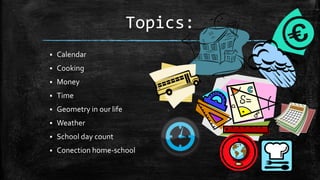
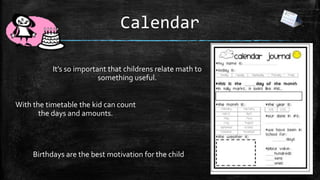
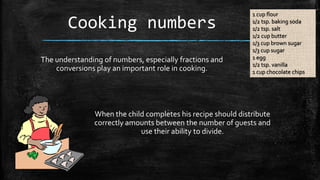
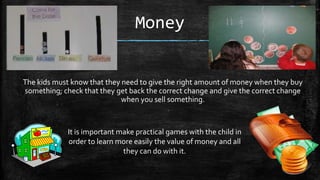
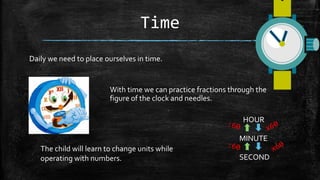
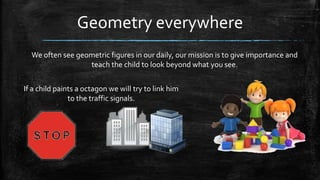
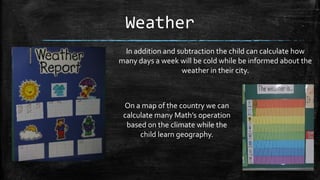
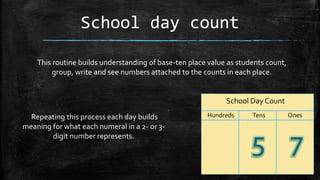
This document discusses how mathematics is present in everyday activities like cooking, telling time, money, weather, and more. It provides examples of ways parents can incorporate math into daily routines with their children through counting steps, sharing snacks, exploring shapes in art, comparing buildings, and predicting number sequences. The conclusion emphasizes that math underlies many everyday actions and should be taught to children from an early age in a familiar way rather than as something foreign.