Chapter 1 - Lesson 1 What do Roots, Stems,
               and Leaves Do


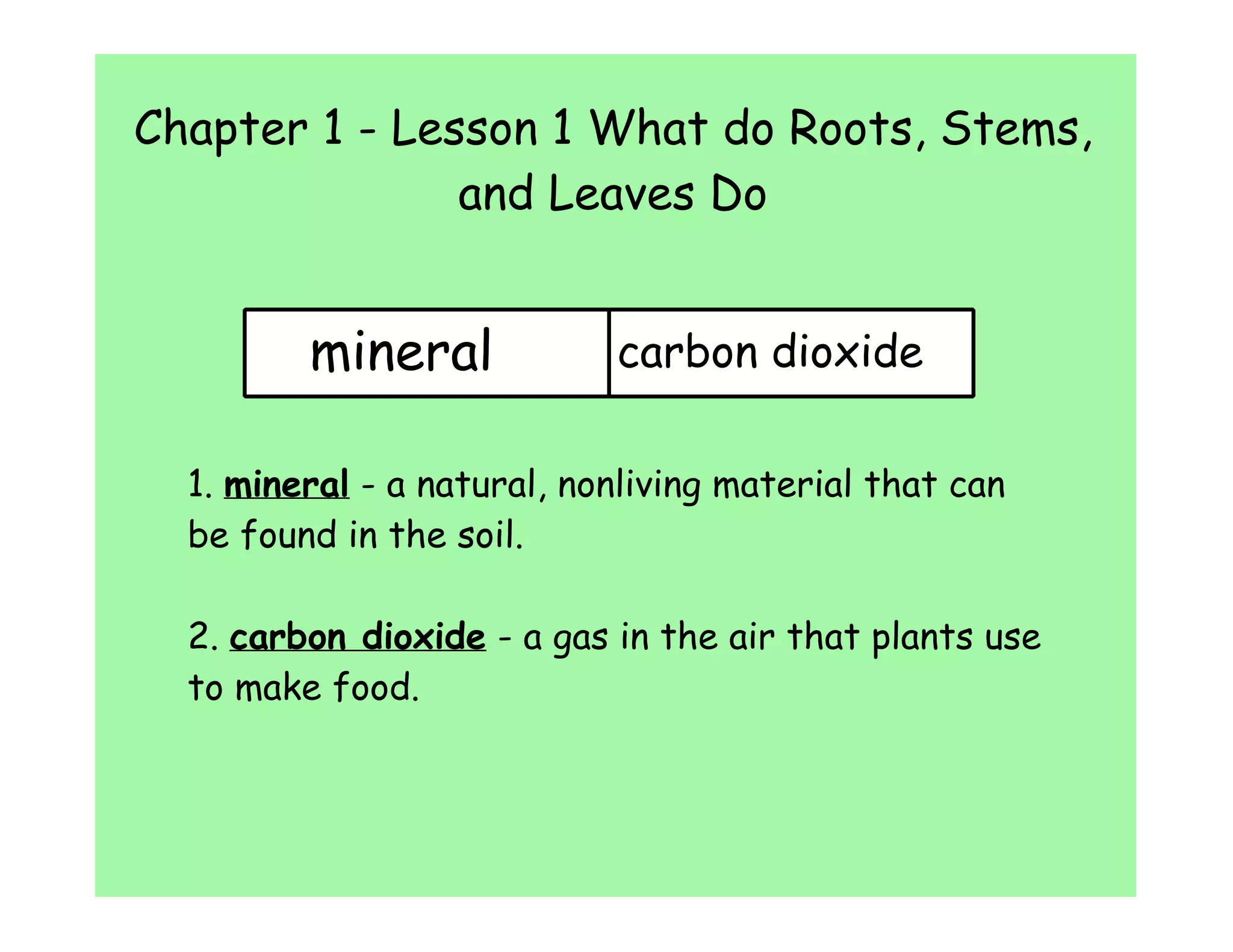
         mineral            carbon dioxide

  1. mineral - a natural, nonliving material that can
  be found in the soil.

  2. carbon dioxide - a gas in the air that plants use
  to make food.
Chapter 1 - Lesson 1 What do Roots, Stems,
               and Leaves Do

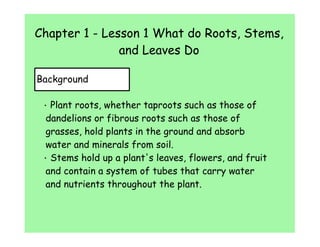
Background

 · Plant roots, whether taproots such as those of
  dandelions or fibrous roots such as those of
  grasses, hold plants in the ground and absorb
  water and minerals from soil.
 · Stems hold up a plant's leaves, flowers, and fruit
  and contain a system of tubes that carry water
  and nutrients throughout the plant.
Chapter 1 - Lesson 1 What do Roots, Stems,
               and Leaves Do
   Notes


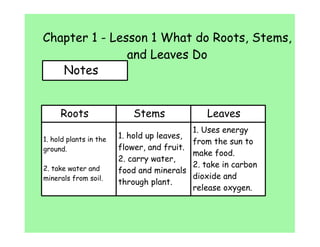
     Roots                 Stems               Leaves
                                           1. Uses energy
1. hold plants in the   1. hold up leaves,
                                           from the sun to
ground.                 flower, and fruit.
                                           make food.
                        2. carry water,
2. take water and
                                           2. take in carbon
                        food and minerals
minerals from soil.                        dioxide and
                        through plant.
                                           release oxygen.
10-1-12

Chapter 1 - Lesson 1 What do Roots, Stems,
               and Leaves Do

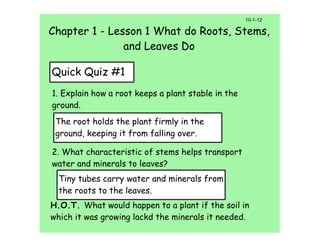
Quick Quiz #1
1. Explain how a root keeps a plant stable in the
ground.
 The root holds the plant firmly in the
 ground, keeping it from falling over.

2. What characteristic of stems helps transport
water and minerals to leaves?
  Tiny tubes carry water and minerals from
  the roots to the leaves.
H.O.T. What would happen to a plant if the soil in
which it was growing lackd the minerals it needed.
Chapter 1 - Lesson 1 What do Roots, Stems,
               and Leaves Do

Background
· Plant leaves have different shapes and sizes. Leaves may
 be needle-shaped, lobed, flat, wide, curled, or long and
 slender.
· Photosynthesis, the series of chemical reactions that
 plants carry out to convert water and carbon dioxide into
 sugar and oxygen, takes place primarily in leaves and
 occasionally in stems. Plants get water from the soil and
 carbon dioxide from the air.
· The energy to make food comes from the sun and is
 stored as sugar in plant's leaves, stems, and roots.
10-1-12

Chapter 1 - Lesson 1 What do Roots, Stems,
               and Leaves Do
Quick Quiz #2
 1. What is the source of the energy plants use to
 make food? (Where do they get the energy
 from)?
           The source of energy plants use to make
           food is the sun.


 2. Where do plants store the sugar?
      Plants store the sugar in leaves, stems
      and roots.

H.O.T. Compare and contrast a plant stem with a
drinking straw. How are they alike? How are they
different?

Chapter 1 lesson 1

  • 1.
    Chapter 1 -Lesson 1 What do Roots, Stems, and Leaves Do mineral carbon dioxide 1. mineral - a natural, nonliving material that can be found in the soil. 2. carbon dioxide - a gas in the air that plants use to make food.
  • 2.
    Chapter 1 -Lesson 1 What do Roots, Stems, and Leaves Do Background · Plant roots, whether taproots such as those of dandelions or fibrous roots such as those of grasses, hold plants in the ground and absorb water and minerals from soil. · Stems hold up a plant's leaves, flowers, and fruit and contain a system of tubes that carry water and nutrients throughout the plant.
  • 3.
    Chapter 1 -Lesson 1 What do Roots, Stems, and Leaves Do Notes Roots Stems Leaves 1. Uses energy 1. hold plants in the 1. hold up leaves, from the sun to ground. flower, and fruit. make food. 2. carry water, 2. take water and 2. take in carbon food and minerals minerals from soil. dioxide and through plant. release oxygen.
  • 4.
    10-1-12 Chapter 1 -Lesson 1 What do Roots, Stems, and Leaves Do Quick Quiz #1 1. Explain how a root keeps a plant stable in the ground. The root holds the plant firmly in the ground, keeping it from falling over. 2. What characteristic of stems helps transport water and minerals to leaves? Tiny tubes carry water and minerals from the roots to the leaves. H.O.T. What would happen to a plant if the soil in which it was growing lackd the minerals it needed.
  • 5.
    Chapter 1 -Lesson 1 What do Roots, Stems, and Leaves Do Background · Plant leaves have different shapes and sizes. Leaves may be needle-shaped, lobed, flat, wide, curled, or long and slender. · Photosynthesis, the series of chemical reactions that plants carry out to convert water and carbon dioxide into sugar and oxygen, takes place primarily in leaves and occasionally in stems. Plants get water from the soil and carbon dioxide from the air. · The energy to make food comes from the sun and is stored as sugar in plant's leaves, stems, and roots.
  • 6.
    10-1-12 Chapter 1 -Lesson 1 What do Roots, Stems, and Leaves Do Quick Quiz #2 1. What is the source of the energy plants use to make food? (Where do they get the energy from)? The source of energy plants use to make food is the sun. 2. Where do plants store the sugar? Plants store the sugar in leaves, stems and roots. H.O.T. Compare and contrast a plant stem with a drinking straw. How are they alike? How are they different?