Foodborne Illnesses
A foodborne illness is a disease transmitted
to people through food.
An illness is considered an outbreak when:
 Two or more people have the same symptoms
after eating the same food
 An investigation is conducted by state and local
regulatory authorities
 The outbreak is confirmed by laboratory analysis
1-2
Challenges to Food Safety
Challenges include:
 Time
 Language and culture
 Literacy and education
 Pathogens
 Unapproved suppliers
 High-risk customers
 Staff turnover
1-3
The Costs of Foodborne Illnesses
Costs of a foodborne illness to an operation:
1-4
Loss of customers and sales Loss of reputation
Negative media exposure Lowered staff morale
1-5
The Costs of Foodborne Illnesses
Costs of a foodborne illness to an operation:
Lawsuits and legal fees Staff missing work
Increased insurance premiums Staff retraining
How Foodborne Illnesses Occur
Unsafe food is the result of contamination:
 Biological
 Chemical
 Physical
1-6
Contaminants
Biological contaminants:
 Bacteria
 Viruses
 Parasites
 Fungi
1-7
Contaminants
Chemical contaminants:
 Cleaners
 Sanitizers
 Polishes
1-8
Contaminants
Physical hazards:
 Metal shavings
 Staples
 Bandages
 Glass
 Dirt
 Natural objects (e.g., fish bones in a fillet)
1-9
How Food Becomes Unsafe
Five risk factors for foodborne illness:
1. Purchasing food from unsafe sources
2. Failing to cook food correctly
3. Holding food at incorrect temperatures
4. Using contaminated equipment
5. Practicing poor personal hygiene
1-10
How Food Becomes Unsafe
1-11
Time-temperature abuse Cross-contamination
Poor personal hygiene Poor cleaning and sanitizing
How Food Becomes Unsafe
Time-temperature abuse:
 When food has stayed too long at
temperatures good for pathogen growth
1-12
How Food Becomes Unsafe
Food has been time-temperature
abused when:
 It has not been held or stored at
correct temperatures
 It is not cooked or reheated enough
to kill pathogens
 It is not cooled correctly
1-13
Pg 1.5 SSF 6e
Pg 1.5 SSF 6e
Pg 1.5 SSF 6e
How Food Becomes Unsafe
Cross-contamination:
 When pathogens are transferred from one
surface or food to another
1-14
Pg 1.5 SSF 6e
How Food Becomes Unsafe
Cross-contamination can cause a
foodborne illness when:
 Contaminated ingredients are added to
food that receives no further cooking
 Ready-to-eat food touches contaminated
surfaces
 Contaminated food touches or drips
fluids onto cooked or ready-to-eat food
 A food handler touches contaminated
food and then touches ready-to-eat food
 Contaminated wiping cloths touch
food-contact surfaces
1-15
Pg 1.5 SSF 6e
How Food Becomes Unsafe
Poor personal hygiene can cause a
foodborne illness when food handlers:
 Fail to wash their hands correctly after using
the restroom
 Cough or sneeze on food
 Touch or scratch wounds and then touch food
 Work while sick
1-16
Pg 1.5 SSF 6e
How Food Becomes Unsafe
Poor cleaning and sanitizing:
 Equipment and utensils are not washed, rinsed,
and sanitized between uses
 Food-contact surfaces are wiped clean instead
of being washed, rinsed, and sanitized
 Wiping cloths are not stored in a sanitizer
solution between uses
 Sanitizer solutions are not at the required levels
to sanitize objects
1-17
Pg 1.5 SSF 6e
Food Most Likely to Become Unsafe
TCS food:
1-18
Food Most Likely to Become Unsafe
TCS food:
1-19
Ready-to-Eat Food
Ready-to-eat food is food that can be eaten without further:
 Preparation
 Washing
 Cooking
Ready-to-eat food includes:
 Cooked food
 Washed fruit and vegetables (whole and cut)
 Deli meat
 Bakery items
 Sugar, spices, and seasonings
1-20
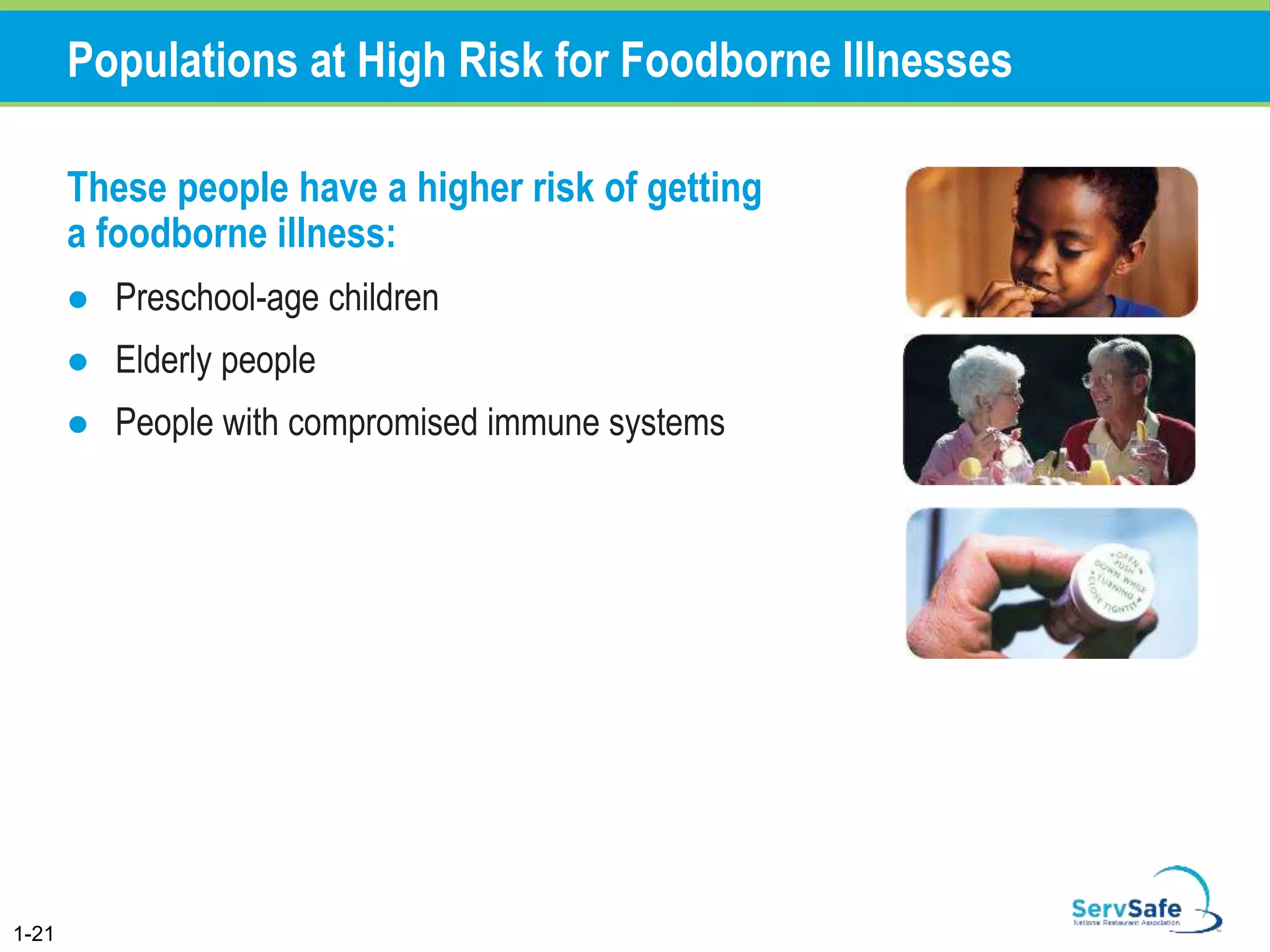
Populations at High Risk for Foodborne Illnesses
These people have a higher risk of getting
a foodborne illness:
 Preschool-age children
 Elderly people
 People with compromised immune systems
1-21
Keeping Food Safe
1-22
Focus on these measures:
 Purchasing from approved, reputable suppliers
 Controlling time and temperature
 Preventing cross-contamination
 Practicing personal hygiene
 Cleaning and sanitizing

chapter 1 keeping food safe.pdf

  • 2.
    Foodborne Illnesses A foodborneillness is a disease transmitted to people through food. An illness is considered an outbreak when:  Two or more people have the same symptoms after eating the same food  An investigation is conducted by state and local regulatory authorities  The outbreak is confirmed by laboratory analysis 1-2
  • 3.
    Challenges to FoodSafety Challenges include:  Time  Language and culture  Literacy and education  Pathogens  Unapproved suppliers  High-risk customers  Staff turnover 1-3
  • 4.
    The Costs ofFoodborne Illnesses Costs of a foodborne illness to an operation: 1-4 Loss of customers and sales Loss of reputation Negative media exposure Lowered staff morale
  • 5.
    1-5 The Costs ofFoodborne Illnesses Costs of a foodborne illness to an operation: Lawsuits and legal fees Staff missing work Increased insurance premiums Staff retraining
  • 6.
    How Foodborne IllnessesOccur Unsafe food is the result of contamination:  Biological  Chemical  Physical 1-6
  • 7.
    Contaminants Biological contaminants:  Bacteria Viruses  Parasites  Fungi 1-7
  • 8.
  • 9.
    Contaminants Physical hazards:  Metalshavings  Staples  Bandages  Glass  Dirt  Natural objects (e.g., fish bones in a fillet) 1-9
  • 10.
    How Food BecomesUnsafe Five risk factors for foodborne illness: 1. Purchasing food from unsafe sources 2. Failing to cook food correctly 3. Holding food at incorrect temperatures 4. Using contaminated equipment 5. Practicing poor personal hygiene 1-10
  • 11.
    How Food BecomesUnsafe 1-11 Time-temperature abuse Cross-contamination Poor personal hygiene Poor cleaning and sanitizing
  • 12.
    How Food BecomesUnsafe Time-temperature abuse:  When food has stayed too long at temperatures good for pathogen growth 1-12
  • 13.
    How Food BecomesUnsafe Food has been time-temperature abused when:  It has not been held or stored at correct temperatures  It is not cooked or reheated enough to kill pathogens  It is not cooled correctly 1-13 Pg 1.5 SSF 6e Pg 1.5 SSF 6e Pg 1.5 SSF 6e
  • 14.
    How Food BecomesUnsafe Cross-contamination:  When pathogens are transferred from one surface or food to another 1-14 Pg 1.5 SSF 6e
  • 15.
    How Food BecomesUnsafe Cross-contamination can cause a foodborne illness when:  Contaminated ingredients are added to food that receives no further cooking  Ready-to-eat food touches contaminated surfaces  Contaminated food touches or drips fluids onto cooked or ready-to-eat food  A food handler touches contaminated food and then touches ready-to-eat food  Contaminated wiping cloths touch food-contact surfaces 1-15 Pg 1.5 SSF 6e
  • 16.
    How Food BecomesUnsafe Poor personal hygiene can cause a foodborne illness when food handlers:  Fail to wash their hands correctly after using the restroom  Cough or sneeze on food  Touch or scratch wounds and then touch food  Work while sick 1-16 Pg 1.5 SSF 6e
  • 17.
    How Food BecomesUnsafe Poor cleaning and sanitizing:  Equipment and utensils are not washed, rinsed, and sanitized between uses  Food-contact surfaces are wiped clean instead of being washed, rinsed, and sanitized  Wiping cloths are not stored in a sanitizer solution between uses  Sanitizer solutions are not at the required levels to sanitize objects 1-17 Pg 1.5 SSF 6e
  • 18.
    Food Most Likelyto Become Unsafe TCS food: 1-18
  • 19.
    Food Most Likelyto Become Unsafe TCS food: 1-19
  • 20.
    Ready-to-Eat Food Ready-to-eat foodis food that can be eaten without further:  Preparation  Washing  Cooking Ready-to-eat food includes:  Cooked food  Washed fruit and vegetables (whole and cut)  Deli meat  Bakery items  Sugar, spices, and seasonings 1-20
  • 21.
    Populations at HighRisk for Foodborne Illnesses These people have a higher risk of getting a foodborne illness:  Preschool-age children  Elderly people  People with compromised immune systems 1-21
  • 22.
    Keeping Food Safe 1-22 Focuson these measures:  Purchasing from approved, reputable suppliers  Controlling time and temperature  Preventing cross-contamination  Practicing personal hygiene  Cleaning and sanitizing