It’s All About Matter
         Solids


Gases              Liquids
                  Karen B. Jones
Table Of Content

•   Introduction
•   Define Solid, Liquid, Gas
•   Examples of Solid, Liquid, Gas
•   Assessing Your Understanding
•   Resources
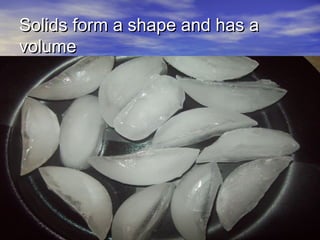
Solids form a shape and has a
volume
particles in solid

• are extremely close


• movement is possible

• it vibrates or slides back and forth
crystalline solids


• repeating patterns-made out of crystals which
  are called crystalline solids

• things we see or use daily such as snow, salt,
  and sugar are examples of crystalline solids

• however, if heat is applied to crystalline solids it
  will melt at a distinct temperature
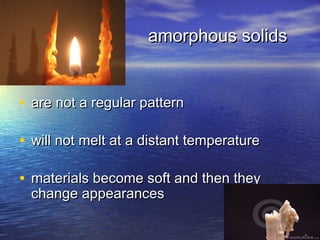
amorphous solids


• are not a regular pattern

• will not melt at a distant temperature

• materials become soft and then they
 change appearances
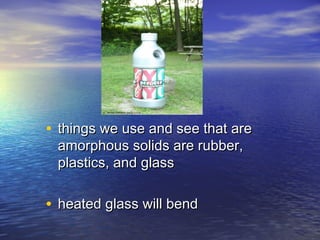
• things we use and see that are
 amorphous solids are rubber,
 plastics, and glass

• heated glass will bend
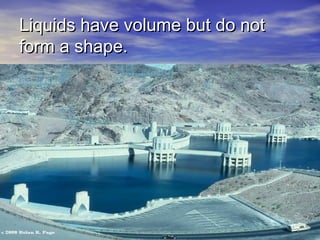
Liquids have volume but do not
form a shape.
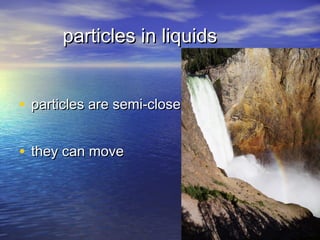
particles in liquids


• particles are semi-close

• they can move
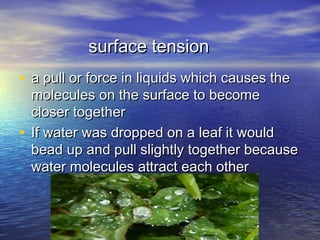
surface tension
• a pull or force in liquids which causes the
  molecules on the surface to become
  closer together
• If water was dropped on a leaf it would
  bead up and pull slightly together because
  water molecules attract each other
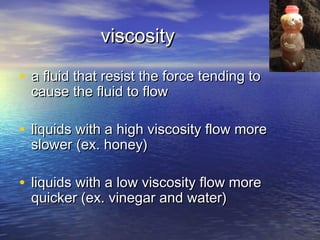
viscosity

• a fluid that resist the force tending to
  cause the fluid to flow

• liquids with a high viscosity flow more
  slower (ex. honey)

• liquids with a low viscosity flow more
  quicker (ex. vinegar and water)
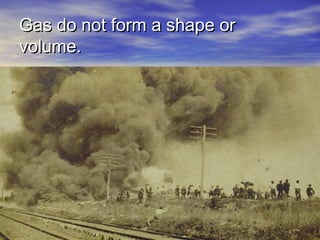
Gas do not form a shape or
volume.
Particles in Gas

• is considered a fluid

• does have pressure

• separate as it moves
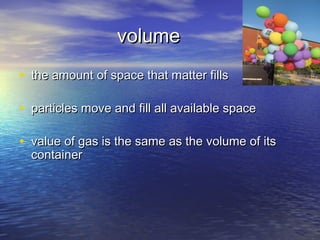
volume
• the amount of space that matter fills

• particles move and fill all available space

• value of gas is the same as the volume of its
  container
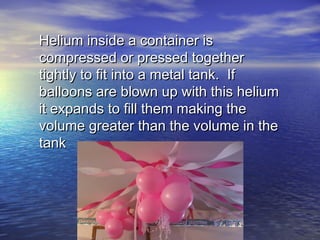
Helium inside a container is
compressed or pressed together
tightly to fit into a metal tank. If
balloons are blown up with this helium
it expands to fill them making the
volume greater than the volume in the
tank
pressure

• The force of an outward push

• An object being filled comes from the
 pressure of the gas
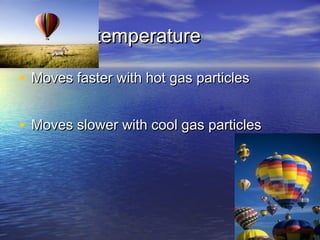
temperature

• Moves faster with hot gas particles

• Moves slower with cool gas particles
Assess Your Understanding

• Describe the two kinds of solids.
• Give an example of crystalline solid.
• Heat applied to this solid causes it to do
  what.
• Liquids have volume but do not form this.
• Name a liquid that flow slowly.
cont. assess your understanding

• Describe one way gas may move.
• Hot gas particles causes temperature to
  move how.
• The pressure of gas is the force of its what
  type of push.
Resources

• images.google.com/advanced_images

• http://pics.tech4learning.com/

Changes of state edu 653

  • 1.
    It’s All AboutMatter Solids Gases Liquids Karen B. Jones
  • 2.
    Table Of Content • Introduction • Define Solid, Liquid, Gas • Examples of Solid, Liquid, Gas • Assessing Your Understanding • Resources
  • 3.
    Solids form ashape and has a volume
  • 4.
    particles in solid •are extremely close • movement is possible • it vibrates or slides back and forth
  • 5.
    crystalline solids • repeatingpatterns-made out of crystals which are called crystalline solids • things we see or use daily such as snow, salt, and sugar are examples of crystalline solids • however, if heat is applied to crystalline solids it will melt at a distinct temperature
  • 6.
    amorphous solids • arenot a regular pattern • will not melt at a distant temperature • materials become soft and then they change appearances
  • 7.
    • things weuse and see that are amorphous solids are rubber, plastics, and glass • heated glass will bend
  • 8.
    Liquids have volumebut do not form a shape.
  • 9.
    particles in liquids •particles are semi-close • they can move
  • 10.
    surface tension • apull or force in liquids which causes the molecules on the surface to become closer together • If water was dropped on a leaf it would bead up and pull slightly together because water molecules attract each other
  • 11.
    viscosity • a fluidthat resist the force tending to cause the fluid to flow • liquids with a high viscosity flow more slower (ex. honey) • liquids with a low viscosity flow more quicker (ex. vinegar and water)
  • 12.
    Gas do notform a shape or volume.
  • 13.
    Particles in Gas •is considered a fluid • does have pressure • separate as it moves
  • 14.
    volume • the amountof space that matter fills • particles move and fill all available space • value of gas is the same as the volume of its container
  • 15.
    Helium inside acontainer is compressed or pressed together tightly to fit into a metal tank. If balloons are blown up with this helium it expands to fill them making the volume greater than the volume in the tank
  • 16.
    pressure • The forceof an outward push • An object being filled comes from the pressure of the gas
  • 17.
    temperature • Moves fasterwith hot gas particles • Moves slower with cool gas particles
  • 18.
    Assess Your Understanding •Describe the two kinds of solids. • Give an example of crystalline solid. • Heat applied to this solid causes it to do what. • Liquids have volume but do not form this. • Name a liquid that flow slowly.
  • 19.
    cont. assess yourunderstanding • Describe one way gas may move. • Hot gas particles causes temperature to move how. • The pressure of gas is the force of its what type of push.
  • 20.