Downloaded 495 times

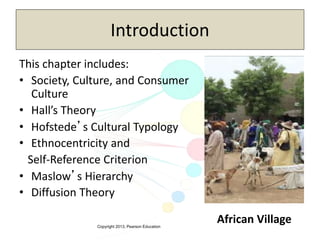
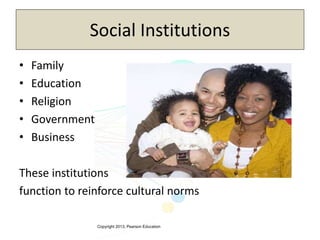
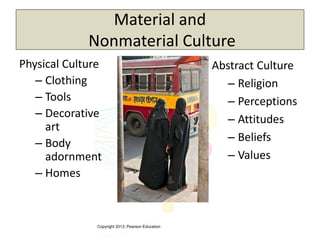
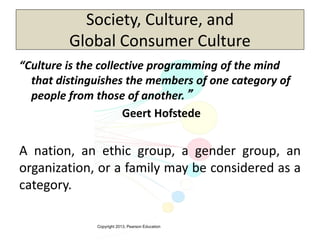
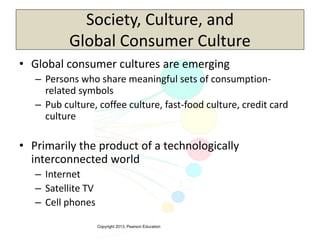
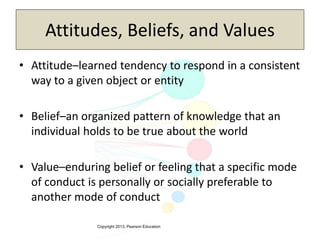
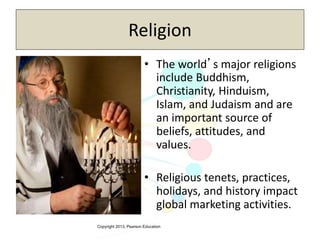
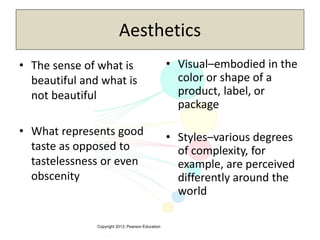
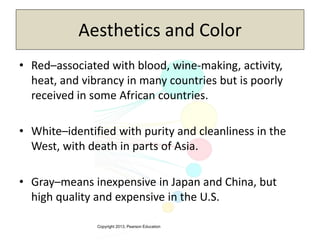
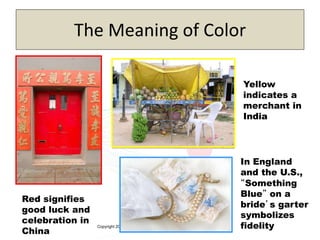
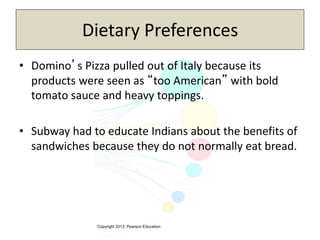
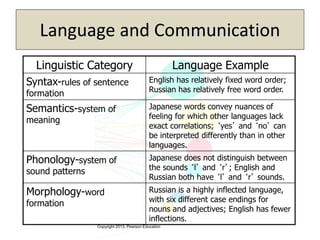
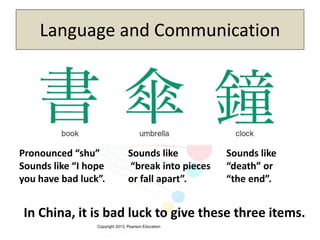
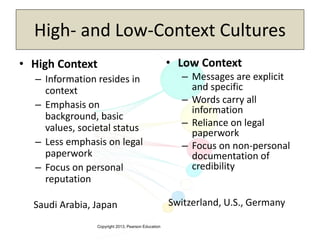
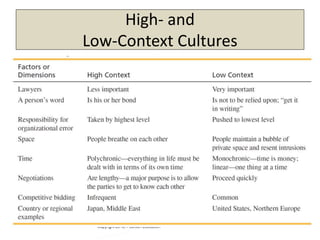
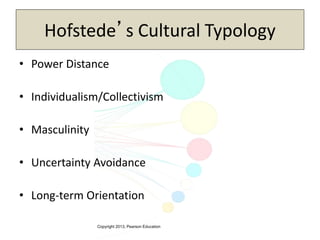
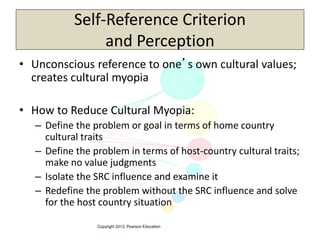

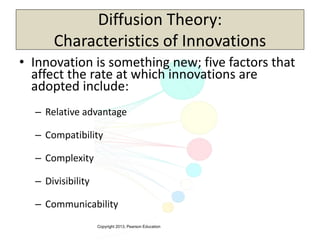
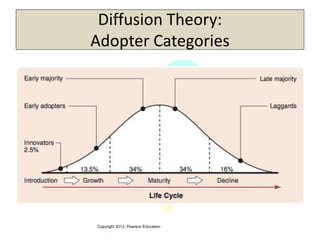
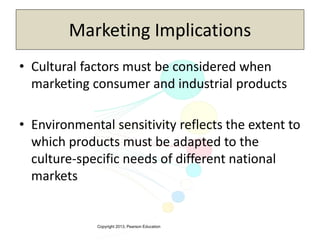
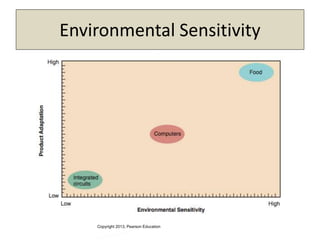
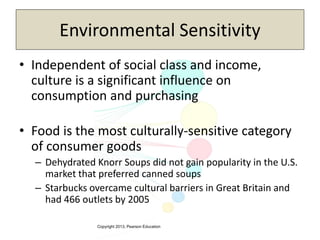


This chapter discusses key cultural factors that global marketers must consider when doing business internationally. It introduces theories and models for understanding differences in cultures, such as Hall's context theory, Hofstede's cultural dimensions, and Maslow's hierarchy of needs. Key aspects of culture explored include social institutions, material and nonmaterial elements, attitudes and values, religion, aesthetics, language, and dietary preferences. The chapter emphasizes that culture unconsciously influences perception and must be understood to avoid ethnocentrism. Global marketers are advised to incorporate cultural understanding into their planning to appropriately adapt products for different markets.


![Global Marketing Chapter 3 : Cultural Foundations [Elegant (V)]](https://cdn.slidesharecdn.com/ss_thumbnails/elegantvglobalmarketing-130328123049-phpapp02-thumbnail.jpg?width=640&height=640&fit=bounds)


![[rokonz.com] Glossary of Semantic SEO Part-3.pdf](https://cdn.slidesharecdn.com/ss_thumbnails/rokonz-260123200835-55123e1e-thumbnail.jpg?width=640&height=640&fit=bounds)


![[rokonz.com] Glossary of Semantic SEO Part-1.pdf](https://cdn.slidesharecdn.com/ss_thumbnails/rokonz-260123200456-440e4060-thumbnail.jpg?width=640&height=640&fit=bounds)
![[rokonz.com] Glossary of Semantic SEO Part-2.pdf](https://cdn.slidesharecdn.com/ss_thumbnails/rokonz-260123200719-92199ba8-thumbnail.jpg?width=640&height=640&fit=bounds)

